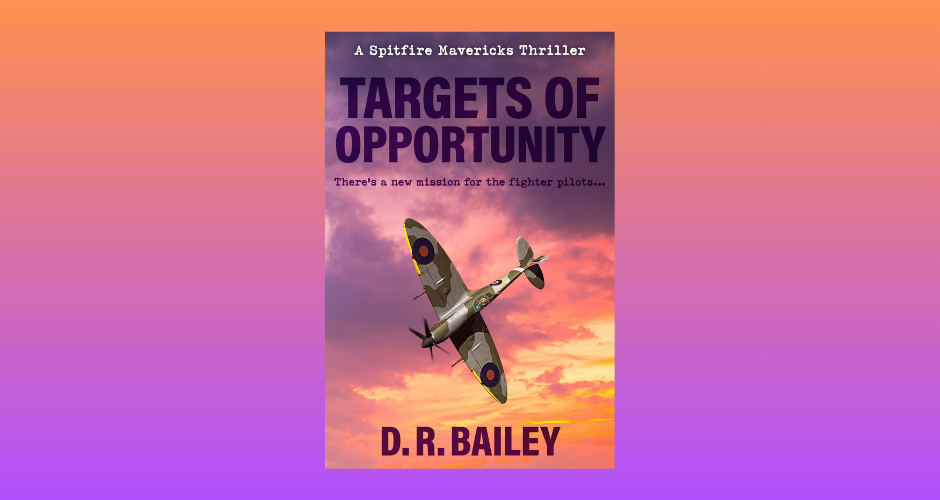
Targets of Opportunity is Out Now!

Congratulations to D. R. Bailey, whose thrilling wartime adventure, Targets of Opportunity, is out now!

Targets of Opportunity is the seventh book in the Spitfire Mavericks Thrillers series: action-packed aviation novels set during the Second World War and featuring a team of vigilante pilots.

Spring, 1943

Flight Lieutenant Angus Mackennelly and his squadron have been given a new mission. The Mavericks are to attack ‘Targets of Opportunity’ under the umbrella of Operation Wagtail.

The War Office wants to capitalise on the Germans’ defeat by the Russians at Stalingrad earlier in the year by harassing them in Northern France and the Low Countries.

Military targets are now on the table. The modus operandi will be to fly in, strafe the targets and get out all under the radar.

The first mission of Operation Wagtail goes ahead. But while the pilots are away, personal items go missing from the mess.

Angus is worried about a security breach.

Are his men under threat? Who is stealing from them?

And will the sense of mistrust interfere with the operations in the skies…?

Remembering Stanley Pavillard

Captain Stanley Pavillard, author of Bamboo Doctor, served as a Medical Officer with the Straits Settlements Volunteer Forces during World War Two. When taken as a POW of Japan in 1942, he used his skills as a doctor to save the lives of many of his fellow prisoners, who were forced to work on the infamous Bangkok–Burma railroad. To commemorate the eightieth anniversary of the end of World War Two, his granddaughter Vanessa shares her memories of him below.

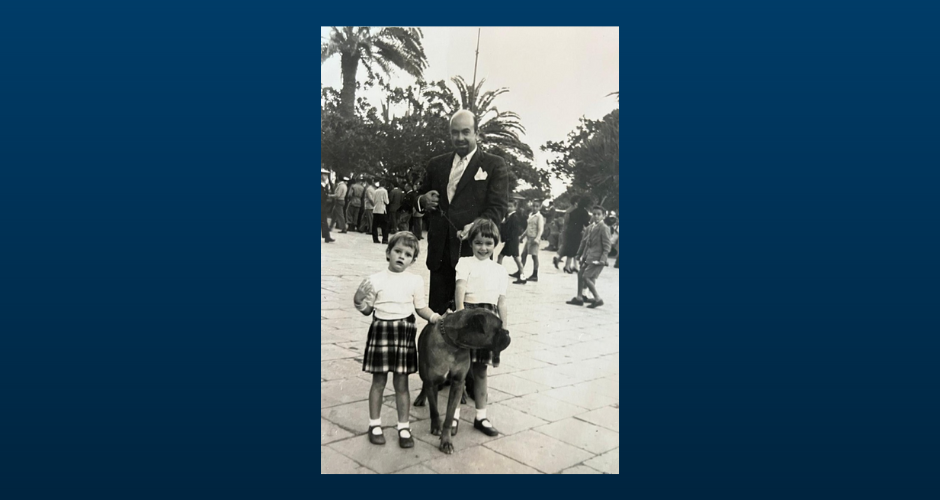
Stanley with Anita and Linda in Las Palmas circa 1956

A lot can be found on Stanley Pavillard online about his early life, his achievements during the war and his career as a doctor. What is less talked about, for obvious reasons, is his private family life. Stanley was a father to three daughters, Linda (my mother), Anita and Sandra. His wife, Irene, an extraordinarily witty and funny lady, remained in his shadow most of her life but shone equally bright in our hearts with her unique style.

Although a proud war hero, Stanley was marked by the war in ways that even I, as a five-year-old grandchild could notice. Due to lack of proper nutrition and vitamins in the camps, Stanley’s eyesight slowly deteriorated over the years to the point where he had very limited tunnel vision. As children, we were always told very strictly to move any toys out of the way or Grandpa might slip on them and fall. Another memory my mum shared with me is that Stanley told his daughters never to touch him while he was asleep. Out of fear of being attacked in his sleep, he had developed a hypervigilance during his time in the POW camps and would jump at any sound or movement. One night, little Linda forgot, touched her sleeping dad and to her surprise got a tight slap!

There were happy and funny memories too, of course, such as the big parties he would throw at the extravagant house he built for the family. I remember my grandfather surrounded by lots of guests and children, doing his favourite trick of hiding his hand in his sleeve and pulling it out suddenly with a loud roar to scare everyone. We couldn’t get enough of his tricks and jokes. Stanley had a sense of drama and a charisma that was hard to ignore. As a child I was both fascinated and terrified when I had a stomach-ache and would finally be brought to him for consultation. He would make me lie down and press his hands carefully against my tummy. The cure felt instant every time.

Stanley marked a generation or maybe even two with his tremendous work in saving so many lives during the war. My mum remembers the countless letters the family would receive at Christmas: Thank you, Pav, for saving my life. The love, generosity and compassion he radiated during those extremely hard times have marked history, together with all his fellow soldiers and prisoners who endured the war. What he left behind, and maybe passed on, is a capacity for adapting and surviving in the hardest situations, thanks to creativity and perseverance, as well as a willingness to move forward and create a life after traumatic events. Equipped with all these skills, our job as his family is to not only survive in a world that is complex in different ways but to thrive and work towards even better times.

Remembering Donald Macintyre

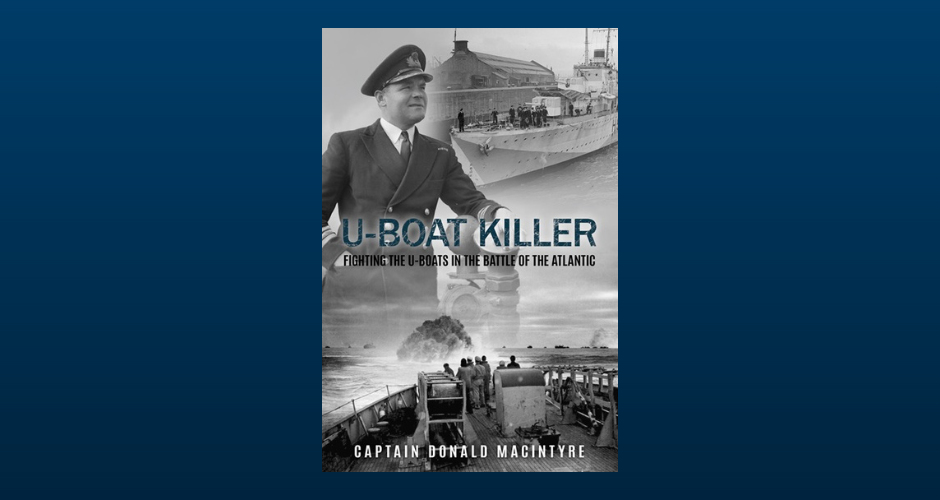
Between 1940 and 1944, Donald Macintyre was among the most successful submarine hunters in any Allied navy, transforming the Battle of the Atlantic with his successes against the U-boat menace. To commemorate the eightieth anniversary of the end of World War Two, Donald’s daughter, Dani, shares a personal memory from her father’s life after the conflict.

In 1960, when Dad was employed by MGM as Nautical Advisor on Mutiny on the Bounty starring Marlon Brando and Trevor Howard, he left my mother in charge of the pig farm. I can only suppose that she felt annoyed to be left with this responsibility, because she sold all the pigs and demanded a flight to California!

Dad complied, and I was able to join them for a fascinating holiday, mainly spent in Culver City’s MGM Studios every day. I watched the crew film scenes of a half replica of the Bounty on rollers, with wind and water machines simulating a storm on the high seas. To my joy I also spent time with the crew of Rawhide, a Western TV series. They made a fourteen-year-old girl feel very welcome!

If you have ever watched Mutiny on the Bounty, you might have noticed that in one scene Marlon Brando comes out of his cabin wearing a ridiculous red velvet smoking jacket. When Dad was asked to approve this costume change, he said it would never have been acceptable in those days. Hollywood being Hollywood thought it made handsome Marlon irresistible, so they kept it in. This made Dad wonder what he was being paid for, apart from sitting and playing cards with Gordon Jackson in Tahiti!

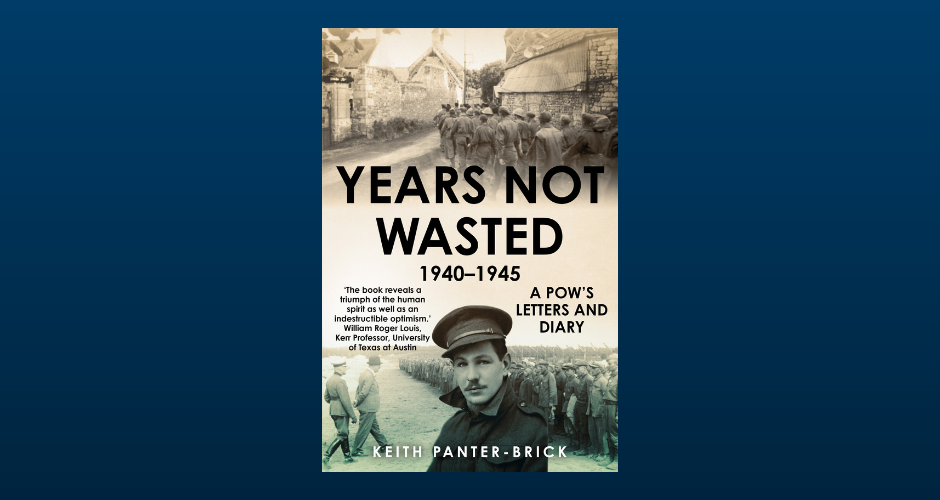
Reflections on Keith Panter-Brick’s Years Not Wasted

Keith Panter-Brick joined the Territorial Army in March 1939, at the age of eighteen. When war broke out six months later, he was sent to France, where he was entrenched ahead of the Maginot Line in spring 1940. Following the devastating German blitzkrieg, he was captured in May 1940 and spent the next five years as a prisoner of war. To commemorate the eightieth anniversary of the end of World War Two, Keith’s friend and colleague, Paul Jankowski — Raymond Ginger Professor Emeritus of History at Brandeis University — reflects on Keith’s harrowing wartime memoir, Years Not Wasted, below.

“We were totally outclassed,” Keith Panter-Brick told me in the early 2000s. He was speaking of May 1940, when the German land and air forces overwhelmed the Allied forces in Belgium and northern France. Taken prisoner that month, he spent the next five years — the first half of his twenties — in German prisoner of war camps (Stalags) in occupied Poland. The mental honesty, scrupulous accuracy, and personal humility in his brief comment captured much of the man, the scholar, and the friend I would first meet some fifty years later.

The same qualities would reappear in his memoir, Years Not Wasted. When he returned home to Merseyside, England, in 1945, all he had was his diary, along with the many letters that had somehow reached his family. He would return to them many years later in his memoir, retelling and perhaps reliving the captivity that he and other captured Western soldiers had to endure. They contended with conditions worse than those of the officers, but far better than those of the Soviet and Polish prisoners, most of whom perished in one of the great war crimes of the Second World War. Neither self-pity nor heroics coarsen his narrative. He writes of malnutrition and bitter cold, but also of Red Cross parcels, of boredom but also release, of submission but also resistance and, in his case, attempts at escape — once in 1944 from the camp itself, and again in 1945 from the virtual death-march out of it.

It is a recollection mixing scrupulous honesty with vivid detail, on one level a document about captivity in wartime, on another a spiritual memoir of inner freedom wrested from adversity, before its physical reality was finally restored.

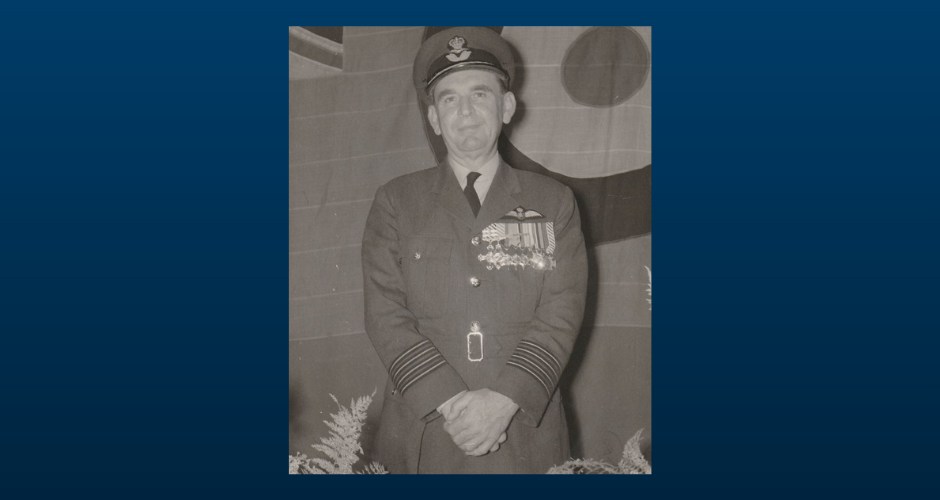
Remembering Bobby Oxspring

Group Captain Bobby Oxspring, author of Spitfire Command, saw action in many of the most famous battles of the Second World War, including Dunkirk and the Battle of Britain. To commemorate the eightieth anniversary of the end of World War Two, his great-grandson, Daniel, shares his reflections on Bobby’s life below.

Flying ace Robert (Bobby) Wardlow Oxspring held the rank of squadron leader when World War Two ended in May 1945. Throughout April 1945, he was confident that the war was soon to conclude. His mood on VE Day as an optimistic family man would have no doubt been a mixture of pride and reflection. He would have been proud of his achievements: he’d been made leader of the 141 Wing at Deanland only the year before, and had been awarded a Distinguished Flying Cross and Two Bars as a flying ace. He would have been reflecting on his numerous wartime adventures, from the Battle of Britain to his time in North Africa, Italy and many other countries. Bobby’s mood on VE Day likely matched the mood of many of ‘The Few’, and I have no doubt he would have felt joy at the war’s conclusion.

For me, the great-grandson of Bobby Oxspring, my great-grandfather has had a huge influence on my life — not only as a proud figure to look up to, exemplifying courage and bravery, but also through his stories. His career after VE Day did not lose momentum. He received a permanent commission as a flight lieutenant on 1st September 1945 and was promoted further to substantive squadron leader on 1st August 1947. One incredible achievement, however, was his award of an Air Force Cross. This was for leading number 54 Squadron of the RAF Vampires to Canada and the US, the very first jet aircraft to cross the Atlantic.

After VE Day, he never stopped being admirable. He undertook further tours, even across Italy, and eventually became Station Commander of RAF Gatow in Berlin. At Churchill’s funeral, he walked at the very front.

I have been to RAF Cranwell to see some of my great-grandfather’s personal scrapbooks and was even fortunate enough to sit in the cockpit of his recovered plane in the Dumfries and Galloway Museum in Scotland. These are only a few of the moments I have taken to reflect on his life.

On VE Day I am almost certain that one thought would have prevailed in his mind: his admiration and respect for the mighty Spitfire, and his pride at having flown it.

Remembering Keith Panter-Brick

Keith Panter-Brick joined the Territorial Army in March 1939, at the age of eighteen. When war broke out six months later, he was sent to France, where he was entrenched ahead of the Maginot Line in spring 1940. Following the devastating German blitzkrieg, he was captured in May 1940 and spent the next five years as a prisoner of war. To commemorate the eightieth anniversary of the end of World War Two, Keith’s daughter Catherine — Professor of Anthropology, Health, and Global Affairs at Yale University — shares her memories of her father below.
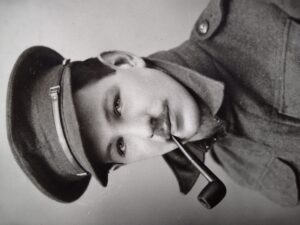
“Each day life is hanging in the balance.” That was the phrase with which my father ended his book, Years Not Wasted. I think that everyone with a lived experience of war will understand that sentence: the notion that you may or may not live, may or may not be free, may or may not return.

Keith Panter-Brick was a prisoner of war in Poland from 1940 to 1945. He was captured at Isières when he was just nineteen. Under the Geneva Convention, ordinary soldiers were obliged to work — and were put to hard labour in POW camps. If he ever survived the cold, hunger, exhaustion, and brutality of war, Keith promised himself that he would study philosophy and go to university, the first of his family to do so. Admitted to Keble College, Oxford, he joined a postwar student delegation to Heidelberg for cultural exchange and reconciliation. There he met my mother, a student from Alsace-Lorraine on a French delegation to Heidelberg. The two fell in love — my father courted in German, their only common language at the time — and in that short week, they decided to marry. They built a family, rooted in the practice of non-violence and cross-cultural understanding.
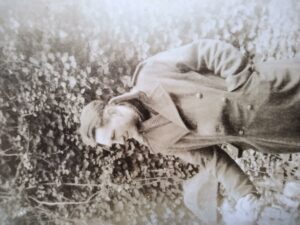
My father’s book began decades later, assembled from scraps of his diary, postcards, and letters sent through the Red Cross, all of which he had kept hidden away in a shoebox. On page seven of the first edition, you’ll find his death certificate — the Office of the Cheshire Regiment officially reported him killed in action in May 1940. It took months for news of his survival to reach home. That certificate became for me the most vivid proof that life indeed is hanging in the balance.

Years Not Wasted isn’t a grand officer’s tale. It’s a soldier’s story, grounded in hard labour, frostbitten marches, and everyday endurance. Because he learnt passable German, Keith was once included in an escape attempt with RAF officers, only to be recaptured in Gdansk, at the dockside when attempting to board a Swedish vessel. He survived the Great March out of Poland in the most brutal of winters, thanks to a pair of good boots made in his father’s bootmaker shop. Even years later, my sister Brigitte, now a regular walker in the forests of Lorraine, measures distances in fractions of “Great March kilometres.” In my own teaching and research, I focus on the biological and social signatures of war across generations, and on pathways to peace. My son Jannik chose to study POW trade and barter systems for his Masters’ dissertation at Cambridge. Each of us carries a trace of my father’s war experience.
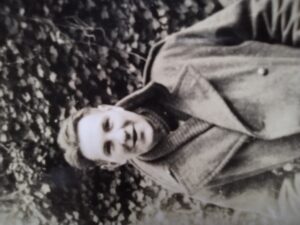
My father was impetuous. Once, while we were travelling from Nigeria to Cameroon, he filmed a bull elephant that decided to charge us on a dusty road. He stood in front of the car with the hand-held camera, while we huddled in the back. He once flagged down the pilot of a plane by running onto the runway, not wanting to miss his actual flight. But he became, over the years, immensely patient. Whilst a professor at the London School of Economics, he turned to gardening, building stone walls, and restructuring the house we purchased in Lorraine — a house that still has “2 OFF” (“must house two German officers”) carved in the front doorway. My father taught me to value ordinary things in everyday life: raking leaves, washing dishes, being attentive to other people. He never forgot what it meant to be hungry. He told me that being alive is a gift from God, and that good health is a blessing one can only really understand after one has lost it.
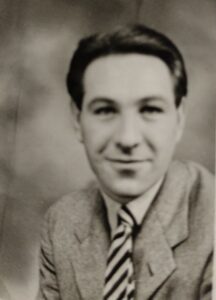
In 2025, we republished Years Not Wasted. It’s more than a memoir — it’s a witness statement. It honours ordinary soldiers who endured extraordinary hardship. It is a uniquely authentic book, told in the way it was recorded in letters and a diary at the time, rather than reconstructed from fallible memory. It was written to share the knowledge “soon acquired once war has started that the cost, in lives, in grief, in suffering, is immeasurable, and unacceptable however much one did accept it at the time.” It’s a call to remember how people like my father built their lives after war, choosing patience over bitterness, solidarity over division, peace over conflict. For my father, it was always about taking one step at a time, drawing from patience and reflection. That is the lesson I carry forward.
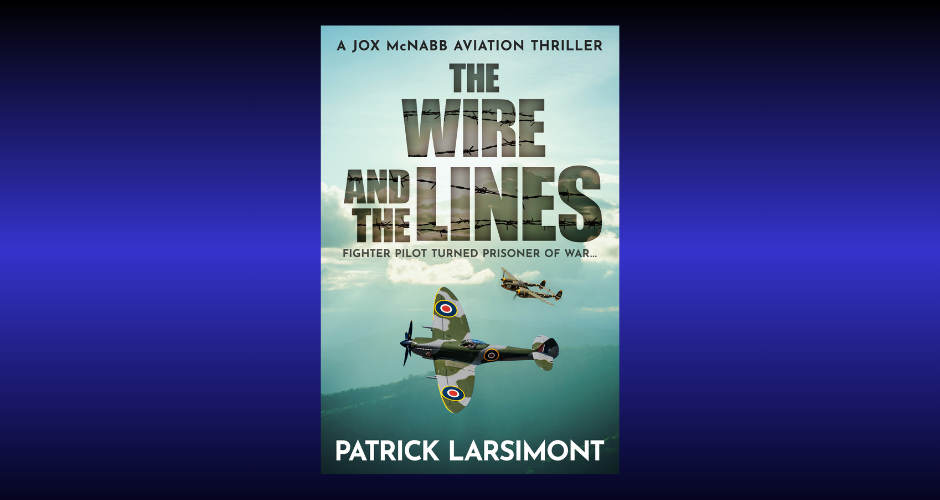
The Wire and the Lines is Published Today

Congratulations to Patrick Larsimont, whose thrilling military adventure, The Wire and the Lines, is published today!

The Wire and the Lines is  fifth instalment of the Jox McNabb Aviation Thrillers series: action-packed historical novels following a young RAF pilot during the Second World War.

Summer, 1943

When fighter pilot Jox McNabb crashes on the wrong side of the straits of Messina, he is captured by the Germans.

It seems that for Jox, the war might be over.

But Jox is never one to give up. Desperate to escape, he quickly familiarises himself with the camp and gets to know his fellow prisoners.

With punishment brutal for those that have attempted to flee previously, morale is low in the camp and there is little motivation to try and break the rules.

The war is still raging on the outside and Jox will do anything to get back to his No. 333 Squadron, the Black Pigs.

On the orders of a cruel Luftwaffe Colonel, Jox is embroiled in a scheme to use high profile POWs as human shields, covering shipments of precious artworks looted from Sicily and Italy.

Could this mission provide Jox with the means to escape? Can he blow the whistle on the stolen loot?

And can he get back in action and rejoin the war in the skies…?

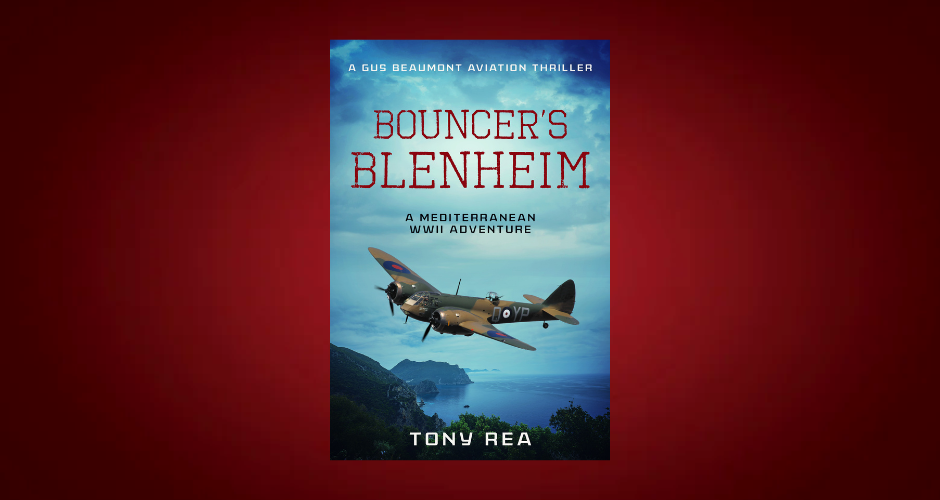
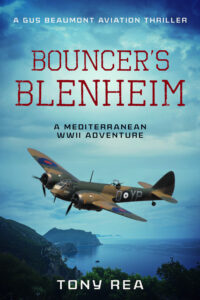
Bouncer’s Blenheim is Published Today

Congratulations to Tony Rea, whose thrilling fighter pilot adventure, Bouncer’s Blenheim, is published today!

Bouncer’s Blenheim is the second book in the Gus Beaumont Aviation Thrillers series: action-packed military novels set during the Second World War.

Europe, 1940

After surviving the Battle of Britain, fighter pilot Gus ‘Bouncer’ Beaumont has been promoted to Flying Officer and is posted to a Spitfire reconnaissance squadron.

That is, until Wing Commander Peacock creates another mission for him.

A new top-secret unit called the Special Operations Executive has been formed to gather intelligence on the enemy. And Gus is ordered infiltrate the Greek Resistance and establish their political affiliation.

Mussolini’s army have occupied Greece but the locals have been fighting back. The actions of the civilians seem promising and British Intelligence want to know where the Greeks’ allegiance lies.

To have a chance of success, Gus needs to ditch his plane into the sea and get picked up by the Resistance fighters.

But that is easier said than done … if you want to survive the crash.

Will Gus make it to Corfu in one piece? Can he persuade the Resistance fighters to confide in him?

And can he successfully evade the Italian army…?

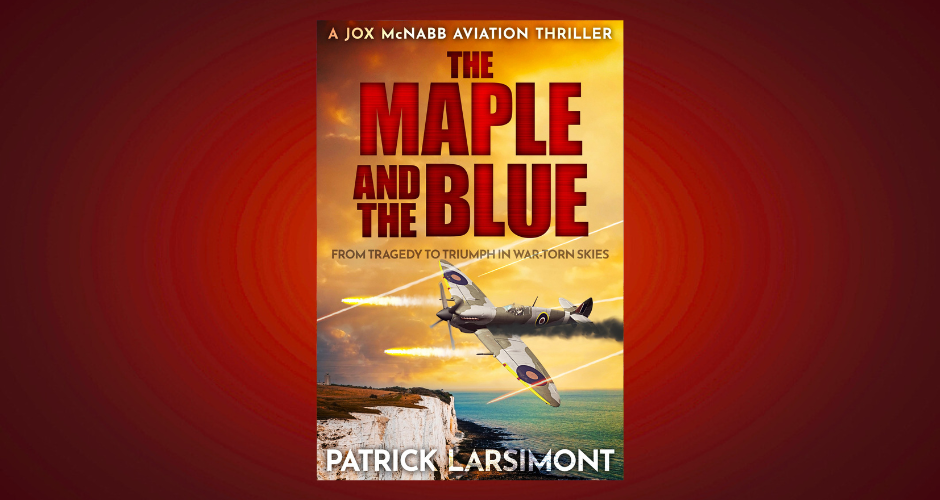
Happy Publication Day to Patrick Larsimont!

Congratulations to Patrick Larsimont, whose gripping aviation adventure, The Maple and the Blue, is published today!

The Maple and the Blue is the third book in the Jox McNabb Aviation Thrillers series: action-packed, authentic historical adventures following a young RAF pilot during the Second World War.

Spring, 1942

The Allies and Fighter Command have gone on the offensive. The French town of Dieppe is selected for the first major assault on the European continent.

But Jox McNabb and No.111 Squadron start to feel like they are being lured into a trap.

And their new leader is acting unpredictably, making them worried that he can’t be trusted.

As the largest air armada since the Battle of Britain prepares for the operation, Jox suspects their squadron leader is using the men for his own vanity and ambition.

And if the Dieppe raid goes wrong could it prove to be a devastating sacrifice.

Can Jox lead his men to victory? Will the ambitious operation be a success? Or will the squadron face disaster…?

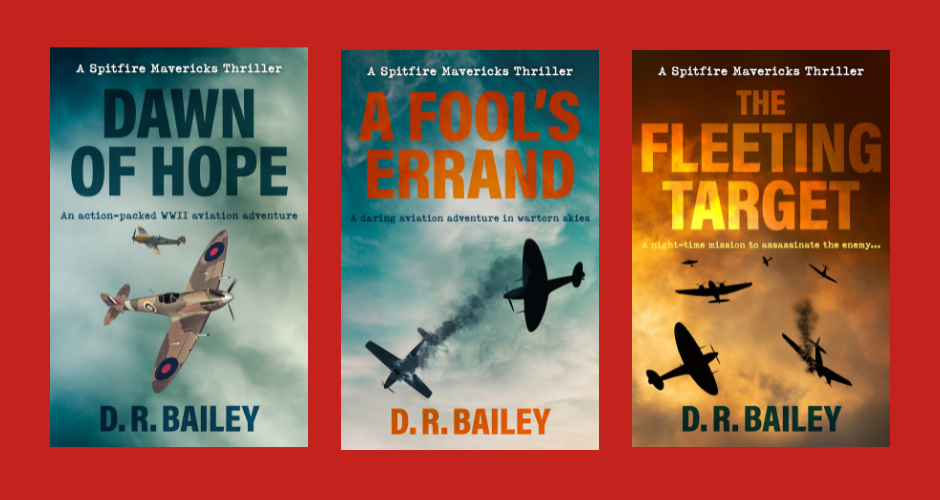
D. R. Bailey Secures Audiobook Deal with Tantor Media

We are delighted to announce that the first three books in D. R. Bailey’s absorbing World War II adventure series, the Spitfire Mavericks Thrillers, will be released as audiobooks by Tantor Media.

The books follow the progress of RAF officer Angus Mackennelly as he flies into battle while becoming embroiled in a series of mysteries.

In David’s words:

“I am very excited to be working with Tantor to bring my books to the audio platform. This is a tremendous boost for any author, and I’m pleased that it will take the Spitfire Mavericks series to a new audience. Working with Sapere has been an excellent experience and I’m very happy that the series is set to continue.

“The Spitfire Mavericks was born out of a love for Spitfires, plus the feeling of wanting to write something new and different about the air war. The series is a mixture of action, love, romance, thriller, mystery and all of the things I like to put into my writing. It is of course fictional, set within the historical context of World War II. As an author, I love to explore the ‘what if’ and weave a story from that. I am very attached to my characters too, in spite of the tribulations I put them through. Joining Sapere has been everything I had hoped. It has taken my writing career to new heights, and I’m eternally grateful for all of the support from Amy, Caoimhe, Richard and Natalie, and the opportunity to bring my work to a wider audience.”

The Fleeting Target is Out Now

Congratulations to D. R. Bailey, whose gripping aviation novel, The Fleeting Target, is out now!

The Fleeting Target is the third book in the Spitfire Mavericks Thrillers series: action-packed aviation adventures set during the second world war and featuring a team of vigilante pilots.

1941

Flying Officer Angus Mackennelly is flying over Northern France when his tank is holed and he’s forced to crash-land.

Luckily, he is picked up by the French Resistance before the enemy can get to him and, after a tense few days moving between safe houses, he escapes back to Blighty.

Reunited with his squadron, Angus expects to return to flying duties. However, Squadron Leader Bentley informs him that he’s not going to be flying sorties. He is singled out to lead a top-secret mission.

The special mission is to conduct a low flying night operation with six blacked out Spitfires to strafe a convoy carrying a top general from the German High Command and assassinate him.

Training quickly commences but a spate of unexpected enemy fighter attacks leads the team to suspect that a spy is trying to leak details of the upcoming mission to the Germans.

Angus is put on the case to squirrel out the informer and protect the rest of the men from the enemy within.

Will Angus succeed in his secret mission? Can he identify the mole?

Or will the lives of all the men in Maverick Squadron be compromised…?

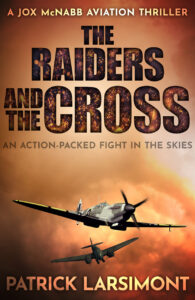
The Raiders and the Cross is Out Now

Congratulations to Patrick Larsimont, whose thrilling World War II adventure, The Raiders and the Cross, is out now!

The Raiders and the Cross is the second book in the Jox McNabb Aviation Thrillers series: action-packed, authentic historical adventures following a young RAF pilot during the Second World War.

Winter, 1940

Enemy raiders are bombing Britain’s cities relentlessly. Casualties are high and morale is at an all-time low.

Jox McNabb and the rest of No.111 Squadron train to become night fighters to take on the raiders inflicting such carnage on Britain’s cities.

But then tragedy strikes and Jox is devastated by the loss of those close to him.

Scarred physically and emotionally, he recovers slowly. Seeking a fresh start, he volunteers to serve in the turbulent skies of besieged Malta.

But this new location quickly becomes just as dangerous as the last.

Can Jox forget the tragedy that haunts him? Will he survive the murderous assault of the Luftwaffe?

And can a desperate Malta withstand the relentless onslaught?

Happy Publication Day to Patrick Larsimont!

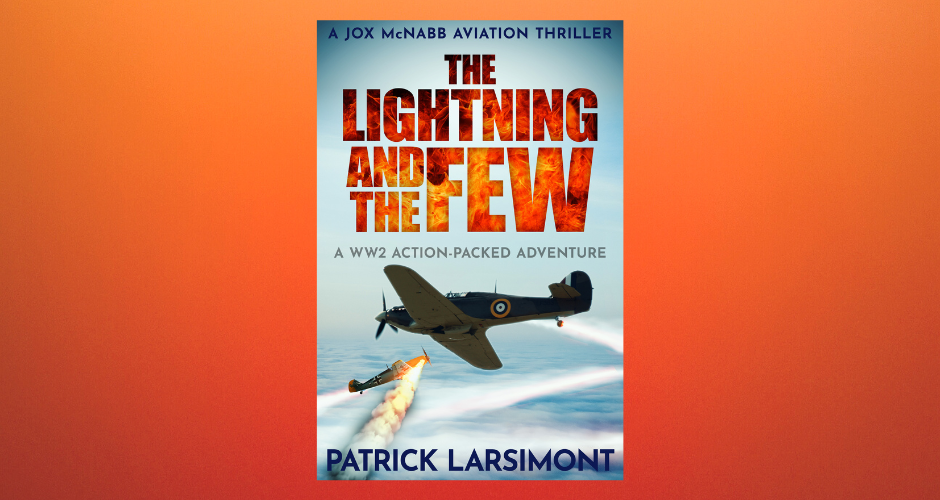
Congratulations to Patrick Larsimont, whose thrilling wartime adventure, The Lightning and the Few, is published today!

The Lightning and the Few is the first book in the Jox McNabb Aviation Thrillers series: action-packed, authentic historical adventures following a RAF pilot during the second world war.

Scotland, 1939

When Jox McNabb is expelled from school he is forced to look to his future.

Inspired by the sight of a Hurricane flying over him, he becomes determined to join the RAF.

And after basic training, Jox is posted to RAF Montrose with the growing group of other recruits he has met along the way.

Battling the bleak Scottish elements and finding themselves immediately thrown in at the deep end, the lads struggle to keep up with the training.

Many are deemed unfit for service, and after tragedy strikes, Jox questions if he’s got what it takes.

Can Jox earn his wings to face Blitzkrieg and defend his country in its hour of need? Does he have the courage and skill to become one of The Few? Will he beat the odds to survive his first battle?

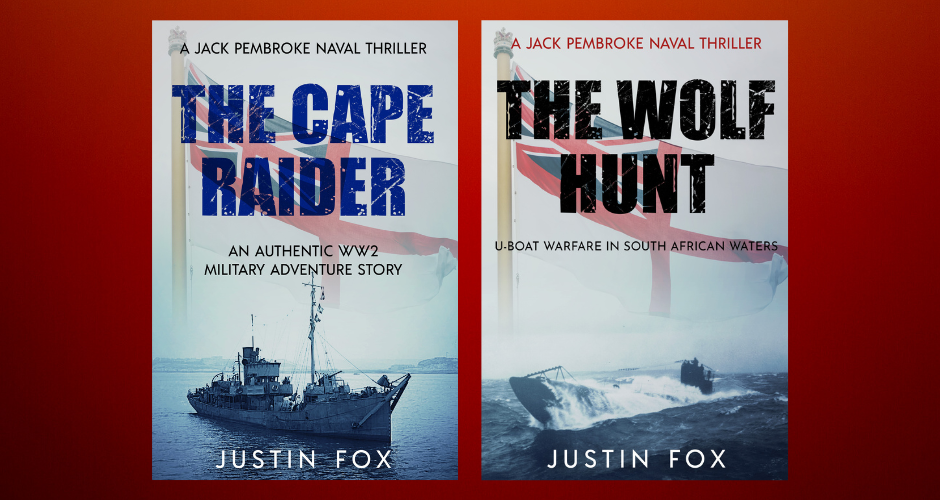
The Historical Inspiration for the Jack Pembroke Naval Thrillers by Justin Fox

Justin Fox is the author of the Jack Pembroke Naval Thriller series: authentic British Navy war stories set during the Second World War.

I grew up around boats and the sea has always been an important part of my life and my writing. Our family spent holidays in an old house in Simon’s Town, the former Royal Navy base in South Africa, and from an early age I knocked about in anything that floats: rowing boats, sailing dinghies, windsurfers and yachts. My reading as a boy was also nautically orientated, particularly naval yarns by the likes of Douglas Reeman, Patrick O’Brian, Nicholas Monsarrat and CS Forester.

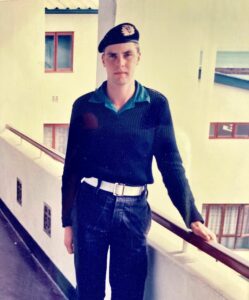
Midshipman Justin Fox, aged 17.

After leaving school, my two years of national service in the South African Defence Force were spent in the navy, based in Simon’s Town. During that period, I had six months at sea on a replica medieval caravel sailing down the Atlantic from Portugal to South Africa in a re-enactment of the voyage of Bartholomew Dias in 1487. The first book I ever wrote (never published) was the story of that voyage.

When I later joined Getaway travel magazine as a photojournalist, I volunteered for any boating assignment: sailing a brigantine around the Seychelles, a felucca down the Nile, a pirogue to Timbuktu, island-hopping by catamaran around Madagascar, taking the mail ship to St Helena Island and sailing a dhow up the Kenyan coast (which provided material for my Somali pirate novel, Whoever Fears the Sea, published by Sapere).

My Jack Pembroke series is inspired by my love of history and the sea, but I also aimed to bring to the fore a theatre of World War II that is not well known and is little written about: the fighting off the South African coast that resulted in the loss of more than 150 Allied ships.

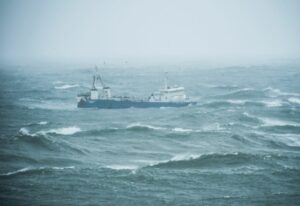
View from Justin’s flat in Cape Town.

I live in a flat in Cape Town and my desk overlooks the city’s anchorage. Watching the ships come and go each day, I often think of the war years when thousands of vessels were routed around the Cape. When a convoy was in town, Table Bay would be crammed with more than fifty ships, all of them needing protection. In place of today’s yachts and pleasure craft puttering jauntily out of the V&A Waterfront, minesweepers and anti-submarine vessels would make their daily round of the bay.

During the war, the Cape of Good Hope became a vital strategic point on the sea route around the continent and was particularly important during the North African campaign. Once Italy entered the war in 1940, the Mediterranean became too dangerous for Allied convoys, and most were diverted around the Cape. Much preparation was needed before Nazi warships made their way to Africa’s southern tip. The Royal Navy base in Simon’s Town had to be expanded and reinforced, and a fledgling South African Navy created almost from scratch.

First came the German surface raiders, then the U-boats. They attacked within sight of the coast and near the entrance to the harbours of Cape Town and Durban. There are incredible stories of heroism and cloak-and-dagger raids around our coast. For instance, one U-boat slipped into Table Bay and its captain allowed his crew on deck to see the bright lights of Sea Point (of course, all German cities were blacked out at the time). There are many apocryphal stories that surfaced in the folklore of coastal towns, such as German sailors coming ashore and playing soccer with Nazi-sympathising locals, spies passing on information about Allied ship movements and farmers replenishing U-boats around Cape Agulhas.

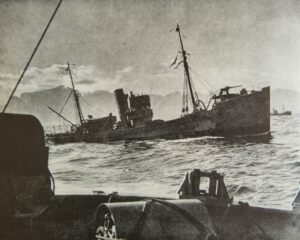
Cape Town minesweepers during WWII.

Like many South African children of my generation, I had a fascination with World War II. I built model ships and aeroplanes, played war games in our suburban garden and devoured books about the great campaigns. But I was always mildly disappointed that most of the stories were about the North, and that South Africa seldom featured in the accounts.

During my time in the navy, I began to learn a little bit about the battles fought in local waters and became interested in the exploits of South Africa’s ‘little ships’. If the actions of raiders, U-boats and convoys were soon forgotten by the general public after the war, the exploits of minesweepers and anti-submarine vessels hardly received mention at all. Yet the industrious, daily patrols by these ships kept South African ports open and took the fight to the U-boat wolf packs. It is that story that forms the backdrop to the first two Jack Pembroke adventure novels, The Cape Raider and The Wolf Hunt.

The Divided Heart is Published Today

Congratulations to Ros Rendle, whose breath-taking dual timeline saga, The Divided Heart, is published today!

England, 1975

Having recently suffered heartbreak, twenty-five-year-old Heather Rawlins is ready to give up on love. Her confidence in tatters, she seeks solace in her new job at The Beeches Care Home for the Elderly.

When Heather meets Izzy Strong, the home’s newest resident, she is surprised to find that they have an instant connection. And as they grow closer and Izzy begins to reveal her shocking past, Heather starts to question her own life choices…

Germany, 1927

With the Great War now a distant memory, Izzy is thrilled to be continuing her education in the beautiful city of Berlin. And when she meets the kind and handsome Garrit Shain, it seems that her happiness is complete.

But with the rise of the brutal Nazi party, ripples of unrest are once again spreading throughout Europe. And when war breaks out, the era of fragile peace comes to an end.

As a Jewish man, Garrit soon begins to fear for his life. Emboldened by her love for him, Izzy is determined to find a way to help Garrit and his family escape the horrors sweeping through Germany…


Click here to order The Divided Heart