How I Write by Angela Ranson

In this behind-the-scenes blog series, Sapere Books authors offer an intriguing insight into how, where and why they write.

Today, we are delighted to spotlight Angela Ranson, author of the Catrin Surovell Tudor Mysteries.

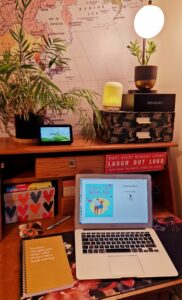
Angela’s study

I write in my study, which doubles as a playroom for my two cats. I love having their energy and curiosity as the backdrop for my writing. This is especially true because I write about a world long dead — Tudor England — and try with every scene to bring it back to life.

My books centre around the early years in the reign of Elizabeth I (the 1560s), which I studied when I earned my doctorate in sixteenth-century English history. I live in York, within a stone’s throw of King’s Manor. This was the building where Henry VIII stayed in 1536, and his suite of rooms is now one of the University of York’s libraries. If you stand at the back of the building, you can see a tiny window that leads to nowhere: it originally let some light into Henry’s specially-made toilet, or garderobe.

I love that York has these little historical treasures; I go looking for them whenever I have the opportunity. That isn’t as often as I would like, because I write between the hours dedicated to two jobs at the university. Writing is what I do to relax, to escape from the trials of daily life. Thus, you’ll often see me writing while I eat my supper, or early on a Saturday morning when I’m still in my pyjamas. Turns out, those are the hours when dreams come true.

Reflections on the Sapere Books’ Writers’ Retreat 2024

The third Sapere Books’ Writers’ Retreat took place at The Priest House Hotel, Castle Donington between the 28th and 31st of October this year.

Adele Jordan, author of the Kit Scarlett Tudor Mysteries and the Shadow Cutpurses Tudor Thriller Series, helped to organise a full programme over the four days.

In Adele’s words:

“For a lot of writers, it’s a solitary world. Whether you are struggling to complete your manuscript or are in love with your story and find it hard to step away, it can’t be denied that for many writers a lot of time is spent in a staring contest with your computer screen, and sometimes we need to step away from that screen.

“For the last three years, a group of authors from Sapere Books have come together to create their own writing retreat, and this year saw our biggest yet. Fourteen authors, who write across various historical genres, came together to talk about all things writing.

Photo of The Priest House Hotel by Andy Stephenson, used under the Creative Commons Licence

“From romance to crime, we plundered the depths — from the importance of accuracy in military fiction, to how we plan and approach clue-filled detective stories. What transpired was not only a shared enthusiasm for our craft, but the reassurance we sometimes need that we are not alone — that there are others out there with the same passion who are keen to inspire and be inspired themselves.

“This year, we had some special sessions led by writers in the group. Highlights included an insightful look into the editing process by Neil Denby, author of the Quintus Roman Thrillers Series, and a debate on the accurate use of poisons in fiction and the importance of research by Linda Stratmann, author of The Early Casebook of Sherlock Holmes Series.

Adele Jordan

“Amy Durant, Sapere Books’ Publishing Director, led a popular Q&A session with authors attending the retreat. We also covered what makes a good title, how to grab your reader’s attention from the very first line, the complications around weaving a narrative with more than one viewpoint, and a friendly critique session where people were invited to bring their own work for discussion.

“Following inspiring chats, some political debates, good food and a very comfortable bar, I was delighted to see so many of the writers come away with big smiles on their faces. Thank you to everyone who came this year and to Amy Durant too for sparing the time to talk to us. Here’s hoping next year’s Writers’ Retreat is not only just as good, but the biggest and best yet!”

Some comments from the attendees:

Ros Rendle, author of The Strong Family Historical Saga and the Moondreams House Romances: ‘Thanks to all attendees at the authors’ retreat week for making it so useful and fun. Particular thanks to Adele Jordan for all the organising, the excellent programme and for keeping us on track with such diplomacy.’

Michael Fowler, author of the DS Hunter Kerr Investigations and Dr Hamlet Mottrell Investigations: ‘[The retreat] has turned the plot of my next book completely around. And it was nice to catch up with colleagues from previous retreats, as well as meet up with new ones.’

Linda Stratmann, author of The Early Casebook of Sherlock Holmes Series: ‘The sessions really stimulated the little grey cells of the brain, and I got some insights which had me rushing off to do some writing!’

C V Chauhan, author of the Inspector Sharma Thrillers Series: ‘It was a fantastic four days! Thanks everyone and a big thank you to Adele for leading and managing the four days so well.’

How I Write by Valerie Holmes

In this behind-the-scenes blog series, Sapere Books authors offer an intriguing insight into how, where and why they write.

Today, we are delighted to spotlight Valerie Holmes, author of the Yorkshire Saga Series.

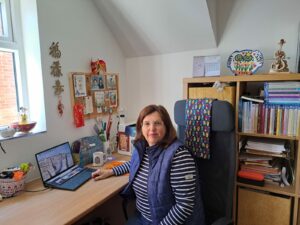
Valerie’s study.

Staring out of my study window I see a brick wall. Not a theoretical one that means I have writer’s block, which I do not actually believe in as a professional writer, but a literal brick wall.

This may not appear to be the most inspirational of vistas, but I am fine with it.

Inside my study I am surrounded by my writing workspace; my research books, my trusty printer and personal items that make me smile.

Centre stage is my lovely laptop with its two screens. One is usually displaying research sites and email tabs, the other Word documents — my current WIP.

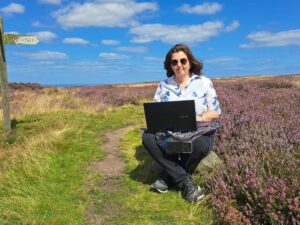
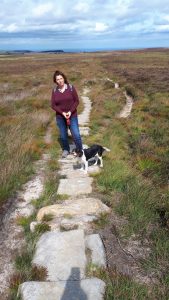
Castleton Walk, Commondale.

The brick wall rarely gets a glance because, once my laptop is on, I dive into my inner vistas. The beautiful scenery of North Yorkshire’s open moorland and coastline with its sweeping bays and rugged headlands. These are the settings against which my romantic adventures play out. Hence the Yorkshire Saga Series and my many novellas.

It is a world I am familiar with because I grew up in a bay town on the northeast coast and have happy memories of running with my dog along the open expanses of fine sandy beach, climbing the dunes which were covered with needle-sharp marram grass.

Gisborough Priory.

The area is steeped in history, from the old abbeys and market towns to the beautiful city of York. I still return regularly to explore the area: the monk’s trods that cross the moorland, the fishermen’s cottages that line the harbours and the old inns of the bay towns such as Whitby, Staithes and Robin Hood’s Bay. Then there are the manor houses and halls, each with a story to tell — inspiration for my next adventure is found in all. The darker era of smuggling provides further scope to add drama and menace.

The beauty of having a laptop is that it is mobile. I have written in cafés, on trains, on picnic tables by the sea, and in hotels — but the real work, the editing, polishing and research, happens at my desk, ignoring the blank brick wall.

I have a flexible routine, writing every day. Life happens, events happen, but the one thing that is constant is the desire to write, which never goes away — or not yet — and I hope never will so long as readers enjoy my adventures.

What better motivation is there for an author to continue to write?

My Neighbours the Celts and Romans by Alistair Forrest

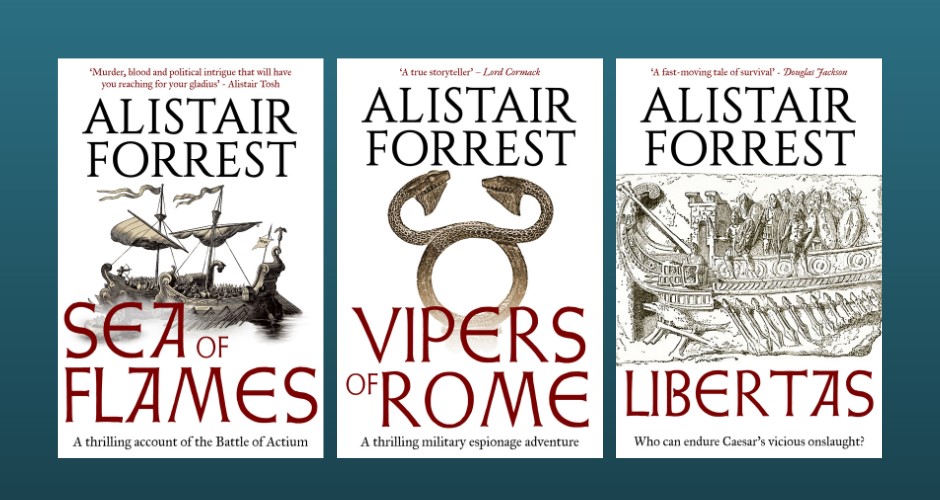
Alistair Forrest is the author of the action-packed Roman adventures Sea of Flames, Libertas and Vipers of Rome. He is currently working on a new series, The Britannia Conspiracy, set in the period during Caesar’s invasion of Gaul.

A 3,000-year-old skeleton. Photo: David Nash

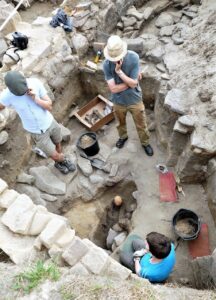
Every year I climb into old jeans, don an Indiana Jones-style hat, and dash a hundred yards down the road to assist in an archaeological dig.

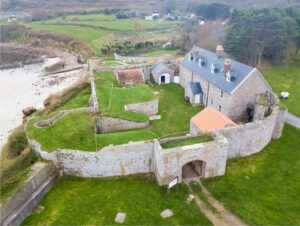
I live on the island of Alderney, which just happens to have an ancient Iron Age settlement, on top of which is a Roman village. Next to this is one of Europe’s best-preserved Roman forts, which was built to protect trade routes between Europe and Britain.

I’ve got to know both of the lead archaeologists — Dr Phil de Jersey and Dr Jason Monaghan — and confess that I’d like to know what they know, as long as it fits my ideas for a new historical fiction series.

So far I’ve struck lucky.

We know for sure that Iron Age folk lived and loved on this tiny island a few miles off the Normandy coast. We’ve found the skeletons, complete with bronze torcs and jewellery.

Our team, Dig Alderney, is bent (both literally and figuratively) on scraping away aeons of history to find the story behind these settlements. And at every layer we have been able to confirm that the Romans first came to this Channel Island in around 56 or 55BC when Julius Caesar was conquering Gaul and had set his sights on Britain, just across the English Channel.

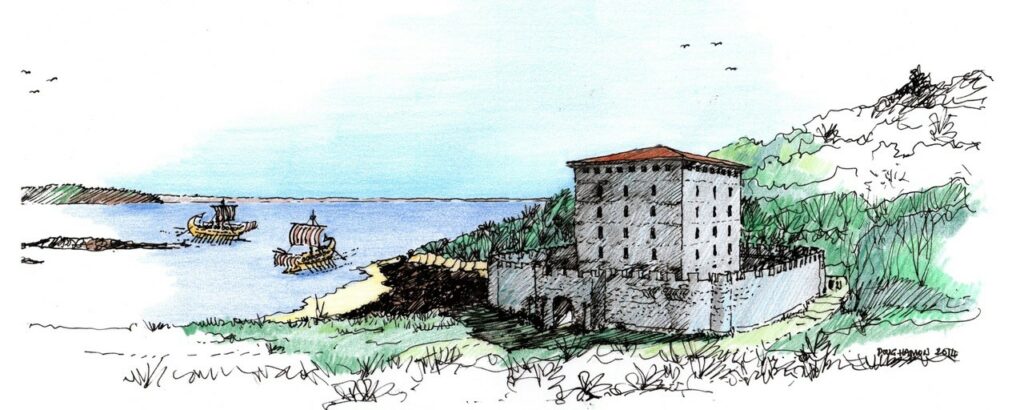
Artist Doug Hamon’s impression of the Roman fort.

Later, the Romans built a fort which has stood intact since the 4th century. Sadly, the huge central tower has long gone, its stonework no doubt used  to build medieval houses in the vicinity, and part of the south wall tumbled onto my local beach who knows when, where its parts can still be seen to this day.

The area is crowded with archaeological features. Some relate to German activity (Alderney was occupied during the Second World War) or Victorian fortifications inside and around the fort. Modern roads partly conceal what we know is an Iron Age cemetery discovered in 2019.

Two skeletons were discovered back then. That’s when I got involved after arriving on the island to write, and I was given backroom jobs like pot-washing, shovelling and making sandwiches. Just to be there was a privilege!

This is now a long-term project to learn more about the Roman and Iron Age settlement on Longis Common, a few yards from my home. How extensive is the Iron Age cemetery, and where was the village in which these people lived?

We hope to discover how far the Roman buildings extend, and if this was the site of an earlier Roman fort that predated the 4th century one, or the vicus municipal administration settlement that grew up close to a fort, or a purely civilian village?

Of course, I already know the answers because they’re in my head, as you would expect from an adventurous historical fiction author.

Alderney’s Roman fort today.      Photo: Alan Perks

I know I’m on to a winner. Take this exuberant comment by Dr Monaghan: “Finds include pottery, metalwork, glass, building materials, human bones and food remains including animal bones. The finds need to uncover more about the people who lived and were buried there. We want to learn about their lifestyle and how ancient Alderney was connected to the wider world.”

I’d call it making the facts fit a good story, and I’m already well into book two of The Britannia Conspiracy series. This series begins with coded messages from Julius Caesar to attend a secret conference on this island to plan his expeditions to Britain.

Should it be a full-on invasion, or a trade expedition? Either way, he’s in for some surprises, especially as far as the local Celts are concerned!


How I Write by Daniel Colter

In this behind-the-scenes blog series, Sapere Books authors offer an intriguing insight into how, where and why they write.

Today, we are delighted to spotlight Daniel Colter, author of the Knights Templar Thriller Series.

Writers are a strange breed.

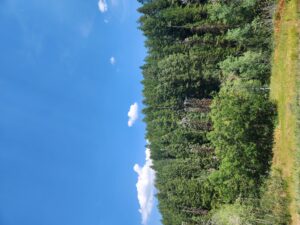
The view from Daniel’s window

We invent friends in our heads, decide how they speak, what they wear, where they go, then spend countless hours conversing with them. No two writers share the same head-friends, oddly, despite running in the same  social circles. Neither do any two writers develop a story the same way.

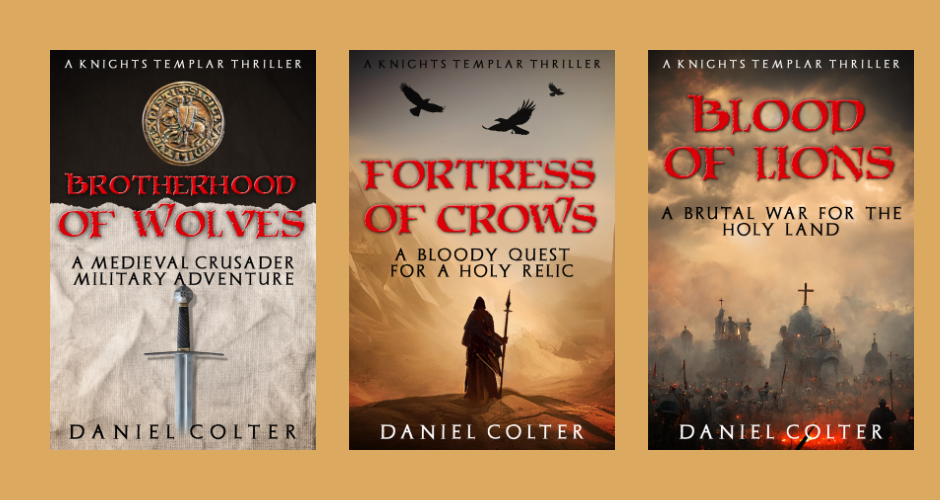
Specific routines keep us on track, or don’t (looking at you, internet), and each work proceeds at its own pace. Most writers are one of two species: a plotter or a pantser. A plotter maps out each scene, chapter, and verse before putting fingers to keyboard. Pantsers fly by the seat of their pants, beginning with an idea, then writing towards a vaguely defined ending. I mapped out my first novel, Brotherhood of Wolves, but tossed the map aside by chapter 3. I found pantsing more rewarding, and still do, because much of the fun (and frustration) is writing myself into a corner and finding a path out.

My novels are historical fiction, where history provides setting, culture, and place. History can also frame the plot. Story is given precedent over history, however, because the goal is to entertain, not to educate. One or more characters are historical persons and the fictional protagonist lives within their orbit. Historical fiction should stay true to history and the fiction takes flight where history grows murky — which it usually does, especially the further back in time one travels. The murk is where the fun begins, in my opinion, and its where the what if fleshes out the story, where the pantser finds out what happens to his head-friends.

Writers are also strange creatures.

Some writers have habits, like a dog that circles exactly three and a half times before lying down, and these rituals are intended to fuel creativity. Isabel Allende started her first novel on January 8, 1981, and that day became a ceremonial start date for all her subsequent works. The poet Friedrich Schiller kept rotten apples in his desk and, when his mind needed a jolt, he would give one a sniff.

My writing rituals are more mundane and less … smelly. I start with two (not one, not three) cups of coffee. I keep a stuffie of Curious George on my desk, in honour of Curious George Rides a Bike, the first book I read cover-to-cover. I say hello to George each morning.

Ritual also comes from my father. He was a painter and writer and used a second-hand desk as his art space. I acquired that desk, set to rehabbing it, but foolishly sanded the top to expose wood veneer over composite. I left his dried paint splashes along the edges, though, and I touch them when I write. They make me think of him, and thinking of him puts me in a creative mood. I told him I had begun writing historical fiction, his favourite genre, but he passed away before reading Brotherhood of Wolves. I often wonder what he would think of my series, and suspect he would be pleased (except for the part where I ruined his desk).

My Writing Space by Patricia Caliskan

In this behind-the-scenes blog series, Sapere Books authors offer an intriguing insight into how, where and why they write.

Today, we are delighted to spotlight contemporary romance author Patricia Caliskan.

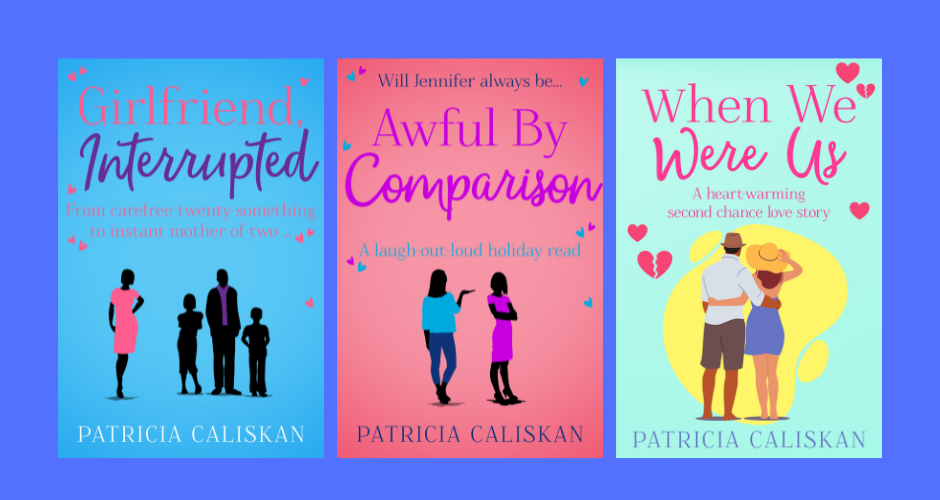
I wrote my third novel, When We Were Us, at my bureau, which has become my writing enclave. Something about opening the bureau desktop gives me a sense of immediacy which speeds the writing along. I write upstairs, free from distractions, except for my dogs who stop by to visit, but basically closed off from everything except the world I’m creating.

Patricia’s bureau

I never thought I had any writing rituals until people began asking the question. I realised that I have rituals in general. All three of my novels were largely written at night. Once the demands of the day are over, night-time is not only the perfect fit in a practical sense but allows me the space I need to daydream on behalf of my characters, and fully immerse my thoughts in the world of the book.

I’m a huge advocate of those tiny details which promote wellbeing, even when I’m not writing. So, before I get back to my latest manuscript, I mix essential oils for my diffuser, which works like magic for changing up the mood, and I set a timer to monitor my working hours.

I find having scheduled time slots super helpful. I can show up and do the work and know exactly how much time I’ve spent on the novel, which is reassuring when I’m trying to find enough time to work on a project.

I switch on my moon light, as I call it, a perfect orb of white light, and always freshen up my perfume before I write. I think of perfume as a superpower. A favourite scent signals that we’ve got work to do and someplace else to be.

I usually start by reading over where I left off to reacclimatise. I try not to spend too much time agonising over a word choice or a sentence formation until I’m at the editing stage. I have a natural tendency to edit as I go, wanting the work to be as close to the final manuscript as possible, which can hinder the drafting process.

When it comes to first drafts, I remind myself of my own advice: to just get it all down. I need solitude to do that, and sitting at my bureau, I feel enclosed in the world of the book. When it comes to editing, I usually end up inadvertently making a playlist to score parts of the novel or characters, which I find helpful with tone and pace. Once I have a completed manuscript, I print the work out and read it aloud, because if the writing doesn’t sound right, it isn’t right, and needs reworking.

Writing fiction requires both discipline and detachment, and my little bureau space provides just that!

How I Write by C.P. Giuliani

In this behind-the-scenes blog series, Sapere Books authors offer an intriguing insight into how, where and why they write.

Today, we are delighted to spotlight C.P. Giuliani, author of the Tom Walsingham Mysteries Series.

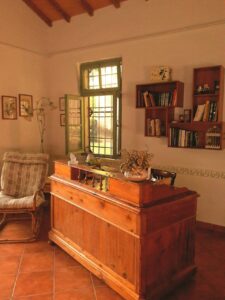
C.P Giuliani’s garden house

Every year, as soon as summer comes, I move my writing to the garden house. It’s not really cooler, as temperature goes, but it feels summery and pleasant. I love the tall ceiling, the terracotta floor, the desk that used to belong to my great-grandfather, and the view onto the garden. There’s a little pond outside the French windows, and the birds bathing or drinking are, I confess, something of a distraction — but they also provide a cheerful break whenever I find myself stuck. A paragraph refusing to take the right shape? A character mutinying? A dull passage? I step away from the desk and watch while the blackbirds play in the water — and, more often than not, a solution will suggest itself.

For all its rustic pleasantness, the garden house has decent Wi-Fi — which is rather essential when my pile of reference books is not enough to confirm some detail — and is equipped with an electric kettle to make cup after cup of tea, which is a fundamental of my writing method.

In truth, beyond the insane amounts of tea, I have little in the way of a writing routine. Working in theatre means that my hours are flexible. Sometimes I write in the morning, sometimes very late at night, sometimes both; sometimes I must snatch the odd hour here and there, between a rehearsal session and a meeting with the techs. One thing I do is to always keep a notebook with me. Through the years, I’ve learnt to keep a dedicated notebook for each project, beside a general one for everything and anything: notes, stray ideas, snatches of dialogue overheard or imagined, lists, questions… It’s the general notebook that I carry around, so I can jot down anything that occurs to me — to be transferred to the relevant one later. This means that I do some of my writing at the theatre, at the vet’s, as I stand in a queue at the Post Office…

My family, friends and colleagues have developed a high degree of amused tolerance for my ‘Notebook Moments’, when I drop whatever I’m doing to take a note; strangers are occasionally a little put out until I explain that, for one thing, I’m prone to forgetting what I don’t write down and, for another, sometimes an idea will present itself in a very iridescent shape, little more than a flicker of colour under the surface of the water — and will need to be recorded quickly and thought through in writing, at least a little, if it’s to be of any use.

So to recap, I’m absent-minded, easily distracted, forgetful, and can’t keep a routine… I suppose it’s no wonder that a quiet, pleasant place like the garden house is important to my writing process.

Becoming a Novelist is a Matter of History by David Field

In this behind-the-scenes blog series, Sapere Books authors offer an intriguing insight into how, where and why they write.

Today, we are delighted to spotlight David Field, author of numerous historical series including the Bailiff Mountsorrel Tudor Mystery Series and the New World Nautical Saga Series.

I’ve always written stories, even as a child, then I progressed from childhood scribbles to more serious attempts at literary glory on an old upright Olivetti typewriter (one of those with a red and black ribbon, if you’re old enough to remember) when my handwriting graduated from ‘untidy’ to ‘execrable’.

Reluctantly I then honoured my mother’s wish, and my father’s insistence, and got a ‘real job’ as a criminal trial lawyer, which was about as relaxing as standing on one leg on the top outer ledge of The Shard in London, without the reassurance of a safety harness. To relieve the stress I decided to start working on a novel — but what should I choose for a genre?

A good friend of mine who already earned a precarious living as a novelist was insistent that one should always write about things that one knows, and by this stage I knew two things outside my professional straightjacket — some history from my schooldays, and the streets of my home town, Nottingham. During the final years of my working life I spent stolen moments imagining the lives of those living in Nottingham during the Luddite Riots, and In Ludd’s Name was eventually published by a boutique publishing house owned by an old school friend.

Bitten by the bug, and buoyed up by having finally been published, I grew ambitious, and searched the history books for possible storylines, most notably from that most colourful of periods of English history, the Tudor era. The literary world seemed to be awash with Henry VIII, Anne Boleyn, Elizabeth I and even ‘Bloody Mary’, but two seminal characters from that era seemed never to have received much attention from novelists.

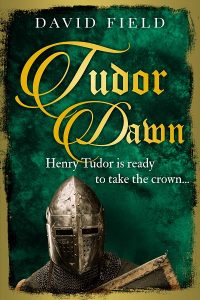
First was the progenitor of the Tudors, the boy from Wales, Henry VII, and I climbed inside his head to bring to the pages that followed his boyhood imprisonment in a bleak castle in South Wales, his youthful exile in Brittany, his triumphant return at the head of a ramshackle army that deposed Richard III at Bosworth, and his love match with Elizabeth of York that brought the Wars of the Roses to an end in the nursery rather than on the battlefield. To my delight, and secret surprise, I found a publisher — Sapere Books — and Tudor Dawn was launched.

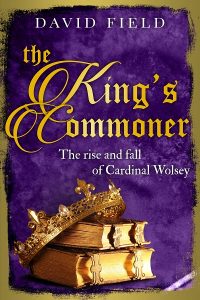
Then — unbounded joy and amazement! — Sapere wanted another one, so this time I focused on a butcher’s son from Ipswich who rose from obscurity to become Archbishop of York, Papal Legate for life, Lord Chancellor and the diplomacy coach of choice of Henry VIII. Cardinal Thomas Wolsey’s spectacular downfall was just as dramatic, and The King’s Commoner was published, as testament to the fact that I had a second novel in me.

Dozens of titles have since been published, all by Sapere Books, and all ‘historical’ in genre. As one of the characters in Alan Bennett’s delightful creation, The History Boys, says of history — ‘It’s just one ******* thing after another’, and so it has been for me.

How I Write by Neil Denby

In this behind-the-scenes blog series, Sapere Books authors offer an intriguing insight into how, where and why they write.

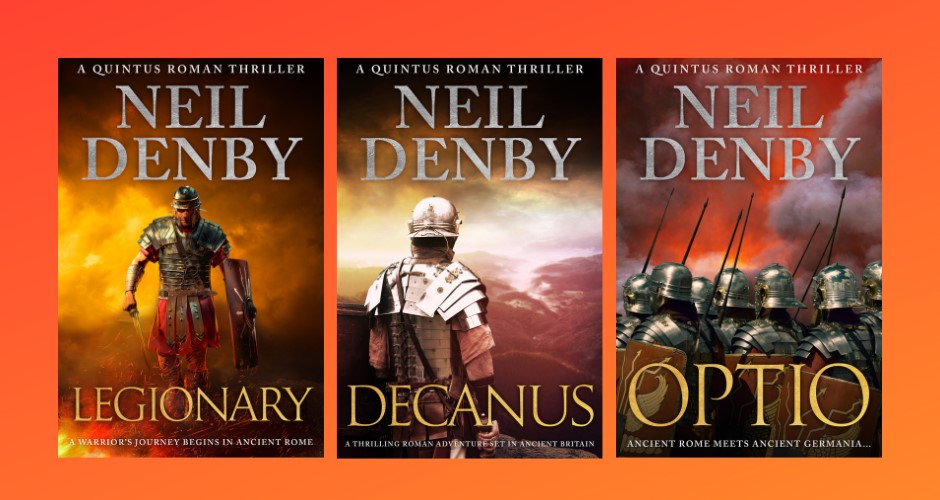
Today, we are delighted to spotlight Neil Denby, author of the Quintus Roman Thriller series.

Inspiration can come at any time of the day or night, but I find that the small hours are awash with ideas — plot lines, character development, a resolution to a particularly tricky scenario — so it is important that I keep a notepad and pencil by the bed. It may be old-fashioned but it is also reliable and has the advantage of not involving bright screens.

Frustratingly, come morning, I cannot always decipher what I have written down, but sometimes there are gems. These may be character or plot evolution, or perhaps just phrases, but I know I would have forgotten them completely if I had not made a note.

While out walking — an excellent way to clear the brain of fog — I defer to modern technology and record voice notes on my mobile phone. The same principle applies — if there is no immediate record, the thoughts can be lost.

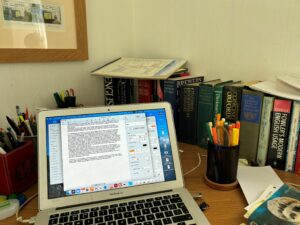
These brief lines are later transferred to a laptop. This is strategically placed in a corner of my study so that I am not distracted by the view outside the window. A row of reference books and one of my favourite possessions, an original Steve Bell cartoon, are all that I have for company. It also helps if I can visualise a character or a place, so I keep a sketchpad on my desk where I can create basic images — maps, plans, sometimes the progress of marches or battles. These drawings help to maintain consistency and authenticity.

This is my primary space, where the words are typed up. I add to them, enhance them, contextualise them, read them back. I often discover that I have used a particular word or phrase twice or more. Or if there is something I’m not sure about, I look it up. The reference books help to straighten out facts and also to find alternative words. Roget’s and Brewer’s and Fowler’s and Chambers provide a wealth of information unmatched by an American-leaning internet. I admit to slipping down rabbit holes of etymology and semantics, but find it strangely satisfying.

I always have to read what has been written, in context with the book so far. Traditionally that would have meant printing the manuscript out and sitting down with a pencil. Happily, that is no longer the case. Instead (thanks to everything going up into the Cloud) I can now read and review on my iPad. This means I can lounge in a chair, or sit outside, or read whilst travelling. So it is more a case of recreating the experience of the reader to see how and if things work.

Of course, there are edits, and actual printouts sometimes, but that is basically it: pencils and pads and technology.

Oh technology, where were you when I had all those essays to write at school?

Sapere Books Sign Three Dual Timeline Novels by Laura Martin

Following the success of her Jane Austen Investigations series, we are thrilled to announce that we have signed a new dual timeline series set in the modern day and Tudor times by Laura Martin.

In Laura’s words:

“I am absolutely delighted to be writing a new dual timeline series for Sapere. With threads of the present day and Tudor times, as well as hints of the occult, the books are fantastically interesting to research and write. In the present day the series follows two friends — Alice and Lydia — whose lives are ripped apart when Lydia suffers a catastrophic accident whilst they are playing with a Ouija board. Alice tries to move on with her life until it becomes apparent Lydia’s condition is linked to an unsolved mystery in the past.

“Vivacious and charming, Bessie Blount is an immediate favourite at court when she joins the household of Queen Katherine of Aragon. With her skill at singing and dancing she soon catches King Henry VIII’s eye and quickly has to learn how to navigate the intrigue and politics at court. When she falls pregnant with the King’s son she begins to wish for a normal life, but the price she has to pay is watching her firstborn son grow up from afar. She cannot guide Henry Fitzroy through the dangerous world of the Tudor court, and cannot stop worrying about her eldest son’s safety.

“The happenings of the present day and the Tudor times are inextricably linked and only by unravelling the mysteries of the past can Alice have any chance of saving her friend.

“I am thrilled to be working with Sapere again on this new series. The whole team are wonderful to work with and have a way of making the complicated process of producing a book appear seamless.”

In the Jane Austen Investigations series:

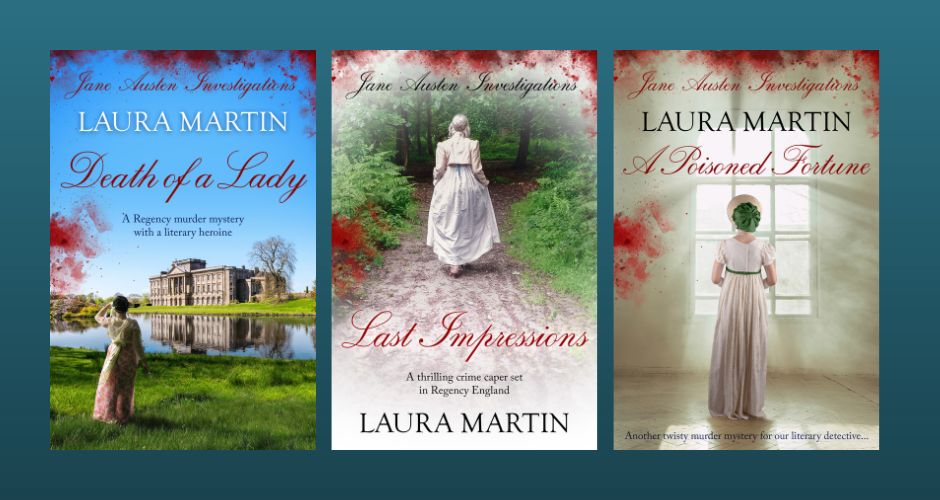
Death of a Lady

Last Impressions

A Poisoned Fortune

The Body on the Beach

Sapere Books Sign Three Tudor Suspense Novels by Kate Robertson

We are delighted to announce that we have signed a new series of Tudor mysteries by Kate Robertson.

In Kate’s words:

“The series follows Anne Winston, a lady at the court of Queen Elizabeth I. Quiet and unassuming, she is a keen observer and has a skill for puzzling out problems.

“When we first meet Anne, she has just returned to court from burying her husband. She soon learns that her nephew has been arrested for sedition and must race against the clock to prove his innocence while also being drawn into the emerging spy network under Sir William Cecil, the Secretary of State.

“As the series progresses, we will see Anne uncover intrigues and conspiracies, using her powers of observation and ability to go unnoticed in most situations. I wanted to write a story about an older female protagonist who discovers the power of her voice and finds her agency in a complicated world, all while trying to right wrongs and find justice for the forgotten.

“I met Amy Durant at the Historical Novel Society Conference in San Antonio in 2023. I initially pitched her a different story but when she asked what else I had, I knew I needed to share Anne, my most personal protagonist, entrenched in the Tudor era, which is my first historical period love.

“I’m excited to work with Sapere — it’s inspiring to work with a publisher that knows and loves historical fiction so well.”

Author Q&A with Stephen Taylor

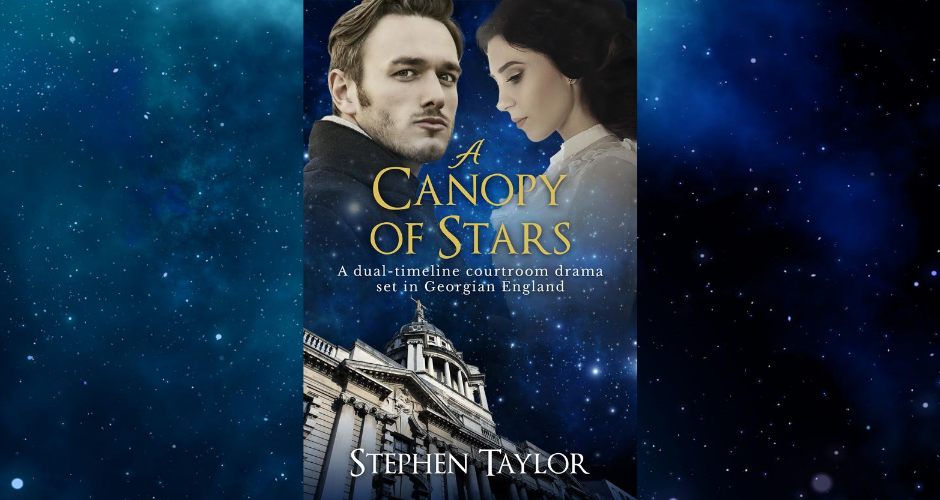
Stephen Taylor is the author of A CANOPY OF STARS, a thrilling historical 19th century saga stretching from the legal courts of Georgian London to the Jewish ghetto in Frankfurt.

Hi Stephen! Welcome to the Sapere Books blog. Could you tell us a bit about what first got you into writing?

My addiction has been with me for over twenty years now. When I was younger, if somebody told me a good joke, when I retold it it was twice as long, embellished, the story enhanced, the characters fleshed out. With me, it was never just about and Englishmen, an Irishman, and a Scotsman. It was an Englishman in a bowler hat with a monocle, an Irishman in a donkey jacket with a pint of Guinness and a Scotsman in a kilt with a set of bagpipes (and yes I know that this is stereotypical).

Tell us about where you write and your writing habits.

I started by writing during my lunchtime at work, but now I write in my home office. I keep a working week, Monday to Friday and write for two and a half hours a day. I seem to need that discipline.

What part of the writing process do you find most difficult?

Probably research: it’s a double edged sword — part good, part tiresome. The rewrites are also tricky, as you can edit forever, endlessly trying to improve what you have written. I aim to stop after five rewrites.

Do your characters ever seem to control their own storyline?

The received wisdom is that you determine your storyline and not let your characters deviate from that. However, after I develop my characters, they tell me where they want to go, what they want to do. I follow them, and my stories are character led. I still have a structure in my mind — A to B, but the characters say how I get there.

Do you find it hard to know when to end a story?

Not usually. I have a prompt to myself that sits just below the line I am typing. It reminds me to keep some control over the characters.  It says: INTRIGUE — CONFLICT — CLIMAX — RESOLUTION. i.e:

Open with a big question or hook: INTRIGUE. Then you have the problems your hero is up against: CONFLICT. This builds to a CLIMAX. This is followed by the RESOLUTION.

What is your favourite book?

If you ask me this next week, you may get a different answer. I would say my favourite book is To Kill a Mockingbird by Harper Lee. My favourite character is Uriah Heep, from David Copperfield. Dickens’ image of him is wonderfully unpleasant — he’s so slimy.

What book do you wish you had written?

Anything by Norman Mailer. As a writer, he is so far above me. He’s much more than a storyteller.

Tell us something surprising about you.

I was brought up in Manchester, but I was born in Yorkshire. My mother traveled back to Yorkshire so that my birth there would give me residential status to play cricket for Yorkshire — nobody ever believes that, but I promise that it’s true. Unfortunately, it was a feat that I never achieved, the White Rose County being unappreciative of my cricketing skills.


Preorder A CANOPY OF STARS here!

Sign up to our newsletter for deals and new releases.

Author Q&A with Keith Moray

Hi Keith. Welcome to the Sapere Books blog!

Can you tell us a little bit about what first inspired you to write the Torquil McKinnon Investigations?

Well, I have been a crime fiction reader most of my life and always wanted to be a crime writer. I began writing children’s stories for The People’s Friend when I was a medical student at the University of Dundee. Then when I qualified, I wrote for the Kingston-upon-Hull’s dial-a-bedtime story service, until I had to give it up and focus on my medical practice. One of my forebears was a piper, and I thought that if I ever did write a crime novel it would have a piper in it. The germ of an idea was there.

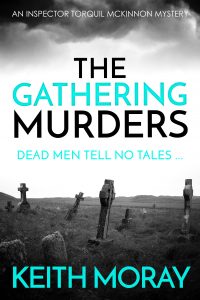
A few years later I started having bagpipe lessons from a good friend and golf partner, who happened to be a retired pipe major. So, actually playing the pipes seemed to germinate the idea. Then we went on a family holiday to Tobermory in Mull and the whole thing seemed to unfold before me. A remote Outer Hebridean island with a primitive golf course and the smallest police force in the country, the Hebridean Constabulary. The ingredients were there, it just took a visit to a Highland Gathering on the mainland and I started to plot The Gathering Murders.  The characters grew on me and the series just developed.

What was your reason for creating the fictional island of West Uist instead of choosing a real Scottish location?

I suppose I just fell into it. I had written several westerns long before I ever went to the USA, so I just started writing, amalgamating my own memories into my own wee island in much the same way that I had created towns and counties in the Southwest of America. I wanted West Uist to be Scotland in miniature. This is why the terrain varies, there is a great variety of surnames (far greater than in the Outer Hebrides) and I have introduced a different theme with each novel.

What are your typical writing habits? Do you work on a set schedule each day? Do you plan thoroughly before you begin writing?

I am an opportunistic writer, so I write when I have done all of my essential chores for the day, such as looking after my small practice. I am also a medical journalist and have a written a weekly column in the local newspaper for 38 years, so I can identify with Calum Steele, the editor of the West Uist Chronicle. Because I used to write short children’s stories and now write a newspaper column, I tend to write in short segments. It has become part of my writing psyche. This suits my opportunistic method of working.

I carry a notebook everywhere and am forever jotting snippets down, to be incorporated later. I plot late at night in longhand. When I am actually writing then it will be on the computer, and that can be literally any part of the day.

I do plan it out and have never felt brave enough to just type and see where the story goes. I have  a method of writing a novel that seems to work for me. A crime novel has so many elements to it: main plot, subplots, clues and red herrings. I work out each chapter and have a fair idea of what has to happen in each one.

What part of the writing process do you find most difficult?

Plotting is never easy. I go around asking myself ‘what if?’ That’s why I need my notebook handy. I would say it is 80 per cent of the work in writing the novel.

When I am working on the plot, I often play the pipes like Torquil (except he is a virtuoso and I am so abysmal that I am forbidden from playing if there is anyone else in the house). And I also putt golf balls across the landing into my study or chip balls onto the settee. Strangely enough, it facilitates ideas.

In terms of the visceral structure of the novel when I actually write, the middle part is the hardest for me. The first part is scene setting, putting people in the right places and ensuring that the crime happens early on. The middle part is about planting the clues, the red herrings and keeping the subplots going without letting them take over. The end part I already know what should happen, so the middle is about ensuring that you have put everything in place so that you can build it up for the final denouement.

Do you always know ‘who done it’ before you start drafting each novel?

Yes, in virtually all of my books I know who, where, when and how. But, I have to admit that I have on one occasion changed my mind while well into the story. It seemed to work, but I’m saying no more!

The sixth book in the series is due out soon – will that be the end for Torquil, or do you have ideas for more mysteries?

Gosh, I am honestly not sure. I would like to think there will be more, but I am working on other projects at the moment, which I am excited about. Torquil may not have finished with me yet.

And finally – tell us something surprising about yourself!

One of my hobbies is conjuring and I am a paid up member of the International Brotherhood of Magicians.


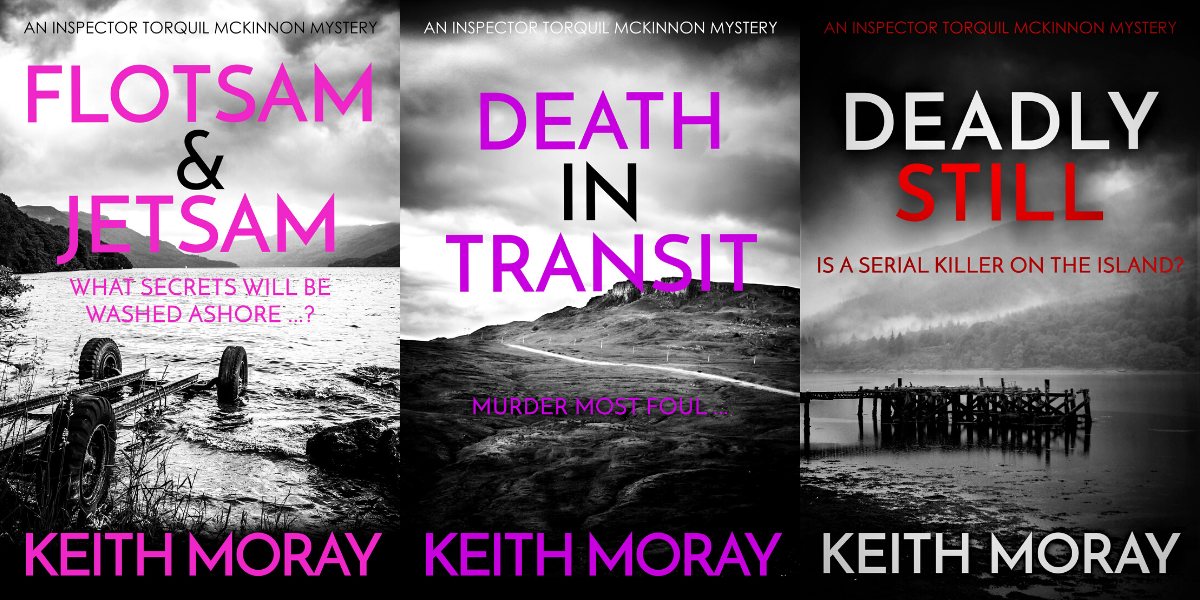
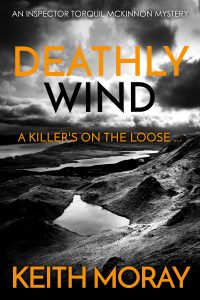
Click here for more information on Keith Moray’s Torquil McKinnon Investigations series.

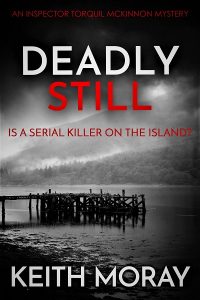
 THE DEADLY STILL, book five in the series, is available to preorder now.

GET THE DEADLY STILL HERE!

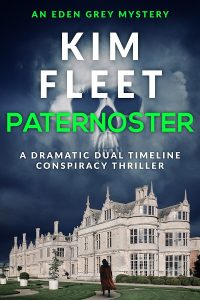
Author Q&A with Kim Fleet

Kim Fleet is the author of the Eden Grey Mystery Series, coming soon from Sapere Books.

Hi Kim! Welcome to the Sapere Books Blog!

What first got you into writing?

I started writing when I was 9. My dad gave me a book called Write Your Own Novel. It was the first time I’d make the connection that the books I loved reading were written by real people, and I thought I’d like to have a go. Dad also gave me a hardback notebook with beautiful marbled endpapers to write in. I filled it with large, round writing; enormous speech marks; and classic lines of dialogue such as, “Hello, Queen Elizabeth the First, would you like a cup of tea?”

What are your typical writing habits?

All my planning is done longhand. I write out character lists, character portraits, and scene outlines with just enough information to get writing but with enough space for the story to grow on its own. I also draw maps of places and maps of connections between characters: this shows me instantly whether I’ve got enough material for a full novel or if I need to come up with another subplot. It helps to avoid the dreaded soggy bit at 30,000 words in. I do a lot of the planning in cafes as I like the buzz of people around me (and the cake). When it comes to writing, though, I use a laptop and sit up in bed to write with the radio on in the background. It’s terrible for my back but does mean I eat less cake.

What part of the writing process do you find most difficult?

The first three chapters are always a nightmare, mostly because I’m still feeling my way into the novel and don’t know the characters fully yet. Those chapters will be rewritten time and time again. Once I got 30,000 words into a novel, realised I’d got the wrong character as the murderer, and had to scrap the whole thing and start again.

How much research do you do?

Every novel requires some research, whether it’s on places, historical detail, or forensic procedures. Research is so absorbing it’s easy to get lost in it, so I discipline myself to do enough to feel confident to start writing and no more. During the writing process, if I realise I need to research something, I write it on the manuscript and come back to it once I’ve got a complete first draft.

Do you ever find your characters controlling their storylines?

Absolutely. The characters become incredibly real, not only when I’m writing but during ‘normal’ life, too! I often have a voice chuntering in my head as I walk round the supermarket or when I’m gardening. In recent years, in addition to hearing characters I’ve started to be physically touched by them, too. It sounds bonkers, but sometimes when I’m in the car I can feel my character’s knees poking into my back. I think I need to create characters who are a bit shorter.

Do you ever feel guilty about killing off characters?

It’s very hard to kill off some characters, but I think that’s necessary to the story. In crime, there has to be something at stake, an offence against society that we care about and want the sleuth to avenge or solve. If I don’t care who dies, if it doesn’t hurt me while I’m writing, then there’s no power in the set-up and nothing for the sleuth to put right.

Do you find it hard to know when to end a story?

All the time. I either stop too soon or drivel on for too long!

Which book do you wish you had written?

Red Joan by Jennie Rooney. It’s a crackingly good read. It’s the book I always recommend to friends when they say they don’t know what to read next.

Tell us something surprising about you!

I can sing ‘Three Blind Mice’ in the Aboriginal language of Pitjantjatjara.


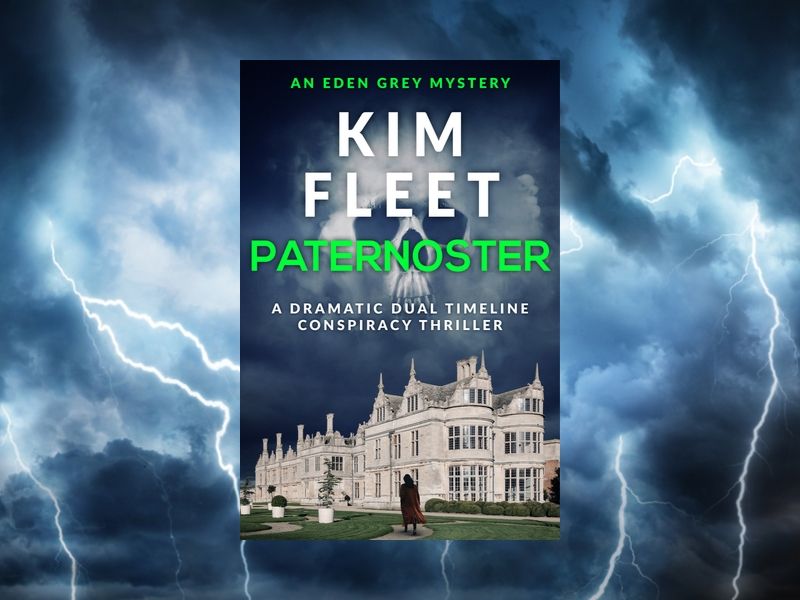
Paternoster, the first book in the EDEN GREY MYSTERY SERIES is available to pre-order now.

GET PATERNOSTER HERE!

Author Q&A with Patricia Caliskan

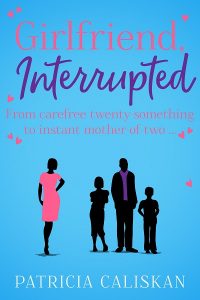
Patricia Caliskan is the author of two romantic comedies: Awful By Comparison and Girlfriend, Interrupted.

Hi Patricia! Welcome to the Sapere Books blog!

Can you tell us a bit about what first got you into writing?

I wrote stories from about the age of six. I collected stationery, pens and pencils, and spent hours at my miniature desk, making ‘books’ for the family. Beverley Cleary’s Ramona series was a huge inspiration to me as a little girl.

What does your typical ‘writer’s day’ look like?

A typical writing day looks like writing through the night. I’ve always been slightly nocturnal; that’s when I get most of my ideas and can be totally focused. I have a 4 a.m. cut-off and wake up completely zooped to read and edit the work. I have a few places I gravitate towards throughout the house. My latest project is basically happening in the kitchen, so there’s been a lot of snack breaks with this one.

I drink coffee on-tap and usually have a playlist on the go. No rituals as such, but candles signify ‘writing time’. That’s about as ceremonial as I get.

What part of the writing process do you find most difficult?

My challenge seems to be plotting from about three-quarters of the way through to the ending. It’s incredibly exciting to start a project, and I know how each story ends – until I begin writing. The characters and storylines naturally evolve, so my plotlines tend to evolve too. It’s a bit like using Sat Nav. I know my destination, but don’t always take the most straightforward route. 

Do you find it hard to know when to end a story?

Absolutely not! There’s nothing like typing ‘The End’ after I’m 100% satisfied I’ve tied up every strand of the story, and done the best work I can for the reader. It’s the best feeling.

How much research do you do?

There’s research involved in every book. Luckily, it’s one of the reasons I enjoy the process. The character of Lara in Awful by Comparison was based on reports ahead of the #metoo movement, and Gia Carangi in particular. The subject of step-parenting in Girlfriend, Interrupted was something I personally experienced, but I visited online forums to make the dynamic as relatable as possible. I’m currently learning about the psychological effects of being widowed, and floristry, so you could say it’s pretty varied.

How real do your characters become and do they ever seem to control their own storyline?

My characters absolutely dictate their fate. Their voices can become very different to how I initially heard them. Listening to certain nuances and spending time with them, they’re full of surprises. It’s kind of like developing a friendship, really. My understanding of them deepens over the course of the novel.

What are you working on at the moment?

I’m currently working on my third novel. It has an ever-changing title, but I can say with certainty that it’s set in the fictitious address of Arkin Avenue, and tells the stories of a great bunch of characters. I hope you’re going to love them.

Which book do you wish you had written?

As she’s fresh in my mind, The Private Lives of Pippa Lee. It was one of those books which made me happy, simply because the character existed. I thought it said a lot about the shifting roles we occupy throughout our lives.

Tell us something surprising about you!

Duran Duran have been my favourite band for nearly 35 years. If you take another look, you’ll find them mentioned in all of my books so far!

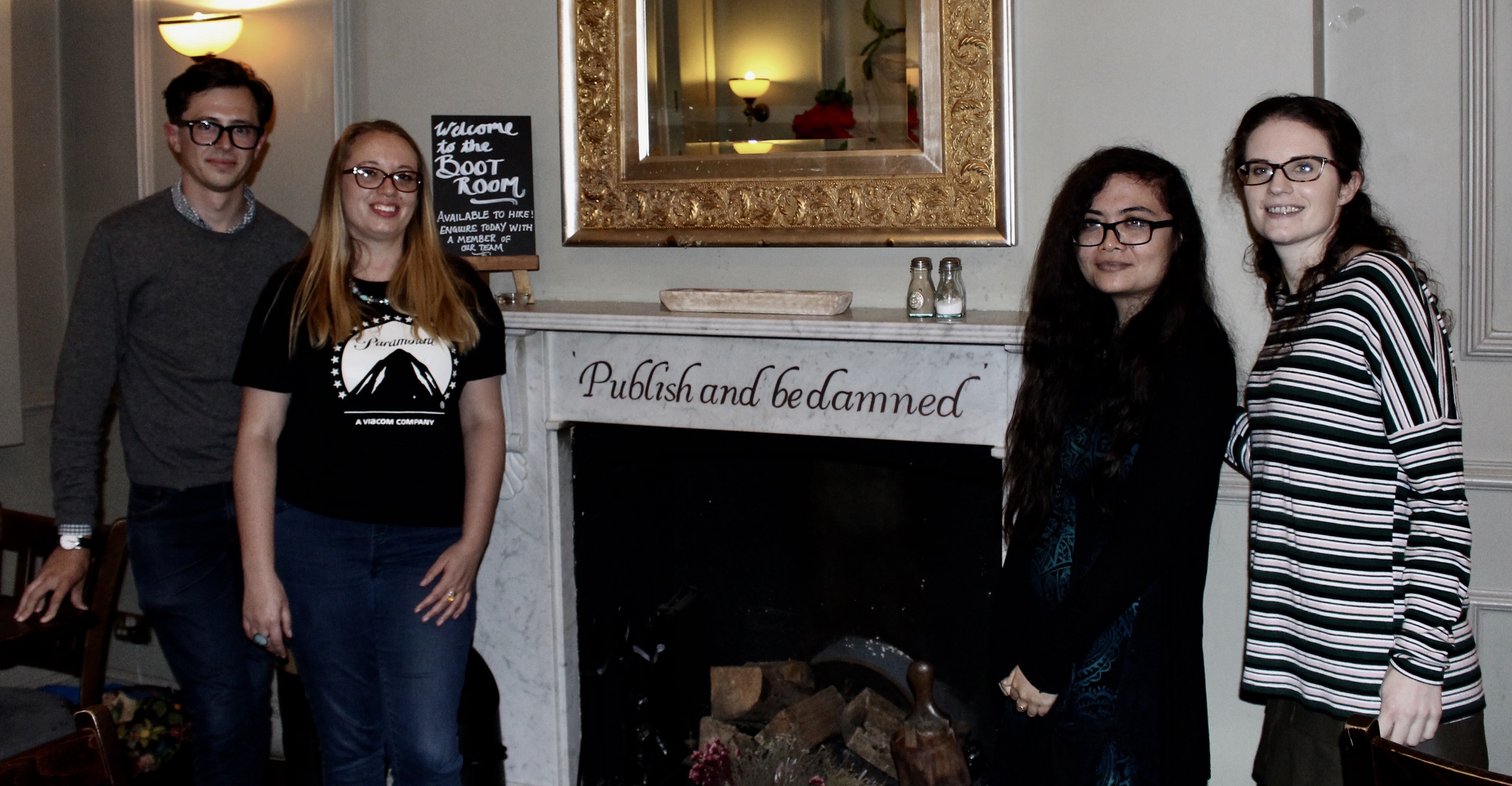
Sapere Books Author Meet-up

On Saturday we had our semi-annual author meet-up in London, where we had a chance to catch up with our wonderful writers over drinks and nibbles, as well as finding out what their next big projects are. Here is a taster of what’s to come:

Simon Michael, Natalie Linh Bolderston and Elizabeth Bailey

Elizabeth Bailey has more dazzling Regency romances and murder mysteries in the pipeline with new Brides By Chance and Lady Fan novels coming our way.

Graham Brack has handed in the final instalment of his thrilling Josef Slonský Investigation series, and will be launching a new historical crime series next year.

We are currently working on Jane Cable’s second compelling romance novel, Winter Skies, and she is already drafting her third.

Michael Fowler’s gripping crime thriller series, the DS Hunter Kerr Investigations, is being launched this month.

Anthony Galvin is working on exciting new thrillers under the pen name of Dean Carson, which we will be publishing soon.

Anthony Galvin and Michael Fowler

Charlie Garratt is drafting book three in his intriguing historical mystery series, the Inspector James Given Investigations.

The captivating fourth instalment of Valerie Holmes’ sweeping Regency adventure series, The Yorkshire Saga, will be coming out soon.

Two members of the Romantic Novelists’ Association, Natalie Kleinmann and Ros Rendle, have recently signed with us and will be bringing out brilliant new books next year.

A brand-new book in Simon Michael’s atmospheric historical crime series, the Charles Holborne Legal Thrillers, is going up on pre-order this month and he has an idea in mind for the next one.

We will soon be publishing book five in Linda Stratmann’s absorbing Victorian detective series, the Mina Scarletti Mysteries, and she has started work on book six.

Deborah Swift’s powerful new wartime romance, The Occupation, will be out by the end of this year.

Thank you to all of the authors who were able to attend, and we hope to see everyone again to celebrate our second anniversary in March!


The Sapere Books team


Image credit: a big thank you to Gary Stratmann for his photographs.

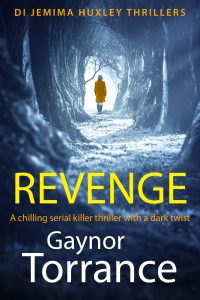
Why I’m Addicted to Crime Thrillers by Gaynor Torrance

Gaynor Torrance is the author of the DI JEMIMA HUXLEY THRILLERS series.

Like many other people, I’m a crime thriller junkie. I can honestly say that books in this genre are my guilty pleasure — as well as chocolate, of course. As far as I’m concerned, it has to be well-written and absolutely has to have a complex plot. I need an abundance of twists and turns, along with a large helping of red herrings. If it keeps me guessing, it will offer me everything I expect from a good book.

I want the story to grab me and not let go. Whenever this happens, my own identity quickly fades into the background, and I become the protagonist. Gender is unimportant to me. I don’t care whether the protagonist is male or female. The only thing that matters is that I inhabit a world I would shun in real life. Fictional characters are instantly relying on me, and I’m desperately trying to save lives whilst I figure out what’s going on. 

From the safety of a comfy armchair, these books have transported me to places I’ll never visit. They’ve presented me with opportunities to solve mysteries. Allowed me to get up close and personal with some of the most evil and twisted minds you could ever imagine. Over the years, I’ve brought justice to victims, been caught up in life-threatening situations and sometimes even had a hand in saving the world from imminent disaster.

Immersing oneself in these fictional scenarios is my ultimate form of escapism. It’s a white-knuckle ride minus the personal risk.

Having so many ideas of my own, I decided to take things a step further. And so I began writing about Detective Inspector Jemima Huxley, whose stories are set in Cardiff, a city I know well.

I love Jemima, but that’s because I know what makes her tick. I appreciate that on first appearance, she’s perhaps not the most likeable of characters. In Revenge, which is when readers are introduced to her, she comes across a bit like Marmite. She’s not a typical lead detective, and this will polarise opinion, as you’ll either love her or hate her.

When I created Jemima, I wanted her to have an interesting backstory. Over the years, I’ve read so many crime novels that have a hard-nosed lead detective heavily dependent on alcohol. Or whose personal relationships are in tatters because of the pressures of the job.

DI Jemima Huxley is different. She’s a modern woman who gets stuck in and excels at her job. Jemima is determined to have it all. At work, she’s a capable, dedicated detective: loyal, brave and intelligent. If only she had more control over other aspects of her life…

If you’ve read Revenge, you’ll already know that Jemima has some serious personal issues. She’s hiding things from everybody. Her mental health is suffering, and she’s in danger of falling down a rather large rabbit hole.

Most importantly, Jemima hasn’t yet figured out what’s at the root of her problems. I have a feeling that that epiphany is a long way off, and until it happens, there’s little chance she’ll begin to turn things around.

Jemima’s personal torment manifests itself in a way that is guaranteed to upset some readers. And I’ll let you in on a secret — I’ve shed tears as I’m writing those scenes. What Jemima does to her body is shocking, brutal and heartbreaking. But her method of keeping a lid on things is a reality for some people.

It’s a sad fact that mental health issues are still stigmatised. And, like many others, Jemima feels compelled to hide her suffering for fear of being judged.

But Jemima isn’t the sort of person to give up easily. She has her low moments but always seems to manage to pull herself together and face whatever life throws at her. Any serial killers stalking the streets of Cardiff had better watch out, because Jemima’s returning soon to investigate her next big case, Sole Survivor!

Click here to order REVENGE now!

Author Q&A with Gillian Jackson

Hi Gillian! Welcome to the Sapere Books blog!

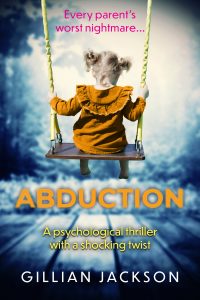
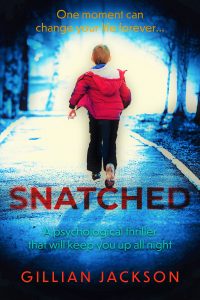
The first two books you have published with us have similar themes of children going missing and families struggling to find them. What initially drew you to those sorts of stories?

I set out to write a compelling story (and what is more compelling than the abduction of a child?) that could be seen from several different perspectives. Those of us who are parents can imagine the horror of a missing child, and I was able to draw on my experience of a time when my own two-year-old daughter went missing from our garden. She was only out of my sight for a few moments and fortunately was found within forty minutes, but the gamut of emotions my husband and I experienced was terrifying. The fear, guilt and despair almost crippled us. I was able to project some of these emotions onto the parents in Abduction and Snatched, who had to wait more than an hour to find out what had happened to their missing children.

We will soon be publishing a third thriller by you – THE ACCIDENT. Can you give us a little teaser of what it’s about?

This is a book I consider to be my ‘ripples in a pond’ novel. It begins, as the title suggests, with an accident and follows the consequences for those involved. As the story unfolds, jealousy comes into play with a shocking outcome; a life changing injury is faced, and the very best possible outcome is derived from the very worst scenario. If that isn’t enough, there’s a smattering of romance too!

Have you always wanted to be a writer? What first got you into writing?

It wasn’t until my early fifties that I began writing seriously, although I’ve dabbled in children’s stories and short stories for most of my adult life. Initially, writing was for me a therapeutic experience, as I kept a journal while recovering from a rather difficult period in my life. The first book I ever wrote was a small self-help book, my only foray into nonfiction so far.

What part of the writing process do you find the most challenging?

Probably the ending, as I sometimes get too bogged down in tying up all the loose ends until I’m satisfied that the story is properly wrapped up. Perhaps this is because when I read a book, I find an incomplete ending so frustrating!

Where and how do you write? Do you have set hours or do you write when you feel motivated? And do you have a favourite writing spot?

Being easily distracted, I’m fortunate to have a designated study to lock myself away to write. I try to write most days but often find my mind most active late at night when all these fictional characters keep me awake with their conversations, and I need to write, or at least make notes. As a work in progress develops, the time I spend on it increases as my enthusiasm grows.

Do you like to read the same types of books you write? Or something completely different? Can you tell us some of your favourite books?

I read quite widely, from thrillers to sagas. I love all of Kate Morton’s books as well as Victoria Hislop’s, particularly The Island. Some of my all-time favourite books are Jane Austen’s novels and the works of the Brontë sisters; I love the sense of atmosphere that leaps off every page, and Austen’s wit is amazing and so timeless!

What three tips would you give to aspiring writers?

You can’t do enough editing and polishing. The temptation when you write those satisfying words ‘the end’ is to get your book out into the world. Don’t – leave it for a couple of weeks and go back to read it again with fresh eyes; you’ll be surprised. Also, write what you know, and enjoy the journey.

Tell us something surprising about yourself!

I used to walk my rather large pet goat, Hobnob, around the streets on a lead. We were discovered and interviewed for BBC TV, but I had to do most of the talking.


Gillian Jackson is the author of psychological and domestic thrillers.

Click here to order ABDUCTION.

Click here to order SNATCHED.

Author Q&A with Elizabeth Bailey

Hi Elizabeth! Welcome to the Sapere Books blog!

 Elizabeth Bailey is the author of THE LADY FAN MYSTERY SERIES – romantic Regency crime novels, and THE BRIDES BY CHANCE REGENCY ADVENTURE SERIES.

 Can you tell us a little a bit about what first got you interested in writing?

I can’t think of a time I didn’t write. I dabbled for most of my young and adult life, but I was in my thirties when I became a member of a co-operative writing group with the idea of sending out each other’s work. I wrote several short stories and then decided to write a historical romance, a genre I had been reading from a child beginning with the novels of Georgette Heyer. That book, though it never saw the light of day, was the turning point. I loved writing it and felt I had at last found my true metier. I’ve been writing fiction ever since.

Do you have set writing times?

Mostly I write my first draft early morning in bed after I’ve had my tea. If I can get between 500 to 1500 words written, I feel I’m making progress. I try to get it all down without research, leaving notes to myself within the text where I need more data. The murder or where it happens, I will usually check out before I start, unless I add something new and have to go and find out about it before I can get on. I can’t start at all until I have names of the main characters and a general idea of what is likely to happen in the first couple of chapters. I actually don’t usually know who the murderer is when I begin. Nothing like making life interesting for yourself!

Seeing as you write historical fiction, do you find you have to do a lot of research?

These days with many years of historicals of the same period behind me I am so familiar with the time that my research is mostly for specifics. I have many books collected over the years which furnish me with the detail I need. My main focus of research is in the area of the murder and the internet is a mine of information on the subject. You can find contemporary sources relating to anatomical matters, which means I can be as accurate as possible according to knowledge of the era. However, I do turn to current material for exact descriptions of what happens, for example, when someone is bludgeoned, knifed or otherwise injured. All of which is fascinating to read about.

What part of the writing process do you find most difficult?

Struggling through against the odds when life intervenes. This happens and you just have to deal with it. It’s virtually impossible in this day and age to shut yourself away in an ivory tower to get your first draft done. I wrote a short book in a week once on a holiday. Another time I forced through 5000 words a day to get a novel done. But it’s not optimum. It doesn’t allow time for the filtering process that builds the minutiae of the story and generates ideas you hadn’t thought of until some trigger sets them off. Working steadily every day seems to build a book better, but it does mean you are subject to interruptions and getting back into it after a break is the hardest thing of all.

Do you find your characters start to control their own storylines?

Yes, they become totally real, and some characters are completely independent and go off in unexpected directions. The thing is, you invest them with life and then they become real people (albeit in a sort of ghost form in your head). They start behaving according to their character and you might have no idea of who they really are until they do this. Ottilia is a case in point. She was supposed to be a retiring female, letting Francis take the lead. Not a bit of it. She marched into centre stage the minute I set her on the page and stayed there. In the book I’m currently writing, I had a peripheral character take off in much the same way and seize quite a chunk of the story from Ottilia. Experience has taught me to run with it. I have a great belief in the Inner Writer knowing a great deal more than I do about the developing story. It really is like being two people sometimes.

Do you ever feel guilty about killing off characters in your crime series?

Apart from the initial dead body, I hesitate. The first death is the spur for the story, so that’s all right. We usually don’t know that person. But it’s very hard to kill off someone who has become a character in their own right. But that’s good, I think. It transfers to my heroine, who is allowed to have an emotional reaction to such a death.

Do you find it hard to know when to end a story?

Usually the story comes to a natural conclusion. Then it’s just a matter of tying up loose ends and giving my lead characters a chance to mull and make decisions of their own. I like to keep the denouement fairly short. When the story is finished, that’s it. And there’s a maxim – always leave the reader wanting more. If you ice the cake too richly, they might be too satisfied to want another slice.

Which book by another author do you wish you had written?

Oh, that’s a tough one. For sheer quality perhaps, another long-time favourite, In This House of Brede by Rumer Godden. So subtle, engaging, insightful and just beautifully written. But then I would love to write like PG Wodehouse whose Jeeves and Bertie books I adore. I’ve had a go in a play I wrote for school when I was teaching drama, and I have a short story out in a similar style (To Catch a Thief). Or Terry Pratchett with such a discerning eye for the human condition.

Tell us something surprising about you!

When I was a teenager, I won two cups for target shooting with a 303 rifle. Now I couldn’t hit a haystack!

History for Sale: Laxton Village Under the Hammer by Austin Hernon

Laxton Village is believed to be the last remaining example in Europe where the Open Field System and Court Leet have been preserved. It boasts a unique 1,845 acre heritage estate — including 525 acres of unenclosed open fields — produces in excess of £230,000 per annum, and is of significant educational and curatorial interest. The village is now on sale for £7m.

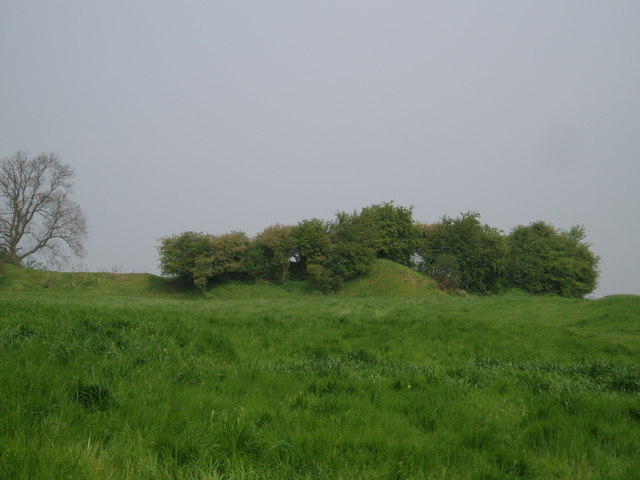
Castle mound: the site of an 11th-century castle in Laxton.

THE ESTATE

The Laxton Estate is situated in and around the picturesque village of Laxton, surrounded by rolling countryside. The village is linear and unusual in appearance, comprising 17 traditional red brick farmsteads in addition to a village pub and visitor centre. The majority of the estate is farmed under Agricultural Holdings Act (AHA) and Farm Business Tenancy (FBT) agreements. Each farm tenant benefits from a home farmstead and land let under AHA and/or FBT and a right to farm land within the open field system as administrated by Laxton Court Leet, an ancient manorial Court with legal status as a court of Law.

You can find out more about the history of Laxton from the Wars of the Magna Carta series. The first instalment, The Battle For England, features Laxton Castle, domain of the brave heroine Matilda.


Image credit:

Castle mound at Laxton, Nottinghamshire. Source: Wikipedia, contributed by Robert Goulden. Used under Creative Commons CC BY-SA 2.0 licence.

Author Q&A with Linda Statmann

When did you first start writing? Did a specific event encourage you to start?

When I was six years old, I saw a TV programme about the Blitz, which as you can imagine was pretty alarming. I wrote a poem about it.

How much research do you do?

I am fascinated with the Victorian era and do a lot of research to try and get the details right. I read contemporary newspapers and journal articles, biographies and medical works. I study maps, census returns, directories, legislation, photographs, and art. I have about a hundred books just on the history of spiritualism.

Tell us about where you write / your writing habits.

I work from home and have a room which is my office. I don’t work set hours; even when I am doing the household chores, my mind is still working on my latest project or planning a new one.

What part of the writing process do you find most difficult? Starting, knowing when you’ve done enough research, the ending?

When I begin a project, I know where I am starting from and where I will end up, but I have to link the two in a way that makes sense. Every time I pause in order to find that natural link, I have to remind myself that I found it last time. It’s worked so far.

How real do your characters become and do they ever seem to control their own storyline?

They feel very real to me, and because I let themes develop naturally in my mind often the characters do things that I hadn’t necessarily planned but emerge from their personalities and situations, so sometimes they do take me by surprise.

Do you ever feel guilty about killing off characters or do you relish it?

Neither, but it is sometimes sad. It’s very hard writing about a character who I know is about to become a murder victim.

Do you find it hard to know when to end a story?

No, I know when it feels right to me.

What are you working on?

I am editing a new volume in the Notable British Trials series about the trial of the Mannings in 1849. I am also developing the plot for the fifth Mina Scarletti book, to be entitled His Father’s Ghost.

What are you reading right now?

Munich by Robert Harris.

What is your favourite book? Who is your favourite character?

I have read thousands of books and it is impossible to pick one!

What book do you wish you had written?

See above.

Do you love any genres/books that are very different from what you write?

Most of my reading is non-fiction: history, biography, true crime, psychology. In crime fiction, I tend to read books with modern settings or if historical, a very different time period from the one I write about.

 Tell us something surprising about you!

I prefer pickles to sweets!

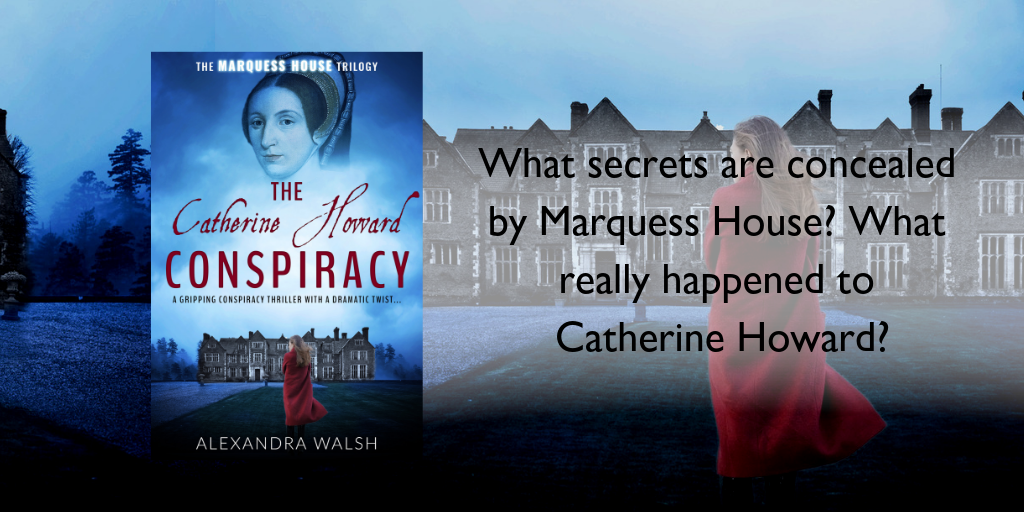
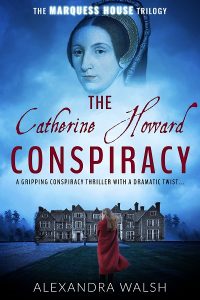
Author Q&A with Alexandra Walsh, author of The Catherine Howard Conspiracy

When did you first start writing? Did a specific event encourage you to start?

There has never been a time when I didn’t write. As a child, my idea of a perfect game was to tell a story to my teddies, then write it down. It was never a conscious decision, it was part of me then and it still is now.

How much research do you do?

It entirely depends on the story. For a while I wrote film scripts, mostly comedies, and they didn’t need any research. Likewise my first few attempts at novels (still languishing unpublished!). One story, The Music Makers took all its chapter heading from the wheel of the Major Arcana cards in the Tarot pack. Although I was a fairly proficient Tarot reader back then, I did research other, wider meanings, for the cards to add extra depth to the main character’s adventures.

The Marquess House Trilogy, which has a split timeline comprising of a present day strand and a historical section has taken years of research. Book one: The Catherine Howard Conspiracy was actually not my intended starting place. The big reveal that appears in book two: The Two Elizabeths was the kernel of the idea for this story and, over the years, I have written many different versions of it trying to make it work. However, none of them were quite right and after several years of juggling work, life and researching Elizabethan England I realised the only way I’d be able to capture this monster of a story on paper was to split it into three separate tales, rather than trying to cram it into one book. Three books, one for each piece of jewellery: two ruby rings and a silver locket.

It was actually devastating because it meant starting again from the beginning. In true frustrated writer style, rather than face this unhappy truth, I wrote a comedy instead, entitled The Patron Saint of Married Women, which was set in the present day and needed very little research. In. Your. Face. History.

In the end, I caved in and began researching Henry VIII’s fourth and fifth brides. I also made the alarming decision to dump my two main characters: Isabella and Oliver. I never liked them much anyway. The name Perdita had been running around my head for a while. From reading Dodie Smith’s One Hundred and One Dalmatians when I was younger, I knew it meant Little Lost One and somehow this seemed appropriate for my main character. Then one morning, I woke up with the question: “Who is Piper?” running around my head. Immediately, I knew she was Perdita’s twin sister and something clicked into place.

The very very first version of this story featured Isabella (now gone) mourning her twin sister who had died under mysterious circumstances on an archaeological dig after she had unearthed a silver locket. The idea was that she had been murdered by MI One Elite. Strangely, the nasty old Watchers were there from the beginning, as was Mary Fitzroy, James Rivers and Alistair Mackensie. Jerusalem was always around too, although it took me a while to settle on its true nature. Warren Dexter was another one who survived the character cull. However, it wasn’t until Perdita and Piper popped up that the story suddenly opened up before me. Then, Kit arrived. He had been through a number of names and he finally found an identity because I quite fancied Kit Harington who plays Jon Snow in Game of Thrones. Yes, it’s an embarrassing admission but he was the inspiration for Kit and once he had his name, the last piece of the puzzle was in place and the story flooded out.

I’ve long since moved past my toe-curling crush, though. Ahem.

Anyway, in answer to your question, at present, several months of research and writing of detailed timelines. By gathering all the information into one huge chart, it’s easier to write fluently and present a more rounded and believable version of my historical periods.

Tell us about where you write / your writing habits.

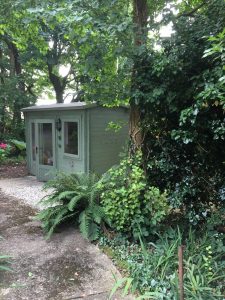
I have a purpose built writing hut in the garden with insulation and a heater. I write every day and, at the moment, am lucky enough to be able to treat it like my day-job.

What part of the writing process do you find most difficult? Starting, knowing when you’ve done enough research, the ending?

It varies. I love the lure of the blank page. Every piece of paper is an adventure waiting to unfold. Knowing when you’ve done enough research is a tricky one but there comes a point where you have to plunge in and see what happens. I don’t like writing endings, not because I don’t like them but because it means you’re saying goodbye to your characters.

How real do your characters become and do they ever seem to control their own storyline?

Very real. They all seem to end up taking over their own storylines. Sometimes, I even argue with them. Although perhaps I shouldn’t have admitted that…

Do you ever feel guilty about killing off characters or do you relish it?

Never! I worry about killing them off for different reasons. What about if I suddenly realise I need them again but they died in Chapter Four?!! EEEKKK!

Do you find it hard to know when to end a story?

Usually I know the end before I begin. The Marquess House trilogy has proved more troublesome though because in my head, it’s one long story, so realising I had to make three endings, instead of just the one at the very very end of book three, has taken a while to adjust to.

What are you working on?

Part three of The Marquess House trilogy. It’s working title was always Prince Oliver but I don’t think this works any more. The title will arrive when its ready.

What are you reading right now?

The Moon Sister by Lucinda Riley. It’s part five of her Seven Sisters series. I only recently discovered these books but I’m really enjoying them.

What is your favourite book? Who is your favourite character?

This is a tough one. How do you choose between so many friends? And also, do I go for something literary and make it look as though I’m very high brow or do I tell the truth?!

For a long time now, my favourite book has been Harry Potter and the Prisoner of Azkaban. I was going through quite a tough time when I began reading these books and, not only was Hogwarts a wonderful place to hide, I was awed by J K Rowling’s brilliance. Goblet of Fire had just been released, the films had been cast and the storm of Harry Potter was building. I never like making judgements on phenomena unless I’ve read/seen/visited them, so I bought the books. Philosopher’s Stone hooked me from page one. Chamber of Secrets worried me – who was Dobby? Was he good or bad? – but when I read the third book with its fabulous twist with Scabbers and the appearance of Sirius Black who had first been mentioned in chapter one of book one, I realised this was more than a series of children’s books. This was truly magical. I’ve asked for help at Hogwarts many times and it’s always been given.

My favourite character is Hermione Granger. Although Harry is pretty amazing too.

I also love Ballet Shoes by Noel Streatfeild and Moll Flanders by Daniel Defoe.

What book do you wish you had written?

Apart for the Harry Potter series? The God of Small Things by Arundhati Roy or The Passion by Jeanette Winterson.

Do you love any genres/books that are very different from what you write?

I try to read a broad cross-section of genres. If a story is well-written, it’ll grip you no matter what the genre. I try never to suffer from literary snobbery. Every book is worth trying, you may not make friends there but you don’t need to be rude!

Tell us something surprising about you!

I play musicals in the background while I write.

Author Q&A with Frances Garrood, author of Ruth Robinson’s Year of Miracles

When did you first start writing? Did a specific event encourage you to start?

I can’t remember a time when I didn’t write something; poetry as a child, then on to short stories when my children were small, and then novels.

How much research do you do?

It depends. I had to do quite a lot for Dead Ernest as it was set during WW2, but often it’s just my own experience. I did once phone a safari park to find out how a monkey would behave if trapped in a car (for Women Behaving Badly), and they said they had no idea!

Tell us about where you write / your writing habits.

I’m afraid I don’t have any. I’m totally lacking in discipline, and I just write when I feel like it, at a desk in a corner of our bedroom. Not very professional, I’m afraid…

What part of the writing process do you find most difficult?

Starting, knowing when you’ve done enough research, the ending? I think the middle is difficult, but I’m not a planner, so I can get stuck anywhere. I usually just let the story take me where it wants to, and sometimes it doesn’t want to!

How real do your characters become and do they ever seem to control their own storyline?

They become very real, and I really hate letting go of them in the end. They certainly control the story to a great extent, especially when they’re speaking. I love writing dialogue.

Do you ever feel guilty about killing off characters or do you relish it?

A bit of both. But it’s also quite cathartic for me, because I was widowed fairly young, and I use my own experience of bereavement.

Do you find it hard to know when to end a story?

So far, my books have ended more or less of their own accord, but that could change (though I hope not).

What are you working on?

I’ve actually started three, and am waiting for one of them to take off. Two are sequels, and sequels are – I’ve discovered – a lot harder than I thought they’d be

What are you reading right now?

A little-known novel by Anthony Trollope (my favourite author): The Belton Estate.T I’ve read pretty well all his books, several more than once, and was delighted to find this one.

What is your favourite book? Who is your favourite character?

Without doubt, George Elliot’s Middlemarch. And my favourite character has to be Winnie the Pooh.

What book do you wish you had written?

At the moment, it’s Gail Honeyman’s stunning debut Eleanor Oliphant is Completely Fine. Otherwise, pretty well anything by Anne Tyler.

Walking the Ancient Trods: For Richer, For Poorer by Valerie Holmes

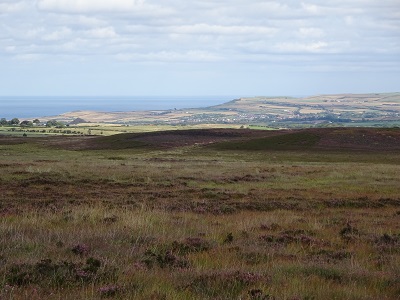
The North York Moors national park has one of the largest expanses of heather moorland in England covering an area of 554 sq miles. For centuries people have crossed this exposed, wild, boggy moorland for trade, social and religious reasons leaving a network of fragmented stone pathways that are lovingly walked and explored by hikers today. All who do respect this mainly inaccessible landscape, which is both beautiful and dangerous to traverse. But what tales these ancient paths could tell of the people who have trodden them over the centuries.

The oldest broken pathways, known locally as ‘Monks trods’ could date back to the Neolithic era. Certainly Roman soldiers have used some of the broader causeways near Whitby. The connection with monks stems from the medieval period when abbeys flourished within the region. Today we see the ruins of Whitby, Rievaulx, Guisborough and Mount Grace Priory to name but a few of these once great communities. These monasteries often housed large numbers of people and linked to other communities by the network of pathways. In Medieval times wool would be transported on them to ports such as Hull and from there to markets overseas.

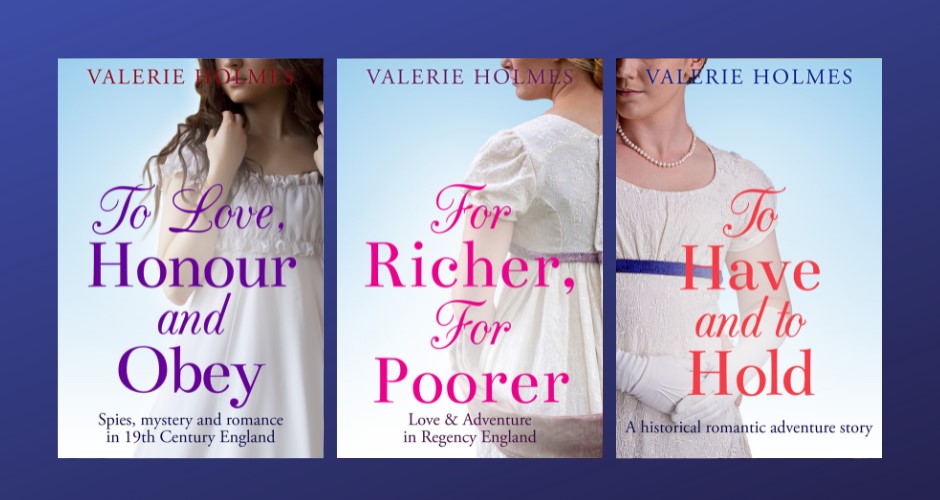
The monasteries often owned farms and land miles apart. In For Richer, For Poorer I linked the two fictitious towns of Gorebeck and Beckton by one such trod that cuts across Gorebeck Moor. Gorebeck Abbey School was linked to Beckton Abbey by trade and the pathway, although rugged and unwelcoming it was known to Parthena. This was no easy route of escape by, especially at night time, it took courage and daring – but essentially local knowledge, or else it would certainly have been tantamount to a death wish. This summer I was caught out in a sudden horizontal rain storm on one of the Quaker’s Causeway, near Commondale and even with modern waterproofs and hiking boots the wind had a bitter chill.

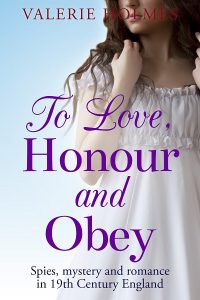
Parthena’s pursuer, like Beth and Willoughby in To Love, Honour and Obey had to travel in single file as the stones were only designed to take a train of pack horses travelling in a line as goods were regularly transported by pack horse.

Beyond the medieval period the need to transport coal, charcoal, jet, alum and lime grew. Fresh fish from the coast needed to reach its market as quickly as possible whilst it was still fresh. Wagons would easily become bogged down in such conditions and so for centuries the pack horse was essential.

These are some of the legitimate uses for these ancient routes, as well as the need for communities such as The Quakers in the early eighteenth century to reach meetings and friend’s houses. They were also essential for people to reach the mills and towns for work as the centuries turned.

However, in the early nineteenth century, when many of my stories are set, smugglers also had local knowledge, could pay a man more than a farmer’s wage and they also needed to disperse landed contraband as quickly and efficiently as possible. Therefore, many of my stories have mentioned the use of the old trods for this purpose.

Once roads were built to cross the moorland then the need for the trods diminished and some of the ancient stone was reused for building. These roads may have even been built over the original paths as their way was the most direct. But what is left provides an interesting connection to the past and a way for people today to access this beautiful wilderness today.


Author Q&A with J. C. Briggs, author of the Charles Dickens Investigations

When did you first start writing? Did a specific event encourage you to start?

I started writing when I was a teacher. I first wrote short plays for performance. When I gave up teaching in 2012, it was the bicentenary of the birth of Charles Dickens. When I read that he had a secret desire to be a detective, I wondered if I could write the crime novel that I had always wanted to write, so I gave it a try with Dickens as my detective.

How much research do you do?

Because my novels are historical crime novels, I need to do a lot of research into Dickens’s life and times, and into nineteenth century forensics. I need to know what the Victorians knew about poison, or stabbing, or shooting, or drowning and post mortems in the mid-nineteenth century.

Tell us about where you write / your writing habits.

I write in a little room in my house. I often write sections of the novel long-hand and then type them up and make changes as I go. I always carry a notebook to jot down ideas when I’m on a train or waiting for someone – you never know what you might overhear!

What part of the writing process do you find most difficult? Starting, knowing when you’ve done enough research, the ending

I find it easy to start. Often the beginning of a novel comes from something I’ve read, especially something from Dickens’s letters. Then I get stuck in working out the plot, especially when I find that X couldn’t have done the murder at that point because she/he was somewhere else at the time!

How real do your characters become and do they ever seem to control their own storyline?

Very real – that’s why I enjoy writing a series. You can bring characters back. It’s very odd how characters you expected to play a minor part in the story start to develop in ways you had not planned and begin to play a major role. Then they seem to have a back story and you think: where did that come from?

Do you ever feel guilty about killing off characters or do you relish it?

It’s always satisfying to get rid of the murderer because that means the case is solved. And there have to be other victims – one murder doesn’t make a crime novel. You can’t help relishing the dramatic deaths, but sometimes you do feel sorry for the victim. Then you think: sorry, but you’ve had your lot, it’s time for another killing – keep up the suspense!

Do you find it hard to know when to end a story?

Not in the sense that you know it’s over when the case is solved, but you also have to think carefully about the very last paragraphs. You want to leave the reader thinking about the effects it has all had on the characters who are left and what their futures hold – if they have one.

What are you working on?

A novel which begins in Ferrara where Dickens went in 1844; I found a letter he wrote from there in which he describes some girls looking down into a stretch of water. It was twilight, the sun was setting and the walls of the castle were blood-red. Dickens writes that he knew the place although he had not been there before and that it chilled his blood. I wondered what those girls were looking at in the water and why Dickens was suddenly frightened. Murder?

What are you reading right now?

Bleak House

What is your favourite book? Who is your favourite character?

Great Expectations. Miss Havisham.

What book do you wish you had written?

So many, it’s too hard to choose, but there’s a wonderful book: Pinkerton’s Sister by Peter Rushforth, which is so rich in character and incident and full of all kinds of literary allusions that I can’t help wishing …

Do you love any genres/books that are very different from what you write?

One of my favourite authors is William Trevor; I’ve just finished The Silence in the Garden which is about Ireland before the First World War. I love fiction about Ireland.

Tell us something surprising about you!

I was the voice over in a television show in Hong Kong. I was a puppet named Violet the Vulture – I played her as a kind of avian Lady Bracknell. My husband, who wrote the show, was Barney the Bear, and we had a kangaroo called Alice Springs.

Sapere Books: Call For Nautical Fiction

Are you working on a new series set in the Age of Sail? Have you written a naval thriller set during the World Wars? Are you passionate about seafaring stories? Sapere Books wants to hear from you!

We are actively looking to acquire nautical fiction from both debut and established authors. We are particularly interested in historical naval fiction, nautical thrillers, and books in a series.

If you are an author who owns the rights to a previously published naval series, or a writer working on a new nautical novel, please get in touch and tell us about it!

Email our Editorial Director, Amy Durant, directly with some information about your nautical writing and a synopsis of your naval novel and we will get back to you as soon as possible.

We hope to hear from you soon!

Excerpt from Scarecrow by Matthew Pritchard

Chapter One

Sunday, March 28th, 2010

Danny Sanchez arrived at 10:27.

It was already bedlam; hundreds of people covered the dusty patch of waste ground beyond the white walls of the property, shouting, pushing, arguing among the cacti and scruffy palms. The excavator’s arm loomed menacingly above the roof of the two-storey villa.

The demolition had been scheduled for nine a.m., but frantic negotiation had earned the elderly expat owners a three-hour stay of execution while the house was cleared. The whole neighbourhood turned out to help, Briton and Spaniard alike. A stream of people walked back and forth along the edge of the unpaved road, carrying everything and anything they could salvage – doors, windows, even the kitchen work surface. The problem now was where to put it all. An incongruous pile of household items was collecting around the trunk of a fan palm. Danny watched as a negligee blew free from a box and wrapped itself around a cactus.

Christ, what a mess.

In eighteen years of journalism, Danny had witnessed dozens of horrors – people cut from the wreckage of car accidents, a woman leap from a burning building, a suicide on a railway track – but this was something new. They were going to demolish Peggy and Arthur Cookes’ house and nothing could be done to avert it. He’d seen the paperwork. Nearly every penny the poor old duffers had was invested in the villa; a lifetime’s equity would be smashed to rubble. It was like waiting for an execution.

The Junta de Andalucía, southern Spain’s regional government, had sent a woman in her mid-thirties to oversee the demolition. Crafty, Danny thought; people found it harder to get angry with a woman, especially an attractive one. Her hard hat and fluorescent bib bobbed at the centre of a tightly-knit group of people. Guardia Civil officers in green boiler suits formed a protective ring around the Junta woman. Then came the leaders of the protestors, waving documents and trying to argue over the shoulders of the Guardia officers.

Behind them was the press pack, two dozen strong, cameras and microphones waving above the crowd as it surged and rocked. Gawkers and curious children milled at the edges, wondering what all the fuss was about.

For her part, the woman from the Junta looked genuinely distraught at what she had to do. Danny had no idea whether she could follow the English words being bellowed at her, but it was obvious she understood the gist. She kept pointing to the paperwork on her clipboard, raising hands and shoulders in shrugs of helplessness. Someone, somewhere had decreed the demolition must go ahead; it was her job to get it done.

The Cookes were inconsolable. Peggy sat on an armchair that had been dumped among spiky clumps of esparto grass. Tears carved streaks through the dust that had settled on her face. Danny recognized the armchair; he’d sat in it when he’d interviewed them a year before, when the demolition orders were first served. Arthur Cooke had looked dapper and defiant as he posed for the cameras back then; now, every one of his seventy-three years weighed upon him. He stood with his hand on his wife’s shoulder and turned moist eyes as Danny approached.

“Not now, mate,” he said, shaking his head. “The bastards are about to ruin us.”

Danny nodded, glad he’d been spared having to ask the obligatory “How do you feel?” It was amazing how dumb those four words could make you feel sometimes.

Peggy Cooke wanted to speak, though. “Why us?” she said, her voice shrill. “Out of all the hundreds of people, why does it have to be us? I want you to print that. It’s not fair.”

Why us? That had been everyone’s first reaction in March 2009 when the judicial demolition orders were delivered to eleven different families dotted around the municipality of Los Membrillos. It seemed so monstrously unfair, given the scale of the problem in Almeria, the province that occupies Spain’s south-eastern tip. A Junta survey had uncovered more than 12,500 irregular constructions in just ten of the worst affected municipalities. But the Spanish legal system was a Heath-Robinson contraption manned by characters from Kafka; immense and baffling in its complexity, arbitrary in the decisions it dispensed and spitefully prescriptive when it did so. It was one of the dangers of emigrating to Spain, the flipside to all the sunshine, fiestas and good living.

Not that it had worried the tens of thousands of Britons who had flooded the Almanzora Valley at the turn of the century, buying up villas and plots of land for self-builds, breathing life into the moribund rural communities that nestled below the Sierra de los Filabres mountain range. But the rush to expand had left thousands caught in the legal quicksand between the local and regional government of Andalusia. Local councils could grant licences to build, but the regional government had the right to challenge those licences. The catch-22 was that no one would stop you from planning to build a house; the house actually had to be built – and the money spent – for it to come to the Junta’s attention and challenge its legality.

Why us? Danny knew the answer to Peggy Cooke’s question; he’d interviewed the mayor of Los Membrillos. “We had so many applications for building licences, we were swamped,” the mayor had said, unlocking a cabinet and indicating three large cardboard boxes leaking paperwork. We only got round to processing eleven.” That was the bitter irony of it; by trying to follow the rules, these unlucky eleven home owners had created a paper trail that Junta officials could follow back to specific properties.

Time was ticking on. The crowd was getting angrier, the shouting louder. More Guardia officers arrived. Danny phoned everyone and anyone he could think of who was involved with the case.

It was the usual pass-the-parcel.

The council blamed the Junta, the Junta blamed the courts, the courts blamed the council; all down the line, each link of the chain shrugged its shoulders and pointed to someone else. Arthur Cooke watched Danny in action, hoping that this man who spoke such perfect Spanish could somehow work a miracle. Danny finished the phone call, shook his head. The flicker of light in the old man’s eyes dulled.

Paco Pino arrived at 11 a.m., yawning and scratching at his chest. “My one day off,” the photographer said, screwing a lens onto one of three cameras dangling from his neck, “And this has to go and happen. Just my luck.”

Danny was glad the Cookes couldn’t speak Spanish; crass comments like that were the last thing they needed to hear. Not that Paco was a bad person; experience had simply made him blasé, like everyone who made a living reporting other people’s misfortunes. Truth be told, Paco was a saint in comparison with some; Danny had spoken to one of the journalists sent by a UK red top to cover the announcement of the demolition orders the previous year.

“We won’t be interested again now until they knock the things down,” she said as she left, nodding toward the cloudy March sky. “Let’s hope they do it in summer, eh? I might get a bit of a tan.”

The pile around the palm tree grew: beds, sofas, lampshades, mirrors, cardboard boxes stuffed with clothes and crockery. Danny looked at his watch. Not long now.

At ten to twelve, uniformed officers of the Policia Local cleared the last of the protestors from the garden and checked no one was left inside the house. There were more scuffles on the white gravel outside the villa, more insults in English and Spanish. The property’s black gates had been lifted from their hinges earlier to allow the excavator through. Having shoved a final protestor outside, Guardia Civil officers formed a human barrier in the space between the gateposts. Protestors waved paperwork at the Junta woman as she looked at her watch and waved toward the workers.

The sudden roar of the excavator’s engine caused everyone to freeze and fall silent. The crowd turned as the engine revved and the excavator’s mantis arm uncoiled and rose above the house. For a moment, time seemed stilled…

…and then the air thundered as the excavator’s claw drove down through the roof. An angry moan emerged from the crowd as the arm rose and hundreds of dislodged tiles showered and smashed on the ground. The excavator arm dipped once, twice, three times more, prising the roof apart before ripping backwards and pulling free a ragged-edged section of brickwork. Looking through the jagged rent it created was surreal; the neatly-tiled interior walls had been exposed, giving a view inside a giant dolls’ house.

The Cookes stood holding each other: Peggy sobbing; Arthur straining to keep her on her feet, his face stoic. They were tearing his house down, but he wouldn’t show a flicker of weakness. Another huge section of wall tumbled away; it fell to the ground with a thud. Dust rose, people coughed, choked, began walking back along the road. Danny pulled his jacket up to cover his mouth.

The Spanish woman atop the ridge didn’t really care about the foreigners; their house was illegal; it had to come down.

She was only there for the spectacle, to have something to tell her friends tomorrow at the market.

She was the first to see it.

Her mouth gaped; then she began to scream and point toward the corner of the house. People looked to see what the noise was but the sounds were rendered unintelligible by the rumble of falling brickwork and the excavator’s diesel chug.

But the dust was settling now; people were following the woman’s outstretched hand, squinting as they too noticed the thing wedged in the narrow gap between exterior and interior wall.

A Guardia Civil officer rushed to the excavator, banged on the window. The machine fell silent. Other people had noticed the shouting woman now and were pressing closer, shading their eyes, unsure of what they were seeing. For the second time that morning, a sudden silence halted the crowd.

Danny thought it was a mannequin at first. And then the corpse fell forward, bending from the waist, its blackened head rocking back and forth. Some people screamed; others stood open-mouthed; some turned to run.

Arthur Cooke’s face remained expressionless as he stared at the semi-skeletal corpse lolling from the broken wall of his house. Then, without moving a single muscle of his face, he toppled forward and fell heavily to the earth.
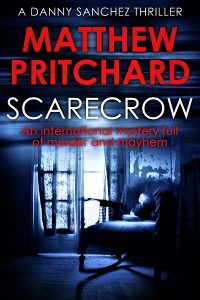
 

Need to know what happens next? Get Scarecrow now from Amazon.

“I am looking for a drowned girl” by J. C. Briggs

Ellen Tyrell’s Nose and Other Suspicious Circumstances

With thanks to the British Newspaper Archive

I am looking for a drowned girl. My old friend, Professor Swaine Taylor will, no doubt, provide the grisly forensic detail in his Medical Jurisprudence: ‘the eyelids livid, and the pupils dilated; the mouth closed or half-open, the tongue swollen and congested … sometimes indented or even lacerated by the teeth …’

I need an inquest on said drowned girl; this is where the British Newspaper Archive comes in. There are drowned girls aplenty in London in the decade 1840-49. Poor things, dragged from the Thames, the Regent’s Canal, the Surrey Canal, the New River, the Serpentine, the lake in Regent’s Park, from under Waterloo Bridge – a favourite spot for those seduced and abandoned girls. There they lie stretched out on muddy shores and banks, their bonnets askew, one boot missing, or both, their faces pale like Millais’ Ophelia, or more likely, bloated and bruised, or half-eaten by decomposition – or rats. Their bodies sometimes float, buoyed up by petticoats – the effect of air retained by the clothes, or the presence of gases. Sometimes a thin hand grasps a clump of weed which, according to Professor Taylor, indicates that the victim went into the water alive. Did she fall or was she pushed? Suicide, most often.

I find the case of the suicide of two young sisters dragged from a Leeds canal in April 1847, tied together by a handkerchief. The handkerchief is pitiable somehow, and memorable. Dickens must have read of that case for he uses the same circumstance in Our Mutual Friend. Something of a thrill in contemplating that, but I need only one girl.

I need an unknown drowned girl, unclaimed, buried at the expense of the parish, and forgotten. Somewhere in a village, a mother wonders about her lost child. She will never know what became of her ruined darling. The Morning Post in February 1842 explains: ‘In London the bodies are taken to any obscure vault, public house, or police office. The Coroner directs the parish to advertise the body, often in vain.’
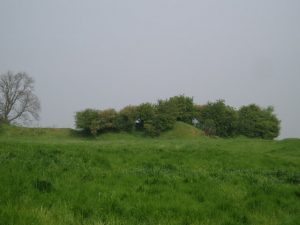
I find several cases of unidentified females in the newspaper archive. In July 1841, according to The Morning Advertiser, a young woman was pulled from the London Dock. She was never identified. I am intrigued by the report’s dark observation that ‘No one could walk into that water by accident.’ Unknown, too, is the identity of the ‘fine-made ’young woman taken from the Serpentine in October 1845 and deposited at St George’s Workhouse. Yet she has a distinctive mole on her left cheek, dark hair and hazel eyes. Surely somebody missed her. Seduced and abandoned, perhaps, like poor Eliza Luke found in the New River in April 1844.

However, this is a crime story, so, naturally, I need a drowned, unknown, murdered girl. This is more difficult. Such is the damage done by the water, or the bridge, or the rocks of some lonely reach that it is often impossible to find enough evidence of murder. However, there is the case of Eliza Rayment found in the River Thames in October 1847. There is a deep cut under her chin. Four inches in length, an inch in depth, so reports Mr Bain, the surgeon, at the inquest, and there are ‘two arteries divided’. The wound might have been inflicted by the deceased, but ‘a person using the right hand would naturally make an incision on the left hand side.’ Eliza Rayment was right-handed. Mr Bain attributes death to the loss of blood from the wound. Poor Emma Ashburnham who was formerly Emma Meyer had once lived ‘in some splendour’ in York Road under the protection of ‘a gentleman of fortune’, but it is not known how she came to be in the river at Waterloo Bridge with a deep and ugly stab wound in her side.

Blood brings me to Ellen Tyrell and her nose. Ellen was found in the Surrey Canal in August 1845. Mr John Hawkins, the surgeon, finds an abrasion on the right side of the nose, but from the decomposition of the body he is unable to distinguish any other external marks of violence. Given that she was seen in the company of a man, not her husband, the night before she disappeared, the inquest is adjourned for the purpose of producing further evidence.

Oh, Eliza Rayment, what a mystery, what a suggestive tale, a married woman whose whereabouts were unknown for some days before your death. Who were you with? Emma, who was that ‘gentleman of fortune’? Alas, neither of you is for me, and Ellen, your nose, telling though it is, does not serve my purpose. I am ‘Oh, that I had been content with a cut throat, or a stabbing, but, in the interests of my plot, the victim must be strangled or I must rewrite the whole damned thing.
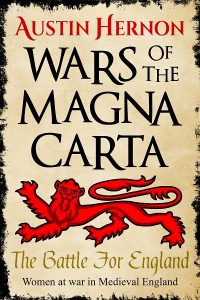
There is evidence I do like: the 1847 case of the unknown drowned young woman wearing a false plait at the back of her hair; the one in 1842 in which an umbrella is found nearby, bearing on its ivory handle the initials ‘F.H.’ And I like especially, the single earring she is wearing. I have a fancy for a single ruby like a drop of blood in my victim’s ear.
I dig deep into the newspaper archives and I find it – just the one, and the indefatigable Mr Bain is on hand to assist. The body was found in October 1848 near Battersea Bridge, much decomposed, appearing to have been in the water some time. Nevertheless, Mr Bain finds evidence of a ligature encircling the neck, though what this might have been he cannot say.

It is quite enough for me. Possible death by strangulation.

Oh, all right, I admit it: the body was that of a sailor. But, it did happen. Evidence of a ligature was found. I’ll just have to put an ‘s’ before the ‘he’. No one will know.

‘F.H.’? Names: Fanny? Florence? Flora? Ah, here’s a name in the archives: ‘Harvest’. I have her: Flora Harvest, the Grim Reaper cometh.

The Murder of Patience Brooke by J. C . Briggs


He Wrote Her Every Day by Gail Lindenberg

The Cooper Museum, housed in a small building in the heart of historic downtown Upland, offers a cozy and often crowded venue for local events. A favorite place to hang out with city residents, this cheery place often invites authors whose books feature the history of American towns and people, especially people from Upland, California.

I wrote my first edition of He Wrote Her Every Day in Upland and printed twenty copies in time to celebrate my mother’s 90th birthday. Based on letters Mom had saved from my father in Germany during WWII, the book was my mother’s gift to share with the family. This hard-cover version of their story includes photographs and follows a narrative using all the documents and souvenirs my mother saved. When I received an invitation to present my book on Author’s Day at the Cooper, I was delighted—and a bit apprehensive.

I decided to prepare a visual display of a few of Dad’s letters and many of the souvenirs. Did I mention that Mom saved everything? I needed three tables, but managed to make do with two. A three-foot square map mounted on a display board earned center stage, balanced between my tables. It was also a place I could hide if no one showed any interest in my book.

The map, sent to all the soldiers and their families from the Army post-war, depicts the route this Infantry division traveled from the beginning of the war until the final return of the last Occupation troops. So when the recommissioned Queen Mary finally brought Dad home, Mom already had the map of the route taken by his troops known as the Railsplitters.

Our afternoon of book signing invited walk-through traffic in the patio area outside of the small museum. A beautiful afternoon in California promised our group of about a dozen local authors a busy opportunity to talk to our neighbors about our books. I was hoping for a few sales and a chance to meet my fellow writers.

Flattered when the assistant curator pulled a chair up at my table, I smiled widely as he began to go through all of the V-mails, coins, K-ration kit remnants, and the seventy-five-year-old postcards that make up my father’s collection. He looked through the assemblage of bits and pieces that had been the focus of my writing for about a half hour before, at last, he raised his head and just said, “Wow!”

Hungry for some positive feedback, I answered by asking, “Wow what?”

His response was a surprise. “You should not have all of this sitting out here in the sun for anyone to handle. This should be in a museum.” I thought he was trolling for a donation to the Cooper, but no, he assured me that mother’s bits and pieces needed a place where scholars could read the primary documents and preserve them for posterity.

He told me about the National WWII museum in New Orleans, LA. It took me a year to do it, but Kim Guise, curator of the museum in New Orleans, guided me through the process and helped our family contribute the collection to them. Mom was tickled to sign the donation papers and make it official. The museum staff is currently working on a display of the letters and souvenirs of Private James William Hendrickson, Jr. It is, according to Guise, the largest collection of letters and documents from an individual American soldier.

This was exciting, but the best experience at the Cooper came on yet another day when my display had been transferred from the originals to mere copies. The Railsplitter Map held pride of place and looked as sharp and clear as the originals.

He Wrote Her Every Day will be published by Sapere Books and is coming soon! 

Me, Danny Sanchez and Journalism by Matthew Pritchard

The Daily Mail and The Sun are both pretty shitty newspapers, I ought to know: I wrote for them both.

Why? Because they were the only newspapers that paid decent money to journalists working out of Spain.

Anyway, stories that were suitably comic, tragic or grotesque enough for The Mail or The Sun only occurred infrequently on my patch – but when they did, I entered an incredibly stressful, real life version of the cartoon, “Wacky Races”, as the first journalist to get there and get the pictures and facts, got the sale. The rest just wasted time and petrol, and I was always in competition with at least 3 or 4 others.

And it was those missed sales that started chipping away at my integrity. Because if you work for shitty newspapers, you very quickly begin to behave in a shitty way.

With me, it began with a bit of cheeky chicanery. Much of rural Spain consists of unmarked dirt tracks, the names of which are known only to locals, so most reporters rely on rural petrol station attendants for guidance, and I often slipped the staff a tenner to misdirect any other strangers asking around.

Pretty tame stuff, but it was the start of the road to Shitsville. And once you’re on it, the question quickly raises itself: How far down the road are you prepared to go?

I found out in 2010, when I covered a story about the collapse of a house which had killed two expats in a tiny hamlet way up in the mountains.

When I got there, I deployed my usual set of tricks. First of all, in order to find the house, I lied and said I was a friend of the dead couple and was there to pay my respects. This got me detailed directions, as well as plenty of pats on the back and commiseration from local Spaniards. I may even have squeezed out some crocodile tears for their benefit.

The property was all locked up and wrapped with police incident tape, so I climbed the fence and started looking for a decent angle from which to take a photograph, clambering, hopping and jumping all over the rubble as I did so. When a neighbour of the dead couple emerged and asked me what the hell I was doing, I ignored his question and asked him the only thing that interested me: ‘Have you seen any other reporters here before me?’

When he said, ‘No’, I climbed back over the fence and started looking for somewhere with Wi-Fi coverage.

I got the sale. But as I was celebrating in a local bar, looking through the photos I had taken, I began to notice that there was dried blood and other types of biological matter all over the collapsed concrete pillars and rubble. Then I noticed some of it had stained the tip of my desert boot as I’d been merrily desecrating a place where two people had died a sudden and likely very painful death.

I lay awake that night, and slowly came to the realisation that I did not have what it took to be a fulltime tabloid journalist. My journey along the road to Shitsville had ended.

And that’s where Danny Sanchez was born. Because Danny does have what it takes and I enjoy exploring the grottier side of journalism through the prism of the character.

Most readers warm to Danny immediately, but others don’t, and I suspect it is the ruthless side of Danny’s character that is the reason for this – he climbs walls, he lies, he goes through bins, he enters people’s homes uninvited and he “borrows” documents – in short, he does whatever he has to in order to get the story.

The trick is to make the people he is investigating so loathsome that the reader sympathises with Danny, despite his shady behaviour.

Anyway, for those of you who dislike the character, I’d ask that you cut the guy some slack – he trawls through the shitty side of journalism so I don’t have to.

Whose Voice? by Graham Brack

Sapere Books are publishing books of mine from two different series involving two different detectives.

One, involving Lieutenant Josef Slonský is set in 21st century Prague; the other, featuring the university lecturer Master Mercurius, takes place in 17th century Netherlands. There are obvious differences in setting that inform the writing.

Slonský is a career policeman. He is inclined to take the occasional drink to get the mental cogs turning faster. There is nothing much in his life except his work, and since he is 58 when the series starts, the threat of retirement looms large. Slonský has all the support that modern science can offer, including a mobile telephone, though he does not really know how to do anything beyond making calls on it.

Mercurius is very much an amateur, an accidental detective who falls into the work when a series of abductions in Delft leave the local authorities baffled, so they send to the University at Leiden for a clever man who might help them solve these; and the Rector sends Mercurius. He is a young man, only 33, a lecturer in moral philosopher and an ordained minister, and he has little in the way of science to help him.

To my mind, though, none of these is the major difference between the series. I award that distinction to the fact that Slonský books are written in the third person, whereas Mercurius narrates his; and I thought it might be instructive to discuss why that is so.

I would love to say that it was the result of a carefully balanced decision, weighing all the factors for and against either approach, but if the truth be told the stories just came out that way. In my head, the action in Slonský appears as a film in which I stand back, observe, listen and record, whereas the Mercurius books involve me as a character in the tale I am telling. I toyed with telling Mercurius in the third person, but it didn’t feel right, and I have spent a bit of time thinking why that might be.

I think the reason is that Slonský is a big character, but he has a large regular supporting cast and it is important to me that we should get to know them. If he were also the narrator, I think he would dominate too much. Mercurius, on the other hand, is the only character who appears in all that series of books, and as the only consistent element the story has to pivot on him anyway.

This is not just of analytical interest. Many crime novelists consistently favour one or the other approach. I am prepared for either, but it changes the way the story develops. In Slonský stories things can happen when he isn’t around; Mercurius only knows what he sees and hears. That inevitably leads to a slower unwinding of the evidence, because it would seem forced if all the clues turned up in an afternoon. Slonský can send his colleagues out to investigate several lines of enquiry and bring them back together for a conference; Mercurius spends a lot of time travelling to discover things for himself. There is no telephone or telegraph system that he can use, and he does not possess a horse.

There have been rare examples of writers changing the voice during a series – Conan Doyle had Holmes writing one of his stories, for example – but generally once the choice is made, you’re stuck with it. It seems strange, given how important it is, that I am not more systematic in my selection!


LYING AND DYING, the first thriller in Graham‘s Slonský series, is available to pre-order now.

Real Life vs. Fiction by Patricia Caliskan

Full-time employee by day, aspiring novelist by night? Then you’ve come to the right article, my friend! That’s how every author who ever nabbed themselves a publishing deal started out. So, let’s do what all dreamers do, and make a list:

1. Be Prepared.
Dib-dib-dib, as the Boy Scouts say. Be prepared to make your first priority a notepad and a pen. Don’t leave home, work, or bed, without them. Inspiration is all around. That punch-line you blurted out. The way someone pronounces, ‘Yugoslavia’. The colour of Boredom. Get as ephemeral or literal as you like, but write it down. Because you’re a writer, remember? It’s not 9-to-5. It’s stride-in-your-step, adrenelin-jolting devotion!

Between You and Me: Check that notepad is tantalizingly empty, and the pen actually works before you get too attached to a brainwave. Ahem.

2. Time on your Side.
Writers tend to fall into either early-morning or late-night camps. That’s because our brains rather wonderfully surrender all traces of reality when we’re pre- or post-dreaming. Marian Keyes set her alarm a couple hours ahead of the office to complete work on her first novel. Jay McInerney kept cosying up to the keyboard way past the midnight hour. No matter which option hits the mark, make it a date.

Friendly Advice: When circumstances don’t allow, don’t beat yourself up. Keep jotting down ideas as casually as you like, and know you’ll make it up to your manuscript with a ream of words waiting in the wings.

3. Plan, plan, plan!
I’d like to be one of those streamlined, linear-types, writing at stealth from beginning to end, but guess what? It doesn’t happen. I know where I’m going. I’ve a pretty good idea why we’re going there, but midway is about as far as I get, plot-wise. Then it’s time to iron-out the initial plan. If you’re armed with a water-tight synopsis, I look on in awe, but I need to submerge in the writing before emerging with a first draft.

Lesson Learned: If something isn’t working, it’s because it doesn’t work. Move on. Re-think. Re-write. No Re-grets.

4. Prioritise
As nice it would be to flounce off into the nearest vestibule and announce an early retirement from all daily responsibility, it’s first things first. Your mind can’t wander into fiction beneath a cloud of household chores or office deadlines. Pin them down. Get them done. Then consider yourself free to focus.

Working Lunch: Make the most of any break. Walk. Think. Be alone. Listen to your characters. Trust your instincts. Jot those thoughts down in that notepad you carry these days.

5. Bite into the Best Bits
There’s no point setting aside time, staring at a screen, wondering where to find a word count. Sometimes you have to take it by surprise. Don’t think of it as a book. Start with that ending you can’t wait to write, or the big reveal you know has to happen. Hit the highlights. Pick out the praline, and throw away the toffees! Why not? It’s your work. Kill off that character before they’re introduced in chapter eight, you absolute maverick! Look in the rearview, and you’ll find a picnic trail of plot development.

Novel Navigation: Make sure there’s batteries in the torch. In other words, map each scene in a working synopsis as you go along. See that shard of light up ahead? That’s the ending, compadre.


Visit Patricia’s author page or find out more about her second novel, Girlfriend, Interrupted. 

How I Wrote a Novel by Cathy Bussey


This year I achieved a lifelong ambition, I wrote a novel. 

I’ve wanted to write a novel since I was about six years old. I have multiple unfinished drafts saved on this computer, on previous computers, on computers lost to time, on computers that probably predate time (BBC Micro, anybody?). Until this year, I never managed to finish one.

I would begin and I would know how it ended. I could never do the middle bit, connecting the dots, getting the characters from A to B. Slowly my interest and motivation would slip away, or I would start afresh, try again only to find the same cycle repeating itself.

If you search online for ‘how to write a novel’ you’ll come across many well-thought out blogs and articles and tips and exercises all designed to help.

Most of them involve things like, planning and writing out the story structure, getting the plot outline completed, developing your characters, going through various creative exercises on paper (if your character went out for lunch, what would they order?). It’s all highly organised and linear.

I did none of the above. The process of writing my novel was as far removed from a planned and organised creative exercise as it’s possible to be. It was completely unlinear.

I went through cycles of intense creativity and productivity, and these would slowly tail off and I would need to rest, get a few early nights, stop trying to force it and wait for the inspiration to return, trusting that it would – and it did. Every time.

It became clear to me that if I kept trusting the process – trusting myself – I was going to finish this book. I put all thoughts of publication out of my mind, stopped worrying about whether my agent would want to read it and whether she would consider it worthy of submission. I didn’t have to encourage myself or ‘fake it til I made it’.

I genuinely wanted to finish the book, to finish the book. That was the only goal. I retained of course an inkling that this could become something big for me if I did finish it and if my agent liked it and if somebody picked it up – but at this stage that was too many ‘ifs’ and all were out of my control.

The only thing in my control was whether or not I would finish the book, so that became the goal, and that’s what I did.

Throughout the process there were standout moments. Finishing, getting good feedback from my agent, getting a deal – they were all huge. But the real standout moment happened much earlier. It happened after those awkward, difficult times when I sat staring at a blank screen knowing what I had to write and feeling unable to write it, waiting to be ready to break through the block, refusing to shut down my computer and let the novel slip away as all its predecessors have done, because I couldn’t find the courage to do what I had to do.

The standout moment was when I realised I was going to finish. That I was not going to stop and I was going to do whatever it took to finish the book. Not in a half-assed ‘well I’ll just put up with some parts that don’t really work for me just to get it done’, but finish truly, with the knowledge deep inside me that I’d done the absolute best I could. I hadn’t shirked or taken the easy way out.

That was when I realised that the hard part – the middle bit, the connecting chapters, keeping the story going, retaining the flow – wasn’t hard at all. In fact it was the easiest part of all.

How Am I Going to Kill You? by Elizabeth Bailey

This is the first question for the crime writer, I’ve discovered. A tad macabre, but that’s the genre.

Hello there, victim, how would you like to die? I can strangle, bludgeon, knife or poison you, just for starters. But if that ain’t good enough, let’s be inventive. The sky’s the limit. The other day someone got mirrored to death in Midsomer Murders!

Problem is, the moment you decide how to kill someone, you’ve immediately got to find out what that’s going to do to their body. Enter medical research. That leads backwards to what your sleuth can and can’t notice and what it will tell her. She has to work out how it was done before she can figure out who dunnit.

Just to complicate matters, when you set your crime in a historical context, you’ve got to find out what your medical man would have known at that time. Which isn’t what he knows now by a long chalk. At which point, thank heavens for the internet!
I turned up the most marvellous contemporary treatise on poisons on Google books, which tells me exactly what was known or thought about it, as well as how to recognise it, for every possible poison you could think of, and some you couldn’t. This was for the third book in my Lady Fan Mystery series. You can also dig up lots of accounts of horrific 18th century murders, which is extremely helpful, thank you, generating plenty of ideas.

There’s a strange satisfaction about killing victims off, I find. Does this mean I’m a closet murderer? Let’s be charitable, and say that it’s pure imagination and the writer’s mind. After all, I may kill them, but I’m also revenging their deaths and seeing that justice is done.

The other thing I’ve found is that you can’t avoid the inevitable exposition where your sleuth says how it was done. I’ve managed to steer clear of the cliché of gathering suspects together for the purpose, though, and tried to make it a natural part of the investigation process. But as a reader I wouldn’t be satisfied if the puzzle wasn’t somehow explained.

I don’t honestly think I’m going to spend too long worrying over the how-am-I-going-to-kill-you question. Ideas for future books seem to leap out at me with images of full-blown murders ready made. And the other common denominator? When I start writing the book, I haven’t a clue who dunnit or why. The fun of the genre is surprising myself with the answer.