Remembering Stanley Pavillard

Captain Stanley Pavillard, author of Bamboo Doctor, served as a Medical Officer with the Straits Settlements Volunteer Forces during World War Two. When taken as a POW of Japan in 1942, he used his skills as a doctor to save the lives of many of his fellow prisoners, who were forced to work on the infamous Bangkok–Burma railroad. To commemorate the eightieth anniversary of the end of World War Two, his granddaughter Vanessa shares her memories of him below.
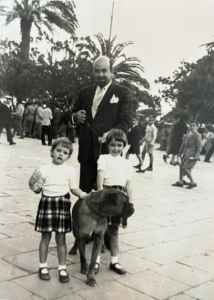
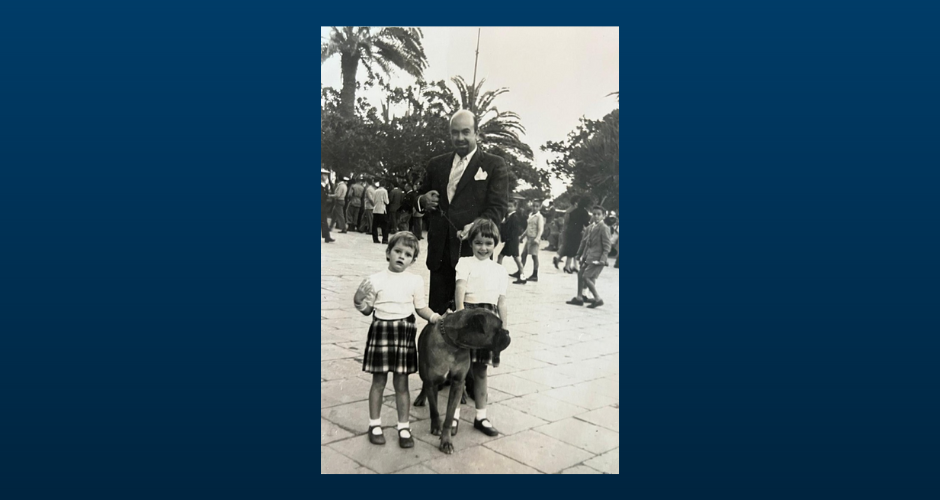
Stanley with Anita and Linda in Las Palmas circa 1956

A lot can be found on Stanley Pavillard online about his early life, his achievements during the war and his career as a doctor. What is less talked about, for obvious reasons, is his private family life. Stanley was a father to three daughters, Linda (my mother), Anita and Sandra. His wife, Irene, an extraordinarily witty and funny lady, remained in his shadow most of her life but shone equally bright in our hearts with her unique style.

Although a proud war hero, Stanley was marked by the war in ways that even I, as a five-year-old grandchild could notice. Due to lack of proper nutrition and vitamins in the camps, Stanley’s eyesight slowly deteriorated over the years to the point where he had very limited tunnel vision. As children, we were always told very strictly to move any toys out of the way or Grandpa might slip on them and fall. Another memory my mum shared with me is that Stanley told his daughters never to touch him while he was asleep. Out of fear of being attacked in his sleep, he had developed a hypervigilance during his time in the POW camps and would jump at any sound or movement. One night, little Linda forgot, touched her sleeping dad and to her surprise got a tight slap!

There were happy and funny memories too, of course, such as the big parties he would throw at the extravagant house he built for the family. I remember my grandfather surrounded by lots of guests and children, doing his favourite trick of hiding his hand in his sleeve and pulling it out suddenly with a loud roar to scare everyone. We couldn’t get enough of his tricks and jokes. Stanley had a sense of drama and a charisma that was hard to ignore. As a child I was both fascinated and terrified when I had a stomach-ache and would finally be brought to him for consultation. He would make me lie down and press his hands carefully against my tummy. The cure felt instant every time.

Stanley marked a generation or maybe even two with his tremendous work in saving so many lives during the war. My mum remembers the countless letters the family would receive at Christmas: Thank you, Pav, for saving my life. The love, generosity and compassion he radiated during those extremely hard times have marked history, together with all his fellow soldiers and prisoners who endured the war. What he left behind, and maybe passed on, is a capacity for adapting and surviving in the hardest situations, thanks to creativity and perseverance, as well as a willingness to move forward and create a life after traumatic events. Equipped with all these skills, our job as his family is to not only survive in a world that is complex in different ways but to thrive and work towards even better times.
Remembering Bobby Oxspring

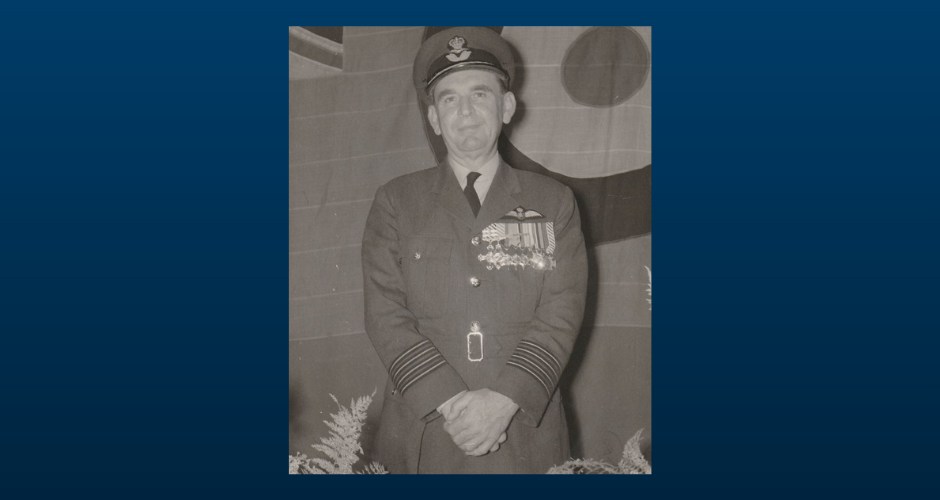
Group Captain Bobby Oxspring, author of Spitfire Command, saw action in many of the most famous battles of the Second World War, including Dunkirk and the Battle of Britain. To commemorate the eightieth anniversary of the end of World War Two, his great-grandson, Daniel, shares his reflections on Bobby’s life below.

Flying ace Robert (Bobby) Wardlow Oxspring held the rank of squadron leader when World War Two ended in May 1945. Throughout April 1945, he was confident that the war was soon to conclude. His mood on VE Day as an optimistic family man would have no doubt been a mixture of pride and reflection. He would have been proud of his achievements: he’d been made leader of the 141 Wing at Deanland only the year before, and had been awarded a Distinguished Flying Cross and Two Bars as a flying ace. He would have been reflecting on his numerous wartime adventures, from the Battle of Britain to his time in North Africa, Italy and many other countries. Bobby’s mood on VE Day likely matched the mood of many of ‘The Few’, and I have no doubt he would have felt joy at the war’s conclusion.
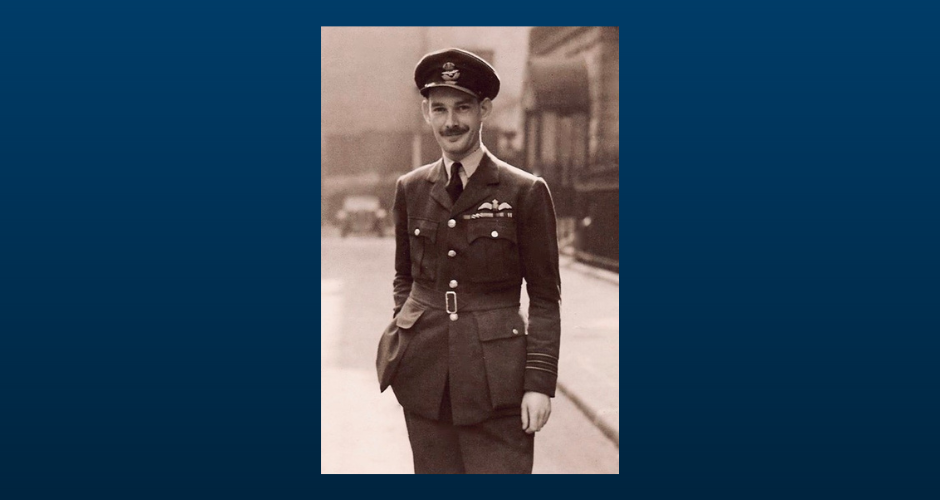
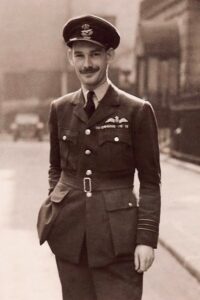
For me, the great-grandson of Bobby Oxspring, my great-grandfather has had a huge influence on my life — not only as a proud figure to look up to, exemplifying courage and bravery, but also through his stories. His career after VE Day did not lose momentum. He received a permanent commission as a flight lieutenant on 1st September 1945 and was promoted further to substantive squadron leader on 1st August 1947. One incredible achievement, however, was his award of an Air Force Cross. This was for leading number 54 Squadron of the RAF Vampires to Canada and the US, the very first jet aircraft to cross the Atlantic.

After VE Day, he never stopped being admirable. He undertook further tours, even across Italy, and eventually became Station Commander of RAF Gatow in Berlin. At Churchill’s funeral, he walked at the very front.

I have been to RAF Cranwell to see some of my great-grandfather’s personal scrapbooks and was even fortunate enough to sit in the cockpit of his recovered plane in the Dumfries and Galloway Museum in Scotland. These are only a few of the moments I have taken to reflect on his life.

On VE Day I am almost certain that one thought would have prevailed in his mind: his admiration and respect for the mighty Spitfire, and his pride at having flown it.

Remembering John Wooldridge

In September 1939 the twenty-year-old John Wooldridge, then a Sergeant Pilot, took part in the British air raid on Kiel, the first raid of World War Two.  Having brought his damaged aircraft home safely, he was awarded the Distinguished Flying Medal.  Commissioned in August 1940, he rapidly rose to the rank of Flight Commander, flying Lancasters as a Flight Lieutenant.  In the middle of 1942, for his part in the 1,000-bomber raid on Cologne, he was awarded the Distinguished Flying Cross.  By the end of the War, he had flown 97 missions over enemy territory.  To commemorate the eightieth anniversary of the end of World War Two, John’s daughter and son, Susan and Hugh, share their memories of him below.

John Wooldridge

On 9th and 10th May 1944, our father, Wing Commander John Wooldridge DSO, DFC*, DFM, returning from New York where his music was being performed at Carnegie Hall, flew over the Atlantic in a Mosquito, taking off from Goose Bay, Canada and landing six and a half hours later in Ballykelly, Northern Ireland.  In so doing, he broke the then speed record for crossing the Atlantic.

The Air Ministry, unsure what to do with this daring twenty-five-year-old, told him to lie low but, within a couple of days, they’d been outflanked by the Press and the story was all over the newspapers.  As our father writes in his diary for Sunday 14th May: Ye gods, what a splash! Headlines, pictures…

Meanwhile, on Monday 15th May in a London hairdresser, our mother, the distinguished British actress Margaretta Scott, was having her hair done.  Whilst under the dryer, she read the story in the London Evening Standard of this amazing trans-Atlantic flight.  But what really caught her eye was that the pilot was also a composer of serious music, who had composed a work for Narrator and Orchestra called The Constellations.

‘That’s my boy!’ she cried, as Sir Henry Wood had recently asked her to find a new work for Narrator and Orchestra for his upcoming Promenade Concerts, and she felt that The Constellations might be just the job.

Our mother immediately approached the Air Ministry, but they refused to give out the personal details of the record-breaking flyer.

The story would have ended there if, a couple of days later, at Denham Film Studios where she was making the film Fanny by Gaslight, our mother had not given a lift to a film publicist who, on their journey back to London, had boasted that he’d just been given a camembert cheese flown across the Atlantic by a friend, one John Wooldridge.

‘Bring him to tea!’ she cried.  And the next Sunday, there was our father on her doorstep — and that was it!  For the next fourteen years until our father’s sudden death in a car crash in 1958, our mother and father were as inseparable as their young family and busy work schedules would allow.

In the 1950s, Margaretta Scott continued to star in plays and films whilst John Wooldridge wrote his music and plays and films.  One of his most important films was the 1953 film starring Dirk Bogarde, Appointment in London, about a Royal Air Force Bomber Command squadron, for which he wrote both the screenplay and the music score.  To this day it continues to be screened to great acclaim and serves as a memorial to Bomber Command by one of their own.

By John Wooldridge:

Low Attack

Remembering Sydney Hart

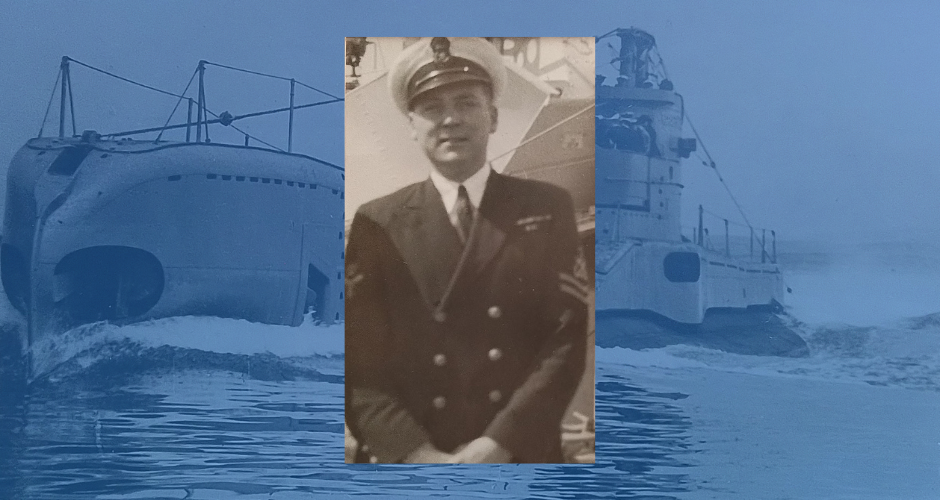
Sydney Hart, author of Submarine Upholder and Discharged Dead, served as a submariner in the North Sea, the Atlantic, and the Mediterranean during World War Two. To commemorate the eightieth anniversary of the end of World War Two, Sydney’s daughters Lynne and Andrea share their memories of him below.

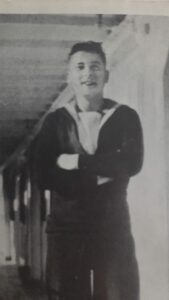
Sydney Hart

Our father came across as a somewhat hard man, but underneath there was a soft man with a dry, hilarious sense of humour, which must have been an asset in his seafaring days.

After leaving submarines, Dad decided to emigrate to Australia. He felt unsettled after entering Civvy Street in post-war England. Of course, his family and friends tried to deter him, but to no avail. Sydney made a formal application to emigrate. The £10 ‘Pommie’ fare allowed him a berth on the Empire Brent. Of course, his treasured motorbike had to come as well.

On a May morning, Dad sailed from Liverpool and shared a cabin with seven other fortune-seekers. The ship sailed full of £10 Pommies, seeking a better life in a sunny climate. On leaving England, Dad met his future wife — our mum, Betty — whilst looking over the railings. Upon arrival in Sydney, Australia, Dad travelled regularly on his motorbike to visit her, and their romance flourished. They had a secret wedding in October, with two witnesses who Dad had plucked off the street.

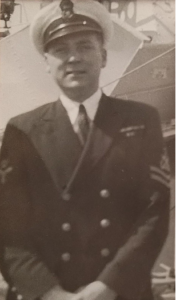
Sydney Hart

Home was a caravan in the bush. This was a lovely, contented start to married life for our parents, though the caravan lacked any amenities. They loved the friendly, relaxed manner of the people around them. After a very challenging wet season, our parents moved to a park with better facilities. It was in this park that I (Lynne) was born, in February 1951. Dad always wondered what his Australian daughter would think of her ‘Pommie’ parents. After much discussion, they decided to return to England. Whether this would be permanent or a holiday, they didn’t know. When I was nine months old, we sailed on the SS Strathmore back to England as a family.

On arrival at Grandad’s house in Standish, a village in Northwest England, we were greeted with a warm welcome party. Dad joined the crew of the George, bound for the Middle East, after a few weeks in England. Mum and I stayed with my paternal grandad. It was easy to see where Dad got his nature from. Grandad adored me and was quite a character. Everyone wanted to know why Mum and Dad hadn’t unpacked. The truth was, they weren’t sure if they were staying. Of course, a £10 Pommie had a full passage back.

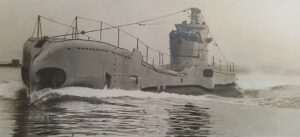
A submarine Sydney served on

They had a ticket confirming a passage back to Australia, but this took a long time to arrive and cost £225. They also declined other offers which would have made their life in England better. Just before the passage came through, Dad accepted a position with a car factory, as he had to support his family. We lived with Grandad for six years. During this time, Dad had three books published. We then moved to a bungalow about a mile away. In 1959, my sister Andrea Davina was born.

Dad stayed in his job until his retirement. Although he did this for his family, he never lost his wanderlust spirit.

Dad died suddenly in 1979. His last request was that he be buried at sea from Portsmouth, as a true submariner.