Remembering Stanley Pavillard

Captain Stanley Pavillard, author of Bamboo Doctor, served as a Medical Officer with the Straits Settlements Volunteer Forces during World War Two. When taken as a POW of Japan in 1942, he used his skills as a doctor to save the lives of many of his fellow prisoners, who were forced to work on the infamous Bangkok–Burma railroad. To commemorate the eightieth anniversary of the end of World War Two, his granddaughter Vanessa shares her memories of him below.
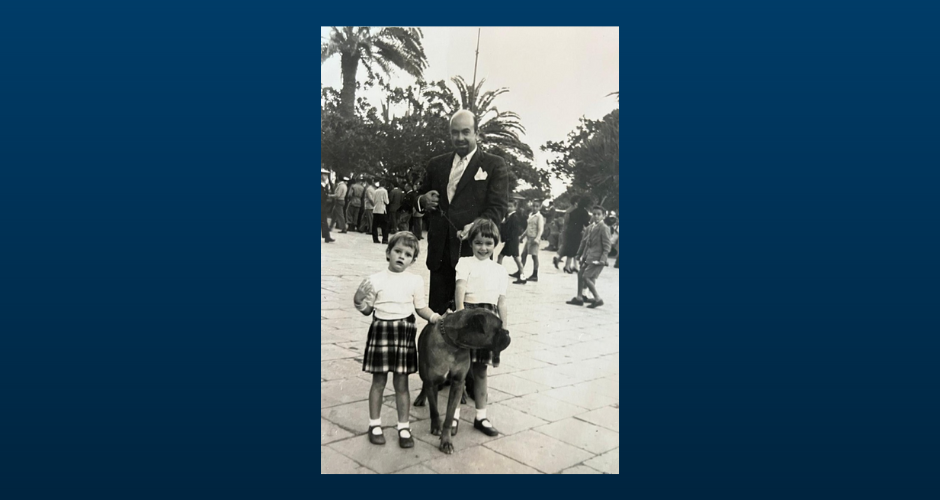
Stanley with Anita and Linda in Las Palmas circa 1956

A lot can be found on Stanley Pavillard online about his early life, his achievements during the war and his career as a doctor. What is less talked about, for obvious reasons, is his private family life. Stanley was a father to three daughters, Linda (my mother), Anita and Sandra. His wife, Irene, an extraordinarily witty and funny lady, remained in his shadow most of her life but shone equally bright in our hearts with her unique style.

Although a proud war hero, Stanley was marked by the war in ways that even I, as a five-year-old grandchild could notice. Due to lack of proper nutrition and vitamins in the camps, Stanley’s eyesight slowly deteriorated over the years to the point where he had very limited tunnel vision. As children, we were always told very strictly to move any toys out of the way or Grandpa might slip on them and fall. Another memory my mum shared with me is that Stanley told his daughters never to touch him while he was asleep. Out of fear of being attacked in his sleep, he had developed a hypervigilance during his time in the POW camps and would jump at any sound or movement. One night, little Linda forgot, touched her sleeping dad and to her surprise got a tight slap!

There were happy and funny memories too, of course, such as the big parties he would throw at the extravagant house he built for the family. I remember my grandfather surrounded by lots of guests and children, doing his favourite trick of hiding his hand in his sleeve and pulling it out suddenly with a loud roar to scare everyone. We couldn’t get enough of his tricks and jokes. Stanley had a sense of drama and a charisma that was hard to ignore. As a child I was both fascinated and terrified when I had a stomach-ache and would finally be brought to him for consultation. He would make me lie down and press his hands carefully against my tummy. The cure felt instant every time.

Stanley marked a generation or maybe even two with his tremendous work in saving so many lives during the war. My mum remembers the countless letters the family would receive at Christmas: Thank you, Pav, for saving my life. The love, generosity and compassion he radiated during those extremely hard times have marked history, together with all his fellow soldiers and prisoners who endured the war. What he left behind, and maybe passed on, is a capacity for adapting and surviving in the hardest situations, thanks to creativity and perseverance, as well as a willingness to move forward and create a life after traumatic events. Equipped with all these skills, our job as his family is to not only survive in a world that is complex in different ways but to thrive and work towards even better times.
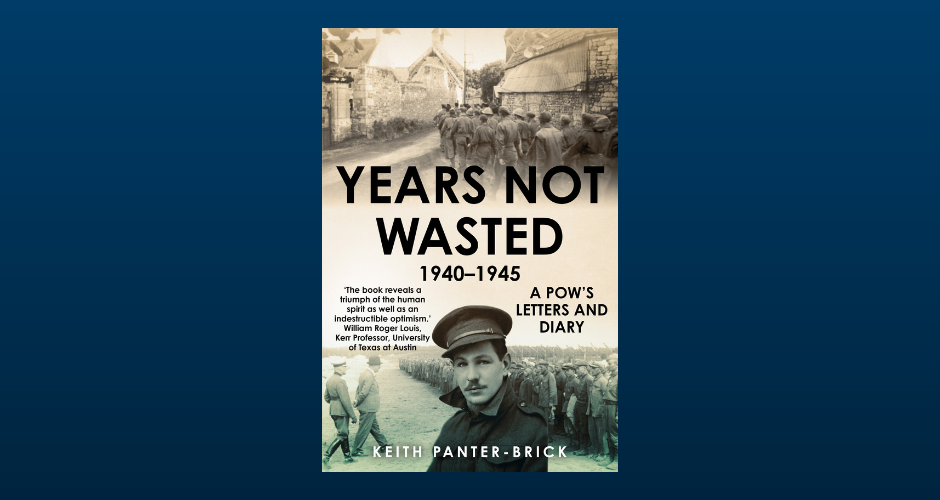
Reflections on Keith Panter-Brick’s Years Not Wasted

Keith Panter-Brick joined the Territorial Army in March 1939, at the age of eighteen. When war broke out six months later, he was sent to France, where he was entrenched ahead of the Maginot Line in spring 1940. Following the devastating German blitzkrieg, he was captured in May 1940 and spent the next five years as a prisoner of war. To commemorate the eightieth anniversary of the end of World War Two, Keith’s friend and colleague, Paul Jankowski — Raymond Ginger Professor Emeritus of History at Brandeis University — reflects on Keith’s harrowing wartime memoir, Years Not Wasted, below.

“We were totally outclassed,” Keith Panter-Brick told me in the early 2000s. He was speaking of May 1940, when the German land and air forces overwhelmed the Allied forces in Belgium and northern France. Taken prisoner that month, he spent the next five years — the first half of his twenties — in German prisoner of war camps (Stalags) in occupied Poland. The mental honesty, scrupulous accuracy, and personal humility in his brief comment captured much of the man, the scholar, and the friend I would first meet some fifty years later.

The same qualities would reappear in his memoir, Years Not Wasted. When he returned home to Merseyside, England, in 1945, all he had was his diary, along with the many letters that had somehow reached his family. He would return to them many years later in his memoir, retelling and perhaps reliving the captivity that he and other captured Western soldiers had to endure. They contended with conditions worse than those of the officers, but far better than those of the Soviet and Polish prisoners, most of whom perished in one of the great war crimes of the Second World War. Neither self-pity nor heroics coarsen his narrative. He writes of malnutrition and bitter cold, but also of Red Cross parcels, of boredom but also release, of submission but also resistance and, in his case, attempts at escape — once in 1944 from the camp itself, and again in 1945 from the virtual death-march out of it.

It is a recollection mixing scrupulous honesty with vivid detail, on one level a document about captivity in wartime, on another a spiritual memoir of inner freedom wrested from adversity, before its physical reality was finally restored.

Remembering Bobby Oxspring

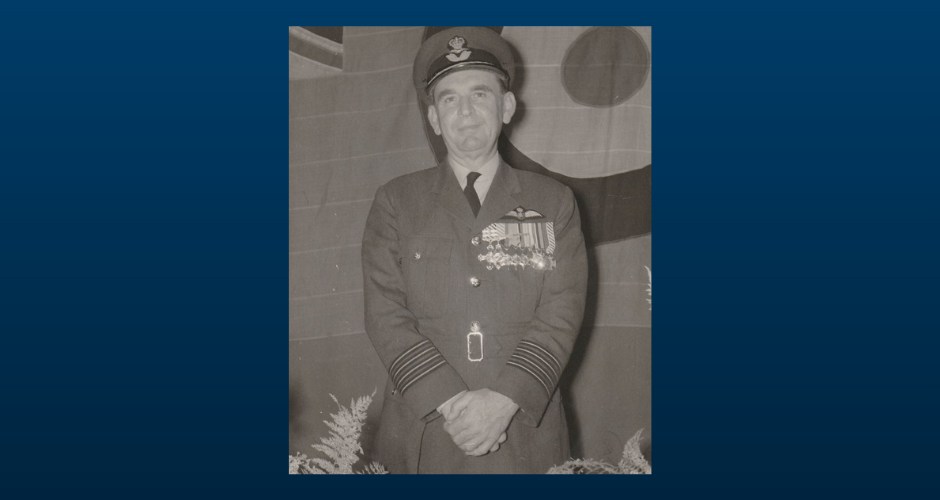
Group Captain Bobby Oxspring, author of Spitfire Command, saw action in many of the most famous battles of the Second World War, including Dunkirk and the Battle of Britain. To commemorate the eightieth anniversary of the end of World War Two, his great-grandson, Daniel, shares his reflections on Bobby’s life below.

Flying ace Robert (Bobby) Wardlow Oxspring held the rank of squadron leader when World War Two ended in May 1945. Throughout April 1945, he was confident that the war was soon to conclude. His mood on VE Day as an optimistic family man would have no doubt been a mixture of pride and reflection. He would have been proud of his achievements: he’d been made leader of the 141 Wing at Deanland only the year before, and had been awarded a Distinguished Flying Cross and Two Bars as a flying ace. He would have been reflecting on his numerous wartime adventures, from the Battle of Britain to his time in North Africa, Italy and many other countries. Bobby’s mood on VE Day likely matched the mood of many of ‘The Few’, and I have no doubt he would have felt joy at the war’s conclusion.
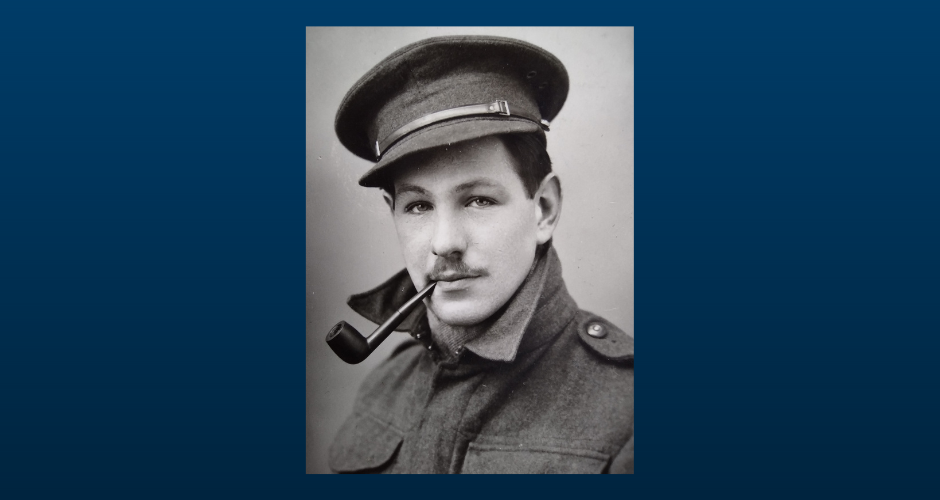
For me, the great-grandson of Bobby Oxspring, my great-grandfather has had a huge influence on my life — not only as a proud figure to look up to, exemplifying courage and bravery, but also through his stories. His career after VE Day did not lose momentum. He received a permanent commission as a flight lieutenant on 1st September 1945 and was promoted further to substantive squadron leader on 1st August 1947. One incredible achievement, however, was his award of an Air Force Cross. This was for leading number 54 Squadron of the RAF Vampires to Canada and the US, the very first jet aircraft to cross the Atlantic.

After VE Day, he never stopped being admirable. He undertook further tours, even across Italy, and eventually became Station Commander of RAF Gatow in Berlin. At Churchill’s funeral, he walked at the very front.

I have been to RAF Cranwell to see some of my great-grandfather’s personal scrapbooks and was even fortunate enough to sit in the cockpit of his recovered plane in the Dumfries and Galloway Museum in Scotland. These are only a few of the moments I have taken to reflect on his life.

On VE Day I am almost certain that one thought would have prevailed in his mind: his admiration and respect for the mighty Spitfire, and his pride at having flown it.

Remembering Keith Panter-Brick

Keith Panter-Brick joined the Territorial Army in March 1939, at the age of eighteen. When war broke out six months later, he was sent to France, where he was entrenched ahead of the Maginot Line in spring 1940. Following the devastating German blitzkrieg, he was captured in May 1940 and spent the next five years as a prisoner of war. To commemorate the eightieth anniversary of the end of World War Two, Keith’s daughter Catherine — Professor of Anthropology, Health, and Global Affairs at Yale University — shares her memories of her father below.

“Each day life is hanging in the balance.” That was the phrase with which my father ended his book, Years Not Wasted. I think that everyone with a lived experience of war will understand that sentence: the notion that you may or may not live, may or may not be free, may or may not return.

Keith Panter-Brick was a prisoner of war in Poland from 1940 to 1945. He was captured at Isières when he was just nineteen. Under the Geneva Convention, ordinary soldiers were obliged to work — and were put to hard labour in POW camps. If he ever survived the cold, hunger, exhaustion, and brutality of war, Keith promised himself that he would study philosophy and go to university, the first of his family to do so. Admitted to Keble College, Oxford, he joined a postwar student delegation to Heidelberg for cultural exchange and reconciliation. There he met my mother, a student from Alsace-Lorraine on a French delegation to Heidelberg. The two fell in love — my father courted in German, their only common language at the time — and in that short week, they decided to marry. They built a family, rooted in the practice of non-violence and cross-cultural understanding.

My father’s book began decades later, assembled from scraps of his diary, postcards, and letters sent through the Red Cross, all of which he had kept hidden away in a shoebox. On page seven of the first edition, you’ll find his death certificate — the Office of the Cheshire Regiment officially reported him killed in action in May 1940. It took months for news of his survival to reach home. That certificate became for me the most vivid proof that life indeed is hanging in the balance.
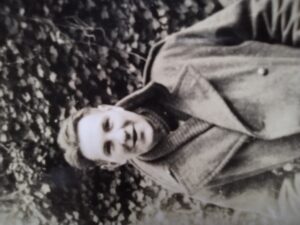
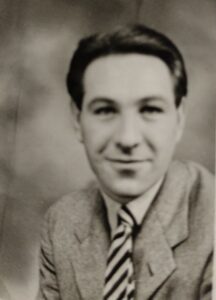
Years Not Wasted isn’t a grand officer’s tale. It’s a soldier’s story, grounded in hard labour, frostbitten marches, and everyday endurance. Because he learnt passable German, Keith was once included in an escape attempt with RAF officers, only to be recaptured in Gdansk, at the dockside when attempting to board a Swedish vessel. He survived the Great March out of Poland in the most brutal of winters, thanks to a pair of good boots made in his father’s bootmaker shop. Even years later, my sister Brigitte, now a regular walker in the forests of Lorraine, measures distances in fractions of “Great March kilometres.” In my own teaching and research, I focus on the biological and social signatures of war across generations, and on pathways to peace. My son Jannik chose to study POW trade and barter systems for his Masters’ dissertation at Cambridge. Each of us carries a trace of my father’s war experience.

My father was impetuous. Once, while we were travelling from Nigeria to Cameroon, he filmed a bull elephant that decided to charge us on a dusty road. He stood in front of the car with the hand-held camera, while we huddled in the back. He once flagged down the pilot of a plane by running onto the runway, not wanting to miss his actual flight. But he became, over the years, immensely patient. Whilst a professor at the London School of Economics, he turned to gardening, building stone walls, and restructuring the house we purchased in Lorraine — a house that still has “2 OFF” (“must house two German officers”) carved in the front doorway. My father taught me to value ordinary things in everyday life: raking leaves, washing dishes, being attentive to other people. He never forgot what it meant to be hungry. He told me that being alive is a gift from God, and that good health is a blessing one can only really understand after one has lost it.

In 2025, we republished Years Not Wasted. It’s more than a memoir — it’s a witness statement. It honours ordinary soldiers who endured extraordinary hardship. It is a uniquely authentic book, told in the way it was recorded in letters and a diary at the time, rather than reconstructed from fallible memory. It was written to share the knowledge “soon acquired once war has started that the cost, in lives, in grief, in suffering, is immeasurable, and unacceptable however much one did accept it at the time.” It’s a call to remember how people like my father built their lives after war, choosing patience over bitterness, solidarity over division, peace over conflict. For my father, it was always about taking one step at a time, drawing from patience and reflection. That is the lesson I carry forward.
Remembering John Wooldridge

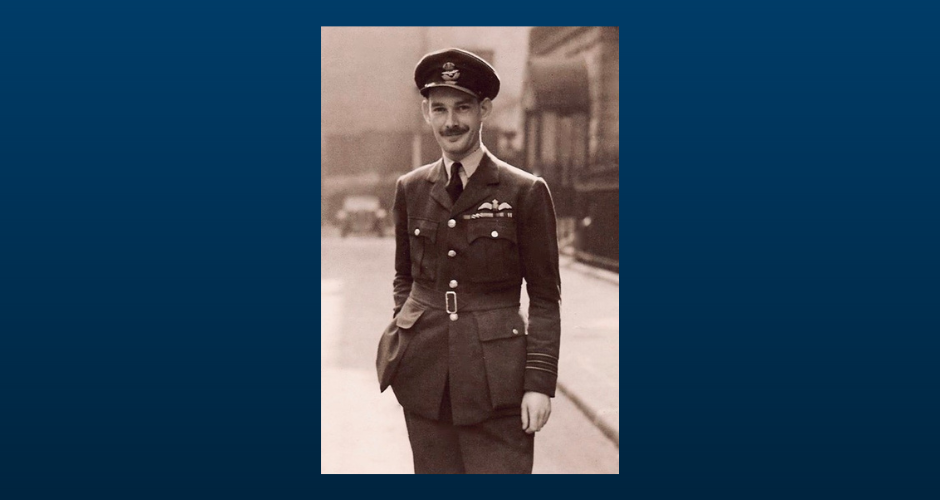
In September 1939 the twenty-year-old John Wooldridge, then a Sergeant Pilot, took part in the British air raid on Kiel, the first raid of World War Two.  Having brought his damaged aircraft home safely, he was awarded the Distinguished Flying Medal.  Commissioned in August 1940, he rapidly rose to the rank of Flight Commander, flying Lancasters as a Flight Lieutenant.  In the middle of 1942, for his part in the 1,000-bomber raid on Cologne, he was awarded the Distinguished Flying Cross.  By the end of the War, he had flown 97 missions over enemy territory.  To commemorate the eightieth anniversary of the end of World War Two, John’s daughter and son, Susan and Hugh, share their memories of him below.

John Wooldridge

On 9th and 10th May 1944, our father, Wing Commander John Wooldridge DSO, DFC*, DFM, returning from New York where his music was being performed at Carnegie Hall, flew over the Atlantic in a Mosquito, taking off from Goose Bay, Canada and landing six and a half hours later in Ballykelly, Northern Ireland.  In so doing, he broke the then speed record for crossing the Atlantic.

The Air Ministry, unsure what to do with this daring twenty-five-year-old, told him to lie low but, within a couple of days, they’d been outflanked by the Press and the story was all over the newspapers.  As our father writes in his diary for Sunday 14th May: Ye gods, what a splash! Headlines, pictures…

Meanwhile, on Monday 15th May in a London hairdresser, our mother, the distinguished British actress Margaretta Scott, was having her hair done.  Whilst under the dryer, she read the story in the London Evening Standard of this amazing trans-Atlantic flight.  But what really caught her eye was that the pilot was also a composer of serious music, who had composed a work for Narrator and Orchestra called The Constellations.

‘That’s my boy!’ she cried, as Sir Henry Wood had recently asked her to find a new work for Narrator and Orchestra for his upcoming Promenade Concerts, and she felt that The Constellations might be just the job.

Our mother immediately approached the Air Ministry, but they refused to give out the personal details of the record-breaking flyer.

The story would have ended there if, a couple of days later, at Denham Film Studios where she was making the film Fanny by Gaslight, our mother had not given a lift to a film publicist who, on their journey back to London, had boasted that he’d just been given a camembert cheese flown across the Atlantic by a friend, one John Wooldridge.

‘Bring him to tea!’ she cried.  And the next Sunday, there was our father on her doorstep — and that was it!  For the next fourteen years until our father’s sudden death in a car crash in 1958, our mother and father were as inseparable as their young family and busy work schedules would allow.

In the 1950s, Margaretta Scott continued to star in plays and films whilst John Wooldridge wrote his music and plays and films.  One of his most important films was the 1953 film starring Dirk Bogarde, Appointment in London, about a Royal Air Force Bomber Command squadron, for which he wrote both the screenplay and the music score.  To this day it continues to be screened to great acclaim and serves as a memorial to Bomber Command by one of their own.

By John Wooldridge:

Low Attack

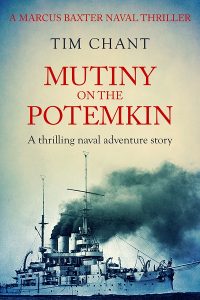
Mutiny on the Potemkin Published Today

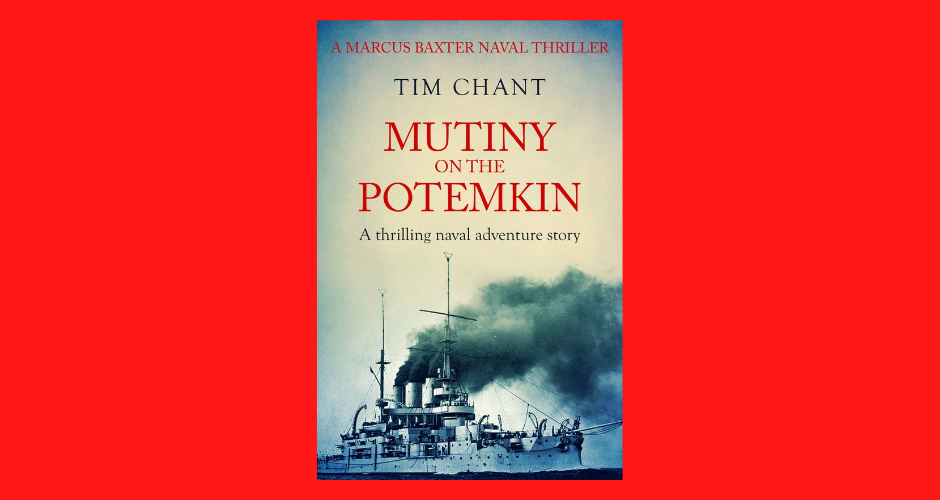
Congratulations to Tim Chant, whose exhilarating nautical action novel, Mutiny on the Potemkin, is published today!

Mutiny on the Potemkin is the second book in the Marcus Baxter naval thriller series: action-packed, authentic historical adventures following former Royal Navy officer Marcus Baxter during the early 1900s.

Marcus Baxter may have survived one naval battle, but his troubles are far from over.

Despite serving with the Russian navy aboard the Yaroslovich, he is arrested by the Tsarist secret police for conspiracy and sent west on the Trans-Siberian railway to St. Petersburg. Competing factions within the secret police disrupt his journey and he finds himself in Odessa.

Odessa, though, is in the grip of revolutionary riots and Baxter finds himself trapped in the city as violence and anarchy spreads.

The crew of the Potemkin has mutinied, killing most of the officers and bringing the battleship into port.

When Baxter realises a friend is trapped in the carnage, he is determined to get onboard the battleship.

But will he make it out alive?


Click here to order Mutiny on the Potemkin

A Poem for Remembrance Day by Ronald Healiss

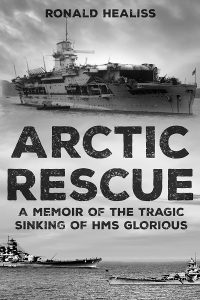
Ronald Healiss is the author of ARCTIC RESCUE: A MEMOIR OF THE TRAGIC SINKING OF HMS GLORIOUS. For Remembrance Day, his son, Doug, shares some memories of his father along with a poem Ronald wrote towards the end of his life.


Passers By

We are only passers by — through this world of sorrow

Here today a little while and gone tomorrow

Only once we come this way

We can’t come back

Let us make this world a little brighter

Scattering our seeds of friendship in the wayside grass

Some day they may bloom and cheer some poor pilgrim with a heavy load

Of doubt and fear

Life is just a journey, doesn’t it seem madness

The envy and enmity, the sorrow and the sadness

All the world’s great wealth for which men fight and kill and lie … is it worth it

when you think…

we are only passers by


Ronald Healiss wrote Passers By just a day or two before he passed away on 25th December 1980 (yes, at noon on Christmas Day! His Liverpudlian humour would no doubt have led him to think it was nice timing!). Ronald had been one the few survivors of the most tragic events of World War Two, the sinking of HMS Glorious and her two escorting destroyers, Acasta and Ardent, which cost the lives over 1,500 men.

Although he managed to record his memories of this horrific ordeal in his book, ARCTIC RESCUE, he rarely talked about his experiences and could never be found on Remembrance Sunday while other members of the family watched the commemoration at the Cenotaph on television.

In the years after his death, Passers By, which was dedicated to the deceased crew of the three ships, has been read out at a number of Remembrance Services held by the HMS Glorious, Ardent & Acasta Association at HMS Drake, Plymouth, and is being shared with you now to commemorate the lives that were lost.

We will remember them.