Rhythms of the Heart is Published Today!

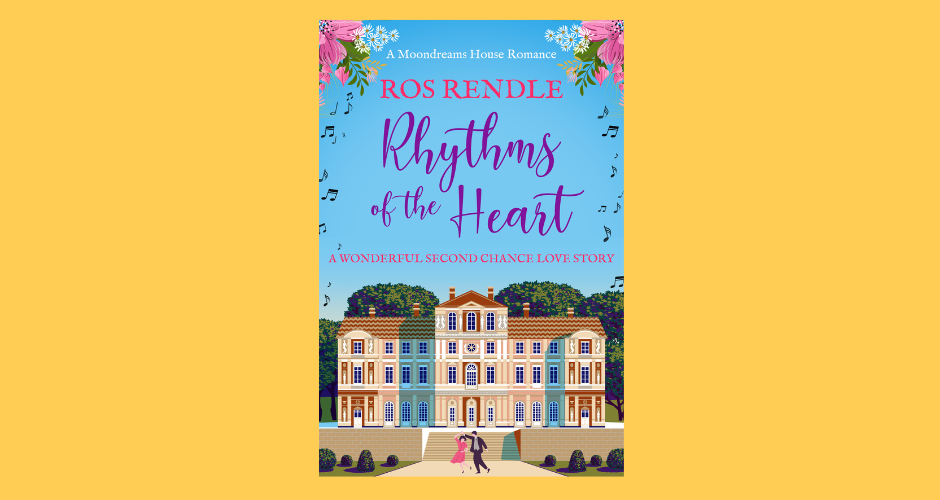
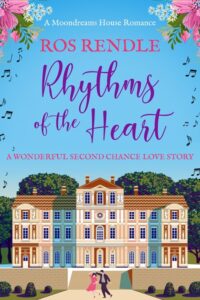
Congratulations to Ros Rendle, whose gorgeous contemporary romance, Rhythms of the Heart, is published today! Rhythms of the Heart is the first book in the Moondreams House series.

Having been widowed for eighteen months, 39-year-old Annie Ellis is searching for a way to support herself.

When she runs into Harry Moon — an old flame from her teenage years — her life takes a direction she never expected.

Separated from his wife and now working as a concierge at Moondreams House — a large local estate — Harry understands what it is like to feel alone. As their friendship progresses, Annie confides her ambition to run a dance school. Admiring her vision, Harry encourages her to rent the ballroom of Moondreams House for her new venture.

Happy with her career path, Annie’s grief over her late husband slowly eases. Believing she is ready for romance, she begins to look for someone to share her new beginning…

Will Annie make a success of her dance school? Is love on the horizon?

Or will the pain of the past hold her back…?

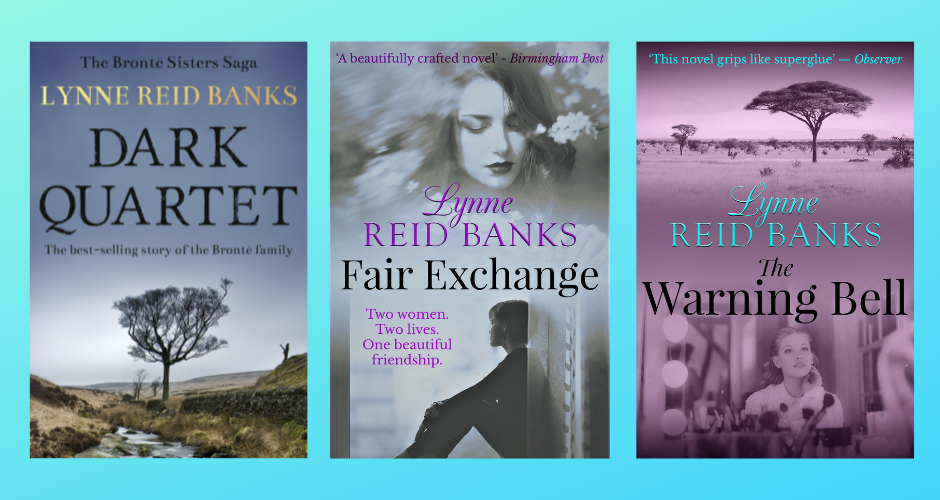
Celebrating Lost Voices: Lynne Reid Banks

In this blog series, Sapere Books spotlights authors whose books have gone out of print and whose work we are republishing, in an effort to revive the most vibrant and engaging voices of the past. This month, we are delighted to spotlight Lynne Reid Banks, author of The Brontë Sisters Saga and several standalone literary novels.

Lynne Reid Banks was born in London in 1929, the only child of a Scottish doctor and Irish actress. During World War Two, she was evacuated to the prairies of Canada, where she lived for five years. Banks went on to have a rich and varied career: prior to becoming a writer, she studied at RADA in the 1940s and became an actress. She then worked for ITN, becoming one of the first female television news reporters in Britain.

Banks’ first novel, The L-Shaped Room — a frank and sensitive portrayal of an unmarried mother-to-be who is thrown out by her father — was published in 1960 and achieved much critical acclaim. In the early 1960s, Banks and her husband moved to a kibbutz in Israel, where she taught English. In 1971, they moved back to London and Banks continued writing.

As an author, Banks is outstandingly versatile; she has written numerous children’s books and ten adult novels. These include Dark Quartet, a fictionalised biography of the Brontë sisters; Casualties, a heart-breaking saga spanning from Nazi-occupied Holland to 1970s Europe; Children at the Gate, the story of a grieving mother living in Israel; Fair Exchange, a moving novel set in England during the Anti-Apartheid movement; and The Warning Bell, which portrays the life of an actress turned news reporter.

The shadows of Banks’ life experiences can often be seen in her novels, contributing to the commendable realism and depth of the settings. Whatever the genre, her wit, beautiful writing style and well-crafted characters shine through.

Click here to find out more about The Brontë Sisters Saga

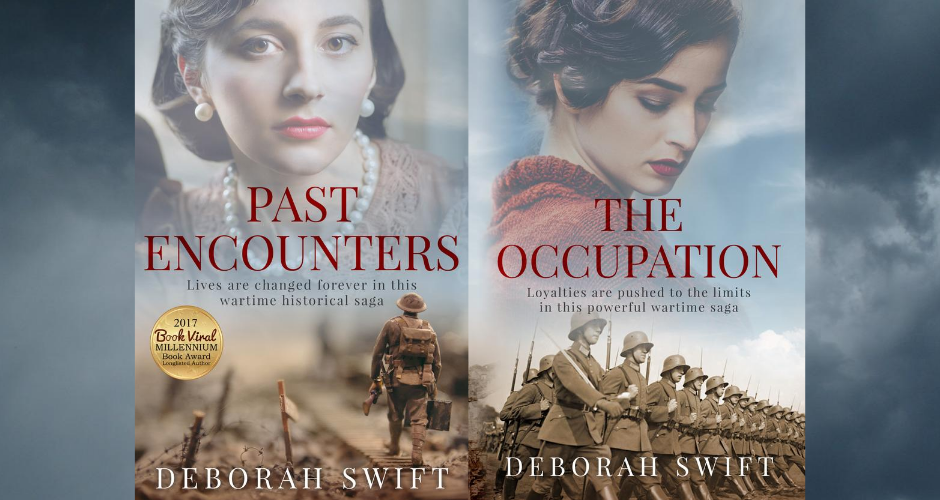
Sapere Books Sign Four Historical Sagas by Deborah Swift

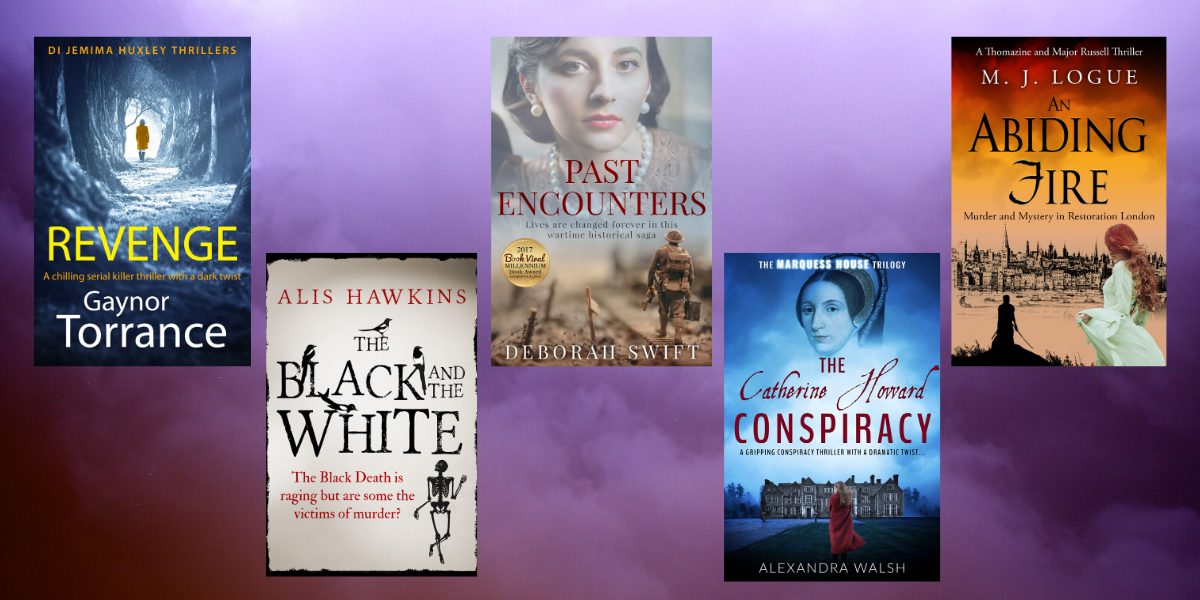
Following the publication of Deborah Swift’s extraordinary wartime sagas – PAST ENCOUNTERS and THE OCCUPATION – editorial director Amy Durant has signed four more of her books.

In Deborah’s words:

“I’m really thrilled to have signed with Sapere Books for my third WW2 novel, THE LIFELINE, in which a teacher flees Nazi-occupied Norway and escapes to Scotland on a small fishing boat, in an operation known as The Shetland Bus.

“Not only that, but I’ve signed with Sapere for three more historical novels set further back in time. The first, THE POISON KEEPER tells the story of Giulia Tofana, the woman who, according to legend, poisoned six hundred men in 17th Century Italy. The deadly poison Aqua Tofana bears her name. Italy in the 17th Century is a fascinating brew of baroque religion, art and culture, and the legacy of the ‘Camorra,’ the 17th Century Mafia. THE POISON KEEPER is set in Naples under the smoking shadow of Mount Vesuvius. There will be two further books in the Italian series; the other two books will be set in Venice and Rome.

“I was delighted to be offered a home for four new books (four books!) with Sapere, as not only do they offer very good royalty rates to authors, but they have a really strong, supportive author community.”

Amy commented: “Deborah is a wonderful storyteller, and I am extremely happy she has chosen to continue partnering with Sapere Books for her next four novels. Fans of her first two Second World War novels won’t have to wait much longer for her third wartime-era book; THE LIFELINE will be available to preorder soon.”


Click here to order PAST ENCOUNTERS

Click here to order THE OCCUPATION

Sign up to Deborah’s newsletter to stay up to date with her book news and latest releases.

Sparkling Summer Reads by Lewis Cox

This summer, settle down with a charming, classic love story by Lewis Cox – a master of the genre!

ONE SPRING IN PARIS follows Caroline May, a young artist studying her craft in the city of love. When her money runs out, she resolves to find a way to remain in the place that inspires her most. Through friends, she finds work with melancholy restauranteur Raoul Pierre. As soon as they meet, Caroline finds herself irresistibly drawn to her new employer. But knowing that Raoul is a determined bachelor, she vows to hide her feelings to protect her heart…

Click here to order ONE SPRING IN PARIS

THE WAYWARD WIND is a fun and flirty summer romance set in sunny Madeira. Fleeing a London scandal that has damaged her reputation, the capricious Ann Thrail arrives at her aunt and uncle’s idyllic home in Portugal for a long stay. But her aunt, Kate, soon begins to worry that Ann will lead her son astray. With no wish to return home, Ann must learn to rein in her chaotic nature and win over her anxious relatives…

Click here to order THE WAYWARD WIND

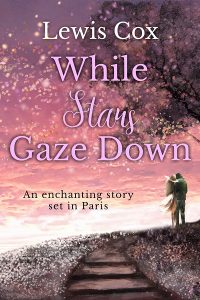
WHILE STARS GAZE DOWN is a beautiful story of healing and new beginnings. Nursing a recently broken heart, Diana Gregg attempts to move on by immersing herself in the delights of Parisian society. But when she crosses paths with John Fanshawe — who reminds her of her ex-boyfriend — she decides to protect herself from further pain by maintaining a distance between them. Confused by Diana’s reserved attitude, John is determined to overcome her apparent dislike…

Click here to order WHILE STARS GAZE DOWN

To further celebrate her work, we asked Lewis Cox’s granddaughter, Priscilla Playford, to say a few words about her life and achievements:

“My grandmother wrote over 250 novels all in longhand; she started her career in the late 1920s and continued writing well into her 80s. She wrote under the names of Lewis Cox, Bridget Parsons and Mary Blair, and her books were published, primarily, by Hutchinson, Mills & Boon and later, Robert Hale. They were available in many countries and translated into several languages, including Japanese and Dutch.

In her writing, as in life, my grandmother was very disciplined and forthright with a strong will and high standards. Not outgoing, she did not seek publicity but enjoyed her success and, whilst not a traveller, it is perhaps true that she lived through her imagination. She loved antiques and enjoyed collecting furniture and pictures.

One cannot help but admire all that she achieved, particularly at a time when women were expected to be in the background — hence her using the name ‘Lewis Cox’ — and during the war; judging by the cuttings, she was very highly thought of and had good reviews and billing.”

Celebrating International Women’s Day

To celebrate International Women’s Day (8th March) we asked five of our authors to tell us all about their favourite female writers. Read on to find out more about their literary heroines!

Alis Hawkins, author of The Black and the White and Testament

My all-time favourite author is Joanna Trollope. An odd choice for a crime author? Not at all. Wonderful writing transcends genre, and she inspires me by drawing characters with a fine eye to dialogue and interaction; by bringing whole scenes to life with a few telling details; by making her readers care passionately about what happens to her characters.

Joanna Trollope has shown me how essential it is to do your research meticulously, to immerse your readers in the world you’re writing about – whether it’s a cathedral close or a dairy farm, a ceramics factory or a Spanish vineyard – but never to include a single unnecessary fact that might slow the action down.

Each Joanna Trollope novel begins with a single key event that turns the lives of all her interrelated characters upside down – and what else does a murder at the beginning of a book do but that?

Order THE BLACK AND THE WHITE here

Order TESTAMENT here

M. J. Logue, author of the Thomazine and Major Russell Thrillers

My busy little mind raced over all the possibilities – Tanith Lee, Storm Constantine, Dorothy Dunnett, Helen Hollick … but there can be only one, for me. Aphra Behn, of course. It’s not the what or the how of her writing, but the enigma and the old-school glamour of the writing persona she created – the international woman of mystery, the myths with which she surrounded herself – that inspires me. (Three hundred and fifty years later, she’s still a mystery!)

She was the first female literary professional, she did all her own publicity, and she’s still incredible. Possibly a spy, possibly bisexual – both, I suspect, images she manipulated to the hilt – and definitely a woman who knew how to work an audience. The fact that her plays and poems still resonate with us now is remarkable. She created characters that speak to us, no matter what clothes they’re wearing.

Order AN ABIDING FIRE here

Or find out more about the Thomazine and Major Russell Thrillers here

Deborah Swift, author of Past Encounters and The Occupation

The first Rosie Tremain novel I read was Music and Silence, set in the Danish court in the early 17th Century. Marvellously atmospheric, it shifts between different narrative styles: small vignettes that add up to a magnified version of life in Copenhagen that is so real, you feel you are there.

I’ve read all her other books since, including the more contemporary The Road Home, about an economic migrant arriving in the UK, who observes with bafflement the English obsession with status and success. I admire Tremain’s precision, and that is something I want to achieve in my own writing.

Order PAST ENCOUNTERS here

Order THE OCCUPATION here

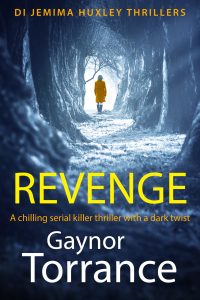
Gaynor Torrance, author of the DI Jemima Huxley Thrillers

I write in the genre I love to read, and being an avid reader of crime fiction, there are so many female authors whose work I admire. A particular favourite of mine is Sophie Hannah. I first stumbled across her books by chance, when I borrowed a copy of Little Face from my local library. Once I started reading, I couldn’t put it down.

Since finishing that particular book, I’ve worked my way through much of the Culver Valley Crime series. I adore the originality and complexity of Sophie’s plots, which have lashings of intrigue and misdirection. The central characters, DS Charlie Zailer and DC Simon Waterhouse, are such a great pairing. They’re both so dysfunctional and vulnerable in many ways, yet somehow form a compelling and likeable team.

Order REVENGE here

Or find out more about the DI Jemima Huxley Thrillers here

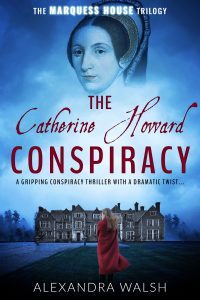
Alexandra Walsh, author of The Marquess House Trilogy

She may be old-fashioned, and her comments can make me wince, but take away the occasionally dubious contents of a bygone era and Enid Blyton remains a huge inspiration with the breadth of her storytelling skill. In her adventure books, her plotting is deft and sharp, while in her fantasy books her imagination is broad and tantalising.

As a child, she shaped my reading habits but my eureka moment came when I was reading In the Fifth at Malory Towers. I was already harbouring ambitions to be a writer, but it was only a dream. Then, the heroine of the series, Darrell Rivers, wrote the school pantomime. Suddenly, I thought, If Darrell can do it, then so can I! My life path was set. From reading Enid Blyton’s work, I learned that girls were stronger and more effective if they worked together, that girls could do as much as boys and usually more, and that if you were determined you could solve anything – lessons that still resonate today.

Order THE CATHERINE HOWARD CONSPIRACY here

Or find out more about The Marquess House Trilogy here

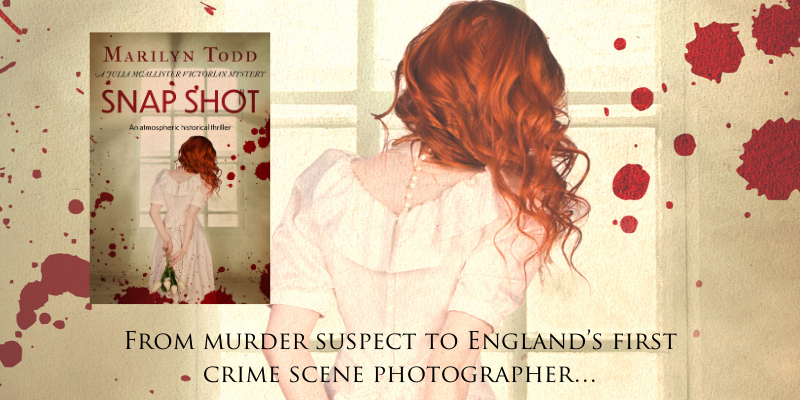
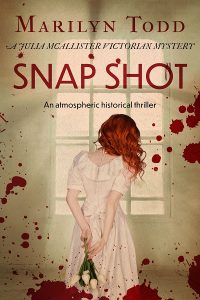
Intrigued by SNAP SHOT? Read the first chapter for free now!

 Chapter 1


‘This —’ The owner of the house cleared his throat and tried again. ‘This is highly irregular.’ He tapped the letter from Whitmore Photographic. ‘The proprietor assures me that he will personally be taking Flora’s portrait.’

Julia McAllister glanced at the four-year-old, sitting bolt upright in her best pink taffeta dress. A froth of ringlets cascaded over her shoulders, and the silver locket round her neck twinkled in the meagre light. With her favourite dolls cradled in her arms, three of them in each, you could be forgiven for thinking the little mite was still alive.
‘My employer, poor man, his health took a turn for the worse.’ Julia flashed a tortured smile. ‘His heart, I’m afraid. Notoriously unreliable.’

‘Yes, but even so.’ Her client’s eyebrows met when he frowned. ‘A woman?’

Julia slotted the plate holder into her camera. She bit her lip, and reminded herself that this was just a job, another routine portrait — that she should knuckle down, take the picture, forget the subject was a baby.

‘Mr. Whitmore would not have entrusted me with such a sensitive task,’ she assured the grieving father, ‘unless he had every confidence in my ability.’

‘For my part —’ his wife’s voice was little more than a croak — ‘I’m comforted that a member of my own sex is looking after Flora. Women,’ she added shakily, ‘are infinitely more sympathetic, so come, dear.’ She pulled her husband’s sleeve. ‘Let us leave Miss McAllister in peace.’

Mrs., Julia wanted to correct. It’s Mrs. McAllister. But the death of their only child was testing the couple’s strength, their marriage and, judging from the cross on the mantelpiece that had been laid flat, their faith in Jesus Christ. Like families everywhere, too much in life had been taken for granted. It was only when the flame was snuffed, in this case without warning, that it was driven home how little they had to remind them of their loved ones. They wanted this picture to cling to and cherish.

‘Rest assured,’ she said, ‘I will do your daughter proud.’

Alone in the parlour, Julia took a series of deep breaths and forced herself to block out the red flock walls that threatened to close in, the gagging scent of lilies, the silence of the grandfather clock, whose pendulum had been removed and wouldn’t be replaced until Flora lay in her grave. How sad. How desperately tragic. When your husband dies, you become a widow. When your parents die, you become an orphan. Yet there’s no word to describe someone who loses a child.

To calm her nerves, Julia followed her familiar ritual of running her hand over the Spanish mahogany case of her camera, inhaling the leathery tang of the bellows and fingering the handmade dovetail joints. (None of those factory-made monstrosities, thank you very much.) By the time she’d given the brass fittings one last unnecessary polish, she felt in control, and disappearing under the heavy dark cover, she examined the image. After all this time, she hadn’t grown used to seeing the world upside down, but there, now — a quick tweak to the focus, a slight tilt to the left, a touch of back swing and —

Mother of God!

The girl’s hand moved.

Nonsense. It must have been a trick of the candles, and that was the problem with having the curtains drawn and the mirrors draped in black. The shadows played havoc.

There! It moved again!

Julia sloughed the sheet from her shoulders and squinted. Impossible. Flora fell downstairs and snapped her neck. In fact, the only thing holding her upright was a metal clamp under her pretty lace collar, and a rope, artfully hidden by dolls, tying the girl to the chair. Julia should know. She’d put them there.

No, no, no. The dead don’t —

‘Ow!’ a voice squealed.

‘Were you trying to steal that locket?’ Julia grabbed the young boy hiding behind the body.

‘Lemme go, you’re pinching!’

‘Did you think I wouldn’t spot a third hand? A third hand, I might add, caked with a six-inch layer of grime.’

‘I said lemme go!’

‘This will be a double exposure in every sense, if you don’t quit squawking.’ Julia examined the urchin in front of her. Eight, was he? Nine? ‘How did you get in?’

‘Door’s open, innit.’

Of course. The front door had been left partly open for mourners to enter without jarring the nerves already stretched past breaking point.

‘So you thought you’d sneak in and steal the locket that probably contains a clipping of her hair, which is all her mother has to remember her only daughter by?’

The defiance crept out of the boy’s face. ‘You gonna report me to the rozzers?’

‘No.’

‘Why not?’

‘Because these are good people, who don’t need to know that some stray urchin crept in their house, defiled their daughter’s body and was caught stealing her precious locket. They’ve suffered tragedy enough, and I won’t have you adding to their misery.’

‘Wotcha gonna do, then?’

‘I am going to take this girl’s portrait, that’s what I’m going to do, and you, sir, are going to help me.’

Me? I don’t know nuffin’ about photographs.’

Julia fluffed the girl’s lace collar to hide the mucky handprint on the taffeta. ‘You don’t need to. Just hold the curtain open — the left one if you please — to throw some decent light in the room.’

‘Like that?’

‘Exactly like that.’ She pressed the shutter release, changed the plate, took another, then another, then another.

‘Why d’you take so many?’ He sniffed, and wiped his nose on his sleeve. ‘It’s not like she’s gonna move and throw the focus out.’

‘For someone who professes to know nothing about photography, you seem remarkably well informed. However, your expertise is no longer required, young man. Time for you to leave, preferably in the same covert manner in which you arrived.’

‘Can’t I —?’

‘Shoo.’

Julia packed up her camera, collapsed her tripod and dismantled the contraption that was holding Flora upright, before packing her accessories back in the case and promising the grieving couple that Whitmore Photographic would be giving Flora’s portrait the utmost priority.

Outside, Julia felt the weight lift from her. After a month of non-stop drizzle that had combined with the smoke from the factories to form a choking, brown, sulphurous stew, the sun was a welcome sight, and Julia wasn’t alone in her joy. Half the population of Oakbourne, it seemed, had turned out to celebrate. The street shimmered with jewel-coloured silks, wide hats festooned with feathers, wasp waists, and shoes with toes so pointed they could put an eye out. Impressive moustaches paraded beneath dark derby hats. Parasols twirled, hansom cabs rattled, and (shock, horror!) could that really be ladies riding bicycles in bloomer suits? Flower girls proffered violets, carnations and stocks a penny a bunch, puppies chased their own tails and a boy played a harp taller than himself to an enraptured audience on the corner.

Stopping at the strawberry barrow, Julia smelled her scrawny assistant before she saw him. ‘You again.’

‘Seeing as how I helped out back there, I thought you might wanna give me sixpence for me troubles.’

‘How about I give you a clip round the ear?’

‘Cow,’ he muttered. Julia checked her black beaded purse. Strangely, it was still there. ‘Threepence, then.’

Dear Lord, give me strength. ‘Suppose we say no pence, and I don’t call the police?’

‘Suppose I went up your chimney and cleaned it?’

‘You’re too old, you’d get stuck, and by the time you’d starved to death and your skeleton dropped out, I’d have died from frostbite, waiting. Go away.’

‘I’ll settle for a ha’penny.’

Julia pulled the boy out of the path of a hackney cab and pointed with her strawberry in the opposite direction to which she was headed. ‘Go. Now.’

‘S’pose I said I wasn’t stealing nuffin’. S’pose I told you, I just wanted to see what a pretty girl looks like dead, coz the only corpses I seen are under the bridges by the canal, and them’s anything but pretty.’

Against her better judgment, Julia gave him her last strawberry. It disappeared whole, green bits, stalk, and all. ‘What’s your name?’

‘Bug.’

‘Bug?’

A grubby shoulder shrugged. ‘Short for Bugger Off, which is what most people —’

‘No explanation required. In fact, I can well see the attraction in offering that particular piece of advice, but tell me — Bug — when was the last time you took a bath?’

‘What’s it to you?’

‘Personally, very little.’ Julia set down her clutter of camera, tripod, cases and clamps. ‘In terms of community service, however, I feel it only fair to remedy the situation.’

Grabbing him by the collar with one hand and the seat of his moth-eaten pants with the other, Julia dropped Bug in the horse trough.

The resulting yells were more than satisfactory. Even if the language wasn’t.

But it was little Flora’s face that stayed with Julia as she pushed through the crush of Cadogan Street and into Westgate Road. Requests for post-mortem photographs — memento mori, as they were popularly called — were becoming more and more common, and this was by no means the first that Julia had taken. Some of her subjects were old, well into their eighties, some were children, a few already laid out in their coffin. Rather memorably, one old chap had begun to decay.

For the sake of authenticity, some of her clients she propped standing up, some with their heads in their hands, some leaning back with a newspaper as though they’d nodded off in mid-read. One lady the family had wanted sitting at a table laid with glassware, cutlery and plates, as though waiting for her dinner guests. Many, like little Flora, had their eyes open. With others, she painted their eyelids to make it look like they were posing for the camera. She perched dogs on their laps. (Stuffed, of course — live animals don’t sit still long enough for the exposure). Several were arranged with their entire families around them and on one notable occasion, it had been impossible to tell which of the eight was the corpse.

None — not one — of those subjects had affected her like this.

Perhaps it was because Flora was an only child, and the mother was of an age when she was unlikely to conceive again. Perhaps it was the dignity with which the couple bore their grief. Perhaps it was the little girl herself, taken in the blink of an eye. Either way, this morning left a nasty taste in Julia’s mouth. One that even the reddest, ripest strawberries couldn’t take away.

‘Ah. The lady photographer, I presume?’

Julia eyed up the man waiting outside her shop, set down her equipment and proceeded to unlock the door. He didn’t look bereaved, was too old to be getting married, and too young to have a daughter needing a wedding recorded for posterity. In fact, in his smart grey lounge suit, derby hat and cocky air, she wouldn’t mind betting he wanted to commission a portrait of himself. Recorded for posterity.

‘What exactly are you wanting, Mr —?’

‘Collingwood.’ For all the width of his smile, it didn’t reach his eyes. Eyes, the artist in her noted, the same hue as his suit. ‘Inspector. Detective Inspector Collingwood, of the Boot Street Police Station. You’d be Miss —?’

‘Mrs.’ Julia hoped that stacking her equipment would excuse not shaking hands. Shaking being the operative word. ‘It’s Mrs. McAllister,’ she said. ‘Now what can I help you with, Inspector? An official police photograph, taken in the station?’

‘Not exactly.’ He walked slowly round the shop, examining the frames on display, the portraits hanging in the window, the showcase of photos, the little china dogs on sale as a side-line. ‘Does the name Eleanor Stern mean anything to you?’

Relief washed over Julia, leeching the strength from her knees — its place instantly taken by a new surge of anxiety. Nellie, Nellie, what have you done now?

‘Can’t say it does.’

‘Lily Atkins?’

An image flashed through Julia’s head. Black stockings drawn over chubby knees. Enormous breasts. The coquettish twist to Lily’s lips as she tweaked her own nipple.

‘Again, no, doesn’t ring a bell.’

‘Hm.’ Collingwood paced a bit more. He stared out of the window at the Common, where lovers strolled arm in arm beneath the oaks, ladies of a certain age walked their Pomeranians, and nannies in uniform pushed perambulators as they eyed the soldiers from the corner of their eye. ‘Bridget O’Leary, though. Surely you know her?’

‘Sorry…’ No smile was ever more apologetic. ‘Then again, a lot of ladies have their portraits taken, Inspector. I could check the ledger, if you like?’

‘That won’t be necessary.’ The pacing changed from clockwise to anti-clockwise. ‘Mr. Whitmore.’ He ran his hand across a silver frame with embossed cherubs on the corners. ‘He left you this business when he died, is that correct?’

‘He did.’

‘Yet four years later, you haven’t changed the name above the shop, and still pretend to clients that Samuel Whitmore’s alive?’

If it had been anyone else, she would have passed that off as respect to her benefactor’s generosity. Unfortunately, there are only so many lies you can tell the police.

‘Pretend is a strong word, Inspector. As a woman fighting to survive, not only in commerce but in what is very much a man’s world, I find it simpler not to disabuse them.’

‘Of course.’ Collingwood switched his derby from his left hand to his right, then back again. ‘And you’re not familiar with the names Lily Atkins, Bridget O’Leary and Eleanor, more commonly known as Nellie, Stern?’

‘I thought we’d already agreed I am not.’

‘Had we? Because these photographs were found in their rooms.’

One by one, he laid them on the walnut counter like a deck of cards. All three were along the lines of the image that had flashed through Julia’s mind a moment before. Although in Nellie’s case, perhaps a little more so.

Inspector!’ Julia swept them off the counter. ‘How dare you bring such filth into my premises!’

Something twitched at the side of his mouth as he bent to retrieve them. With luck, it was indigestion. ‘My apologies if the content offends you, Mrs. McAllister, but you notice that, on the reverse of these prints, is your stamp.’

Damn. She never put her address on the back of any incriminating — Wait. Whitmore Photographic? In her distinctive purple ink…?

‘I have no idea how that got there.’ And that was the truth. ‘But as far as I’m aware, no law has been broken in either posing for pornographic photographs, or taking them.’

‘Quite so. The crime lies in the possession and distribution of lewd material, although it piques my interest that you’re aware of this fact.’

A trickle of sweat snaked down Julia’s backbone. ‘You wouldn’t believe the requests I receive from certain members of the public.’

‘Hm.’ Collingwood’s grey eyes — wolf’s eyes — held hers for what seemed like two days, but was probably only a couple of seconds. She swore she heard the dust motes hitting the ground. ‘Your husband.’

‘James.’

‘Where might I find him?’

‘The Sudan.’

One eyebrow rose. ‘Fighting in the campaign?’

‘Buried there.’ Julia smoothed her skirts. ‘Now then, Inspector, if you don’t mind, a grieving family needs a portrait of their daughter — the only image they will have to remember her by.’

‘I understand. You need to get to work.’

‘The matter is pressing, and despite my trade plate on the back of these vile photographs, I assure you, I know nothing of their provenance, and to be honest, I’m offended that you think me acquainted with strumpets such as these.’ She forced a smile. ‘On the other hand, I can see how you made the connection, and — well, far be it for me to tell you your job, but wouldn’t it be simpler to ask the girls about the pictures?’

‘Strange as it might seem, that thought occurred to me, as well.’ Collingwood picked up a china dog, a King Charles Spaniel as it happened, examined the pottery mark, then replaced it in the exact position in which he had found it. ‘The problem with that line of enquiry is that all three are dead.’

 ‘I am sorry to hear that.’ Nellie? Lily? Little Birdie…?

‘Murdered,’ Collingwood said quietly. ‘And from what I can gather, Mrs. McAllister, you work alone on these premises, without an assistant.’

Breathe … breathe…

‘I’m sure there’s a point to that observation, Inspector.’

‘My point, Mrs. McAllister, is that all roads lead to Rome.’ He picked up another china dog, a Skye Terrier, and proceeded to examine it. ‘And you, it would seem, are standing in the middle of the Forum.’


Need to keep reading and find out what happens to Julia? Buy Snap Shot here now!

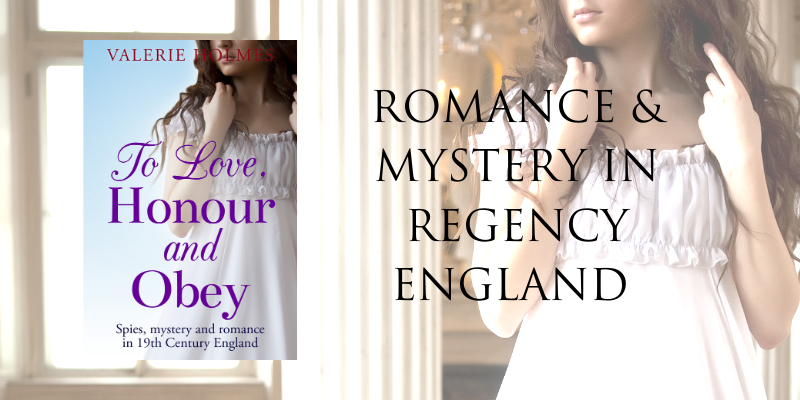
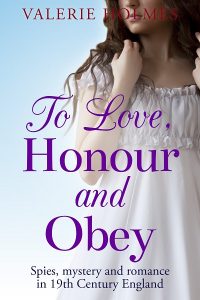
Read the first chapter of gorgeous romance TO LOVE, HONOUR AND OBEY now!

CHAPTER 1

1805, North Riding, Yorkshire

Willoughby Rossington gulped the much needed ale down his dry throat, sighed with relief and placed the pewter tankard on the upturned barrel, which doubled as a table. It had been a difficult mission and a hard ride, but Willoughby had managed to flush out his prey, a highwayman, and after a chase across exposed moorland had relieved the country of one more specimen of murdering vermin. Now, he leaned patiently back on the settle, which lined the alcove next to the rear door of the inn, watching for the York coach to arrive.

Discreetly, Willoughby checked the shallow cut on his wrist. It had not been deep enough to sever the vein. Taking a clean strip of linen from a side pocket of his case, he tied it around his wrist as best as he could, using his free hand and teeth. This was not the first time he had been wounded. A pistol shot had caught him as he was chased across a French beach the previous summer. Fortunately, he had not been on his own and was tossed into the bottom of a fishing boat waiting to return him to England. His uncle had called it his initiation — a rite of passage. The slight scar above his left ear would apparently serve to remind him to take greater care. He slipped his wrist inside his cuff and smiled — no more scars, he thought.

A flurry of activity broke out in the yard.

“York coach!” A horn was heard as the vehicle approached.

Willoughby drained the tankard, ran a hand through his fair hair before replacing his hat, picked up his bag and headed out. He was anxious to be on his way again. The coach had made good time and was busy. A family with two young girls filled most of the inside, so it was with some relief that Willoughby found himself climbing on top. He settled as comfortably as he could, holding on firmly as the horses pulled their burden back out onto the open road, increasing in speed and momentum. Willoughby felt the invitation to attend his uncle, Lord Nathaniel Rossington, in his pocket and relaxed into the journey. The rush of air on his face made him smile. He anticipated his uncle’s next set of orders and relished the prospect of serving his country further.

The coach sped between the open moors and fields, slowing as it approached the ancient city of York. Willoughby was aware of the noise emanating from the lunatic asylum as they passed by. He swallowed, feeling pity for the poor souls trapped inside. That would be hell on earth to him, to be trapped like a caged animal, or worse, chained like a bear, perpetually baited.

The vehicle entered through the ancient stone archway and slowed to navigate the heavily soiled mire, making the going heavy as it passed through one of the ancient crumbling Barrs, ready to traverse the narrow lanes inside the old walls, where a mixture of wooden medieval homes with their jutted fronts gave way to the fashionable new stone buildings.

Willoughby looked on in wonder at the might of The Minster, the magnificent cathedral that dominated the cobbled together collections of buildings around it. No matter how often he saw it, he was always impressed. York was a place which confused and delighted his senses by turn. Contrasts were everywhere: putrid stench mingled with the more pleasant aromas of the market, rich living alongside the impoverished.

The coach came to a lumbering halt in front of an old inn. A sign swung dubiously above the door of a phoenix rising from the ashes. It was a sorry depiction of what should have been a lovely image, buffeted by the wind and heavy rain.

The innkeeper rushed around the corner and greeted his new arrivals, despite the pouring rain. All was a hive of activity. A small step was brought for the passengers to climb down onto. Willoughby knew that Lord Rossington would have been informed that the coach was in. He would be expected to report shortly but he was tempted to go inside and warm and dry himself.


Beth heard the excitement as word reached the inn that the coach was approaching. She had been preparing food in the back in readiness. In her dreams, she would get on the coach, dressed smartly in a travelling coat and be taken to some grand house where her husband or, more likely, her lover, would be awaiting her return. She put down her bread knife at the side of the stone sink, brushed her hands against her coarse skirts and glanced anxiously around her. Dotty, the cook, had gone into the back yard and Irwin Wilkes had left earlier on ‘business’. He would normally greet his guests and then return inside — to her. She grabbed her old shawl and pulled it around her shoulders, thinking that he must have been delayed.

Beth knew if she was caught shirking, she would be in for trouble, yet the yearning inside her made her desperate to see who the coach had brought in. The longing to escape the inn, her hellhole, was growing daily. She had nothing of her own and no one to go to, but the coaches came and went and each time her heart desired to go too. She was the bird lost in the ashes and she would take flight, unlike the bird that was trapped on a piece of wood swinging above the doorway.

She ran her fingers through her rich auburn hair, its fiery colour subdued by the need of a wash, though she kept it in relatively good order as she hated the knots. Beth peeped through the serving hatch just to make sure that Irwin Wilkes had not become distracted by his friends and was sitting on his favourite settle. No, he was hovering somewhere outside in his coat. He owned the inn and, although it hurt Beth to think it, he also owned her. Two seasons ago she had been bought by coin from the orphanage where she had grown up as a young woman to serve drinks at the inn. She had no say in the matter, no rights, and was told to be grateful her fate was not a worse one. It was go with Wilkes or live on the filthy streets.

Peering through the musty, smoke-filled tap room she could see the passengers alight from the coach. One man stood alone and slightly to the side. Beth watched him. He did not look as if he intended to enter, she noted with disappointment, but stood surveying the city. He was tall and from what she could see of his features, between high collar and tall hat, handsome. He looked to the inn, but despite the soaking he had had, he decided to move off.

He must be lost, Beth reasoned, so she straightened her shoulders and stepped forward, ready to cross the room and welcome the guests and offer the stranger her help before he decided to leave — if she could. There was something about him that drew her to him. He would fit the image of the man in her daydream well enough. Even though he was clearly a gentleman, she thought, a girl can dream, can’t she?

“Beth!”

She froze. Wilkes’s footsteps neared as his boots sounded upon the flagstone floor behind her. The weather must have dampened his enthusiasm for being a good host.

“Where d’you think you are off to, my girl?”

She could smell his musk. He spun her around, whipping the worn fabric from her shoulders. The word ‘my’ resonated in her head as the usual feelings of disgust stirred within her belly. He threw his coat onto a stool.

“Nowhere, Mr Wilkes. I was just a bit cold and I heard all the noise.” She tried to keep her voice calm as getting flustered only provoked his temper further. Her eyes were downcast; he took it as a sign of submission. She used it to shield the hatred that burned within them.

“Cold, eh,” he repeated, and chuckled. “Go on up to me room. I’ll be there shortly.” He slapped her rump as she stepped away.

Beth tried not to show him fear or her anger. She picked up her shawl; moth-bitten it may be, but it was hers, and then climbed the wooden steps to his room above, cursing her stupidity and dreading his idea of giving her warmth.


Willoughby stretched to his full height. He was tired, his wrist was sore, but he needed to see his uncle — then he could think about resting before setting off again on his next mission. He was in the north; he was so near to where his father had been murdered. Willoughby’s heart desired one mission more than any other: to investigate that ‘accident’. No one had been brought to justice. Five years later and he had proved to his uncle he could wheedle out vermin and be trusted, so why not now avenge his father’s death?

He approached the grand façade of the elegant terraced house. Willoughby had to stay level-headed; displays of emotion were not appreciated — ‘anger was to be challenged into action, not allowed to burn and destroy internally’. His uncle was full of such pearls of wisdom.

He lifted the brass knocker, then crashed it against the door and waited until a liveried servant opened it to him.

“Is my uncle at home?” Willoughby asked.

“Your uncle? May I have your card, sir?” The man spoke stiffly and held out a gloved hand.

Willoughby wondered if he was one of his uncle’s agents or just a household servant; either way, he acted like a pompous fool. Willoughby pulled the invitation from his pocket, returning it to its sender. It was his pass to a very different world — one in which he thrived. The man responded with a cursory look up and down as rain dripped off Willoughby’s greatcoat and onto the doorstep of the elegant house.

Willoughby met the man’s stare in challenge and made to step forward. It had been an uncomfortable journey and his patience was becoming worn. The servant closed the door on him, disappearing with the letter. Willoughby balled his fist and looked across the sodden road, waiting patiently, albeit reluctantly, to be allowed entry. A few minutes later the door reopened.

“My apologies, sir.” The man bowed low as he stepped back, allowing Willoughby to pass by him, whilst taking his hat and coat. “This way, if you please, sir.”

Willoughby followed him across a chequered floor and down a narrow corridor to a set of doors towards the back of the house. Beyond them was his uncle’s study. Immediately Willoughby entered, the doors were shut securely behind him, not one, but two sets separated by a good thick curved wall. This was a necessity, as his uncle could not afford to have his private discussions overheard by anyone.

Willoughby was surprised that the normally officious man was not sitting and looking imposingly at him from behind the large mahogany desk as was his habit. Instead, he stood silently gazing at a painting that adorned the wall above the marble fireplace. Immaculately dressed in a perfectly fitted black coat which accentuated his straight and noble posture, he held his hands clasped behind his back. “Do you know what this is, Willoughby?”

Willoughby sighed. Never a warm word of welcome, but he knew how to respond. “It is a seascape, Uncle.” Willoughby stared at it emotionless, almost mimicking his uncle’s dour manner until he saw a flash of annoyance showing in the older man’s eyes. “A stormy sea and a rescue boat being hauled into the water by the local villagers.” Willoughby admired the movement and energy within the painting. One could almost feel the tempest raging and the desperation of the people to launch the life-saving boat into the water.

“What else can you see? Where do you think it is set?” his uncle persisted, staring at him, waiting for Willoughby to look beyond the obvious. It was like a game, a grooming, which both his uncle and his father had played with him since he had been a child.

Willoughby stepped forward, relaxing his pose. He looked at every feature of the painting: the group of people at the water’s edge, the windmill behind a row of small fishermen’s houses, the firm flat sands, the high rugged headland in the distance and the menacing sea. “By the attire of the people and the geographical features of the land, I would say this is a fishing village on the remote north-east coast.” Willoughby glanced at his uncle, waiting for acknowledgement or approval.

“And what reasoning is behind this decision, Willoughby? Have you proof of a logical nature or is this just a wild guess — no more than a lucky whim?”

“No, Uncle, it is not a guess. The boats in the background are the cobles of the Yorkshire design. They land on the flat sandy beaches, cutting through the breakers. The sea is treacherously turbulent and that area is infamous for its wrecks. To the right are the ancient marshlands and dunes, whilst to the left, the steep jutting headland forms a dramatic feature. The boat is one of the new designs of ‘lifeboat’, which I believe has to be pulled manually down to the beach by the villagers in order to launch it successfully.”

His uncle released his hands, relaxing his stance and patted Willoughby firmly on his shoulder. “Excellent observations, Willoughby; you show some intelligence. I’m glad your time at Cambridge was not wasted; you have at least learnt to deduce. So tell me, why am I showing you this merciless place?” Nathaniel Rossington flicked the tails of his coat up into the air and rested against his desk.

“You wish me to go there, no doubt still wearing the robes of a priest and save the poor from the endless toil of their lives and their mortal souls from hell itself, Uncle?” Willoughby raised a cynical brow, as he knew Nathaniel was a sceptical man, a non-believer, a fact he kept very much to the closest family members to avoid unnecessary problems within the society with which he mixed.

“I would say they are beyond salvation and, personally, I should let them rot away within their own grimy existence.”

Willoughby was not surprised by the man’s sentiment, he had his sights set on saving a nation, apparently forgetting at times that the word represented common men eking out a ‘grimy existence’ and not just the land itself.

“However, I would also remind you that this is not a game anymore, Willoughby. It is as serious as life and death … yours included.” Nathaniel looked at Willoughby, whose gaze did not waver despite his uncle’s powerful withering stare. However, Willoughby did note the fleeting glint of amusement in the man’s eyes — a rare sight.

“There are treacherous men earning a lot of money in the region — corruption throughout and within the villages which has spread to the normally decent social strata. I need you in there.” He pointed to the painting, his manner intense. “Yes, don your priest’s garb and start preaching and listening to as many confessions as you can…”

“Uncle, I am not a priest. I have chosen a very different path now.” Willoughby spoke out defiantly, then instantly wished he had controlled his tongue. “Surely, I have proven to you that I would have been wasted in such a role when I refused to follow the path which was laid out for me by Uncle Jeremiah, God rest his soul. I would be better serving as a soldier — please, sir, allow me to hunt down Father’s murderers or obtain me a commission so that I may serve, with your blessing.”

“I am fully aware of what you are and what you are not. Unless you wish me to return you to ‘your initial path’ and insist that you are to be permanently planted in a respectable parish with a fat wife and several noisy brats to feed, you would do well to remember how much I do know about you, Willoughby James Rossington!” Nathaniel’s words were harsh, but as always, controlled. “You serve best where I place you. Your brother serves the King, you fight a very different battle and I need you here to do it!”

Willoughby nodded, annoyed that this man who had acted as a father to him when his own died prematurely always placed his duty first. More disastrous news had followed the next year when his elder uncle, Jeremiah, had perished in a riding accident. Nathaniel was totally devoted towards his King and country. He buried his pain deeply, though, Willoughby realised. Willoughby had been sent to many a dark place concerning his clandestine role. It had shown him a world very different from the old clubs of St James Street in London and the halls of Cambridge. Nathaniel was a man who demanded and expected nothing less than total obedience from those who served him, whether relative or not, and that had earned him Willoughby’s absolute respect.

Willoughby did not want to don the garb of the priesthood. He had his own faith, but preaching was something he found no comfort in. It irked him that he had been made to hide within the role in order to be of some use to his uncle. He should have been the soldier — Charles wanted to stay on the estate, but the uncles had insisted he fought for the family honour, leaving Willoughby’s path clear for the priesthood.

“You will win the hearts of one or two of the local people. Use your stealth, wit and common sense, but, Willoughby, remember this is no fool’s errand. We have reason to believe that the rot that has set in this area is deep and complex. Every one living there is as guilty as their neighbour of plying the trade. They will not break their ungodly ranks and speak out… Strangers are like foreigners to them, they live in greed and ignorance. Only last month, a riding officer nearly had what brains he possessed spilt from a broken skull after he came across a group of ‘fishermen’ moving a catch. It was not crabs they had plucked from the sea. The fool shouted warning before shooting!” Nathaniel shook his head. “You have two names to keep in your mind, and I demand that you make your initial contact with them as a priest, someone people will pass by, seeing the uniform and not the man, yet, hopefully, show respect and trust.”

Willoughby was surprised by the severity of the tone in his uncle’s orders.

“Go to Major Walter Husk, who has a temporary barracks in Whitby. He will brief you on the known smuggling activity along the coast north of Whitby, and then to Reverend Artemis Burdon of St Aidan’s at Ebton. He will take you in and give you a base from which to work. I do not want you to use the name ‘Rossington’. Our family name will be kept out of this. You travel as Reverend Mr Willoughby James. Make sure you conjure up a credible past-life, which does not link you back to the family or me. You are working incognito. Only Husk and Burdon will know the truth. Both are loyal to the Crown and…”

“My father’s murderers…” Willoughby’s face was instantly animated. It was on Ebton beach that the body of his father, Joshua, had been washed up. “Is it possible that Father’s murderers still walk free after nearly six years?” Each time Willoughby had requested to investigate it he had been turned away with other missions to attend to, keeping him far away from this part of the country. It was always with the promise that when the time was right, his turn would come. Now he needed to know if that time was here. Willoughby clenched his fists at his side as the years of frustration and training mixed with his eagerness to set off on his own personal quest grew.

“Of course it is possible, Willoughby!” Nathaniel stood tall and looked into Willoughby’s deep brown eyes as if analysing his private thoughts. “You need to put all personal issues aside. We both do. We are working for our country, for the very survival of our nation.” Nathaniel swallowed as if struggling to keep his composure. “We are at war with the French. The trade forgets its loyalties and anything is sold for the right price. If, and I mean if, there is a link between my brother’s early demise and the current tenuous situation, then I expect you to discover it and act accordingly. They went to ground, but have now risen stronger than ever. But remember this: King and country first, revenge last! Do I make myself clear?” Nathaniel raised his eyebrows.

“Yes, sir!”

“Oh, and one more thing to remember: the harbinger of evil can be both male or female. Your father was engaging in an affair as well as his ‘work’. It may have been the cause of his downfall.”

Willoughby’s attention had wandered to the painting, straining at the menacing sea and the headland beyond. He swallowed, for it must have been a cold and lonely death to die in those waters alone. At the mention of an affair, so calmly announced, Willoughby’s head shot back around to look at his uncle.

“Affair? With who?”

“I do not know who. You will not fall into the same trap, will you, my young priest?”

Willoughby was taken aback. He had never thought it possible that his father had had an affair, for his mother had died of a broken heart four years since.

Nathaniel patted him on the back firmly.

“Here is a purse. The sooner you go and pay your respects to your aunt, the sooner I shall have peace from her on this matter. I swear the woman can hear through the walls of a fortress. May your God be with you, and I hope you come back to us safely from this vipers’ nest, Willoughby.”


Have to keep reading? Buy To Love, Honour and Obey now!


Author Q&A with Patricia Caliskan

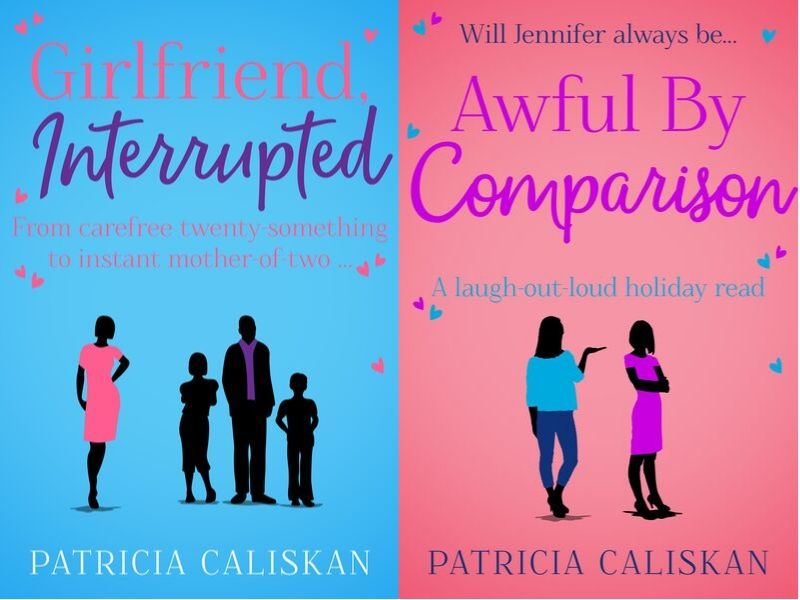
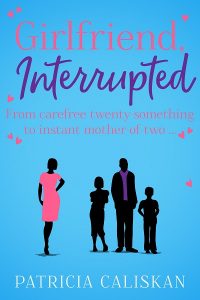
Patricia Caliskan is the author of two romantic comedies: Awful By Comparison and Girlfriend, Interrupted.

Hi Patricia! Welcome to the Sapere Books blog!

Can you tell us a bit about what first got you into writing?

I wrote stories from about the age of six. I collected stationery, pens and pencils, and spent hours at my miniature desk, making ‘books’ for the family. Beverley Cleary’s Ramona series was a huge inspiration to me as a little girl.

What does your typical ‘writer’s day’ look like?

A typical writing day looks like writing through the night. I’ve always been slightly nocturnal; that’s when I get most of my ideas and can be totally focused. I have a 4 a.m. cut-off and wake up completely zooped to read and edit the work. I have a few places I gravitate towards throughout the house. My latest project is basically happening in the kitchen, so there’s been a lot of snack breaks with this one.

I drink coffee on-tap and usually have a playlist on the go. No rituals as such, but candles signify ‘writing time’. That’s about as ceremonial as I get.

What part of the writing process do you find most difficult?

My challenge seems to be plotting from about three-quarters of the way through to the ending. It’s incredibly exciting to start a project, and I know how each story ends – until I begin writing. The characters and storylines naturally evolve, so my plotlines tend to evolve too. It’s a bit like using Sat Nav. I know my destination, but don’t always take the most straightforward route. 

Do you find it hard to know when to end a story?

Absolutely not! There’s nothing like typing ‘The End’ after I’m 100% satisfied I’ve tied up every strand of the story, and done the best work I can for the reader. It’s the best feeling.

How much research do you do?

There’s research involved in every book. Luckily, it’s one of the reasons I enjoy the process. The character of Lara in Awful by Comparison was based on reports ahead of the #metoo movement, and Gia Carangi in particular. The subject of step-parenting in Girlfriend, Interrupted was something I personally experienced, but I visited online forums to make the dynamic as relatable as possible. I’m currently learning about the psychological effects of being widowed, and floristry, so you could say it’s pretty varied.

How real do your characters become and do they ever seem to control their own storyline?

My characters absolutely dictate their fate. Their voices can become very different to how I initially heard them. Listening to certain nuances and spending time with them, they’re full of surprises. It’s kind of like developing a friendship, really. My understanding of them deepens over the course of the novel.

What are you working on at the moment?

I’m currently working on my third novel. It has an ever-changing title, but I can say with certainty that it’s set in the fictitious address of Arkin Avenue, and tells the stories of a great bunch of characters. I hope you’re going to love them.

Which book do you wish you had written?

As she’s fresh in my mind, The Private Lives of Pippa Lee. It was one of those books which made me happy, simply because the character existed. I thought it said a lot about the shifting roles we occupy throughout our lives.

Tell us something surprising about you!

Duran Duran have been my favourite band for nearly 35 years. If you take another look, you’ll find them mentioned in all of my books so far!

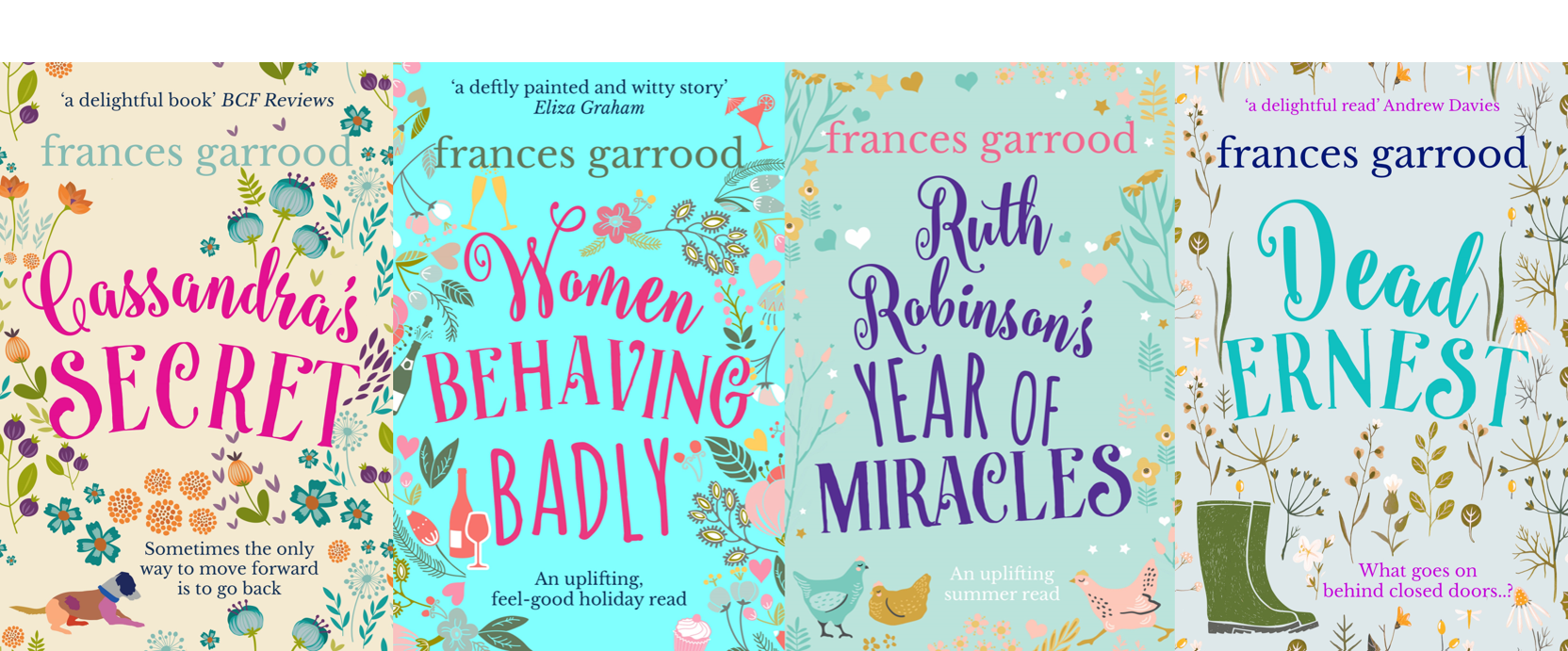
Author Q&A with Frances Garrood, author of Ruth Robinson’s Year of Miracles

When did you first start writing? Did a specific event encourage you to start?

I can’t remember a time when I didn’t write something; poetry as a child, then on to short stories when my children were small, and then novels.

How much research do you do?

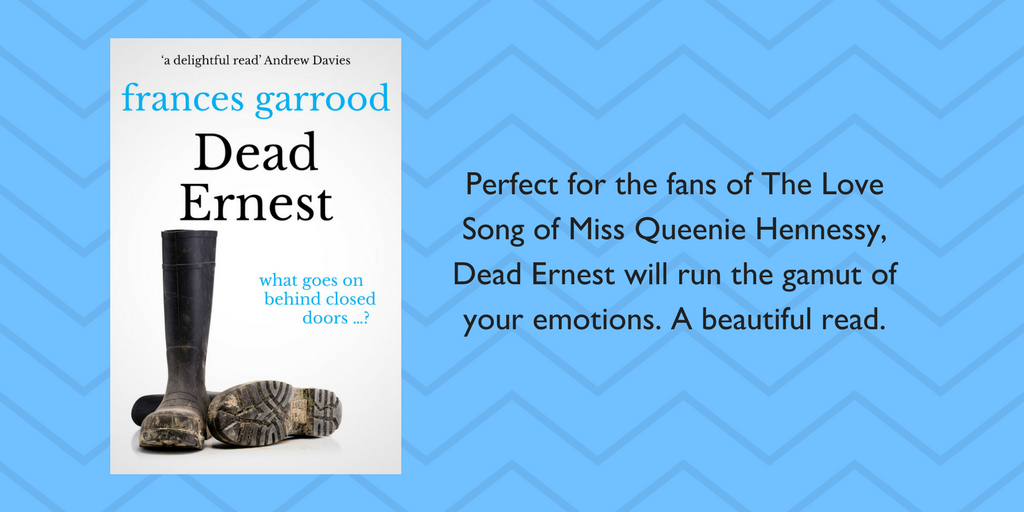
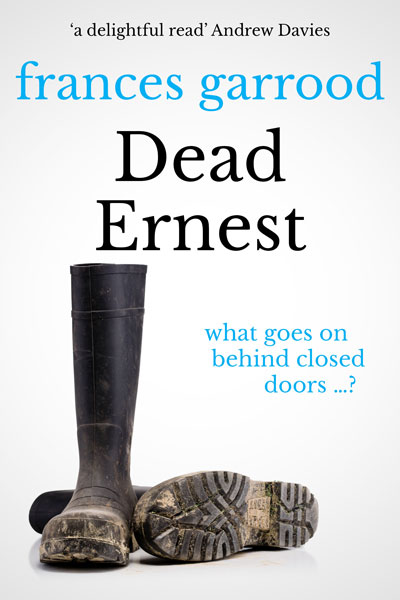
It depends. I had to do quite a lot for Dead Ernest as it was set during WW2, but often it’s just my own experience. I did once phone a safari park to find out how a monkey would behave if trapped in a car (for Women Behaving Badly), and they said they had no idea!

Tell us about where you write / your writing habits.

I’m afraid I don’t have any. I’m totally lacking in discipline, and I just write when I feel like it, at a desk in a corner of our bedroom. Not very professional, I’m afraid…

What part of the writing process do you find most difficult?

Starting, knowing when you’ve done enough research, the ending? I think the middle is difficult, but I’m not a planner, so I can get stuck anywhere. I usually just let the story take me where it wants to, and sometimes it doesn’t want to!

How real do your characters become and do they ever seem to control their own storyline?

They become very real, and I really hate letting go of them in the end. They certainly control the story to a great extent, especially when they’re speaking. I love writing dialogue.

Do you ever feel guilty about killing off characters or do you relish it?

A bit of both. But it’s also quite cathartic for me, because I was widowed fairly young, and I use my own experience of bereavement.

Do you find it hard to know when to end a story?

So far, my books have ended more or less of their own accord, but that could change (though I hope not).

What are you working on?

I’ve actually started three, and am waiting for one of them to take off. Two are sequels, and sequels are – I’ve discovered – a lot harder than I thought they’d be

What are you reading right now?

A little-known novel by Anthony Trollope (my favourite author): The Belton Estate.T I’ve read pretty well all his books, several more than once, and was delighted to find this one.

What is your favourite book? Who is your favourite character?

Without doubt, George Elliot’s Middlemarch. And my favourite character has to be Winnie the Pooh.

What book do you wish you had written?

At the moment, it’s Gail Honeyman’s stunning debut Eleanor Oliphant is Completely Fine. Otherwise, pretty well anything by Anne Tyler.

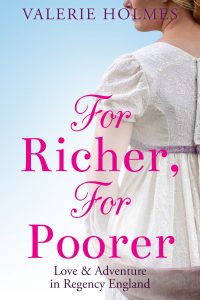
Walking the Ancient Trods: For Richer, For Poorer by Valerie Holmes

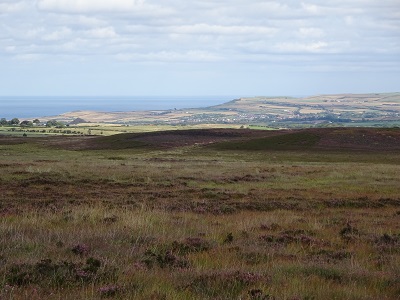
The North York Moors national park has one of the largest expanses of heather moorland in England covering an area of 554 sq miles. For centuries people have crossed this exposed, wild, boggy moorland for trade, social and religious reasons leaving a network of fragmented stone pathways that are lovingly walked and explored by hikers today. All who do respect this mainly inaccessible landscape, which is both beautiful and dangerous to traverse. But what tales these ancient paths could tell of the people who have trodden them over the centuries.

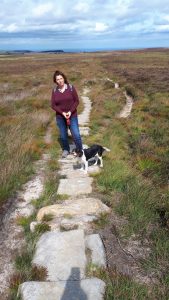
The oldest broken pathways, known locally as ‘Monks trods’ could date back to the Neolithic era. Certainly Roman soldiers have used some of the broader causeways near Whitby. The connection with monks stems from the medieval period when abbeys flourished within the region. Today we see the ruins of Whitby, Rievaulx, Guisborough and Mount Grace Priory to name but a few of these once great communities. These monasteries often housed large numbers of people and linked to other communities by the network of pathways. In Medieval times wool would be transported on them to ports such as Hull and from there to markets overseas.

The monasteries often owned farms and land miles apart. In For Richer, For Poorer I linked the two fictitious towns of Gorebeck and Beckton by one such trod that cuts across Gorebeck Moor. Gorebeck Abbey School was linked to Beckton Abbey by trade and the pathway, although rugged and unwelcoming it was known to Parthena. This was no easy route of escape by, especially at night time, it took courage and daring – but essentially local knowledge, or else it would certainly have been tantamount to a death wish. This summer I was caught out in a sudden horizontal rain storm on one of the Quaker’s Causeway, near Commondale and even with modern waterproofs and hiking boots the wind had a bitter chill.

Parthena’s pursuer, like Beth and Willoughby in To Love, Honour and Obey had to travel in single file as the stones were only designed to take a train of pack horses travelling in a line as goods were regularly transported by pack horse.

Beyond the medieval period the need to transport coal, charcoal, jet, alum and lime grew. Fresh fish from the coast needed to reach its market as quickly as possible whilst it was still fresh. Wagons would easily become bogged down in such conditions and so for centuries the pack horse was essential.

These are some of the legitimate uses for these ancient routes, as well as the need for communities such as The Quakers in the early eighteenth century to reach meetings and friend’s houses. They were also essential for people to reach the mills and towns for work as the centuries turned.

However, in the early nineteenth century, when many of my stories are set, smugglers also had local knowledge, could pay a man more than a farmer’s wage and they also needed to disperse landed contraband as quickly and efficiently as possible. Therefore, many of my stories have mentioned the use of the old trods for this purpose.

Once roads were built to cross the moorland then the need for the trods diminished and some of the ancient stone was reused for building. These roads may have even been built over the original paths as their way was the most direct. But what is left provides an interesting connection to the past and a way for people today to access this beautiful wilderness today.


Find out all about Christine Evans

When did you first start writing? Did a specific event encourage you to start?

In the 1990s. I can’t be more specific as I went to several creative writing classes, usually with the same tutors. The class would start out well attended, then people gradually would drop out – usually in winter. Then the following year the funding would change and we’d start up again at a different venue. But I always persevered and about three or four of us went to the same classes, which I enjoyed very much. Finally one tutor suggested I sent off some of my stories to a magazine. The first one was rejected but the editor must have seen something in my writing and made some useful suggestions. So luckily my next one was accepted by Ireland’s Own. I still have the cover framed on my wall. It’s dated August 1999 and has the picture of a Connemara pony on the front.


How much research do you do?

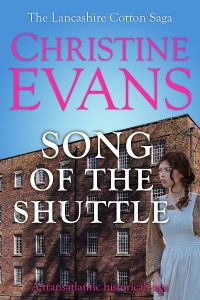
For Song of the Shuttle I went to Quarry Bank Mill, a working cotton mill near Manchester owned by the National Trust. The volunteer guide on duty was so helpful, explaining how the machines worked, then demonstrating them. He was really patient answering all my questions. From a large second hand book store in South Manchester I was lucky enough to find a book from the television series about the American Civil War shown back in the 1990s. It was packed with information and original photographs which was invaluable to my research. Other books like ‘The Hungry Mills’ and ‘Reveille in Washington’ helped enormously and also a map showing the major battles of the war.

For subsequent books I’ve turned to Victorian history which has always interested me. The internet is invaluable too. Where else could you discover the uniform that an American military hospital orderly wears?


Tell us about where you write / your writing habits.

I’ve set up office in a small bedroom since my son and daughter have left home. It overlooks the back garden and I can see the small birds bobbing about in the trees. I’m afraid I’m not an organised writer or set time each day for writing. I have a habit of waking up at an unearthly hour with an idea in my head and can’t get back to sleep until I’ve typed it out. I did try to write those ideas down on a pad by the bed but couldn’t read my writing in the morning. So I drag on a hairy old dressing gown – and tracky bottoms in winter – and sneak off into my office for an hour or so. Then I slip back into bed and sleep soundly.


What part of the writing process do you find most difficult? Starting, knowing when you’ve done enough research, the ending?

Most of my stories are written in my head long before they reach the page. Then when I have time I want to get down the information as quickly as possible. Of course I have to go through it all again and edit it. Sometimes I seem to write in Polish!  I’m not keen on editing and don’t like rewriting at all.


How real do your characters become and do they ever seem to control their own storyline?

My characters do seem to take on a life of their own and I instinctively know how they will act. This is a very perceptive question as many times my ideas and plots will change when faced with what a character would do.


Do you ever feel guilty about killing off characters or do you relish it?

I have sat and wept when one of my characters died. Normally it’s only the baddies that ‘get it’. I feel they get what they deserve.


What are you reading right now?

At the moment I’m reading a spy novel by John Le Carre and persevering with it. I get annoyed by the macho attitude of the men though! I have Lamentation by C. J. Sansom waiting in the wings. I love his Shardlake novels.


What is your favourite book? 

My favourite book is Jane Eyre. I’ve always loved it from being young when I had the Dean and Son version for young readers.

What book do you wish you had written?

Something brilliant like The Book Thief. I’ve recommended it to so many people and they’ve all enjoyed it.


Do you love any genres/books that are very different from what you write?

I have very eclectic taste. I really enjoy Terry Pratchett books. Patrick O’Brian’s seafaring novels are a favourite and also Lyndsay Davies’ Roman detective Falco. Although they are historical novels, they are very different from the romances that I’m writing.
Tell us something surprising about you!

I’ve had a painting exhibited in Manchester Art gallery. I won a competition where all the art classes round the city sent a painting that was inspired by one of the Gallery’s paintings. It was called ‘Things to Do’ and in one corner featured a cosy armchair, a book and a cup of tea. The rest of the canvas had an ironing board, a dirty frying pan, an un-ironed shirt and lots and lots of socks – black with a different coloured heel. None of the socks matched! The blurb was that I’d rather sit reading than doing all the chores. Along with a certificate I received a bag of art goodies. Unfortunately I don’t have time to go to any art classes nowadays.

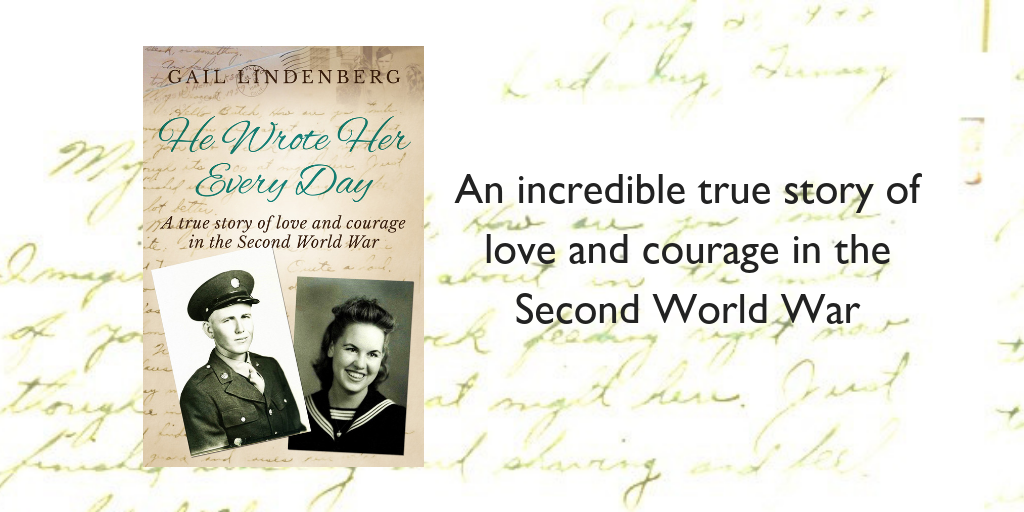
He Wrote Her Every Day by Gail Lindenberg

The Cooper Museum, housed in a small building in the heart of historic downtown Upland, offers a cozy and often crowded venue for local events. A favorite place to hang out with city residents, this cheery place often invites authors whose books feature the history of American towns and people, especially people from Upland, California.

I wrote my first edition of He Wrote Her Every Day in Upland and printed twenty copies in time to celebrate my mother’s 90th birthday. Based on letters Mom had saved from my father in Germany during WWII, the book was my mother’s gift to share with the family. This hard-cover version of their story includes photographs and follows a narrative using all the documents and souvenirs my mother saved. When I received an invitation to present my book on Author’s Day at the Cooper, I was delighted—and a bit apprehensive.

I decided to prepare a visual display of a few of Dad’s letters and many of the souvenirs. Did I mention that Mom saved everything? I needed three tables, but managed to make do with two. A three-foot square map mounted on a display board earned center stage, balanced between my tables. It was also a place I could hide if no one showed any interest in my book.

The map, sent to all the soldiers and their families from the Army post-war, depicts the route this Infantry division traveled from the beginning of the war until the final return of the last Occupation troops. So when the recommissioned Queen Mary finally brought Dad home, Mom already had the map of the route taken by his troops known as the Railsplitters.

Our afternoon of book signing invited walk-through traffic in the patio area outside of the small museum. A beautiful afternoon in California promised our group of about a dozen local authors a busy opportunity to talk to our neighbors about our books. I was hoping for a few sales and a chance to meet my fellow writers.

Flattered when the assistant curator pulled a chair up at my table, I smiled widely as he began to go through all of the V-mails, coins, K-ration kit remnants, and the seventy-five-year-old postcards that make up my father’s collection. He looked through the assemblage of bits and pieces that had been the focus of my writing for about a half hour before, at last, he raised his head and just said, “Wow!”

Hungry for some positive feedback, I answered by asking, “Wow what?”

His response was a surprise. “You should not have all of this sitting out here in the sun for anyone to handle. This should be in a museum.” I thought he was trolling for a donation to the Cooper, but no, he assured me that mother’s bits and pieces needed a place where scholars could read the primary documents and preserve them for posterity.

He told me about the National WWII museum in New Orleans, LA. It took me a year to do it, but Kim Guise, curator of the museum in New Orleans, guided me through the process and helped our family contribute the collection to them. Mom was tickled to sign the donation papers and make it official. The museum staff is currently working on a display of the letters and souvenirs of Private James William Hendrickson, Jr. It is, according to Guise, the largest collection of letters and documents from an individual American soldier.

This was exciting, but the best experience at the Cooper came on yet another day when my display had been transferred from the originals to mere copies. The Railsplitter Map held pride of place and looked as sharp and clear as the originals.

He Wrote Her Every Day will be published by Sapere Books and is coming soon! 

Real Life vs. Fiction by Patricia Caliskan

Full-time employee by day, aspiring novelist by night? Then you’ve come to the right article, my friend! That’s how every author who ever nabbed themselves a publishing deal started out. So, let’s do what all dreamers do, and make a list:

1. Be Prepared.
Dib-dib-dib, as the Boy Scouts say. Be prepared to make your first priority a notepad and a pen. Don’t leave home, work, or bed, without them. Inspiration is all around. That punch-line you blurted out. The way someone pronounces, ‘Yugoslavia’. The colour of Boredom. Get as ephemeral or literal as you like, but write it down. Because you’re a writer, remember? It’s not 9-to-5. It’s stride-in-your-step, adrenelin-jolting devotion!

Between You and Me: Check that notepad is tantalizingly empty, and the pen actually works before you get too attached to a brainwave. Ahem.

2. Time on your Side.
Writers tend to fall into either early-morning or late-night camps. That’s because our brains rather wonderfully surrender all traces of reality when we’re pre- or post-dreaming. Marian Keyes set her alarm a couple hours ahead of the office to complete work on her first novel. Jay McInerney kept cosying up to the keyboard way past the midnight hour. No matter which option hits the mark, make it a date.

Friendly Advice: When circumstances don’t allow, don’t beat yourself up. Keep jotting down ideas as casually as you like, and know you’ll make it up to your manuscript with a ream of words waiting in the wings.

3. Plan, plan, plan!
I’d like to be one of those streamlined, linear-types, writing at stealth from beginning to end, but guess what? It doesn’t happen. I know where I’m going. I’ve a pretty good idea why we’re going there, but midway is about as far as I get, plot-wise. Then it’s time to iron-out the initial plan. If you’re armed with a water-tight synopsis, I look on in awe, but I need to submerge in the writing before emerging with a first draft.

Lesson Learned: If something isn’t working, it’s because it doesn’t work. Move on. Re-think. Re-write. No Re-grets.

4. Prioritise
As nice it would be to flounce off into the nearest vestibule and announce an early retirement from all daily responsibility, it’s first things first. Your mind can’t wander into fiction beneath a cloud of household chores or office deadlines. Pin them down. Get them done. Then consider yourself free to focus.

Working Lunch: Make the most of any break. Walk. Think. Be alone. Listen to your characters. Trust your instincts. Jot those thoughts down in that notepad you carry these days.

5. Bite into the Best Bits
There’s no point setting aside time, staring at a screen, wondering where to find a word count. Sometimes you have to take it by surprise. Don’t think of it as a book. Start with that ending you can’t wait to write, or the big reveal you know has to happen. Hit the highlights. Pick out the praline, and throw away the toffees! Why not? It’s your work. Kill off that character before they’re introduced in chapter eight, you absolute maverick! Look in the rearview, and you’ll find a picnic trail of plot development.

Novel Navigation: Make sure there’s batteries in the torch. In other words, map each scene in a working synopsis as you go along. See that shard of light up ahead? That’s the ending, compadre.


Visit Patricia’s author page or find out more about her second novel, Girlfriend, Interrupted. 

Excerpt from Dead Ernest

Prologue


BENTLEY Ernest, Husband of Annie and father of William (Billy) passed away suddenly on January 2nd 2004 aged 83.

Funeral January 10th at 12.30 p.m. at Great Mindon Crematorium. Family flowers only.


“What about beloved? Something like that?” Billy asked, scrutinising Annie’s crabbed handwriting.

“Beloved? Beloved what?”

“You know. Beloved husband, much-loved father. That sort of thing.”

“Did you love your father, Billy?”

“Of course. Well, I suppose so. Yes, of course I did.”

“Well then. We can put much-loved father.”

“And husband? What about husband?”

“No,” said Annie. “Not beloved husband. Not any sort of husband.”

“But Mum!” Billy looked hurt, as though even now he were taking his father’s part. “You must. What will people think?”

“It doesn’t matter what people think,” said Annie firmly. “I know.”


Chapter One


No one had expected Ernest to die, least of all Ernest. He prided himself on coming from tough, Yorkshire stock, and had often told Annie that he would easily outlive her. So, when he had his heart attack, Annie’s feelings were at first of surprise rather than anything else.

“Are you sure?” she asked the policewoman, who was making tea in the kitchen. (How odd that it was always the police who were sent to break bad news; almost as though dying in the street were an offence against the law). “Are you sure he’s dead?”

“Quite sure. I’m so sorry, dear.” The policewoman handed her the tea (much too sweet, and not hot enough) and put an arm around her shoulders. “It must be a terrible shock. Is there anyone you’d like us to contact?”

“Billy. My son Billy. You’ll need to contact him.”

Because, of course, Billy must be told. Strangely, Annie had rather wanted to keep the news to herself for a while; to taste it and think about it on her own before sharing it with anyone else. But Billy would think it odd if she didn’t tell him at once, and besides, there would be things that would need doing. Annie had only the vaguest idea of what those things were, but she was sure Billy would know how to deal with them. Billy was good at that sort of thing.

“How do you know it was a heart attack?” Annie asked. “How can they tell?”

“Well, they can’t tell. Not for certain. But that’s what it looks like. There’ll have to be a post-mortem, of course.”

“Ernest wouldn’t like that,” Annie said, remembering Ernest’s dislike of being touched and even greater dislike of anyone seeing him in a position of disadvantage. A post-mortem, she could see, was going to place him in a position of considerable disadvantage.

“It has to be done, dear. It’s the law. Because he didn’t die in hospital.” The policewoman poured herself a cup of tea, although Annie hadn’t invited her to have one. Death, it would seem, muddled up all the rules of normal behaviour.

Ernest would have hated dying in the street like that, with everyone watching. Dying in hospital would have been acceptable, with dignity and nurses and clean sheets. But then Annie might have had to sit with him while he was doing it, and she wasn’t sure she could have managed that. Perhaps, after all, it was a blessing that he had died in the street.

“Where was he?” she asked. “Where did Ernest die?”

“Outside the fish and chip shop.”

“Outside the fish and chip shop,” Annie repeated, surprised. It seemed such an odd place to die. She wondered what he had been doing there. The fish and chip shop was the wrong end of town for the barber’s, which was where Ernest was supposed to be, and he’d only just had his lunch, so he couldn’t have been hungry. But now she would never know. Nobody would ever know what Ernest was doing before he died outside the fish and chip shop.

Annie was aware of the policewoman watching her, waiting to see how she would behave. “What do people usually do?” she asked, suddenly interested.

“Do?” The policewoman looked bemused.

“Yes. When someone dies. You must see a lot of them. When you tell them, what do they do?”

“Everyone’s different of course,” said the policewoman carefully. “They cry, of course, and some people even scream. And sometimes they’re just shocked and quiet. Trying to understand what’s happened.”

“And what am I?”

“What are you?” The policewoman’s teacup paused, trembling, halfway to her lips.

“Yes. How would you say I was taking it?”

“I would say,” the teacup returned firmly to its saucer, “I would say that you were being very brave. Perhaps it hasn’t quite sunk in yet,” she added gently. “It’s a terrible shock for you.”

Was it? Was it really a terrible shock? A surprise, certainly, but a shock? Annie wished the policewoman would go away and let her think. She needed time to sort herself out; to get to grips with what had happened. Ernest was dead, and she didn’t feel anything much at all. Not sad, not happy, not anything. Was she normal? Was it okay to feel like this?

“Ernest is dead.” She tried the words to see what they felt like. “Ernest — is — dead. It sounds so strange.” She paused. “He had this little joke he used to tell: ‘Once upon a time there were two worms fighting in dead Ernest.’ I never thought it was funny, and Billy didn’t like it, but it always made Ernest laugh.”
The policewoman smiled.

“Did he have a sense of humour then, your Ernest?”

“Oh, I wouldn’t say that. Ernest only had the two jokes, and I’ve forgotten the other one.”

“Would you like another cup of tea?” the policewoman asked.

“No thank you. I think I’d like you to go now,” Annie said.

“But we can’t leave you here on your own. Not at a time like this. Is there a neighbour who might sit with you? Just until your son gets here.”

Annie thought of her neighbours. Of odd, secretive Mr Adams, a tiny man of indeterminate age who lived alone and who hoarded things. Annie had only once been inside his house and had been left with an impression of disturbing smells and what appeared to be wall-to-wall jumble and bric-a-brac. The piles were neat and appeared to be in some kind of order, but the impression was not welcoming. On the other side lived a young couple, with a frog-faced toddler who screamed a lot. Annie certainly didn’t want to involve them, and she quite definitely didn’t need the toddler.

“I don’t really have much to do with the neighbours.” She stood up. “I want to be by myself now. I don’t need anyone else.”

After the policewoman had gone, Annie locked and bolted the door. Then, because it was getting dark, she drew the curtains and turned on the gas fire. Ernest would be home any time now, and wanting his tea. Ernest was very particular about his tea. He always had it at six o’clock on the dot, the same time as he used to have his meal when he got home from work. Ernest liked routine and order, and because it was easier to do what Ernest wanted, Annie had always gone along with it. Yes. She must get Ernest’s tea ready. A nice piece of fish (it was Friday) and some mashed potatoes and cabbage. Annie thought it was odd to have cabbage with fish, but Ernest had read a book about green vegetables being particularly good for you, and recently he had insisted on having them with everything.

But Ernest is dead, she realised again. Ernest is dead. He isn’t coming home for his tea. The green-vegetable book came too late to save him. He won’t be coming home at all; not ever. His heavy tread on the gravel (a slight limp because of his bad hip), his key in the door, his voice calling her name as he hung up his coat and cap. None of these things would ever happen again. The coat and the cap were — where? At the hospital, presumably. And Ernest himself; where exactly was he? Lying somewhere, cold, waiting for the post-mortem. Annie shivered. At least she wouldn’t have to go and identify him. Billy would see to that. She couldn’t understand why anyone had to go and identify Ernest, when he’d been carrying his pension book.


Get your copy of Dead Ernest now!

How I Wrote a Novel by Cathy Bussey


This year I achieved a lifelong ambition, I wrote a novel. 

I’ve wanted to write a novel since I was about six years old. I have multiple unfinished drafts saved on this computer, on previous computers, on computers lost to time, on computers that probably predate time (BBC Micro, anybody?). Until this year, I never managed to finish one.

I would begin and I would know how it ended. I could never do the middle bit, connecting the dots, getting the characters from A to B. Slowly my interest and motivation would slip away, or I would start afresh, try again only to find the same cycle repeating itself.

If you search online for ‘how to write a novel’ you’ll come across many well-thought out blogs and articles and tips and exercises all designed to help.

Most of them involve things like, planning and writing out the story structure, getting the plot outline completed, developing your characters, going through various creative exercises on paper (if your character went out for lunch, what would they order?). It’s all highly organised and linear.

I did none of the above. The process of writing my novel was as far removed from a planned and organised creative exercise as it’s possible to be. It was completely unlinear.

I went through cycles of intense creativity and productivity, and these would slowly tail off and I would need to rest, get a few early nights, stop trying to force it and wait for the inspiration to return, trusting that it would – and it did. Every time.

It became clear to me that if I kept trusting the process – trusting myself – I was going to finish this book. I put all thoughts of publication out of my mind, stopped worrying about whether my agent would want to read it and whether she would consider it worthy of submission. I didn’t have to encourage myself or ‘fake it til I made it’.

I genuinely wanted to finish the book, to finish the book. That was the only goal. I retained of course an inkling that this could become something big for me if I did finish it and if my agent liked it and if somebody picked it up – but at this stage that was too many ‘ifs’ and all were out of my control.

The only thing in my control was whether or not I would finish the book, so that became the goal, and that’s what I did.

Throughout the process there were standout moments. Finishing, getting good feedback from my agent, getting a deal – they were all huge. But the real standout moment happened much earlier. It happened after those awkward, difficult times when I sat staring at a blank screen knowing what I had to write and feeling unable to write it, waiting to be ready to break through the block, refusing to shut down my computer and let the novel slip away as all its predecessors have done, because I couldn’t find the courage to do what I had to do.

The standout moment was when I realised I was going to finish. That I was not going to stop and I was going to do whatever it took to finish the book. Not in a half-assed ‘well I’ll just put up with some parts that don’t really work for me just to get it done’, but finish truly, with the knowledge deep inside me that I’d done the absolute best I could. I hadn’t shirked or taken the easy way out.

That was when I realised that the hard part – the middle bit, the connecting chapters, keeping the story going, retaining the flow – wasn’t hard at all. In fact it was the easiest part of all.