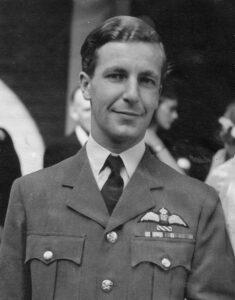
Remembering Stanley Pavillard

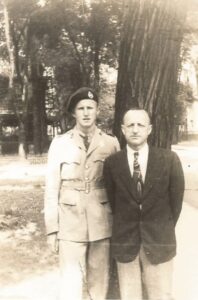
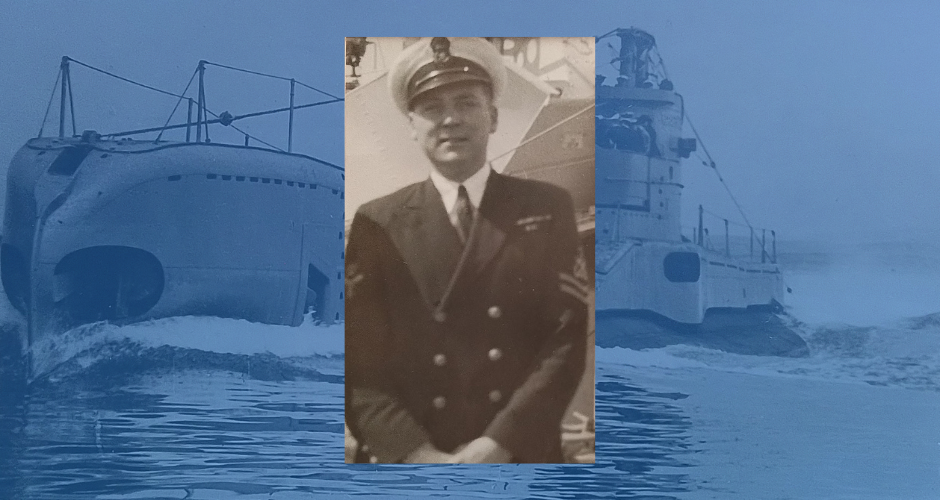
Captain Stanley Pavillard, author of Bamboo Doctor, served as a Medical Officer with the Straits Settlements Volunteer Forces during World War Two. When taken as a POW of Japan in 1942, he used his skills as a doctor to save the lives of many of his fellow prisoners, who were forced to work on the infamous Bangkok–Burma railroad. To commemorate the eightieth anniversary of the end of World War Two, his granddaughter Vanessa shares her memories of him below.
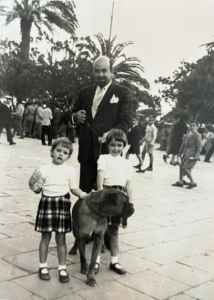
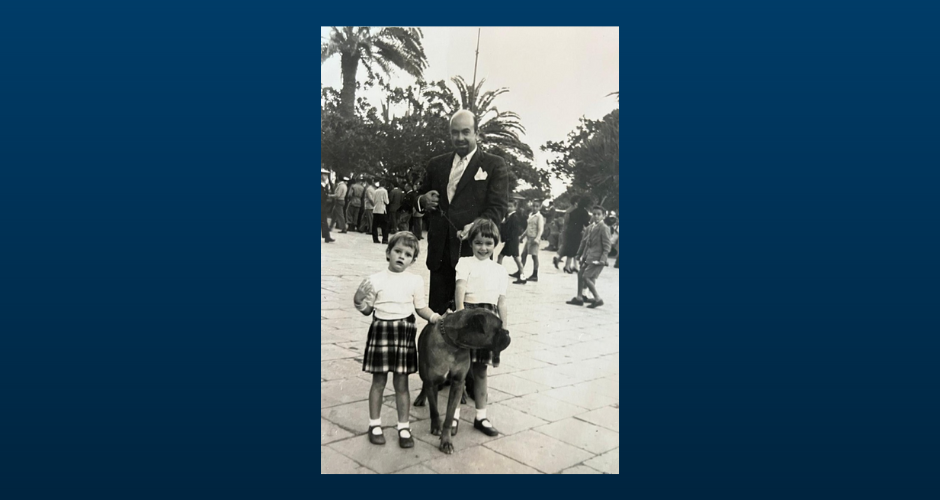
Stanley with Anita and Linda in Las Palmas circa 1956

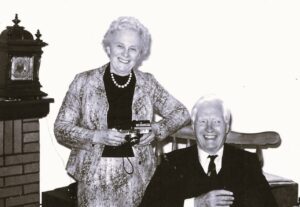
A lot can be found on Stanley Pavillard online about his early life, his achievements during the war and his career as a doctor. What is less talked about, for obvious reasons, is his private family life. Stanley was a father to three daughters, Linda (my mother), Anita and Sandra. His wife, Irene, an extraordinarily witty and funny lady, remained in his shadow most of her life but shone equally bright in our hearts with her unique style.

Although a proud war hero, Stanley was marked by the war in ways that even I, as a five-year-old grandchild could notice. Due to lack of proper nutrition and vitamins in the camps, Stanley’s eyesight slowly deteriorated over the years to the point where he had very limited tunnel vision. As children, we were always told very strictly to move any toys out of the way or Grandpa might slip on them and fall. Another memory my mum shared with me is that Stanley told his daughters never to touch him while he was asleep. Out of fear of being attacked in his sleep, he had developed a hypervigilance during his time in the POW camps and would jump at any sound or movement. One night, little Linda forgot, touched her sleeping dad and to her surprise got a tight slap!

There were happy and funny memories too, of course, such as the big parties he would throw at the extravagant house he built for the family. I remember my grandfather surrounded by lots of guests and children, doing his favourite trick of hiding his hand in his sleeve and pulling it out suddenly with a loud roar to scare everyone. We couldn’t get enough of his tricks and jokes. Stanley had a sense of drama and a charisma that was hard to ignore. As a child I was both fascinated and terrified when I had a stomach-ache and would finally be brought to him for consultation. He would make me lie down and press his hands carefully against my tummy. The cure felt instant every time.

Stanley marked a generation or maybe even two with his tremendous work in saving so many lives during the war. My mum remembers the countless letters the family would receive at Christmas: Thank you, Pav, for saving my life. The love, generosity and compassion he radiated during those extremely hard times have marked history, together with all his fellow soldiers and prisoners who endured the war. What he left behind, and maybe passed on, is a capacity for adapting and surviving in the hardest situations, thanks to creativity and perseverance, as well as a willingness to move forward and create a life after traumatic events. Equipped with all these skills, our job as his family is to not only survive in a world that is complex in different ways but to thrive and work towards even better times.
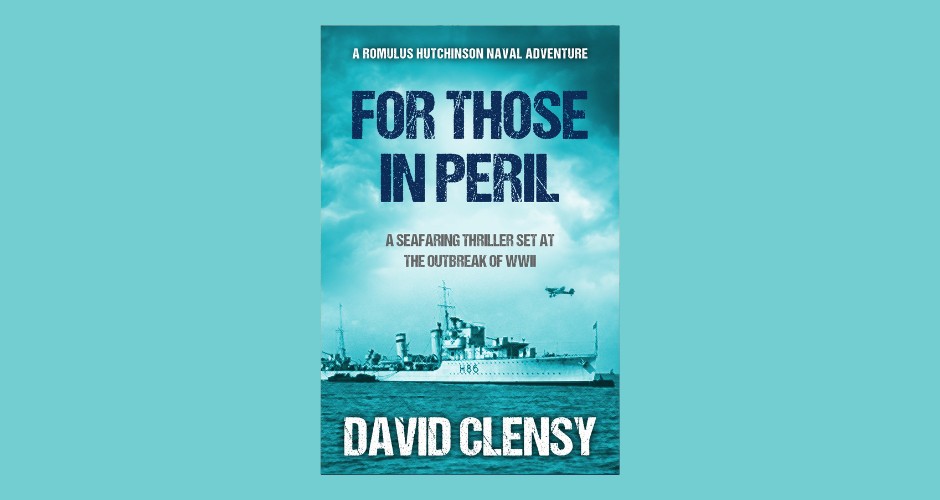
Happy Publication Day to David Clensy

Congratulations to David Clensy, whose thrilling war-time naval thriller, For Those In Peril, is published today!

For Those In Peril is the first book in the Romulus Hutchinson Naval Adventure series.

Liverpool, 1939

Twin brothers Romulus and Remus Hutchinson grew up in a proud seafaring Liverpool family. So when war breaks out in Europe, they are both keen to sign up and do their part.

With their parents’ consent, both boys join up on their 16th birthday in October 1939 – Romulus as an RNVR sub-lieutenant on a Royal Navy destroyer and his brother as a deck hand with their father’s employer, John Holt & Company.

But with Romulus’s sadistic training officer seemingly intent on breaking the cadets’ spirits before their careers have even set sail, he struggles with the intense training.

There is no time for doubts, however, as the two brothers are quickly thrown into combat.

With Operation Dynamo around the corner, will the Hutchinson brothers both make it out alive…? Can they make their mark as their forefathers did before them?

Or will the bottomless deep claim yet more victims…?

The Fire Maidens is Published Today

Congratulations to D. R. Bailey, whose heart-pounding military adventure, The Fire Maidens, is out now!

The Fire Maidens is the third book in the Secret Sirens Aviation Thrillers, set during the Second World War.

Autumn, 1943

Sisters Anna and Jennifer Nightingale have been flying in top missions with the Secret Sirens all-female RAF unit for nearly a year.

Their squadron of twelve Mosquitos stages a raid on Rouen to divert the enemy’s attention from the Lancasters which are coming in to bomb the marshalling yards and port.

But while Jennifer makes it through the mission safely, Anna and her navigator, Maria, are forced to ditch into the Channel.

Luckily they are picked up by a British Destroyer. And on board is none other than Winston Churchill himself.

Impressed by the skill-level and bravery of the female pilots, Churchill is keen to learn more about their training.

He escorts them back to base where they are given a new mission: to attack the Nazi-occupied Mimoyecques Fortress.

The Allies know that the Fortress is being armed with high calibre guns capable of reaching London in a massive, unending bombardment. The Sirens need to drop bombs into the railway tunnel entrance of the Fortress as soon as possible before the unthinkable happens.

But with very little time to train, will the Sirens be able to pull off the task? Can they reach the Fortress unscathed?

Or will these Fire Maidens join the many thousands who have already lost their lives in this brutal war…?

Remembering Donald Macintyre

Between 1940 and 1944, Donald Macintyre was among the most successful submarine hunters in any Allied navy, transforming the Battle of the Atlantic with his successes against the U-boat menace. To commemorate the eightieth anniversary of the end of World War Two, Donald’s daughter, Dani, shares a personal memory from her father’s life after the conflict.

In 1960, when Dad was employed by MGM as Nautical Advisor on Mutiny on the Bounty starring Marlon Brando and Trevor Howard, he left my mother in charge of the pig farm. I can only suppose that she felt annoyed to be left with this responsibility, because she sold all the pigs and demanded a flight to California!

Dad complied, and I was able to join them for a fascinating holiday, mainly spent in Culver City’s MGM Studios every day. I watched the crew film scenes of a half replica of the Bounty on rollers, with wind and water machines simulating a storm on the high seas. To my joy I also spent time with the crew of Rawhide, a Western TV series. They made a fourteen-year-old girl feel very welcome!

If you have ever watched Mutiny on the Bounty, you might have noticed that in one scene Marlon Brando comes out of his cabin wearing a ridiculous red velvet smoking jacket. When Dad was asked to approve this costume change, he said it would never have been acceptable in those days. Hollywood being Hollywood thought it made handsome Marlon irresistible, so they kept it in. This made Dad wonder what he was being paid for, apart from sitting and playing cards with Gordon Jackson in Tahiti!

Remembering Leo Heaps

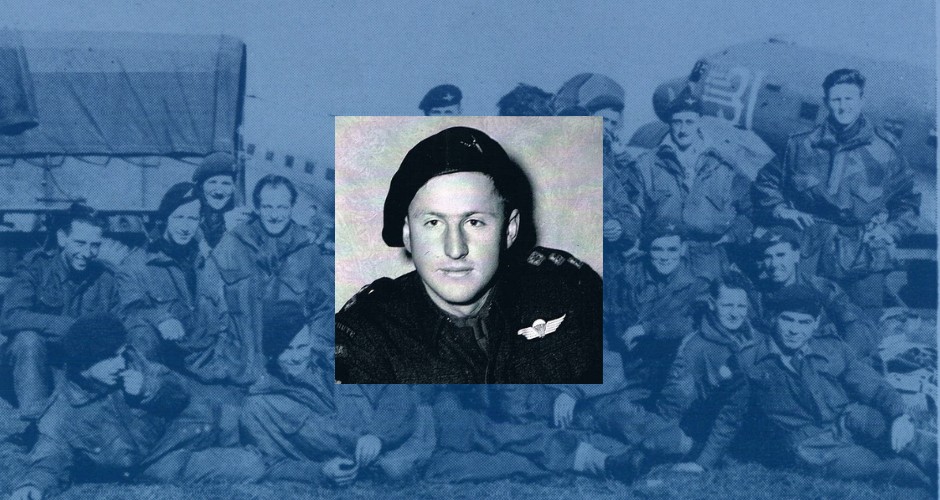
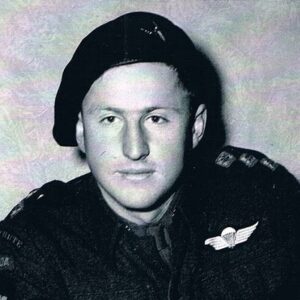
Canadian paratrooper Leo Heaps (1923–1995) was seconded to the British Army during the Second World War and participated in the Battle of Arnhem. He was captured by the Germans and upon his escape, his work with the Dutch Resistance to help rescue hundreds of Allied soldiers behind enemy lines resulted in his being awarded the Royal Military Cross for “outstanding gallantry”. To commemorate the eightieth anniversary of the end of the Second World War, Leo’s son Adrian reflects on his father’s life in 1945.

Leo Heaps

In 1945, Leo Heaps was just twenty-two, a young Canadian whose experiences in the Second World War shaped him into the complex figure I knew.

Born in Winnipeg in 1923, growing up as the son of Abraham Albert Heaps, a prominent Parliamentarian, wasn’t easy, but Leo forged his own path. Educated at Queen’s University, the University of California, and McGill, he was restless by 1944, bored with the Canadian Infantry Holding Unit. His commanders underestimated him, calling him “not of officer caliber, no initiative, not aggressive enough.” Sarcastic and defiant, he failed to qualify for the Infantry. His father urged him to work on his aunt’s farm, an exemption from service, but Leo sought action. He volunteered for the CANLOAN program, seconding Canadian officers to the British Army, a choice that plunged him into Operation Market Garden.

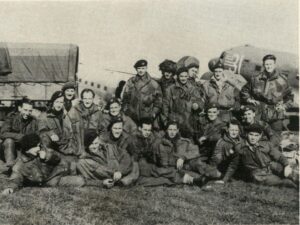
Leo (upper right) before his first jump into Arnhem

In September 1944, Leo joined the British 1st Airborne Division, commanding the 1st Parachute Battalion’s Transport — without ever having jumped before. He described his first drop on 17 September 1944 with vivid clarity: “I floated down gently from heaven at 1:30 p.m. on Sunday… The sun shone, the fields of Wolfheze were bathed in warm light and the green meadow bloomed with large bursts of yellow sunflowers.” That beauty was short-lived. The Battle of Arnhem, part of a failed plan to seize Rhine bridges, ended in defeat. Captured by the Germans, Leo didn’t stay a prisoner for long. With the help of the Dutch Resistance, he escaped, hiding in a chicken coop at Ennyshoeve. There, he met members of the Resistance risking their lives for Allied evaders.

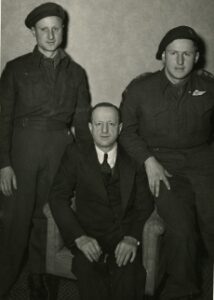
Leo with his father and brother David

His work with the Dutch Resistance earned him the Military Cross, a rare honour for a Canadian in British service. His brother, David, also received the Military Cross, making them the only Jewish brothers during the Second World War to win the decoration. Leo’s role in Operation Pegasus, the escape of over 100 Allied soldiers across the Rhine, was a triumph he chronicled in his book The Grey Goose of Arnhem. He called it “the most amazing mass escape of World War II.”

But some memories were harder to share. In April 1945, Leo was among the first to enter Bergen-Belsen concentration camp after the Germans fled, leaving behind a typhoid outbreak and unimaginable suffering. As a Jewish soldier, the sight of skeletal survivors, the stench of death, and the chaos of the camp struck him profoundly. In Escape from Arnhem (1945) he described the eerie silence broken by the groans of the starving, the piles of unburied bodies, and the desperate eyes of those clinging to life. The scale of the horror overwhelmed him. He rarely spoke of Belsen, but when he did, his voice was subdued. I can picture him there, a young man of twenty-two, confronting a darkness that no one could fully process.

Leo with his father following his decoration

By May 1945, Leo was no longer the kid who frustrated his commanders, but a decorated veteran, a survivor of capture, combat, and collaborator with the Dutch underground. However, the war left its mark on Leo in what we now recognise as PTSD. The loss of friends killed by the Germans ushered a quiet guilt for those surviving when so many didn’t. Yet Leo channelled his unease into action, as if movement could keep the ghosts at bay. His writing, his adventures, his relentless drive — they were, in part, his way of coping with a war that never fully left him.

In 1994, my son and I accompanied Leo to Arnhem for the fiftieth anniversary, as one of forty Canadian veterans. I often wonder what he felt in those sunflower fields, thinking of his lost comrades and his own life’s pursuits. Some of these feelings can be found in his records and letters in the Ontario (Canada) Jewish Archives, which offer a glimpse of the man and the many moments beyond his stories.

Leo died in 1995, leaving a legacy I’m still unravelling. In 1945, he emerged from the war not just as a survivor but as a storyteller who gave voice to the unsung. His books are a testament to a war that left its scars, but also of the man who became my father.

By Leo Heaps:

Escape from Arnhem

The Grey Goose of Arnhem

Operation Morning Light

Hugh Hambleton, Spy

Log of the Centurion

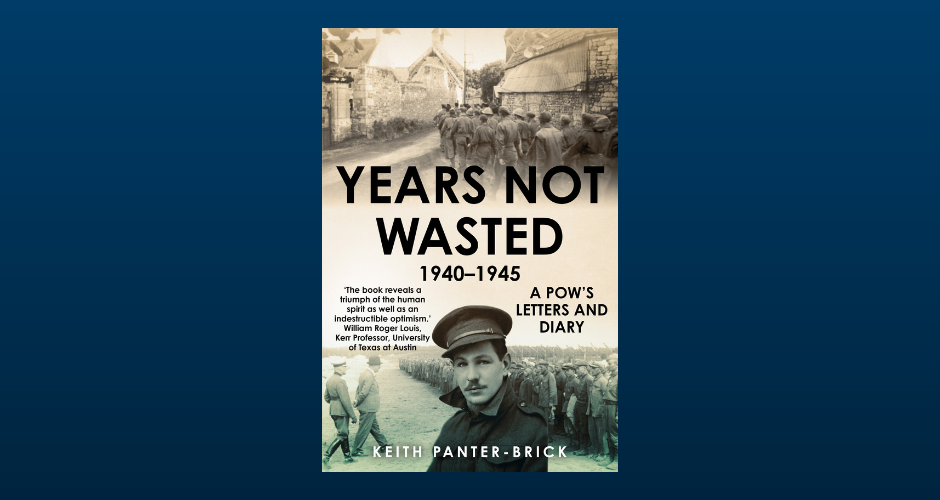
Reflections on Keith Panter-Brick’s Years Not Wasted

Keith Panter-Brick joined the Territorial Army in March 1939, at the age of eighteen. When war broke out six months later, he was sent to France, where he was entrenched ahead of the Maginot Line in spring 1940. Following the devastating German blitzkrieg, he was captured in May 1940 and spent the next five years as a prisoner of war. To commemorate the eightieth anniversary of the end of World War Two, Keith’s friend and colleague, Paul Jankowski — Raymond Ginger Professor Emeritus of History at Brandeis University — reflects on Keith’s harrowing wartime memoir, Years Not Wasted, below.

“We were totally outclassed,” Keith Panter-Brick told me in the early 2000s. He was speaking of May 1940, when the German land and air forces overwhelmed the Allied forces in Belgium and northern France. Taken prisoner that month, he spent the next five years — the first half of his twenties — in German prisoner of war camps (Stalags) in occupied Poland. The mental honesty, scrupulous accuracy, and personal humility in his brief comment captured much of the man, the scholar, and the friend I would first meet some fifty years later.

The same qualities would reappear in his memoir, Years Not Wasted. When he returned home to Merseyside, England, in 1945, all he had was his diary, along with the many letters that had somehow reached his family. He would return to them many years later in his memoir, retelling and perhaps reliving the captivity that he and other captured Western soldiers had to endure. They contended with conditions worse than those of the officers, but far better than those of the Soviet and Polish prisoners, most of whom perished in one of the great war crimes of the Second World War. Neither self-pity nor heroics coarsen his narrative. He writes of malnutrition and bitter cold, but also of Red Cross parcels, of boredom but also release, of submission but also resistance and, in his case, attempts at escape — once in 1944 from the camp itself, and again in 1945 from the virtual death-march out of it.

It is a recollection mixing scrupulous honesty with vivid detail, on one level a document about captivity in wartime, on another a spiritual memoir of inner freedom wrested from adversity, before its physical reality was finally restored.

Remembering Bobby Oxspring

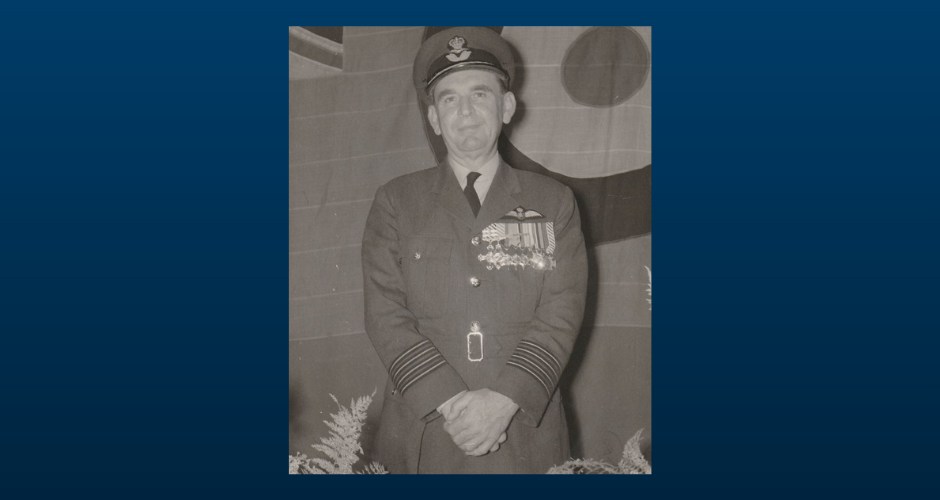
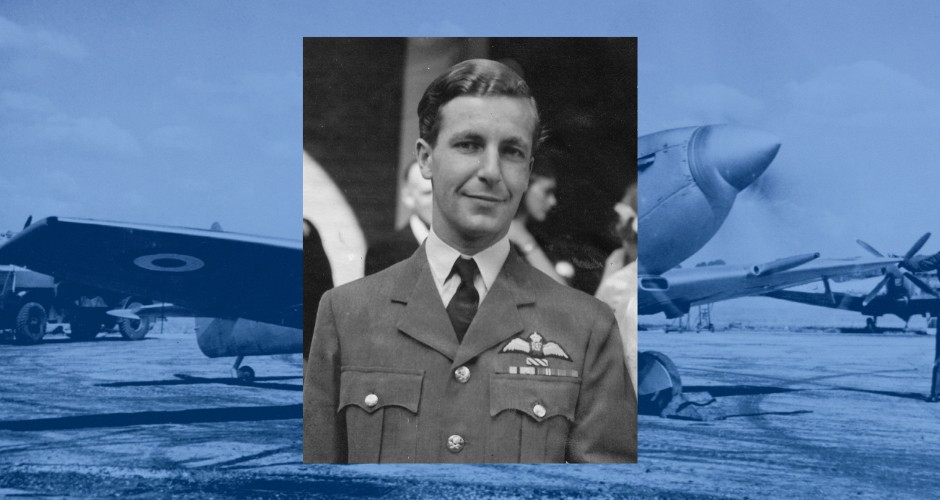
Group Captain Bobby Oxspring, author of Spitfire Command, saw action in many of the most famous battles of the Second World War, including Dunkirk and the Battle of Britain. To commemorate the eightieth anniversary of the end of World War Two, his great-grandson, Daniel, shares his reflections on Bobby’s life below.

Flying ace Robert (Bobby) Wardlow Oxspring held the rank of squadron leader when World War Two ended in May 1945. Throughout April 1945, he was confident that the war was soon to conclude. His mood on VE Day as an optimistic family man would have no doubt been a mixture of pride and reflection. He would have been proud of his achievements: he’d been made leader of the 141 Wing at Deanland only the year before, and had been awarded a Distinguished Flying Cross and Two Bars as a flying ace. He would have been reflecting on his numerous wartime adventures, from the Battle of Britain to his time in North Africa, Italy and many other countries. Bobby’s mood on VE Day likely matched the mood of many of ‘The Few’, and I have no doubt he would have felt joy at the war’s conclusion.
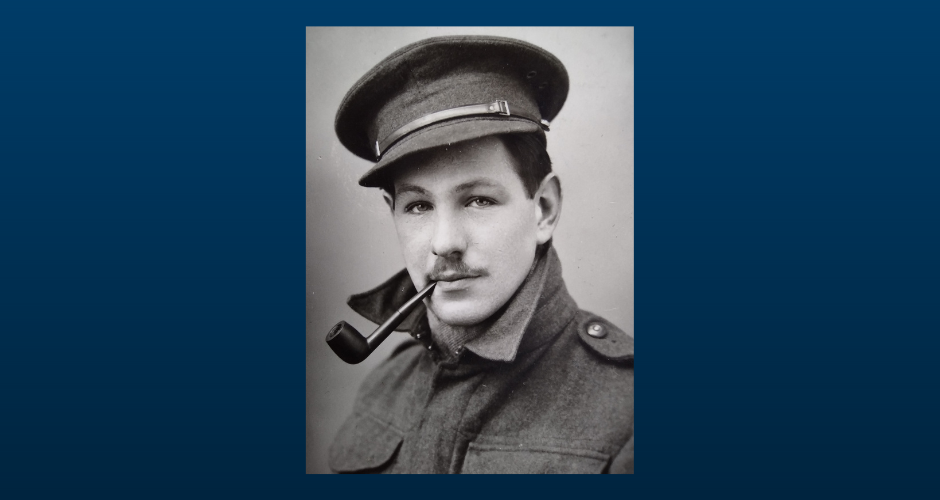
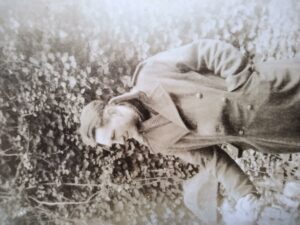
For me, the great-grandson of Bobby Oxspring, my great-grandfather has had a huge influence on my life — not only as a proud figure to look up to, exemplifying courage and bravery, but also through his stories. His career after VE Day did not lose momentum. He received a permanent commission as a flight lieutenant on 1st September 1945 and was promoted further to substantive squadron leader on 1st August 1947. One incredible achievement, however, was his award of an Air Force Cross. This was for leading number 54 Squadron of the RAF Vampires to Canada and the US, the very first jet aircraft to cross the Atlantic.

After VE Day, he never stopped being admirable. He undertook further tours, even across Italy, and eventually became Station Commander of RAF Gatow in Berlin. At Churchill’s funeral, he walked at the very front.

I have been to RAF Cranwell to see some of my great-grandfather’s personal scrapbooks and was even fortunate enough to sit in the cockpit of his recovered plane in the Dumfries and Galloway Museum in Scotland. These are only a few of the moments I have taken to reflect on his life.

On VE Day I am almost certain that one thought would have prevailed in his mind: his admiration and respect for the mighty Spitfire, and his pride at having flown it.

Remembering Keith Panter-Brick

Keith Panter-Brick joined the Territorial Army in March 1939, at the age of eighteen. When war broke out six months later, he was sent to France, where he was entrenched ahead of the Maginot Line in spring 1940. Following the devastating German blitzkrieg, he was captured in May 1940 and spent the next five years as a prisoner of war. To commemorate the eightieth anniversary of the end of World War Two, Keith’s daughter Catherine — Professor of Anthropology, Health, and Global Affairs at Yale University — shares her memories of her father below.

“Each day life is hanging in the balance.” That was the phrase with which my father ended his book, Years Not Wasted. I think that everyone with a lived experience of war will understand that sentence: the notion that you may or may not live, may or may not be free, may or may not return.

Keith Panter-Brick was a prisoner of war in Poland from 1940 to 1945. He was captured at Isières when he was just nineteen. Under the Geneva Convention, ordinary soldiers were obliged to work — and were put to hard labour in POW camps. If he ever survived the cold, hunger, exhaustion, and brutality of war, Keith promised himself that he would study philosophy and go to university, the first of his family to do so. Admitted to Keble College, Oxford, he joined a postwar student delegation to Heidelberg for cultural exchange and reconciliation. There he met my mother, a student from Alsace-Lorraine on a French delegation to Heidelberg. The two fell in love — my father courted in German, their only common language at the time — and in that short week, they decided to marry. They built a family, rooted in the practice of non-violence and cross-cultural understanding.

My father’s book began decades later, assembled from scraps of his diary, postcards, and letters sent through the Red Cross, all of which he had kept hidden away in a shoebox. On page seven of the first edition, you’ll find his death certificate — the Office of the Cheshire Regiment officially reported him killed in action in May 1940. It took months for news of his survival to reach home. That certificate became for me the most vivid proof that life indeed is hanging in the balance.
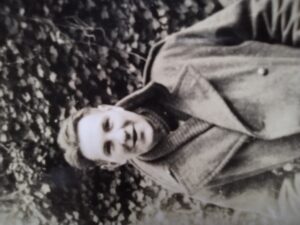
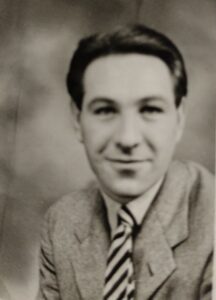
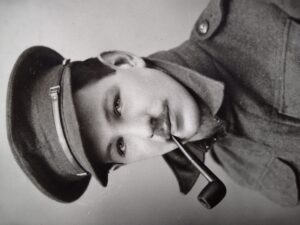
Years Not Wasted isn’t a grand officer’s tale. It’s a soldier’s story, grounded in hard labour, frostbitten marches, and everyday endurance. Because he learnt passable German, Keith was once included in an escape attempt with RAF officers, only to be recaptured in Gdansk, at the dockside when attempting to board a Swedish vessel. He survived the Great March out of Poland in the most brutal of winters, thanks to a pair of good boots made in his father’s bootmaker shop. Even years later, my sister Brigitte, now a regular walker in the forests of Lorraine, measures distances in fractions of “Great March kilometres.” In my own teaching and research, I focus on the biological and social signatures of war across generations, and on pathways to peace. My son Jannik chose to study POW trade and barter systems for his Masters’ dissertation at Cambridge. Each of us carries a trace of my father’s war experience.

My father was impetuous. Once, while we were travelling from Nigeria to Cameroon, he filmed a bull elephant that decided to charge us on a dusty road. He stood in front of the car with the hand-held camera, while we huddled in the back. He once flagged down the pilot of a plane by running onto the runway, not wanting to miss his actual flight. But he became, over the years, immensely patient. Whilst a professor at the London School of Economics, he turned to gardening, building stone walls, and restructuring the house we purchased in Lorraine — a house that still has “2 OFF” (“must house two German officers”) carved in the front doorway. My father taught me to value ordinary things in everyday life: raking leaves, washing dishes, being attentive to other people. He never forgot what it meant to be hungry. He told me that being alive is a gift from God, and that good health is a blessing one can only really understand after one has lost it.

In 2025, we republished Years Not Wasted. It’s more than a memoir — it’s a witness statement. It honours ordinary soldiers who endured extraordinary hardship. It is a uniquely authentic book, told in the way it was recorded in letters and a diary at the time, rather than reconstructed from fallible memory. It was written to share the knowledge “soon acquired once war has started that the cost, in lives, in grief, in suffering, is immeasurable, and unacceptable however much one did accept it at the time.” It’s a call to remember how people like my father built their lives after war, choosing patience over bitterness, solidarity over division, peace over conflict. For my father, it was always about taking one step at a time, drawing from patience and reflection. That is the lesson I carry forward.
Remembering Roderick Chisholm

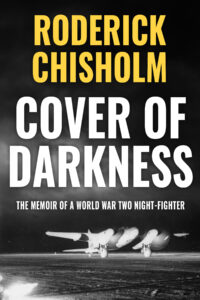
Air Commodore Roderick Chisholm, CBE, DSO, DFC & Bar (1911–1994), author of Cover of Darkness, was a night fighter pilot, flying ace and a highly decorated British airman of the Second World War. To commemorate the eightieth anniversary of the end of the Second World War, his son Julian reflects on his father’s life in 1945.

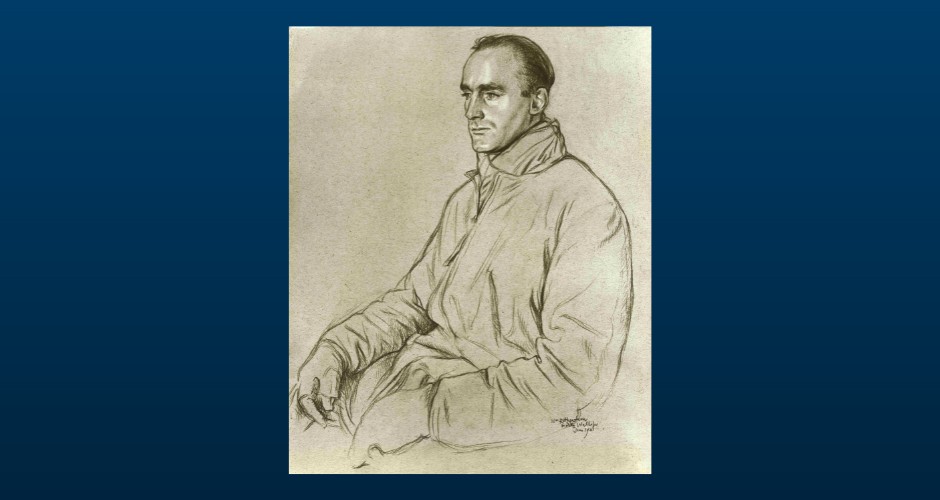
Roderick Aeneas Chisholm by Sir William Rothenstein. Image used with permission from Museums Sheffield

In 1930 Roderick Chisholm joined 604 Squadron of the Royal Auxiliary Air Force. He learnt to fly and was commissioned as an officer. He left the squadron in 1935 when his work took him to Iran. Before rejoining his squadron in late June 1940, he took a refresher course to become a night fighter pilot and fly the squadron’s Blenheims. During the war, while flying Beaufighters and Mosquitos, he shot down nine enemy aircraft with the assistance of his airborne observers and the ground controllers, he commanded the Night Fighter Interception Unit at Ford, and was the second-in-command of Bomber Command’s 100 Group, which was charged with defending RAF bombers over enemy territory. He recorded his wartime experiences in Cover of Darkness, which was first published in 1953.

Immediately after hostilities ended, Roderick led a team of twelve charged with gaining as much intelligence as possible about the impact of 100 Group’s radar-assisted night fighters, Mosquitos, and Radio Counter Measures. The team did their work at the final base of the Luftwaffe in Schleswig, just before it was disbanded and its personnel transferred to POW camps. They carried out interrogations of Luftwaffe night fighter commanders and pilots, observers, flight controllers and technicians, held technical discussions, and examined the vast number of German aircraft parked on the airfields. The team gained confirmation of the effectiveness of 100 Group’s efforts, and had the satisfaction that as a  result RAF losses were significantly reduced. The Mosquito had an awesome reputation amongst the German airmen.

Major Schnauffer was one of the pilots whose interrogation Roderick witnessed. Schnauffer was a brave and skilful night fighter pilot who was credited with shooting down no less than 124 bombers in defence of his country. He wore uniform, and on the last day the Germans were allowed to wear medals, he wore the highest order of the Iron Cross around his neck. The exchanges with the Germans were generally civilised and friendly, but my father could not ignore that they were Nazis, and that nearby were camps for Russian prisoners living in ghastly conditions, and mini-Belsens for Jews and other displaced persons.

Roderick’s mission complete, he flew back to Norfolk. While doing so, he envisioned a future Europe in which frontiers would mean no more and individual nationalities were less important, as per the multi-national squadrons of the Battle of Britain. After the collapse of France in 1940, British, French, Belgian, Czech, Polish and other nationalities had flown in harmony in polyglot fighter squadrons. Their aims were identical, and their understanding effective thanks to the basic English of the radio. Sadly, later, as national squadrons were formed, national identities asserted themselves and the unity achieved in the Battle of Britain became compromised.

Remembering John Wooldridge

In September 1939 the twenty-year-old John Wooldridge, then a Sergeant Pilot, took part in the British air raid on Kiel, the first raid of World War Two.  Having brought his damaged aircraft home safely, he was awarded the Distinguished Flying Medal.  Commissioned in August 1940, he rapidly rose to the rank of Flight Commander, flying Lancasters as a Flight Lieutenant.  In the middle of 1942, for his part in the 1,000-bomber raid on Cologne, he was awarded the Distinguished Flying Cross.  By the end of the War, he had flown 97 missions over enemy territory.  To commemorate the eightieth anniversary of the end of World War Two, John’s daughter and son, Susan and Hugh, share their memories of him below.

John Wooldridge

On 9th and 10th May 1944, our father, Wing Commander John Wooldridge DSO, DFC*, DFM, returning from New York where his music was being performed at Carnegie Hall, flew over the Atlantic in a Mosquito, taking off from Goose Bay, Canada and landing six and a half hours later in Ballykelly, Northern Ireland.  In so doing, he broke the then speed record for crossing the Atlantic.

The Air Ministry, unsure what to do with this daring twenty-five-year-old, told him to lie low but, within a couple of days, they’d been outflanked by the Press and the story was all over the newspapers.  As our father writes in his diary for Sunday 14th May: Ye gods, what a splash! Headlines, pictures…

Meanwhile, on Monday 15th May in a London hairdresser, our mother, the distinguished British actress Margaretta Scott, was having her hair done.  Whilst under the dryer, she read the story in the London Evening Standard of this amazing trans-Atlantic flight.  But what really caught her eye was that the pilot was also a composer of serious music, who had composed a work for Narrator and Orchestra called The Constellations.

‘That’s my boy!’ she cried, as Sir Henry Wood had recently asked her to find a new work for Narrator and Orchestra for his upcoming Promenade Concerts, and she felt that The Constellations might be just the job.

Our mother immediately approached the Air Ministry, but they refused to give out the personal details of the record-breaking flyer.

The story would have ended there if, a couple of days later, at Denham Film Studios where she was making the film Fanny by Gaslight, our mother had not given a lift to a film publicist who, on their journey back to London, had boasted that he’d just been given a camembert cheese flown across the Atlantic by a friend, one John Wooldridge.

‘Bring him to tea!’ she cried.  And the next Sunday, there was our father on her doorstep — and that was it!  For the next fourteen years until our father’s sudden death in a car crash in 1958, our mother and father were as inseparable as their young family and busy work schedules would allow.

In the 1950s, Margaretta Scott continued to star in plays and films whilst John Wooldridge wrote his music and plays and films.  One of his most important films was the 1953 film starring Dirk Bogarde, Appointment in London, about a Royal Air Force Bomber Command squadron, for which he wrote both the screenplay and the music score.  To this day it continues to be screened to great acclaim and serves as a memorial to Bomber Command by one of their own.

By John Wooldridge:

Low Attack

Remembering Hubert Essame

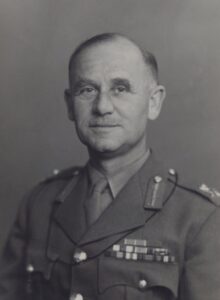
Major-General Hubert Essame, CBE, DSO, MC (1896–1976) was a British Army officer who fought in the First and Second World Wars. Following his retirement from the army, Hubert lectured in military history at King’s College London, and published several books and articles. He was also an advisor to television producers for military programmes. To commemorate the eightieth anniversary of the end of the Second World War, his granddaughter Antonia shares her memories of him below.

Hubert Essame

Brigadier, later Major-General, Hubert Essame led 214 Independent Infantry Brigade, part of 43rd Wessex Division, in the capture of Mont Pincon, the key to Normandy, as well as of Hill 112, the successful yet most costly single battalion action of the Overlord campaign.

He was a sharp-witted and determined man remembered by the actor and raconteur Dirk Bogarde, his one-time liaison officer, for his “brilliant blue eyes and tongue like a whip”. He had a caustic sense of humour and was a formidable leader from the front.

Soon after the war, Hubert wrote the Division’s official history, The 43rd Wessex Division at War, 1944-45, and later Battle for Normandy, Normandy Bridgehead, The Battle for Germany, and a biography of General Patton. His perspective as a leader of troops into battle, alongside his use of a wide-ranging variety of sources as a historian, makes for a great read even for those who know about Operation Overlord.
His 214 Independent Infantry Brigade, which together with 129 and 130 Brigade and their supporting arms formed Major General Ivor Thomas’s 43rd Wessex Division, were in turn part of the XXX Corps commanded by Lieutenant-General Sir Brian Horrocks all the way from Normandy to Bremerhaven.

The Wessex Division story spans the stormy Overlord crossing and later the crucial Battle for Hill 112. This point south-west of Caen was defined by Eberbach, commander of Panzer Group West, as the “pivotal point of the whole position” and it saw the first of the grim battles of attrition immediately following Caen’s fall. The battle involved heavy casualties and tested the 43rd Division against some of the most seasoned German divisions, well dug in and skilfully hidden.

Road and rail lines lay at right angles to the direction of advance. The bocage of tiny, often boggy fields with sunken lanes and thick hedges reduced visibility for artillery and impeded all movement. And it was high summer. Hubert describes vividly how he crawled forward in the August heat to assess Mont Pincon’s southern slopes before its eventual capture by the Division and 8th Armoured Brigade.

Hubert was a writer whose extraordinarily immediate account includes, for example, the information he gained from German prisoners, subsequent revelations about Hitler’s orders to his generals, and his own point of view at the head of 214 Brigade. His perspective sheds light on some of the huge challenges of the campaign, such as that of establishing a key bridgehead over the Seine at Vernon despite the civilian population’s determination to celebrate as though the campaign was already won.

214 Brigade fought on through northern France and the Netherlands, including Operation Market Garden, and were among the first Allied troops to enter Germany. They played a key part in the turning of the tide in the Reichswald. I am proud that ‘Brigadier Twinkletoes’ was my grandfather and attempt to read across from his high standards of resolve and determination to the greyer demands of the here and now.
By Hubert Essame:

Patton the Commander

Normandy Bridgehead

The Battle for Europe, 1918

The Battle for Germany, September 1944-May 1945

Remembering Jeremy Howard-Williams

Jeremy Howard-Williams DFC (1922–1995), author of Night Intruder, had a distinguished career in the RAF as a night-fighter pilot during the Second World War and was awarded the Distinguished Flying Cross for gallantry. To commemorate the eightieth anniversary of the end of the Second World War, Jeremy’s son, Anthony Inglis Howard-Williams, reflects on the arrival of peace in 1945 and how it influenced his father’s life.

Jeremy Howard-Williams warming up the engines of a clipped wing Spitfire

When peace came to Europe in May 1945, Flight Lieutenant Jeremy Howard-Williams DFC was stationed at HQ, 11 Group Uxbridge. Three days before Germany’s unconditional surrender, a party was held to celebrate peace. Jeremy and his brother Peter did so by marching a guest — Flight Lieutenant Andrew from RAF Intelligence — between them up and down an anteroom. The junior flight lieutenant just happened to have been their pre-war boarding school housemaster, and the brothers had found it too good an opportunity to miss. When, years later, he was asked how the lieutenant had taken the ribbing, Jeremy replied, “with remarkable good humour!”

Jeremy at his wedding in 1951

Like so many in 1945, Jeremy was headed for an uncertain future. With peace  came the pressing question: what happens now? For most, life outside of the  forces beckoned. With millions demobilising, the assimilation of those who had been at war back into civilian society became one of the new post-war government’s biggest challenges. For those who did not want to leave the forces came a different challenge. With Jeremy’s father a retired RAF pilot, Peter a Battle of Britain day-fighter pilot and Jeremy a night-fighter pilot with the Fighter Interception Unit — an elite force at the forefront of the RAF’s early experiments with radar equipment — both brothers understandably wished to remain serving.

With the Royal Air Force downsizing, deployment meant less flying — not a very exciting prospect for a twenty-three-year-old war veteran. Jeremy had specifically joined the RAF in order to fly when the Nazis had tried to seize control of Western Europe. However, in the new modern era of the jet engine, aircraft were flying ever faster and higher. Now that was exciting!

In the end, both brothers remained in the RAF. Jeremy was first posted in an admin job to Singapore during the Malayan Emergency, where he met his wife, uniting two distinguished RAF families. He later worked as an assistant air attaché in the Paris and Berlin embassies. He did fly during these postings, but mainly a desk. He resigned in 1957.

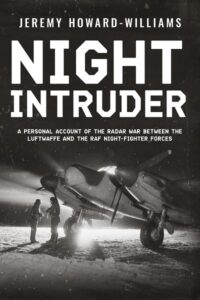
Ultimately, Jeremy’s parents divorced and his father remarried into the Ratsey family, where Jeremy became sales manager for the famous sail-making firm Ratsey & Lapthorn in Cowes on the Isle of Wight. After leaving the company, he wrote many authoritative books on sailing, as well as Night Intruder, republished by Sapere Books, a personal account of his wartime service as a pilot and the radar war between the RAF and Luftwaffe night-fighter forces.

Remembering Sir Frank Whittle

Sir Frank Whittle, author of Jet: The Story of a Pioneer, was a Royal Air Force pilot and aviation engineer known as the inventor of the jet engine. He obtained his first patent for a turbo-jet engine in 1930, and in 1936 co-founded Power Jets Ltd. In May 1941, his engine was fitted to a Gloster E.28/39 airframe — the plane’s maiden flight from RAF Cranwell in Lincolnshire heralded the beginning of the jet age. Frank retired from the RAF in 1948 with the rank of air commodore, and that same year he was knighted. He was awarded the Order of Merit in 1986. To commemorate the eightieth anniversary of the end of World War Two, his son Ian reflects on Sir Frank’s life in 1945.

Frank as a junior officer  in 1929, when he proposed the turbojet

My father’s company, Power Jets, was nationalised in 1944. From then until 1946, he was on the board of the government company that emerged under a slightly different name. At the time, he was working on the design for the aft-fan engine that also incorporated the after-burner system he had patented in 1936 — the modified W2/700. This was expected to propel the experimental Miles aircraft (M52) intended to be the first in the world to go supersonic. He was also working on the development of what would have been the world’s first hi-bypass turbo-fan engine — the LR1. Both projects were cancelled by the government in 1946 — as was the M52. These decisions resulted in Frank resigning from the board and putting himself in the hands of the RAF to do whatever they would wish him to do.

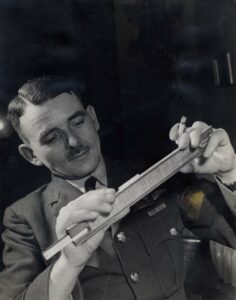
Frank holding his slide rule

1945 was a year of change for my father. He was still a serving officer in the RAF, but Power  Jets had become publicly owned and entirely dependent on government funding. He found himself subject to the needs of the large independent aero-engine manufacturers who objected to a government company in competition. However, on three occasions he briefly got away from it  all and flew the Meteor jet fighter. Apart from the Wright brothers, he was the first person to pilot an aeroplane powered by an engine of his own design. At other times, he found himself sent off to deliver lectures at various venues to describe the impact and differences when changing from piston engine/propeller propulsion to jet propulsion.

As a little boy, I remember him coming home after flying the Meteor along the high-speed run at Herne Bay. “How fast did you go, Daddy?” I asked. “Oh, about 450,” he replied. “Is that all?” I said with some disgust, and turned away to do whatever it was that I was doing. I had  expected him to  tell me 600 miles per hour. When I asked him about this, many years later, he said he was quite crestfallen by my reaction. He also explained that, as he was flying at about 50 feet above the surface of the sea, he really was unable to pay much attention to his airspeed indicator — his attention was focussed on keeping the aeroplane steady and level. And anyway, he would have been speaking of knots, not mph!

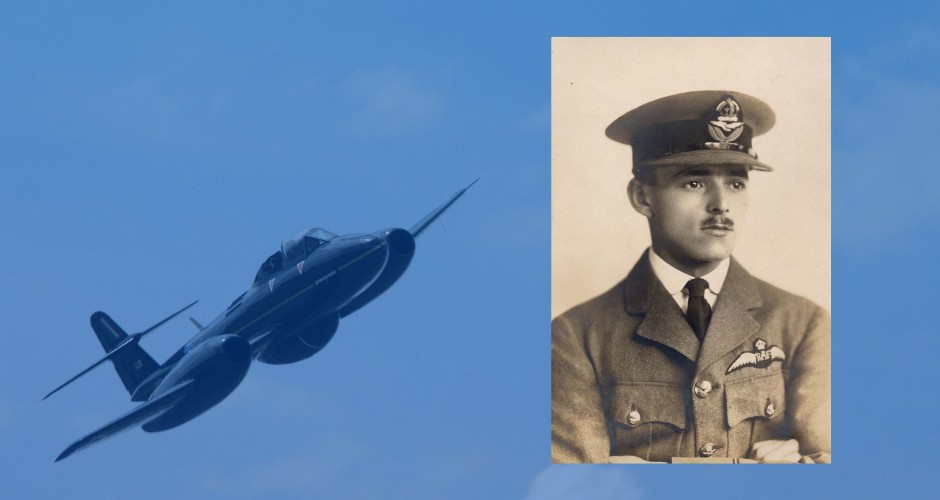
Featured image credit: Photo of Gloster Meteor by Alexis Threlfall on Unsplash.

Remembering Sir Peter Gretton

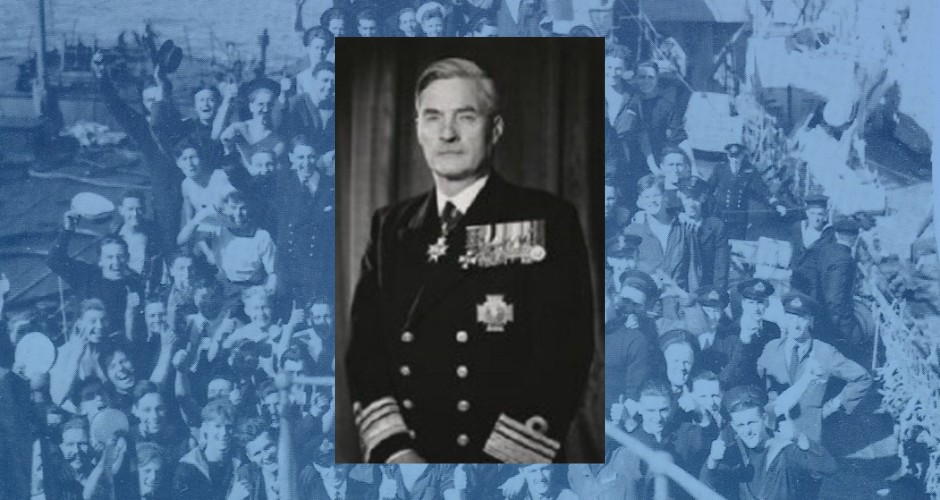
Sir Peter Gretton DSO** OBE DSC (1912–1992) was an officer in the Royal Navy. He was active in the Battle of the Atlantic during the Second World War, and was a successful convoy escort commander. He eventually rose to become Fifth Sea Lord and retired as a Vice-Admiral before entering university life as a bursar and academic. To commemorate the eightieth anniversary of the end of World War Two, Sir Peter’s son, Vice-Admiral Mike Gretton, shares his memories of him below.

Lieutenant Commander Peter Gretton with the Ship’s Company of HMS Wolverine

On 8 May 1945 — Victory in Europe Day — Peter Gretton was thirty-three years old and utterly exhausted. He had been continuously in seagoing appointments since the outbreak of war in September 1939. He had married Wren Judy Du Vivier in 1943 during a short break between convoys, and they had had their first child, Anne, who was not yet one year old. They were renting a flat in Kensington so that he could readily get to work: his job at the time was in the Joint Planning Staff in the Cabinet Office working on strategic plans to end the war in Europe and then in the Far East — not exactly a rest cure.

Peter had served continuously in seagoing ships from September 1939 until he came ashore in March 1944 — still only thirty-one years old. He had served in five ships during that time, starting as a First Lieutenant, including HMS Cossack in which he was mentioned in Dispatches for his performance during the Second Battle of Narvik under the very demanding Captain Philip Vian VC. From February 1941, he was in command of destroyers, starting with HMS Sabre in which he was awarded an OBE, and then HMS Wolverine (March to November 1942) when his ship was an escort for Operation Pedestal, the relief of Malta. He was awarded his first DSO for ramming and sinking an Italian submarine at the expense of wrecking his bows and having to proceed astern to port at Gibraltar.

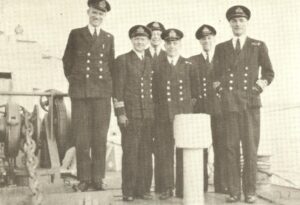
Commander Peter Gretton with the Commanding Officers of ships in B7 Escort Group

From there, he was recalled to the UK as a Commander to become the Senior Officer of Escort Group B7, to be based in Derry, and he initially embarked on HMS Duncan. The Escort Group supported Atlantic convoys for two years and five months. He was awarded the two bars to his DSO during that time, the first of which reflected the successful battle for convoy ONS5, which historians regard as the tipping point in Allied fortunes in the Atlantic convoy campaign.

Peter with wife Judy in 1965

In March 1944, Peter dedicated himself to writing a new book — The Admiralty Convoy Instructions — based on his and others’ experience at war, with a readership in the Royal Navy, Royal Air Force and Merchant Navy. This became the bible for convoy protection and the same book, with minor amendments, was the basis of my own training as a naval  officer in the 1970s.

Peter and my mother rejoiced exuberantly at the victory in Europe: he writes that they ‘walked up Picadilly and thence to St James’ Park … remarkable scenes’. They would have reflected proudly on their own contribution to the outcome: my father at sea and my mother as a Wren in the Western Approaches Tactical Unit (WATU), which developed and taught tactics for the Atlantic battle. I was born nine months after VE Day, in March 1946.

By Peter Gretton:

The Battle of the Atlantic

Former Naval Person

Crisis Convoy

Convoy Escort Commander

Remembering Sydney Hart

Sydney Hart, author of Submarine Upholder and Discharged Dead, served as a submariner in the North Sea, the Atlantic, and the Mediterranean during World War Two. To commemorate the eightieth anniversary of the end of World War Two, Sydney’s daughters Lynne and Andrea share their memories of him below.

Sydney Hart

Our father came across as a somewhat hard man, but underneath there was a soft man with a dry, hilarious sense of humour, which must have been an asset in his seafaring days.

After leaving submarines, Dad decided to emigrate to Australia. He felt unsettled after entering Civvy Street in post-war England. Of course, his family and friends tried to deter him, but to no avail. Sydney made a formal application to emigrate. The £10 ‘Pommie’ fare allowed him a berth on the Empire Brent. Of course, his treasured motorbike had to come as well.

On a May morning, Dad sailed from Liverpool and shared a cabin with seven other fortune-seekers. The ship sailed full of £10 Pommies, seeking a better life in a sunny climate. On leaving England, Dad met his future wife — our mum, Betty — whilst looking over the railings. Upon arrival in Sydney, Australia, Dad travelled regularly on his motorbike to visit her, and their romance flourished. They had a secret wedding in October, with two witnesses who Dad had plucked off the street.

Sydney Hart

Home was a caravan in the bush. This was a lovely, contented start to married life for our parents, though the caravan lacked any amenities. They loved the friendly, relaxed manner of the people around them. After a very challenging wet season, our parents moved to a park with better facilities. It was in this park that I (Lynne) was born, in February 1951. Dad always wondered what his Australian daughter would think of her ‘Pommie’ parents. After much discussion, they decided to return to England. Whether this would be permanent or a holiday, they didn’t know. When I was nine months old, we sailed on the SS Strathmore back to England as a family.

On arrival at Grandad’s house in Standish, a village in Northwest England, we were greeted with a warm welcome party. Dad joined the crew of the George, bound for the Middle East, after a few weeks in England. Mum and I stayed with my paternal grandad. It was easy to see where Dad got his nature from. Grandad adored me and was quite a character. Everyone wanted to know why Mum and Dad hadn’t unpacked. The truth was, they weren’t sure if they were staying. Of course, a £10 Pommie had a full passage back.

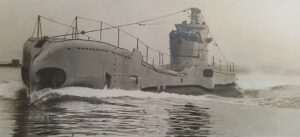
A submarine Sydney served on

They had a ticket confirming a passage back to Australia, but this took a long time to arrive and cost £225. They also declined other offers which would have made their life in England better. Just before the passage came through, Dad accepted a position with a car factory, as he had to support his family. We lived with Grandad for six years. During this time, Dad had three books published. We then moved to a bungalow about a mile away. In 1959, my sister Andrea Davina was born.

Dad stayed in his job until his retirement. Although he did this for his family, he never lost his wanderlust spirit.

Dad died suddenly in 1979. His last request was that he be buried at sea from Portsmouth, as a true submariner.

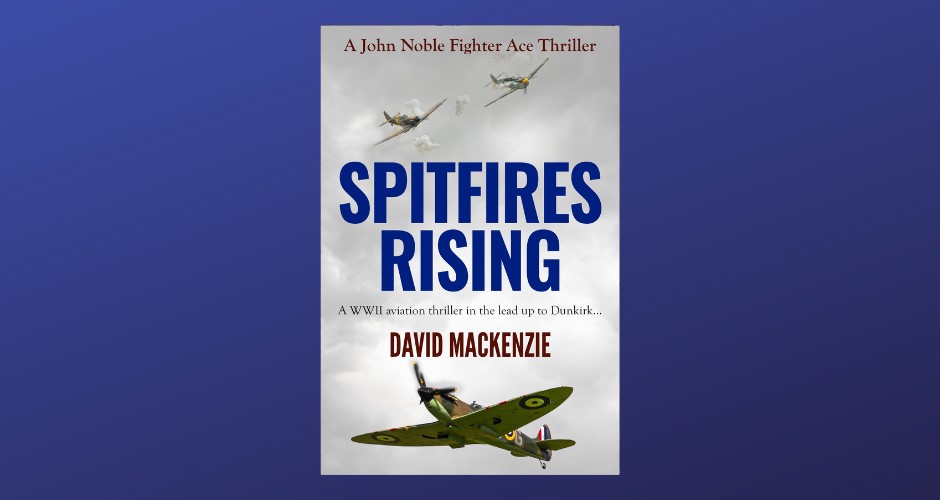
Spitfires Rising is Published Today

Congratulations to David Mackenzie, whose wartime aviation thriller, Spitfires Rising, is published today.

Spitfires Rising is the first book in the John Noble Fighter Ace Thrillers: action-packed military adventures following an RAF pilot during the Second World War.

1938

Having been raised on a farm, young New Zealander John Noble longs for an adventure away from his family’s homestead.

Enthralled by the sight of a Tiger Moth flying overhead, he decides to pursue a career as an RAF pilot and travels to the United Kingdom to complete his training.

After receiving his Wings, John is sent to RAF Catterick, where he finds himself flying the formidable Spitfire.

When tensions in Europe reach breaking point and Britain declares war on Germany, John’s training and courage are put to the ultimate test.

As the squadron prepares to face the Luftwaffe, John starts to question the effectiveness of their tactics, leading to clashes with senior officers.

And as his missions grow ever more dangerous, John begins to wonder just how far he will go to survive the war…

Is John ready for battle? Will he be able to follow orders while preserving his life?

Or is he destined to become a casualty of war…?

The Night Angels is Published Today

Congratulations to D. R. Bailey, whose thrilling aviation novel, The Night Angels, is published today!

The Night Angels is the second novel in the Secret Sirens Aviation Thrillers Series, heart-pounding Second World War escapades with strong female leads.

1943

Sisters Anna and Jennifer Nightingale are recruits in the top-secret Siren Squadron: a group of women trained in the RAF to fight against the enemy.

The Sirens are tasked with flying a series of night stealth missions as part of Operation Scorpion. The first mission is successful, and on returning to base they are told that new members will be joining their ranks.

Hopeful that this means the all-female squadron has been deemed a success, the sisters welcome the new recruits and start training them on the Mosquitos.

They head out on another night mission. But this time not everyone returns.

With a downed plane found empty off the English coast, fears grow that one of the Sirens hasn’t survived.

But the show must go on. And Anna Nightingale has to destroy the crashed plane so the Sirens can remain classified.

As their night missions continue, increased skirmishes with enemy pilots suggest someone may be leaking information to the Germans.

Have the Sirens been compromised? Can they find the mole?

Or will these daring female agents be forced out of the war…?

Sapere Books Sign World War II Series by Anthony Palmiotti

We are delighted to announce that we have signed Anthony Palmiotti’s American Merchant Marine series set during World War II.

Anthony Palmiotti

In Anthony’s words:

“Thank you, Sapere Books, for allowing my series to sail on.

“World War II was, perhaps, the most dangerous of all times for American Merchant Marines and British Merchant Navy seamen. Particularly in the early years, these civilian seamen had less chance of surviving the war than their comrades in the traditional military services. The series starts just as things are heating up when a young third mate, Patrick Welch, joins the tramp freighter Arrow. Throughout the first three books in the series, Patrick, and the crew of the Arrow, deal with Nazi U-boats, unforgiving weather and are part of a little-known rescue of Norwegian civilians from the far north.

“The goal of these novels is to highlight the contribution and sacrifice of these civilian warriors. And, of course, tell a good sea story!”

Congratulations to D. R. Bailey!

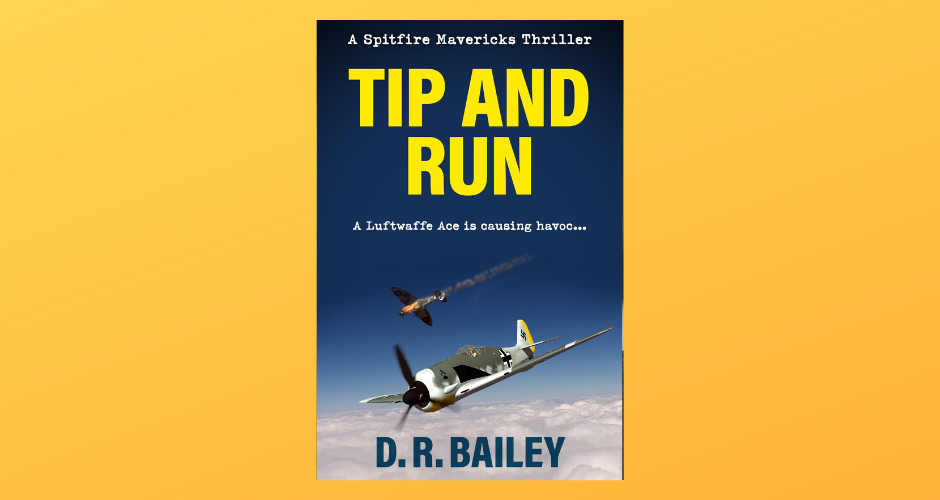
Congratulations to D. R. Bailey, whose exciting aviation adventure, Tip and Run, is out now!

Tip and Run is the sixth book in the Spitfire Mavericks Thrillers series: action-packed novels set during the second world war and featuring a team of vigilante pilots.

Winter, 1942

Flight Lieutenant Angus Mackennelly and his team of Mavericks are informed that a new kind of raid is being perpetrated by the Luftwaffe nicknamed a ‘Tip and Run’.

The planes arrive over the Channel, flying extremely low to avoid radar detection, drop bombs and make a quick getaway. These nuisance raids are designed to disrupt the allies and keep their defences on high alert.
Angus takes a trip to the site of the most recent bombing to see if he can discover more about it. And he makes an extraordinary find – a flat piece of stone with an Ace of Spades playing card attached. This was undoubtedly the calling card dropped by the pilot.
Angus is convinced that the same pilot will try again, and he makes it his personal mission to catch the ‘Ace Raider’.
So begins a deadly game of cat and mouse between the Mavericks and the Luftwaffe invaders.

Who will emerge victorious? Can Angus track down and defeat the raider?

Or will the German Ace lure the Mavericks to destruction…?

How I Write by Patrick Larsimont

In this behind-the-scenes blog series, Sapere Books authors offer an intriguing insight into how, where and why they write.

Today, we are delighted to spotlight Patrick Larsimont, author of the Jox McNabb Aviation Thrillers.

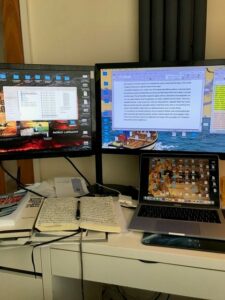
Patrick’s winter writing area

My writing has two modes, much like the clock, British Summer Time and Greenwich Mean Time. Living by the sea in Dorset, the weather rather sets the mood and often my productivity.

In the winter, when it’s darker, I get up early and write directly onto my computer.  Earlier this year, I acquired two largish monitors, which I have side by side on a stand, below which I have my MacBook Pro. My desk is invariably covered in paper, notebooks and little bibelots that keep me interested, amused and inspired.

When I glance at the nearby window ledge, I see a toy metal Spitfire in desert camo with a spinning propellor, and a pair of painted tin soldiers (not by me), one a bagpiper in full regalia, the other a 1940s RAF pilot, inscribed on the bottom as ‘Hurricane Ace, Battle of Britain.’ Finally, there’s my grandfather’s little silver boar, a memento of his own service during the war. It bears the motto, ‘Résiste et Mords,’ which got him through many battles and the camps. He’s gone now, but just seeing that pig always rids me of any writer’s block, knowing full well that I’ve had it much easier than him.

In winter mode, I stare at a radiator and the world comes to me through my monitors, making me feel like some sort of chaotic air traffic controller. Heaven help the pilots in my care, although old Jox McNabb is holding his own. I generally aim for twelve hundred words a day and have a weekly target of at least five thousand. It’s a cadence I can manage and feeds my nature as an impatient man.

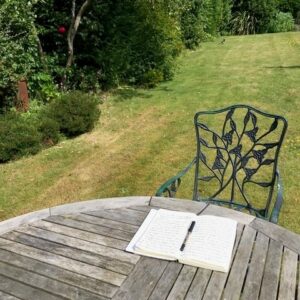
Patrick’s summer writing area

In the summertime, the process becomes two-staged. I write first in my notebook, in terrible doctor-style handwriting, sometimes so awful I can’t even decipher my own hieroglyphics. I can write anywhere — on the beach, at a coffeeshop (rarely) or in our garden (most often), and train journeys are good too. I don’t get too comfortable and like to just write, setting myself the target of twelve notebook pages per session. I then type up, embellish and edit whenever I fancy. Generally, I do about four drafts, plotting out a rough chapter breakdown at first, with two or three sentences for each. Invariably, that synopsis changes, with chapters budding off like yeast.

For inspiration, I depend on the internet and my constantly growing pile of to-be-read books, but often I just make stuff up. A lifetime of blagging it helps. When working on the laptop and monitors, the lure of ‘rabbit holes’ is great, and I can disappear for hours, but when grinding through with the notebook, I try to avoid that, although I do usually have my smartphone in my pocket.

If I did have a writing approach, it would probably be something like Nike’s ‘Just Do It’ (that’s the old adman in me), but ‘Résiste et Mords’ would probably do too.

How I Write by D. R. Bailey

In this behind-the-scenes blog series, Sapere Books authors offer an intriguing insight into how, where and why they write.

Today, we are delighted to spotlight D. R. Bailey, author of the Spitfire Mavericks Thrillers.

For my aviation novels, I do a lot of direct and indirect research. I read books, watch documentaries, scour historical websites and more. I’m looking for context rather than necessarily actual events. There is a surprising number of things you would never imagine happened continuing to be revealed about World War Two.

I’m interested in the what-ifs and that’s where I take my stories. I grew up just after the war and so some aspects of British culture at the time seem to have imprinted themselves upon me. I’m most interested in characters, developing them and their lives, building the stories around them. I have a keen sense of humour and I can’t help adding that into my plots. I’m not trying to write a history book so much as an adventure book set in the era.

I work full-time as a lecturer in Creative Technology, so my writing time is constrained. However, I’ve developed a disciplined approach to writing based on the Pomodoro method, which has served me well. I write in twenty-five-minute bursts, and I must work uninterrupted for that time. I try to complete a certain number of these bursts a day and I track them very precisely in a spreadsheet, which informs me of my writing speed and how much longer I have to go to finish the book. I also edit as I go, not leaving a scene until I’m happy with it. Then, of course, once finished I read through and edit again, but generally, I find I’ve done all the hard work prior to that point.

During term time I write after work for maybe an hour and then more at the weekends until I’ve got my novel done. I am a pretty fast writer, so I’m lucky that way. I also work through a loose synopsis and plot, but my characters often change the story as I go, and it plays in my head as I write it — just like a movie scene.

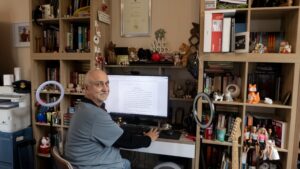
D. R. Bailey’s writing space

Fortunately, my wife is hugely supportive in every way and makes me delicious meals when I’m in full flow writing a novel. Unfortunately, my cat has no respect for my writing time, and will come and beg for food or strokes regardless of whether or not I’m busy.

My writing space, as you can see, has a lot of cat ornaments; I’m an avid cat lover and we just keep on collecting more. My space is light and comfortable, and I have a nice big screen for composing my words. I’m also surrounded by books, including my own, my daughter’s and my sister’s, who are both successful novelists too. I also have my doctorate certificate on the wall, one of my proudest achievements. I aim to keep writing for as long as I can, completing as many books as I can. I find it one of the most calming and fulfilling things in life. I’m grateful that Sapere Books has given me the chance to get my stories into the hands of so many more readers.


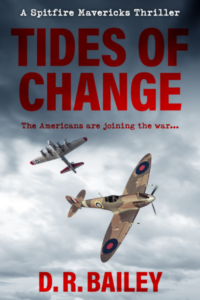
Tides of Change is Out Now

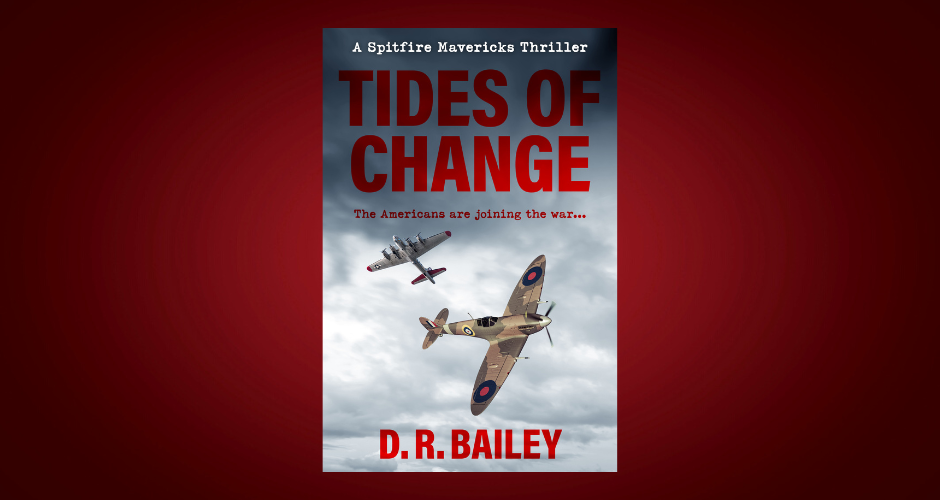
Congratulations to D. R. Bailey, whose exciting wartime thriller, Tides of Change, is out now!

Tides of Change is the fifth book in the Spitfire Mavericks Thrillers series: action-packed aviation adventures set during the second world war and featuring a team of vigilante pilots.

December, 1941

After a tense encounter with attacking Focke-Wulfs, Flying Officer Angus Mackennelly returns to base to find Squadron Leader Bentley announcing the bombing of Pearl Harbor.

US forces are being drafted in as war is declared on Japan and an American airbase is to be established next to the RAF Banley base used by the Maverick Squadron.

Angus is promoted to Flight Lieutenant and is given orders to lead a squadron escorting the American bombers on short-range missions until they have their own escort fighters.

But after the US bombers have landed, the Germans stage an attack on the airbase and rumours start to circulate that there may be an enemy spy on base.

As Angus and the Mavericks prepare for more intense air battles over Europe, suspicion between the team grows.

Is there a spy? Are they only targeting the Americans?

And can Maverick Squadron prepare their new allies for the realities of war…?

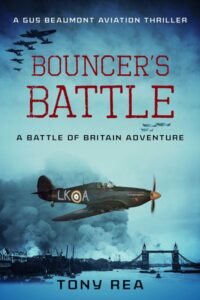
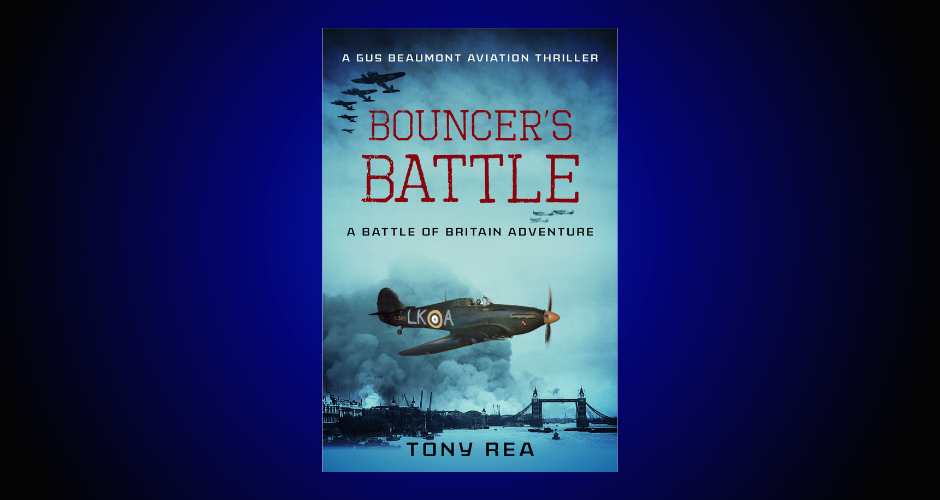
Bouncer’s Battle is Published Today

Congratulations to Tony Rea, whose fighter pilot adventure, Bouncer’s Battle, is published today!

Bouncer’s Battle is the first book in the Gus Beaumont Aviation Thrillers series: action-packed military adventure novels set during the Second World War.

England, 1939

When Gus Beaumont completes his training in June 1939, he is given the nickname ‘Bouncer’ for his less than smooth landings.

Despite that, he is an excellent flyer, and his Polish-British heritage inspires the secretive Wing Commander Sir Alexander Peacock to set him on a mission.

The British are aware that Poland is likely to fall to Germany and they are desperate to get the Polish fighter pilots to safety beforehand so they can continue fighting against the Reich.

Gus’s cousin, Staś Rosen, is a Polish fighter pilot and Gus is sent to persuade him to pass the message on to those in charge.

By the time Gus returns to England, war has been declared, and after some tough battles against the Luftwaffe, Staś manages to escape from Poland.

Gus is jealous of Staś’s tales of adventures as he finds himself once more stuck in training, and failing to see any action.

But all that will change when Gus is sent to fight in the Battle of Britain…

Can Gus ‘Bouncer’ Beaumont make his mark? Will he find himself fighting alongside his cousin?

Or will the realities of war prove to be more than he can handle…?

Congratulations to D. R. Bailey!

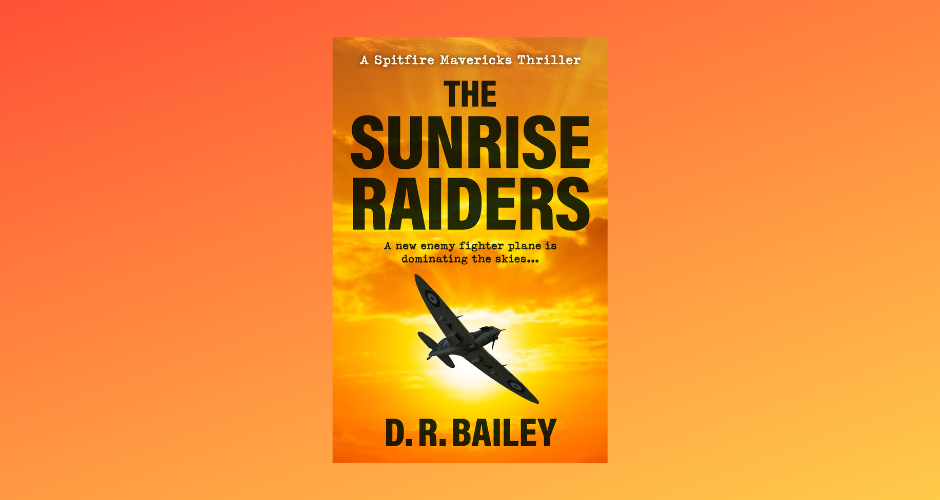
Congratulations to D. R. Bailey, whose page-turning military adventure, The Sunrise Raiders, is out now!

The Sunrise Raiders is the fourth book in the Spitfire Mavericks Thrillers series: action-packed aviation novels set during the second world war and featuring a team of vigilante pilots.

Autumn, 1941

During a routine patrol, Flying Officer Angus Mackennelly ends up in a skirmish with the enemy over the English Channel and is nearly captured.

It is clear the Germans have unleashed a new weapon.

Back at base, Maverick Squadron are told the new German fighter plane is the Focke-Wulf 190. And it is far more manoeuvrable and nimbler than anything the British have got.

Soon the FW is causing problems for every unit. Squadron Leader Bentley exhorts the Mavericks to do their best no matter what and continue to fly in combat against the new plane.

The Mavericks struggle on against the enemy but the odds are falling further out of their favour.

Something needs to change and Angus is tasked with capturing one of the enemy craft for British intelligence.

But that’s easier said than done…

Will Angus succeed in his mission? Can the British match the new German technology?

Or will Maverick Squadron be forced to admit defeat…?

The Real-life Inspiration behind The Maple and the Blue by Patrick Larsimont

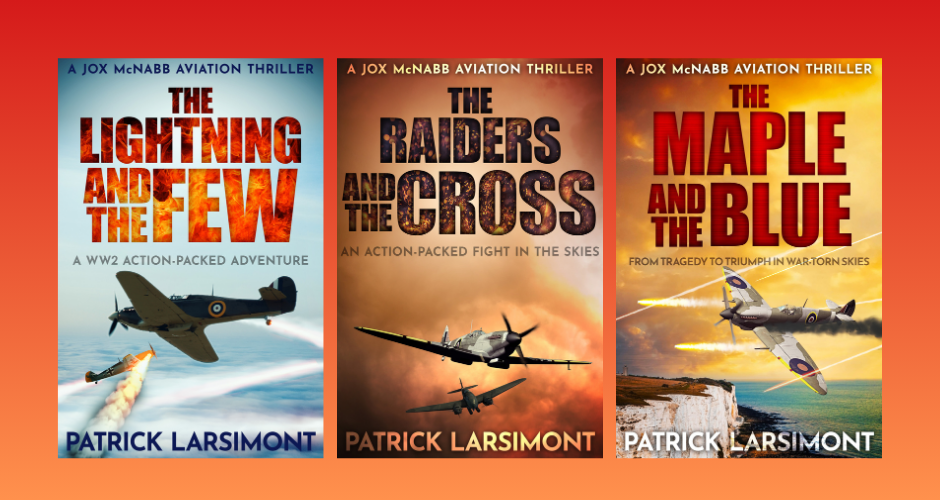
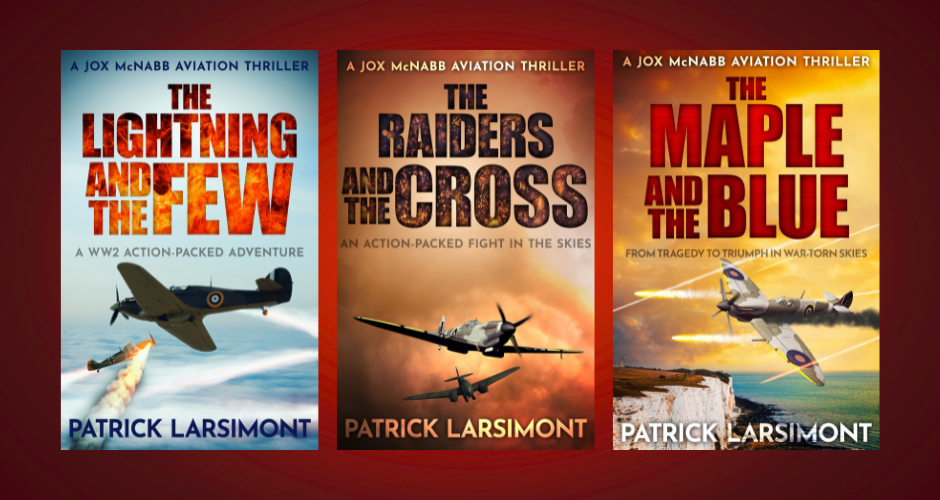
Patrick Larsimont is the author of The Maple and the Blue, the third instalment of Jox McNabb Aviation Thrillers series: action-packed historical adventures following a young RAF pilot during the Second World War.

The Maple and the Blue sees Jox McNabb and his comrades of No. 111 Squadron, the Treble Ones, prepare and train for Operation Jubilee, the raid on the French seaside town of Dieppe in Normandy. It would be the first major Allied assault on the European continent, spearheaded by Canadian ground forces, but it also promised to be the largest air battle since the Battle of Britain.

When writing Jox’s adventures, I like to include some of the real characters, locations and events that I uncover during the course of my research into the period. I hope by doing so I provide a convincing evocation of the time, but also share the stories of people, locations and events on the very edge of living memory.

Here are three examples from my next book:

During the training phase before Operation Jubilee, Jox and his commanding officer are invited to a party near Biggin Hill at a large villa called The Red House. This was the home of Moira and Sheila Macneal, six-foot twin sisters known as the Belles of Biggin Hill. Wealthy socialites whose father was known as the Black Knight, they hosted celebrated parties for ‘The Few’ during the Battle of Britain and afterwards.  Suffice to say, Jox attracts the interest of one of them and he finds her to be as formidable an adversary as any he’s met up in the skies.

During this time, Jox also drops in for a drink at the celebrated Battle of Britain pub, the White Hart in Brasted. On the wall in the bar is the famous blackboard covered with the signatures of many legendary aces including Sailor Malan, Al Deere, Colin Gray, Johnny Kent and Johnnie Johnson.

Image courtesy of Dougal Fisken

Later on in the story, Jox and his Norwegian comrade (spoiler alert), Axel Fisken, find themselves stranded on the ground near the Dieppe Pourville Golf Club, one of the oldest golf courses in France. Somehow, they manage to find an escape vehicle, which turns out to be a beautiful 1929 Bentley Speed Six tourer, like the one which won the Le Mans twenty-four hours in 1930. As it happens, my own good friend, Dougal Fisken’s family own this one pictured, and so provide the inspiration for the tale.

This and many other personalities, factoids and anecdotes litter my stories, and I hope you enjoy discovering them as much as I enjoy finding a place for them in Jox McNabb’s tale. Jox’s war is just getting started, so I hope you’ll join me for his forthcoming adventures.

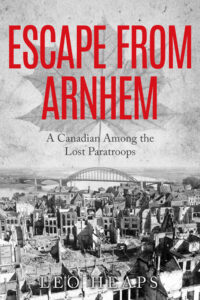
Escape From Arnhem is Out Now!

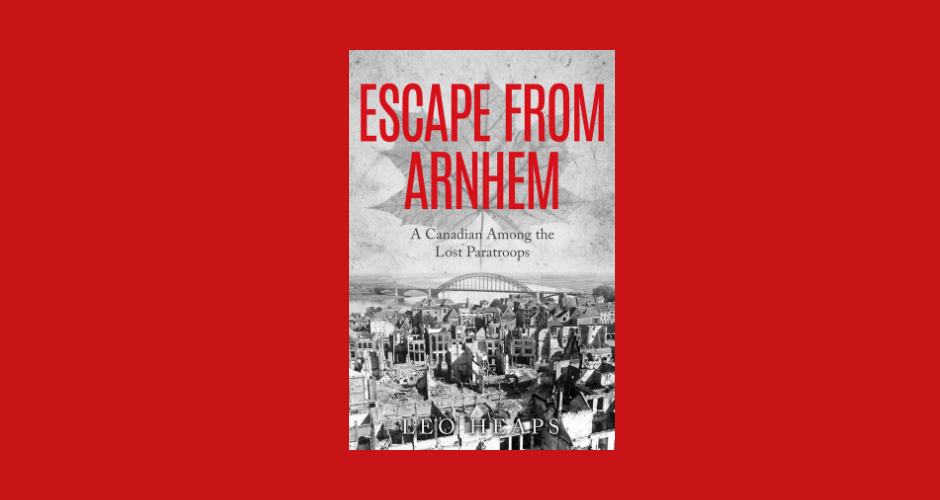
Congratulations to the estate of Leo Heaps, whose remarkable World War Two memoir, Escape From Arnhem, is out now!

On September 17, 1944, over 8,000 men of the British 1st Airborne Division landed in German-occupied Netherlands as part of the largest airborne invasion ever undertaken. Twenty-two-year-old Canadian paratrooper Leo Heaps was one of them.

Told with authenticity and clarity, Heaps’ personal account of the nightmare battle fought after the paratroopers dropped at Oosterbeek paints a remarkably vivid picture of one of the most dramatic and little-known events of the Second World War.

Captain Leo Heaps volunteered to serve with the British Army early in 1944 and arrived in England in May of that year. Attached to the Dorset Infantry Regiment, he took part in the D-Day assault on Normandy in June. After twelve days, he was wounded and returned to England. In August, he applied to join a British Parachute Regiment and was accepted. A mere three weeks later, Heaps made his first and only jump as the Arnhem assault commenced.

Escape from Arnhem is one of the most visceral diaries of a young men caught up in the horrors of war. Barely out of his teens, Leo Heaps is charged with the responsibility of working with the Dutch underground, while evading capture from the Germans; all set against the backdrop of one WW2’s biggest battles.

From the battlefield to Belsen, Capt. Leo Heaps chronicles a story of capture and escape, unintended heroism and personal loss. It is a life-changing journey that goes beyond the medals and ceremony of war.

Written only a year after the war ended, the images of the Battle of Arnhem are as fresh and raw as the wounds of war themselves and offer a stark reminder of the triumph and tragedy during and after the battle.

Patrick Larsimont Secures Audiobook Deal with Tantor Media

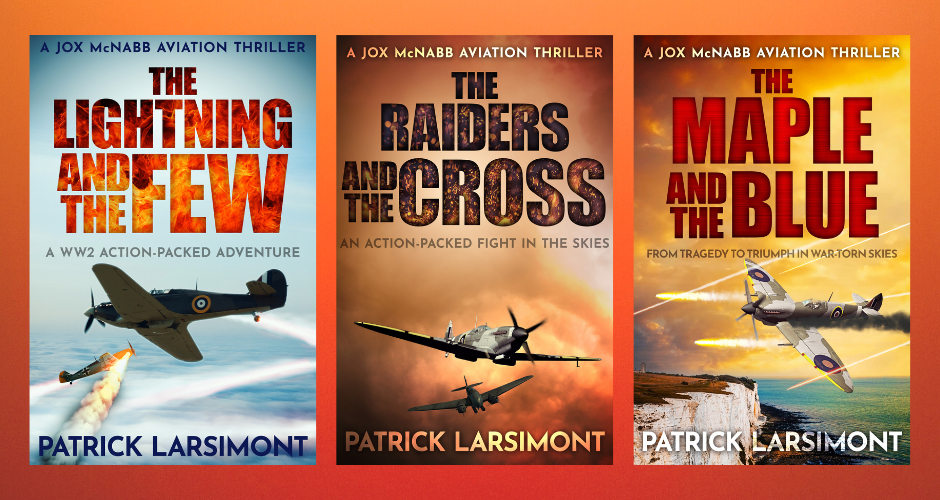
We are thrilled to announce that the first three books in Patrick Larsimont’s page-turning wartime adventure series, the Jox McNabb Aviation Thrillers, will be released as audiobooks by Tantor Media.

The series follows the progress of Jox McNabb, a young RAF officer, as he fights his way through the fiery skies of the Second World War.

In Patrick’s words:

“I’m delighted that Tantor Media has agreed to publish the first three novels in my Jox McNabb series. It is testament to my growing number of readers, who have already demonstrated remarkable loyalty to Jox and his comrades, and to the skill and support of Sapere Books and its family of authors.

“Going from being a debut writer, who started scribbling during lockdown, to having a five-book deal with Sapere and a three-book audio deal with Tantor is very gratifying. Much of that is down to Sapere recognising that I might have some talent, for which I’m very grateful.

“I’m very intrigued to discover who will be cast as the narrator of Jox McNabb’s stories. He is loosely based on a dear old friend, a softly spoken Scotsman, so I’m hoping we can do justice to that and the many other accents in my books. I can’t wait.”

Happy Publication Day to D. R. Bailey!

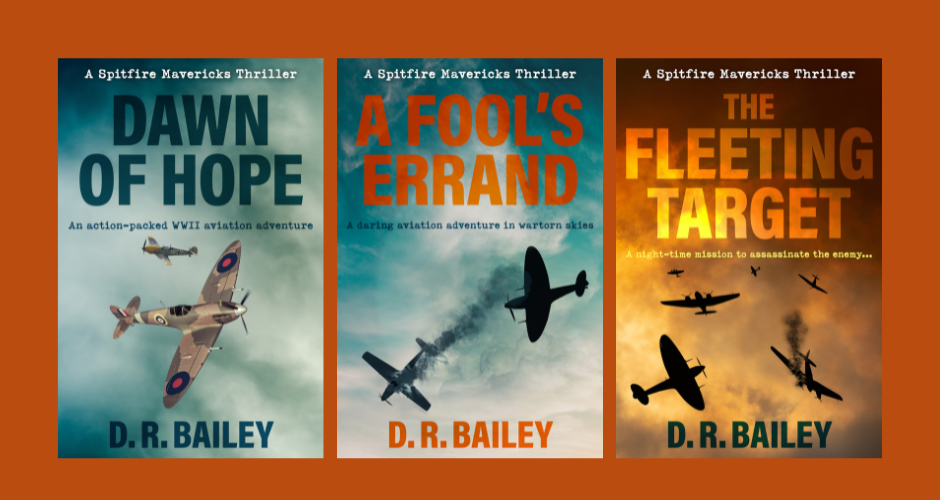
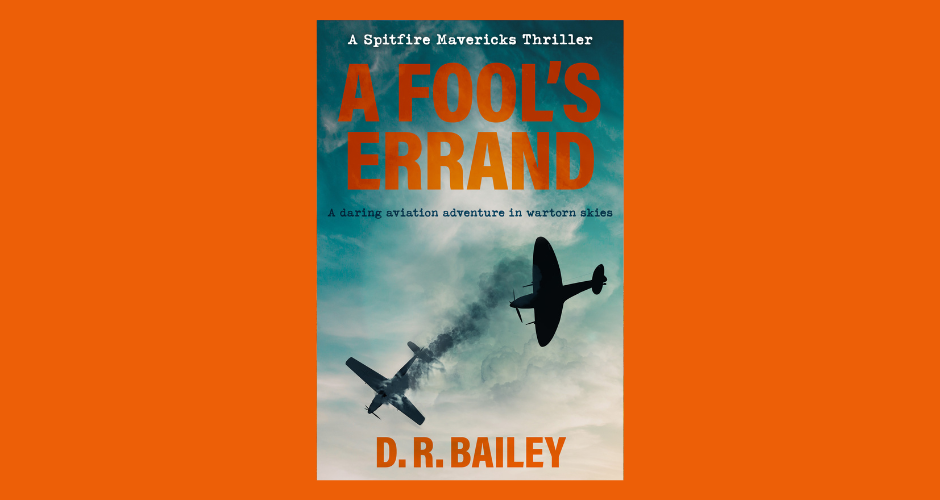
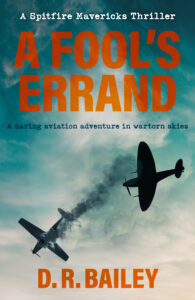
Congratulations to D. R. Bailey, whose page-turning World War II adventure, A Fool’s Errand, is published today!

A Fool’s Errand is the second book in the Spitfire Mavericks Thrillers series: action-packed aviation adventures set during the second world war and featuring a team of vigilante pilots.

1941

The Battle of Britain is over, and RAF Fighter Command turns its attention to France.

Flying Officer Angus Mackennelly and the rest of ‘Maverick’ Squadron 696 are engaged in tactics to lure the Luftwaffe into battle.

But Angus has grave misgivings about the orders he has been given, which are justified when he loses a brand-new pilot on their first incursion.

And the squadron is dealt another blow when one of their pilot officers is discovered dead in the hangar.

The inquest rules the death a suicide, but Angus is certain something more sinister has happened.

In between bouts of furious dogfights in the skies, Angus and his good friend Flying Officer Tomas Jezek work tirelessly to investigate the murder.

While they risk their lives fighting a deadly foe, could the real threat be coming from an enemy within? Are the Spitfire Mavericks being targeted by someone who is supposed to be on their side…?

Dawn of Hope is Out Now

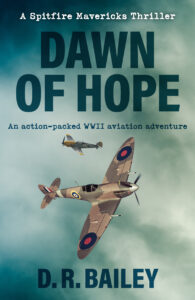
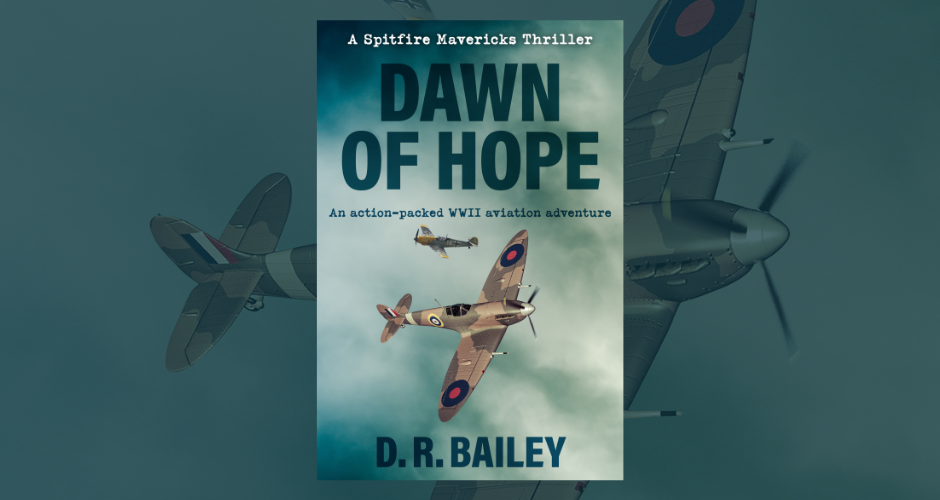
Congratulations to D. R. Bailey, whose gripping military adventure, Dawn of Hope, is out now!

Dawn of Hope is the first book in the Spitfire Mavericks Thrillers series: action-packed aviation adventures set during the Second World War and featuring a team of vigilante pilots.

1940, England

After a series of run-ins with his superiors, Flying Officer Angus Mackennelly is posted to Squadron 696 – the Maverick unit full of misfits and outsiders.

Angus has just returned from gunning down enemy aircraft when he is given a shocking top-secret mission.

A spy is in their midst, feeding information to the Germans, and Angus is tasked with exposing him.

MI6 pin their suspicions on one of the squadron’s foreign pilots, but Angus is not convinced. He needs to get closer to the men in his unit to try and unravel their secrets.

As the fight in the skies intensifies, it is clear the Germans are anticipating their every move, putting the lives of the pilots in the Maverick squadron at a deadly risk.

Can Angus unmask the traitor? Will he save the men in his squadron?

Or will the enemy remain one step ahead…?

The Raiders and the Cross is Out Now

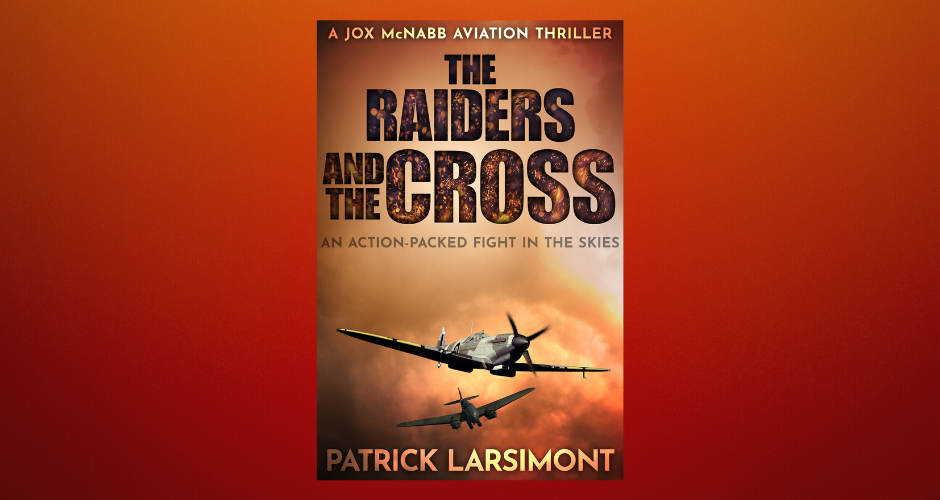
Congratulations to Patrick Larsimont, whose thrilling World War II adventure, The Raiders and the Cross, is out now!

The Raiders and the Cross is the second book in the Jox McNabb Aviation Thrillers series: action-packed, authentic historical adventures following a young RAF pilot during the Second World War.

Winter, 1940

Enemy raiders are bombing Britain’s cities relentlessly. Casualties are high and morale is at an all-time low.

Jox McNabb and the rest of No.111 Squadron train to become night fighters to take on the raiders inflicting such carnage on Britain’s cities.

But then tragedy strikes and Jox is devastated by the loss of those close to him.

Scarred physically and emotionally, he recovers slowly. Seeking a fresh start, he volunteers to serve in the turbulent skies of besieged Malta.

But this new location quickly becomes just as dangerous as the last.

Can Jox forget the tragedy that haunts him? Will he survive the murderous assault of the Luftwaffe?

And can a desperate Malta withstand the relentless onslaught?

The Historical Inspiration for the Jack Pembroke Naval Thrillers by Justin Fox

Justin Fox is the author of the Jack Pembroke Naval Thriller series: authentic British Navy war stories set during the Second World War.

I grew up around boats and the sea has always been an important part of my life and my writing. Our family spent holidays in an old house in Simon’s Town, the former Royal Navy base in South Africa, and from an early age I knocked about in anything that floats: rowing boats, sailing dinghies, windsurfers and yachts. My reading as a boy was also nautically orientated, particularly naval yarns by the likes of Douglas Reeman, Patrick O’Brian, Nicholas Monsarrat and CS Forester.

Midshipman Justin Fox, aged 17.

After leaving school, my two years of national service in the South African Defence Force were spent in the navy, based in Simon’s Town. During that period, I had six months at sea on a replica medieval caravel sailing down the Atlantic from Portugal to South Africa in a re-enactment of the voyage of Bartholomew Dias in 1487. The first book I ever wrote (never published) was the story of that voyage.

When I later joined Getaway travel magazine as a photojournalist, I volunteered for any boating assignment: sailing a brigantine around the Seychelles, a felucca down the Nile, a pirogue to Timbuktu, island-hopping by catamaran around Madagascar, taking the mail ship to St Helena Island and sailing a dhow up the Kenyan coast (which provided material for my Somali pirate novel, Whoever Fears the Sea, published by Sapere).

My Jack Pembroke series is inspired by my love of history and the sea, but I also aimed to bring to the fore a theatre of World War II that is not well known and is little written about: the fighting off the South African coast that resulted in the loss of more than 150 Allied ships.

View from Justin’s flat in Cape Town.

I live in a flat in Cape Town and my desk overlooks the city’s anchorage. Watching the ships come and go each day, I often think of the war years when thousands of vessels were routed around the Cape. When a convoy was in town, Table Bay would be crammed with more than fifty ships, all of them needing protection. In place of today’s yachts and pleasure craft puttering jauntily out of the V&A Waterfront, minesweepers and anti-submarine vessels would make their daily round of the bay.

During the war, the Cape of Good Hope became a vital strategic point on the sea route around the continent and was particularly important during the North African campaign. Once Italy entered the war in 1940, the Mediterranean became too dangerous for Allied convoys, and most were diverted around the Cape. Much preparation was needed before Nazi warships made their way to Africa’s southern tip. The Royal Navy base in Simon’s Town had to be expanded and reinforced, and a fledgling South African Navy created almost from scratch.

First came the German surface raiders, then the U-boats. They attacked within sight of the coast and near the entrance to the harbours of Cape Town and Durban. There are incredible stories of heroism and cloak-and-dagger raids around our coast. For instance, one U-boat slipped into Table Bay and its captain allowed his crew on deck to see the bright lights of Sea Point (of course, all German cities were blacked out at the time). There are many apocryphal stories that surfaced in the folklore of coastal towns, such as German sailors coming ashore and playing soccer with Nazi-sympathising locals, spies passing on information about Allied ship movements and farmers replenishing U-boats around Cape Agulhas.

Cape Town minesweepers during WWII.

Like many South African children of my generation, I had a fascination with World War II. I built model ships and aeroplanes, played war games in our suburban garden and devoured books about the great campaigns. But I was always mildly disappointed that most of the stories were about the North, and that South Africa seldom featured in the accounts.

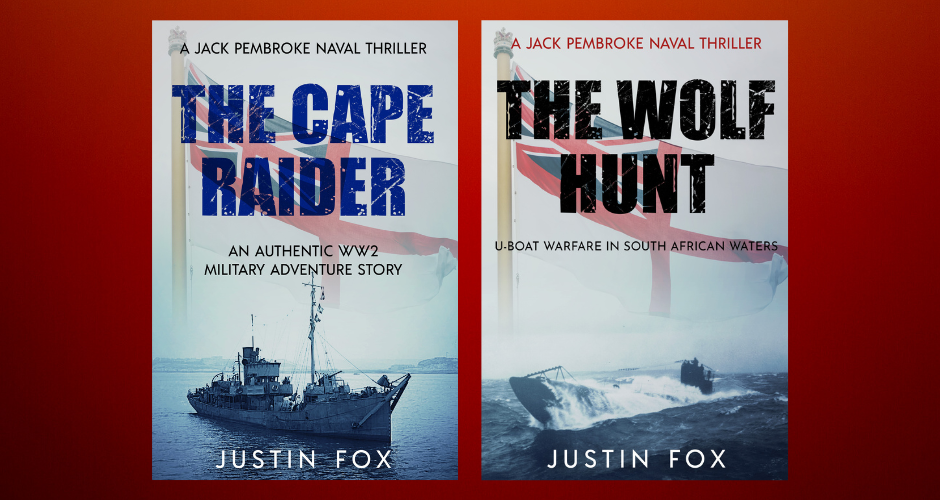
During my time in the navy, I began to learn a little bit about the battles fought in local waters and became interested in the exploits of South Africa’s ‘little ships’. If the actions of raiders, U-boats and convoys were soon forgotten by the general public after the war, the exploits of minesweepers and anti-submarine vessels hardly received mention at all. Yet the industrious, daily patrols by these ships kept South African ports open and took the fight to the U-boat wolf packs. It is that story that forms the backdrop to the first two Jack Pembroke adventure novels, The Cape Raider and The Wolf Hunt.

The Wolf Hunt is Out Now

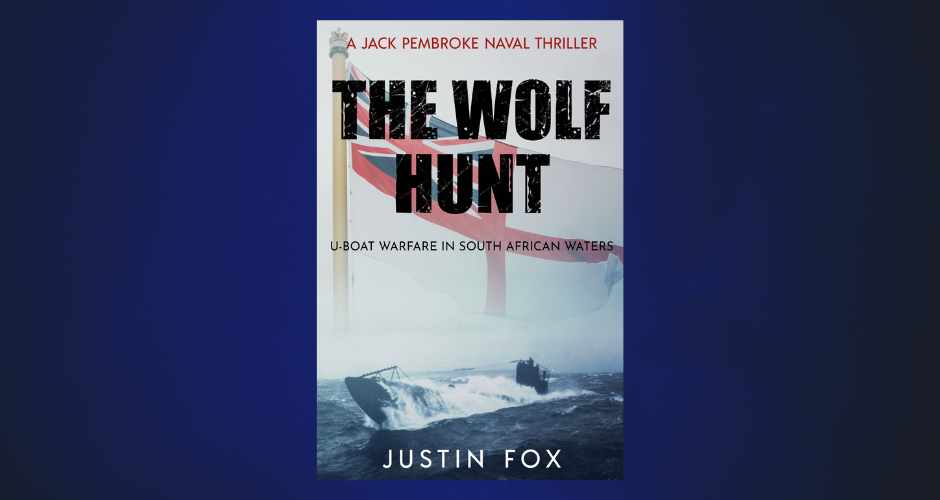
Congratulations to Justin Fox, whose thrilling wartime adventure, The Wolf Hunt, is out now! The Wolf Hunt is the second book in the Jack Pembroke Naval Thriller series.

1941

Lieutenant Jack Pembroke has found a new home and new love at the Cape, but it will all hang in the balance with the arrival of the enemy in South African waters.

With the Mediterranean all but closed to maritime traffic, and Rommel’s forces rampaging through North Africa, this sea route is vital to supplying the Allied forces in Egypt.

But German U-boats have been sent by Admiral Donitz from their bases on the west coast of France to cripple the convoy route.

Jack is put in command of a small anti-submarine flotilla in the Royal Navy base of Simon’s Town, South Africa.

But he has very little time to train his officers and men, and prepare his ships, for the arrival of the Nazi wolf packs.

With the Cape under attack, Jack has to escort a vital convoy from Cape Town to Durban.

But with the enemy U-boats lying in wait in the storm-ravaged waters, he’ll be luck to make it out alive…

Winners of the Sapere Books Writing Competition Announced!

We are thrilled to announce that we have awarded winners in all six of the writing competition briefs that we set last year.

Top row: Richard Kurti, Laura Martin, Neil Denby. Bottom row: Patrick Larsimont, Bob Robertson, Rachel McDonough.

Each chosen author has won a five-book contract to work on the series they submitted for.

Screenwriter Richard Kurti has won The Medici Murder Mystery series brief.

The Second World War Aviation Thriller series brief was won by debut author Patrick Larsimont.

Established romance author Laura Martin scooped the Jane Austen Detective series brief.

Ghost-writer Bob Robertson snapped up the Age of Sail brief.

Academic author Neil Denby scooped the Ancient Rome Historical thriller brief.

And American author Rachel McDonough won the Tudor Maid Diaries series brief.

The quality of the entries were so strong that we have also awarded honourable mentions in nearly all of the categories and we are speaking to the shortlisted authors about writing other historical series for us based in the time period of their submission.

The shortlisted authors are:

Donna Gowland and Leann McKinley for the Jane Austen brief.

Daniel Colter and Ava McKevitt for the Ancient Rome brief.

David Bailey, David Mackenzie, Tony Rea and Suzanne Parsons for the WWII brief.

Kate MacCarthy for the Medici brief.

Alice Campbell, Angela Ranson, Katharine Edgar, Valerie Boyd and Maria Hoey for the Tudor brief.

Following the success of the first competition we are hoping to run the competition again later this year with a fresh set of writing prompts.

Resistance of Love Published Today

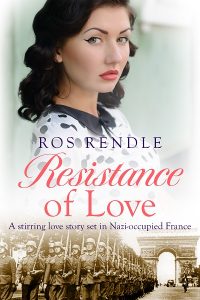
Congratulations to Ros Rendle, whose moving romantic saga, Resistance of Love, is published today!

Resistance of Love is set in England and France before and during World War II, and is the second book in The Strong Family Historical Saga series.

After spending ten years in Australia, Delphi Strong is on a ship back to England with her daughter, Flora.

While on board, Delphi meets Rainier, a charming vineyard owner on his way home to France. Forming an instant mutual attraction, the two share a whirlwind romance before disembarking.

Unable to forget her, Rainier crosses the channel a few months later and asks Delphi to marry him. Equally lovestruck, Delphi accepts, and she and Flora join Rainier in France.

However, their idyllic lifestyle is shattered when war breaks out and the Nazis begin to occupy the country. Forced to flee to the Free Zone in the south, the family must now pull together to resist the enemy…


Click here to order Resistance of Love