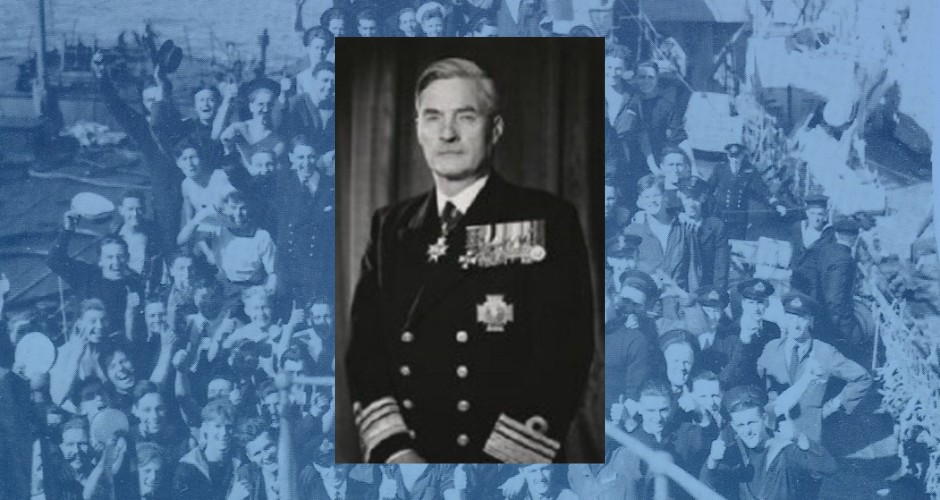
Sir Peter Gretton DSO** OBE DSC (1912–1992) was an officer in the Royal Navy. He was active in the Battle of the Atlantic during the Second World War, and was a successful convoy escort commander. He eventually rose to become Fifth Sea Lord and retired as a Vice-Admiral before entering university life as a bursar and academic. To commemorate the eightieth anniversary of the end of World War Two, Sir Peter’s son, Vice-Admiral Mike Gretton, shares his memories of him below.
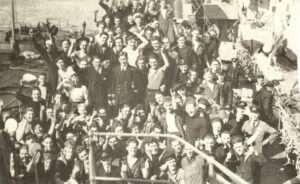
On 8 May 1945 — Victory in Europe Day — Peter Gretton was thirty-three years old and utterly exhausted. He had been continuously in seagoing appointments since the outbreak of war in September 1939. He had married Wren Judy Du Vivier in 1943 during a short break between convoys, and they had had their first child, Anne, who was not yet one year old. They were renting a flat in Kensington so that he could readily get to work: his job at the time was in the Joint Planning Staff in the Cabinet Office working on strategic plans to end the war in Europe and then in the Far East — not exactly a rest cure.
Peter had served continuously in seagoing ships from September 1939 until he came ashore in March 1944 — still only thirty-one years old. He had served in five ships during that time, starting as a First Lieutenant, including HMS Cossack in which he was mentioned in Dispatches for his performance during the Second Battle of Narvik under the very demanding Captain Philip Vian VC. From February 1941, he was in command of destroyers, starting with HMS Sabre in which he was awarded an OBE, and then HMS Wolverine (March to November 1942) when his ship was an escort for Operation Pedestal, the relief of Malta. He was awarded his first DSO for ramming and sinking an Italian submarine at the expense of wrecking his bows and having to proceed astern to port at Gibraltar.
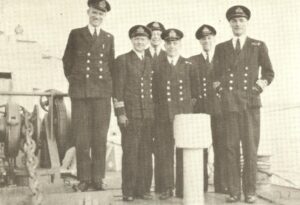
From there, he was recalled to the UK as a Commander to become the Senior Officer of Escort Group B7, to be based in Derry, and he initially embarked on HMS Duncan. The Escort Group supported Atlantic convoys for two years and five months. He was awarded the two bars to his DSO during that time, the first of which reflected the successful battle for convoy ONS5, which historians regard as the tipping point in Allied fortunes in the Atlantic convoy campaign.
In March 1944, Peter dedicated himself to writing a new book — The Admiralty Convoy Instructions — based on his and others’ experience at war, with a readership in the Royal Navy, Royal Air Force and Merchant Navy. This became the bible for convoy protection and the same book, with minor amendments, was the basis of my own training as a naval officer in the 1970s.
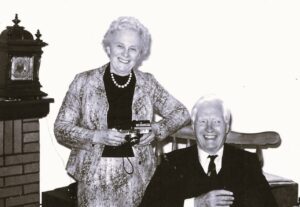
Peter and my mother rejoiced exuberantly at the victory in Europe: he writes that they ‘walked up Picadilly and thence to St James’ Park … remarkable scenes’. They would have reflected proudly on their own contribution to the outcome: my father at sea and my mother as a Wren in the Western Approaches Tactical Unit (WATU), which developed and taught tactics for the Atlantic battle. I was born nine months after VE Day, in March 1946.
By Peter Gretton: