Fortress of Steel is Published Today

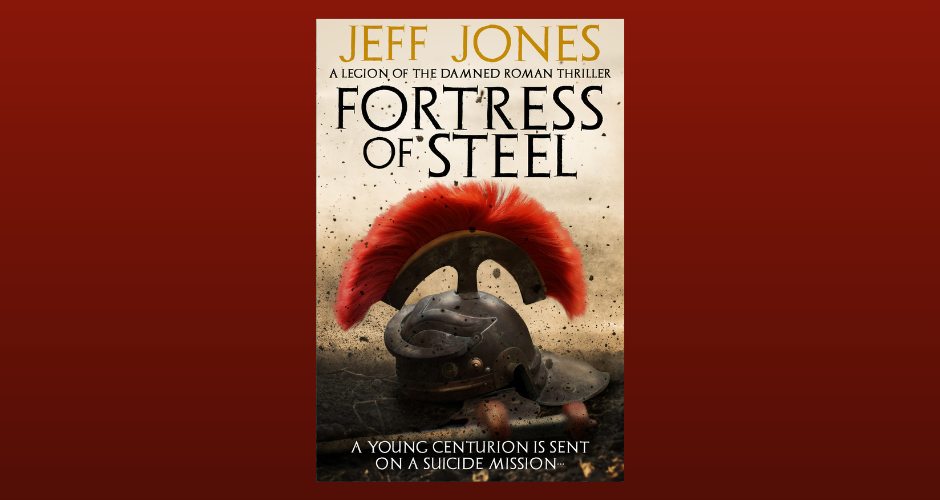
Congratulations to Jeff Jones, whose exciting Roman adventure, Fortress of Steel, is out now!

Fortress of Steel is the first book in the Legion of the Damned Roman Thrillers series.

Rome, 59 AD

When the son of his commanding officer is taken prisoner, young centurion Marcus Corvo is tasked with recruiting men from the underbelly of the Empire to rescue him.

Corvo sets about scouring the gladiatorial arenas, prisons and slave markets, for men desperate and tough enough to join him on what is likely to be a suicide mission.

The quest will take them to the eastern fringes of the Empire where the prisoner is being held in Armenia.

Corvo attempts to mould his recruits into a cohesive fighting force, but long before they are ready they are ordered to leave.

In a land where brother fights brother, and where Corvo and his men could easily be mistaken for the enemy or deserters, Corvo must keep his wits about him as they cross hostile land.

Can Corvo keep his wilful legion of men in line? Will they work together to complete the task?

Or will the journey prove too perilous for even the most hardened men of Rome…?

My Neighbours the Celts and Romans by Alistair Forrest

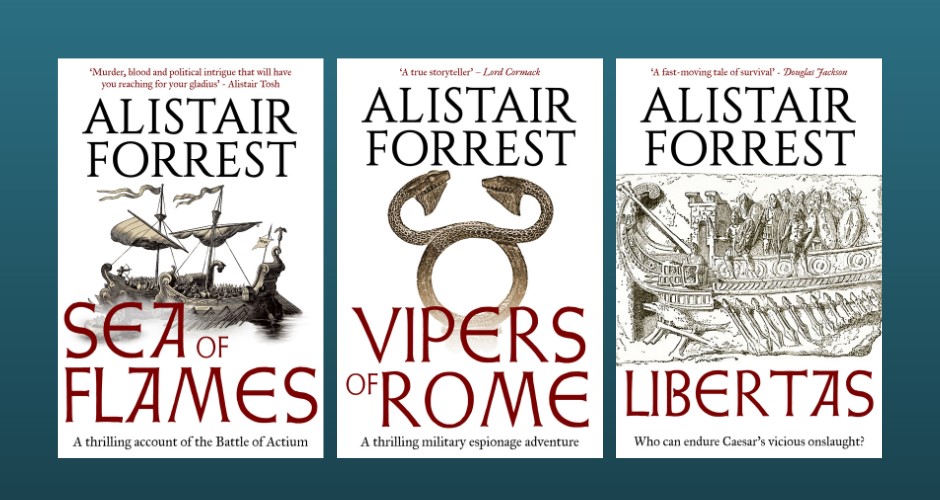
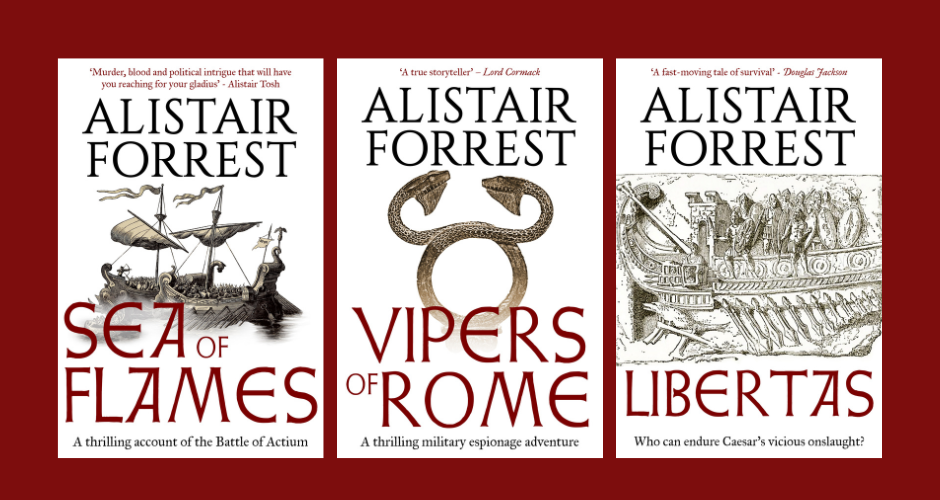
Alistair Forrest is the author of the action-packed Roman adventures Sea of Flames, Libertas and Vipers of Rome. He is currently working on a new series, The Britannia Conspiracy, set in the period during Caesar’s invasion of Gaul.

A 3,000-year-old skeleton. Photo: David Nash

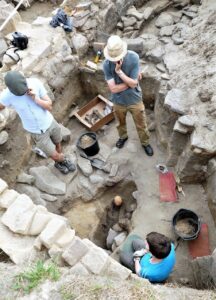
Every year I climb into old jeans, don an Indiana Jones-style hat, and dash a hundred yards down the road to assist in an archaeological dig.

I live on the island of Alderney, which just happens to have an ancient Iron Age settlement, on top of which is a Roman village. Next to this is one of Europe’s best-preserved Roman forts, which was built to protect trade routes between Europe and Britain.

I’ve got to know both of the lead archaeologists — Dr Phil de Jersey and Dr Jason Monaghan — and confess that I’d like to know what they know, as long as it fits my ideas for a new historical fiction series.

So far I’ve struck lucky.

We know for sure that Iron Age folk lived and loved on this tiny island a few miles off the Normandy coast. We’ve found the skeletons, complete with bronze torcs and jewellery.

Our team, Dig Alderney, is bent (both literally and figuratively) on scraping away aeons of history to find the story behind these settlements. And at every layer we have been able to confirm that the Romans first came to this Channel Island in around 56 or 55BC when Julius Caesar was conquering Gaul and had set his sights on Britain, just across the English Channel.

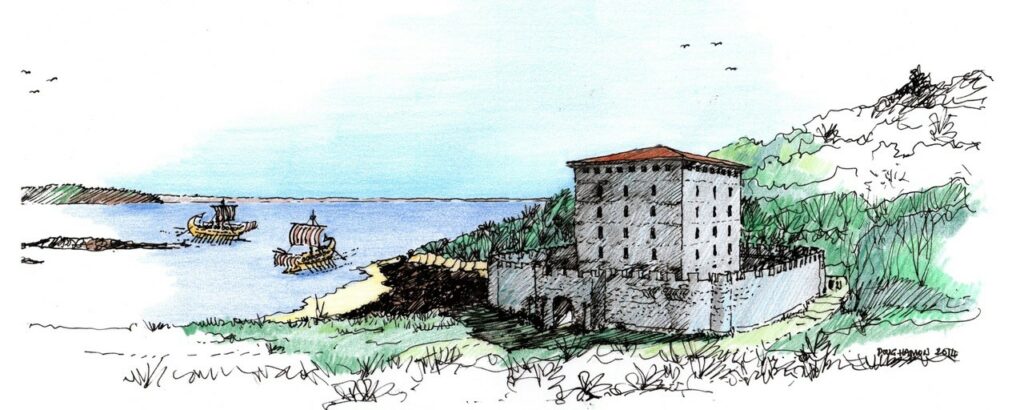
Artist Doug Hamon’s impression of the Roman fort.

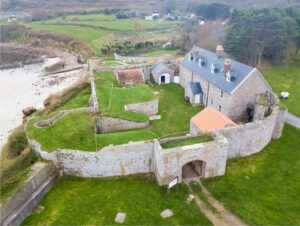
Later, the Romans built a fort which has stood intact since the 4th century. Sadly, the huge central tower has long gone, its stonework no doubt used  to build medieval houses in the vicinity, and part of the south wall tumbled onto my local beach who knows when, where its parts can still be seen to this day.

The area is crowded with archaeological features. Some relate to German activity (Alderney was occupied during the Second World War) or Victorian fortifications inside and around the fort. Modern roads partly conceal what we know is an Iron Age cemetery discovered in 2019.

Two skeletons were discovered back then. That’s when I got involved after arriving on the island to write, and I was given backroom jobs like pot-washing, shovelling and making sandwiches. Just to be there was a privilege!

This is now a long-term project to learn more about the Roman and Iron Age settlement on Longis Common, a few yards from my home. How extensive is the Iron Age cemetery, and where was the village in which these people lived?

We hope to discover how far the Roman buildings extend, and if this was the site of an earlier Roman fort that predated the 4th century one, or the vicus municipal administration settlement that grew up close to a fort, or a purely civilian village?

Of course, I already know the answers because they’re in my head, as you would expect from an adventurous historical fiction author.

Alderney’s Roman fort today.      Photo: Alan Perks

I know I’m on to a winner. Take this exuberant comment by Dr Monaghan: “Finds include pottery, metalwork, glass, building materials, human bones and food remains including animal bones. The finds need to uncover more about the people who lived and were buried there. We want to learn about their lifestyle and how ancient Alderney was connected to the wider world.”

I’d call it making the facts fit a good story, and I’m already well into book two of The Britannia Conspiracy series. This series begins with coded messages from Julius Caesar to attend a secret conference on this island to plan his expeditions to Britain.

Should it be a full-on invasion, or a trade expedition? Either way, he’s in for some surprises, especially as far as the local Celts are concerned!


Where My Inspiration Comes From by Alistair Forrest

In this behind-the-scenes blog series, Sapere Books authors offer an intriguing insight into how, where and why they write.

Today, we are delighted to spotlight Alistair Forrest, author of Sea of Flames, Libertas and Vipers of Rome.

For some authors, inspiration is a flash of instant eureka. For me, it’s been more like evolution.
I had never intended to write historical novels centred on the late Roman Republic, but it became inevitable when I moved to Spain with my wife, two-fifths of our children and assorted pets.

Our new home had been built slap bang in the middle of an ancient battlefield. More about that later.

For me, inspiration began in an English lesson at boarding school. One day, evening prep was to write an essay on Macbeth and I hadn’t got a clue how to answer the question. So I flipped to the cover of my textbook, which featured an image of Dunsinane Castle and the encroaching Birnam Wood.

I used my embryonic creative writing skills to describe the scene and thus avoid answering the question, hoping my talent would impress the English teacher, Patrick Cormack.

He wasn’t impressed. He called out my feeble effort in front of Class 4R, announcing that my work was too descriptive, and I wanted the ground to open up and swallow me. But the truth is, I really enjoyed writing that essay.
If I had ever summoned the courage to discuss career options with him, he would have said ‘Go and be an accountant’ or something like that. But while he became a politician with a knighthood and later Lord Cormack, I became a humble journalist. Yes, I could write.

Years later, on the publication of my first novel, Libertas, Lord Cormack was kind enough to give me an endorsement. “Forrest has the gift of a true storyteller,” he said, with a hint of a chuckle in his email.

My journalism career provided further inspiration. As a pimply cub reporter on the South Wales Echo, the terrifying news editor would peer down the vast newsroom to see who was slacking. The ‘punishment’ was to be handed the latest novel supplied by a hopeful publisher and told to review it by the next day. This happened to me frequently, and I never objected.

Among the many was Gateway to the Gods by Mary Teresa Ronalds, a magical excursion into the ancient world of Babylonia. It clicked for me, because as a child and teenager, I had lived in three Middle Eastern countries. From that moment, I wanted nothing more than to be a writer of ancient stories.

Leap forward decades, and that move to Spain. My wife and I chose a house amid well-tended olive groves in an upland valley opposite Monda (ancient Munda), a charming village in the Sierra de las Nieves Natural Park, not far inland from Marbella.

And it didn’t take long to discover that Julius Caesar had marched his crack legions through our garden.
I started writing Libertas, revelling in the scenery and culture, and imagining what the community might have been like when Caesar came.

I developed the theme of an indigenous people who were creative and inventive in their own right. They understood herbcraft and lacked nothing for a full, healthy life.

The hero in Libertas is not a warrior but a thinker. He is appalled at the horror that Rome brings to his hometown.

Living in the same community as my protagonist, separated by centuries in which nothing much happened between Caesar and Franco, enabled me to add colour and feeling to my imagined community of bakers, brewers and cheesemakers.

Happily I can refer to a comment by the Historical Novel Society’s reviewer: “Forrest makes us care about Munda. He captures the tragedy of a people dragged into the horror of a vicious war brought about by circumstances over which they had no control and could hardly understand.”

Such a contrast to my teacher’s comment on my Macbeth essay. But let’s face it, his comment was where inspiration began for me.
Congratulations to Alistair Forrest!

Congratulations to 

42BC

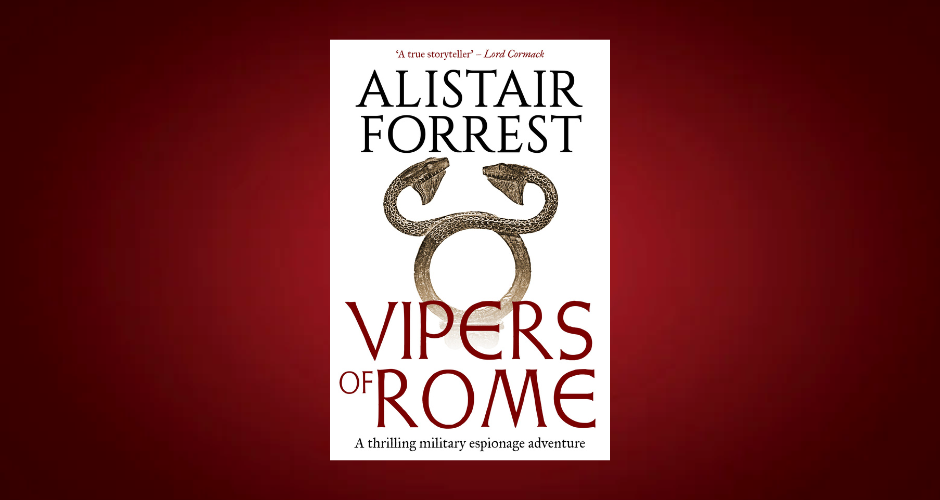
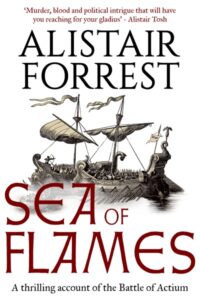
Two years on from Julius Caesar’s assassination, his successors still crave vengeance. The massed legions of the new Caesar, Octavian, and Mark Antony face off against Cassius and Brutus at Phillipi.

Leading the charge for New Rome are primus pilus Titus Villius Macer and his optio, Crispus.

Their heroics come to the attention of Octavian’s spymaster, Marcus Vipsanius Agrippa, who recruits them for his Viper network of spies.

Their mission: Return to Titus’s native Sicilia to gather intelligence on its current ruler, Sextus Pompey.

But when Titus and Crispus arrive in Sicilia, they find much has changed while they’ve been fighting with the Fifth Legion.

The woman Titus came home to marry has grown cold and he must face up to domestic troubles while trying to help Agrippa restore Sicilia to Roman rule.

Suspecting a plot to assassinate Rome’s new rulers, Titus will face savage sea warfare against the local pirate fleet.

Can he uncover the deadly plot? Will he save another Caesar from assassination?

And can he save his family from the ravages of war…?

Libertas is Out Now

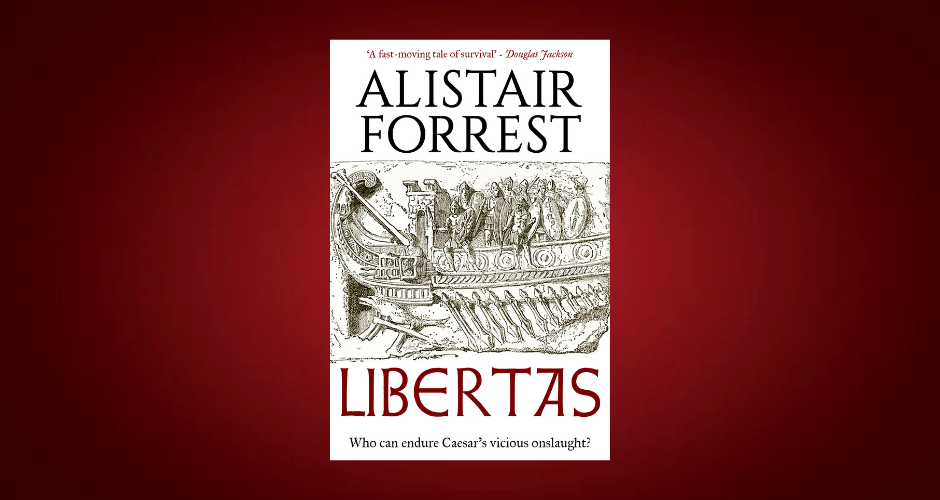
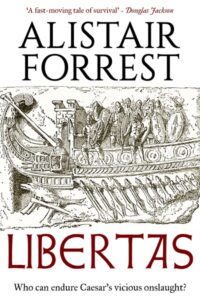
Congratulations to Alistair Forrest, whose action-packed Roman adventure, Libertas, is out now!

Hispania Ulterior, 51 BC

The son of a baker, young Melqart has lived all his life in Munda — an idyllic mountain town untouched by the troubles of Rome.

But when General Pompey sends his sons, Gnaeus and Sextus, to create strongholds and raise new legions, the citizens of Munda find themselves pulled into Rome’s conflicts. Recognising Melqart’s talents as an engineer and strategist, Sextus soon recruits him to his cause.

As tensions between Pompey and his political rival, Julius Caesar, reach breaking point, it seems that Munda is set to become a battleground.

And as darkness begins to fall over his beloved homeland, Melqart must summon all of his courage and ingenuity to save his community from destruction…

Happy Publication Day to Neil Denby!

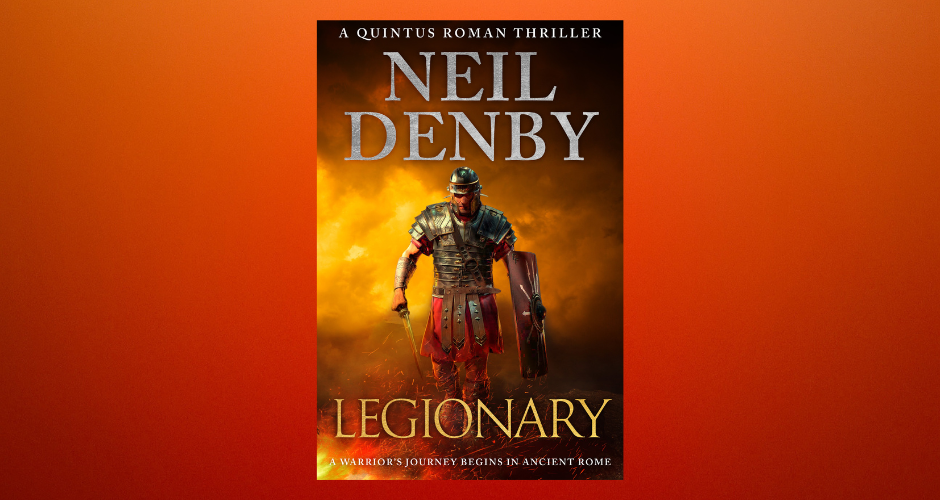
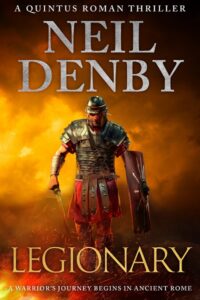
Congratulations to Neil Denby, whose action-packed military adventure, Legionary, is out now! Legionary is the first book in the Quintus Roman Thrillers series.

17 BC

Julius Quintus Quirinius, like many citizens in the years after Rome’s civil wars, must volunteer with the Roman army or be sold into slavery.

Keen to prove his worth, he becomes a member of the IXth Legion, but after only six months his cohort suffer a brutal defeat, the result of stupidity and cowardice.

Cowardice in a legionary carries a heavy punishment: the sentence of decimation – to live or die at the whim of the gods with the unlucky ones clubbed to death by their fellow soldiers.

Ursus, the man killed in Quintus’ group, lays a heavy charge on the youth, asking him to look after the remaining men and to take care of his family back in Rome.

Keen to fulfil Ursus’ last wishes, Quintus helps lead his cohort south to defeat the tribesmen skulking in the mountains in the hope that the IXth legion’s reputation will be restored.

But if they win the fight, their reward may not be the prize they had hoped for… And it soon seems as if returning to Rome is further out of reach than ever…