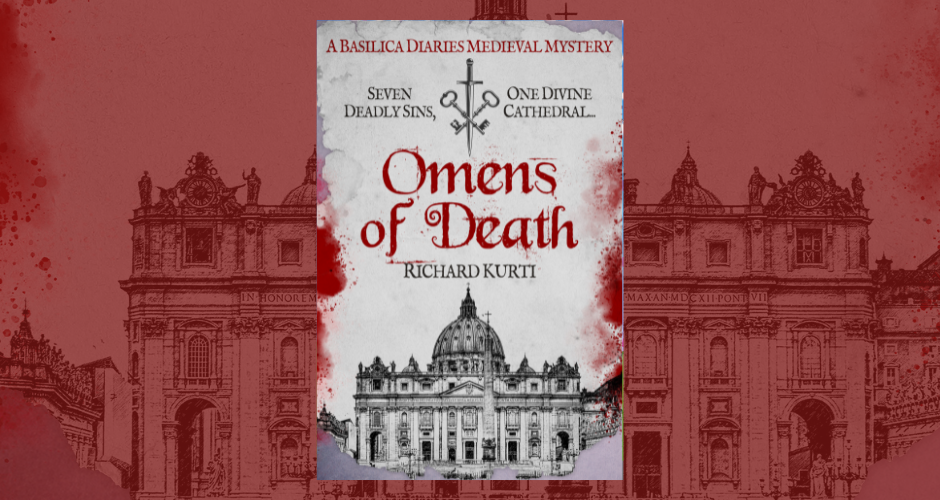
Carnival of Chaos is Out Now!

Congratulations to Richard Kurti, whose absorbing medieval adventure, Carnival of Chaos, is out now!

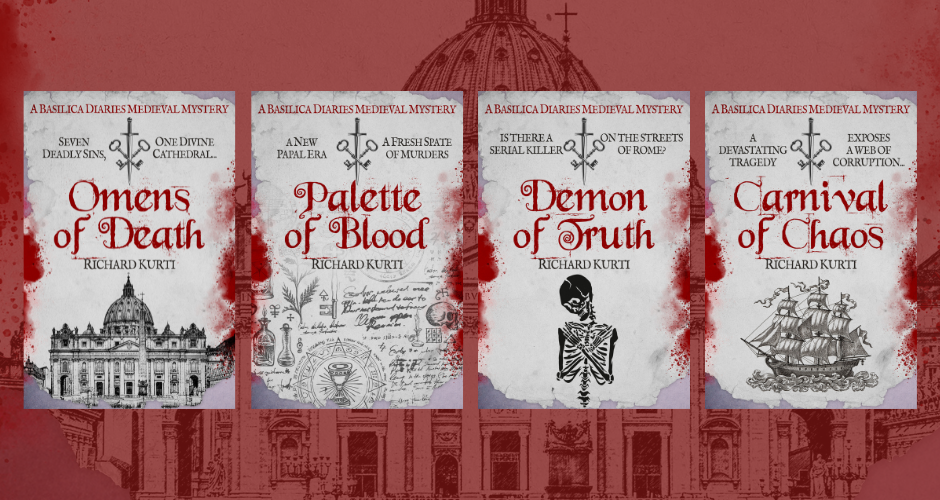
Carnival of Chaos is the fourth book in the Basilica Diaries Medieval Mysteries serieshistorical thrillers set in fifteenth-century Rome and featuring a brother and sister investigative duo.

1508, Rome
An abandoned ship is drifting in the mouth of the Tiber and a horrific discovery is found inside.

Nearly three-hundred men were packed together in the hold. All of them are dead.

They were migrant workers shipped over from North Africa, cheap labour to cut the cost of building St Peter’s Basilica, and all have died in the most horrendous circumstances.

The Vatican is desperate to distance itself from this atrocity. The guilty contractor must be found and punished, and the entire illegal trade in people must be stamped out.

The Pope charges his Head of Security, Domenico Falchoni with conducting a full investigation.

Domenico turns to his scholar sister Cristina for help and together they delve into the grudges and rivalries of the old dynastic families who are competing for building contracts for the great basilica.

Cristina and Domenico discover that dirty tricks extend across all aspects of the great construction and corruption is rife. So it is not easy to find out who is responsible for the horrific deaths of the migrant workers.

Can they protect other workers from untimely deaths? Will they expose those responsible?

Or will digging into the dark world of human trafficking put their own lives at risk…?
The Power of Story by Richard Kurti

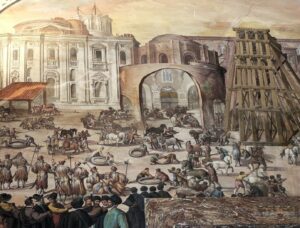
A few weeks ago, I was standing outside St Peter’s Basilica in Rome, gazing at the ancient Egyptian obelisk that sits in the middle of the square. (It’s also on the front cover of Omens of Deaththe first book in The Basilica Diaries series.)

A fresco in the Vatican depicting preparations for the erection of the obelisk in front of St Peter’s Basilica. Photograph taken by Richard Kurti.

The guide who was showing me round said, “There’s an interesting story about this obelisk. When Moses was a young man, he was educated in Heliopolis (modern Cairo), where this obelisk originally stood. As he hurried back and forth to school, Moses would have seen this very stone every day. Even then it was a thousand years old. He would have walked past it, used it as a meeting point for friends, maybe even sat in its shade.

“Now, cut forward across time. The Romans have stolen the obelisk and brought it to Italy, where the Emperor Caligula ordered it to be set up at the Circus of Nero just outside the city walls. And that is the same place where St Peter was executed. Which means the very last thing St Peter saw before he died would have been this obelisk. And now you are gazing at the exact same stone.”

I could feel my brain jolt. Moses, Caligula, St Peter and myself, all connected across 4,500 years by a single object. These were no longer remote characters from the pages of the Bible — if I reached out my hand, I could touch them through this granite obelisk.

What the guide did was a brilliant demonstration of the power of narrative. He could have bombarded me with facts and figures about the height and weight of the obelisk, about where the stone was quarried and when it was carved, and how it was moved from the Circus of Nero to its current site and erected in a single day.

But he didn’t, because he knew that those facts would have gone in and out of my mind in seconds. Instead, he told a story that organised the truth in such a way that it connected me to the distant past.

That’s what I’ve been attempting to do on every page of The Basilica Diaries historical thrillers. I have spent countless hours researching the novels, but rather than bombard the reader with details, I have tried to organise the truth into narratives that will resonate with the modern world whilst also transporting us back across the centuries.

I hope you enjoy the latest adventure in the series, Carnival of Chaos, which will be published in April.

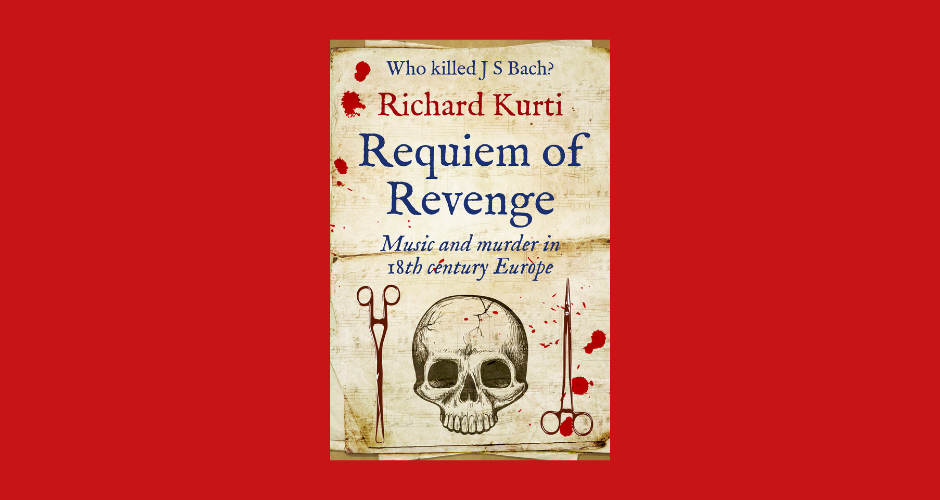
Requiem of Revenge is Out Now

Congratulations to Richard Kurti, whose twisty biographical crime novel, Requiem of Revenge, is out now!

Requiem of Revenge is a page-turning historical thriller based on the mystery surrounding the death of J S Bach.

Bath, England, 1761

A gruesome discovery is made in one of the city’s wealthiest townhouses. A man has been imprisoned and blinded; left to die in his own home.

He is rescued and his wife, Lady Arabella Taylor is arrested for the crimes.

Doctor Erasmus Harvey examines the victim, and finds out he is Chevalier John Taylor, an esteemed surgeon. The chevalier is keen to see his wife punished and Harvey is sent to take her confession.

But when Harvey meets with Arabella, he is astonished to find she shows no remorse. In fact, she insists her crimes were justified.

Repulsed by this she-devil, Harvey is unsure whether to declare her insane. But as he hears her testimony, what she reveals shocks him to his core.

And he soon realises he is not only unravelling the truth behind the crimes inflicted on the chevalier, but also the death of the celebrated composer J.S. Bach.

Who is the victim and who is the criminal? Why did Arabella torture her husband?

Her crimes could expose a scandal that will send shockwaves through Europe…

The Real-Life Inspiration behind Requiem of Revenge by Richard Kurti

Richard Kurti is the author of the Basilica Diaries Medieval Mysteries series and Requiem of Revenge: a page-turning historical thriller based on the mystery surrounding the death of J S Bach.

Despite being the story of a man who leaves a trail of chaos and suffering in his wake, Requiem of Revenge began as a search for inner peace.

I always listen to music when I write, often choosing film scores that resonate with the tone of the story I’m working on. But as populist leaders took power in country after country and the world seemed to retreat from democracy, my mood slumped. Instinctively, I turned to the music of Bach and Handel.

The richness of their music was incredibly healing, and I clung to the thought that whatever dark times they endured, both composers were still able to produce works of incredible beauty. And then I wondered, What exactly did they live through?

I started reading about the lives of Bach and Handel. They were both born in 1685 in Germany, barely 90 miles apart; they spent their lives as composers and musicians, yet they never met. Although they are now recognised as being the greatest composers of their age, both men had very different lives. Handel moved to London, where he enjoyed wealth and fame, while Bach spent much of his life working in Leipzig, scraping a living as the director of church music.

Bach certainly knew of Handel and greatly admired him; he is even quoted as saying “[Handel] is the only person I would wish to see before I die, and the only person I would wish to be.”

And then, as I was rummaging around in the footnotes of history, I discovered an extraordinary coincidence: both composers were destroyed by the same fraudulent English eye surgeon, ‘Chevalier’ John Taylor.

I dug deeper into the Chevalier’s life, and realised there was a shocking resonance across the centuries: the charlatans who were wreaking havoc in the modern world seemed to be cut from the same cloth as the man who destroyed the genius of Bach and Handel 250 years ago.

Perhaps telling the story of one liar and cheat could shed light on how liars and cheats are able to triumph across the world?

And that was when I started writing.

St Peter’s Basilica by Richard Kurti

Richard Kurti is the author of the Basilica Diaries Medieval Mysteries series: historical thrillers set in fifteenth- and sixteenth-century Rome and featuring a brother and sister investigative duo.

Donato Bramante (1444-1514) was the brilliant architect who designed St Peter’s Basilica in Rome and oversaw the initial stages of construction. If you could put him in a time machine, bring him forward five hundred years, and lay out the current problems of the HS2 railway line before him, I doubt he would be very surprised. Bramante discovered the hard way that huge, ambitious construction projects that test the limits of technology always run into the same dilemmas and have the same questions hanging over them:

Why build it at all?

Isn’t the existing structure good enough?

What philosophy should drive the new project?

How can you prevent the costs ballooning out of control?

Will the public lose interest and turn against you?

How will you cope with unforeseen complications?

How will you prevent corrupt builders skimming off vast sums for their own personal enrichment?

Take a moment to think about building something like St Peter’s without the use of computers, high-powered machinery or sophisticated scientific instruments. It took one hundred and twenty years, and Bramante was long dead by the time it was completed, but its construction was still a lot quicker than Notre Dame Cathedral in Paris, or York Minster. And once built, these cathedrals have stood the test of time. How many railway lines will still be operating half a millennia after they were constructed?

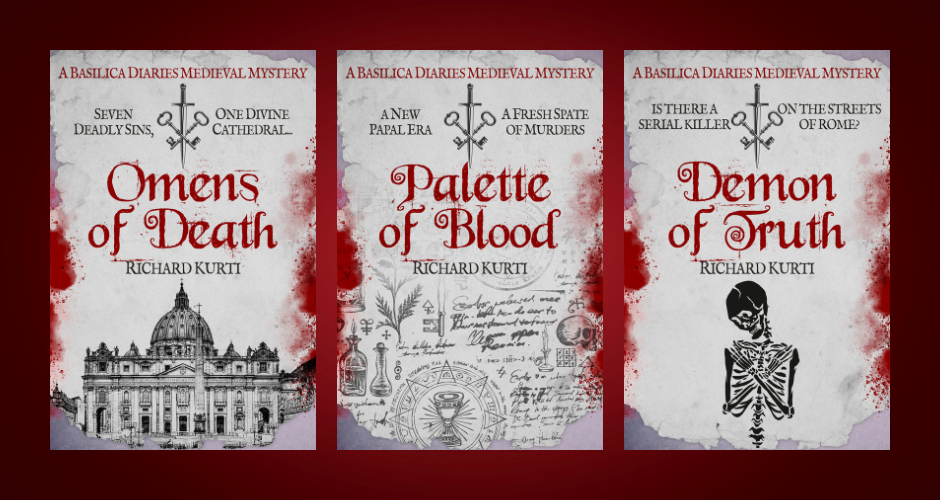
The triumph of this superhuman achievement inspired me to write a series of novels centred on the construction of St Peter’s. Each murder mystery swirls around a different theme linked to the vast building project. Omens of Death explores the morality of building St Peter’s in the first place; Palette of Blood focuses on the vicious battle between artists competing to design it; and the newest book, Demon of Truth, shows what happens when you make a catastrophic discovery mid-construction.

Although the novels are fictional thrillers, I spent a lot of time doing research to find elements that grounded the stories in the sixteenth century, but also resonated with the dilemmas of the modern world.

So, the next time you find yourself on a rail replacement bus service, why not download some Basilica Diaries to while away the time?

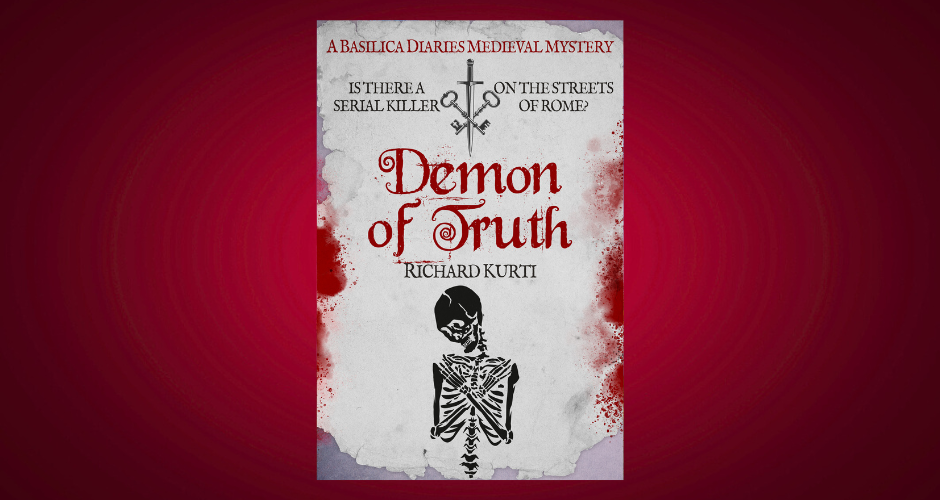
Demon of Truth is Out Now!

Congratulations to Richard Kurti, whose absorbing Medieval crime adventure, Demon of Truth, is published today!

Demon of Truth is the third book in the Basilica Diaries Medieval Mysteries series: historical thrillers set in fifteenth-century Rome and featuring a brother and sister investigative duo.

1504, Rome

The construction of the new Basilica is finally making progress when a shocking discovery is made: St Peter’s tomb, which has housed the saint’s remains for over a thousand years, is found to only contain animal bones.

Immediately the Pope panics – St Peter’s tomb is a central part of the mythology of the Rome, underpinning its legitimacy. If the tomb is a fraud, the entire Church could be undermined.

Scholar Cristina Falchoni’s vast and unorthodox learning may provide a solution, and she is summoned to the Vatican. She immediately dives into Rome’s archives, searching for clues to find the real burial place of St Peter.

But just as she believes she’s found the answer, the body of a priest is discovered with a piece of parchment stuffed in its mouth, dedicating the killing to God.

And when more bodies laid out in a similar fashion start appearing, a battle of competing myths tears Rome in two.

Is a benign St Peter blessing Rome with miracles? Or is the city being punished with a spate murders?

With the help of her brother, Domenico, Cristina is determined to discover the truth…

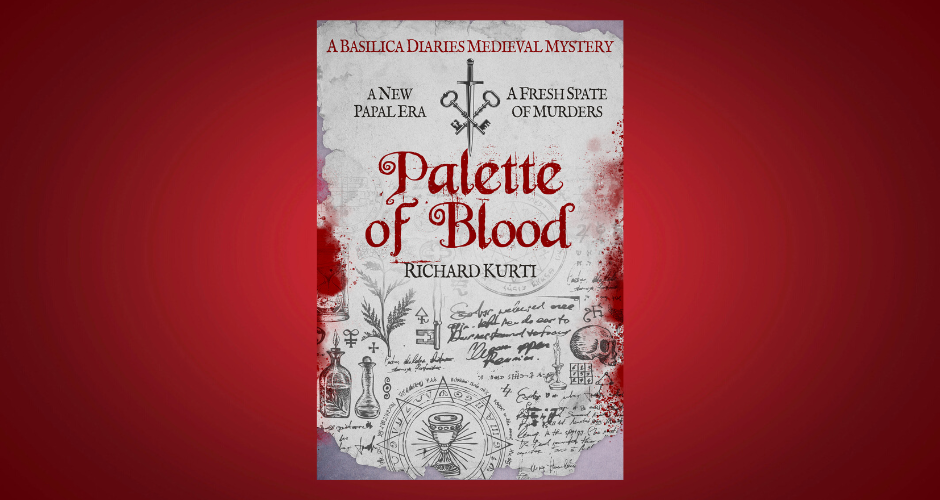
Palette of Blood is Out Now

Congratulations to Richard Kurti, whose thrilling Renaissance murder mystery, Palette of Blood, is out now!

Palette of Blood is the second book in the Basilica Diaries Medieval Mysteries: historical thrillers set in fifteenth-century Rome and featuring a brother and sister investigative duo.

1503, Rome

Power has shifted among the great families, and a new Pope has been elected.

Julius II is determined to cement his place in history by redesigning the magnificent St Peter’s Basilica and he issues a challenge to the leading artists to submit their designs.

Aware that there are rich pickings to be had from such an ambitious project, Rome’s most powerful families each back different artists, hoping to get a monopoly on valuable building contracts.

But before a winner is picked, a shocking murder disrupts proceedings.

Prominent lawyer Antonio Ricardo is found brutally dismembered next to a magnificent work of art he commissioned.

And the killings don’t stop there…

Is one of the famously ruthless families behind the killings? Could it all be a dark campaign to scare off the rival bids?

Head of Security at the Vatican, Domenico Falchoni and his astute sister Cristina are determined to get to the bottom of the mystery.

But with the reputations of the most powerful families at stake, can they stop the deaths without putting their own lives on the line…?

Omens of Death is Published Today

Congratulations to Richard Kurti, whose absorbing historical mystery, Omens of Death, is published today! Omens of Death is the first book in the Basilica Diaries Medieval Mysteries series, set in fifteenth-century Rome.

1497, Rome

Wealthy merchant’s daughter Cristina Falchoni has a vision: to create a magnificent cathedral in the heart of Rome. Europe is in desperate need of a powerful unifying symbol, and a great basilica, built over the tomb of St Peter, will be a rallying point for Western civilisation.

With the help of her brother Domenico, as Head of Security at the Vatican, Cristina manages to persuade Pope Alexander VI to cleanse his conscience by reviving a decades old plan to construct a new basilica as a celebration of God’s greatness. Whatever bribery, corruption, lechery, or assassination lay in the Borgia Pope’s past, all would be forgiven; he could atone through stone.

But when a prominent aristocrat is found brutally murdered in a grotesque parody of the martyrdom of St Peter, Pope Alexander fears it is a divine warning, a message from God not to tamper with the revered shrine.

Realising that their dream of a glorious new cathedral is in jeopardy, Cristina and Domenico urgently start to investigate the grisly murder.

But as more ominous events torment Rome, they soon realise that whoever is behind these strange portents will stop at nothing to get their own way — even if it means killing the Pope himself.

With the Pope’s life in danger, can Cristina and Domenico uncover the truth before it’s too late? Or are they about to become the killer’s next targets?