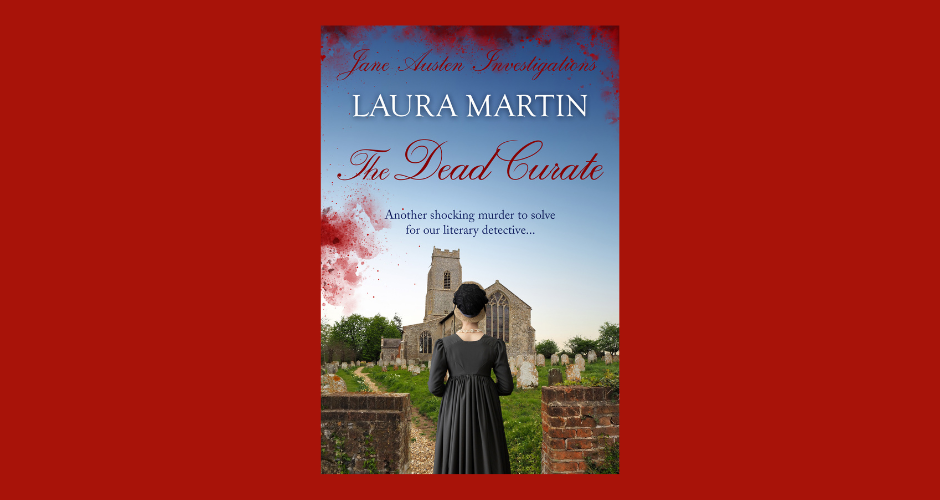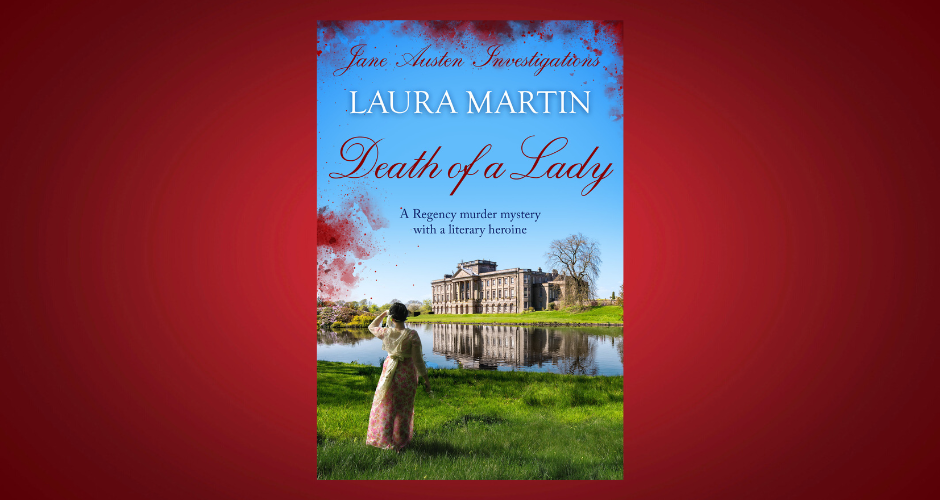
As we celebrate 250 years since the birth of one of England’s most beloved authors, we asked Laura Martin, author of the Jane Austen Investigations series, to tell us what Jane Austen’s work means to her and how it has influenced her own writing.
2025 marks the 250th anniversary of Jane Austen’s birth and is the perfect opportunity to reflect on her literary legacy and the influences that shaped her writing.

Jane Austen is one of Britain’s most well-known and influential authors. Over two hundred years after her death her books are still immensely popular and there are numerous film and television adaptations, as well as books inspired by her life and her characters. Much has been theorised about the sort of woman she was, a picture built from the letters she wrote to her sister Cassandra as well as other friends and relatives; she has become immortalised by her work and the people who celebrate it.
One reason Jane Austen’s books are so popular is her ability to build complex and layered characters, a reflection of the people we meet in real life. No two characters are the same, and even the minor players are well defined. It allows the characters and their flaws to linger in the reader’s mind — how often have I met someone and thought how similar they are to anxious Mr Woodhouse or foolish Lydia Bennet.
Undoubtedly there were many influences on Jane Austen and her books. Her main themes revolved around marriage, love, class divisions and morality. Her stories often centred on intelligent and spirited heroines — Elizabeth Bennet, Elinor Dashwood, Anne Elliot — who are forced to navigate societal expectations in the pursuit of happiness. Through these characters Jane Austen explored the roles of women in society, economic dependence and social mobility with a clarity and subtlety that remains impressive to this day.

Although Jane Austen did not live past the age of forty-one, she led a rich and varied life for a woman of her time. Her early life was spent in rural Hampshire, but in 1801 she moved to the city of Bath — a move that her letters suggest she was not overly happy with. However, there is no doubt that her time spent in the city — a place of genteel society and social ambition — offered her the perfect opportunity to observe human behaviour, which she then used to help form the flawed but interesting characters that we have all come to love.
For an author writing about Jane Austen, Bath is the perfect place to immerse yourself in the Georgian era. The streets are lined with beautiful examples of Georgian architecture and when you stroll around the curve of the Royal Crescent, you can almost imagine you might catch a glimpse of Jane Austen herself.
In my Jane Austen Investigations series I have attempted to capture the essence of Jane as an author and a person, especially her unparalleled insight into human nature. It is always daunting, writing a story where the main character once existed, especially when it is someone universally beloved, but I hoped to celebrate her genius and explore the life of the woman behind the books.
I have no doubt that in another two hundred and fifty years Jane Austen’s books will still be as popular as they are today — her wit and wisdom will still be as compelling as they are now.
Discover more about Laura here.

IN THE JANE AUSTEN INVESTIGATIONS SERIES:
Featured image credit: Photo by Dominika Walczak on Unsplash.