Sapere Books Sign New Scotland Yard Series by Michael Fowler

Following the success of his DS Hunter Kerr Investigations and Dr Hamlet Mottrell Investigations, we are delighted to announce that we have signed a new historical police procedural series by Michael Fowler.

In Michael’s words:

“My new series features Detective Winter Cooper of Scotland Yard and is set in the 1950s.

“Detective Cooper’s first case is based upon a real event, the Eastcastle Street robbery — Britain’s biggest cash-in-transit hold-up at the time. In May 1952, robbers used two cars to sandwich a Post Office van in London and escaped with mailbags containing £287,000 (estimated to be worth approximately £8,500,000 today). It was a case that shocked the nation and embarrassed the Government, with Prime Minister Winston Churchill demanding daily updates from the Police Commissioner. Despite the involvement of over a thousand police officers, and the offer of a £25,000 reward, no one was ever caught.

“This is my take on that case, and while it is a deviation from my contemporary novels, I hope readers will embrace Winter Cooper with the same enthusiasm that I have put into creating him and this new series.

“Working with Sapere Books again was an easy decision to make. Over the past five years, they have given me so much support as a writer and I cannot thank them enough. When I ran the idea of this new series past them, their backing was unflinching.”

The Red Death is Published Today

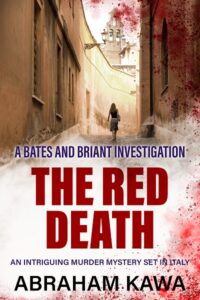
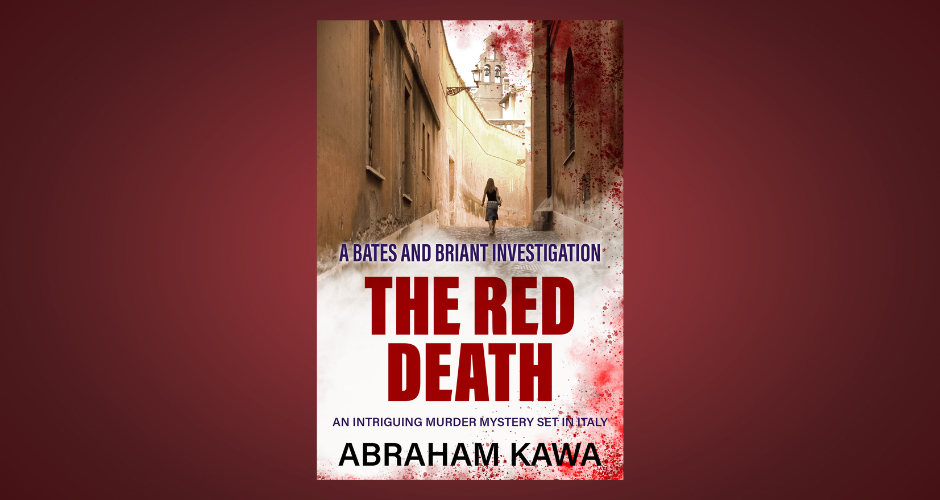
Congratulations to Abraham Kawa, whose heart-pounding murder mystery, The Red Death, is published today!

The Red Death is the second police procedural crime novel in the Bates and Briant Investigations series — gritty, hard-boiled thrillers set in 1960s and 1970s London and Europe.

Rome, 1970

After a disturbing murder case left DI Chris Bates’ mental health shattered, he spent time recovering in an asylum before being released to a halfway house.

He receives a photo of police photographer Helen Briant in Rome along with a message to join him there, with a hint she’s in trouble. With nothing tying him to home, Chris decides to go.

In Rome, he discovers Helen in a desperate situation. She is caught in a web of blackmail, threats and violence.

And when some of those threatening her are murdered, Helen is hauled in for questioning.

Keen to clear Helen’s name, Chris is determined to get to the bottom of the mystery. But the further he delves into it, the more complicated it becomes.

And when more victims are found, the stakes become even higher…

Happy Publication Day to Michael Fowler!

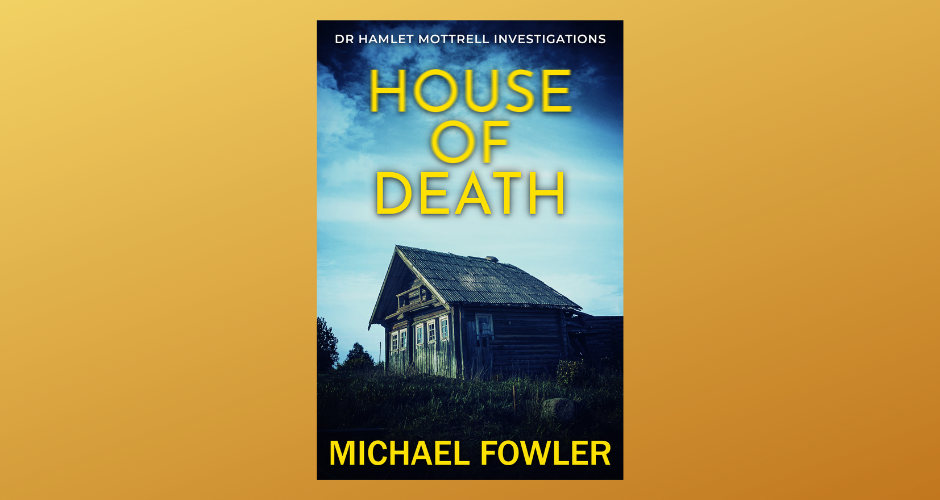
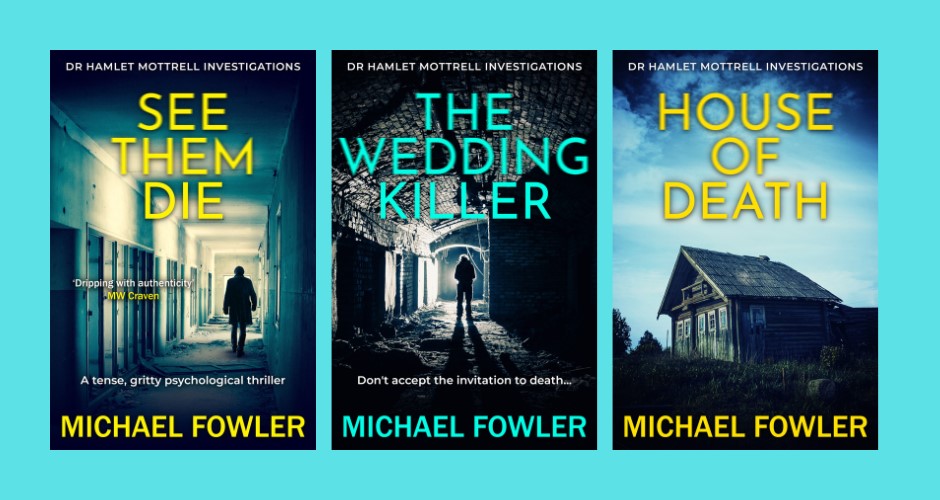
Congratulations to Michael Fowler, whose fast-paced thriller, House of Death, is published today!

House of Death is the third crime novel in the Dr Hamlet Mottrell Investigations series: dark, gritty murder cases investigated by a forensic psychologist.

Forensic psychologist turned detective Dr Hamlet Mottrell and his crime-fighting partner Detective Sergeant Alix Rainbow have found themselves in hot water.

The serial murderer, The Wedding Killer, who they put in custody is pleading his innocence, alleging he has been framed by the two detectives.

And a series of letters, claiming to be from the real killer, back up his accusation.

Under the spotlight for mishandling the investigation, Hamlet and Alix are sent home on gardening leave while another force conducts a scrutiny of their investigation.

The pair are told not to interfere. But that is one order they must disobey.

Determined to discover the truth, they go against the rules, secretly embarking on a behind-the-scenes enquiry to discover who the Wedding Killer is, and they soon discover the disappearance of two women who might be linked.

The quest to discover who is behind their vanishing quickly becomes a dangerous exercise, putting not only Hamlet and Alix’s careers in jeopardy but also their lives…

Did they put the right killer behind bars? Can they clear their names?

Or will the two detectives end up as victims…?

Happy Publication Day to to C V Chauhan!

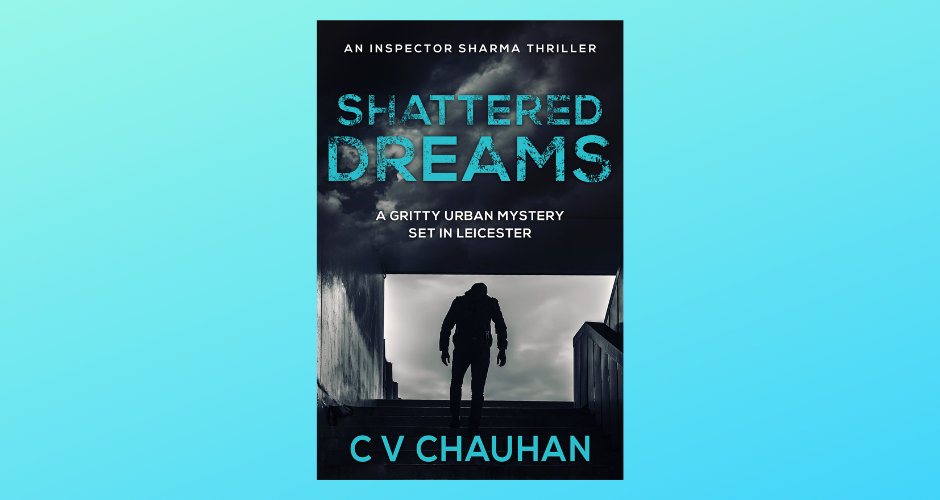
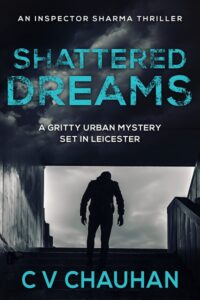
Congratulations to C V Chauhan, whose gritty urban thriller, Shattered Dreams, is published today! Shattered Dreams is the second book in the Inspector Sharma series.

When a body is found in Charnwood Forest in Leicestershire, Detective Inspector Rohan Sharma is called to the scene.

But before he can get there, a young woman arrives on his doorstep, saying she is scared for her life and asking for his help.

Before he can take down her details, she runs away.

And when Sharma reaches the crime scene, what he finds leaves him bewildered.

The prone body lying on the ground is of a man in full diving gear. He looks to have been dead for a while, but there is no obvious cause of death.

And before long, a second body is discovered, this time in the local river. It is a naked woman, with her head and hands missing.

Her build is similar to that of the mysterious woman on Sharma’s doorstep. But there is nothing to identify her.

Are the two deaths connected? Can Sharma and his team discover the identities of the two victims?

Or could they be about to unravel something even more disturbing…?

Deep and Deadly is Out Now

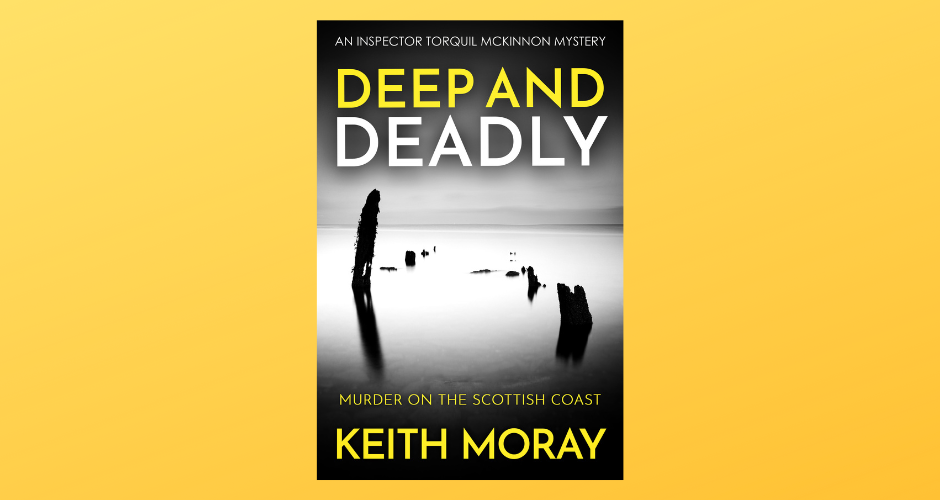
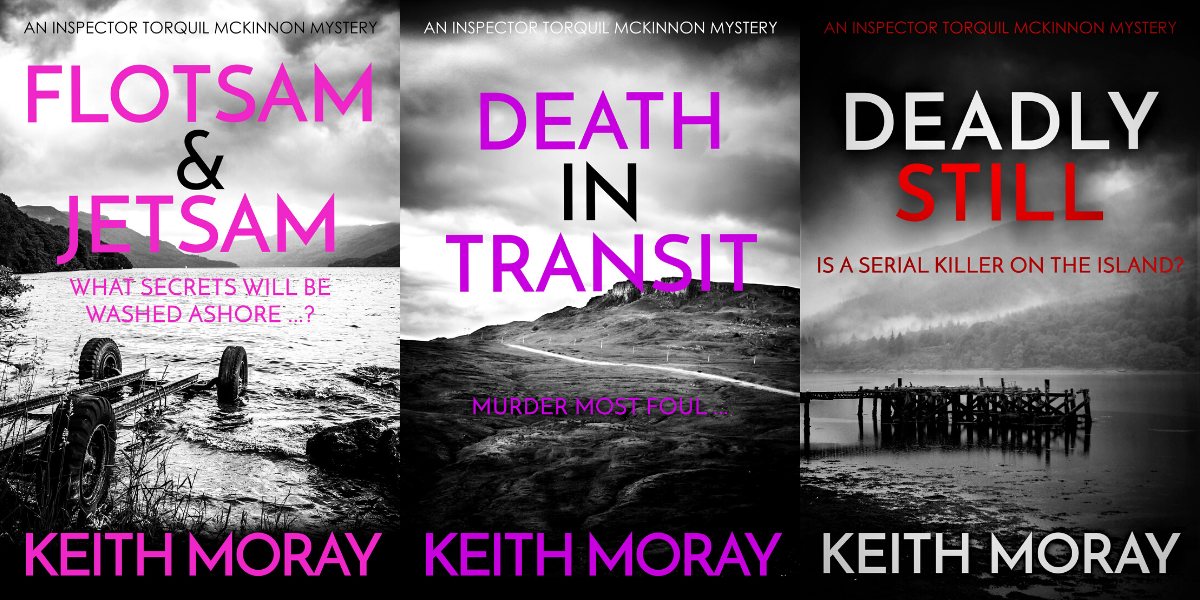
Congratulations to Keith Moray, whose gripping Scottish mystery, Deep and Deadly, is out now!

Deep and Deadly is the seventh crime thriller in the detective series featuring Inspector Torquil McKinnon: an action-packed police procedural full of suspense.

West Uist, Scotland

It’s an usually busy day on the remote island of West Uist. The only transport on and off the island is the local ferry, and there is uproar when it is blocked by eco-rights activists, protesting against the shooting of seals by local fishermen.

While dealing with that disturbance, the police are amused to find a celebrity has disembarked from the ferry and is causing a stir among the locals.

But just as the demonstration is peaceably dispersed and actor and singer Declan O’Neil is escorted away from the crowds, Detective Inspector Torquil McKinnon is called to investigate a dead body.

Fisherman Arran MacCondrum, owner of the farm that is being protested against, has been found dead in one of his fish pens, seemingly by suicide.

But with a spate of threatening poison-pen letters making their rounds on the island, it soon becomes clear that Arran’s death was not by his own hands.

Was Arran attacked by a protestor? Or was there an ulterior motive?

Torquil must unravel the mystery before anyone else on the island comes to harm…

Happy Publication Day to Abraham Kawa!

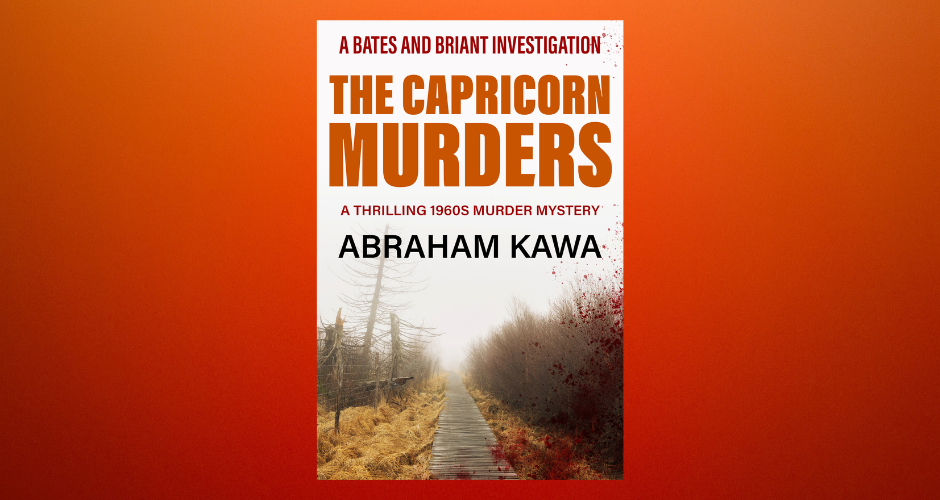
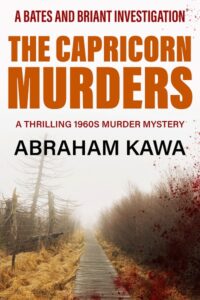
Congratulations to Abraham Kawa, whose heart-pounding murder mystery, The Capricorn Murders, is published today! The Capricorn Muders is the first book in the Bates and Briant Investigations series.

London, 1969

When two dead women are discovered in a peat bog, Murder Squad DI Chris Bates is joined on the scene by police photographer Helen Briant, with whom he has a thorny relationship.

Fingerprints identify the women as Maddy Lynn, a glamour model-turned-prostitute, and Gillian Loder, long-missing daughter of former Junior Cabinet Minister Anthony Loder.

While unrelated and murdered years apart, both girls were killed in ways evocative of druidic rituals.

Intrigued by the gap between the murders, Chris starts looking at other unsolved similar cases.

And he soon discovers more potential victims who were lost young people like Gillian and Maddy.

Meanwhile, Helen has become obsessed with the case, filling her studio with photos of the victims and attempting to connect them through a visual reconstruction of their lives.

Their methods complementing each other, Bates and Briant find themselves drawn into an uneasy collaboration as they seek to unravel the mystery…

The Dance of Death is Out Now

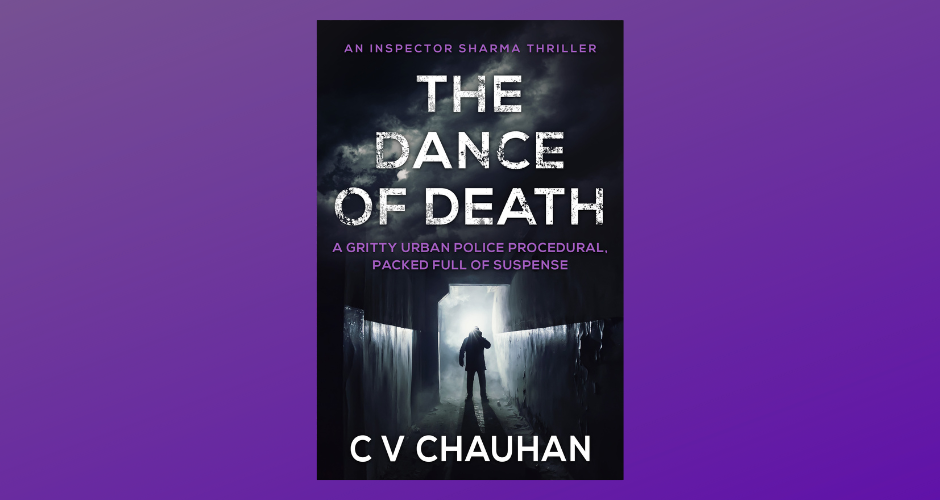
Congratulations to C V Chauhan, whose page-turning serial killer thriller, The Dance of Death, is out now!

The Dance of Death is the first book in the Inspector Sharma Thriller series.

When a young Asian woman is found murdered in a particularly brutal fashion, the Leicestershire police force are put on high alert to find the killer.

The body was positioned in the shape of swastika and instantly points to racist motivations.

Newly promoted homicide detective Rohan Sharma is given the case – a surprise both to Sharma himself and his more experienced colleagues.

Desperate to prove himself, Sharma works around the clock – and soon discovers connections to the death of a young Somali woman that occurred the previous year.

But with his resentful colleagues working against him and his private life falling apart, Sharma struggles to keep his head in the game.

And when he starts to receive strange anonymous messages, he realises the killer may now be tracking his every move…

Can Detective Sharma stop the killer before he strikes again?

Or will he find himself trapped in a vicious dance of death…?

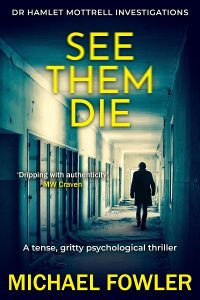
See Them Die is Out Now

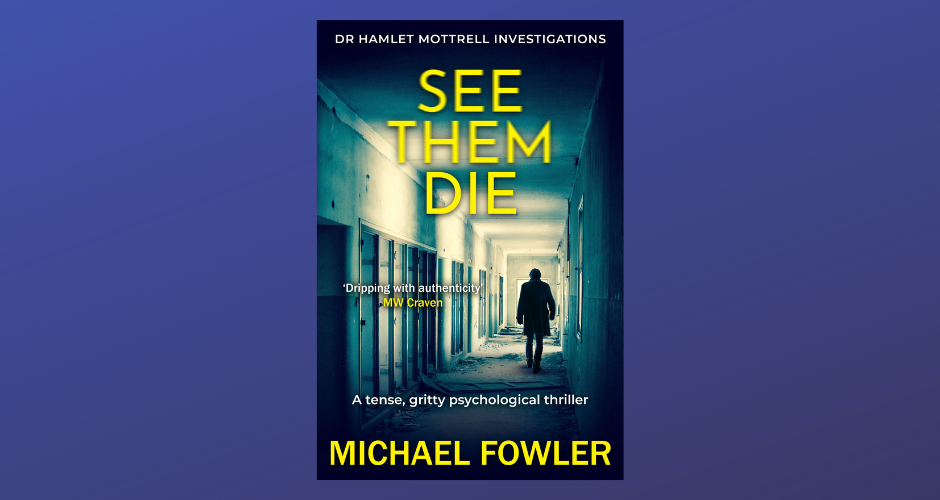
Congratulations to Michael Fowler, whose gritty psychological thriller, See Them Die, is published today!

Three years ago, forensic psychologist Dr Hamlet Mottrell’s life was completely destroyed when an intruder killed his wife and unborn child and slashed his wrists to make it look like a murder-suicide.

Though the case against him was dropped, Hamlet remained guilty in the eyes of many, and was forced into a life of solitude.

But then he hears of another brutal murder case and becomes convinced it is the same person who attacked his family.

He gets in touch with Detective Sergeant Alix Rainbow, one of the only people who believed him when he was initially arrested, and convinces her to help him track down the vicious killer.

But when more deaths occur, she starts to question everything…


Click here to order See Them Die

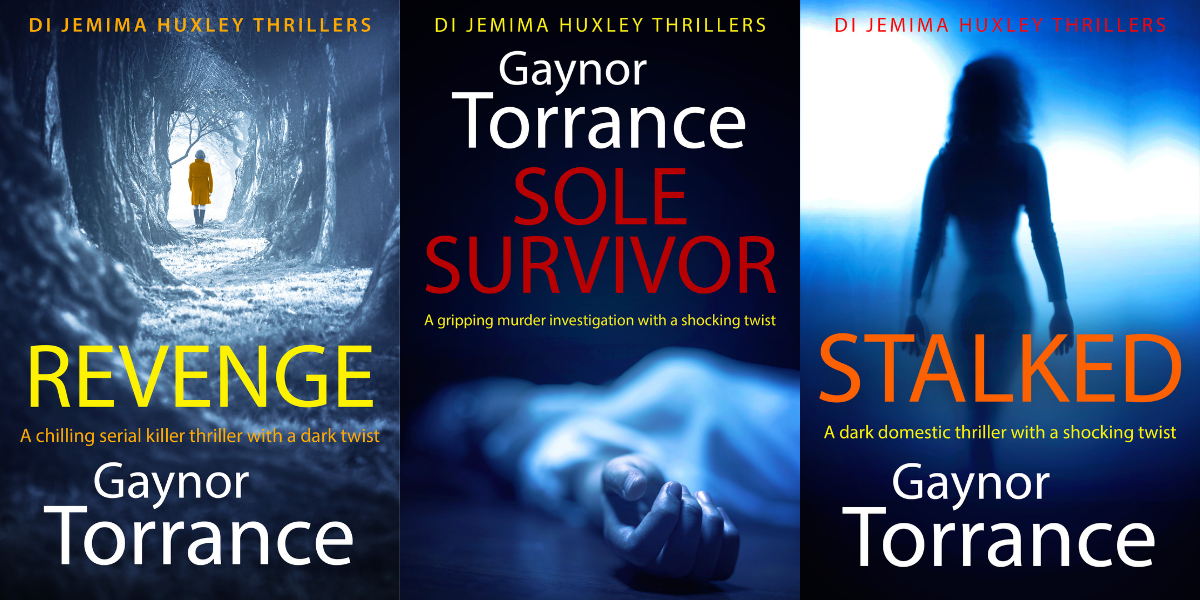
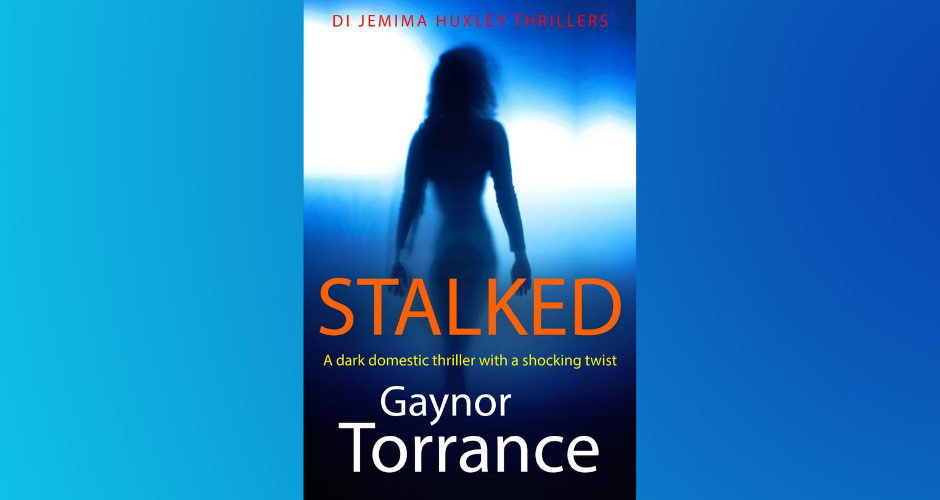
Sapere Books Sign Three Thrillers by Gaynor Torrance

Gaynor Torrance’s absorbing DI Jemima Huxley Thrillers follow a determined and resourceful female detective as she unravels gruesome crimes.

The first three books in the series, REVENGE, SOLE SURVIVOR and STALKED are already published. We are excited to announce that we have now signed up a further three instalments.

In Gaynor’s words:

“I am delighted to have signed with Sapere Books for a further three instalments of the DI Jemima Huxley Thriller series, as Jemima has many more cases heading her way. It really is a dream come true for me and I’m thrilled that Amy Durant – editorial director at Sapere Books – is keen for Jemima’s story to continue.

“GONE – the fourth book in the series – is due to go on pre-order soon. What starts out as the investigation into a young woman’s murder quickly evolves in some surprising ways. And in the inimitable Huxley style, I guarantee that the story is both dark and shocking. Jemima’s life will change forever when it takes an unexpected turn, and Broadbent has the chance to become a hero.”

Click here to order REVENGE

Click here to find out more about the DI Jemima Huxley Thrillers

The Beast of Barnwell by Michael Fowler

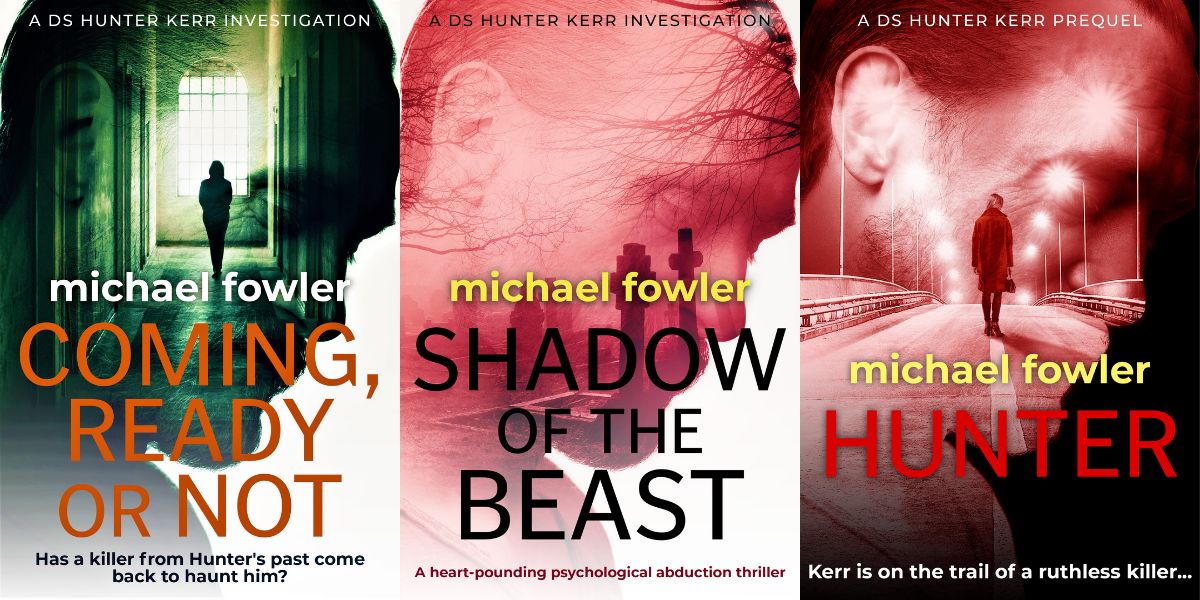
Michael Fowler’s DS Hunter Kerr novel, SHADOW OF THE BEAST features a horrific serial killer. Read on to find out more about where the inspiration for the Beast of Barnwell ― the murderer in this story ― comes from.

The ‘Beast’ is loosely based on Peter Pickering from Wombwell, near Barnsley, who was dubbed ‘the Beast of Wombwell’ by the press following his conviction in 1973 for the rape and murder of 14 year-old Shirley Ann Boldy, when he was jailed indefinitely.

Peter abducted Shirley Ann as she walked back to school at lunchtime, driving her to woods in the village of Barnburgh, where he tortured and raped her before stabbing her with a kitchen knife. Peter had to flee with her body in his van when he was disturbed by three men walking in the woods who tried to intervene after hearing her screams for help.

Arrested later that day, he had dumped Shirley Ann’s body, cleaned his van, burned his clothes and sandpapered and bleached his shoes in a hope of hiding evidence; however, he eventually confessed, blaming his mother for the killing, telling detectives that she would never allow him to have a girlfriend, and he could see her face as he killed Shirley.

The killing of Shirley Ann came just five months after he was released from prison after a six-year jail term for sex attacks on a teenage girl in Doncaster and Scarborough.

Detectives who dealt with Pickering firmly believed that Peter was responsible for more rapes and murders and were particularly interested in him for the unsolved murders of 13 year-old Anne Dunwell, from Rotherham, who was raped and strangled in 1964, and 14 year-old Elsie Frost from Wakefield, who was stabbed five times in 1965. He was visited several times while detained in Broadmoor by detectives and interviewed in connection with these murders, but he refused to cooperate.

However, in 2017, detectives had a breakthrough. Forensic evidence linked Peter to the murder of Elsie Frost and a fresh investigation was launched. During this re-investigation detectives discovered that Peter was renting a storage garage in Sheffield, and getting a warrant, they opened it up and found handcuffs, diaries and exercise books, which contained confessions. One of those confessions was the rape of an 18-year-old woman from Barnsley, which was undetected and after tracing the woman, who was then in her sixties, Peter was charged with that rape and convicted in 2018. Before he could be sentenced for that rape and also charged with the Elsie Frost murder, Peter died. He was 79.

Click here to order SHADOW OF THE BEAST

Click here to find out more about the DS Hunter Kerr Investigations

Stalked in Real Life by Gaynor Torrance

It seems apt that I am writing this on the day that the A-level results are announced. I finished school many years ago, but can still recall the excitement of finding out that I had been accepted at my university of choice to study psychology. With everything to look forward to, my head spun with expectations of what student life would be like. Little did I know that my entire existence was about to take a sinister turn. Until then, I’d lived a sheltered life and hadn’t heard of people being stalked. But that was about to change as my terrifying ordeal began only a few weeks later. 

It was a steep learning curve. If I were included in a random cohort of people and asked to order them by likeliness of being targeted by a stalker, I would have positioned myself towards the bottom of that list. After all, I was introverted, wasn’t going to turn anyone’s head and certainly didn’t court attention. I was someone people didn’t tend to notice. Though I later discovered that anyone, regardless of age, gender, or perceived physical attractiveness can be stalked, and stalkers are not exclusively male.

Even as I write this, I can feel my stress levels grow. Despite the passage of time, as I dredge up these suppressed memories, the old emotions rise like a tsunami threatening to overwhelm me. There are some things from that time that I refuse to discuss as those memories are far too traumatic. I also have no intention of naming the person who caused me so much mental and emotional anguish. Identifying him serves no purpose and might cause pain or embarrassment to other people, which I have no desire to do. It is enough for me to know that my ordeal is over. Apart from in nightmares, my stalker is no longer a threat to me.

It is essential to understand that this chapter of my life occurred way before the availability of mobile phones or the subsequent rise of social media. It was quite literally another world back then. At the time, there were no stalking laws in the UK. Society was far more misogynistic, and I would probably have been seen as a stupid young woman who had obviously brought it all on herself. It seemed to me that my only viable option was to deal with things alone. 

Before I realised the threat he posed, I had allowed my stalker to enter my room at the hall of residence. Although I didn’t appreciate it at the time, I’d made a big mistake. It gave him access to information, and we’re all familiar will the old adage, ‘Information is power. He took the opportunity to familiarise himself with my lecture and seminar timetable. Naively I had it pinned on my noticeboard. From then on, he was able to predict my movements.

His behaviour quickly became alarmingly claustrophobic. And when I tried to distance myself, things escalated rapidly. For almost a year he followed me, watched me, sent anonymous threatening messages and on a few occasions, succeeded in cornering me. It was a relentless campaign of intimidation, designed to mess with my head. He even managed to convince people that he was a heartbroken innocent, and I felt ostracised when I most needed support.  

I have no intention of giving you a blow-by-blow account of what happened. It would take too long, and I would feel uncomfortable about relaying some of the details. However, there are things I’m willing to share. 

On one occasion, I’d gone home for a weekend visit and was travelling back to the university. I felt physically sick as I stood on the platform waiting for the train to arrive, as I dreaded him turning up. I breathed a sigh of relief as the train pulled in, found a seat, settled down and took out whichever book I was reading. There was plenty of time for me to lose myself in the story as it would take a few hours for me to reach my destination, and I certainly needed the distraction. About forty minutes into the journey, the woman opposite me got up to leave. And as the train pulled away from the station, someone else sat in that seat. As I glanced up, my blood ran cold. It was him.

I did my best to stay calm, but I was quaking inside. He crossed his arms and kept staring at me as I pretended to continue to read my book. Neither of us spoke until he leaned forward and placed his elbows on the table between us. I wanted to run, but there was nowhere to go. 

He appeared calm as he told me that he had a ‘new best friend,’ someone who was helping him see things differently. They’d discussed things, and he now realised that he didn’t want a relationship with me. I had a glimmer of hope, but that light was soon extinguished. As his monologue continued, I deduced that the friend he was referring to was God. But what he went on to tell me was the scariest thing I had ever heard.

He claimed to be having frequent conversations with God, who had made him realise that I was evil and had to be stopped. He said that he had God’s permission to do whatever it took to make this happen. After all, he had right on his side. I could tell that this wasn’t some kind of sick joke. He believed everything he was saying.  

My mind raced as the train approached my destination. I was all too aware of the impending showdown and didn’t want to end up injured or dead. The odds were stacked against me. He was far larger and undoubtedly stronger than me. I knew I was safe whilst I was on the train, as he surely wouldn’t harm me in public. But even when I got off the train, the university campus was still a few miles away. I couldn’t risk waiting for the bus I had planned to take. I had to get a taxi.

As the train pulled into the station, I sat in my seat for as long as I dared. It was a popular destination, and people were already queuing up to get off. Leaving my book on the table, I grabbed my bag, jumped up and pushed my way past people. I was shouting and distressed. It was one of the few occasions in my life when I wanted others to notice me. Thankfully people obliged and let me through, though none of them thought to ask me what was wrong or offer any help. I was banking on the fact that he couldn’t risk making a scene. It gave me the only advantage I was going to get. 

I raced over the footbridge, panting and crying. Reached the taxi rank where a queue hadn’t yet formed. I jumped inside the nearest cab and told the driver to take me to the campus. But as the vehicle was about to pull away, the rear door opened and he calmly got in. ‘Thought you were going to leave without me,’ he said in a non-threatening way.

He grabbed my arm, and we sat in silence. When the cab eventually pulled up outside my hall, I dug the nails of my free hand into the back of his and shouted, ‘He’s paying.’ I ran, all the while fumbling for my keys. I made it inside and sprinted up two flights of stairs. Little did I realise that another student was on her way out of the hall and unhelpfully held the door open for him.

As I entered my corridor, I was dismayed to find it deserted. I’d been banking on there being other people around. My hand was shaking as I attempted to insert the key into the lock. I heard the door open off the stairwell, turned and saw him there striding purposefully towards me. I’d lost my chance. I couldn’t risk going into my room. If he forced his way inside, it would be game over. I knew from past experience what would happen. Instead, I ran to the communal toilets, which were almost opposite my room. All four cubicles were free. I got inside one, locked the door and started shouting for help.

Luckily for me, other students heard the commotion, and people soon arrived. My friend was amongst them and knew a little of what was happening to me. She helped me get back to my room, while some other girls attracted his attention. She came inside with me as she could see how scared I was. She was just closing the door when he realised what we’d done. He completely lost it and kicked the door in. Another student had the foresight to call security, and he was eventually forced to leave. 

On another occasion he drove a car at me, screeching to a halt inches from where I stood. He calmly got out of the vehicle, stepped towards me and said, ‘If I can’t have you, no one will.’ Thankfully a stranger intervened. But nowhere was safe. I was isolated, terrified and didn’t know who I could trust.  

When I returned for my second year at university, my tutor sat me down and informed me that he believed there was a credible threat to my life. My stalker had applied to study numerous courses at the university. He was frequently seen roaming the grounds and buildings despite being banned from entering the campus. Realistically I knew there was no way they could ensure that he was kept out. This guy was focused and had no intention of playing by the rules.

That morning I spent an hour or so in my tutor’s office as he made some phone calls, and just like that, I was transferred to another university. I had to leave without saying goodbye and immediately cut ties with my university friends. My world had become a real-life psychological thriller. 

Throughout this entire ordeal, I was offered no support or counselling. It wasn’t the ‘done thing,’ back then. I was on a downward spiral with no safety net in sight. In public, I did my best to act as though nothing was wrong. It was a role I felt compelled to play. I wanted to move on, put things behind me and try to fit in. But I didn’t succeed. I couldn’t relax and frequently experienced panic attacks. In retrospect, I realise that I was suffering from PTSD. But at least I had walked away. I had survived. Though something had to give, and my studies suffered.

For many years, my children have often joked that I am the most paranoid person on the planet. They don’t appreciate that I spent such a sustained period living in fear. Thankfully I bear no physical scars from that time. Though, I carry mental and emotional wounds which have faded but will never fully heal. 

An example of how messed up I had become is that throughout my twenties, I dreaded entering my own home if I happened to be alone. I’d put the key in the lock, take a deep breath, race to the kitchen and grab a sharp knife. My knuckles would be white and my hand shaking as I systematically walked from room to room, flinging open cupboard doors, looking behind curtains and beneath the furniture. It is a relief that I no longer feel compelled to do that.

Upon reflection, my behaviour was extreme and perhaps ridiculous. But unless you’ve experienced such an insidious long-lasting threat, you can’t begin to imagine how deeply it affects you. I can honestly say that in those days, I had become as obsessed with my stalker as he was with me. 

As time passed with no contact, I still couldn’t get him out of my head. I had no idea where he was, but expected to find him waiting in the shadows. Even sleep failed to offer respite, as I experienced night terrors whenever I’d had a stressful day. 

Then, I had a meltdown at work. It happened out of the blue on an ordinary afternoon. I hadn’t seen or heard from my stalker for years. I walked out of the ladies room just as the lift doors located directly opposite, opened. A man stepped out, we looked at each other, and he smiled. He was my stalker’s doppelganger. The likeness was uncanny. I kept facing him and quickly backed up to the ladies room, where I locked myself inside a cubicle and cried. 

At that moment, I thought it was happening all over again. I couldn’t understand how he had found me after all this time. I knew I’d have to resign and look for another job as it wasn’t safe for me to continue working there. Eventually, I was all cried out, and some other women came in to use the facilities. I waited for them to enter the cubicles and went out to clean myself up, taking my time so that I could leave the room with them.

When I returned to my desk, I contacted reception, gave them my stalker’s name and asked for his extension number and details of which department he worked for. I was informed that no one with that name was employed there. It took a while for me to be convinced that the receptionist was telling me the truth. I later discovered that the man in question was actually someone else. He must have thought I was a lunatic.   

There is no doubt in my mind that living through such a traumatic experience has shaped the person I went on to become. I’m introverted and do my best to avoid group interactions as I find them stressful. It seems that no matter how hard I try, I still feel like an outsider. I’m incapable of ‘fitting in’

Of course, I have friends and family, and I value them highly. I’m comfortable when there’re just a handful of people I know and trust. But in larger groups, even virtual ones, I feel ill at ease. Though, every so often, I pluck up the courage to try again. Hopefully one day I’ll find it’s no longer a problem.  

STALKED, the third book in the Jemima Huxley Thrillers series, is the story I always wanted to write. It is undeniably a work of fiction, but one created with an authentic understanding of what it is like to be in those particular crosshairs. I didn’t have to imagine what it would be like for my character, Violet Watkins — I know what she was going through.

If you have already read the book, you may think that the twist at the end is far-fetched. It was in fact inspired by information passed to me from someone who knew my stalker, and was a chilling indication that perhaps he hadn’t fully moved on. As a writer, I played around with the idea as I thought it would be perfect for this book. Though in my personal life, there was never any suggestion of such a threat.

Thankfully my ordeal is over. I am a very different person to the one I had hoped to be all those years ago. There are occasions when I wonder what path I would have followed if things had been different. But overall I have no regrets as I have so much to be grateful for.


Click here to order STALKED


If you have been affected by any of the issues raised above, the following organisations may be able to provide help and support:

National Stalking Helpline

Paladin National Stalking Advocacy Service

Supportline

Victim Support

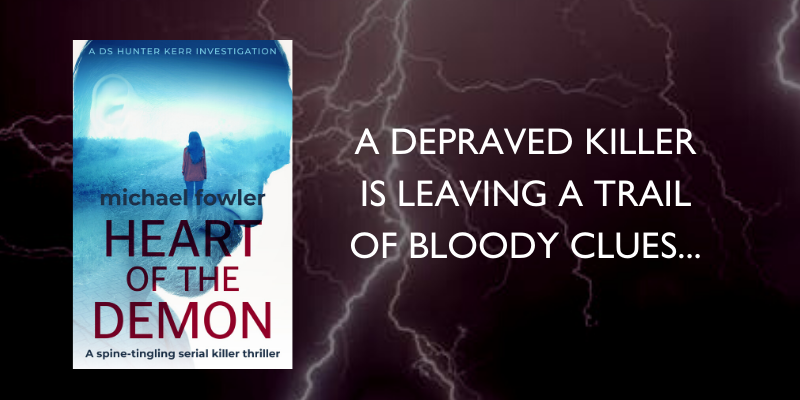
Read the chilling first chapter of Heart of the Demon by Michael Fowler

DAY ONE

6 July 2008

She bucked and jerked wildly and he had to bear down all of his twelve stone onto her wiry yet well-toned young body as her limbs smacked against his… She was fighting for her life.

Then the air exploded from her chest in a heavy moan and she stopped thrashing.

Gasping for breath and drenched in sweat, he pushed himself up from her limp figure. He’d thought she was never going to die, amazed at the fight she had put up. He took several deep breaths and tried to slow his racing heartbeat, watching with fascination as dark viscous blood belched from her eye sockets, joining other rivulets which were already matting her dark bob of hair and forming a pool around her head.

Bending down, he scraped the mess from his knife into the dusty earth and then dropped it into his coat pocket and set to work.

He couldn’t leave her body here.
Dragging the bloodied corpse by the wrists along the flagstone floor, he soon found himself gasping for breath again, and he could feel fresh beads of sweat tickling his ribcage as he hauled her towards the barn entrance.

Then a distant unfamiliar noise caught his attention; a noise which didn’t belong to the surroundings. He paused and listened. It was coming nearer. He dropped the girl’s arms and dashed to a slit in the barn wall, threw himself against the damp stone and twisted sideways to peer through the gap without being seen. For a split-second the sunlight blurred his vision but as it cleared, he spotted a flat-back lorry bouncing along the uneven farm track, coming his way.

He closed his eyes and held his breath, gritting his teeth. He couldn’t believe his bad luck. He had sought out this place especially for its remoteness, visiting it at different times over the past few weeks to finalise his plan. In all that time no one had come near and now, today of all days, he had a visitor. For a few seconds he thought about killing the driver, but then realised he didn’t know this adversary.

He looked back along the lane. The truck was only a few hundred yards away and there was no sign of it stopping.

He took one last look at the lifeless form, realising he had no other choice but to make his escape, leaving behind this bloodied mess. He couldn’t afford to be caught. Not after all this time.

‘Damn,’ he cursed, realising he wouldn’t be able to finish off what he had set out to do. He slipped the playing card from his trouser pocket and, suit side up, placed it over the gaping wound in the middle of her chest. Now was the time to show them that this was his handiwork.


Dennis O’Brian swung the Bedford lorry through the broken entranceway that led to the tumbledown farm and braked sharply, throwing up a cloud of dust. Surveying the old Yorkshire stone buildings in a bad state of repair, he smiled to himself. Then, making a quick call on his mobile, he shut down the engine, flung open the driver’s door and leapt out of the cab. For a good few seconds he scanned the ramshackle buildings, weighing up which portions of stone would reap the most rewards.

Then he froze and his heart skipped a beat as he caught the sound of running feet. He was about to leap back into his truck when he realised the footfalls were growing fainter. Whoever had been here was leggingit, he thought. A grin snaked across his mouth and he chuckled to himself. Bet it was another stone thief who thought he was going to be caught.

As he stepped out of the sunlight into the dimness of the barn’s interior, he wasn’t prepared for what greeted him. Sprawled across the uneven dirt floor was a lifeless and bloody form. Only from the clothing could he tell it was a girl; the injuries inflicted upon her were like nothing he had ever seen before.

He began to retch as he fished in his jeans pocket for his mobile.


As he pushed the CID car door shut with his hip, Detective Sergeant Hunter Kerr paused for a moment and gathered his thoughts while casting his gaze out over the very active crime scene before him. He watched a line of uniformed officers, regular intervals apart, striding slowly through waist-high crops, their white short-sleeved shirts standing out against a backdrop of lush green trees.

Above him the Force helicopter hovered, the drumming noise of its rotor blades disturbing the peace of the surroundings.

He had raced here at breakneck speeds, listening to updates being broadcast over his radio. By the time he arrived, he had enough information to formulate a picture in his mind of what had happened.

Scanning the surroundings with his steel blue eyes, he knew that in one of the dilapidated and derelict farm buildings ahead a young girl’s battered body had been found, and that her killer had fled the area only about an hour beforehand. Right now, everything was being done as quickly and thoroughly as possible to track down her murderer and secure the site.

Hunter knew this area well. As an amateur artist, he had visited the location on many occasions and painted the subjects in the vicinity. In fact, the old farm buildings had been captured many times in his oil sketches. It was disconcerting that such atmospheric surroundings, which featured in paintings back home, were now centre-stage in a gruesome discovery.

‘Hi Sarge.’

Hunter turned to see his partner DC Grace Marshall tramping towards him at a pace. In her smart, pale grey business suit, Grace looked more the confident professional businesswoman than a hard-working front-line murder detective.

She was corralling her dark hair into an elastic scrunchy. Her face was grim.

‘It’s bad in there, Hunter. You ought to see what he’s done to her.’

‘What have we got then, Grace?’

‘It looks like it’s Rebecca Morris, the fourteen-year-old who was reported missing only a few hours ago. She should have turned up for an exam at her school this morning but didn’t.’ Grace finished bunching her hair. ‘She’s in a real mess. Her face is barely recognisable. No one’s moved or touched the body. First uniform on site could see from the state of her that she was dead and immediately cordoned off the area. The three nines call came from a guy who had driven here in his lorry. He’s now back at the station being interviewed. His story is that he just happened to be driving up the track to the farm for a quick ten minutes rest, but he’s got form for theft and it’s my guess that he was going to nick some of the stone or slates from here. Anyway, he says he just got out of his cab, heard the sound of someone running from the back of one of the buildings, and then a car starting up and screeching away. When he goes round to look, he finds the girl dead in the barn.’

‘And do we believe him?’

Grace shrugged her shoulders. ‘No reason not to at the moment. As I say, he is known to us. He’s got previous for nicking stone and lead from church roofs. He’s also got a couple of convictions for drunk and disorderly, but those are over fifteen years ago, and he’s got nothing for violence. And to be fair, he did ring it in and stick around until uniform arrived, and they say he appeared to be genuinely shook up over it. I’ve had him lodged in a cell and he can stew there for a couple of hours ’til we’re clear from here. I’ll get a statement from him and then kick him out.’

‘Any description of the person he disturbed?’ Hunter asked.

‘No, unfortunately not. Well gone before he got to the barn. The guy says he heard a car or van driving off up the dirt track over there.’ Grace pointed to a small copse of trees several hundred yards away.

It was warmer than he’d anticipated and Hunter tugged at the crisp collar of his blue shirt. Before he had shot away from the station he had slung on a jacket. Now he wished he hadn’t and he undid the top button of his shirt and loosened his tie.

‘Where does that track go to, Grace?’ he asked, pointing at a line of bushes just beyond the old farm buildings.

‘It leads up to a B road half a mile away. It takes you past the Ings and eventually brings you out near the village of Harlington. I’ve got uniform to seal off that area as well.’

‘Okay, good job, Grace. Are Scenes of Crime here?’

‘Just arrived. The forensic pathologist and the senior investigating officer are also en route. Everything should be in place in the next hour.’

Hunter realised it was an ideal opportunity to slip off his jacket and make the most of the warm breeze drifting across the fields. Going to the rear of his CID car he sprang open the boot and dropped his coat into the back. Then, pulling the sides of his shirt from his sticky and clammy skin, he reached into one of the storage boxes and pulled out a white forensic suit and set of shoe covers. He handed these to Grace and then pulled out another set for himself.

‘Come on then, show me what we’ve got,’ he said as he stepped into one leg of the protective suit.

Having satisfied themselves that all the relevant evidence sites were secured, Hunter and Grace made their way back to the murder scene, carefully following the police cordon tape, past the ruined farmhouse building and into a tumbledown barn. Streams of light burst through gaps between the old roof timbers where slates had become dislodged or broken, but despite the sunlight the interior was cool.

The body lay unceremoniously on the dirty stone slab floor, a pool of thick, congealed blood around the head and shoulders. The battered and swollen face was caked in blood. Where the eyes should have been, only two dark sockets crusted in dried blood looked back. At first glance, because of the injuries, if Hunter hadn’t already been told he was looking at the face of a young girl, he would never have known. The arms were outstretched above the head and the hands had already been forensically bagged. The girl’s T-shirt and padded pink lace bra had been pulled up, exposing her small pale breasts. A huge gash exposed the breastbone, and other less deep cuts covered her abdomen. Her jeans were undone but still around her hips.

In another white forensic suit, bending over the cadaver, he recognised Professor Lizzie McCormack. Slim and petite, in her early sixties, with features not dissimilar to the actress Geraldine McEwan, she had dutifully earned herself the nickname ‘Miss Marple’. She was one of the small number of British forensic experts who had been invited to work with American scientists at the Tennessee body farm, studying detection experiments on decomposing murder victims, and had gained national recognition in the location of human remains and the linking of offenders to the scene.

He was pleased Professor McCormack had been called out. Hunter had first seen her at work a year ago when the remains of a young mother had been found in a muddy ditch just outside town. She was one of a handful of forensic botanists in the country and had been able to establish that the pollen found on the shoes of the girl’s partner exactly matched the type found in the ditch. Not only had this evidence broken the man’s story but also, such was her presence in the witness box, the jury had no difficulty in reaching a guilty verdict and he’d been sentenced to 22 years in jail. It had been a good result.

Her light-grey eyes looked up from the dead girl and, from behind a pair of thin gold-framed spectacles, fixed his. ‘Detective Sergeant Kerr, long time no see,’ she greeted him in her soft Scottish lilt.

Her welcome surprised him. ‘You’ve remembered me after all this time,’ he said.

‘With a fine Scottish name like that, how could I forget you?’

‘And there’s me thinking it was because of my good looks.’

She smiled, tut-tutted, and gave him a quick dismissive shake of her head. ‘By the way, before I start my examination, I think you need this.’ She handed him a clear plastic exhibit bag. Inside was a playing card, its reverse side facing him.

He turned it over. The seven of hearts. He gave a quizzical frown.

‘My sentiments exactly,’ the pathologist responded. ‘That card was partially covering the gaping wound you can see in the centre of her chest.’ She turned her attention back to the cadaver.

Hunter watched her move painstakingly around the body, her every move captured on video. The samples she pointed to were quickly photographed and bagged by the Scenes of Crime officers and forensic team who followed in her wake. Pausing, she lifted her head towards Hunter and Grace. Glancing over her spectacles, which had fallen down her nose, she enquired, ‘Has anyone moved the body?’

Hunter gave Grace a questioning look.

She responded with a shrug and shake of head. ‘Not that we know of. The man who found the body couldn’t get away quick enough before he phoned in. Though he said he heard someone running away from the scene.’

‘Well, the body has definitely been moved. There are scuffmarks in the matted blood on the floor; clearly where she has been dragged. And also, we have the arms outstretched above her head which tend to reinforce that theory.’ The pathologist rolled the corpse towards her and exposed an ugly pattern of purple beneath the surface of the back’s flesh, the result of the muscles and organs no longer pumping blood around the body, and gravity taking over.

‘The lividity is just starting to blanch. Hypostasis is in the early stages and body temperature readings would indicate she has been here for only a few hours. By the drag marks through the blood I would say that someone has attempted to move this body after death.’

‘We believe it’s a fourteen-year-old girl who was reported missing only a few hours ago. Her name’s Rebecca Morris,’ said Grace.

‘Well, my initial findings would suggest she was most probably murdered less than two hours ago. She has multiple stab and incised wounds to her head and as you can see a sharp instrument has penetrated both eyes. There is also the deep wound to the upper chest. Despite the considerable amount of congealed blood, I can’t say for sure yet if she was dead before or after the wounds were inflicted because I have also found this.’ Professor McCormack pulled down the neckline of the dead girl’s T-shirt a few inches below the throat. With a latex gloved hand, she pointed out several red weals around the front of the neck.

‘There is petechial haemorrhaging on the skin which is consistent with some type of ligature being placed tightly around the anterior neck. In other words, she has been strangled with something approximately five centimetres wide. And looking at the nip and graze marks on the side of her upper neck my first thoughts are a belt of some type. The post mortem will give us a better indication.’ She snapped off her gloves. ‘I’ve finished now if you’d like to bag up this once dear creature and remove her to the mortuary for me.’ She eased herself up gently, her hands clasped around her knee joints. ‘The arthritis is playing me up today.’


The smell of death was something Hunter Kerr could never get used to. Despite the air conditioning in the white tiled mortuary, the stench was a nauseating mixture of decaying flesh and stale blood, which enveloped him and which he knew would be clinging to every article of clothing he wore for the remainder of the day. He popped an extra strong mint into his mouth in an effort to cover the smell. The mortuary also brought back the memories of when he had dealt with his first cot-death. The baby had been roughly the same age as his own first-born and all he had seen throughout the procedure was the face of Jonathan superimposed on the dead child. For days after, he had lain awake at night watching the movement of the Moses basket at the side of the bed and listening to Jonathan’s breathing pattern.

The girl on the metal slab had been cleaned up and he could now clearly see the horrendous wounds inflicted on her head. The dark mushy sockets, devoid of eyes, gave the face an almost surreal appearance. He had never been squeamish when it came to looking at dead bodies, whatever state they were in, though as a young cop he had never liked having to physically handle the cold flesh. That was a job he’d faced with trepidation and, whenever possible, avoided.

Now in her green pathologist’s scrubs, Professor McCormack moved gracefully around the body, her dexterous hands measuring and moving limbs, picking up and setting down the many shiny precision instruments, each having its own function to perform, whether it be cracking and cutting bone or slicing through flesh. She probed orifices with swabs and scraped under fingernails, meticulously noting and labelling each sample, all the while speaking with her soft Scottish brogue into a metal microphone hanging from the ceiling, poised above the cadaver.

‘The body is that of a normally developed pubescent white female, and appears generally consistent with the stated age of fourteen years,’ she began. Moving to the head, she scrutinised, probed and measured the numerous wounds. ‘There is evidence of multiple sharp-force injury,’ she continued in a steady voice.

After spending some considerable time counting and detailing each of the head wounds, she moved to the neck. She pointed out several marks to the Scenes of Crime officer and stepped back while close-up photographs were taken. Then, taking a small surgical scalpel, she began the process of incising the yellowing flesh at the base of the neck and peeling the scalp and face completely over the head to reveal a glistening white skull.

Inside fifteen minutes the professor had removed the brain, measured and weighed it, and sliced off small samples of the grey tissue for further analysis. She then began moving down the body, examining the many cuts and gashes inflicted on the upper torso. Within a minute she gave out an elongated ‘Mmmm’, paused, and caught Hunter’s gaze. ‘You’re going to find this very interesting, very interesting indeed.’

Hunter furrowed his brow.

‘That’s grabbed your attention, hasn’t it?’ She grinned, and began circling an index finger above the cadaver’s abdomen. ‘I thought at first these were minor stab wounds,’ she continued, pointing to several regular marks gouged into the flesh. ‘These cuts are nowhere near as deep as the others. The blade has only penetrated the first subcutaneous layer.’

Hunter moved in closer, bending over Rebecca’s body, focusing on the area Professor McCormick indicated. He stared at the series of consistent slashes above the navel, unable at first to make head-nor-tail of them; that was until he followed the slow deliberate movement of the pathologist’s finger, then he did. He could quite clearly make out the letters ‘I I V’ and a number three lined across the stomach. He glanced at the professor. She looked preoccupied.

‘This is a first for me,’ she said. ‘Well, in the flesh anyway, so to speak, but I have seen photographs of similar markings of corpses and read about this some time ago.’ She paused again before continuing. ‘What you have here, Detective Sergeant, is the killer’s signature. What you make of it is the same as me at the moment, a series of letters or Roman numerals, and what appears to be the number three.’ She took a step back while the Scenes of Crime officer moved in with his camera and rattled off a sequence of photographs, its flash highlighting the red marks carved into the marble-like flesh.

‘Add to this the playing card, which was found lying across her chest, and I can say with some confidence that this is definitely the killer letting you know it’s his or her handiwork. Though, given the viciousness of the attack, I am more inclined to favour that a man’s hand is responsible.’ The pathologist caught Hunter’s startled look. ‘I would start by contacting other forces, because it’s my guess that this young girl is not his first victim.’

She returned to her examination of the body, and just over an hour later she snapped off her latex gloves and turned to Hunter.

‘Many of the wounds to the face and head are regular and suggest a knife of at least ten centimetres in length with an angled blade at its point. Many are stab type wounds, which have penetrated both the facial and muscle tissue of the head, and in places the bone beneath has actually been chipped. The most serious of those are to the eye sockets. Here, the knife has actually sliced through into the brain and penetrated to the extent of ten centimetres. The downward slant of these wounds indicate a continued jabbing action. A real frenzied hacking at the face.’ The professor emphasised her words by thrusting her arm up and down several times. ‘My other findings are death by asphyxia due to ligature strangulation. The hyoid bone and the thyroid and cricoid cartilages are fractured, which would indicate tremendous pressure around the throat. The marks suggest a belt of some type and I reinforce this by a buckle-mark where it’s nipped the upper neck. The mark is so clear that if you find the right belt, I will be able to confirm a match.

‘This is a particularly vicious and sustained attack. From the lack of defence injuries, I would suggest she was strangled first and then, as she lay dead or dying, she was stabbed numerous times to the face and head. There is no evidence of any sexual interference, though swabs have been taken for more detailed analysis. It never ceases to amaze me just how cruel the human race is,’ she finished as she turned towards the shower room.


Earlier today, the body of a teenage girl was found in old farm buildings close to the town of Barnwell. Police have identified her as fourteen-year-old Rebecca Morris and confirm that she had been brutally murdered.’

The hairs at the back of the man’s head bristled and he could feel his face flush. The rest of the news report became a jumble of words as he stared at the TV, which flicked between scenes showing the regional newsroom and a reporter who was broadcasting in front of the derelict buildings — the farm from earlier.

That was the closest yet to being caught.

He screwed up his face and shuddered, feeling a little light-headed. He had held his breath for far too long as he concentrated on the news report. He exhaled sharply and took in a gulp of air.

In the depths of his mind he recalled the events of the past two days. In the early hours of the night before last, and for most of yesterday morning, he could barely contain his excitement. It had increased ten-fold when he had caught sight of her waiting by the bus stop where he had arranged they should meet. As she climbed into his car, he could feel himself getting an erection. He had to pull the hem of his T-shirt over his lap to hide the bulge.

He could recall the conversation as though it had just happened.

‘Didn’t think you were going to come.’

‘I promised I’d be here, didn’t I?’ she’d smiled back at him. ‘Though I don’t know what I’m going to say when Mum and Dad find out I’ve skipped an exam.’

‘That’s not going to matter once we get this portfolio done. A modelling agency will soon snap you up and the money you’re going to earn will take care of any exam marks,’ he’d lied.

In the barn he’d watched her change out of her school clothes, blushing with embarrassment, and managed to shoot several frames of her undressing before she stopped him. She’d put a hand over his lens, with the other arm across her chest, covering the pretty pink cotton bra that hid her small, firm breasts.

He’d laughed and tried to pull her arm away but she’d resisted and got angry.

‘I want to go home,’ she’d said. ‘That’s it. I’ve had enough.’ And she’d put her blouse back on.

That’s when he’d slapped her across the face. He couldn’t believe it when she’d slapped him back. The surprise made him drop his camera.

He’d snatched off his belt without thinking and wound it so quickly round her neck that she barely registered what was happening. He pulled it so tight that the veins at the sides of her temples had swollen and he feared they would burst.

The rest was a blur and over as quickly as it had started. All he could remember was standing over her body, staring at the bloodied mess he had created.

As he had surveyed his work, a surge of power shot through him, tightening every sinew in his body.

He tried to recall if the rush was the same as before and decided this time it had felt better. His erection remained, even when she had breathed her last.

The noise in the background brought him back to the present, and as the vision in his mind blurred, he felt his chest fill with a sense of urgency and excitement again. There was movement in his groin. He was getting erect just thinking about what he’d done.

From the kitchen, he could hear the domestic sounds of his mother getting their evening meal ready. He pointed the remote at the TV and switched over to the other local news channel to see if the story was being aired there, too.
 

Fascinated by this intriguing case? Keep reading now!

Author Q&A with Michael Fowler

Hi Michael! Welcome to the Sapere Books blog!

We are very excited to be publishing your HUNTER KERR detective series. Could you tell us a bit about what first got you into writing?

I started at about the age of twelve, and it was a science fiction apocalyptic story, written in two exercise books from Woolworths.  I had an uncle, who was not only an avid reader but had a wonderful imagination, and as a teenager, I would spend many autumn and winter nights with him developing characters and drafting first chapters in front of a glowing coal fire with just a single table lamp burning. It made for a wonderful atmosphere and it was my uncle who introduced me to crime fiction.

Where and how do you like to write?

I have a study set out with everything I need. I start my day walking my dog on fields at the back of my home, and as I’m walking, I am working through what I will be writing when I return. I then hammer away at my keyboard for about five hours, doing some refining along the way, and then take my dog out for his second walk, reflect on the piece I have just written and do a mental edit. I’ll then return and make a few adjustments.

What part of the writing process do you find most difficult?

I am a constructive plotter, and so work out a beginning and end, and build in significant events in the middle, to drive the story. In my study I have a huge whiteboard, and I ‘run’ my stories as if they were a major incident (from my detective days), with photographs, timelines, and spider lines connecting characters to story, so I can keep track.

How much research do you normally do before you start writing?

Not a great deal. Because my crime novels are based very much on my previous career as a detective, I am drawing on those experiences.

How real do your characters become?

Many of my characters are based on people I know or have met, so it’s quite easy for them to own their story.

Do you ever feel guilty about killing off your characters?

Not the villains. As I have said above, they are generally based on the villains I have come across during my career and so I find bumping them off quite cathartic.  However, I have just killed off one of my leading detectives in my Hunter Kerr series and I had a great deal of angst about doing so.

What are you working on at the moment?

I am working on a new character who is a forensic psychologist in a psychological thriller, which is a huge shift for me as my previous novels are police procedurals.

What is your favourite book?

I am such an avid reader I don’t have a favourite book or character. However, there are a few recent reads that stand out among others, and they are: Into the Darkest Corner by Elizabeth Haynes; The Dry by Jane Harper; Her Every Fear by Peter Swanson; Fall from Grace by Tim Weaver, plus The Bone Field by Simon Kernick.

Which book do you wish you had written?

The Bone Collector by Jeffery Deaver – I love the unique element of a paraplegic crime scene examiner detecting a crime from his bed.

Tell us something surprising about you!

I am also an established artist. I have exhibited in London’s Mall Gallery with The Society of Marine Artists, The Society of Oil Painters and the British Federation of Artists. In 2009 I was awarded the SAA Professional Artist of the Year.


Michael Fowler is the author of the DS HUNTER KERR INVESTIGATIONS series.  

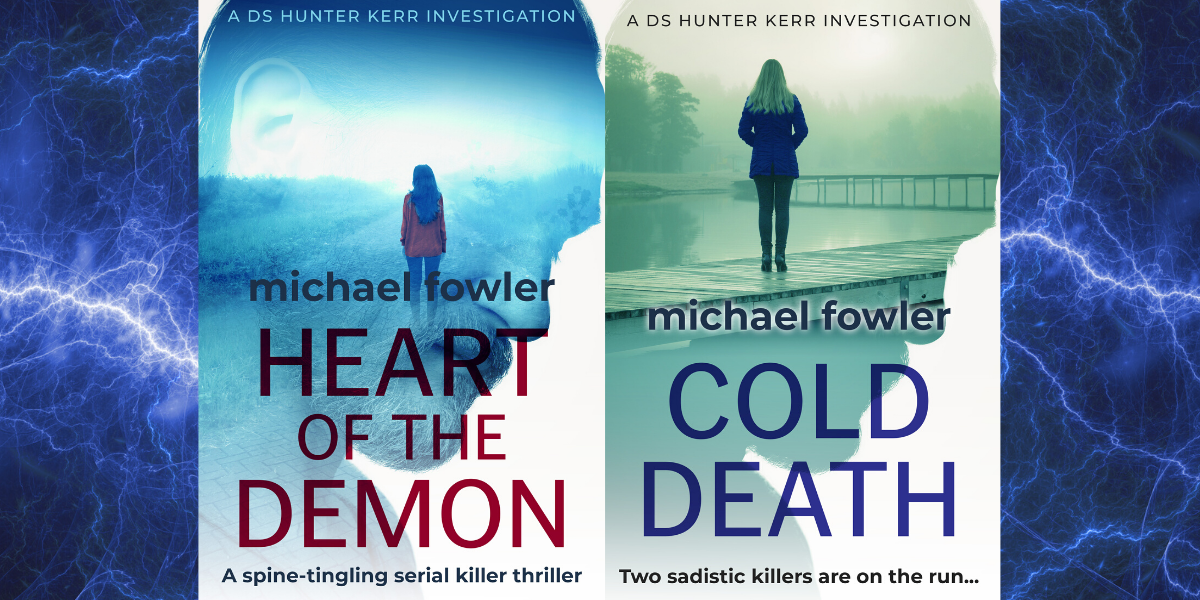
Click here to order HEART OF THE DEMON – the first book in the series – now!

COLD DEATH – the second book in the series – is available to pre-order.


Author Q&A with Keith Moray

Hi Keith. Welcome to the Sapere Books blog!

Can you tell us a little bit about what first inspired you to write the Torquil McKinnon Investigations?

Well, I have been a crime fiction reader most of my life and always wanted to be a crime writer. I began writing children’s stories for The People’s Friend when I was a medical student at the University of Dundee. Then when I qualified, I wrote for the Kingston-upon-Hull’s dial-a-bedtime story service, until I had to give it up and focus on my medical practice. One of my forebears was a piper, and I thought that if I ever did write a crime novel it would have a piper in it. The germ of an idea was there.

A few years later I started having bagpipe lessons from a good friend and golf partner, who happened to be a retired pipe major. So, actually playing the pipes seemed to germinate the idea. Then we went on a family holiday to Tobermory in Mull and the whole thing seemed to unfold before me. A remote Outer Hebridean island with a primitive golf course and the smallest police force in the country, the Hebridean Constabulary. The ingredients were there, it just took a visit to a Highland Gathering on the mainland and I started to plot The Gathering Murders.  The characters grew on me and the series just developed.

What was your reason for creating the fictional island of West Uist instead of choosing a real Scottish location?

I suppose I just fell into it. I had written several westerns long before I ever went to the USA, so I just started writing, amalgamating my own memories into my own wee island in much the same way that I had created towns and counties in the Southwest of America. I wanted West Uist to be Scotland in miniature. This is why the terrain varies, there is a great variety of surnames (far greater than in the Outer Hebrides) and I have introduced a different theme with each novel.

What are your typical writing habits? Do you work on a set schedule each day? Do you plan thoroughly before you begin writing?

I am an opportunistic writer, so I write when I have done all of my essential chores for the day, such as looking after my small practice. I am also a medical journalist and have a written a weekly column in the local newspaper for 38 years, so I can identify with Calum Steele, the editor of the West Uist Chronicle. Because I used to write short children’s stories and now write a newspaper column, I tend to write in short segments. It has become part of my writing psyche. This suits my opportunistic method of working.

I carry a notebook everywhere and am forever jotting snippets down, to be incorporated later. I plot late at night in longhand. When I am actually writing then it will be on the computer, and that can be literally any part of the day.

I do plan it out and have never felt brave enough to just type and see where the story goes. I have  a method of writing a novel that seems to work for me. A crime novel has so many elements to it: main plot, subplots, clues and red herrings. I work out each chapter and have a fair idea of what has to happen in each one.

What part of the writing process do you find most difficult?

Plotting is never easy. I go around asking myself ‘what if?’ That’s why I need my notebook handy. I would say it is 80 per cent of the work in writing the novel.

When I am working on the plot, I often play the pipes like Torquil (except he is a virtuoso and I am so abysmal that I am forbidden from playing if there is anyone else in the house). And I also putt golf balls across the landing into my study or chip balls onto the settee. Strangely enough, it facilitates ideas.

In terms of the visceral structure of the novel when I actually write, the middle part is the hardest for me. The first part is scene setting, putting people in the right places and ensuring that the crime happens early on. The middle part is about planting the clues, the red herrings and keeping the subplots going without letting them take over. The end part I already know what should happen, so the middle is about ensuring that you have put everything in place so that you can build it up for the final denouement.

Do you always know ‘who done it’ before you start drafting each novel?

Yes, in virtually all of my books I know who, where, when and how. But, I have to admit that I have on one occasion changed my mind while well into the story. It seemed to work, but I’m saying no more!

The sixth book in the series is due out soon – will that be the end for Torquil, or do you have ideas for more mysteries?

Gosh, I am honestly not sure. I would like to think there will be more, but I am working on other projects at the moment, which I am excited about. Torquil may not have finished with me yet.

And finally – tell us something surprising about yourself!

One of my hobbies is conjuring and I am a paid up member of the International Brotherhood of Magicians.


Click here for more information on Keith Moray’s Torquil McKinnon Investigations series.

 THE DEADLY STILL, book five in the series, is available to preorder now.

GET THE DEADLY STILL HERE!

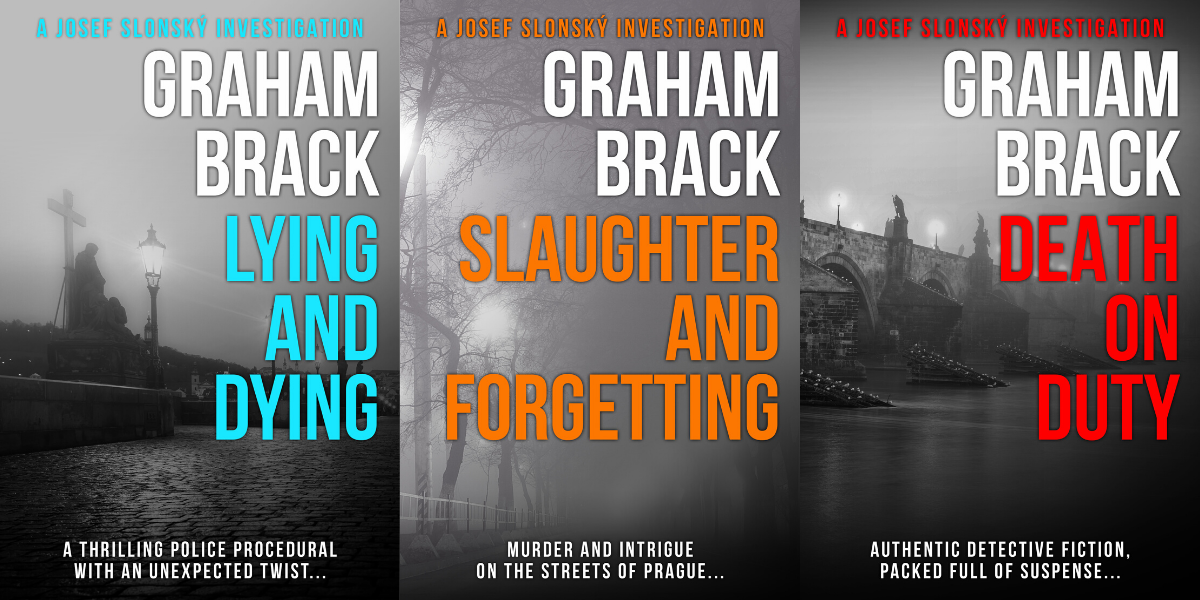
Introducing Josef Slonský by Graham Brack

Graham Brack is the author of the JOSEF SLONSKÝ INVESTIGATIONS series.

When I started writing the book that became Lying and Dying, I didn’t have a detective in mind. There would have to be one, of course, and because I wanted it to be realistic he would have to be part of a team, but the character of Slonský was not central to my thinking.

I can remember precisely when he appeared. My brother and I were at the National Theatre; during the interval I described the story, and together we arrived at the notion that a senior Czech detective must have worked under Communism and would therefore probably have some skeletons in his closet. Moreover, everyone he knew would have similar problems, so it would be understandable if he had little or no respect for anyone of his own vintage.

The world-weary detective is a lazy trope, so I made Slonský enthusiastic about his work. He loves his job. He believes it matters, and he has no patience with corrupt colleagues. And then it came to me that the biography I had proposed for him, in which he spent around half his career under Communism, and half after it, meant he must be coming up to retirement. That provided a rich vein of character analysis, because he dreads retirement; there is nothing else in his life, so he wants to go on as long as he can, and the fact that his bosses know that gives them the only hold they have over him.

Thus, Captain Lukas is able to get him to take a trainee officer, Jan Navrátil. Slonský has had partners before, but they quickly apply for transfers. Navrátil can’t do that. He is a fast-tracked police academy officer with a law degree, fierce intelligence, a strict moral code and an open and trusting nature. Slonský comes to realise that Navrátil is incorruptible and probably always will be, and that when he is gone Navrátil has the potential to reach the very top of the tree – provided he listens to Slonský’s sage advice. Shaping Navrátil’s police career will give Slonský the nearest thing he can have to a legacy. Later they are joined by a woman officer, Kristýna Peiperová, who doesn’t have a law degree but balances that by knowing much more about how the world works. Slonský enjoys training her too, and he honestly does not know which of them will get the top job first, but he doesn’t care. Male or female doesn’t matter; all he wants is someone who can bring about the clean, efficient police force he wanted to join.

I sat down to write one Saturday morning, and after a page or so the police car pulled up and Slonský climbed out. Battered, inelegant, disinclined to waste any effort, cunning, cynical and sharp-tongued, he appeared in my mind’s eye and somehow took over. A story in which he was a necessary figure but not the star was seized and made into a section of his biography. Whenever he walked into a scene, it livened up, and I found if I just listened to him he told me so much about himself.

He doesn’t eat well, but he eats a lot. He is a typical Czech, he believes, devoted to beer and sausages. He lives in a dingy one-room flat, so he spends most evenings in bars. He was married, but his wife left him, and he took it for granted that they were divorced, which proved not to be the case. He believes that nobody can work on an empty stomach, that you should never miss a chance to eat or pee (because you don’t know when the next one will come) and that not everything about the old days was bad.

His name was derived from the Czech word slon, meaning elephant. It seemed appropriate, given his size and his memory, and it was gratifyingly similar to the Czech surname Slánský.

After Lying and Dying was published, a woman wrote to me to say that Slonský was appallingly non-PC in his language but his instincts were good; he was meticulously fair, and therefore free from prejudices such as sexism and racism; and, she said, while she wouldn’t invite him to dinner, if she were ever murdered she would want him to be investigating her death. I think he would allow himself a smile if he heard that.

Click here to order LYING AND DYING now!

Creepy Thrillers to Read This Halloween

We have a range of hair-raising titles to help you get your fear fix this Halloween! Read on to find out more about some of our spookiest stories…

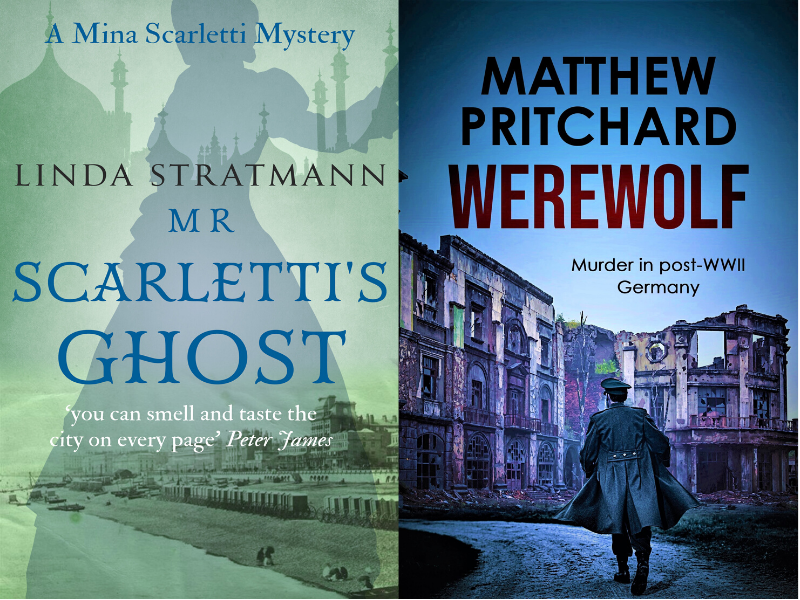
Werewolf, Matthew Pritchard

Werewolf is an atmospheric urban thriller set in post-WWII Germany. While running a police training school as part of the government’s denazification policy, Scotland Yard’s Detective Silas Payne is pulled into a grisly mystery. Two corpses are found in a requisitioned house, and another man is soon killed – this time a British soldier. Everyone blames the ‘werewolves’, a dangerous Nazi resistance force. But Silas believes that a new, depraved serial killer might be at large…

Heart of the Demon, Michael Fowler

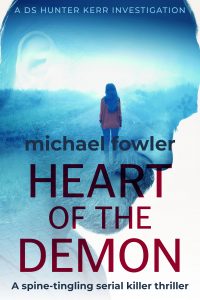
When Yorkshire is terrorized by a deranged murderer, Detective Sergeant Hunter Kerr steps in to unravel the gruesome plot. A fourteen year-old-girl has been brutally slaughtered, and a bloody playing card has been left beside her body. As his investigation proceeds, Kerr makes another shocking discovery: the mummified remains of a teenage girl, seemingly killed in the same ritualistic fashion. Since the murders were committed more than a decade apart, it seems that the killer is biding their time. And it’s up to Kerr to untangle their deadly game before they strike again…

Mr Scarletti’s Ghost, Linda Stratmann

In Victorian Brighton, those desperate to communicate with their lost loved ones are rushing to psychics and mediums. But local author Mina Scarletti is sceptical, believing psychics to be unscrupulous fortune hunters. However, at her mother’s insistence, she takes part in a séance in an attempt to reach her recently deceased father. Still doubtful, Mina decides to investigate the spiritualist – the revered Miss Eustace. But will Mina be able to expose her as a fraudster? Or will Mr Scarletti’s ghost return from the grave…?

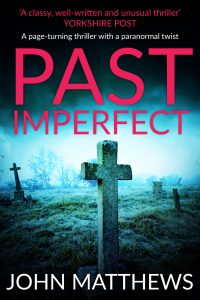
Past Imperfect, John Matthews

In 1963, a boy is abducted and killed in the French countryside. A man is convicted of the murder, but young policeman, Dominic Fornier, is convinced that they have caught the wrong person. In London 30 years later, a boy loses his parents in a car accident and is left in a coma. And when he wakes, he is haunted by strange dreams of a past that isn’t his. When Fornier hears of a possible link between the two boys, he plunges into a desperate race against time to catch a vicious killer and right the wrongs of the past…