Congratulations to Linda Stratmann!

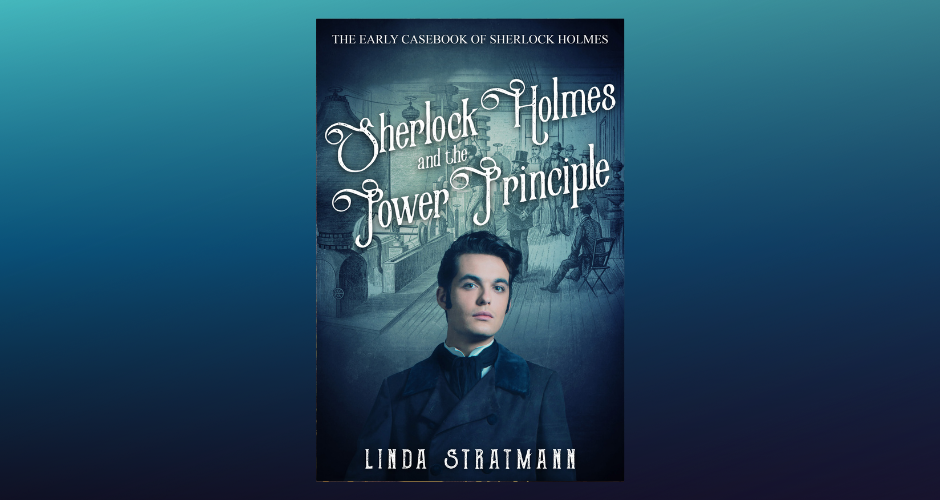
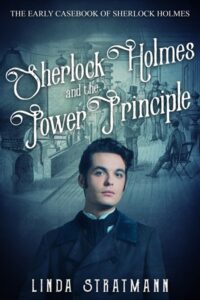
Congratulations to Linda Stratmann, whose absorbing Victorian mystery, Sherlock Holmes and the Power Principle, is out now!

Sherlock Holmes and the Power Principle is the ninth book in the Early Casebook of Sherlock Holmes series.

1878

Sherlock Holmes and his good friend Mr Stamford are close to completing their education at London’s St Bartholomew’s Medical College, and Holmes is keen to begin a serious career as a detective.

So when a solicitor contacts him about a new case, he quickly accepts.

Mr Ineson is concerned for his client, the widow Mrs Beauregard, who is considering investing most of her considerable assets in a new company called Baumann Motors Ltd.

In an age of industry, machines are rapidly transforming the Victorian world, and fortunes can be made – or lost – by speculating on the latest enterprise.

The Baumann motor promises to change the world transport, make manufactured goods cheaper and allow trains to run without the need for coal.

But it has not been tested, and Ineson is worried that Mrs Beauregard has fallen for the charm of its inventor.

Holmes and Stamford attend a demonstration under the pretence of being interested in investing to try and discover if the motor is as miraculous as it sounds. But soon they are involved in an even deadlier mystery…

With Holmes’ reputation as a highly intelligent and intuitive detective at stake, can he discover the truth about the highly secretive company? Or will this case prove too challenging for even the most astute of men?

Sapere Books Signs Three New Sherlock Holmes Mysteries by Linda Stratmann

We’re thrilled to announce that we have signed three new instalments of the Early Casebook of Sherlock Holmes series by Linda Stratmann.

The series follows a young Sherlock Holmes and his acquaintance, medical student Mr Stamford, as they unravel mysteries and unmask devious killers.

In Linda’s words:

“I am delighted to continue the adventures of a youthful Holmes, before he met Dr Watson. A little about what to expect next: in the Halloween-themed Widow’s Key, an unexpected legacy creates a furore, with deadly mysteries to uncover.  In The Aeronauts, murder is sky-high, and escaped balloons cause peril both aloft and below. The Ghost of Lodge Thirteen finds Holmes and Stamford in Brighton. Richard Scarletti has been accused of murder, and his sister Mina (from the Mina Scarletti Mysteries) and Holmes form a powerful detective alliance.”

To keep up to date with Linda’s newest releases, visit her website and sign up to her newsletter.

Reflections on the Sapere Books’ Writers’ Retreat 2024

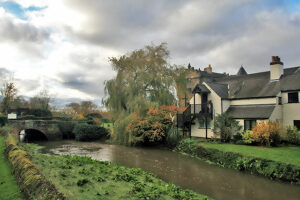
The third Sapere Books’ Writers’ Retreat took place at The Priest House Hotel, Castle Donington between the 28th and 31st of October this year.

Adele Jordan, author of the Kit Scarlett Tudor Mysteries and the Shadow Cutpurses Tudor Thriller Series, helped to organise a full programme over the four days.

In Adele’s words:

“For a lot of writers, it’s a solitary world. Whether you are struggling to complete your manuscript or are in love with your story and find it hard to step away, it can’t be denied that for many writers a lot of time is spent in a staring contest with your computer screen, and sometimes we need to step away from that screen.

“For the last three years, a group of authors from Sapere Books have come together to create their own writing retreat, and this year saw our biggest yet. Fourteen authors, who write across various historical genres, came together to talk about all things writing.

Photo of The Priest House Hotel by Andy Stephenson, used under the Creative Commons Licence

“From romance to crime, we plundered the depths — from the importance of accuracy in military fiction, to how we plan and approach clue-filled detective stories. What transpired was not only a shared enthusiasm for our craft, but the reassurance we sometimes need that we are not alone — that there are others out there with the same passion who are keen to inspire and be inspired themselves.

“This year, we had some special sessions led by writers in the group. Highlights included an insightful look into the editing process by Neil Denby, author of the Quintus Roman Thrillers Series, and a debate on the accurate use of poisons in fiction and the importance of research by Linda Stratmann, author of The Early Casebook of Sherlock Holmes Series.

Adele Jordan

“Amy Durant, Sapere Books’ Publishing Director, led a popular Q&A session with authors attending the retreat. We also covered what makes a good title, how to grab your reader’s attention from the very first line, the complications around weaving a narrative with more than one viewpoint, and a friendly critique session where people were invited to bring their own work for discussion.

“Following inspiring chats, some political debates, good food and a very comfortable bar, I was delighted to see so many of the writers come away with big smiles on their faces. Thank you to everyone who came this year and to Amy Durant too for sparing the time to talk to us. Here’s hoping next year’s Writers’ Retreat is not only just as good, but the biggest and best yet!”

Some comments from the attendees:

Ros Rendle, author of The Strong Family Historical Saga and the Moondreams House Romances: ‘Thanks to all attendees at the authors’ retreat week for making it so useful and fun. Particular thanks to Adele Jordan for all the organising, the excellent programme and for keeping us on track with such diplomacy.’

Michael Fowler, author of the DS Hunter Kerr Investigations and Dr Hamlet Mottrell Investigations: ‘[The retreat] has turned the plot of my next book completely around. And it was nice to catch up with colleagues from previous retreats, as well as meet up with new ones.’

Linda Stratmann, author of The Early Casebook of Sherlock Holmes Series: ‘The sessions really stimulated the little grey cells of the brain, and I got some insights which had me rushing off to do some writing!’

C V Chauhan, author of the Inspector Sharma Thrillers Series: ‘It was a fantastic four days! Thanks everyone and a big thank you to Adele for leading and managing the four days so well.’

Sherlock Holmes and the Cabinet of Wonders is Out Now!

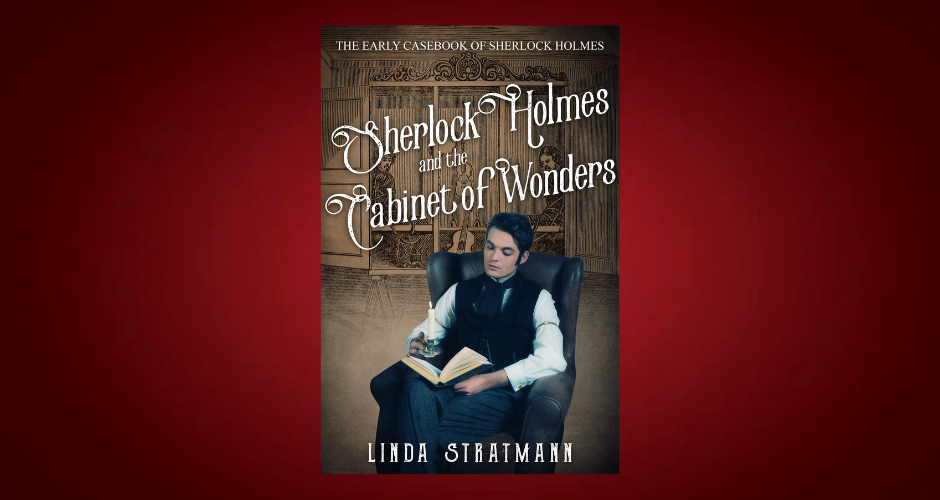
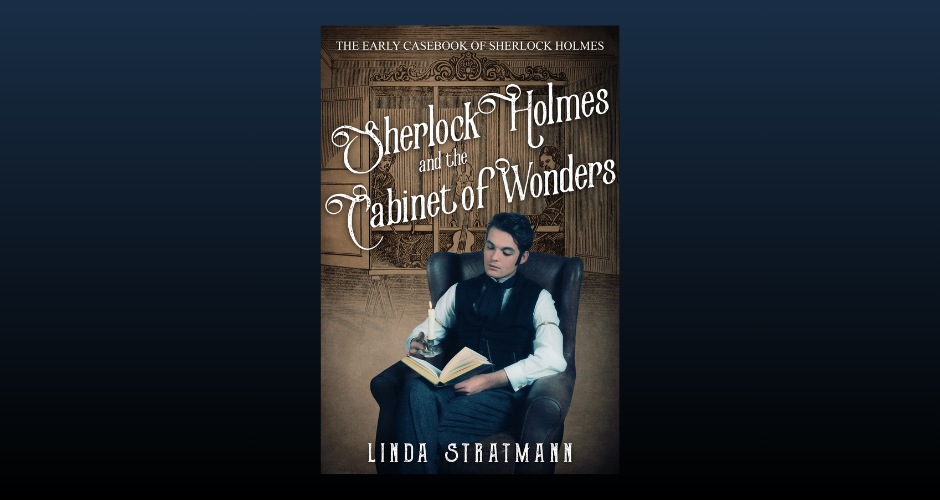
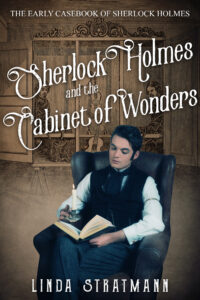
Congratulations to Linda Stratmann, whose absorbing Victorian mystery, Sherlock Holmes and the Cabinet of Wonders, is out now!

Sherlock Holmes and the Cabinet of Wonders is the eighth novel in the Early Casebook of Sherlock Holmes series.

1878

Sherlock Holmes is in a slump of despair and self-doubt following his recent encounter with his brother Mycroft and his good friend Mr Stamford is determined to snap him out of it.

When Stamford hears of a new show being put on at the Egyptian Hall Theatre, he brings Holmes with him for a night of diversion.

But for Holmes, the outing leads to something much more stimulating…

A few days later, a corpse is found inside the cabinet used for one of the conjuror’s acts at the theatre, and at first it appears the death was accidental.

But Holmes soon realises it was the result of something more sinister. And lurking beneath the surface of the magician’s code of conduct is a murky world of false identities and professional jealousy.

There are secrets in the world of illusion that people would kill to keep hidden…

And if they are not careful, Holmes and Stamford could be the next targets…

Yorick vs Psycho, or The Child in a Box by Linda Stratmann

 Linda Stratmann is the author of the Mina Scarletti Mysteries and the Early Casebook of Sherlock Holmes series.

One of the great joys of historical research is discovering untold and fascinating true stories. This is one I found during my reading for Sherlock Holmes and the Cabinet of Wonders, which inspired part of the plot.
On 8 January 1878 an unusual statement was printed on the front page of The Scotsman newspaper. The title was ‘YORICK — WHAT IS IT?’ and the author, announcing ‘challenge accepted’, was one of the most accomplished and famous magicians of his day. John Nevil Maskelyne was a mechanical genius, the constructor of a whist-playing automaton called Psycho. He was the lessee of the Egyptian Hall theatre in Piccadilly, known as ‘England’s Home of Mystery’, where he performed illusions and debunked spirit mediums. He was also, judging by the tone of the piece in The Scotsman, extremely annoyed. His ire was aimed at two men: William Alexander, under whose management a rival of Psycho called Yorick was being exhibited, and the conjuror Boz who took the stage.

After briefly holding the licence of the York Hotel in Weston-super-Mare, Alexander had decided on a new career, promoting conjurors and illusionists. It is not known what previous experience he might have had, but he brought to his profession the ability to manufacture glowing endorsements, shameless theft of other men’s material, and a complete ignorance of the laws of libel.

‘Boz’ was born William Arthur Weston, in Brighton, in 1847. His father was a gunsmith and his mother a dyer. In common with many youthful enthusiasts of the art of conjuring, he had become fascinated with the American Davenport Brothers who toured England in 1864-5, bringing with them a miraculous cabinet. When the brothers were securely tied in the cabinet, all kinds of manifestations were produced, both musical and visual, which many onlookers believed to be the work of spirits. Weston, convinced that their act was trickery, determined to work out how it was done. He chanced to meet George William Buck, a skilled and successful professional conjurer born in 1836, who worked under the name Herr Dobler. The two discovered a mutual interest and pooled their information. After collaborating to perform an exposé of the Davenports’ methods, Dobler hired Weston as his assistant, and they went on tour. In 1866, however, Weston’s father died, and he was obliged to return to Brighton and the trade of dyeing. The flame of ambition still burned, and Weston hoped for an opportunity to take to the stage again.

This eventually came about when he met William Alexander, who by 1875 was managing the career of Herr Dobler. Coincidentally, Alexander had just spotted a new money-spinner, and all he needed was a man with some stage experience who could play a part and was happy to comply with his unusual promotional methods. He terminated his arrangement with Dobler and engaged Weston, who was now advertised as ‘Boz’.

Before long, posters were appearing under the heading ‘Alexander’s Sensations’, advertising Boz and the astonishing Yorick, a whist-playing automaton. The glowing reviews of this extraordinary device were probably written either by Alexander or Weston. Herr Dobler was especially shocked to see that the advertisements were using his playbills and lithographs and were posted in towns where he was appearing. Worse still, Weston was now claiming that he alone had devised the method of exposing the Davenports, and taught it to Dobler, who had been profiting ever since from his work. When Dobler objected, he was accused of being an impostor, taking the name and reputation of another man, a conjuror named Ludwig Dobler who had died in 1864.

Dobler sued both Alexander and Weston for libel and they made a counterclaim against him. The case came before the Bristol assizes in July 1877, where Dobler’s counsel pointed out that English conjurors often performed under foreign names to enhance their attractiveness, ‘for foreigners were supposed to be more clever than English people.’ The case was stopped with the agreement that the imputations would be withdrawn on both sides, and the offensive advertisements not repeated.

Boz and Alexander had suffered little from this spat. They continued their career as before, the advertisements and reviews becoming even more exuberant, the claims more fantastical, and the audiences larger. Their confidence was misplaced, since they had reckoned without John Nevil Maskelyne.

Maskelyne, born in 1839, had been apprenticed to a watchmaker. He became fascinated by stage illusions and seances when he was asked to repair a mysterious mechanical device. The owner was unusually coy about describing its function, and Maskelyne realised that it was used by mediums to fake spirit rapping. After he and his friend George Cooke successfully replicated the Davenport Brothers’ act without the aid of spirits, they commenced a career as conjurers and illusionists and first appeared at the Egyptian Hall in 1873.

Maskelyne had spent more than two years devising and assembling his whist-playing automaton Psycho, the workings of which were a closely guarded secret. He was therefore highly displeased to see Alexander’s advertisements claiming that the young pretender Yorick, which as illustrated on a handbill appeared identical to Psycho, was superior in both construction and operation. However, he had strong suspicions that Yorick, whatever wonders it might perform, was not an automaton.

Yorick and Boz had commenced their glittering career early in 1877 at Weston-super-Mare. Yorick, billed as ‘the most perfect automatic clairvoyant in the world’ was said not only to play whist but also perform mental arithmetic, read, write and spell. It could even, so it was claimed, submit to the test of a naked sword being passed through its body in four distinct places, and being taken to pieces in full view of the audience. There is no evidence that these tests were ever applied.

Yorick moved on to Bristol, the advertisements now boldly claiming that Psycho had been superseded. The tour was in full flow, with bookings pouring in: Liverpool, Manchester and Leicester were to follow.

It was during the Edinburgh appearances in December 1877 that Maskelyne’s patience expired. He and Cooke published newspaper announcements cautioning the public against a ‘gross imposition’ by conjurors exhibiting ‘a trick consisting of a child concealed in an Octagon Box about 24 inches wide and 12 inches deep upon which the bust of a figure is placed’. It was the child, not machinery, that caused the figure to move. Maskelyne did not mind sincere imitations but objected to crude copies said to be superior to Psycho, in an attempt to injure his hard-earned reputation.  At the Egyptian Hall, members of the audience were invited to come up onto the stage and examine the interior of Psycho and the box on which it sat, but, he said, the exhibitors of ‘spurious imitations’ could allow no-one to examine theirs.

On 4 January, The Scotsman published Alexander’s response. He claimed that audience members were permitted to examine Yorick, which he insisted was a genuine automaton on the same principle as Psycho. He challenged Maskelyne and Cooke, who he now alleged were simply the exhibitors of a figure made by another man named Clark [sic], to disprove his claims. The wager was worth £100, the loser to hand this sum to the Edinburgh Infirmary.

Maskelyne eagerly accepted the challenge in his statement of 8 January. He had always acknowledged that a friend of his called Clarke had assisted with the theory and early development of Psycho, but he alone had built the mechanism. Crucially, he now revealed the whole of Yorick’s secret. For the last two years, copies of Psycho had been made and sold in London. Although claimed to be genuine automata, they were designed so that their movements could be controlled by a child concealed in the apparatus. Mr Alexander had purchased one and engaged a little boy to work it, and Mr Weston, as Boz, to present it to the public. It was then advertised as the most wonderful automaton in the world, costing £1,000 to construct. During the performance, Boz told his audience that Yorick operated on the same principle as Psycho but was superior. He even claimed that he was the inventor and Mr Maskelyne the imitator.

Maskelyne now issued a devastating counterchallenge. He proposed to send a representative to Edinburgh who would spare no labour or expense to prove that he had just cause for his caution to the public. He offered to place £200 with a committee of Edinburgh gentlemen, to be paid to the infirmary if his statement was shown to be untrue. If it was true, then Mr Alexander was to pay £100 to the infirmary. The loser of the wager was to pay all the expenses of obtaining the evidence and advertising the result in The Scotsman.

William Alexander now knew that the man he had taunted was willing to do everything in his considerable power to defend his reputation. Maskelyne repeated his challenge, which was never accepted.

Alexander continued to expand his operation. He obtained a second figure worked by a child, which he presented as the original Yorick. In February 1878 he had a new sensation to announce. Extraordinarily, he had partnered again with Herr Dobler — the same man who had previously sued him for libel — who would be appearing with a marvellous automaton, similar to Psycho, dressed as a king and called Rex. This association did not last long. Dobler returned to his former act and sued Alexander for unpaid wages.

The performances of Boz and Yorick continued, the advertisements now carefully avoiding libel, but the secret was out, and bookings dried up before the end of 1878.

The magical career of Arthur Weston was in decline. On 1 April 1880, in Dunfermline where he had an engagement as ‘Signor Boz’, he was found dead in his lodgings. He had tied a piece of wetted silk (variously described as a handkerchief or a cravat) about his neck, and twisted it tightly with a poker, thus garrotting himself, a highly unusual form of suicide. He was thirty-three years of age and left a widow and two children.

Herr Dobler continued to perform as a popular and respected conjuror. He died in 1904. William Alexander remains an obscure figure. It is to be hoped that he decided to abandon his dubious career as a promoter of talent.


Sources

Family records on Ancestry.co.uk

White Magic: The Story of Maskelynes by Jasper Maskelyne

Newspaper reports and advertisements, principally The Scotsman and the Era*.

Also the Western Daily Press and Glasgow Evening Citizen.

*Regarding the Era’s report of the libel trial, on Sunday, 5 August 1877 p. 4, titled ‘Rival Conjurers’. Some statements are untrue, when checked against other records. Weston’s father was not a dyer but a journeyman gunsmith and William Alexander was licensee of the York Hotel under that name.
Sherlock Holmes and the Mycroft Incident is Published Today

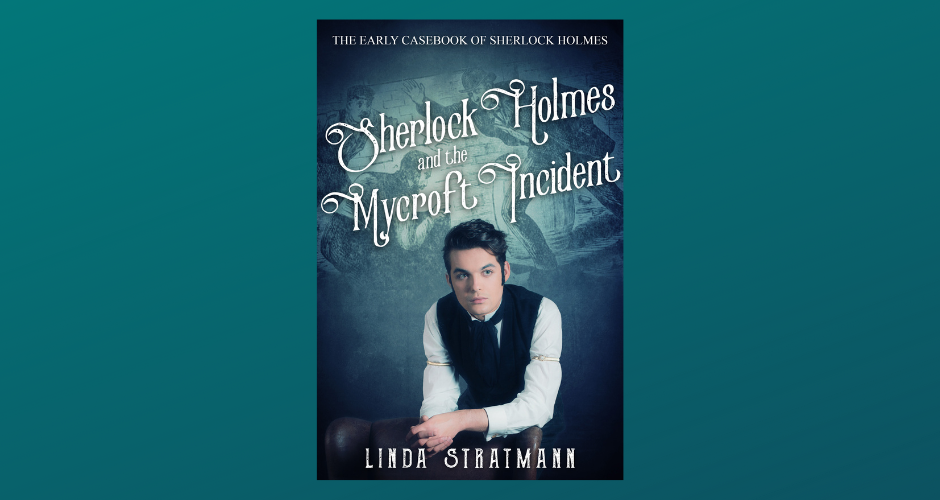
Congratulations to Linda Stratmann, whose absorbing historical mystery, Sherlock Holmes and the Mycroft Incident, is published today!

Sherlock Holmes and the Mycroft Incident is the seventh Victorian crime thriller in the Early Casebook of Sherlock Holmes series.

1877

A trusted government courier, Anthony Cloudsdale, has gone missing after delivering some secret documents.

The police are questioning everyone who works at Whitehall, and their attention has been drawn to a young clerk, Joshua Emmett, who is in need of funds and might have been vulnerable to bribery.

Emmett is an old schoolfriend of Mycroft Holmes and Mycroft approaches his private-investigator brother, Sherlock Holmes for help.

Holmes and Mycroft collaborate with the assistance of Holmes’ trusted friend Mr Stamford, but each time they discover new information about Cloudsdale’s disappearance, it appears to provide evidence of Emmett’s involvement.

And when a body is found in the Thames, Emmett is arrested.

But is the body Cloudsdale’s? Can Sherlock prove Emmett’s innocence?

Or is Mycroft trying to protect a guilty man…?

Sapere Books Sign New Early Casebook of Sherlock Holmes Books by Linda Stratmann

We are thrilled to announce that we have signed three new instalments of the Early Casebook of Sherlock Holmes series by Linda Stratmann.

Book 1 in the Early Casebook of Sherlock Holmes series

The series follows the adventures of Sherlock Holmes and his acquaintance Mr Stamford during their years at St Bartholomew’s Medical College.

In Linda’s words:

“I am delighted to have signed with Sapere for three more books in the Early Casebook of Sherlock Holmes series, my chronicle of his youthful adventures.  In these next three we will meet a young Mycroft, enter the world of theatrical illusions, and encounter a devious confidence trickster with a mysterious device.

“My grateful thanks are due to the dedicated team at Sapere Books, for their invaluable support, and the friendly encouragement of the growing family of Sapere authors.”

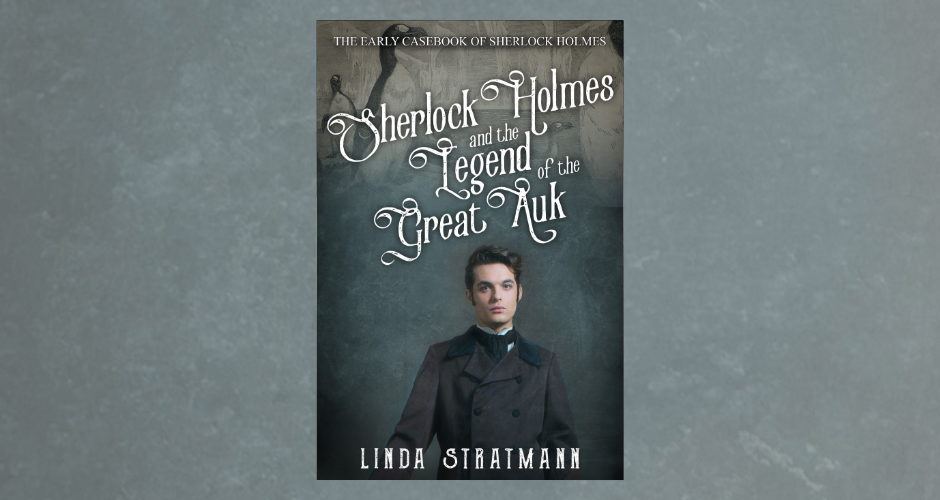
Sherlock Holmes and the Legend of the Great Auk is Published Today

Congratulations to Linda Stratmann, whose atmospheric historical mystery, Sherlock Holmes and the Legend of the Great Auk, is published today!

Sherlock Holmes and the Legend of the Great Auk is the fifth Victorian crime thriller in the Early Casebook of Sherlock Holmes series.

London, 1877

The unveiling of a new specimen of the extinct Great Auk leads to accusations of fraud against the British Museum and a ferocious attack on the exhibit by ornithologist Charles Smith.

Sherlock Holmes is tasked with saving the reputation of the museum, but before long, Smith is found murdered.

Police think it was a random robbery gone wrong but when Holmes examines the crime scene, he is sure there is more to it.

Aided by his loyal friend Mr Stamford, Holmes is determined to discover if the museum has something to hide.

Is there more to the legend of the Great Auk? Why has this exhibit attracted so much controversy?

Could more lives be in danger…?

Five Years of Sapere Books

We are thrilled to be celebrating five years in business this month and we are incredibly grateful to all the writers, agents and literary estate holders who have helped us bring to market such a vibrant and diverse list of books.

Since launching Sapere Books in March 2018, our list has grown to include over six-hundred books by over one hundred authors. We have sold over 3 million books to date with 500 million pages read through Amazon’s Kindle Unlimited program.

In 2019, we employed our first full-time staff member, Natalie Linh Bolderston, who now holds the title of Assistant Editor, and in 2020, Matilda Richards and Helen Jennings both also joined our editorial team. They have all been essential to our ongoing success and we are over the moon that they are continuing the journey with us as we celebrate our first big milestone.

In 2020, we launched our non-fiction list, which includes classic works by authors such as E R Chamberlin, Sir Peter Gretton and John Bowle. And we are now pleased to announce that we are also hiring another staff member to help look after our burgeoning military history and military fiction list.

Since launching, we have focussed primarily on fiction, particularly historical fiction and crime fiction, and in 2021 we created our first historical writing contest, asking for entrants to submit a series outline loosely based on briefs we set. The response was so strong that as well as signing up five prize-winners we also signed ten more authors from the shortlisted entries.

We have always been keen to foster a community among our authors. In 2020, to combat some of the isolation due to the pandemic, we started running weekly Zooms for our authors to join and chat about their writing. These have become a valuable part of our ethos and we want to continue to make our authors feel welcomed, valued and part of the Sapere Books family.

We are also proud to announce that we have been certified Carbon Neutral since 2021 and we have created our own Sapere Books forest, planting a tree for every author that we work with.

We look forward to continuing to build strong relationships within the writing community and to publishing more brilliant genre fiction to capture the imagination of readers. Thank you again to everyone who has supported us and we hope you continue to love our books!

Amy, Richard and Caoimhe


Testimonials from four of the authors who launched with us in 2018:


David Field, author of the Medieval Saga series, the Tudor Saga series and many more 

By one of life’s happy coincidences, I came across Amy Durant just when the publisher that had commissioned my first historical novel series decided to close down. Five years later I’ve published over twenty historical novels with Sapere, with ten more waiting to go.

When you become a member of the Sapere family, you’re all set for a rewarding writing career. If the quality’s right, you know that your latest ‘baby’ will be assured of a good home. They provide great editing, superb covers, expert marketing, regular royalty payments and guaranteed replies to your emails. Sapere authors have indeed been smiled upon by the patron saint of aspiring writers.
 

Keith Moray, author of the Inspector Torquil McKinnon series

Being published by Sapere Books has been a revelation for me as a writer. From the very first moment that Isabel Atherton, my agent at Creative Authors, arranged a chat with Amy Durant it has been a fabulous experience. Over the past five years, I have seen my backlist of fiction published along with five new novels, and I have three more under contract. Every aspect of book production from editing, cover design, publicity and marketing has been handled with flair and efficiency. On top of that, communication could not be easier or quicker, and Sapere Books have created a friendly atmosphere among all of the authors that makes me feel pleased to be part of the Sapere Books family. I could not be happier than I have been with Sapere Books, who are in my opinion without parallel in the publishing industry.

 

Linda Stratmann, author of The Early Casebook of Sherlock Holmes and the Mina Scarletti Mysteries 

Becoming a Sapere Books author is like joining a warm and welcoming family, dedicated to providing the best for authors and readers. An experienced and hardworking team offers a soundly professional service, always on hand for support and advice. The last five years has seen Sapere grow and flourish, but never losing that personal touch.


Elizabeth Bailey, author of the Lady Fan Mystery series

Working with Sapere has been the most enjoyable and rewarding publishing experience in all my thirty-odd years as an author. That my career is flourishing is testament to the care and attention given to every book. Authors are encouraged to interact and support each other, which makes me feel part of a family, parented by the nurturing and talented Sapere team. Long may they reign! Oh, and we all love our covers!


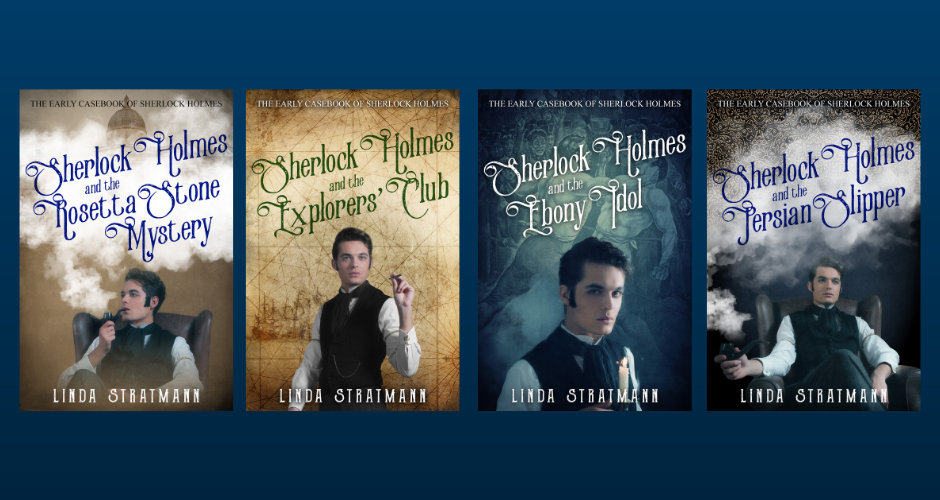
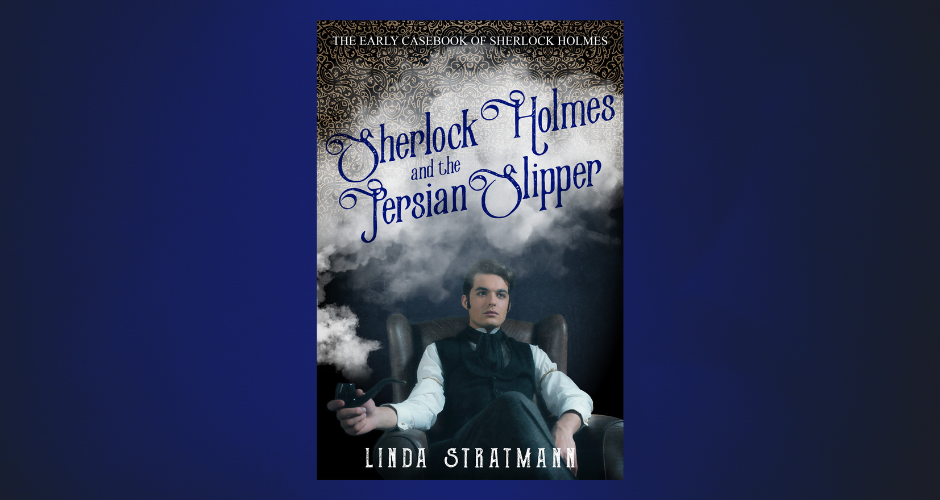
Sherlock Holmes and the Persian Slipper is Published Today

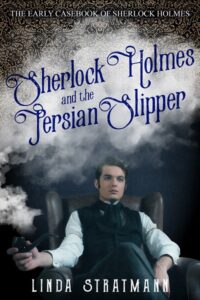
Congratulations to Linda Stratmann, whose eerie historical mystery, Sherlock Holmes and the Persian Slipper, is published today!

Sherlock Holmes and the Persian Slipper is the fourth Victorian crime thriller in the Early Casebook of Sherlock Holmes series.

London, 1877

When medical student Mr Stamford is visited by his cousin, Lily, he is disturbed by the sinister tale she relates.

Lily’s friend, Una, has recently inherited an old country house and settled down to married life in Coldwell, a small Essex village. However, Una’s letters to Lily indicate that she is alarmed by her new husband’s secretive behaviour — especially when she discovers a gun in his drawer, tucked inside a Persian slipper. Fearing for her friend’s safety, Lily asks Stamford to pay Una a visit.

To his dismay, Stamford arrives in Coldwell to find that Una’s husband, John Clark, has been found dead, lying in bed with a gunshot wound in his chest. Close examination reveals that the bullet was fired from Clark’s own gun, through the toe of the slipper.

Stamford loses no time in alerting his acquaintance, Sherlock Holmes — an artful young sleuth — hoping that he can shed some light on Clark’s death.

As Holmes and Stamford begin to probe Clark’s past, it soon becomes obvious that he had plenty to hide. And when Holmes hears of further suspicious disappearances, he starts to search for the connection between the sinister mysteries…

Sherlock Holmes and the Ebony Idol is Out Now

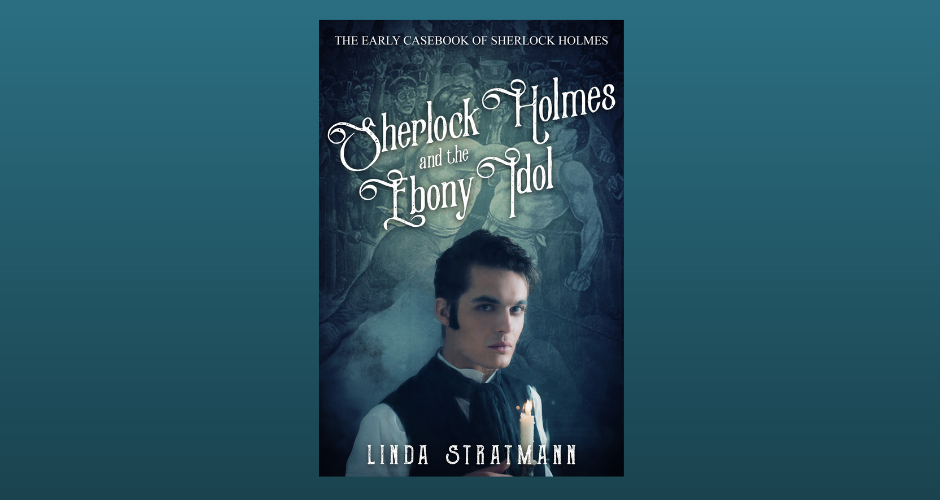
Congratulations to Linda Stratmann, whose gripping historical mystery, Sherlock Holmes and the Ebony Idol, is published today! Sherlock Holmes and the Ebony Idol is the third Victorian crime thriller in the Early Casebook of Sherlock Holmes series.

When a pugilist dies at a local boxing demonstration attended by medical student Mr Stamford and his acquaintance Sherlock Holmes, a post-mortem reveals the death is due to natural causes.

But when the corpse of another boxer is discovered clutching a small wooden carving – the ebony idol – Holmes begins to suspect that sinister forces are at work.

His suspicions seem confirmed when the companions hear about a previous death in the ring.

Tasked by the man’s widow to bring his killer to justice, Holmes and Stamford are swiftly drawn into their most curious case to date.


Click here to order Sherlock Holmes and the Ebony Idol

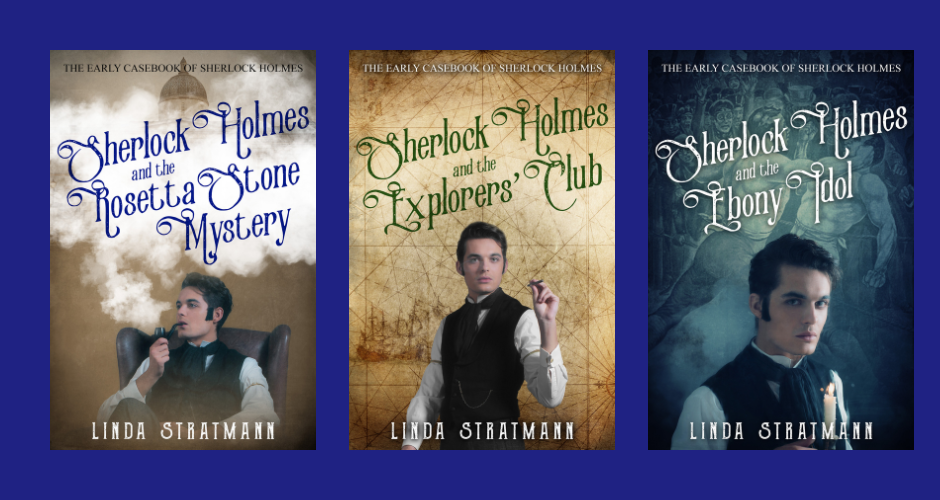
Sherlock Holmes and the Explorers’ Club Published Today

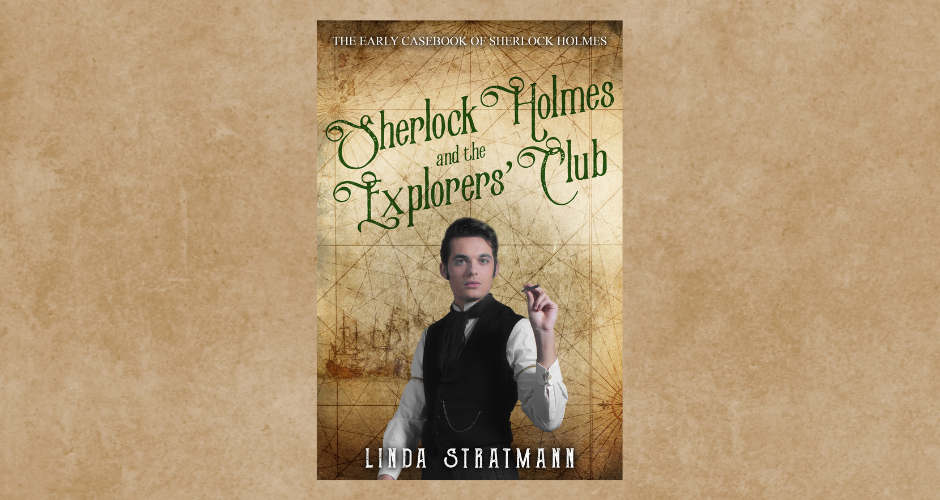
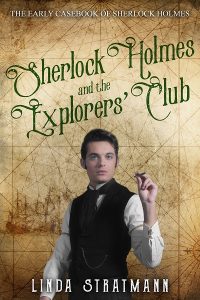
Congratulations to Linda Stratmann, whose fabulous historical mystery, Sherlock Holmes and the Explorers’ Club, is published today!

Sherlock Holmes and the Explorers’ Club is the second Victorian crime thriller in the Early Casebook of Sherlock Holmes series.

When the preserved foot of a dead man with extra toes arrives at St Bartholomew’s Medical College, the students are fascinated. However, despite this unusual feature being reported in the press, the man’s identity remains a mystery.

Intrigued by the puzzle, medical student Mr Stamford calls on his acquaintance Sherlock Holmes — an eccentric but brilliant young sleuth — to help him learn more about the deceased.

With only the man’s boots and a few possessions to examine, Holmes relishes the challenge. He soon finds a coded message hidden inside the man’s purse, which suggests a possible connection to criminals or spies.

Over the course of their investigations, Holmes’ and Stamford’s suspicions are strengthened when they learn of further shocking deaths. It soon becomes apparent that the men who died all belonged to the mysterious Explorers Club — and the lives of the remaining members may also be in danger.

Although the deaths look like accidents, Holmes is convinced that the men were murdered. And with conspiracy and intrigue lurking at every turn, he must now expose the secrets of the Explorers’ Club before the next member meets a grisly end…


Click here to order Sherlock Holmes and the Explorers’ Club

Sapere Books Sign a New Sherlock Holmes Series by Linda Stratmann

Following the publication of Linda Stratmann’s sensational Mina Scarletti Mysteries – Victorian crime novels with a courageous woman sleuth at the centre – editorial director Amy Durant has signed up her exciting new series, which follows a young Sherlock Holmes. The first instalment will be published next year.

In Linda’s words:

“22 year old Sherlock Holmes, realising that his destiny is to be the world’s first and best consulting detective, has abandoned conventional education and come to London to acquire the very particular and unusual skills and knowledge he needs for his chosen career. This is Holmes before Watson: youthful, fiery, determined, energetic, still learning his craft. This is the legend in the making, the story of how young Holmes became the Holmes we know.

“Sherlock Holmes is the epitome of the great detective, iconic and instantly recognisable. It was a tremendous thrill to be asked to create new adventures and explore those periods of Holmes’s life which Conan Doyle left to the imagination. It is a pleasure to continue working with the wonderfully supportive team at Sapere Books, and to be a part of the Sapere family of authors.”


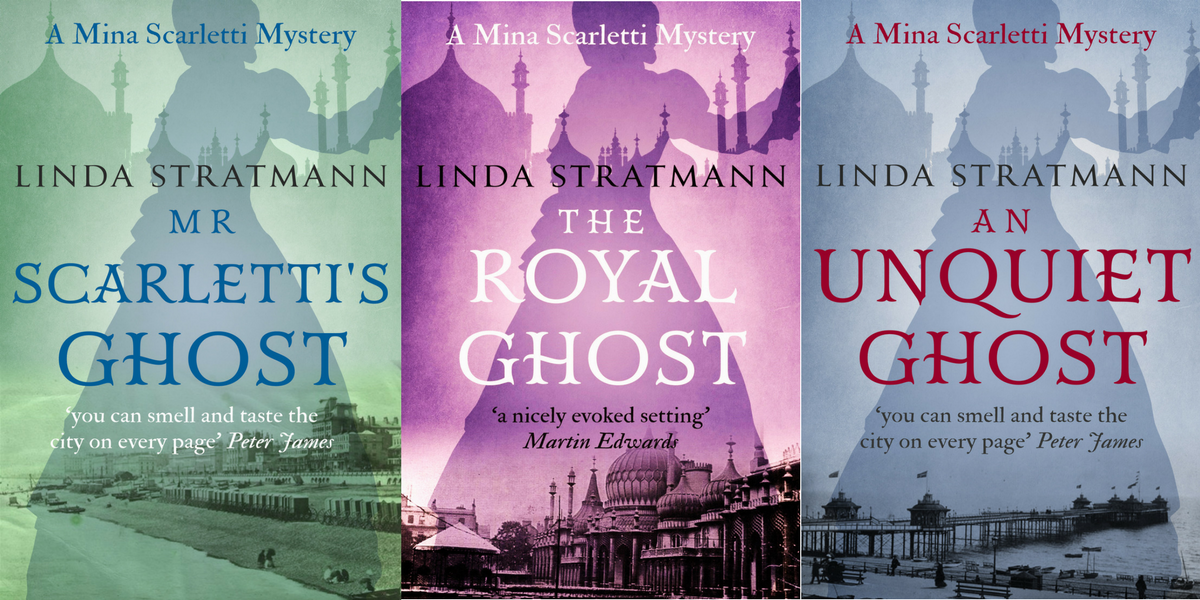
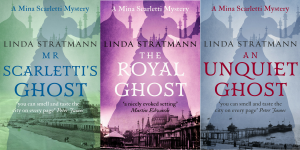
Click here to order MR SCARLETTI’S GHOST

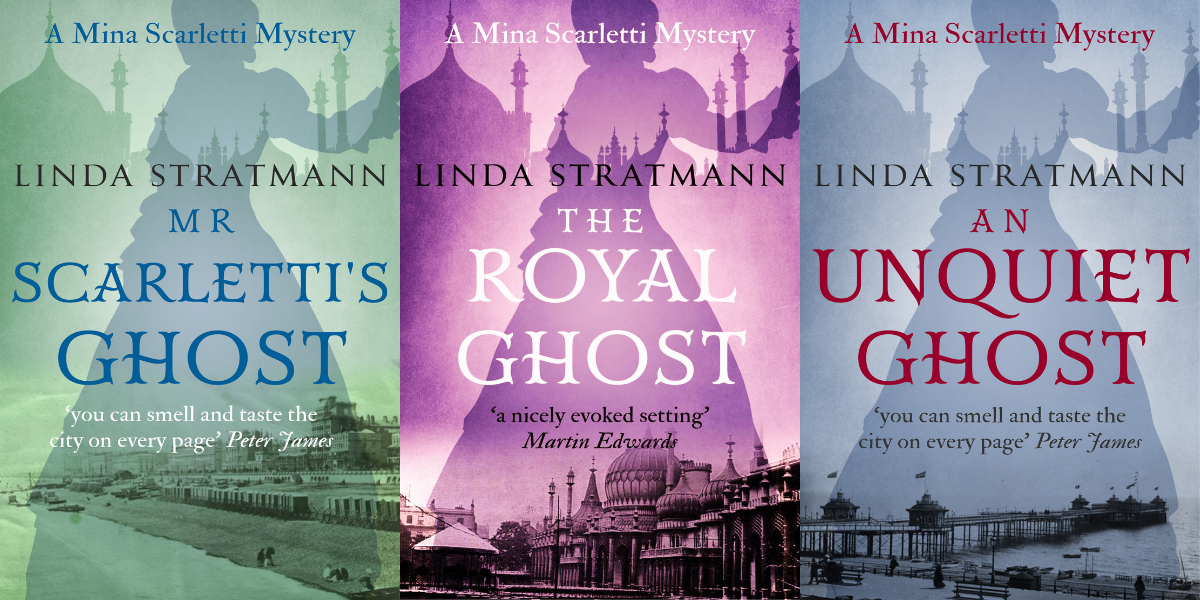
Click here to find out more about the Mina Scarletti Mysteries

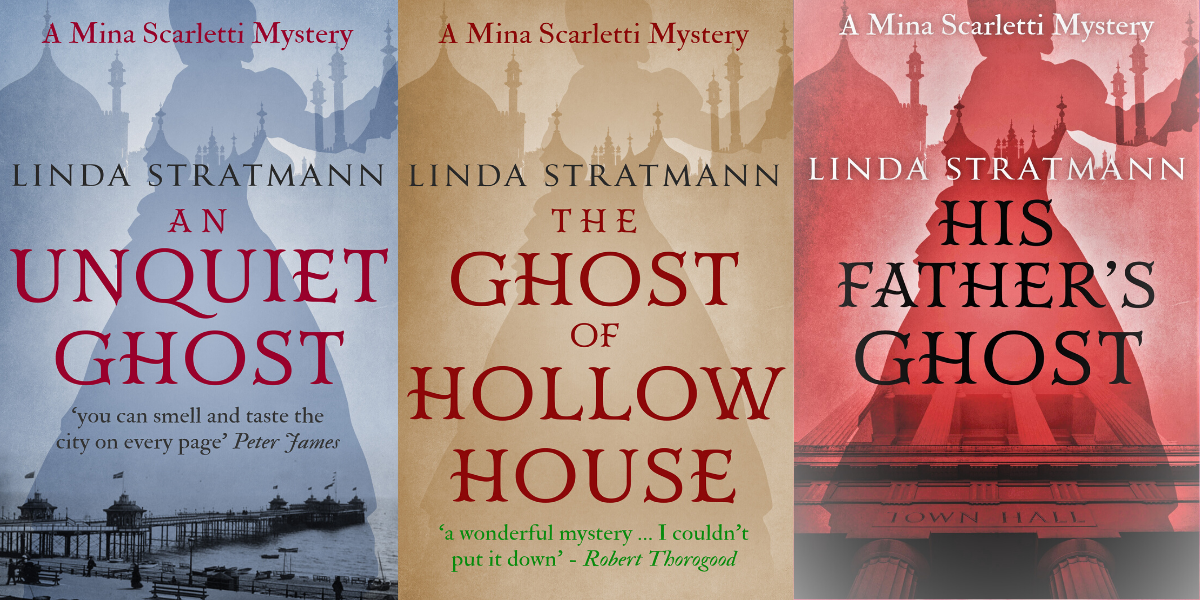
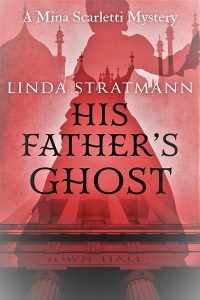
His Father’s Ghost by Linda Stratmann

Linda Stratmann is the author of the MINA SCARLETTI INVESTIGATIONS, a traditional British detective series set in Victorian Brighton.

More than a year ago, I determined to write a book in which Mina Scarletti, disabled by the scoliosis that twists her spine and cramps her lungs, is taken ill and solves a mystery while confined to bed. It is not a new concept. In The Wench is Dead, Inspector Morse solves a Victorian murder while in hospital, and in Josephine Tey’s The Daughter of Time, Inspector Alan Grant, hospitalised with a broken leg, explores the fate of the Princes in the Tower.

But these are historical puzzles, and therefore considered suitable to engage the mind of a bored invalid. In His Father’s Ghost, Mina has additional challenges. She is intrigued by a current conundrum, the disappearance of a local man while out sailing, declared legally dead, but his actual fate unknown. Her doctor, however, has advised her against any activity that might tax her delicate health, and that includes solving mysteries. She has to use all her ingenuity to gather the information she needs. In doing so, she finds that she has uncovered evidence of past crimes and scandals. Her enquiries are a catalyst that set off a train of events that ultimately have dramatic and life-changing consequences for several prominent citizens of Brighton.

One of the themes which I explore in this book is hallucination. Mina, when stricken by a fever, sees and hears things that reveal what is troubling her. The son of the vanished man, disturbed by significant events, has terrifying visions in those dark hours that lie between sleeping and waking.

I really enjoyed my research for this book. I visited the fascinating Police Cells Museum of Brighton, and read about the curious spiritoscope, an apparatus designed to prove that it was spirits and not the medium who cause the movement of the divination table.

It was my real pleasure to include two characters who have appeared in previous books, the flamboyant actor Marcus Merridew, fresh from his acclaimed season as Hamlet, and the creepy young photographer Mr Beckler.

While editing the manuscript, which was completed at the end of 2019, I was struck by how Mina’s plight echoes our current time. She is ill with a lung infection, and effectively on lockdown. But when she scents a puzzle, it gives her strength. She needs not only warmth and air and nourishment, but material to keep her busy mind alive.


Click here to pre-order HIS FATHER’S GHOST

What to Expect from 2020

Happy new year to all of our wonderful authors and readers, and thank you for your continued faith and support! 2019 saw us expand our list with some incredible titles and we can’t wait to share more with you this year.

Here’s what to expect from 2020:

We will soon launch our non-fiction list, led by Sapere co-founder Richard Simpson. Richard is on the lookout for military history titles – backlist in particular – and aims to launch the first few books on our second anniversary in March.

Our ‘call for nautical fiction’ has been successful and we will soon be releasing Irving A. Greenfield’s Depth Force series – thrilling submarine adventures set in the 90s, as well as the first in a series of Second World War naval thrillers by Justin Fox, and a trilogy of Tudor nautical adventure books by David Field.

We also have plenty of exciting new projects from our current authors, so look out for the next books in the series you already love! These include the final instalment of Alexandra Walsh’s Marquess House Trilogy; the next ghostly adventure in Linda Stratmann’s Mina Scarletti series; a new Lady Fan regency mystery from Elizabeth Bailey and a return of Charles Dickens as private investigator in J C Briggs’ Victorian series.

We also have brand new authors launching next year and plenty more fan favourites! Make sure you sign up to our newsletter to stay up to date with our latest releases and monthly deals.

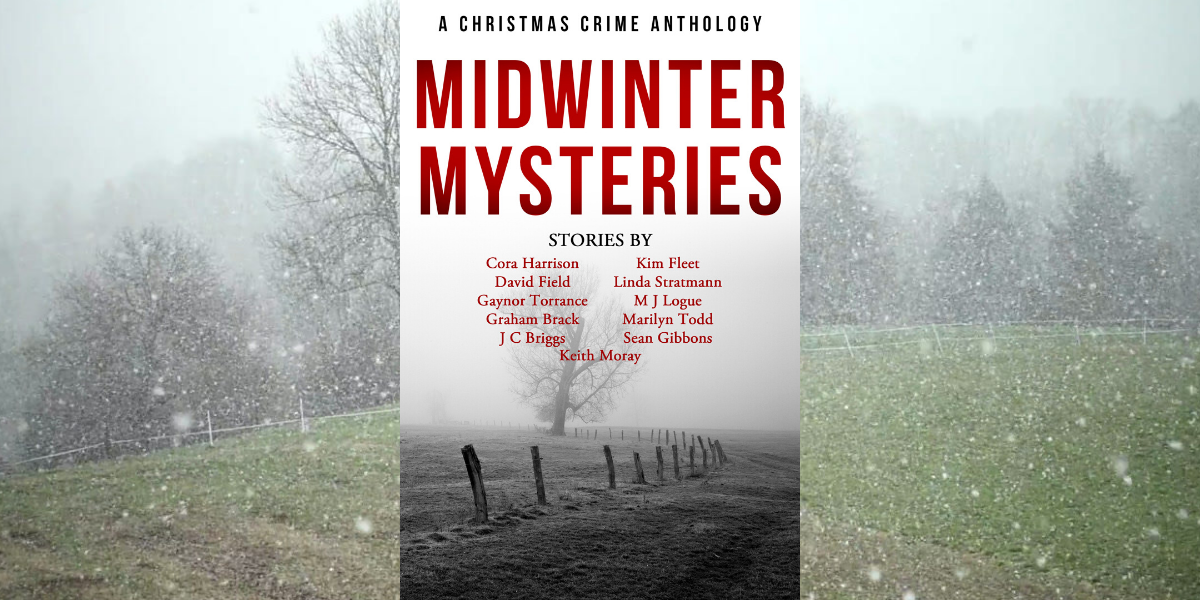
MIDWINTER MYSTERIES: Our Christmas Crime Anthology

This Christmas, we’ve put together an anthology of festive crime fiction that is sure to give you the chills! Here’s a taste of what to expect from MIDWINTER MYSTERIES…

In Graham Brack’s AWAY IN A MANGER, a decidedly non-festive Lieutenant Josef Slonský investigates a string of thefts amid Prague’s bustling Christmas market.

At a Christmas Eve gathering, Charles Dickens weaves a gory, atmospheric ghost story that becomes a little too real in J C Briggs’ FOOTPRINTS IN THE SNOW.

Keith Moray’s LOST AND FOUND follows the residents of West Uist as they merrily prepare for their New Year’s Eve traditions – until one of them is found dead…

While trying to provide for his family, young Alfie finds himself investigating the disappearance of gold bars from a bullion store – which have vanished along with his beloved dog, Mutsy – in Cora Harrison’s THE SPIRIT OF CHRISTMAS.

In Seán Gibbons’ THE STOLEN SANTA SACK, unlucky driver Ben Miller is stuck with a dead Santa Claus and a sackful of cash in the back of his cab…

While hurrying to develop her clients’ portraits in time for Christmas, photographer Julia McAllister is landed with a drunken newlywed and a photograph of a ghost in Marilyn Todd’s WILL POWER.

Gaynor Torrance’s CHRISTMAS SPIRITS follows headstrong Detective Inspector Jemima Huxley as she finds herself caught up in an armed robbery while doing her Christmas shopping.

In David Field’s THE ESSEX NATIVITY, Detective Sergeant Jack Enright discovers a destitute couple expecting their first child in the shelter of a barn.

When one of her clients is stalked by a mysterious figure, Private Investigator Eden Grey attempts to uncover the unwelcome follower in Kim Fleet’s SECRET SANTA.

Major Thankful and Thomazine Russell investigate the theft of a scandalous manuscript written by the king in M J Logue’s STIR UP SUNDAY.

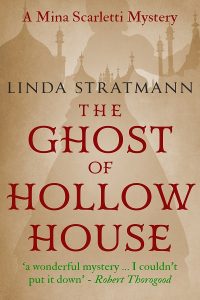
In Linda Stratmann’s THE CHRISTMAS GHOST, wilful sleuth Mina Scarletti attempts to bring peace to a woman haunted by the spirit of her dead son.


Click here to order MIDWINTER MYSTERIES!

Creepy Thrillers to Read This Halloween

We have a range of hair-raising titles to help you get your fear fix this Halloween! Read on to find out more about some of our spookiest stories…

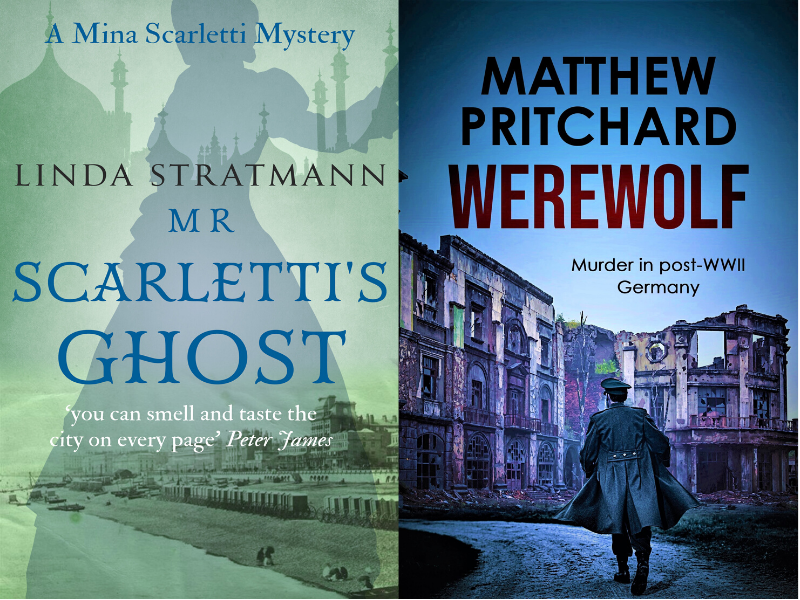
Werewolf, Matthew Pritchard

Werewolf is an atmospheric urban thriller set in post-WWII Germany. While running a police training school as part of the government’s denazification policy, Scotland Yard’s Detective Silas Payne is pulled into a grisly mystery. Two corpses are found in a requisitioned house, and another man is soon killed – this time a British soldier. Everyone blames the ‘werewolves’, a dangerous Nazi resistance force. But Silas believes that a new, depraved serial killer might be at large…

Heart of the Demon, Michael Fowler

When Yorkshire is terrorized by a deranged murderer, Detective Sergeant Hunter Kerr steps in to unravel the gruesome plot. A fourteen year-old-girl has been brutally slaughtered, and a bloody playing card has been left beside her body. As his investigation proceeds, Kerr makes another shocking discovery: the mummified remains of a teenage girl, seemingly killed in the same ritualistic fashion. Since the murders were committed more than a decade apart, it seems that the killer is biding their time. And it’s up to Kerr to untangle their deadly game before they strike again…

Mr Scarletti’s Ghost, Linda Stratmann

In Victorian Brighton, those desperate to communicate with their lost loved ones are rushing to psychics and mediums. But local author Mina Scarletti is sceptical, believing psychics to be unscrupulous fortune hunters. However, at her mother’s insistence, she takes part in a séance in an attempt to reach her recently deceased father. Still doubtful, Mina decides to investigate the spiritualist – the revered Miss Eustace. But will Mina be able to expose her as a fraudster? Or will Mr Scarletti’s ghost return from the grave…?

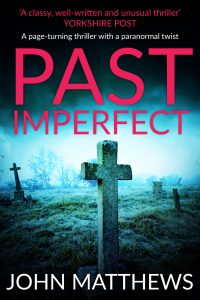
Past Imperfect, John Matthews

In 1963, a boy is abducted and killed in the French countryside. A man is convicted of the murder, but young policeman, Dominic Fornier, is convinced that they have caught the wrong person. In London 30 years later, a boy loses his parents in a car accident and is left in a coma. And when he wakes, he is haunted by strange dreams of a past that isn’t his. When Fornier hears of a possible link between the two boys, he plunges into a desperate race against time to catch a vicious killer and right the wrongs of the past…

Sapere Books Historical Dagger Award Winner Announced

On Thursday evening, we attended the Crime Writers’ Association Dagger Awards at the Leonardo Royal Hotel London City – a starry celebration of the best crime writing of the year in the UK.

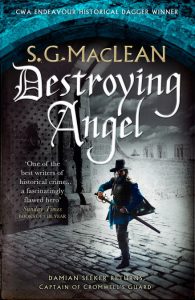
We are the proud sponsors of the Sapere Books Historical Dagger Award, which recognises the best historical crime novel of the year. From a shortlist of six, the fabulous Destroying Angel by S. G. MacLean was chosen as the winner!

Set in 1655, Destroying Angel is the third novel in MacLean’s popular and critically acclaimed Seeker series. The first book in the series, Seeker, won the Historical Dagger in 2015, so this is a second win for MacLean’s excellent series.

This third book follows Captain Damian Seeker, a trusted member of Oliver Cromwell’s guard, as he travels to the Yorkshire village of Faithly to enforce the government’s anti-Royalist laws. Upon arrival, Damian is invited to dinner at the home of Faithly’s Puritan commissioner, Matthew Pullan – a tension-filled gathering that ends with Pullan’s young ward, Gwendolen, being fatally poisoned.

With suspicion and bitterness rife in the village, Damian must discover whether Gwendolen’s death was an accident or something more sinister. Atmospheric and full of compellingly unsavoury characters, Destroying Angel’s meticulous historical details and intricate narrative keep the reader absorbed throughout.

We would like to congratulate S. G. MacLean on her well-deserved win and applaud all of the shortlistees for their wonderful work!

You can order all the books in S G MacLean’s Seeker series here.

We would also like to say a massive thank you to CWA Chair Linda Stratmann, Vice Chair Jean Briggs and everyone else on the CWA committee who put in some much hard work organising the event! We are very happy to be building an ongoing relationship with the Association and we can’t wait for next year.

We are the proud publishers of both CWA Chair Linda Stratmann and Vice Chair Jean Briggs’ novels.

Click here to find out more about Linda Stratmann’s Mina Scarletti series.

Click here to find out more about Jean Briggs Charles Dickens Investigations series.

Sapere Books Author Meet-up

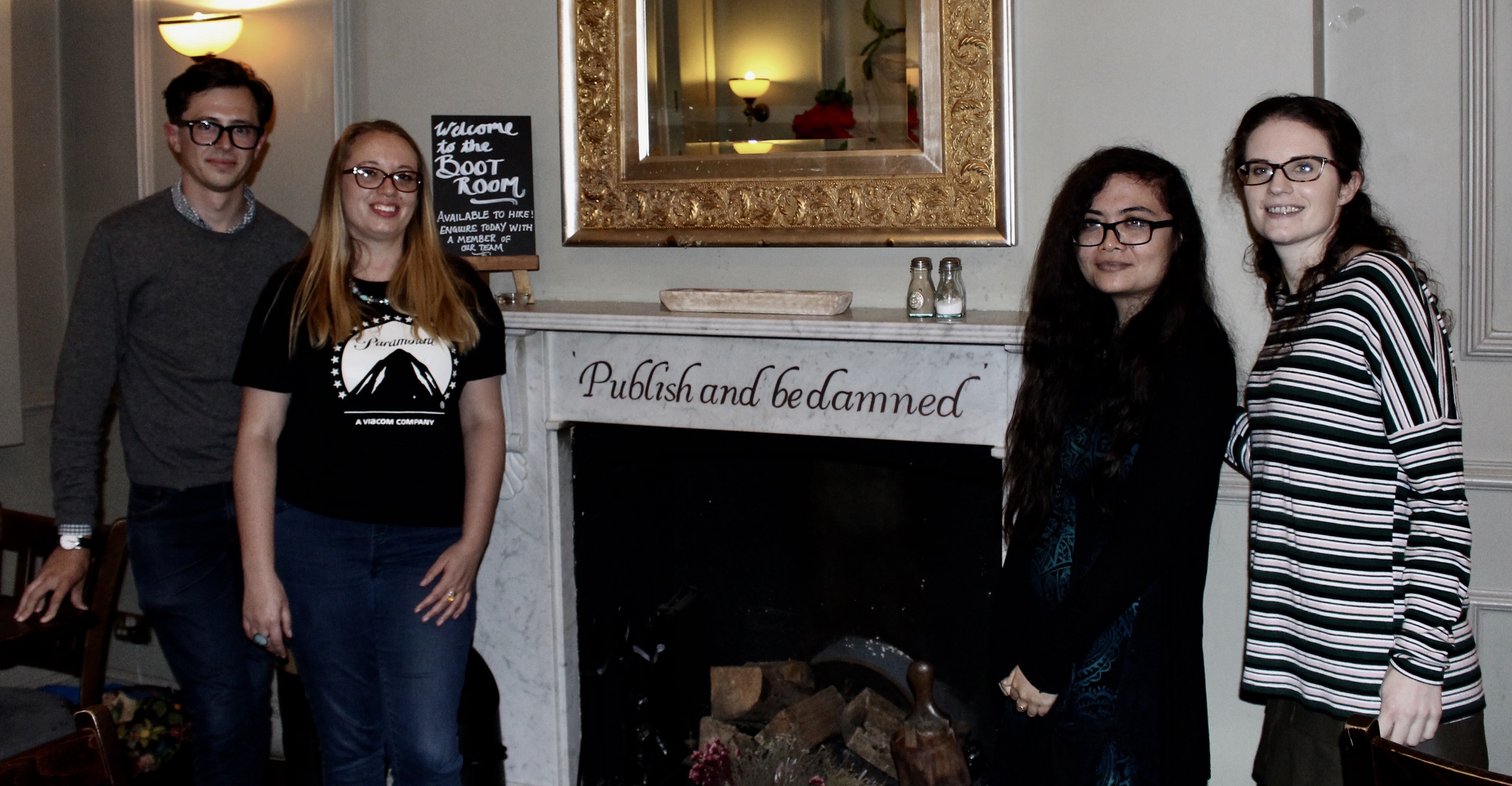
On Saturday we had our semi-annual author meet-up in London, where we had a chance to catch up with our wonderful writers over drinks and nibbles, as well as finding out what their next big projects are. Here is a taster of what’s to come:

Simon Michael, Natalie Linh Bolderston and Elizabeth Bailey

Elizabeth Bailey has more dazzling Regency romances and murder mysteries in the pipeline with new Brides By Chance and Lady Fan novels coming our way.

Graham Brack has handed in the final instalment of his thrilling Josef Slonský Investigation series, and will be launching a new historical crime series next year.

We are currently working on Jane Cable’s second compelling romance novel, Winter Skies, and she is already drafting her third.

Michael Fowler’s gripping crime thriller series, the DS Hunter Kerr Investigations, is being launched this month.

Anthony Galvin is working on exciting new thrillers under the pen name of Dean Carson, which we will be publishing soon.

Anthony Galvin and Michael Fowler

Charlie Garratt is drafting book three in his intriguing historical mystery series, the Inspector James Given Investigations.

The captivating fourth instalment of Valerie Holmes’ sweeping Regency adventure series, The Yorkshire Saga, will be coming out soon.

Two members of the Romantic Novelists’ Association, Natalie Kleinmann and Ros Rendle, have recently signed with us and will be bringing out brilliant new books next year.

A brand-new book in Simon Michael’s atmospheric historical crime series, the Charles Holborne Legal Thrillers, is going up on pre-order this month and he has an idea in mind for the next one.

We will soon be publishing book five in Linda Stratmann’s absorbing Victorian detective series, the Mina Scarletti Mysteries, and she has started work on book six.

Deborah Swift’s powerful new wartime romance, The Occupation, will be out by the end of this year.

Thank you to all of the authors who were able to attend, and we hope to see everyone again to celebrate our second anniversary in March!


The Sapere Books team


Image credit: a big thank you to Gary Stratmann for his photographs.

Author Q&A with Linda Statmann

When did you first start writing? Did a specific event encourage you to start?

When I was six years old, I saw a TV programme about the Blitz, which as you can imagine was pretty alarming. I wrote a poem about it.

How much research do you do?

I am fascinated with the Victorian era and do a lot of research to try and get the details right. I read contemporary newspapers and journal articles, biographies and medical works. I study maps, census returns, directories, legislation, photographs, and art. I have about a hundred books just on the history of spiritualism.

Tell us about where you write / your writing habits.

I work from home and have a room which is my office. I don’t work set hours; even when I am doing the household chores, my mind is still working on my latest project or planning a new one.

What part of the writing process do you find most difficult? Starting, knowing when you’ve done enough research, the ending?

When I begin a project, I know where I am starting from and where I will end up, but I have to link the two in a way that makes sense. Every time I pause in order to find that natural link, I have to remind myself that I found it last time. It’s worked so far.

How real do your characters become and do they ever seem to control their own storyline?

They feel very real to me, and because I let themes develop naturally in my mind often the characters do things that I hadn’t necessarily planned but emerge from their personalities and situations, so sometimes they do take me by surprise.

Do you ever feel guilty about killing off characters or do you relish it?

Neither, but it is sometimes sad. It’s very hard writing about a character who I know is about to become a murder victim.

Do you find it hard to know when to end a story?

No, I know when it feels right to me.

What are you working on?

I am editing a new volume in the Notable British Trials series about the trial of the Mannings in 1849. I am also developing the plot for the fifth Mina Scarletti book, to be entitled His Father’s Ghost.

What are you reading right now?

Munich by Robert Harris.

What is your favourite book? Who is your favourite character?

I have read thousands of books and it is impossible to pick one!

What book do you wish you had written?

See above.

Do you love any genres/books that are very different from what you write?

Most of my reading is non-fiction: history, biography, true crime, psychology. In crime fiction, I tend to read books with modern settings or if historical, a very different time period from the one I write about.

 Tell us something surprising about you!

I prefer pickles to sweets!

The Woman Who Created Mina Scarletti by Linda Stratmann

The heroine of the Mina Scarletti books is not based on a specific individual; however when I created my diminutive protagonist two people were in my thoughts, one of whom I knew personally.

Eva was the aunt of a friend of mine. She had a very severe distortion of the spine, but the thing that I remember most about her was her sweet smile. I never got to know her well and she died when I was a child.

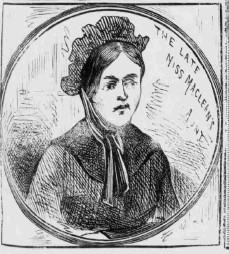
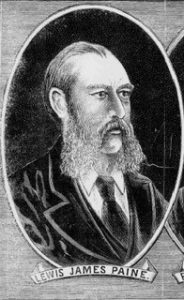
Annie Jane Fanny Maclean was delicate and very small, due to the curvature of her spine and she walked with a limp. In 1879 aged 33, she inherited some family property. She also attracted the attention of Lewis James Paine, a 49 year old insurance salesman in need of money. 

Unknown to Miss Maclean, Paine was a married man, although he denied it when challenged by her suspicious family. By July that year they were living together as husband and wife. Annie had been a moderate drinker, but Paine plied her with alcohol, sometimes forcing her to drink it against her will, and as she fell more and more under his control, he withheld food.

In September, in a very weakened state, she was induced to sign a deed making over her property to Paine. In less than a month she was dead.

Paine was tried for the wilful murder of Annie Maclean at the Central Criminal Court in February 1880. The question for the jurors was had Paine deliberately set out to kill, or had he caused death through recklessness and negligence? He was found not guilty of murder but guilty of manslaughter.

Paine made a long statement to the court, claiming innocence, but the judge, who clearly despised him, stated bluntly that he didn’t believe a word of it.  He stated that Paine was guilty of manslaughter ‘in about as cruel and barbarous circumstances as I ever remember having heard of.  . . . Had you been guilty of murder, you would most unquestionably have been hanged, as you richly deserve to be.’ (Times 25 Feb 1880 page 11) Paine was sentenced to imprisonment for life. He died in 1897.
In commenting on the case, The Times pointed out that the victim’s appearance was not an insignificant fact, and this led me to reflect on the vulnerability of women in the Victorian marriage market, especially those with a disability, who if they had property could be manipulated by cruel and unscrupulous men.

Marriage and motherhood were considered to be the primary and most desirable roles for Victorian women, and Miss Maclean must have seen Paine, perhaps her only wooer, as her chance of happiness.

In Mina Scarletti, who has been told by her doctors that she must never think to marry, I have created a heroine who is able by her unique insight and force of will to make a challenging and fulfilling life for herself.