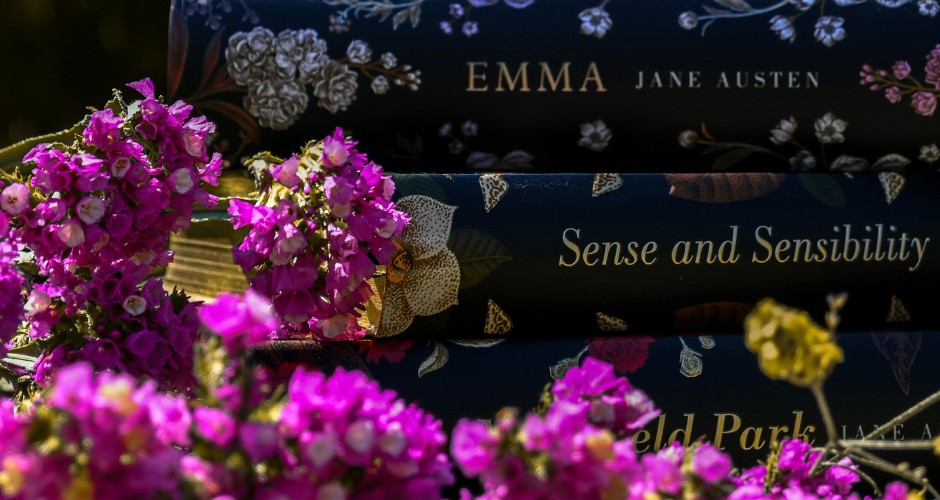
Celebrating Jane Austen’s 250th Birthday

As we celebrate 250 years since the birth of one of England’s most beloved authors, we asked Laura Martin, author of the Jane Austen Investigations series, to tell us what Jane Austen’s work means to her and how it has influenced her own writing.

2025 marks the 250th anniversary of Jane Austen’s birth and is the perfect opportunity to reflect on her literary legacy and the influences that shaped her writing.

The Royal Crescent, Bath

Jane Austen is one of Britain’s most well-known and influential authors. Over two hundred years after her death her books are still immensely popular and there are numerous film and television adaptations, as well as books inspired by her life and her characters. Much has been theorised about the sort of woman she was, a picture built from the letters she wrote to her sister Cassandra as well as other friends and relatives; she has become immortalised by her work and the people who celebrate it.

One reason Jane Austen’s books are so popular is her ability to build complex and layered characters, a reflection of the people we meet in real life. No two characters are the same, and even the minor players are well defined. It allows the characters and their flaws to linger in the reader’s mind — how often have I met someone and thought how similar they are to anxious Mr Woodhouse or foolish Lydia Bennet.

Undoubtedly there were many influences on Jane Austen and her books. Her main themes revolved around marriage, love, class divisions and morality. Her stories often centred on intelligent and spirited heroines — Elizabeth Bennet, Elinor Dashwood, Anne Elliot — who are forced to navigate societal expectations in the pursuit of happiness. Through these characters Jane Austen explored the roles of women in society, economic dependence and social mobility with a clarity and subtlety that remains impressive to this day.

Pulteney Bridge at twilight

Although Jane Austen did not live past the age of forty-one, she led a rich and varied life for a woman of her time. Her early life was spent in rural Hampshire, but in 1801 she moved to the city of Bath — a move that her letters suggest she was not overly happy with. However, there is no doubt that her time spent in the city — a place of genteel society and social ambition — offered her the perfect opportunity to observe human behaviour, which she then used to help form the flawed but interesting characters that we have all come to love.

For an author writing about Jane Austen, Bath is the perfect place to immerse yourself in the Georgian era. The streets are lined with beautiful examples of Georgian architecture and when you stroll around the curve of the Royal Crescent, you can almost imagine you might catch a glimpse of Jane Austen herself.

In my Jane Austen Investigations series I have attempted to capture the essence of Jane as an author and a person, especially her unparalleled insight into human nature. It is always daunting, writing a story where the main character once existed, especially when it is someone universally beloved, but I hoped to celebrate her genius and explore the life of the woman behind the books.

I have no doubt that in another two hundred and fifty years Jane Austen’s books will still be as popular as they are today — her wit and wisdom will still be as compelling as they are now.

Discover more about Laura here.
IN THE JANE AUSTEN INVESTIGATIONS SERIES:

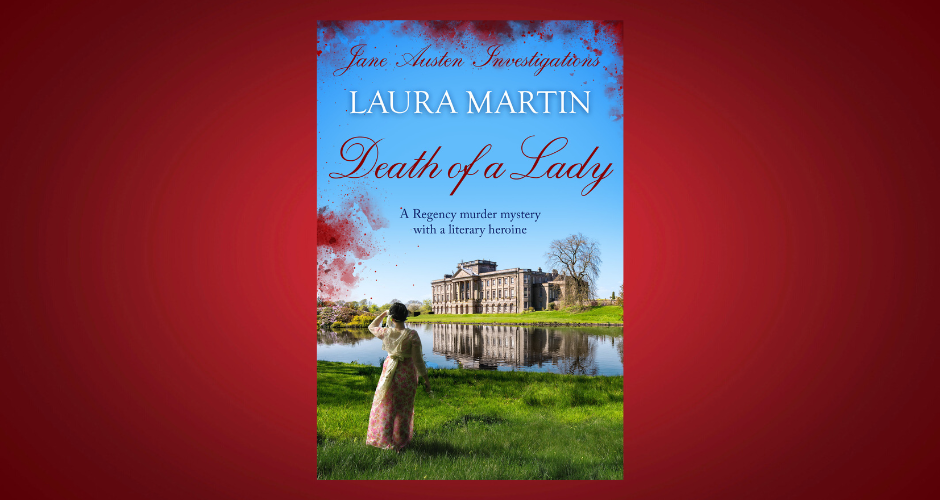
Death of a Lady

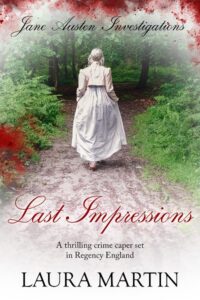
Last Impressions

A Poisoned Fortune

The Body on the Beach

The Dead Curate


Featured image credit: Photo by Dominika Walczak on Unsplash.
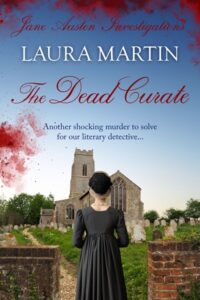
The Dead Curate is Published Today

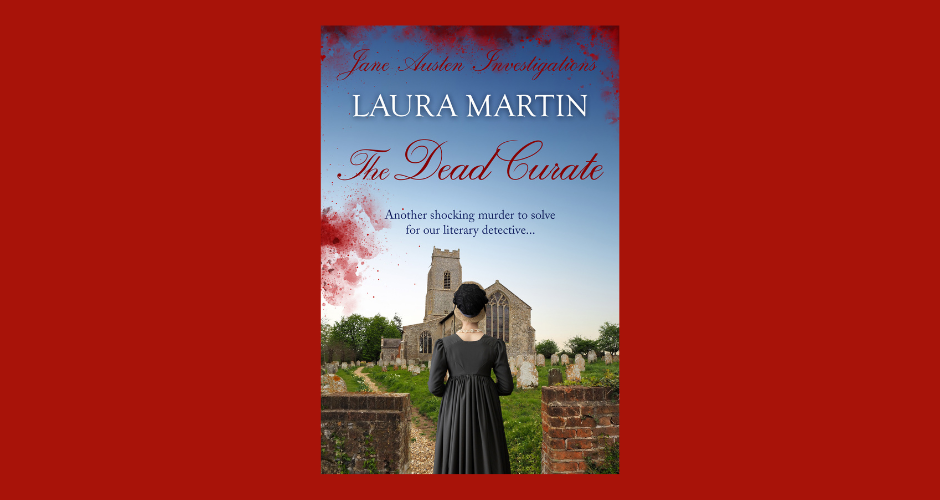
Congratulations to Laura Martin, whose gripping Regency murder mystery, The Dead Curate, is published today!

The Dead Curate is the fifth book in the Jane Austen Investigation series.

1798, Steventon, England

Mr Austen’s role as rector of Steventon church has meant that Jane and her sister Cassandra are well connected in the local community.

With Mr Austen indisposed, Jane and Cassandra walk to church to greet the curate, Mr Williamson, who will be leading the sermon in his place.

But when they arrive the church is locked and the parishioners are already milling around outside.

Already fearing something is amiss, Jane rushes home to find her father’s key and when she returns she makes a horrifying discovery.

At first the church appears to be empty, but a series of blood drops lead Jane up into the belfry.

And there she finds Mr Williamson, propped up with iron nails through his hands and feet.

The Austen sisters are used to investigating murders by now, but this one is too close to home…

Who would have a grudge against the unassuming curate? Why his body displayed in such a manner?

And are any other lives at risk in the sleepy village of Steventon?

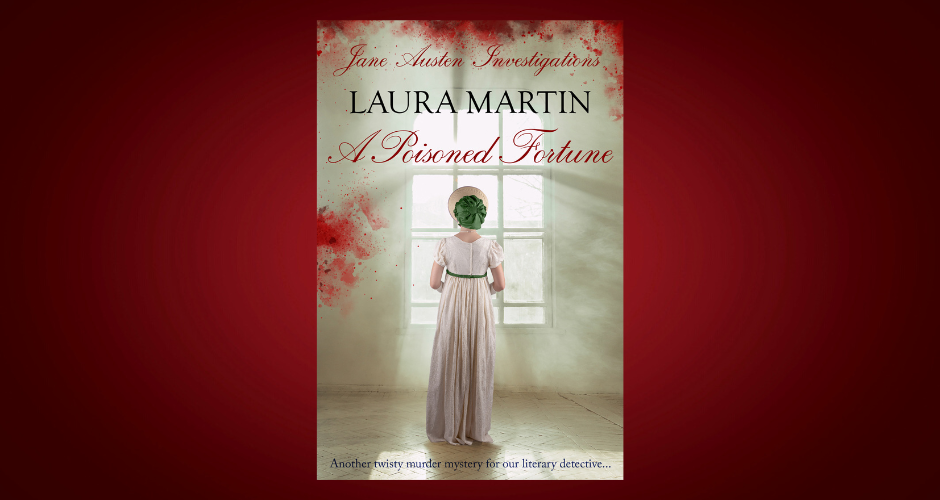
A Poisoned Fortune is Published Today

Congratulations to Laura Martin, whose absorbing Regency mystery, A Poisoned Fortune, is published today!

A Poisoned Fortune is the third book in the Jane Austen Investigation series: thrilling Regency-era murder mysteries with a tenacious literary heroine working as a female sleuth.

1797, Bath, England

Devastated by the news of the death of her fiancé, Cassandra Austen has slipped into a melancholy that her sister Jane is desperate to relieve.

Jane suggests a short trip to stay with their aunt, Mrs Leigh-Perrot, in Bath with the aim of lifting Cassandra’s spirits.

Whilst out walking they meet Lady Arabella Waters, and they receive an invitation to meet her at the musical celebration in the Parade Gardens by the river.

But after taking a sip of his drink, Lady Arabella’s husband, Lord Waters collapses, dead.

Despite his advanced years Jane feels there is something not quite right about his death, and her suspicions are confirmed when the inquest determines Lord Waters was poisoned.

The magistrate announces he has found belladonna in Lady Waters’ possessions. He takes her into custody and sends her to the gaol in Ilchester. As she is taken away she pleads with Jane and Cassandra to help her prove her innocence.

Jane believes in Lady Waters, but why was there poison in her possession? And who else could have a motive for killing Lord Waters?

Can the Austen sisters unravel the mystery and prove the innocence of their new friend?

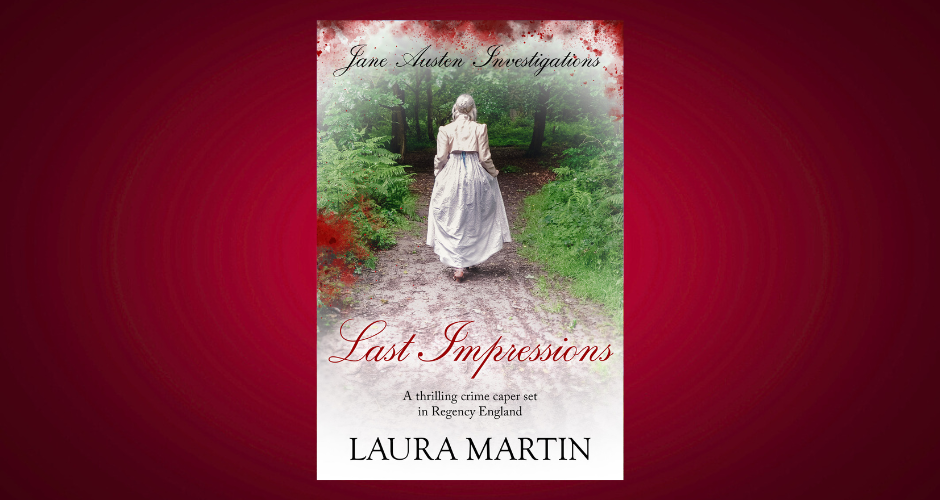
Happy Publication Day to Laura Martin!

Congratulations to Laura Martin, whose absorbing Regency mystery, Last Impressions, is out now!

1796, Hampshire, England

After having her heart broken by the man she thought she was going to marry, Jane Austen is in desperate need of a distraction. So her sister, Cassandra, accepts every social invitation going, and one of them is to stay with a family friend at Melmont Hall.

Mrs Paulson welcomes them to her home and introduces them to the other guests who have arrived for a dinner party. But when they sit down to eat, Mr Paulson is nowhere to be found.

After discovering his study is locked, the guests break in and find a shocking scene. Mr Paulson is dead – and not of natural causes. Someone has stabbed him.

Jane has already helped solve one murder mystery and she is determined to put her skills to use to help her hostess get justice for her husband.

Everyone at the dinner party must be questioned as a suspect, as well as the servants at Melmont Hall.

But what had Mr Paulson done to provoke such anger? Why would someone want to kill him? Can Jane Austen use her quick wit to unmask the killer?

Happy Publication Day to Laura Martin!

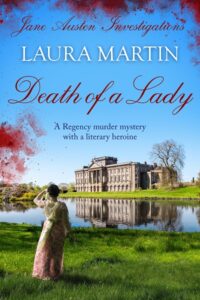
Congratulations to Laura Martin, whose gripping historical murder mystery, Death of a Lady, is published today!

Death of a Lady is first book in the Jane Austen Investigation series: thrilling Regency-era murder mysteries with a tenacious literary heroine working as a female sleuth.

1795, Hampshire, England

Jane Austen and her family are delighted to be attending Lord Wentworth’s ball. The event has been at the centre of village gossip after it was announced Wentworth was holding a ball to celebrate the return of his brother, who went missing in India many years earlier and had been declared dead.

At the ball an old friend, Emma Roscoe, bumps into Jane and tells her she saw something she shouldn’t have. She asks Jane to meet her at ten o’clock in the library to discuss it.

Delayed by dancing with the charming Mr Tom Lefroy, Jane is late to meet to her friend.

But when she arrives, she finds the body of Emma Roscoe lying on the floor with a dagger sticking out of her chest.

Distraught and feeling horribly guilty, Jane is determined to help with the investigation into Emma’s murder.

Was it a coincidence that the murder happened on the night of Lord Wentworth’s brother being reintroduced to society? What did Emma see that was worth killing her over?

And could more people be in danger?

With the help of her sister Cassandra, Jane must use her wit and intelligence to get to the heart of the mystery.

Winners of the Sapere Books Writing Competition Announced!

We are thrilled to announce that we have awarded winners in all six of the writing competition briefs that we set last year.

Top row: Richard Kurti, Laura Martin, Neil Denby. Bottom row: Patrick Larsimont, Bob Robertson, Rachel McDonough.

Each chosen author has won a five-book contract to work on the series they submitted for.

Screenwriter Richard Kurti has won The Medici Murder Mystery series brief.

The Second World War Aviation Thriller series brief was won by debut author Patrick Larsimont.

Established romance author Laura Martin scooped the Jane Austen Detective series brief.

Ghost-writer Bob Robertson snapped up the Age of Sail brief.

Academic author Neil Denby scooped the Ancient Rome Historical thriller brief.

And American author Rachel McDonough won the Tudor Maid Diaries series brief.

The quality of the entries were so strong that we have also awarded honourable mentions in nearly all of the categories and we are speaking to the shortlisted authors about writing other historical series for us based in the time period of their submission.

The shortlisted authors are:

Donna Gowland and Leann McKinley for the Jane Austen brief.

Daniel Colter and Ava McKevitt for the Ancient Rome brief.

David Bailey, David Mackenzie, Tony Rea and Suzanne Parsons for the WWII brief.

Kate MacCarthy for the Medici brief.

Alice Campbell, Angela Ranson, Katharine Edgar, Valerie Boyd and Maria Hoey for the Tudor brief.

Following the success of the first competition we are hoping to run the competition again later this year with a fresh set of writing prompts.

Celebrating Jane Austen’s Birthday

Renowned for her wit, humour, realism and sparkling dialogue, Jane Austen is hailed as one of England’s greatest writers. To celebrate her birthday (16 December 1775), we asked three of our Regency romance authors to tell us what her work means to them and how it has influenced their own writing.

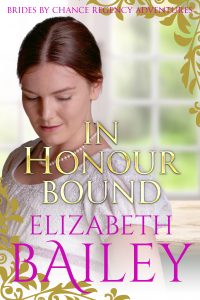
Elizabeth Bailey, author of the Brides By Chance series

When I first read Pride and Prejudice, I was already educated to a degree on the period by an addiction to the works of Georgette Heyer. It was a revelation reading a novel contemporary to the era. The style was different, uncluttered by period description, Austen assuming that knowledge in her readers not necessarily available to the 20th century eye. Yet the detailed descriptions of the lives she depicts gave me a rich understanding of the thinking and mores of the day, and her dry humour and insights into humanity’s foibles made me realise that people don’t change very much. The same emotional dilemmas beset the human heart, regardless of the time in which they may be living. The trappings may be different, the moral values tighter or looser, but essentially the human condition remains constant. An invaluable lesson for a writer.

Order IN HONOUR BOUND here.

Or find out more about the Brides By Chance series here.

Valerie Holmes, author of The Yorkshire Saga

My work was strongly influenced by Jane Austen’s novels, which are as refreshing today as they were when she wrote them.  Social realism and romantic comedy blend subtly to provide moral lessons on life as she saw it: she could have coined the phrase ‘show, don’t tell’.

In 1775, Jane, a lively rector’s daughter was born into a world that restricted women by gender, social strata, the control of male relatives and wealth or a lack of it. Jane described Regency, but did not glorify fashionable finery, wealth, social meetings or snobbery — deliberate or unintentional.

Whether master or servant she wanted people to be unselfish, just and to be aware of the dangers of making quick and personal judgements.

Jane revealed the failings of would-be lovers, but also their ability to change. The resulting memorable novels have happy, hopeful endings.

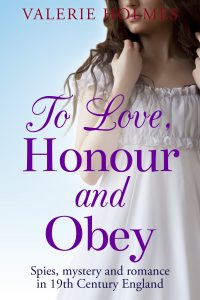
Order TO LOVE, HONOUR AND OBEY here.

Or find out more about The Yorkshire Saga here.

Natalie Kleinman, author of The Reluctant Bride (forthcoming)

I couldn’t honestly tell you when Jane Austen first came into my life but, when she did, she came to stay. As with any society, there is good and there is bad, the haves and the have nots, but as a reader and a lover of romantic fiction I want to be whisked away to a time and place where I can remove myself from the mundane to a world of fashion, excitement and yes, romance, and that’s what her books do for me. Not that Miss Austen is universally kind to her cast of characters, but isn’t that what makes them seem so real? She has a talent that makes them leap from the page.

The films and TV productions that depict her work have only added to my enjoyment with their amazing sets and beautiful costumes. So on this day, her birthday, I would like to thank her for the abundance of pleasure she has given me over so many years.

Natalie’s Regency romances are forthcoming in 2020 and will feature spirited heroines, determined to succeed against the odds.


Featured image credit: Photo by Elaine Howlin on Unsplash.