How I Write by Angela Ranson

In this behind-the-scenes blog series, Sapere Books authors offer an intriguing insight into how, where and why they write.

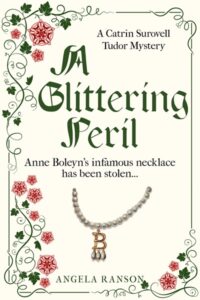
Today, we are delighted to spotlight Angela Ranson, author of the Catrin Surovell Tudor Mysteries.

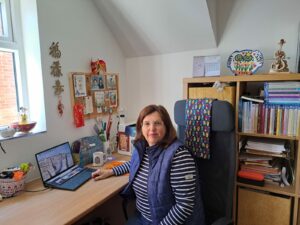
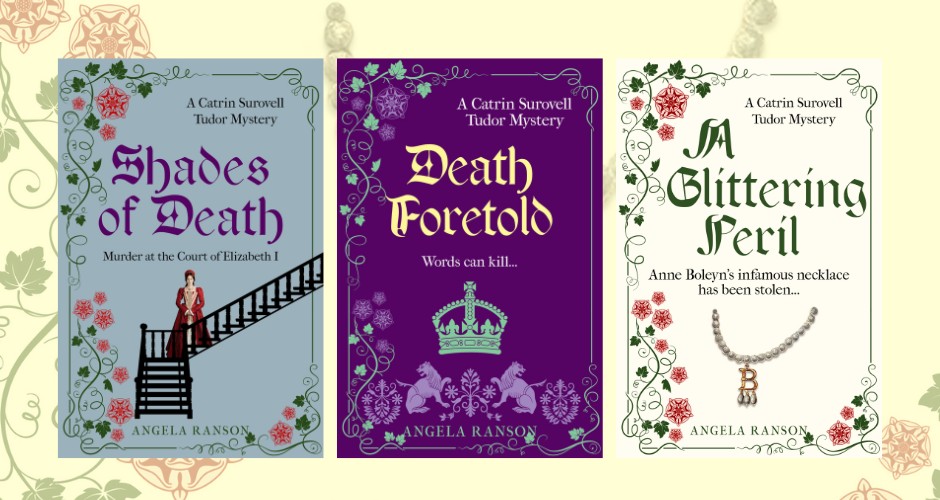
Angela’s study

I write in my study, which doubles as a playroom for my two cats. I love having their energy and curiosity as the backdrop for my writing. This is especially true because I write about a world long dead — Tudor England — and try with every scene to bring it back to life.

My books centre around the early years in the reign of Elizabeth I (the 1560s), which I studied when I earned my doctorate in sixteenth-century English history. I live in York, within a stone’s throw of King’s Manor. This was the building where Henry VIII stayed in 1536, and his suite of rooms is now one of the University of York’s libraries. If you stand at the back of the building, you can see a tiny window that leads to nowhere: it originally let some light into Henry’s specially-made toilet, or garderobe.

I love that York has these little historical treasures; I go looking for them whenever I have the opportunity. That isn’t as often as I would like, because I write between the hours dedicated to two jobs at the university. Writing is what I do to relax, to escape from the trials of daily life. Thus, you’ll often see me writing while I eat my supper, or early on a Saturday morning when I’m still in my pyjamas. Turns out, those are the hours when dreams come true.

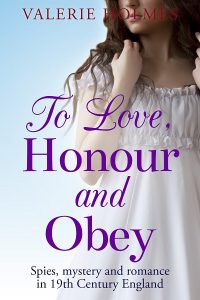
How I Write by Valerie Holmes

In this behind-the-scenes blog series, Sapere Books authors offer an intriguing insight into how, where and why they write.

Today, we are delighted to spotlight Valerie Holmes, author of the Yorkshire Saga Series.

Valerie’s study.

Staring out of my study window I see a brick wall. Not a theoretical one that means I have writer’s block, which I do not actually believe in as a professional writer, but a literal brick wall.

This may not appear to be the most inspirational of vistas, but I am fine with it.

Inside my study I am surrounded by my writing workspace; my research books, my trusty printer and personal items that make me smile.

Centre stage is my lovely laptop with its two screens. One is usually displaying research sites and email tabs, the other Word documents — my current WIP.

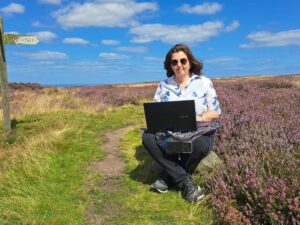
Castleton Walk, Commondale.

The brick wall rarely gets a glance because, once my laptop is on, I dive into my inner vistas. The beautiful scenery of North Yorkshire’s open moorland and coastline with its sweeping bays and rugged headlands. These are the settings against which my romantic adventures play out. Hence the Yorkshire Saga Series and my many novellas.

It is a world I am familiar with because I grew up in a bay town on the northeast coast and have happy memories of running with my dog along the open expanses of fine sandy beach, climbing the dunes which were covered with needle-sharp marram grass.

Gisborough Priory.

The area is steeped in history, from the old abbeys and market towns to the beautiful city of York. I still return regularly to explore the area: the monk’s trods that cross the moorland, the fishermen’s cottages that line the harbours and the old inns of the bay towns such as Whitby, Staithes and Robin Hood’s Bay. Then there are the manor houses and halls, each with a story to tell — inspiration for my next adventure is found in all. The darker era of smuggling provides further scope to add drama and menace.

The beauty of having a laptop is that it is mobile. I have written in cafés, on trains, on picnic tables by the sea, and in hotels — but the real work, the editing, polishing and research, happens at my desk, ignoring the blank brick wall.

I have a flexible routine, writing every day. Life happens, events happen, but the one thing that is constant is the desire to write, which never goes away — or not yet — and I hope never will so long as readers enjoy my adventures.

What better motivation is there for an author to continue to write?

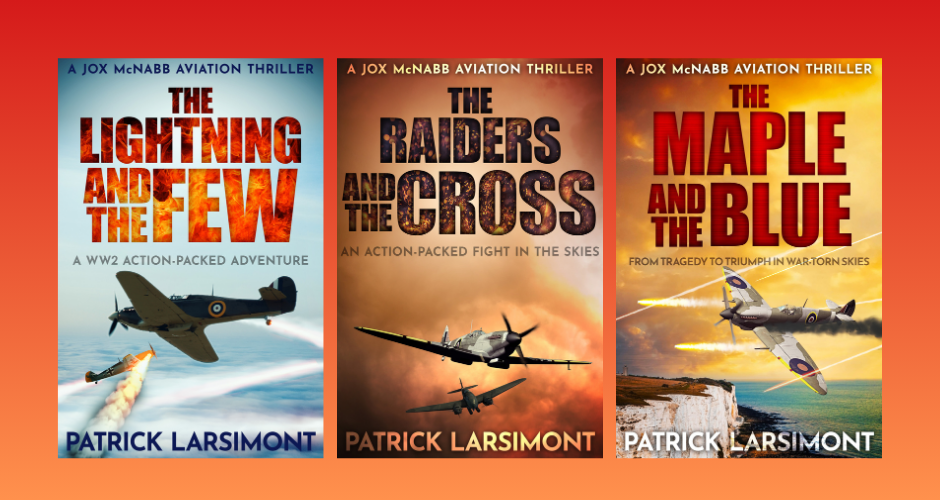
How I Write by Patrick Larsimont

In this behind-the-scenes blog series, Sapere Books authors offer an intriguing insight into how, where and why they write.

Today, we are delighted to spotlight Patrick Larsimont, author of the Jox McNabb Aviation Thrillers.

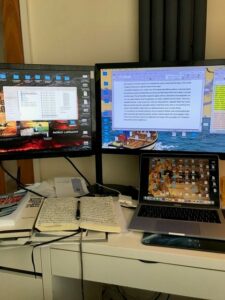
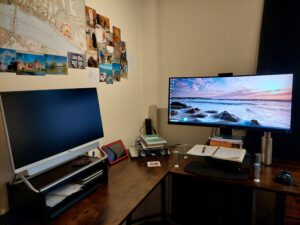
Patrick’s winter writing area

My writing has two modes, much like the clock, British Summer Time and Greenwich Mean Time. Living by the sea in Dorset, the weather rather sets the mood and often my productivity.

In the winter, when it’s darker, I get up early and write directly onto my computer.  Earlier this year, I acquired two largish monitors, which I have side by side on a stand, below which I have my MacBook Pro. My desk is invariably covered in paper, notebooks and little bibelots that keep me interested, amused and inspired.

When I glance at the nearby window ledge, I see a toy metal Spitfire in desert camo with a spinning propellor, and a pair of painted tin soldiers (not by me), one a bagpiper in full regalia, the other a 1940s RAF pilot, inscribed on the bottom as ‘Hurricane Ace, Battle of Britain.’ Finally, there’s my grandfather’s little silver boar, a memento of his own service during the war. It bears the motto, ‘Résiste et Mords,’ which got him through many battles and the camps. He’s gone now, but just seeing that pig always rids me of any writer’s block, knowing full well that I’ve had it much easier than him.

In winter mode, I stare at a radiator and the world comes to me through my monitors, making me feel like some sort of chaotic air traffic controller. Heaven help the pilots in my care, although old Jox McNabb is holding his own. I generally aim for twelve hundred words a day and have a weekly target of at least five thousand. It’s a cadence I can manage and feeds my nature as an impatient man.

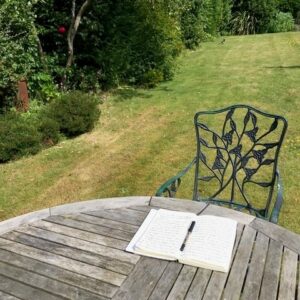
Patrick’s summer writing area

In the summertime, the process becomes two-staged. I write first in my notebook, in terrible doctor-style handwriting, sometimes so awful I can’t even decipher my own hieroglyphics. I can write anywhere — on the beach, at a coffeeshop (rarely) or in our garden (most often), and train journeys are good too. I don’t get too comfortable and like to just write, setting myself the target of twelve notebook pages per session. I then type up, embellish and edit whenever I fancy. Generally, I do about four drafts, plotting out a rough chapter breakdown at first, with two or three sentences for each. Invariably, that synopsis changes, with chapters budding off like yeast.

For inspiration, I depend on the internet and my constantly growing pile of to-be-read books, but often I just make stuff up. A lifetime of blagging it helps. When working on the laptop and monitors, the lure of ‘rabbit holes’ is great, and I can disappear for hours, but when grinding through with the notebook, I try to avoid that, although I do usually have my smartphone in my pocket.

If I did have a writing approach, it would probably be something like Nike’s ‘Just Do It’ (that’s the old adman in me), but ‘Résiste et Mords’ would probably do too.

How I Write by D. R. Bailey

In this behind-the-scenes blog series, Sapere Books authors offer an intriguing insight into how, where and why they write.

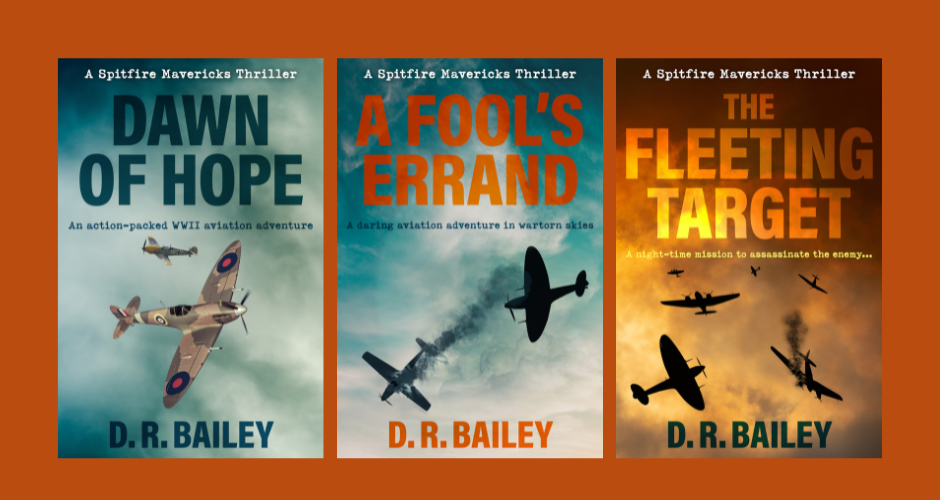
Today, we are delighted to spotlight D. R. Bailey, author of the Spitfire Mavericks Thrillers.

For my aviation novels, I do a lot of direct and indirect research. I read books, watch documentaries, scour historical websites and more. I’m looking for context rather than necessarily actual events. There is a surprising number of things you would never imagine happened continuing to be revealed about World War Two.

I’m interested in the what-ifs and that’s where I take my stories. I grew up just after the war and so some aspects of British culture at the time seem to have imprinted themselves upon me. I’m most interested in characters, developing them and their lives, building the stories around them. I have a keen sense of humour and I can’t help adding that into my plots. I’m not trying to write a history book so much as an adventure book set in the era.

I work full-time as a lecturer in Creative Technology, so my writing time is constrained. However, I’ve developed a disciplined approach to writing based on the Pomodoro method, which has served me well. I write in twenty-five-minute bursts, and I must work uninterrupted for that time. I try to complete a certain number of these bursts a day and I track them very precisely in a spreadsheet, which informs me of my writing speed and how much longer I have to go to finish the book. I also edit as I go, not leaving a scene until I’m happy with it. Then, of course, once finished I read through and edit again, but generally, I find I’ve done all the hard work prior to that point.

During term time I write after work for maybe an hour and then more at the weekends until I’ve got my novel done. I am a pretty fast writer, so I’m lucky that way. I also work through a loose synopsis and plot, but my characters often change the story as I go, and it plays in my head as I write it — just like a movie scene.

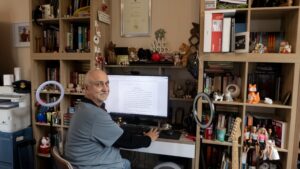
D. R. Bailey’s writing space

Fortunately, my wife is hugely supportive in every way and makes me delicious meals when I’m in full flow writing a novel. Unfortunately, my cat has no respect for my writing time, and will come and beg for food or strokes regardless of whether or not I’m busy.

My writing space, as you can see, has a lot of cat ornaments; I’m an avid cat lover and we just keep on collecting more. My space is light and comfortable, and I have a nice big screen for composing my words. I’m also surrounded by books, including my own, my daughter’s and my sister’s, who are both successful novelists too. I also have my doctorate certificate on the wall, one of my proudest achievements. I aim to keep writing for as long as I can, completing as many books as I can. I find it one of the most calming and fulfilling things in life. I’m grateful that Sapere Books has given me the chance to get my stories into the hands of so many more readers.


Where My Inspiration Comes From by Alistair Forrest

In this behind-the-scenes blog series, Sapere Books authors offer an intriguing insight into how, where and why they write.

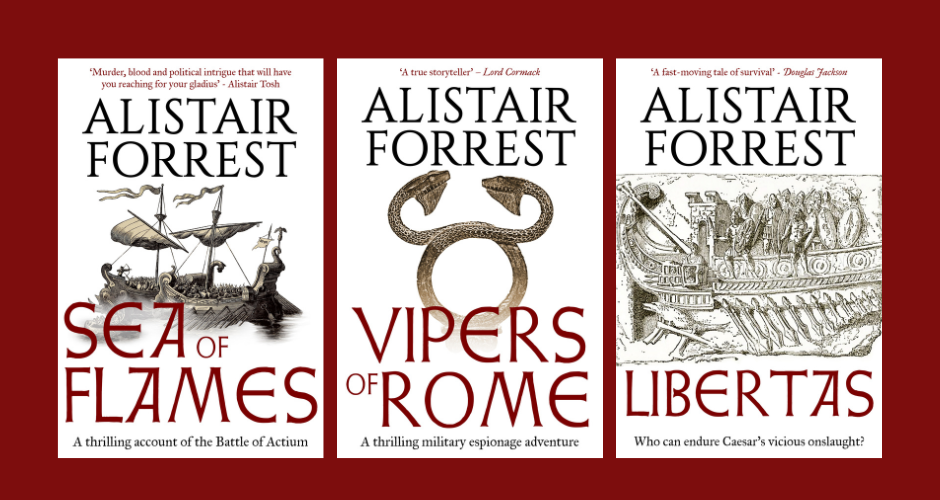
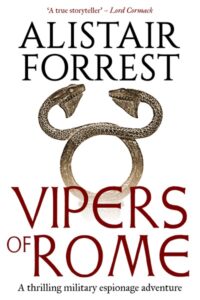
Today, we are delighted to spotlight Alistair Forrest, author of Sea of Flames, Libertas and Vipers of Rome.

For some authors, inspiration is a flash of instant eureka. For me, it’s been more like evolution.
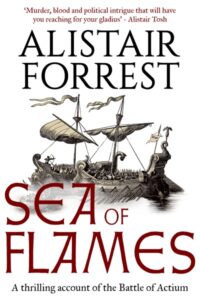
I had never intended to write historical novels centred on the late Roman Republic, but it became inevitable when I moved to Spain with my wife, two-fifths of our children and assorted pets.

Our new home had been built slap bang in the middle of an ancient battlefield. More about that later.

For me, inspiration began in an English lesson at boarding school. One day, evening prep was to write an essay on Macbeth and I hadn’t got a clue how to answer the question. So I flipped to the cover of my textbook, which featured an image of Dunsinane Castle and the encroaching Birnam Wood.

I used my embryonic creative writing skills to describe the scene and thus avoid answering the question, hoping my talent would impress the English teacher, Patrick Cormack.

He wasn’t impressed. He called out my feeble effort in front of Class 4R, announcing that my work was too descriptive, and I wanted the ground to open up and swallow me. But the truth is, I really enjoyed writing that essay.
If I had ever summoned the courage to discuss career options with him, he would have said ‘Go and be an accountant’ or something like that. But while he became a politician with a knighthood and later Lord Cormack, I became a humble journalist. Yes, I could write.

Years later, on the publication of my first novel, Libertas, Lord Cormack was kind enough to give me an endorsement. “Forrest has the gift of a true storyteller,” he said, with a hint of a chuckle in his email.

My journalism career provided further inspiration. As a pimply cub reporter on the South Wales Echo, the terrifying news editor would peer down the vast newsroom to see who was slacking. The ‘punishment’ was to be handed the latest novel supplied by a hopeful publisher and told to review it by the next day. This happened to me frequently, and I never objected.

Among the many was Gateway to the Gods by Mary Teresa Ronalds, a magical excursion into the ancient world of Babylonia. It clicked for me, because as a child and teenager, I had lived in three Middle Eastern countries. From that moment, I wanted nothing more than to be a writer of ancient stories.

Leap forward decades, and that move to Spain. My wife and I chose a house amid well-tended olive groves in an upland valley opposite Monda (ancient Munda), a charming village in the Sierra de las Nieves Natural Park, not far inland from Marbella.

And it didn’t take long to discover that Julius Caesar had marched his crack legions through our garden.

I started writing Libertas, revelling in the scenery and culture, and imagining what the community might have been like when Caesar came.

I developed the theme of an indigenous people who were creative and inventive in their own right. They understood herbcraft and lacked nothing for a full, healthy life.

The hero in Libertas is not a warrior but a thinker. He is appalled at the horror that Rome brings to his hometown.

Living in the same community as my protagonist, separated by centuries in which nothing much happened between Caesar and Franco, enabled me to add colour and feeling to my imagined community of bakers, brewers and cheesemakers.

Happily I can refer to a comment by the Historical Novel Society’s reviewer: “Forrest makes us care about Munda. He captures the tragedy of a people dragged into the horror of a vicious war brought about by circumstances over which they had no control and could hardly understand.”

Such a contrast to my teacher’s comment on my Macbeth essay. But let’s face it, his comment was where inspiration began for me.
How I Write by Marilyn Todd

In this behind-the-scenes blog series, Sapere Books authors offer an intriguing insight into how, where and why they write.

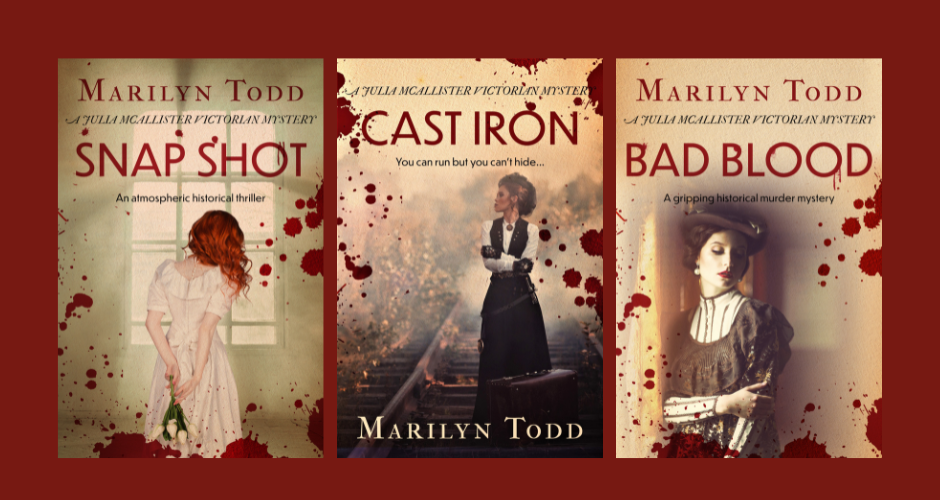
Today, we are delighted to spotlight Marilyn Todd, author of the Julia McAllister Victorian Mysteries series.

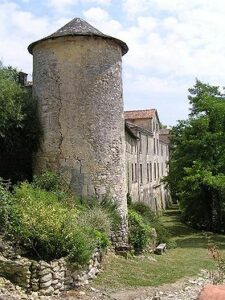
Medieval castle at the bottom of Marilyn’s garden

Living on a French hilltop, with a medieval castle at the bottom of our garden, Roman remains beside a river in the valley, and with the Hennessey Cognac estate on one side, Martell on the other — I couldn’t ask for a lovelier or more tranquil setting.

Okay, there are diggers outside at the moment, replacing water pipes in the very same trenches the electricity people dug (then filled in) exactly one week before. But usually the loudest sound is birdsong, and the mewing of buzzards circling overhead. Just the ticket when you come home bursting with ideas that need to be turned into stories without distractions. From Sicily to Arizona, Sweden to Nova Scotia, I find inspiration everywhere.

Sweden? That was when we were walking a little out-and-back coastal path — worryingly easy to imagine two people going out, but only one of them coming back.

Nova Scotia? Who wouldn’t be inspired by the biggest disaster no one’s ever heard of, when a French ship carrying enough explosives to end the First World War collided with a Norwegian ship coming the wrong way up the channel? The explosion took close to 2,000 lives, injured 9,000 more, destroyed everything in a half-mile radius, spiked a tsunami, and scattered debris several miles inland.

Sicily drew me back to ancient history, inspiring the second book in the Claudia Seferius series, Virgin Territory, as well as Blind Eye — set in Ancient Greece this time, rather than Rome — and debunked the myth of the Cyclops.

As always, Arizona never fails to deliver, especially when my story ‘The Wickedest Town in the West’ scooped an Ellery Queen’s Mystery Magazine award, of which I am ridiculously proud.

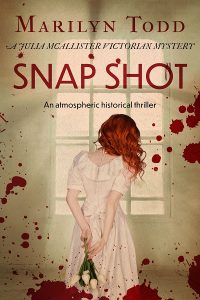
But while we travel a lot, not everything I write is inspired by breathtaking scenery, adventures and legends. My first series with Sapere Books, which kicked off with Snap Shot, was influenced by the emerging science of forensic evidence at the end of the nineteenth century, and the importance of studying crime scenes. Hence Britain’s first crime scene photographer, Julia McAllister.

My new Firefly series, coming soon with Sapere, tackles the inequalities women faced in Edwardian times, especially domestic violence, which was banned between the hours of 10 p.m. and 7 a.m. because the noise interrupted other people’s sleep. Battling the system is Kitty Sullivan, who runs a gentleman’s club with a fleet of … let’s say exotic dancers, to fund a women’s refuge. Environments that, unsurprisingly, provoke dangerous situations, which Kitty faces down with charm, wit and, of course, a silver Derringer.

After all, there’s no point in having double standards, if you don’t live up to both of them.

The Manors of the Wentworth Family Regency Saga by Graham Ley

In this behind-the-scenes blog series, Sapere Books authors offer an intriguing insight into how, where and why they write.

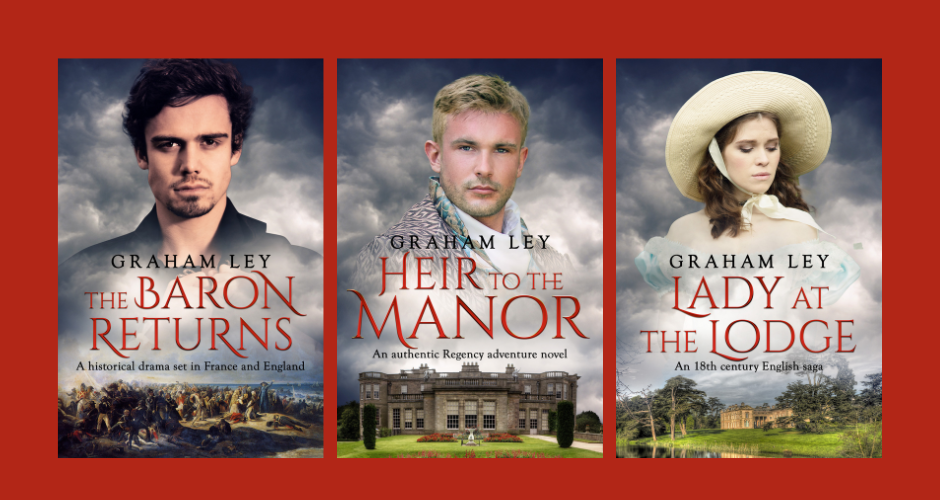
Today, we are delighted to spotlight Graham Ley, author of the Wentworth Family Regency Saga Series.

Brittany, really, has been my place for my writing. There lies inspiration and the prompt to be historical, implicit in the ancient stone and timber that surrounds you, and the glimpses from the road of almost hidden farmhouses and squat barns of sturdy beauty — sometimes deserted but strangely still standing. And that region across the Channel has an uncanny relationship with Devon and its history, embedded in its own cob-and-timber beauties, and those oddly contrasting stone manor houses.

How better to link the two regions than with the story of a family that was both Devonian and Breton, in the mid-1790s when the buildings were still full of life and yet conflict was raging? It was bound to be the case that at some point I would catch, in passing, the misty outline of the Breton manor that would lie at the heart of the story — a home that had been emptied by the Revolution in France, but which would be gradually restored in quite unpredictable ways. That manor came into being in partnership with another that would be in Devon, both of great antiquity but which had, in different ways, been brought up to date. Two homes that might contain threat as well as comforting familiarity, both put together from what I had seen across the two regions.

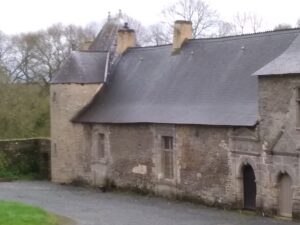
Manoir du Val au Houx, Brittany

In the saga, Chittesleigh in Devon and Kergohan in Brittany are manors with orchards and gardens. Both sit in the heart of farmland and woodland, with its capacity to conceal, protect and yet also harbour danger. It was only when I was finishing the fourth and final book of the saga that I stumbled on a truly striking vision of Kergohan, nestling in a valley only a mile or so from where I was staying. Its medieval aspect is pictured here, but it also has a shorter, eighteenth-century façade with a portico. So it seems that you can only sum up when you have finished. In the meantime, a building takes shape from the inspiration and the uncertain lives of its characters: they fill it with aspirations, fears and suspicions, which only their love for each other may come to quieten.

How I Write by C.P. Giuliani

In this behind-the-scenes blog series, Sapere Books authors offer an intriguing insight into how, where and why they write.

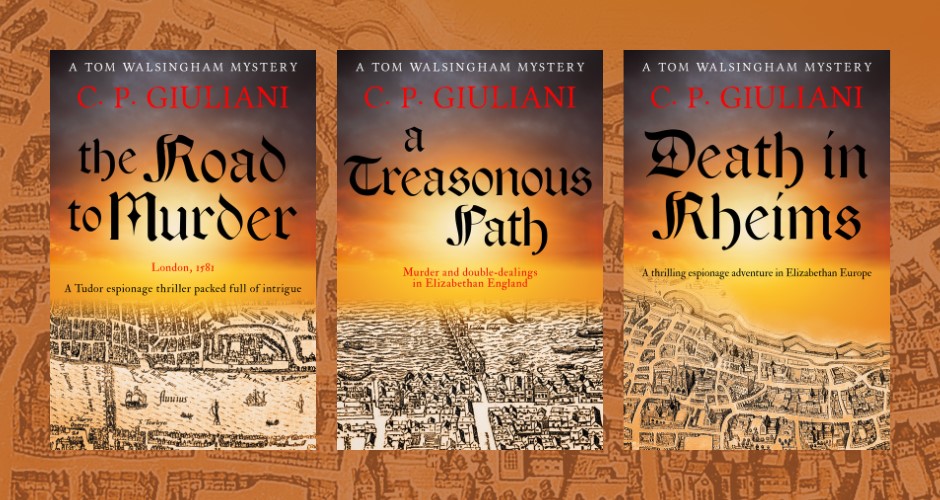
Today, we are delighted to spotlight C.P. Giuliani, author of the Tom Walsingham Mysteries Series.

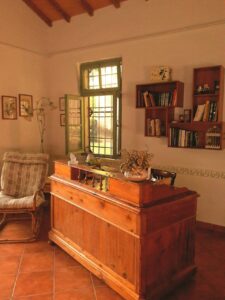
C.P Giuliani’s garden house

Every year, as soon as summer comes, I move my writing to the garden house. It’s not really cooler, as temperature goes, but it feels summery and pleasant. I love the tall ceiling, the terracotta floor, the desk that used to belong to my great-grandfather, and the view onto the garden. There’s a little pond outside the French windows, and the birds bathing or drinking are, I confess, something of a distraction — but they also provide a cheerful break whenever I find myself stuck. A paragraph refusing to take the right shape? A character mutinying? A dull passage? I step away from the desk and watch while the blackbirds play in the water — and, more often than not, a solution will suggest itself.

For all its rustic pleasantness, the garden house has decent Wi-Fi — which is rather essential when my pile of reference books is not enough to confirm some detail — and is equipped with an electric kettle to make cup after cup of tea, which is a fundamental of my writing method.

In truth, beyond the insane amounts of tea, I have little in the way of a writing routine. Working in theatre means that my hours are flexible. Sometimes I write in the morning, sometimes very late at night, sometimes both; sometimes I must snatch the odd hour here and there, between a rehearsal session and a meeting with the techs. One thing I do is to always keep a notebook with me. Through the years, I’ve learnt to keep a dedicated notebook for each project, beside a general one for everything and anything: notes, stray ideas, snatches of dialogue overheard or imagined, lists, questions… It’s the general notebook that I carry around, so I can jot down anything that occurs to me — to be transferred to the relevant one later. This means that I do some of my writing at the theatre, at the vet’s, as I stand in a queue at the Post Office…

My family, friends and colleagues have developed a high degree of amused tolerance for my ‘Notebook Moments’, when I drop whatever I’m doing to take a note; strangers are occasionally a little put out until I explain that, for one thing, I’m prone to forgetting what I don’t write down and, for another, sometimes an idea will present itself in a very iridescent shape, little more than a flicker of colour under the surface of the water — and will need to be recorded quickly and thought through in writing, at least a little, if it’s to be of any use.

So to recap, I’m absent-minded, easily distracted, forgetful, and can’t keep a routine… I suppose it’s no wonder that a quiet, pleasant place like the garden house is important to my writing process.

The Real-life Inspiration Behind my Medieval Novels by Isolde Martyn

In this behind-the-scenes blog series, Sapere Books authors offer an intriguing insight into how, where and why they write.

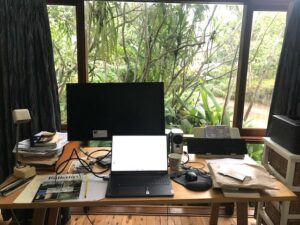
Isolde’s writing space

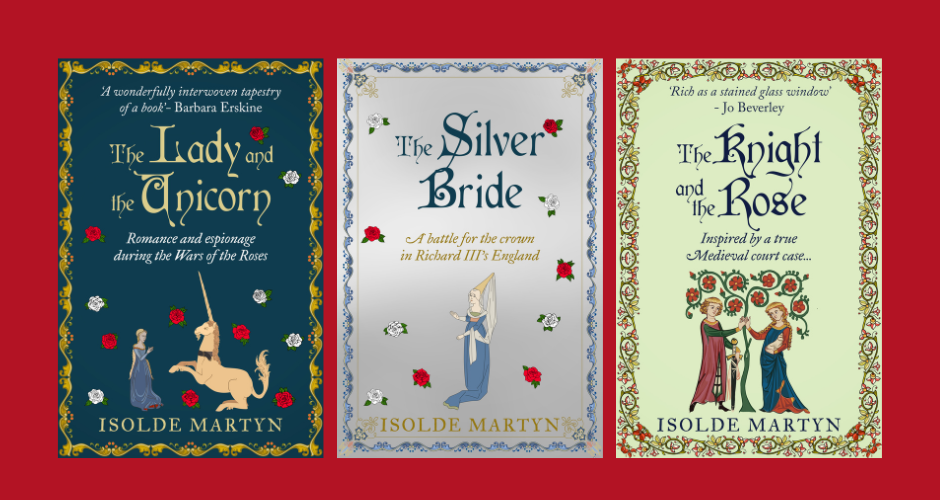
Today, we are delighted to spotlight Isolde Martyn, the author of a number of historical novels including The Lady and the Unicorn and The Knight and the Rose.

Instead of looking out at rose bushes and oak trees or hearing blackbirds, I face an office window that is flanked by palm lilies, and the bird noises come from kookaburras and sulphur-crested cockatoos. None of which is very helpful when I am attempting to describe a scene in fifteenth-century England or thirteenth-century France. Living in Sydney, my research is limited to the occasional overseas trip or the internet. Fortunately, the latter is so fantastic these days and British History Online is now one of my go-to places.

Inspiration? Visiting Carcassonne and Minerve in France and hearing how the Northern French crusaders ransacked the land of the troubadours. Or sometimes it’s someone’s talk quivering my antennae. My second novel, The Knight and the Rose, resulted from hearing a fellow historian cite a rare medieval divorce case that involved a ‘green card’ situation. My third book, The Silver Bride, was hatched from reading of a daughter dressing in armour to fight a duel for her cowardly dad, plus wondering what it would have been like to be a clairvoyant woman back in the 1480s. The Golden Widows arose out of a friend taking me to visit Shute Barton in Devon and hearing about Warwick the Kingmaker’s youngest sister losing seven menfolk in battle. That gave rise to the idea of two young widows on opposite sides in the Wars of the Roses in the early 1460s: Katherine Neville and Elizabeth Woodville.

Historical novelists tend to go over the ground with a metal detector trying to find new angles. It becomes a challenge, especially with the Tudors. Fortunately, the character who was trying to get my attention was from the previous century and one of history’s most mysterious wheelers and dealers, the twenty-nine-year-old Duke of Buckingham, Richard III’s cousin, and so the tale of a villain and a loser came to life in The Devil in Ermine.

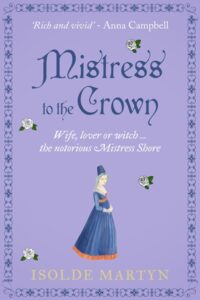
‘Write a woman next, a shameless gold-digger,’ suggested my agent. It didn’t work. Instead, on further acquaintance that most appealing of royal mistresses, Elizabeth Lambard — aka ‘Shore’s wife’ — took charge of the writing, and away we went with Mistress to the Crown.

I still envy novelists living in the UK for being able to easily do location research, but living in Australia hasn’t stifled my lifelong interest in… Oh, there goes another kookaburra!

How I Write by Neil Denby

In this behind-the-scenes blog series, Sapere Books authors offer an intriguing insight into how, where and why they write.

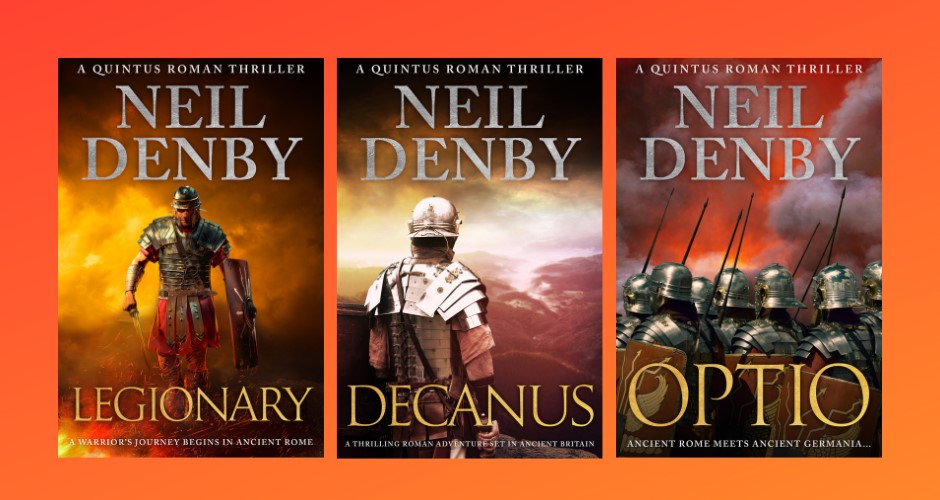
Today, we are delighted to spotlight Neil Denby, author of the Quintus Roman Thriller series.

Inspiration can come at any time of the day or night, but I find that the small hours are awash with ideas — plot lines, character development, a resolution to a particularly tricky scenario — so it is important that I keep a notepad and pencil by the bed. It may be old-fashioned but it is also reliable and has the advantage of not involving bright screens.

Frustratingly, come morning, I cannot always decipher what I have written down, but sometimes there are gems. These may be character or plot evolution, or perhaps just phrases, but I know I would have forgotten them completely if I had not made a note.

While out walking — an excellent way to clear the brain of fog — I defer to modern technology and record voice notes on my mobile phone. The same principle applies — if there is no immediate record, the thoughts can be lost.

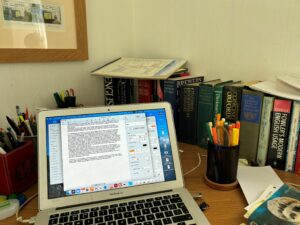
These brief lines are later transferred to a laptop. This is strategically placed in a corner of my study so that I am not distracted by the view outside the window. A row of reference books and one of my favourite possessions, an original Steve Bell cartoon, are all that I have for company. It also helps if I can visualise a character or a place, so I keep a sketchpad on my desk where I can create basic images — maps, plans, sometimes the progress of marches or battles. These drawings help to maintain consistency and authenticity.

This is my primary space, where the words are typed up. I add to them, enhance them, contextualise them, read them back. I often discover that I have used a particular word or phrase twice or more. Or if there is something I’m not sure about, I look it up. The reference books help to straighten out facts and also to find alternative words. Roget’s and Brewer’s and Fowler’s and Chambers provide a wealth of information unmatched by an American-leaning internet. I admit to slipping down rabbit holes of etymology and semantics, but find it strangely satisfying.

I always have to read what has been written, in context with the book so far. Traditionally that would have meant printing the manuscript out and sitting down with a pencil. Happily, that is no longer the case. Instead (thanks to everything going up into the Cloud) I can now read and review on my iPad. This means I can lounge in a chair, or sit outside, or read whilst travelling. So it is more a case of recreating the experience of the reader to see how and if things work.

Of course, there are edits, and actual printouts sometimes, but that is basically it: pencils and pads and technology.

Oh technology, where were you when I had all those essays to write at school?