How I Write by Angela Ranson

In this behind-the-scenes blog series, Sapere Books authors offer an intriguing insight into how, where and why they write.

Today, we are delighted to spotlight Angela Ranson, author of the Catrin Surovell Tudor Mysteries.

Angela’s study

I write in my study, which doubles as a playroom for my two cats. I love having their energy and curiosity as the backdrop for my writing. This is especially true because I write about a world long dead — Tudor England — and try with every scene to bring it back to life.

My books centre around the early years in the reign of Elizabeth I (the 1560s), which I studied when I earned my doctorate in sixteenth-century English history. I live in York, within a stone’s throw of King’s Manor. This was the building where Henry VIII stayed in 1536, and his suite of rooms is now one of the University of York’s libraries. If you stand at the back of the building, you can see a tiny window that leads to nowhere: it originally let some light into Henry’s specially-made toilet, or garderobe.

I love that York has these little historical treasures; I go looking for them whenever I have the opportunity. That isn’t as often as I would like, because I write between the hours dedicated to two jobs at the university. Writing is what I do to relax, to escape from the trials of daily life. Thus, you’ll often see me writing while I eat my supper, or early on a Saturday morning when I’m still in my pyjamas. Turns out, those are the hours when dreams come true.

The Manors of the Wentworth Family Regency Saga by Graham Ley

In this behind-the-scenes blog series, Sapere Books authors offer an intriguing insight into how, where and why they write.

Today, we are delighted to spotlight Graham Ley, author of the Wentworth Family Regency Saga Series.

Brittany, really, has been my place for my writing. There lies inspiration and the prompt to be historical, implicit in the ancient stone and timber that surrounds you, and the glimpses from the road of almost hidden farmhouses and squat barns of sturdy beauty — sometimes deserted but strangely still standing. And that region across the Channel has an uncanny relationship with Devon and its history, embedded in its own cob-and-timber beauties, and those oddly contrasting stone manor houses.

How better to link the two regions than with the story of a family that was both Devonian and Breton, in the mid-1790s when the buildings were still full of life and yet conflict was raging? It was bound to be the case that at some point I would catch, in passing, the misty outline of the Breton manor that would lie at the heart of the story — a home that had been emptied by the Revolution in France, but which would be gradually restored in quite unpredictable ways. That manor came into being in partnership with another that would be in Devon, both of great antiquity but which had, in different ways, been brought up to date. Two homes that might contain threat as well as comforting familiarity, both put together from what I had seen across the two regions.

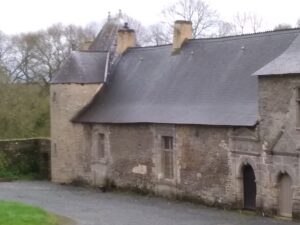
Manoir du Val au Houx, Brittany

In the saga, Chittesleigh in Devon and Kergohan in Brittany are manors with orchards and gardens. Both sit in the heart of farmland and woodland, with its capacity to conceal, protect and yet also harbour danger. It was only when I was finishing the fourth and final book of the saga that I stumbled on a truly striking vision of Kergohan, nestling in a valley only a mile or so from where I was staying. Its medieval aspect is pictured here, but it also has a shorter, eighteenth-century façade with a portico. So it seems that you can only sum up when you have finished. In the meantime, a building takes shape from the inspiration and the uncertain lives of its characters: they fill it with aspirations, fears and suspicions, which only their love for each other may come to quieten.

Becoming a Novelist is a Matter of History by David Field

In this behind-the-scenes blog series, Sapere Books authors offer an intriguing insight into how, where and why they write.

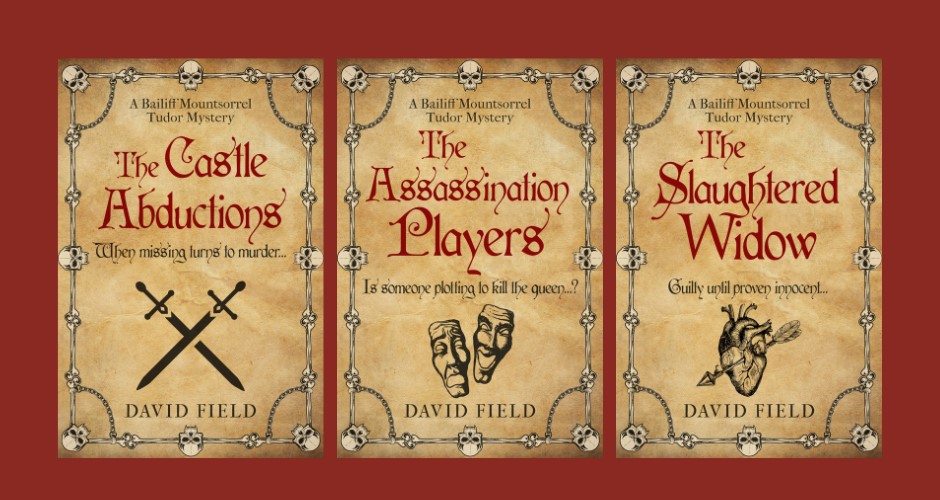
Today, we are delighted to spotlight David Field, author of numerous historical series including the Bailiff Mountsorrel Tudor Mystery Series and the New World Nautical Saga Series.

I’ve always written stories, even as a child, then I progressed from childhood scribbles to more serious attempts at literary glory on an old upright Olivetti typewriter (one of those with a red and black ribbon, if you’re old enough to remember) when my handwriting graduated from ‘untidy’ to ‘execrable’.

Reluctantly I then honoured my mother’s wish, and my father’s insistence, and got a ‘real job’ as a criminal trial lawyer, which was about as relaxing as standing on one leg on the top outer ledge of The Shard in London, without the reassurance of a safety harness. To relieve the stress I decided to start working on a novel — but what should I choose for a genre?

A good friend of mine who already earned a precarious living as a novelist was insistent that one should always write about things that one knows, and by this stage I knew two things outside my professional straightjacket — some history from my schooldays, and the streets of my home town, Nottingham. During the final years of my working life I spent stolen moments imagining the lives of those living in Nottingham during the Luddite Riots, and In Ludd’s Name was eventually published by a boutique publishing house owned by an old school friend.

Bitten by the bug, and buoyed up by having finally been published, I grew ambitious, and searched the history books for possible storylines, most notably from that most colourful of periods of English history, the Tudor era. The literary world seemed to be awash with Henry VIII, Anne Boleyn, Elizabeth I and even ‘Bloody Mary’, but two seminal characters from that era seemed never to have received much attention from novelists.
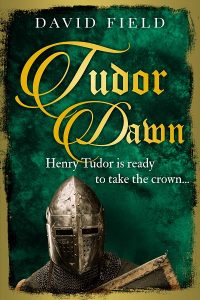
First was the progenitor of the Tudors, the boy from Wales, Henry VII, and I climbed inside his head to bring to the pages that followed his boyhood imprisonment in a bleak castle in South Wales, his youthful exile in Brittany, his triumphant return at the head of a ramshackle army that deposed Richard III at Bosworth, and his love match with Elizabeth of York that brought the Wars of the Roses to an end in the nursery rather than on the battlefield. To my delight, and secret surprise, I found a publisher — Sapere Books — and Tudor Dawn was launched.
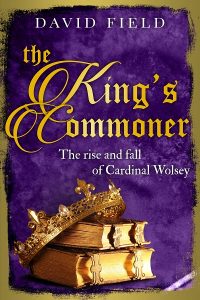
Then — unbounded joy and amazement! — Sapere wanted another one, so this time I focused on a butcher’s son from Ipswich who rose from obscurity to become Archbishop of York, Papal Legate for life, Lord Chancellor and the diplomacy coach of choice of Henry VIII. Cardinal Thomas Wolsey’s spectacular downfall was just as dramatic, and The King’s Commoner was published, as testament to the fact that I had a second novel in me.

Dozens of titles have since been published, all by Sapere Books, and all ‘historical’ in genre. As one of the characters in Alan Bennett’s delightful creation, The History Boys, says of history — ‘It’s just one ******* thing after another’, and so it has been for me.

The Real-life Inspiration Behind my Medieval Novels by Isolde Martyn

In this behind-the-scenes blog series, Sapere Books authors offer an intriguing insight into how, where and why they write.

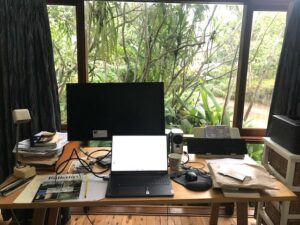
Isolde’s writing space

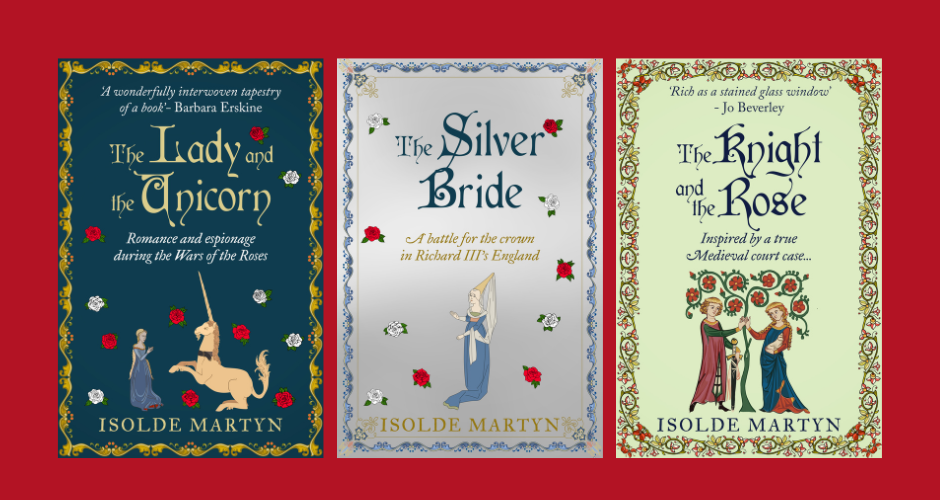
Today, we are delighted to spotlight Isolde Martyn, the author of a number of historical novels including The Lady and the Unicorn and The Knight and the Rose.

Instead of looking out at rose bushes and oak trees or hearing blackbirds, I face an office window that is flanked by palm lilies, and the bird noises come from kookaburras and sulphur-crested cockatoos. None of which is very helpful when I am attempting to describe a scene in fifteenth-century England or thirteenth-century France. Living in Sydney, my research is limited to the occasional overseas trip or the internet. Fortunately, the latter is so fantastic these days and British History Online is now one of my go-to places.

Inspiration? Visiting Carcassonne and Minerve in France and hearing how the Northern French crusaders ransacked the land of the troubadours. Or sometimes it’s someone’s talk quivering my antennae. My second novel, The Knight and the Rose, resulted from hearing a fellow historian cite a rare medieval divorce case that involved a ‘green card’ situation. My third book, The Silver Bride, was hatched from reading of a daughter dressing in armour to fight a duel for her cowardly dad, plus wondering what it would have been like to be a clairvoyant woman back in the 1480s. The Golden Widows arose out of a friend taking me to visit Shute Barton in Devon and hearing about Warwick the Kingmaker’s youngest sister losing seven menfolk in battle. That gave rise to the idea of two young widows on opposite sides in the Wars of the Roses in the early 1460s: Katherine Neville and Elizabeth Woodville.

Historical novelists tend to go over the ground with a metal detector trying to find new angles. It becomes a challenge, especially with the Tudors. Fortunately, the character who was trying to get my attention was from the previous century and one of history’s most mysterious wheelers and dealers, the twenty-nine-year-old Duke of Buckingham, Richard III’s cousin, and so the tale of a villain and a loser came to life in The Devil in Ermine.

‘Write a woman next, a shameless gold-digger,’ suggested my agent. It didn’t work. Instead, on further acquaintance that most appealing of royal mistresses, Elizabeth Lambard — aka ‘Shore’s wife’ — took charge of the writing, and away we went with Mistress to the Crown.

I still envy novelists living in the UK for being able to easily do location research, but living in Australia hasn’t stifled my lifelong interest in… Oh, there goes another kookaburra!

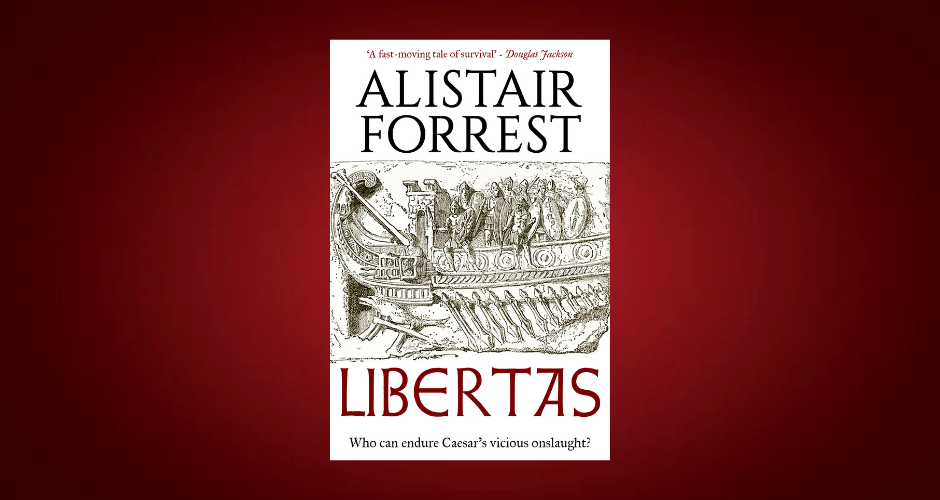
Libertas is Out Now

Congratulations to Alistair Forrest, whose action-packed Roman adventure, Libertas, is out now!

Hispania Ulterior, 51 BC

The son of a baker, young Melqart has lived all his life in Munda — an idyllic mountain town untouched by the troubles of Rome.

But when General Pompey sends his sons, Gnaeus and Sextus, to create strongholds and raise new legions, the citizens of Munda find themselves pulled into Rome’s conflicts. Recognising Melqart’s talents as an engineer and strategist, Sextus soon recruits him to his cause.

As tensions between Pompey and his political rival, Julius Caesar, reach breaking point, it seems that Munda is set to become a battleground.

And as darkness begins to fall over his beloved homeland, Melqart must summon all of his courage and ingenuity to save his community from destruction…