The Thirteenth Apostle is Published Today!

Congratulations to R. M. Cullen, whose page-turning historical murder mystery, The Thirteenth Apostle, is published today!

The Thirteenth Apostle is the Richard Brinsley Sheridan Mysteries: eighteenth-century crime thrillers set in London at a time of Revolution.

1793

England is at war with France and London is teeming with spies and agents.

Pitt’s Government has become increasingly repressive and poses a threat to liberal reformers like the playwright Richard Brinsley Sheridan.

Meanwhile, other terrors stalk the night streets of the city. There is a killer abroad, targeting homosexual men. Each victim has been marked with an arcane symbol carved into their brow.

When one of Sheridan’s actors, Andrew, is found murdered in a Covent Garden bagnio the playwright is drawn into the murky world of hidden lives and secret liaisons as he tries to apprehend the assassin.

And as the number of victims begin to mount and someone in Sheridan’s inner circle comes under attack, the need to stop the ruthless killer becomes more urgent.

Can Sheridan advocate for the victims who are scorned by most of society? Will he find justice for their untimely deaths?

Or will this new London prove the perfect breeding ground for murderous fanatics…?

Death’s Long Shadow is Published Today

Congratulations to R. M. Cullen, whose twisty murder mystery, Death’s Long Shadow, is out now!

Death’s Long Shadow is the second instalment in the Richard Brinsley Sheridan Mystery Series: eighteenth-century crime thrillers set in London at a time of Revolution.

1792

Playwright Richard Brinsley Sheridan’s retreat to the country is interrupted when he stumbles upon a body during a woodland stroll.

The man is identified as Edward Stretton, cousin to Earl Cannock who Sheridan is residing with.

Stretton had a reputation as a scoundrel and seducer and was heavily in debt at the time of his death.

He had been poisoned, and when the Earl’s servants are questioned, unusual evidence puts one man in custody.

But Sheridan is not convinced of his guilt. And one another man is murdered, he suspects there may be a connection.

Can Sheridan uncover the link? Could he save an innocent man from death?

Or will this case prove too complex for this amateur sleuth…?

The Long Delayed Revenge is Out Now!

Congratulations to David Field, whose Victorian thriller, The Long Delayed Revenge, is out now!

The Long Delayed Revenge is the tenth instalment in the Esther and Jack Enright Mystery Series – a traditional British detective series set in Victorian London and packed full of suspense.

London, 1899

Jack and Esther Enright, with their four children in tow, have recently moved to a comfortable new home. Esther has settled into her dream job as headmistress of the local private school, owned by her mentor Emily Allsop.

But things are not going so well for Jack. Though he does not mind the commute to his high-ranking desk job at New Scotland Yard, he is disturbed by the level of recent resignations in by uniformed constables in the East End.

Though the police force has always been used to tackling crime in the more impoverished parts of London, a recent influx of Russian immigrants has led to gang warfare and vigilante justice which is proving impossible to control.

And when Esther’s school is vandalised with a disturbing message, he finds his detective skills are needed closer to home as well.

Things escalate when one of the young pupils is abducted and Jack needs all the help he can get in finding the perpetrator before it is too late.

Can Jack and Esther solve another case together? Will they rescue the child in time?

Or will the unrest in London prove too much for even Jack to handle…?

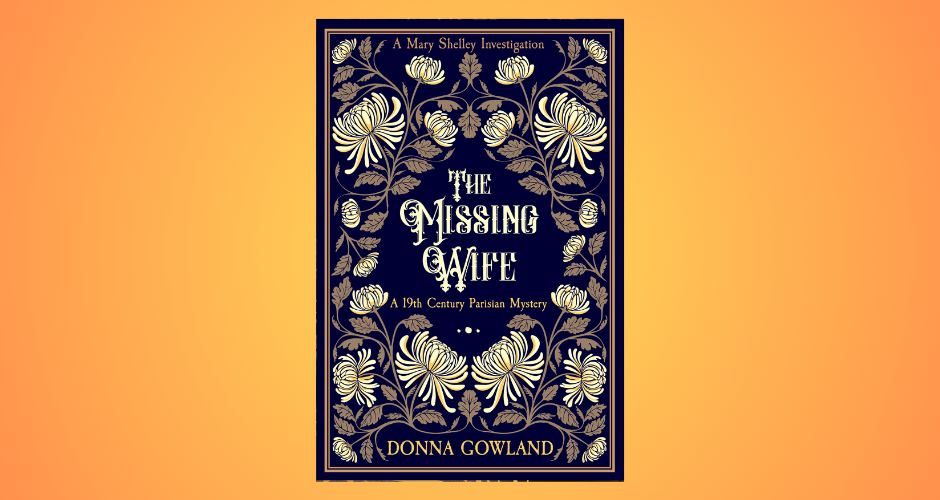
The Missing Wife is Out Now!

Congratulations to Donna Gowland, whose absorbing murder mystery, The Missing Wife, is out now!

The Missing Wife is the first book in the Mary Shelley Investigation series.

1814, London

It isn’t easy being the daughter of the great Mary Wollstonecraft, harder still to navigate life without her. 16-year-old Mary Godwin is desperate for excitement and trapped in a family she feels stifled in, under the watchful, disapproving glare of her stepmother Mary, she is constantly battling for her father’s attention and approval.

So when the young Romantic poet, Percy Shelley, comes blazing into her life, she falls quickly and deeply in love with him. But Percy has plenty of demons. He is already married with a second child on the way, and he turns up to the Godwin family home with a bottle of laudanum, declaring he will end his life if he cannot be with Mary.

William Godwin forbids contact between them, but Mary’s heart aches for the man she believes to be her soulmate. And so she agrees to elope to Paris.

The excitement of the journey soon wears off and they arrive in the city weary, travel-sick and penniless, though luck finally seems to be on their side when they meet a man who offers them money to find his missing wife.

But with Mary becoming increasingly homesick and concerned for her future, will her love affair with Percy be all she had hoped for? Could the search for the missing wife set her on a new course of self-discovery?

Or will her first daring adventure prove to be her downfall…?

Congratulations to David Field!

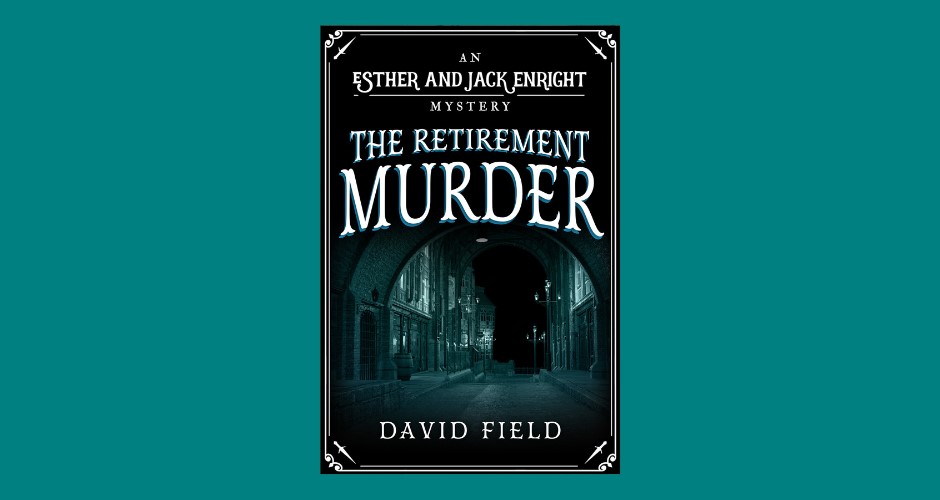
Congratulations to David Field, whose twisty Victorian thriller, The Retirement Murder, is out now!

The Retirement Murder is the ninth instalment in the Esther and Jack Enright Mystery Series – a traditional British detective series set in Victorian London and packed full of suspense.

London, 1898

The time has finally come for Percy Enright to retire from Scotland Yard. His nephew, Jack, is sad to lose a partner in the force, but Jack’s wife Esther is glad Percy won’t be getting her husband into any further scrapes.

It seems Esther’s relief might be short lived, though, when a senior officer collapses at Percy’s farewell ceremony.

It soon becomes clear that the officer was poisoned, and Percy delays retirement to help Jack track down the culprit.

It’s a daunting task that involves trawling through all the murdered officer’s recent cases in the search for someone who may still bear him a grudge.

But when it becomes clear the dead man may not have been the intended target, the investigation suddenly turns in a new direction.

Why are the police being targeted? Can Percy make one final arrest before he retires?

Or will the murderer outwit the Enrights in their latest case…?

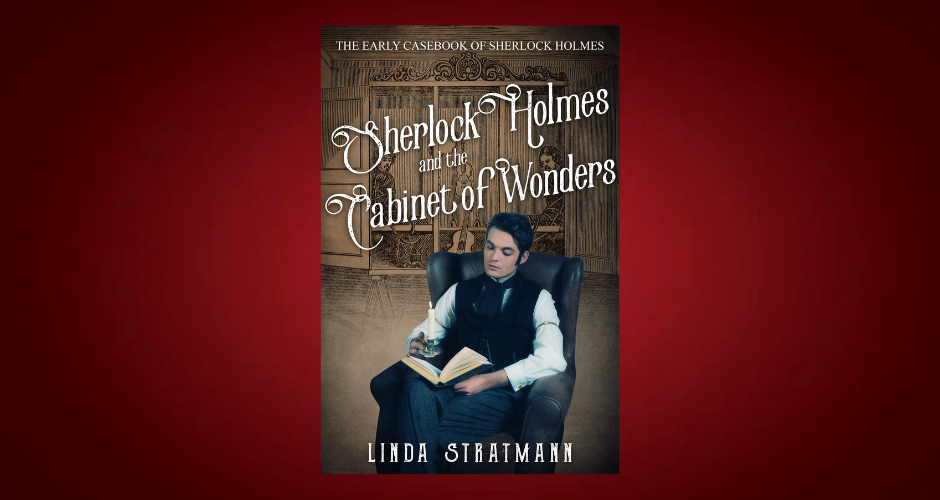
Sherlock Holmes and the Cabinet of Wonders is Out Now!

Congratulations to Linda Stratmann, whose absorbing Victorian mystery, Sherlock Holmes and the Cabinet of Wonders, is out now!

Sherlock Holmes and the Cabinet of Wonders is the eighth novel in the Early Casebook of Sherlock Holmes series.

1878

Sherlock Holmes is in a slump of despair and self-doubt following his recent encounter with his brother Mycroft and his good friend Mr Stamford is determined to snap him out of it.

When Stamford hears of a new show being put on at the Egyptian Hall Theatre, he brings Holmes with him for a night of diversion.

But for Holmes, the outing leads to something much more stimulating…

A few days later, a corpse is found inside the cabinet used for one of the conjuror’s acts at the theatre, and at first it appears the death was accidental.

But Holmes soon realises it was the result of something more sinister. And lurking beneath the surface of the magician’s code of conduct is a murky world of false identities and professional jealousy.

There are secrets in the world of illusion that people would kill to keep hidden…

And if they are not careful, Holmes and Stamford could be the next targets…

Sapere Books Sign New Scotland Yard Series by Michael Fowler

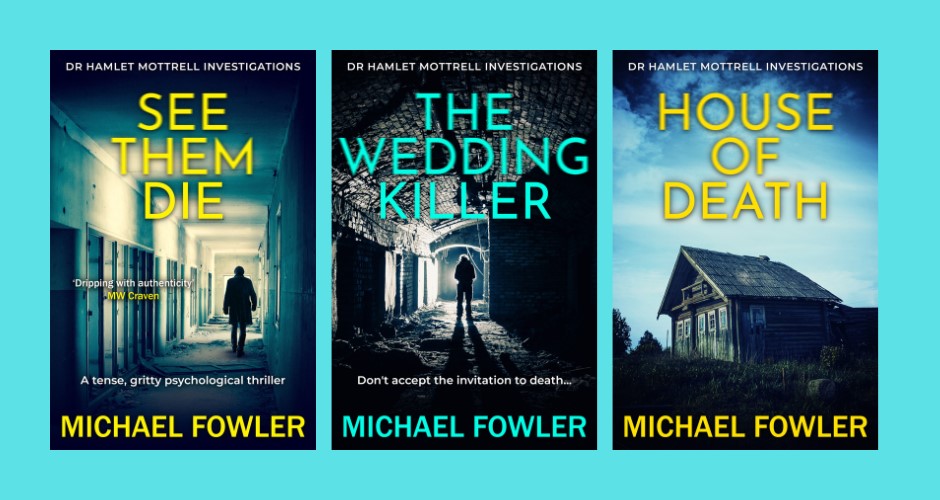
Following the success of his DS Hunter Kerr Investigations and Dr Hamlet Mottrell Investigations, we are delighted to announce that we have signed a new historical police procedural series by Michael Fowler.

In Michael’s words:

“My new series features Detective Winter Cooper of Scotland Yard and is set in the 1950s.

“Detective Cooper’s first case is based upon a real event, the Eastcastle Street robbery — Britain’s biggest cash-in-transit hold-up at the time. In May 1952, robbers used two cars to sandwich a Post Office van in London and escaped with mailbags containing £287,000 (estimated to be worth approximately £8,500,000 today). It was a case that shocked the nation and embarrassed the Government, with Prime Minister Winston Churchill demanding daily updates from the Police Commissioner. Despite the involvement of over a thousand police officers, and the offer of a £25,000 reward, no one was ever caught.

“This is my take on that case, and while it is a deviation from my contemporary novels, I hope readers will embrace Winter Cooper with the same enthusiasm that I have put into creating him and this new series.

“Working with Sapere Books again was an easy decision to make. Over the past five years, they have given me so much support as a writer and I cannot thank them enough. When I ran the idea of this new series past them, their backing was unflinching.”

Congratulations to Keith Moray!

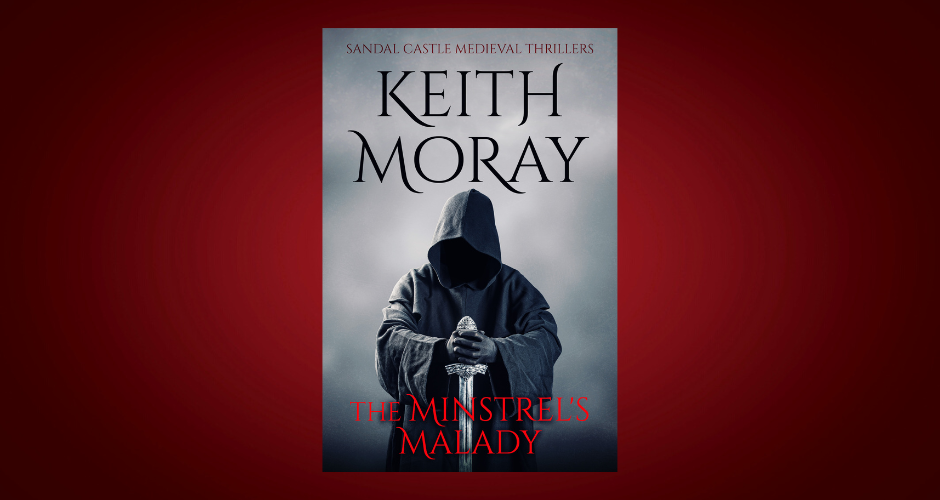
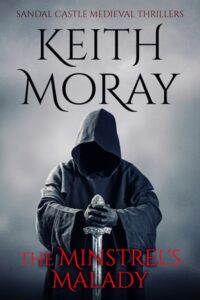
Congratulations to Keith Moray, whose gripping Medieval mystery, The Minstrel’s Malady, is published today!

The Minstrel’s Malady is the fifth book in the Sandal Castle Medieval Thrillers series: historical murder mysteries set in Yorkshire.

1330, Yorkshire, England

Edmund of Woodstock, the Earl of Kent, is executed for High Treason against King Edward III.

At his trial, it is claimed that a demon was conjured up by a monk versed in the Dark Arts, who told him that his brother, King Edward II, still lived.

Keen to quell rumours of sorcery that could do untold damage to the royal house and to the country, Sir Richard Lee, Sergeant-at-Law, is instructed by Sir Roger Mortimer and Queen Isabella, the king’s mother, to seek out the monk who delivered the message.

When a minstrel is struck down by a seizure before Sir Richard’s court, many believe the man to be possessed of a demon. Richard’s assistant, Hubert of Loxley, is given the task of riding to Cawthorne Priory to deliver the minstrel into the care of the monastery hospital.

Also at the priory is the anchorite, Sister Odelina, blessed with visions and the power to heal the sick.

But when a number of sinister deaths take place at the priory, blame falls upon the minstrel and the demon inside him.

Are the deaths the work of evil spirits? Or is there a murderer in their midst…?

With panic on the rise, can Sir Richard discover the truth before evil strikes again…?

Tudor Law and Order by David Field

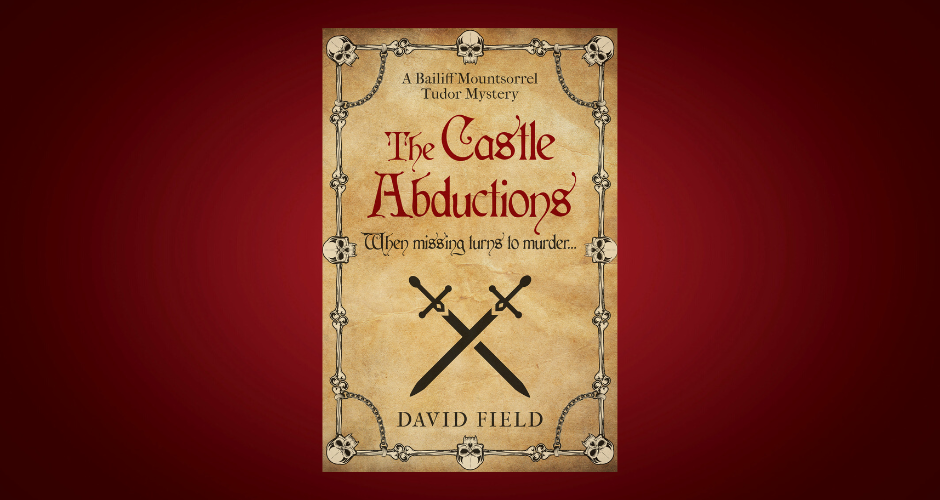
David Field is the author of numerous historical series, including the Bailiff Mountsorrel Tudor Mystery Series: private investigation crime novels set during the reign of Elizabeth I and beyond.

My new series features the exploits of two sheriffs’ bailiffs during the Tudor and later the Stuart eras. For me it was a labour of love because it involved researching the history of Nottingham, where I was born and raised during the immediate post-war years.

In my novels, Edward Mountsorrel and Francis Barton are colleagues in adjoining jurisdictions who have become close friends. Their work involves enforcing the law and investigating crime, under the direction of their respective employers, the Sheriff of Nottinghamshire and the Sheriff of Nottingham. The fact that there are two separate sheriffs, one for the county and the other for the town, arises from a quirk of Nottingham’s history that also explodes one of the elements of the legend of Robin Hood, Nottingham’s most famous alleged resident.

A central character in the Robin Hood myth is the dastardly Sheriff of Nottingham, but the truth is that he did not exist until 1449, at least two hundred years after Robin is said to have lurked in Sherwood Forest, to the north of the town. A charter in that year, granted by Henry VI, made Nottingham its own county, with its own sheriff and its own jurisdiction, not to mention its own courthouse. And therein lies another set of intriguing and quirky facts.

While the town continued to conduct its legal affairs in the old Guildhall in Weekday Cross, the county needed a place to do the same, conveniently located within the town itself. It therefore constructed what for many years was known as the Shire Hall, sitting proudly in the middle of one of the town’s most affluent streets, High Pavement. It was a small chunk of the county located within the town, and given that the boundary line ran through the centre of the original courtroom, the judge could be found seated in the town while the prisoner before him was located in the county. This august building is now the National Justice Museum, a popular destination for tourists.

Hopefully this will make up for several guaranteed disappointments for any tourist visiting Nottingham hoping to step into the Medieval world of Robin Hood. The city does indeed possess a castle, which features heavily in the first book in my forthcoming series, but the current edifice is now in its third manifestation. The original eleventh-century version constructed on the orders of William the Conqueror was destroyed at the behest of its own governor, Colonel John Hutchinson, at the end of the English Civil War, before Oliver Cromwell could get his hands on it. The reconstruction was then burned down by a mob during the Reform Bill Riots of 1831, and the current building — which is now a civic museum that houses old bicycles, coin collections and Japanese armour — became little better than a middle-class boarding house of dull Victorian architecture before being bought up for a song by the embarrassed city fathers.

At least the vandals couldn’t do much to diminish the grandeur of the rock on which the castle stands, a block of sandstone rising for one hundred and thirty feet above ground level. This is full of caves and passages where previous generations cut their way through the soft stone in order to create dwellings that were converted into dungeons when the castle was first constructed. At its foot sits a vintage hostelry, now known as The Ye Olde Trip to Jerusalem, that was once the castle’s in-house brewery before it became an alehouse, linked to the castle above by a series of tunnels through the sandstone. This alehouse would have been there during the time in which my novels are set, so I’ve made use of it in the first instalment, in which young women are abducted from there.

I enjoyed researching the history of my birthplace, and I think it shows in my new series, which hopefully captures the rough-and-tumble nature of law enforcement in a Tudor township.

Sherlock Holmes and the Legend of the Great Auk is Published Today

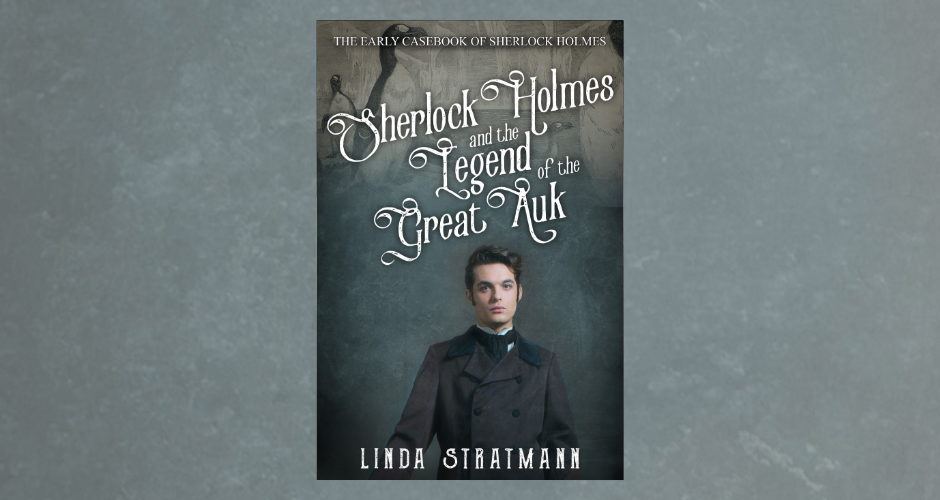
Congratulations to Linda Stratmann, whose atmospheric historical mystery, Sherlock Holmes and the Legend of the Great Auk, is published today!

Sherlock Holmes and the Legend of the Great Auk is the fifth Victorian crime thriller in the Early Casebook of Sherlock Holmes series.

London, 1877

The unveiling of a new specimen of the extinct Great Auk leads to accusations of fraud against the British Museum and a ferocious attack on the exhibit by ornithologist Charles Smith.

Sherlock Holmes is tasked with saving the reputation of the museum, but before long, Smith is found murdered.

Police think it was a random robbery gone wrong but when Holmes examines the crime scene, he is sure there is more to it.

Aided by his loyal friend Mr Stamford, Holmes is determined to discover if the museum has something to hide.

Is there more to the legend of the Great Auk? Why has this exhibit attracted so much controversy?

Could more lives be in danger…?

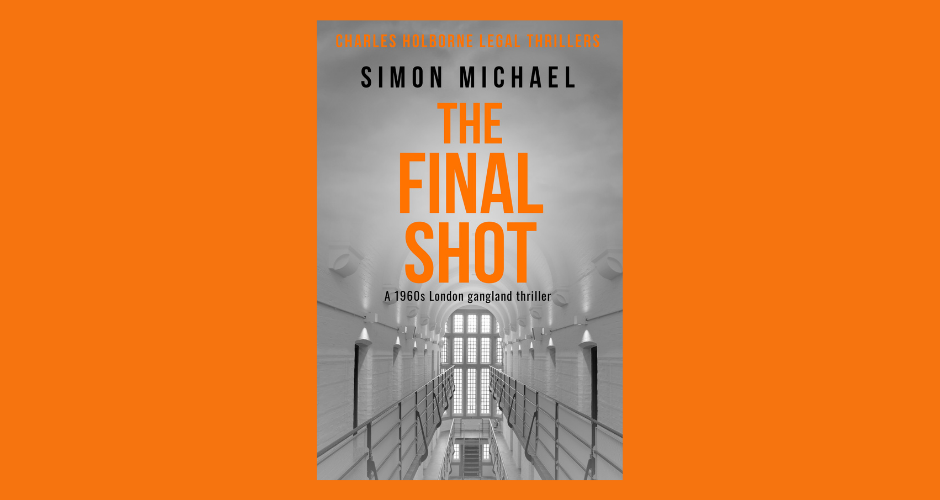
The Final Shot Published Today

Congratulations to Simon Michael, whose gripping thriller, The Final Shot, is published today!

The Final Shot is the seventh crime novel in the Charles Holborne Legal Thrillers — gritty, hard-boiled mysteries set in 1960s London.

As England eagerly anticipates the World Cup Final, barrister Charles Holborne is briefed in another high-profile case.

Once a sadistic gangster, Reverend Stanley Sharpe found God while incarcerated and has run his own parish for a number of years since being released. But when he is convicted of murdering Frank Marshall, right-hand man to the Kray twins, he is sent back to prison for life.

Convinced that he is innocent, Reverend Sharpe’s wife begs Charles to apply to the Court of Appeal to reopen the case.

With his own question marks over whether Frank Marshall is really dead, Charles agrees to take the brief on.

But with the media now casting doubt over Sharpe’s redemption, Charles knows he is bound for failure unless he can find further evidence.

And to do so he must once again cross the most dangerous men in London…


Click here to order The Final Shot

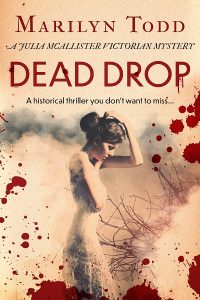
Dead Drop Published Today

Congratulations to Marilyn Todd, whose gripping historical mystery, Dead Drop, is published today!

Dead Drop is the fourth book in the Julia McAllister Victorian Mystery series: thrilling British detective novels with a courageous woman sleuth at the centre.

Seeing an easy way to pay off her debts, Julia McAllister takes in three female lodgers from a travelling show.

With musical halls more popular than ever, Buffalo Buck’s Mild West is the perfect antidote to the noise and smoke belching out of the factories, and the tide of Julia’s fortune quickly turns.

Until one of the three girls is found hanging under a bridge.

Julia doesn’t believe it was suicide. Annie had been excited about the future, not depressed.

And when another body is found on the railway line, a distraught widower, inspired by Julia’s role as crime scene photographer, asks for her help as the police are refusing to give out any details.

When Julia raises the matter with Detective Inspector John Collingwood, he explains that they’re keeping the case close to their chest because the body had ligature marks, showing he’d been chained up. Their fears are that this is just the tip of a particularly nasty iceberg.

Is Annie’s death connected to the body on the railway? Can Julia work with Collingwood to solve the mystery?

Or will the secrets they uncover put their lives in grave danger…?


Click here to order Dead Drop

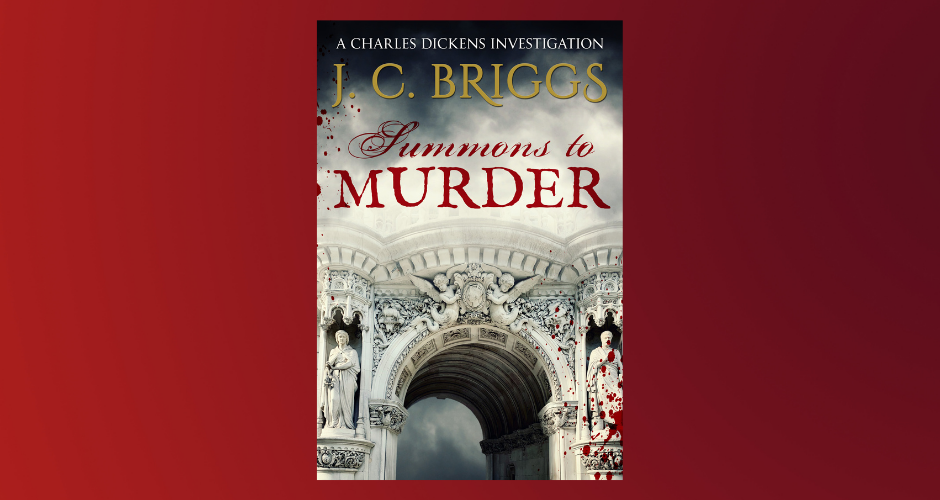
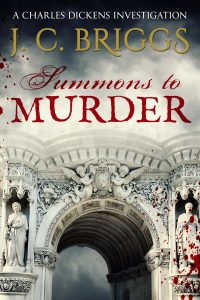
Summons to Murder Published Today

Congratulations to J. C. Briggs, whose absorbing historical mystery, Summons to Murder, is publishing today!

Summons to Murder is set in Victorian England and is the ninth book in the Charles Dickens Investigations series.

Pierce Mallory, a gentleman journalist, is found dead in his lodgings with a gunshot wound in his head and a duelling pistol beside him.

Though the death is deemed a suicide, Mallory’s friends — including Charles Dickens — don’t believe that he would have taken his own life.

Dickens therefore returns to the scene of Mallory’s demise, along with Superintendent Sam Jones from Bow Street. On further investigation, they soon find evidence that Mallory was murdered.

A notorious philanderer, there are plenty of people who could have wanted Mallory dead — including abandoned lovers and jealous husbands.

And as Dickens and Jones dig further into Mallory’s personal affairs, it seems that there are more shocking scandals waiting to be uncovered…


Click here to order Summons to Murder

The Sapere Books Historical Dagger Award Shortlist 2021

Sapere Books are proud to be sponsoring the Crime Writers’ Association’s Historical Dagger Award, which is for the best historical crime novel set in any period at least 50 years prior to the year in which the prize is presented.

The 2021 shortlist has now been announced, and features secretive aristocrats, murdered diplomats, dramatic public trials and more.


Snow, John Banville, Faber

A deftly woven country house mystery, Snow immerses us in the wintry depths of 1950s Ireland. The body of a priest has been found in Ballyglass House in County Wexford, the family seat of the mysterious aristocratic Osborne family.

Called in from Dublin to investigate, Detective Inspector St. John Strafford faces opposition at every turn as he attempts to unravel what happened. Up against the secretive attitude of the local community and the fast-falling snow, Strafford must hurry to apprehend the murderer before they can cover their tracks…

Click here to find out more about Snow


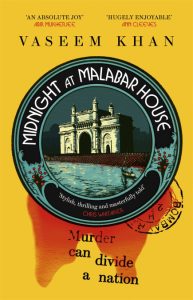
Midnight at Malabar House, Vaseem Khan, Hodder & Stoughton

Compelling and cleverly plotted, Midnight at Malabar House opens on New Year’s Eve in Bombay, 1949. The first female detective in India, Persis Wadia has been repeatedly overlooked and struggles against a hostile, all-male environment. As a new decade dawns, she stands vigil in the basement of Malabar House, consigned to the midnight shift.

But when an English diplomat is murdered, Persis is finds herself on the case of a lifetime. Against the backdrop of social and political turmoil, she teams up with Scotland Yard criminalist Archie Blackfinch to uncover the truth — at any cost…

Click here to find out more about Midnight at Malabar House


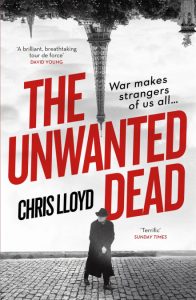
The Unwanted Dead, Chris Lloyd, Orion

A haunting thriller set in 1940s France under German occupation, The Unwanted Dead follows police detective Eddie Giral, a survivor of the previous World War. As the Nazis march into Paris, Eddie watches in dismay as terror descends over the city.

When four refugees are murdered, he vows to find the perpetrator. No longer knowing who to trust, Eddie must tread carefully between the Occupation and Resistance in order to survive long enough to untangle the brutal killings…

Click here to find out more about The Unwanted Dead


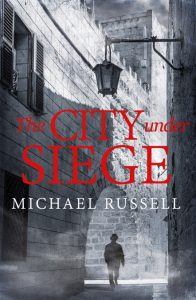
The City Under Siege, Michael Russell, Constable

Atmospheric and darkly evocative, The City Under Siege is set between Dublin, London and Valletta during World War Two. After a gay man is brutally murdered, Detective Inspector Stefan Gillespie suddenly finds that this is one of a series of similar killings stretching across Ireland and England. What’s more, none of the deaths were investigated as thoroughly as they should have been.

Meanwhile, in Valletta, Malta, there are rumours that a British soldier killed a Maltese teenager. Determined to retain Malta’s loyalty to Britain, the authorities send Stefan to investigate. And as he delves deeper into the case, Stefan becomes convinced that this killing is somehow linked to the murders back in England and Ireland…

Click here to find out more about The City Under Siege


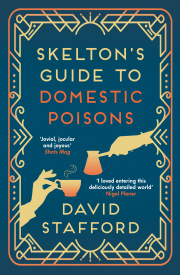
Skelton’s Guide to Domestic Poisons, David Stafford, Allison & Busby

A classic detective novel set in the 1920s, Skelton’s Guide to Domestic Poisons follows celebrated barrister Arthur Skelton as he strives to win another case against the odds. Accused of poisoning her husband after years of abuse, Mary Dutton has already been widely condemned by the press. Unwilling to concede her guilt without hard evidence, Arthur agrees to represent her.

Against the backdrop of the general election, the case becomes increasingly high-profile as Mary wins support from various members of the public. But as Skelton digs deeper into the murky depths of the Dutton family, he begins to wonder whether he will ever expose the whole truth…

Click here to find out more about Skelton’s Guide to Domestic Poisons


The Mimosa Tree Mystery, Ovidia Yu, Constable

The Mimosa Tree Mystery is the fourth book in Ovidia Yu’s witty, page-turning Crown Colony series, set in 1930s Singapore during the Japanese Occupation. Determined sleuth Su Lin becomes embroiled in another dangerous investigation when a neighbour, Mirza, is found murdered in his garden, a branch of mimosa in his hand.

Mirza was a known blackmailer and a collaborator with the occupying forces. The murder suspects therefore include acquaintances, Japanese officials and his own family. When Su Lin’s Uncle Chen is arrested, Hideki Tagawa — a former spy who has gained power in the new regime — offers her uncle’s life in exchange for Su Lin’s help in finding the real killer. Armed with her local knowledge and fluency in multiple languages, Su Lin must decide who she can trust as she is thrown into a world of treachery and subterfuge…

Click here to find out more about The Mimosa Tree Mystery

The Sapere Books Historical Dagger Award Longlist 2021

Sapere Books are proud to be sponsoring the Crime Writers’ Association’s Historical Dagger Award, which is for the best historical crime novel set in any period at least 50 years prior to the year in which the prize is presented.

This year’s judges were Janet Laurence, the author of four cookery books and a series of articles on historical cookery; Angela May Rippon CBE, a television journalist, newsreader, writer and presenter; and Professor Edward James, Emeritus Professor of Medieval History at University College Dublin.

The 2021 longlist has now been announced. Many congratulations to the following authors and publishers:

Justice for Athena by J M Alvey, Canelo Digital Publishing Limited

Snow by John Banville, Faber

Midnight at Malabar House by Vaseem Khan, Hodder & Stoughton

Riviera Gold by Laurie R King, Allison & Busby

The Unwanted Dead by Chris Lloyd, Orion Fiction, The Orion Publishing Group

Execution by S J Parris, HarperFiction, HarperCollins

The Night of Shooting Stars by Ben Pastor, Bitter Lemon Press

The City Under Siege by Michael Russell, Constable, Little, Brown Book Group

Skelton’s Guide to Domestic Poisons by David S. Stafford, Allison & Busby

Chaos by A D Swanston, Bantam Press, Transworld

The Dead of Winter by Nicola Upson, Faber

The Mimosa Tree Mystery by Ovidia Yu, Constable, Little, Brown Book Group

Sapere Books Signs a New Historical Mystery by Graham Brack

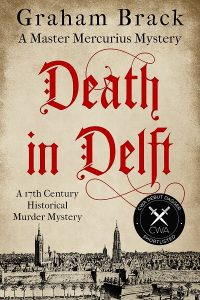
Set in seventeenth-century Leiden, The Netherlands, Graham Brack’s funny and immersive Master Mercurius Mysteries follow Mercurius — a witty university lecturer-cum-sleuth.

The first four books in the Master Mercurius series are published, and we are delighted to have signed up the next instalment: THE VANISHING CHILDREN.

In Graham’s words:

“I’ve been delighted with the response from readers to the Master Mercurius Mysteries. It’s wonderful to read good reviews, not only for myself, but also for Sapere Books, who always had faith in the stories. Being part of the Sapere family is very encouraging to any author; we enjoy our colleagues’ successes. I wouldn’t want to be anywhere else.

“The fifth book sees Mercurius sent to Amsterdam which — even in 1684 — was not a place where a minister who has led a sheltered life as he has would feel comfortable. On top of that, he has been sent to bully the city authorities into handing over their taxes in full. However, while he is there, he is approached by a local merchant who tells him that three children have gone missing, and their families have been fobbed off by Amsterdam’s powers that be.

“So begins an inquiry that makes Mercurius question his own faith as well as his suitability for the task he has been given…”


Click here to order DEATH IN DELFT

Click here to find out more about the Master Mercurius Mysteries


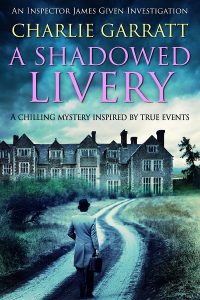
Sapere Books Sign a New Historical Crime Novel by Charlie Garratt

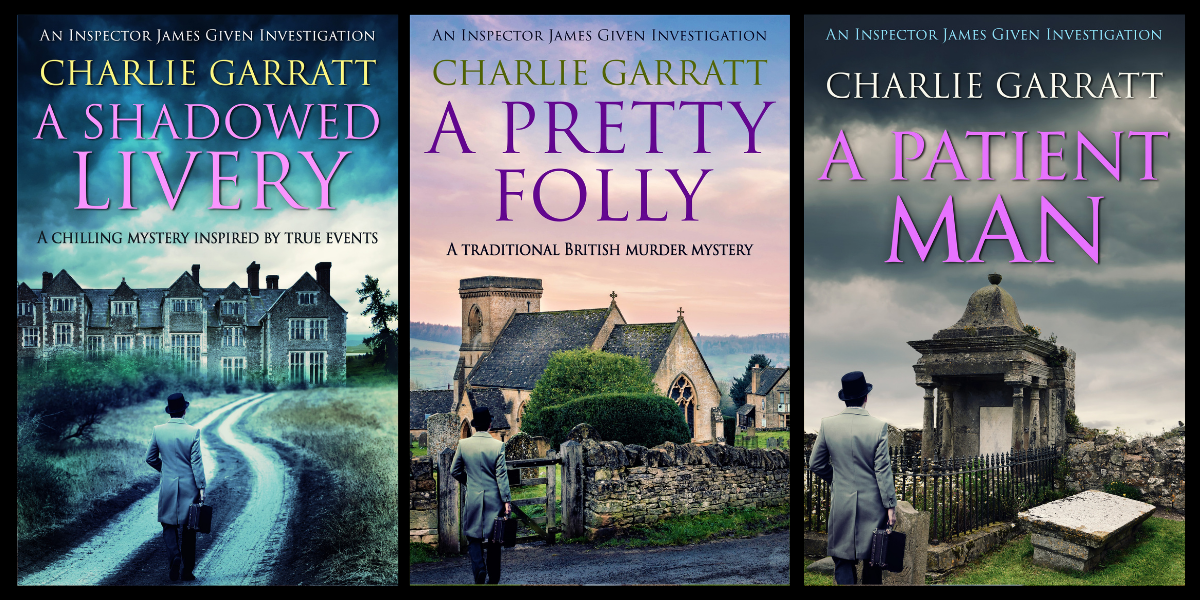
Set in England during the Second World War, Charlie Garratt’s Inspector James Given Investigations follow a troubled detective as he uncovers the truth behind a series of suspicious deaths.

The first four books in the series are already published, and we are delighted to announce that we have now signed up the fifth instalment.

In Charlie’s words:

“I could hardly believe it when Sapere Books accepted my first and second novels, so I’m delighted to have signed a contract for my fifth: A LEAMINGTON DEATH. In this instalment, James returns from war-torn France to settle into a quiet life working for his father, when a request from his old boss to help with a simple factory theft turns into a murder investigation. James’ initial reluctance to become involved is tempered by the debts he owes to the victim.

“The team at Sapere could not have been more supportive to me as an author on this journey, with excellent advice, high-quality editing, great marketing and very fair royalties — paid very promptly. The regular get-togethers they organise for their authors also offer a great exchange of experience and ideas, something other publishers could learn from.”


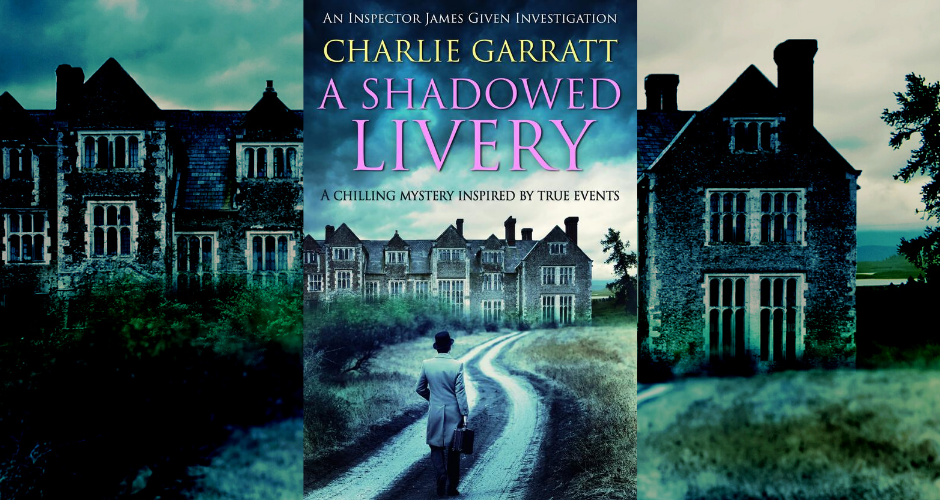
Click here to order A SHADOWED LIVERY

Click here to find out more about The Inspector James Given Investigations

Crime Writers’ Association’s 2020 Sapere Books Historical Dagger Award Winner Revealed

Sapere Books are proud to sponsor the Crime Writers’ Association’s Historical Dagger Award, which is for the best historical crime novel set in any period at least 50 years prior to the year in which the prize is presented.

The 2020 shortlist featured eccentric doctors, notorious gangsters, stolen diamonds and much more.

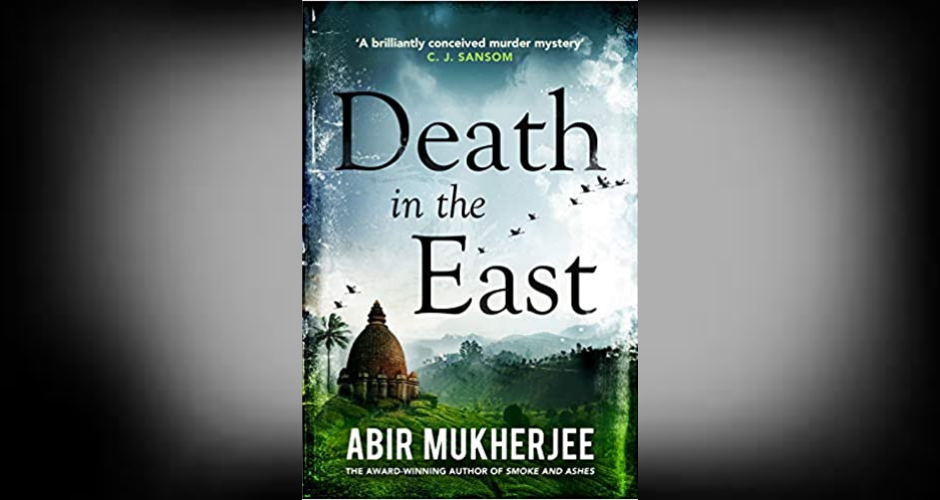
On Thursday night, the fabulous Abir Mukherjee was announced as this year’s winner at the Crime Writers’ Association’s digital awards ceremony. His winning novel, Death in the East, is the fourth instalment in his Wyndham & Banerjee Mysteries Series.

Set in 1920s India, Death in the East follows the continuing adventures of dynamic duo Captain Sam Wyndham and Sergeant Surrender-not Banerjee. Wyndham is haunted by an old case from his early days as a young constable, when his old flame Bessie Drummond was found beaten to death in her own room. Arriving at the ashram of a sainted monk – where he hopes to overcome his opium addiction – Wyndham finds a shadowy figure from his past, a man he believed was long dead. Certain that the man is out for revenge, Wyndham once again calls on Sergeant Banerjee for help. Together, they prepare to take on a sadistic and slippery killer…

We would like to send a huge congratulations to Abir, and to all of the wonderful authors who were longlisted and shortlisted this year.


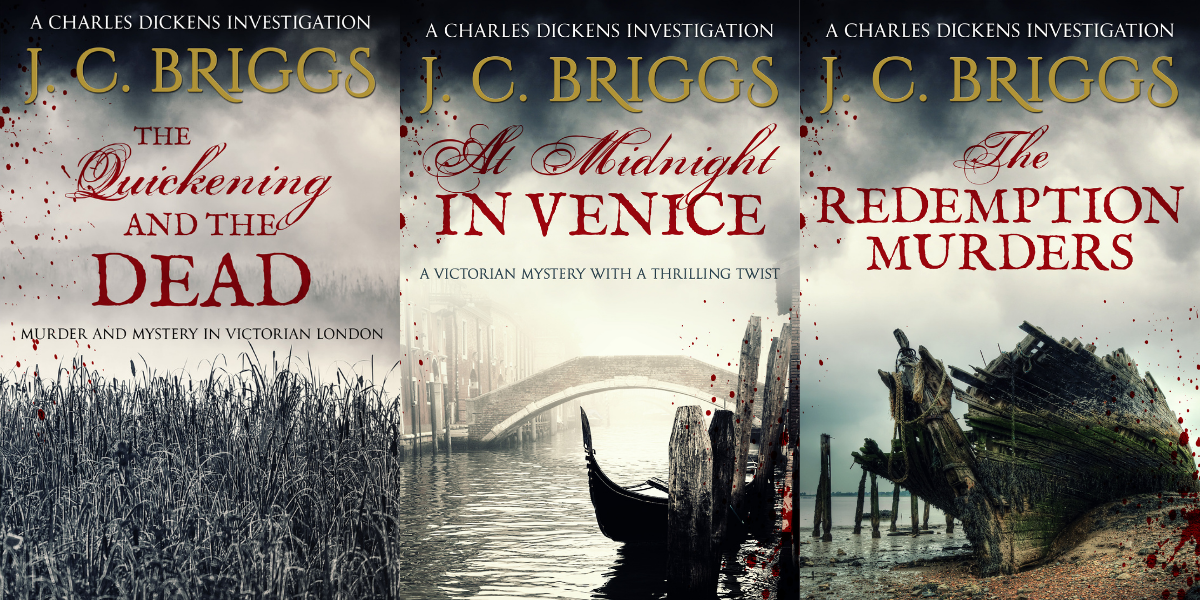
Sapere Books Sign Two New Historical Mysteries by J. C. Briggs

J C Briggs’ gripping Charles Dickens Investigations follow the famous writer-turned-detective as he dives into the seedy underbelly of Victorian London.

The first six books in the series have been published, and we are thrilled to announce that we have signed up the next two instalments.

In J C Briggs’ words:

“I am thrilled that Sapere Books are to publish two new cases featuring Charles Dickens and Superintendent Jones. Number seven in the series is THE HAWKE SAPPHIRES, which begins at Hawke Court, an almost derelict mansion where Sir Gerald Hawke is dying. His two wives and his only son are dead. His heir is a clergyman, Meredith Case, for whom Hawke has one last command. Hawke has commanded all his vicious life and expects to be obeyed. Meredith Case must ‘find Sapphire Hawke’, who vanished over twenty years ago.

“A chance meeting with Charles Dickens sends Case to the north of England. Meanwhile, Dickens and Superintendent Jones of Bow Street are investigating the death of a young man who was found on the steps of a bookshop.

“Charles Dickens begins to suspect that the two cases are connected. He and the young detective, Scrap, experience a frightening night at Hawke Court.

“Book eight in the series is THE CHINESE PUZZLE. On the first day of The Great Exhibition in May 1851, a Chinese man bowed before Queen Victoria. It was assumed that he was a representative of the Celestial Empire. He wasn’t. It was reported in the newspapers of the day.

“In THE CHINESE PUZZLE, behind the scenes the Home Secretary is furious at the breach of security. There have been attempts on the Queen’s life before.

“And also concerning for the government, a wealthy banker and former opium merchant of Canton vanishes on the first day of the Exhibition. The Prime Minister, Lord John Russell, appoints Superintendent Jones to carry out a most secret investigation. The case may involve high-powered bankers and politicians. Jones cannot afford to get it wrong. Only Charles Dickens can help him find his way about the houses of some very important people. There is danger from high and low when the case takes them to the East End opium trade and some very dangerous criminals.

“It really is great to work with Sapere Books again and to know that they have faith in my series. They are a wonderfully supportive publisher to all the writers in the Sapere family.”


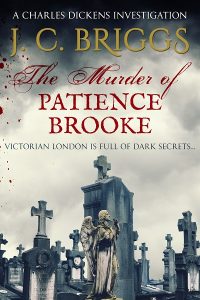
Click here to order THE MURDER OF PATIENCE BROOKE

Click here to find out more about the Charles Dickens Investigations

Read the first chapter of A SHADOWED LIVERY, an intriguing historical mystery.

Chapter One

The taxi swung out of the avenue and I got my first view of Grovestock House, its blindingly white stucco frontage gleaming in the autumn sunlight. The drive curved gently round a neatly manicured lawn and our wheels crunched on the gravel as we pulled up outside the front door.

As I stood outside waiting for the doorbell to be answered, I wasn’t sure if there would be anything challenging in this case.

‘Just go through the motions,’ Dyer had said to me. ‘There needs to be the appearance of a complete investigation, but we already know what happened. And remember, it’s not me wanting another look at it, it’s the Chief Constable. He’s getting pressure from the press, who think we should have investigated the deaths more thoroughly. They’re suggesting the case wouldn’t have been tied up quite so quickly if the family wasn’t so well connected.’
Briefly, we went through the file together. I recognised the outlines of the case from the newspaper coverage. “Warwickshire House of Death” had screamed one headline, followed by every grim detail of the tragedy. Lady Isabelle Barleigh had killed her wheelchair-bound son with a shotgun before turning the gun on herself. This had been quickly followed by the suicide of the young man’s fiancée. What made the whole affair more chilling was that the couple were to have been married two days later. Instead, they were now sharing a graveyard. I’d felt ill reading the article but, on the face of it, the facts had looked clear. Nevertheless, I was hardly surprised when questions started to be asked about why the whole matter was despatched so quickly. The deaths had only occurred a few days earlier and, somehow, strings had been pulled to convene a quick inquest and then a funeral to replace the wedding celebrations.

Now I was wishing I’d argued more against being assigned to this one, especially as Dyer had taken me off the Jewish beatings investigation and passed it to that idiot Terry Gleeson. If what happened at Grovestock House was as clear-cut as the preliminary work suggested then why give it to me? I’d told him that there were plenty of other good coppers around who’d adequately tie up the loose ends. I think Dyer knew the Bishop and Stack case had given me a good deal of pain and he was trying to do me a favour. Or perhaps his instincts told him that the initial enquiry had been a bit cursory and, perhaps, unreliable.

Anyway, I hadn’t resisted much so I’d left, briefly calling in to my station in Kenilworth, then home to collect a few things, arriving at Grovestock House before lunch. On the way I’d re-read the file and acquainted myself with the facts as they’d been recorded so far. It was unfortunate that a few days had passed and allowed the trail to cool but it couldn’t be avoided in the circumstances.

The local constable, Sawyer, had been pretty thorough in his approach. He’d been telephoned about the deaths around midday, cycled over as soon as he could, arriving an hour later. By then, the body of the fiancée had been discovered; she had shot herself with the dead man’s revolver. First thing he did was make sure the gates were guarded. Nothing to be done for Tom Barleigh, his mother or girlfriend, so he set about photographing the scenes and interviewing witnesses, several of whom told Sawyer that Lady Isabelle had been increasingly set against the marriage, though none knew why. He’d written his notes up swiftly and gone through them with Gleeson, who hadn’t bothered to interview anyone himself. Just like him, idle bugger.

The local doctor decided there was no need for a post-mortem and Sawyer presented his evidence to the inquest, which made the same conclusions he had. It was starting to bother me that everything had been despatched so quickly, so neatly.

I had done my research on the family prior to my visit. Grovestock House had been built sometime in the middle of the eighteenth century when Thomas Barleigh had wanted a new home to reflect his recently acquired status as a Privy Councillor to King George III. He’d been appointed following his generous support to the monarch in a series of conflicts with France, particularly in the Americas. Thomas was no soldier though, he was one of the new breed of industrialists, building up a fortune manufacturing muskets and pistols. Items put to good use by George’s army in its attempts to suppress uprisings across the empire.

Thomas’s grandson, having become a regular drinking partner to the Prince Regent, was raised to a baronetcy when the prince ascended the throne in the early eighteen hundreds and the house had been refurbished and extended to celebrate. Shifts in political allegiance over the next two centuries meant Sir Arthur Barleigh, the present incumbent, no longer had the power and influence his ancestors enjoyed. Nevertheless, the family was still important in the social merry-go-round of the county, hence the newspapers’ interest and the Chief Constable’s newly-found desire to make sure the job was done thoroughly.

A man in his late forties swung open the door. He wore a dark jacket and pin-stripe trousers, and his hair was greying at the temples. He gave off the unmistakeable smell of brilliantine as he looked at me enquiringly over the rim of his glasses. He was beyond question a butler and I remembered from Sawyer’s report that his name was Jervis.

‘Inspector James Given, Warwickshire Constabulary. I believe you’ve been expecting me.’

‘We have, sir. Sir Arthur asked me to prepare a room for you so I’ll take you up if you’ll follow me.’

‘There’ll be no need, thank you, Mr Jervis, I won’t be staying here tonight. I’ve already booked a room in the village. However, you can look after my overnight bag for now if it’s not too much trouble.’

He took it and asked if there was anything else I needed. I told him I’d like to have a look at where the deaths took place.

‘Very good, sir, would you like me to accompany you?’

‘No thank you, that won’t be necessary, just show me where Lady Isabelle and her son died.’

He pointed to the left of the house. ‘The shootings took place down there, sir, on the side lawn.’

I let the butler go about his business, instructing him to tell everyone in the house I’d arrived and would be conducting interviews later in the day. I didn’t think for a moment I’d get through many but it would do no harm to put them under a little pressure.

Before heading to the side of the house I turned on the step and surveyed the grounds. It wasn’t a grand estate by any means and I suspected it had once been much grander. Perhaps a profligate ancestor had squandered too much of the family fortune on high living. It still remained a couple of hundred acres at least, judging by the distance from the gate to the main house. A lawn, directly in front of the main door, was circled by the drive and bordered by several dozen rose bushes, whose scent would have been breath-taking in the height of summer. At its centre stood a magnificent cedar, fully thirty feet across and towering well above the roof top. The whole garden was walled or hedged on the two sides, with openings to further gardens, woods or fields beyond. The entire landscape sloped down to a lake sculpted into the fields below.

When I turned again and stepped back, I was able to take in the full grandeur of the house. There were two enormous bays rising to the roof and there were roughly twenty windows, all in the Georgian style. Ruefully, I compared this with the single window on each floor of my own little cottage in Kenilworth. The gravel crunched beneath my feet as I walked to the side lawn and through the gate. High walls and hedges surrounded the area and it was obvious that whatever had taken place here wouldn’t have been seen from anywhere in front of the building. Not unless someone was close enough to the gate. I noted there was no other access, or exit, apart from a side door into the house. The side walls were of much plainer red-brick and of a much earlier period, the grand frontage being merely a façade. I wondered what else in this case might be not what it seemed on the surface.


‘Good afternoon, constable.’ I looked at my notes. ‘Sawyer, isn’t it?’

‘Yes sir, John Sawyer.’

‘I’ve had a chance to have a look at your report but there are a few things I need to go over with you, to get them clear. Well done with the photographs, by the way, a very thorough touch.’

‘Thank you, sir.’

He’d joined me at Grovestock a few minutes after my inspection of the front gardens. He was tall even for a copper, towering over me when I stood to shake his hand. His blond hair and fresh features, accompanied by the flushed cheeks when I praised his work, gave the impression of an overgrown schoolboy in a policeman’s uniform.

‘I had my Brownie with me, sir; I tend to put it in my saddlebag when I’m out in case I see anything interesting to photograph on the way. There’s not usually much use for it in my work round here, though. Lost cats, neighbour disputes, that kind of thing. I’m lucky enough to have a darkroom at home so was able to develop them myself as well.’

Sawyer’s boyish enthusiasm was naive, but clearly he was smart and not afraid of using his own initiative. I was certain it would have been the first murder he’d looked at so he’d done well to keep calm and record everything as fully as he had.

‘Why did you conclude Isabelle Barleigh had shot Tom and then herself?’

‘Well, it all looked very obvious on the day, sir. The two of them were lying on the ground with the weapon between them. He’d been shot in the chest from close range, toppling him out of his wheelchair, and she’d shot herself under the chin, really the only way she could have done it with a shotgun.’ Sawyer turned green as he remembered. ‘Also, people from the house and the estate were there in minutes, so it seemed unlikely that anyone could have carried out a murder then disappeared down the road without being noticed.’

‘Not likely, or not possible?’

He now hung his head slightly at the thought he might have missed something.

‘I suppose it might barely have been possible, sir, for someone who knew the place well enough.’

I asked him if there was anything else at the scene, anything at all which might suggest a different set of circumstances.

‘Nothing really, sir. The only slightly odd thing was that Lady Isabelle had a scrap of paper clutched in her left hand.’

‘Paper?’

‘It appeared to be a bit of a letter, judging by the partial address in one corner. It turned out to be that of Miss Bamford’s father, Gerald Bamford. I searched the garden thoroughly but didn’t find any more of it and presumed the scrap was all she had.’

‘And what about Jenny Bamford? You concluded she’d committed suicide as well. Did she leave a note?’

‘There was no note, at least none that I found. When I was let into Tom’s room by Jervis, Miss Bamford was lying on the bed with the revolver on the floor below her hand. It seems that the gun belonged to Tom Barleigh and everyone knew he kept it in a drawer in his bedroom. She had a single bullet hole to the side of her head and the pillow was covered with blood, so it was clear she’d died where she lay.’

He looked queasy again so I let him settle before continuing.

‘Did you interview everyone when you arrived?’

‘I took statements from everyone there. You’ll know from the file that Billy Sharp and Tom Barleigh’s nurse, Trudi Collinge, disappeared before I could interview them. I would have liked to speak to Jenny’s family as well, to see if she’d been unhappy and so on.’

‘But you didn’t manage it?’

‘No, it wasn’t possible. Parents are divorced, she’s in Australia and remarried. We sent a telegram to the local police so they could let her know her daughter was dead. Her father showed up briefly at the funeral but then left part way through before I could speak to him. I asked one of the other lads to call round to see him but apparently the house looks like it’s been empty for a few days.’

‘What about Sir Arthur? Did you get a full statement out of him?’

‘That wasn’t easy, sir, but I did get something. I was told by the butler that Sir Arthur had some urgent business which he needed to attend to and it would be really helpful if I could interview one or two of the others first. It made no real difference to me so I just got on with seeing everyone else that I could. When I’d finished, Jervis came to fetch me to go to Sir Arthur’s study. He seemed a bit surprised to see me still there but did agree to be interviewed. Apart from telling me where he was when each of the shootings happened he wasn’t able to add anything to what everyone else had said.’

‘Did he suggest any reason why his wife might have done such a thing?’

‘He said he was at a complete loss about it. To be honest, he seemed … overcome, if you understand me. Like he didn’t really know what was happening. I thought I’d best leave it alone until I was told to do otherwise by someone more senior. I did telephone next day in case he was feeling any better but was told he’d been given sedatives and was sleeping.’

‘Tell me about him. How is it that he’s “Sir” Arthur?’

‘He’s a baronet and inherited the title. It’s come down through about eight generations until he took it over when his father died at the end of the Great War. That was about the same time he married Lady Isabelle.’

‘“Lady” Isabelle? She was a proper toff then, was she?’

‘No, I don’t think so. I’d be fairly sure she picked up the title from him. I don’t know much about her but I’ve an idea she was just a local girl who got lucky.’ Sawyer then came up with a question he must have been dying to ask since we met. ‘Excuse me, Inspector, and I know it’s perhaps none of my business, but why has it taken so long for someone to follow up the case? I mean, I know Inspector Gleeson went through the file but he didn’t even come down to the house, just met me at the station. Said there was no need. But now you’ve turned up.’

‘You’re right, it would have been much better if I’d have been able to make it straight away but I wasn’t available. On the day I was still tied up with the Peter Bishop hanging.’

‘I read about that case. Didn’t they kick a Jewish butcher to death in Birmingham?’

‘They did. Bishop and Stack scarpered but I got lucky when they were heard bragging about it in a pub. They were both members of a Blackshirt gang, followers of that idiot Mosley, and had been planning the attack for weeks. Anyway, by the time it was over, you and Inspector Gleeson had finished the investigation.’

I told him Gleeson had forwarded the file to the Chief Constable with a recommendation for no further action.

‘If you hadn’t made such a convincing case for a murder and two suicides it might have been chased up sooner.’

‘I’m sorry, sir, it all seemed so clear cut.’

‘Don’t worry about it, you did a good job. I can think of half a dozen officers, with much more experience than you, who would have come to the same conclusion. It was only after the inquest, when the big boss started getting pressure from the newspapers, that he asked Superintendent Dyer to have another look.’

‘And you think there’s more to the case than meets the eye, sir?’

‘I don’t know, but it’s all a bit too neat and tidy for my liking. Let’s just sniff around a bit longer and see what turns up. If it’s nothing more than me being overly cautious, then you’ll gain more respect from your colleagues and I’ll have had a nice day or two in the Warwickshire countryside.’

Sawyer filled me in on the other interviews he’d carried out with the household staff and the gardeners. No-one had witnessed anything and all except the butler were able to account for where they were when the shootings happened. Sawyer had also spoken to a friend of Tom’s, Alan Haleson, who was staying at Grovestock House and would have been his best man at the forthcoming wedding. Haleson had reported his version of the events but was on his own when each of the shootings took place.

‘So what would you like me to do now, Inspector?’

‘It’s imperative we find the young gardener, Tom’s nurse, and Jenny Bamford’s father. And I’ve to get a full interview with Sir Arthur. You follow up the first three as best you can. I’m going to finish reading the file and then go back to the bereaved husband and a few of his staff. Let’s see how we get on and we’ll meet up again tomorrow.’


I found Jervis in his pantry, a small room between the kitchen and main part of the house. This was the nerve centre of his fiefdom. There was all the paraphernalia associated with ensuring the life of his master was well run and comfortable: the wine coolers, ice buckets, silver trays, cutlery boxes and so on. The room also contained a small table and two chairs; an old one seemingly from the kitchen, and a slightly more welcoming one placed in the corner. Jervis had an open ledger on the table when I popped my head round the door. A number of others were neatly stacked on the shelf above him.

‘You look busy, Mr Jervis.’

‘Not really, Inspector, just catching up on some paperwork.’ He smiled sorrowfully as he got up to beckon me inside. ‘Much less to do now with fewer people in the house. We were expecting this to be such a happy time. How can I help you?’

The man looked upset and seemed to be putting on a brave face for the sake of the other servants. He must have felt the tragedy as heavily as everyone else.

‘I need to see Sir Arthur. Could you go up and tell him I’m here and want to interview him?’

‘I’m afraid I can’t, sir, he’s not here.’

‘Not here? A moment ago you said he was in his room most of the time. I thought I asked you to tell everyone I’d like to see them today.’

‘I’m sorry, sir, I should have said when you arrived. He decided this morning he needed to get out of the house so left quite early for a ride.’

‘Does he often do this?’

‘Before all of this happened he’d go out several times a week and could be away for hours. On more than one occasion he’d travel as far as Banbury and back in the day; a good three hours’ journey in each direction. I believe he thought you wouldn’t be here until the evening. I couldn’t say when he’ll come home but I’ll let him know you want to see him if you’re still here. He’s said we need to give the police as much assistance as we can and I should put the house at your disposal if you need somewhere to stay or work.’

I was annoyed at Sir Arthur’s absence but all I could do was interview the butler and hope his employer would return soon. I thanked Jervis for the offer of a room to work in, took a seat and checked some of the details from the file with him.

‘So where were you at the time of the first shootings, Mr Jervis?’

‘It’s as I told the Constable, sir. I’d just entered the lift upstairs and pressed the button to come down. I wouldn’t normally use it, of course; the servants aren’t really allowed. We’re supposed to use the side stairs, but I was bringing down a large basket of bed linen that needed to be aired for the guests due to arrive.’

‘Surely that isn’t your job?’

‘It’s usually one of the maid’s jobs to fetch the linen but there was so much it needed someone stronger. I thought the first bang was something to do with the lift machinery starting up. Then, when I’d travelled a few more feet, I heard the second bang and was certain it was a gunshot fairly close by, much closer to the house than would be usual. I got out as soon as the lift arrived on the ground floor then saw Miss Parry at the bottom of the stairs, about to run out of the front door.’

There was a silence.

‘And who is Miss Parry?’

I think I knew the answer before he gave it. It would be too much of a coincidence for it not to be her.

‘Miss Elizabeth Parry is the housekeeper, Inspector.’

I hadn’t expected to hear her name ever again. It made my stomach churn and my head spin.

‘So what did you do?’

‘I knew something must be wrong so I joined her. Mr Haleson, Mr Barleigh’s friend, also appeared at that point and came with us. I wasn’t sure which direction to go but she said it was on the side lawn so we went that way. I shouted for her to stay behind me in case there was still any danger.’

‘That was very brave of you, Mr Jervis.’

‘I don’t know about brave, sir; I was doing my duty.’

I went on to question him about what he’d seen when he arrived at the side lawn and he repeated what he’d told Sawyer. He also confirmed he’d gone inside to find Sir Arthur straight after the bodies were discovered. He had asked Elizabeth Parry to tell the rest of the staff what had happened.

‘You let Miss Bamford into the house when she returned?’

‘I did.’

‘And you told her what had happened?’

‘Oh no, Inspector. I was under strict instructions from Sir Arthur not to say anything, that I should simply inform her he wanted to see her upstairs in his room.’

Jenny left him in the hallway and climbed the main stairs to the upper landing. Shortly afterwards he was making his way to the kitchen to join the other staff when he heard a shot from upstairs. He ran back through the house and up the central staircase then searched from room to room to try to find where the shot had been fired. He arrived at Tom Barleigh’s room last of all and saw Sir Arthur and Alan Haleson standing over Jenny Bamford. A revolver was on the floor beside the bed.

His voice caught in his throat when he recalled seeing the dead young woman, though his face gave nothing away. I couldn’t help wondering if he was perhaps fonder of her than of the others. There was nothing else he could tell me so I asked him to contact me straight away if he thought of anything important he’d missed. I didn’t really expect he would. Jervis had a butler’s loyalty so family secrets would remain secret.


Sir Arthur still hadn’t returned when I’d finished with the butler. I decided to move on to the maid who had witnessed the first two deaths on the side lawn. I asked for her to be sent to the room which had now been put at my disposal, the “morning room”. I’d spent several years at sea, often with four to a cabin, and it amused me to think the aristocracy have special rooms they only utilise at particular times of the day. I even think my own little cottage is spacious, having the luxury of an extra bedroom for me to use as an office.

Marion Clark stood before me, looking nervous, and confirmed she was upper housemaid to Sir Arthur and Lady Isabelle Barleigh. She’d been in their employment for about two years. There was something about the girl’s face that hinted at a touch of stupidity and though she was twenty years old or thereabouts, she looked much younger.

‘You were interviewed by Constable Sawyer on Tuesday, weren’t you, Marion?’

‘Yes sir, I was, sir.’

‘Well, I’m a detective and an Inspector, so much more senior than he is and there can be no lies from you. Do you understand me, Marion?’

If the girl had been nervous before, she now looked like she’d faint away any moment, her eyes darting this way and that, and her hands wringing her apron front.

‘I understand, sir. I wouldn’t lie.’

I told her to take a seat.

‘You’ve known the family for a good while now, so what do you make of them?’

She appeared to struggle for words.

‘They’ve always treated me well, sir.’

‘I wasn’t asking how they treat you, Marion. Were Sir Arthur and Lady Isabelle a happy couple?’

‘That wouldn’t be for me to say, Inspector Given, I’m not one for telling tales.’

‘But that’s exactly what I want you to do, Marion. In fact, I’m actually expecting you to tell tales. We have three deaths here and I dearly want to get to the truth of what happened. But we’ll perhaps come back to what you think of the family a little later. For now you can tell me what you saw on Tuesday.’

‘Tuesday? Well, sir, Tuesday is my day for cleaning Mr Tom’s room. His nurse, Miss Collinge, sees to it most days but once or twice a week the other staff take a turn and on Tuesday it’s me. I start with the beds, then brush the carpet and finish up by tidying his desk.’

For some reason this turned on the waterworks and we had to pause for a minute or two.

‘I’m sorry sir, it’s just the thought of it… Mr Tom is — was — very fussy, you know and didn’t want us messing about with his papers, only to put them neatly into piles where he left them. I was at the desk, and I could see out of the window and across the side lawn. It was such a lovely day I couldn’t stop myself from looking out for a few minutes. I wasn’t slacking sir, honest I wasn’t. If only it had been raining then none of this might have come about. Mr Tom wouldn’t have been outside and his mother wouldn’t…’ She sniffled and I was certain she’d open the sluice gates again.

‘Hold on, Marion, let’s stay with what you saw out of the window.’

There was more sniffling and a blow of her nose before we could resume.

‘As I said, sir, I was by the desk, and looking out of the window at Mr Barleigh out on the lawn. He sat in his wheelchair reading most days when the weather was good enough. Always very fond of his books he was, sir, even before his accident.’

‘You were here before that happened?’

‘Oh yes, sir, though I hadn’t been here long then, a great shock to us all it was, especially to Lady Isabelle. She seemed to worry about him all the time after he came back from the hospital.’ The maid looked like she was going to tell me more but caught herself and returned to my earlier question. ‘Sorry, sir, I was telling you what I saw. Suddenly the blackbirds pecking for worms took off and Lady Isabelle came into view, from the front gate I think, though I couldn’t be sure. I straight away thought something must be wrong, ’cos her ladyship seemed to be shouting and waving her hand about like she’s half mad.’

‘What about the other hand?’

‘The other hand? Well, I think she must have had the shotgun under her arm because she was holding something close to her side.’

‘Did you see the shotgun, Marion?’

‘No, I didn’t. But that’s what it must have been, mustn’t it, otherwise where would she have got it from?’

‘That is something quite else. You remember what I said, and tell me what you actually saw, no more and no less. Understand? So what happened next?’

‘Mr Tom looked up at her — I didn’t see no more, sir, because Miss Parry, the housekeeper, had been watching me from inside the doorway and shouted for me to get on with my work.’

‘So you didn’t see the actual shooting take place?’

‘No sir, can’t say as I did. I heard the shotgun go off right outside, and Miss Parry and I both looked at each other but before we can do or say anything, there’s a second shot. We were then so terrified, sir, honest sir. Miss Parry tells me to go back up to my room, quick as I can, and she heads off down the stairs to look for Mr Jervis. I…’ She stopped, blushing.

‘What is it, Marion? Remember, this is a police matter, we need the complete truth.’

‘Yes, sir, Mr … Inspector. Well … truth is I didn’t go straight back upstairs. I crept back across the bedroom and peeked out of the window. It was only for a second, ’cos I couldn’t face it no longer, but what I saw was the two of them, Mr Tom and his mother, lying on the ground with the shotgun beside Lady Isabelle.’ She stared sightlessly ahead, remembering. ‘There was just the wheels of his chair going round and round…’

‘Did you see anyone else there, Marion?’

‘No, sir. All I could do was stare at those bodies. The blood and the stillness all around. There was no-one else there that I saw.’

The maid seemed transfixed by the memory and I had to prompt her to continue.

‘It’s all I know really, sir. I ran up to my room and stayed there until Miss Parry called all the staff together to tell them what had happened.’ Suddenly she looked at me, her eyes focusing. ‘Why’d she do it, sir? They were so close, the two of them.’

‘Well, that’s what I’m here to find out. Where were you when the third shooting occurred, that of Miss Bamford?’

‘Just where I said, sir. Miss Parry had called all the servants together in the kitchen to tell them what had happened. She was shaking like a leaf and said there’d been a terrible accident. A minute after she told us Mr Jervis had phoned the police there was another shot, from upstairs.’

‘Who was in the kitchen at the time, Marion?’

‘Well, sir, apart from me and Miss Parry, there was Mrs Veasey, she’s the cook, Peggy Shaw, the other maid, and Mr Perkins, the head gardener.’

‘So there were five of you, is that correct?’

Clark slowly counted the names in her head and on her fingers to confirm the number. ‘Yes, sir, that’s it.’

‘Mr Jervis and Nurse Collinge weren’t there with you?’

‘No, sir, they weren’t. Mr Jervis had been waiting for Miss Bamford to come back and someone said Nurse Collinge was too upset to come down. She was very fond of Mr Barleigh, you know.’

‘Had you seen Jenny Bamford arrive back at the house?’

‘I hadn’t, sir. As I told you, I went to my room like Miss Parry had told me and stayed there until she called for us to the kitchen. I don’t know when Miss Bamford came back, sir.’

I spent another few minutes clarifying some of the points she’d made and I underlined a couple of items in my notebook, then told her she could go. There was still something niggling me about what she’d seen that didn’t seem right.
 

Intrigued? Get A Shadowed Livery now and keep reading! 

The Sapere Books Historical Dagger Award Longlist 2020

Sapere Books are proud to be sponsoring the Crime Writers’ Association’s Historical Dagger Award, which is for the best historical crime novel set in any period at least 50 years prior to the year in which the prize is presented.

This year’s judges were Janet Laurence, the author of four cookery books and a series of articles on historical cookery; Angela May Rippon CBE, a television journalist, newsreader, writer and presenter; Professor Edward James, Emeritus Professor of Medieval History at University College Dublin; and Andre Paine, former editor of Crime Scene magazine.

The 2020 longlist has now been announced. Congratulations to the following authors and publishers:

THE MAN THAT GOT AWAY by Lynne Truss, Raven Books

THE KING’S EVIL by Andrew Taylor, Harper Collins

THE BEAR PIT by SG MacLean, Quercus Fiction

THE ANARCHISTS’ CLUB by Alex Reeve, Raven Books

METROPOLIS by Philip Kerr, Quercus Fiction

THE PAPER BARK TREE MYSTERY by Ovidia Yu, Constable

THE SERPENT’S MARK by SW Perry, Corvus

IN TWO MINDS by Alis Hawkins, The Dome Press

LIBERATION SQUARE by Gareth Rubin, Michael Joseph

THE BONE FIRE by SD Sykes, Hodder & Stoughton

SORRY FOR THE DEAD by Nicola Upson, Faber & Faber

DEATH IN THE EAST by Abir Mukherjee, Harvill Secker

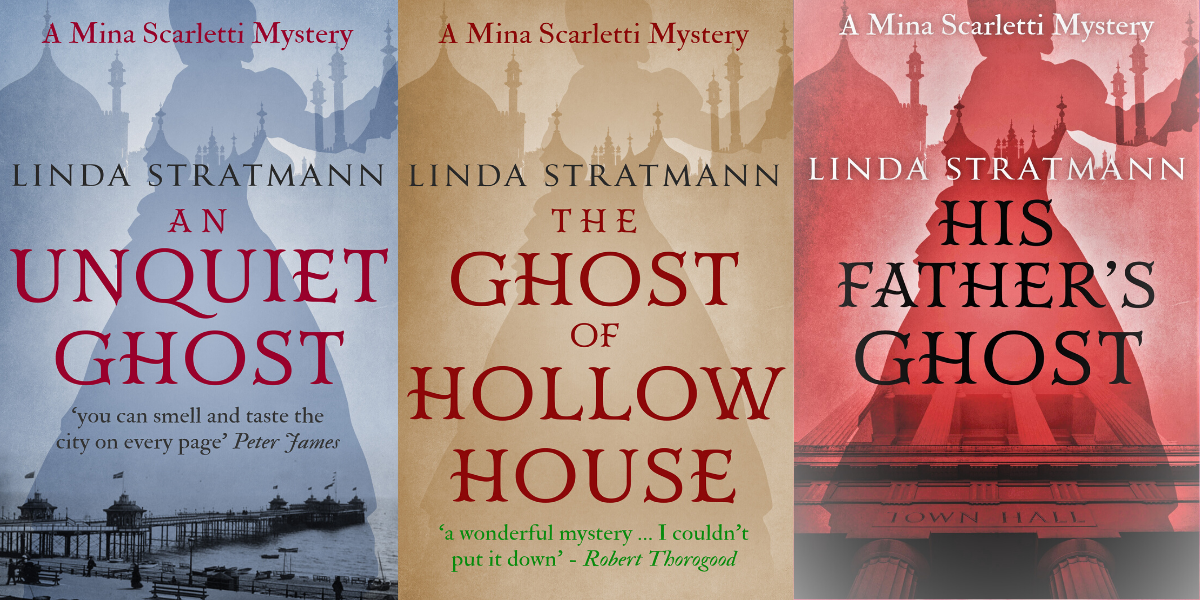
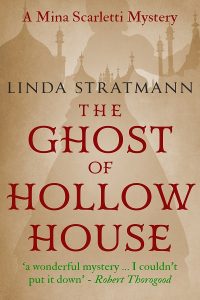
His Father’s Ghost by Linda Stratmann

Linda Stratmann is the author of the MINA SCARLETTI INVESTIGATIONS, a traditional British detective series set in Victorian Brighton.

More than a year ago, I determined to write a book in which Mina Scarletti, disabled by the scoliosis that twists her spine and cramps her lungs, is taken ill and solves a mystery while confined to bed. It is not a new concept. In The Wench is Dead, Inspector Morse solves a Victorian murder while in hospital, and in Josephine Tey’s The Daughter of Time, Inspector Alan Grant, hospitalised with a broken leg, explores the fate of the Princes in the Tower.

But these are historical puzzles, and therefore considered suitable to engage the mind of a bored invalid. In His Father’s Ghost, Mina has additional challenges. She is intrigued by a current conundrum, the disappearance of a local man while out sailing, declared legally dead, but his actual fate unknown. Her doctor, however, has advised her against any activity that might tax her delicate health, and that includes solving mysteries. She has to use all her ingenuity to gather the information she needs. In doing so, she finds that she has uncovered evidence of past crimes and scandals. Her enquiries are a catalyst that set off a train of events that ultimately have dramatic and life-changing consequences for several prominent citizens of Brighton.

One of the themes which I explore in this book is hallucination. Mina, when stricken by a fever, sees and hears things that reveal what is troubling her. The son of the vanished man, disturbed by significant events, has terrifying visions in those dark hours that lie between sleeping and waking.

I really enjoyed my research for this book. I visited the fascinating Police Cells Museum of Brighton, and read about the curious spiritoscope, an apparatus designed to prove that it was spirits and not the medium who cause the movement of the divination table.

It was my real pleasure to include two characters who have appeared in previous books, the flamboyant actor Marcus Merridew, fresh from his acclaimed season as Hamlet, and the creepy young photographer Mr Beckler.

While editing the manuscript, which was completed at the end of 2019, I was struck by how Mina’s plight echoes our current time. She is ill with a lung infection, and effectively on lockdown. But when she scents a puzzle, it gives her strength. She needs not only warmth and air and nourishment, but material to keep her busy mind alive.


Click here to pre-order HIS FATHER’S GHOST

THE SANDAL CASTLE MEDIEVAL THRILLERS by Keith Moray

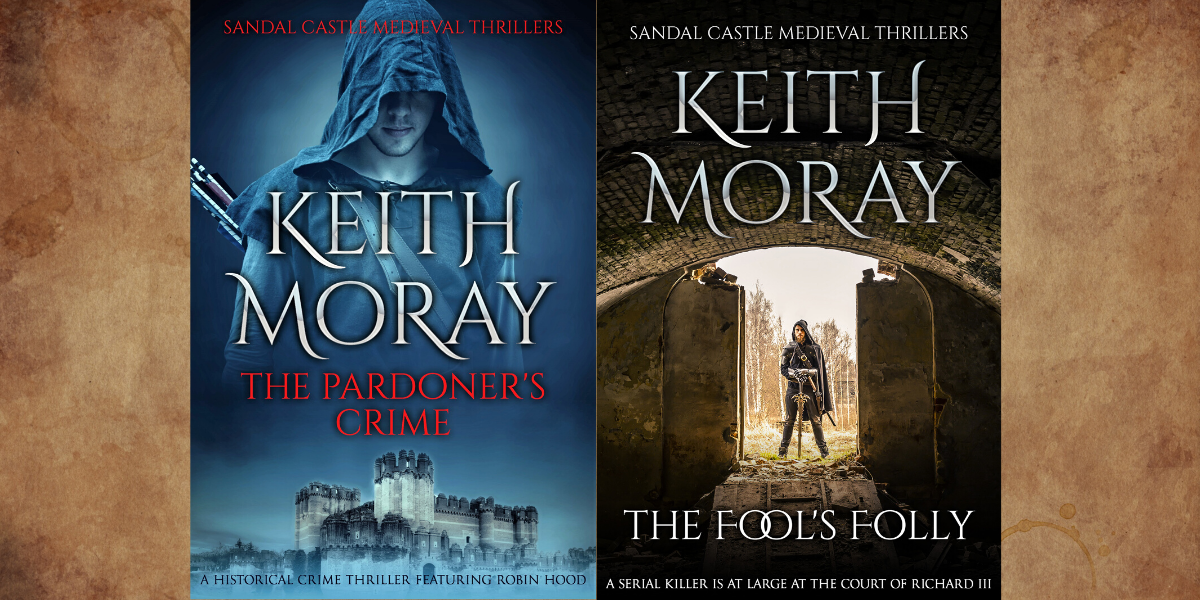
Keith Moray is the author of the SANDAL CASTLE MEDIEVAL THRILLERS, historical murder mysteries set in Yorkshire. The first two books in the series, THE PARDONER’S CRIME and THE FOOL’S FOLLY, are available to pre-order.

I live within arrowshot of the ruins of Sandal Castle. As a family doctor in Yorkshire, for thirty years I saw it most days while driving around the area on my morning visits. Nowadays, in semi-retirement I go running around the old battlefield where thousands of knights and soldiers once fought and died during the Wars of the Roses.

I plot and daydream when I run. Happily, a short story entitled The Villain’s Tale about a miscreant in a rat-infested dungeon in Sandal Castle won a Fish Award. It spurred me on to start plotting the Sandal Castle Medieval Thrillers.

Sandal Castle

The fine old motte and bailey was built in the 12th century by the De Warenne family during the reign of Henry I. From the 14th century it passed into royal ownership and is best known for its involvement in the Battle of Wakefield in 1460, when Richard, Duke of York was mortally wounded.  His son, King Edward IV established it as one of the two bases for the Council of the North in 1472. Effectively, this was the government for the North of England. After he died, his younger brother, King Richard III began rebuilding the castle in 1483. The work stopped when he lost his life at Bosworth Field in 1485.

Robin Hood

Thanks to television and movies, most people associate the outlaw Robin Hood with Sherwood Forest and Nottingham. However, the medieval ballads say that his stomping ground was actually Barnsdale Forest, which once covered a vast swathe of Yorkshire. The ballads also mention King Edward and various Yorkshire characters, such as George-a-Green the Pinder of Wakefield, and many actual locations in Wakefield are referred to.

The Court Rolls of the Manor of Wakefield

In medieval times, The Manor of Wakefield was the largest in Yorkshire and one of the largest in England, covering some 150 square miles. The Court Rolls of the Manor of Wakefield are a national treasure, consisting of a continuous recording of court proceedings from the late thirteenth century until the 1920s.

The outlaw and bowman Robert Hode, a sure candidate for being the historical Robin Hood, is mentioned in the Court Rolls of 1316.

 The Sandal Castle Medieval Thrillers

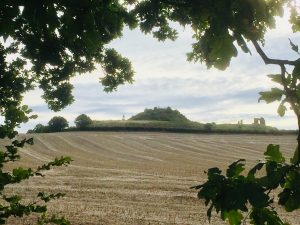
If you look at the picture of Sandal Castle today you will see exactly where I had the germ of the idea for The Pardoner’s Crime, the first novel in this series. It is a view of the castle from under what I fancifully call Robin Hood’s tree. I blended historical facts, medieval ballads and a good deal of imagination to come up with a historical whodunit.

There are three completed novels and a fourth in the pipeline. They are not all about the same characters; indeed they are set at different times, because Sandal Castle with its fascinating history is the historical backdrop to them. They are all inspired by Chaucer’s The Canterbury Tales and some of the characters that he described so beautifully. The Pardoner’s Crime fuses The Canterbury Tales with the Robin Hood legends. The reader is challenged to uncover the true villain in each novel.


Click here to pre-order THE PARDONER’S CRIME.

Click here to pre-order THE FOOL’S FOLLY.

Sandal Castle image credit: Keith Moray