Congratulations to Natalie Kleinman!

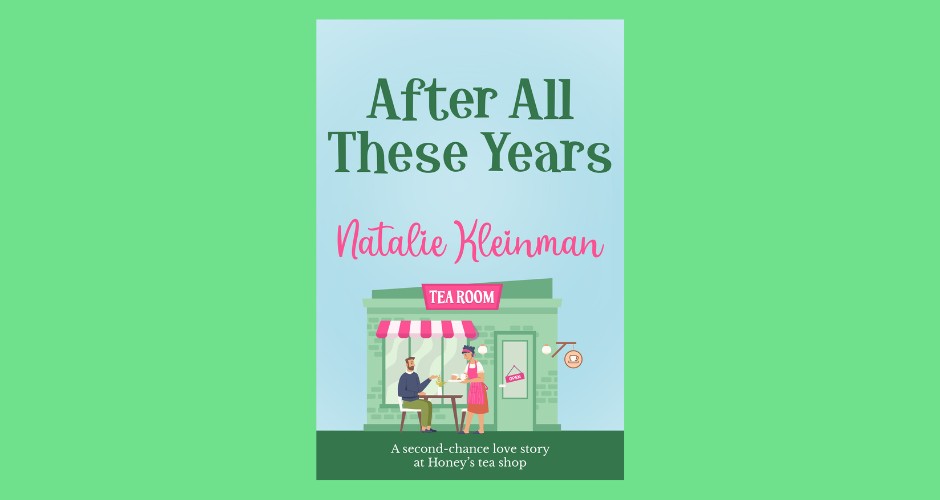
Congratulations to Natalie Kleinman, whose second-chance love story, After All These Years, is out out now!

When Guy Ffoulkes walks into Honeysuckle ‘Honey’ Bunting’s tea shop in the little town of Rills Ford, she’s transported back in a flash to her teenage years – and to the pain of first love.

As a young girl she worshipped Guy from afar – but to him, she knows, she was simply his best friend’s scruffy younger sister.

Over the years Honey has poured her energy into her business and caring for her elderly mother, telling herself it’s enough for her. But no man has ever replaced Guy in her heart…

Now, fourteen years on, Guy has returned from Australia, a rich and successful architect, but a lonely man. And when he and Honey reconnect, neither can deny the spark between them.

But Honey’s loyalties are tested to the extreme when Guy reveals the reason for his return…

Does Honey know her old flame as well as she thinks? Will Guy let pride and ambition drive away the only woman he has ever loved?

And as the pair find themselves at the heart of a local scandal, can they find the strength to take a chance on love?

Sapere Books to Republish Eight Titles by Elizabeth Bailey

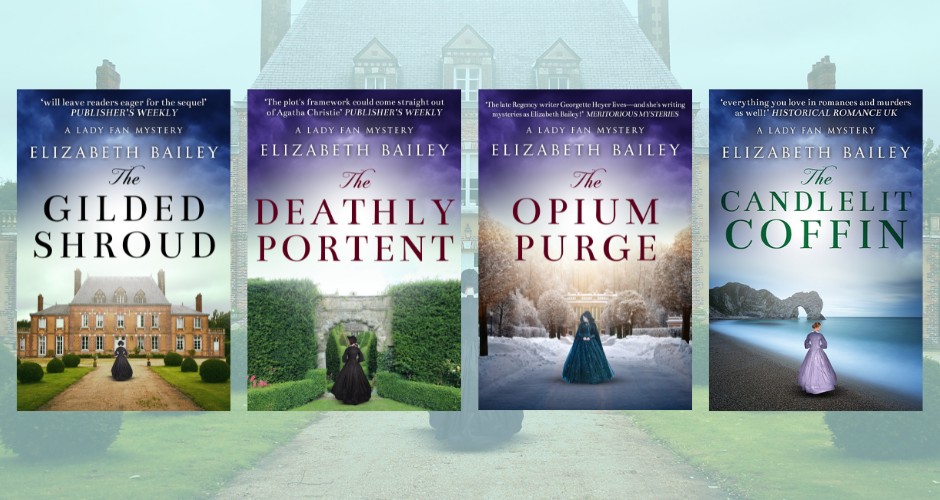
Following the success of her many historical and mystery romances, including the Lady Fan Mystery Series and The Governess Trilogy, we are delighted to announce that we will be republishing eight backlist tiles by Elizabeth Bailey.

In Elizabeth’s words:

“As a child, I found and read with relish Georgette Heyer’s historical romances. For several years, my parents gave me the latest Heyer as one of my presents at Christmas, thereby ensuring I would bury myself in the book until I finished it. It was inevitable, perhaps, that when I came to write myself, I chose to try my luck with historical romance. It took time, but I was successful at last.

“Of the eight books that Sapere is taking on, almost all feature a hero or heroine disadvantaged in some way. It is an ever-fascinating thing to me how the human spirit manages to overcome all manner of life’s apparent cruelties. Yet these are not necessarily dark tales, although they have their moments. It is the pleasure of writing romance that one’s task is to lead the protagonists through the scary woods and out into the light of happiness.

“I could not have hoped for a better home for these stories than Sapere Books. I’ve worked with them since the publishing house was formed and the editors are both meticulous and sympathetic to the author’s intentions. They are friendly, helpful and supportive. Moreover, Sapere covers are superb! I’m delighted to entrust my books to Sapere’s hands.”

The forthcoming titles are:

A Trace of Memory
A Lady In Name
Friday Dreaming
The Count’s Charade
An Angel’s Touch
The Veiled Bride
The Conqueror’s Dilemma
A Fragile Mask

Find out more about Elizabeth here.

Death’s Long Shadow is Published Today

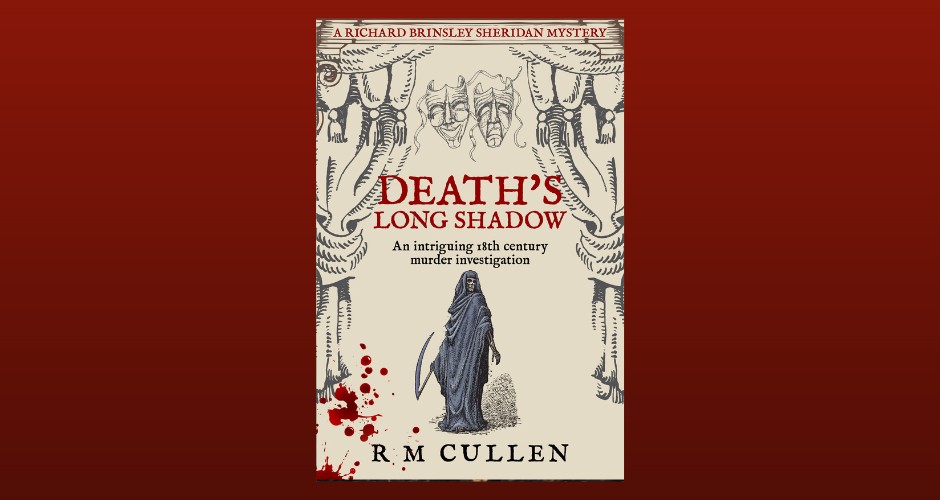
Congratulations to R. M. Cullen, whose twisty murder mystery, Death’s Long Shadow, is out now!

Death’s Long Shadow is the second instalment in the Richard Brinsley Sheridan Mystery Series: eighteenth-century crime thrillers set in London at a time of Revolution.

1792

Playwright Richard Brinsley Sheridan’s retreat to the country is interrupted when he stumbles upon a body during a woodland stroll.

The man is identified as Edward Stretton, cousin to Earl Cannock who Sheridan is residing with.

Stretton had a reputation as a scoundrel and seducer and was heavily in debt at the time of his death.

He had been poisoned, and when the Earl’s servants are questioned, unusual evidence puts one man in custody.

But Sheridan is not convinced of his guilt. And one another man is murdered, he suspects there may be a connection.

Can Sheridan uncover the link? Could he save an innocent man from death?

Or will this case prove too complex for this amateur sleuth…?

Sapere Books Sign New Naval Novel by Anthony Palmiotti

We are delighted to announce that we have signed a new naval fiction novel set during the Second World War by Anthony Palmiotti.

Anthony Palmiotti

In Anthony’s words:

“When searching for subjects to write about, I look for little-known stories or actions within bigger events that emphasize the strength of character and the contributions made by ordinary people — the individuals that make a difference to the outcome. Invariably, it is the strength of character of the common man or woman that determines the outcome — that makes the difference between winning and losing. It could be a single heroic action or simply a steadfast stubbornness. It might be the will to go on when common sense says this is not a good idea. They are the unknown people who make the seemingly impossible, possible.

“Operation Pedestal was just one convoy in a war that saw hundreds of convoys. Malta was just one island in a sea of islands. What makes these two different is that they faced extreme odds and yet, through a steadfast perseverance, they beat the odds. The citizens of Malta and the common men on the convoys showed an uncommon resolve. They simply did not give up, even when giving up was the smart thing to do.

“My take on Malta during the summer of 1942 and Operation Pedestal is not a history but a novel. A novel allows the writer to get personal. It not only offers the facts, but, hopefully, a feel for what it’s like when ordinary people are asked to do extraordinary things.”

Discover more about Anthony here.

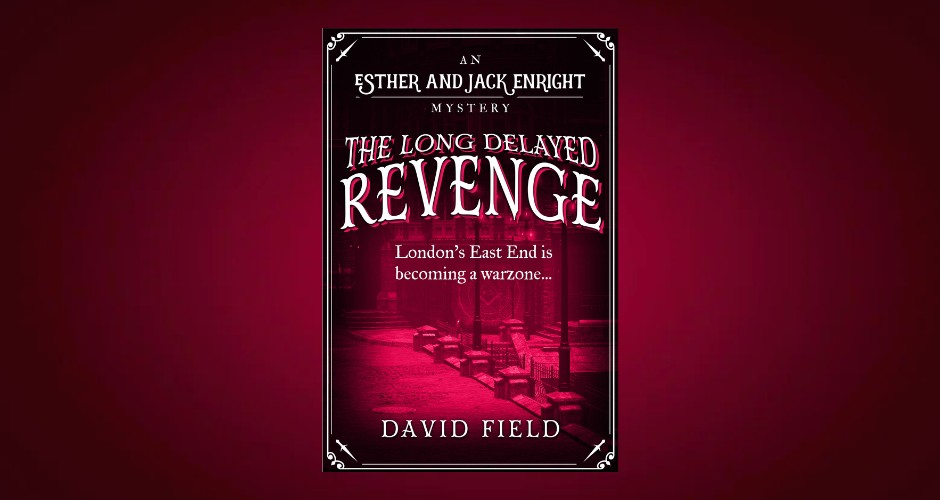
The Long Delayed Revenge is Out Now!

Congratulations to David Field, whose Victorian thriller, The Long Delayed Revenge, is out now!

The Long Delayed Revenge is the tenth instalment in the Esther and Jack Enright Mystery Series – a traditional British detective series set in Victorian London and packed full of suspense.

London, 1899

Jack and Esther Enright, with their four children in tow, have recently moved to a comfortable new home. Esther has settled into her dream job as headmistress of the local private school, owned by her mentor Emily Allsop.

But things are not going so well for Jack. Though he does not mind the commute to his high-ranking desk job at New Scotland Yard, he is disturbed by the level of recent resignations in by uniformed constables in the East End.

Though the police force has always been used to tackling crime in the more impoverished parts of London, a recent influx of Russian immigrants has led to gang warfare and vigilante justice which is proving impossible to control.

And when Esther’s school is vandalised with a disturbing message, he finds his detective skills are needed closer to home as well.

Things escalate when one of the young pupils is abducted and Jack needs all the help he can get in finding the perpetrator before it is too late.

Can Jack and Esther solve another case together? Will they rescue the child in time?

Or will the unrest in London prove too much for even Jack to handle…?

Sapere Books Sign New Cosy Crime Series by Amy Licence

Following the success of The Marwood Family Tudor Saga, we are delighted to announce that we have signed a new Sherlock Holmes-inspired cosy crime series by Amy Licence.

In Amy’s words:

“Tucked away in a sleepy Sussex village, Sherlock Holmes’ great-great niece Charlotte Holmes wants nothing more than to run her antiquarian bookshop in peace and quiet. Divorced, and with her grown-up children having flown the nest, she’s looking forward to reading her way through the shelves, attending quiz nights with best friend Nell, and going out for dinner with handsome lecturer Toby. But then a young woman unexpectedly turns up in answer to an advert she placed for a housemate, whose name just happens to be Scarlet Watson. It seems too much of a coincidence, but when the landlady of the local pub is murdered, the pair team up to solve the crime, and Scarlet’s infectious enthusiasm wins Charlotte over. But is the new arrival all she seems? What secrets is Scarlet hiding?

A Study in Scarlet is the first book in my new cosy crime series, inspired by the Sherlock Holmes stories. I’ve always loved reading detective fiction and, as an English teacher, I have been reading the Holmes stories with my classes for twenty years. I felt it was a perfect addition to the genre, imagining a modern setting for some familiar devices, swapping the gender of the detective, and keeping a literary twist — my heroine loves reading! Each book is based on one of the original stories and Holmes fans will love spotting the overlap and solving the crime.

“I’m delighted to be branching out with Sapere Books into another genre that I’ve always loved. Books two and three in the series are already planned and ready to be written, with more sleepy village intrigue, plus some local festival glamour, but always remaining true to the Holmes genre.”

Discover more about Amy here.

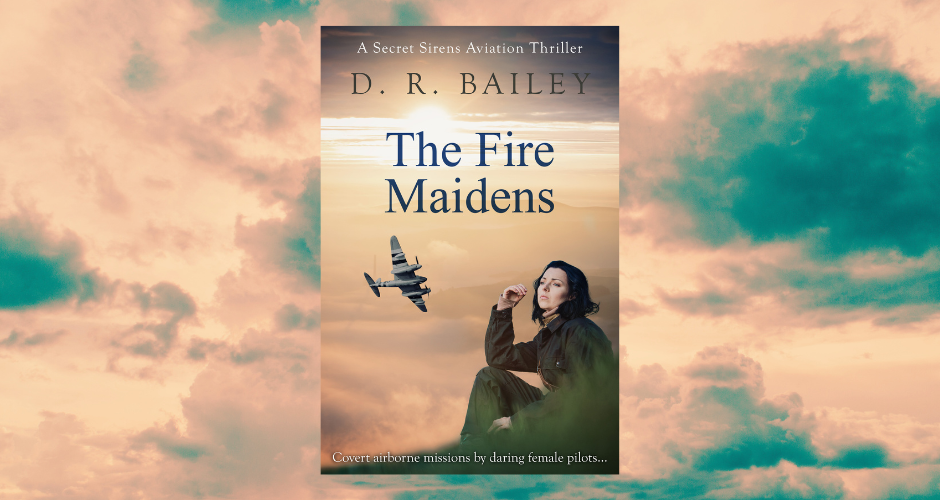
The Fire Maidens is Published Today

Congratulations to D. R. Bailey, whose heart-pounding military adventure, The Fire Maidens, is out now!

The Fire Maidens is the third book in the Secret Sirens Aviation Thrillers, set during the Second World War.

Autumn, 1943

Sisters Anna and Jennifer Nightingale have been flying in top missions with the Secret Sirens all-female RAF unit for nearly a year.

Their squadron of twelve Mosquitos stages a raid on Rouen to divert the enemy’s attention from the Lancasters which are coming in to bomb the marshalling yards and port.

But while Jennifer makes it through the mission safely, Anna and her navigator, Maria, are forced to ditch into the Channel.

Luckily they are picked up by a British Destroyer. And on board is none other than Winston Churchill himself.

Impressed by the skill-level and bravery of the female pilots, Churchill is keen to learn more about their training.

He escorts them back to base where they are given a new mission: to attack the Nazi-occupied Mimoyecques Fortress.

The Allies know that the Fortress is being armed with high calibre guns capable of reaching London in a massive, unending bombardment. The Sirens need to drop bombs into the railway tunnel entrance of the Fortress as soon as possible before the unthinkable happens.

But with very little time to train, will the Sirens be able to pull off the task? Can they reach the Fortress unscathed?

Or will these Fire Maidens join the many thousands who have already lost their lives in this brutal war…?

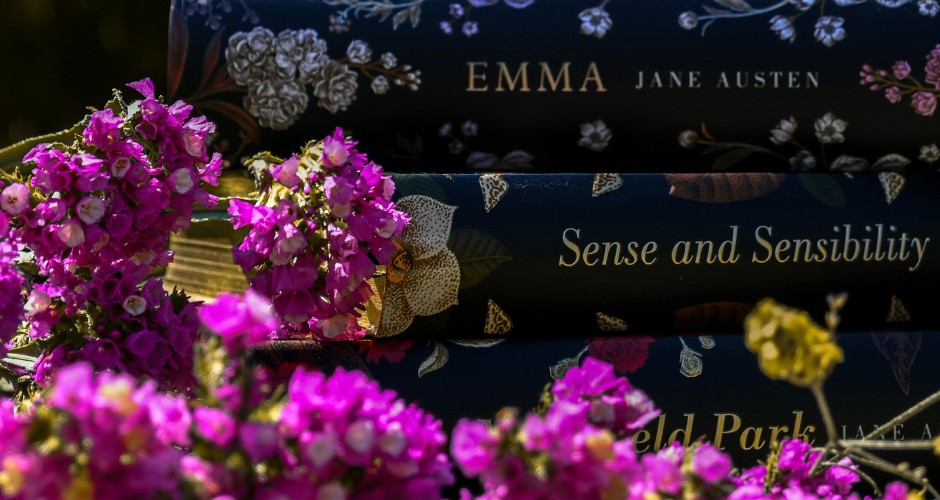
Celebrating Jane Austen’s 250th Birthday

As we celebrate 250 years since the birth of one of England’s most beloved authors, we asked Laura Martin, author of the Jane Austen Investigations series, to tell us what Jane Austen’s work means to her and how it has influenced her own writing.

2025 marks the 250th anniversary of Jane Austen’s birth and is the perfect opportunity to reflect on her literary legacy and the influences that shaped her writing.

The Royal Crescent, Bath

Jane Austen is one of Britain’s most well-known and influential authors. Over two hundred years after her death her books are still immensely popular and there are numerous film and television adaptations, as well as books inspired by her life and her characters. Much has been theorised about the sort of woman she was, a picture built from the letters she wrote to her sister Cassandra as well as other friends and relatives; she has become immortalised by her work and the people who celebrate it.

One reason Jane Austen’s books are so popular is her ability to build complex and layered characters, a reflection of the people we meet in real life. No two characters are the same, and even the minor players are well defined. It allows the characters and their flaws to linger in the reader’s mind — how often have I met someone and thought how similar they are to anxious Mr Woodhouse or foolish Lydia Bennet.

Undoubtedly there were many influences on Jane Austen and her books. Her main themes revolved around marriage, love, class divisions and morality. Her stories often centred on intelligent and spirited heroines — Elizabeth Bennet, Elinor Dashwood, Anne Elliot — who are forced to navigate societal expectations in the pursuit of happiness. Through these characters Jane Austen explored the roles of women in society, economic dependence and social mobility with a clarity and subtlety that remains impressive to this day.

Pulteney Bridge at twilight

Although Jane Austen did not live past the age of forty-one, she led a rich and varied life for a woman of her time. Her early life was spent in rural Hampshire, but in 1801 she moved to the city of Bath — a move that her letters suggest she was not overly happy with. However, there is no doubt that her time spent in the city — a place of genteel society and social ambition — offered her the perfect opportunity to observe human behaviour, which she then used to help form the flawed but interesting characters that we have all come to love.

For an author writing about Jane Austen, Bath is the perfect place to immerse yourself in the Georgian era. The streets are lined with beautiful examples of Georgian architecture and when you stroll around the curve of the Royal Crescent, you can almost imagine you might catch a glimpse of Jane Austen herself.

In my Jane Austen Investigations series I have attempted to capture the essence of Jane as an author and a person, especially her unparalleled insight into human nature. It is always daunting, writing a story where the main character once existed, especially when it is someone universally beloved, but I hoped to celebrate her genius and explore the life of the woman behind the books.

I have no doubt that in another two hundred and fifty years Jane Austen’s books will still be as popular as they are today — her wit and wisdom will still be as compelling as they are now.

Discover more about Laura here.

IN THE JANE AUSTEN INVESTIGATIONS SERIES:

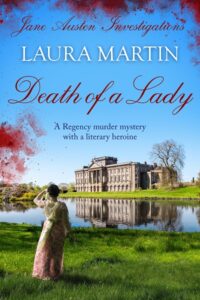
Death of a Lady

Last Impressions

A Poisoned Fortune

The Body on the Beach

The Dead Curate


Featured image credit: Photo by Dominika Walczak on Unsplash.

Vengeance at the Falklands is Out Now!

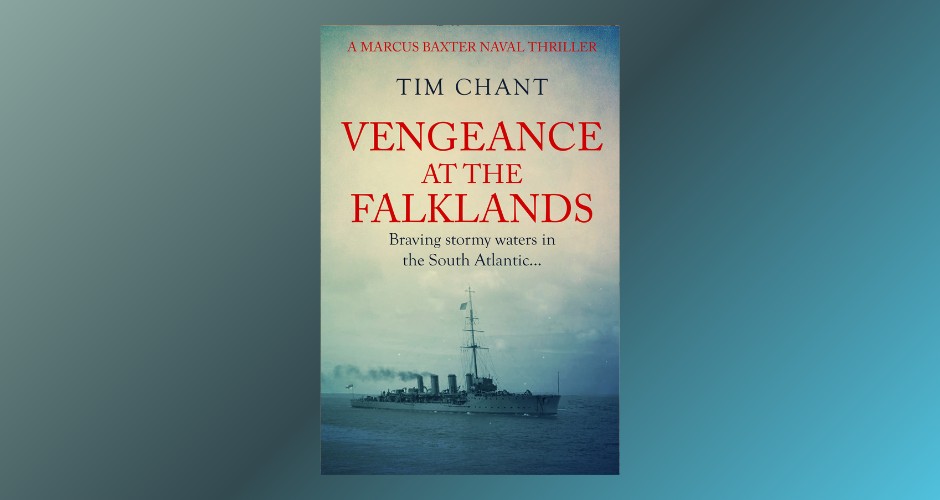
Congratulations to Tim Chant, whose thrilling naval adventure Vengeance at the Falklands, is out now!

Vengeance at the Falklands is the fifth book in the Marcus Baxter Naval Thriller Series: action-packed historical adventures following former Royal Navy officer Marcus Baxter during the early 1900s and through the First World War.

Winter, 1914

Lieutenant Marcus Baxter is working in the supply department at HM Dockyard Devonport, when word arrives that the German East Asia Squadron has destroyed a British squadron at the battle of Coronel.

Baxter seizes an opportunity to impress the First Sea Lord, Jackie Fisher, during a snap inspection of the dockyard and secures an appointment to HMS Astute, a scout cruiser, which is being sent to join the squadron in the South Atlantic.

Surviving a storm in the mid-Atlantic, Astute has a run-in with a mysterious passenger liner sailing under the Stars and Stripes, and duels with a German light cruiser stalking the rich hunting grounds off the South American coast.

After an intense engagement, which sees the Astute fleeing along the coast to Montevideo for emergency repairs, Baxter once again encounters the suspicious liner. And this time he is determined not to let it get away.

Baxter risks everything to sneak aboard, and makes a shocking discovery. He needs to reach the safety of the Falklands before any intelligence falls into the wrong hands.

But with the enemy on his tail, the race along the South Atlantic won’t be an easy one…

Remembering Jeremy Howard-Williams

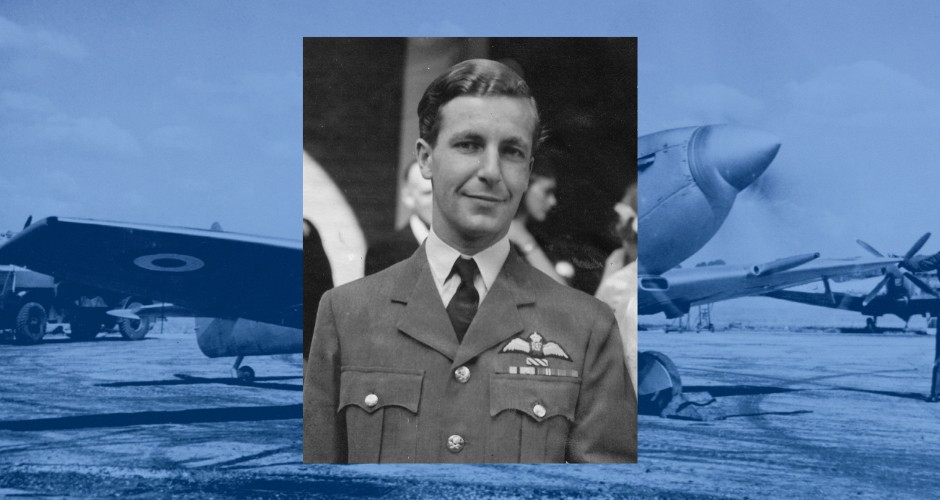
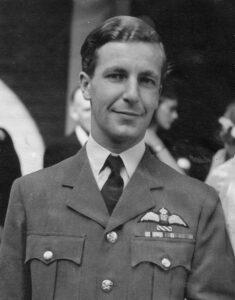
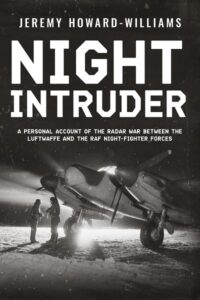
Jeremy Howard-Williams DFC (1922–1995), author of Night Intruder, had a distinguished career in the RAF as a night-fighter pilot during the Second World War and was awarded the Distinguished Flying Cross for gallantry. To commemorate the eightieth anniversary of the end of the Second World War, Jeremy’s son, Anthony Inglis Howard-Williams, reflects on the arrival of peace in 1945 and how it influenced his father’s life.

Jeremy Howard-Williams warming up the engines of a clipped wing Spitfire

When peace came to Europe in May 1945, Flight Lieutenant Jeremy Howard-Williams DFC was stationed at HQ, 11 Group Uxbridge. Three days before Germany’s unconditional surrender, a party was held to celebrate peace. Jeremy and his brother Peter did so by marching a guest — Flight Lieutenant Andrew from RAF Intelligence — between them up and down an anteroom. The junior flight lieutenant just happened to have been their pre-war boarding school housemaster, and the brothers had found it too good an opportunity to miss. When, years later, he was asked how the lieutenant had taken the ribbing, Jeremy replied, “with remarkable good humour!”

Jeremy at his wedding in 1951

Like so many in 1945, Jeremy was headed for an uncertain future. With peace  came the pressing question: what happens now? For most, life outside of the  forces beckoned. With millions demobilising, the assimilation of those who had been at war back into civilian society became one of the new post-war government’s biggest challenges. For those who did not want to leave the forces came a different challenge. With Jeremy’s father a retired RAF pilot, Peter a Battle of Britain day-fighter pilot and Jeremy a night-fighter pilot with the Fighter Interception Unit — an elite force at the forefront of the RAF’s early experiments with radar equipment — both brothers understandably wished to remain serving.

With the Royal Air Force downsizing, deployment meant less flying — not a very exciting prospect for a twenty-three-year-old war veteran. Jeremy had specifically joined the RAF in order to fly when the Nazis had tried to seize control of Western Europe. However, in the new modern era of the jet engine, aircraft were flying ever faster and higher. Now that was exciting!

In the end, both brothers remained in the RAF. Jeremy was first posted in an admin job to Singapore during the Malayan Emergency, where he met his wife, uniting two distinguished RAF families. He later worked as an assistant air attaché in the Paris and Berlin embassies. He did fly during these postings, but mainly a desk. He resigned in 1957.

Ultimately, Jeremy’s parents divorced and his father remarried into the Ratsey family, where Jeremy became sales manager for the famous sail-making firm Ratsey & Lapthorn in Cowes on the Isle of Wight. After leaving the company, he wrote many authoritative books on sailing, as well as Night Intruder, republished by Sapere Books, a personal account of his wartime service as a pilot and the radar war between the RAF and Luftwaffe night-fighter forces.

Spitfires Rising is Published Today

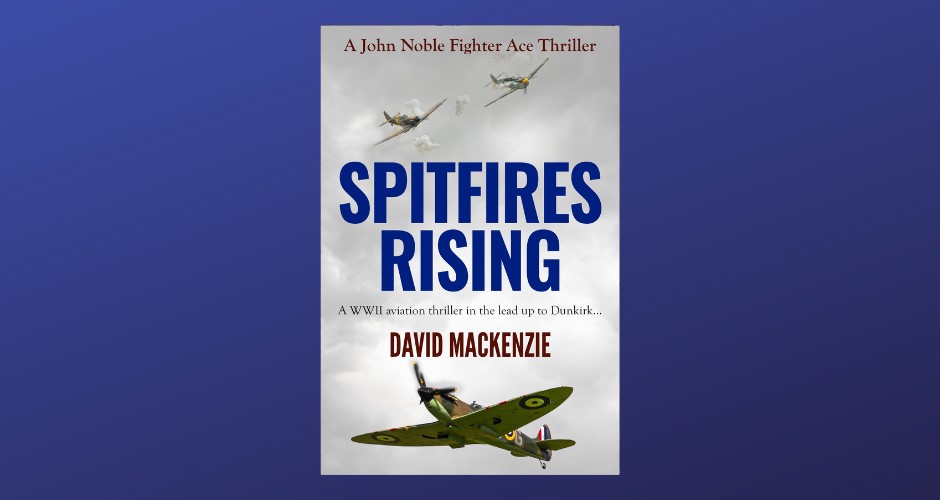
Congratulations to David Mackenzie, whose wartime aviation thriller, Spitfires Rising, is published today.

Spitfires Rising is the first book in the John Noble Fighter Ace Thrillers: action-packed military adventures following an RAF pilot during the Second World War.

1938

Having been raised on a farm, young New Zealander John Noble longs for an adventure away from his family’s homestead.

Enthralled by the sight of a Tiger Moth flying overhead, he decides to pursue a career as an RAF pilot and travels to the United Kingdom to complete his training.

After receiving his Wings, John is sent to RAF Catterick, where he finds himself flying the formidable Spitfire.

When tensions in Europe reach breaking point and Britain declares war on Germany, John’s training and courage are put to the ultimate test.

As the squadron prepares to face the Luftwaffe, John starts to question the effectiveness of their tactics, leading to clashes with senior officers.

And as his missions grow ever more dangerous, John begins to wonder just how far he will go to survive the war…

Is John ready for battle? Will he be able to follow orders while preserving his life?

Or is he destined to become a casualty of war…?

Congratulations to David Field!

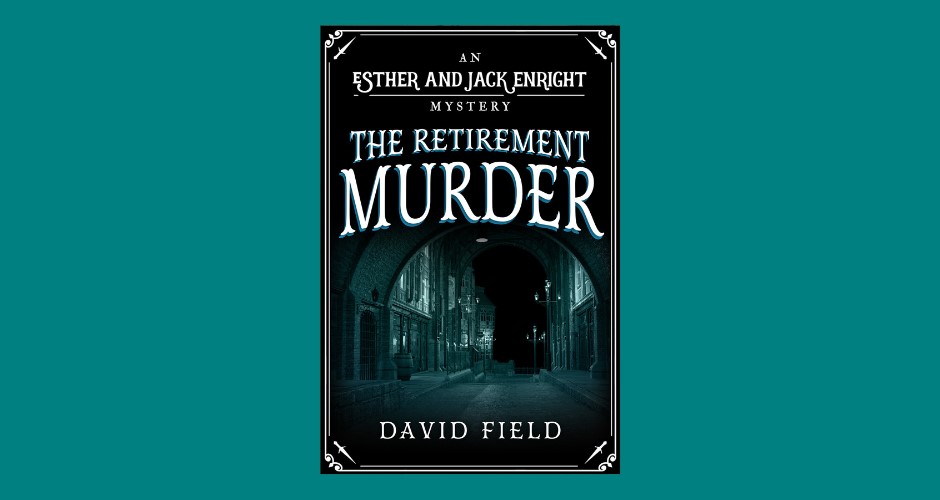
Congratulations to David Field, whose twisty Victorian thriller, The Retirement Murder, is out now!

The Retirement Murder is the ninth instalment in the Esther and Jack Enright Mystery Series – a traditional British detective series set in Victorian London and packed full of suspense.

London, 1898

The time has finally come for Percy Enright to retire from Scotland Yard. His nephew, Jack, is sad to lose a partner in the force, but Jack’s wife Esther is glad Percy won’t be getting her husband into any further scrapes.

It seems Esther’s relief might be short lived, though, when a senior officer collapses at Percy’s farewell ceremony.

It soon becomes clear that the officer was poisoned, and Percy delays retirement to help Jack track down the culprit.

It’s a daunting task that involves trawling through all the murdered officer’s recent cases in the search for someone who may still bear him a grudge.

But when it becomes clear the dead man may not have been the intended target, the investigation suddenly turns in a new direction.

Why are the police being targeted? Can Percy make one final arrest before he retires?

Or will the murderer outwit the Enrights in their latest case…?

Sapere Books Sign Victorian Mystery Series by Keith Moray

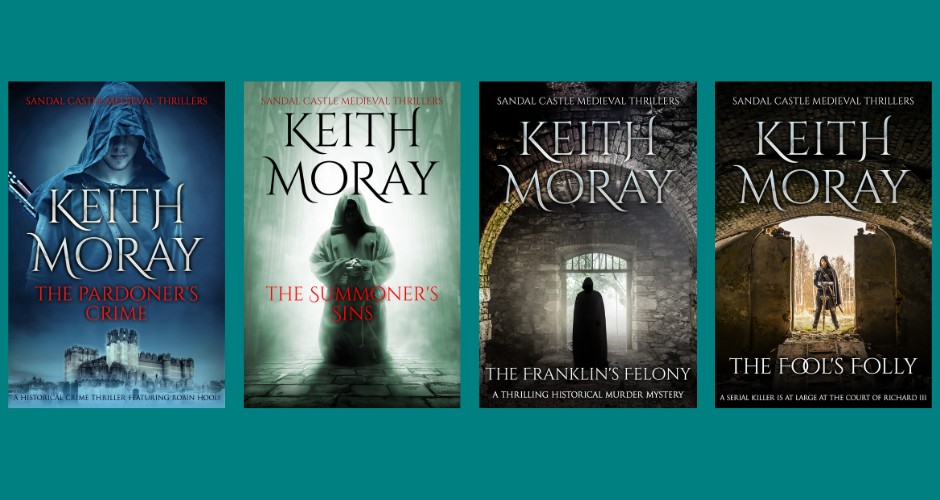
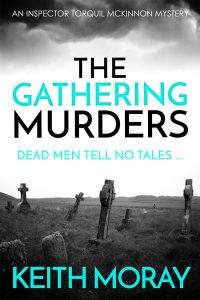
Following the success of his many historical series, including the Sandal Castle Medieval Thrillers and Inspector Torquil McKinnon Mystery Series, we are delighted to announce that we have signed a new supernatural series set in Victorian London by Keith Moray.

In Keith’s words:

“The first book in the series is set in London in 1854. Jack Moon is a foundling, brought up in an orphanage and then a workhouse, where he and his best friend Danny are subject to regular beatings. Together they escape, but when Danny dies in tragic circumstances, Jack secretly buries his friend in a cemetery at night.

“Alone and living in a deserted and rat-infested warehouse, Jack starts seeing Danny’s ghost, who warns him that someone is out to kill him and worse, the girl he loves, too. This is Victorian London, with its criminal underworld, body-snatchers, phrenologists, séances, ghosts and ghouls.

“I am delighted to be writing another historical series with Sapere Books, who have permitted me to set my stories in a variety of times and places, from ancient Egypt and medieval England to a contemporary Scottish island. My new mystery series delves into the occult and the psyche of the Victorian mind. It is murky, sinister and just a little bit scary.

“And one of the main characters is a ghost.”

Sapere Books Sign Global War Series by Eric Helm

Following the success of his many military thrillers, including the Vietnam Ground Zero Series and Wings Over Nam aviation thrillers, we are delighted to announce that we have signed a new historical military series by Eric Helm.

In Eric’s words:

“At the end of the 1980s and at the beginning of the 1990s, the world moved close to a world war that could easily escalate into a thermonuclear exchange that would end modern civilization. There were those who wished for nothing more because they believed it would thrust them to the top and in control of the world. And there were those who wanted to prevent that. Their purpose wasn’t always altruistic, but that goal matched their own climb to power. It is into this world that the characters in this series move, serving on every continent and sailing all the oceans, dealing with those problems.

“The characters are military and civilian, members of the media, and those with an academic frame of mind. Each brings an interesting take to the problems of trying to prevent a world war, except for one nation whose leaders believe such a conflict would benefit them. These are unique situations that require unique solutions. This is a tale told on the world stage with players at nearly every level of society.

“Sapere Books have been very good to me. The packaging of my Vietnam Ground Zero series has been perfect. The enthusiasm with which the books have been received has been wonderful. Sapere is a great publisher who have looked out for my best interests. Everyone seems to be excited by the various projects that I have suggested and there is no pressure to crank out a book quickly. They let it evolve naturally, which I believe makes the books that much better.”

The Night Angels is Published Today

Congratulations to D. R. Bailey, whose thrilling aviation novel, The Night Angels, is published today!

The Night Angels is the second novel in the Secret Sirens Aviation Thrillers Series, heart-pounding Second World War escapades with strong female leads.

1943

Sisters Anna and Jennifer Nightingale are recruits in the top-secret Siren Squadron: a group of women trained in the RAF to fight against the enemy.

The Sirens are tasked with flying a series of night stealth missions as part of Operation Scorpion. The first mission is successful, and on returning to base they are told that new members will be joining their ranks.

Hopeful that this means the all-female squadron has been deemed a success, the sisters welcome the new recruits and start training them on the Mosquitos.

They head out on another night mission. But this time not everyone returns.

With a downed plane found empty off the English coast, fears grow that one of the Sirens hasn’t survived.

But the show must go on. And Anna Nightingale has to destroy the crashed plane so the Sirens can remain classified.

As their night missions continue, increased skirmishes with enemy pilots suggest someone may be leaking information to the Germans.

Have the Sirens been compromised? Can they find the mole?

Or will these daring female agents be forced out of the war…?

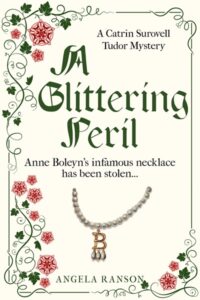
A Glittering Peril is Published Today

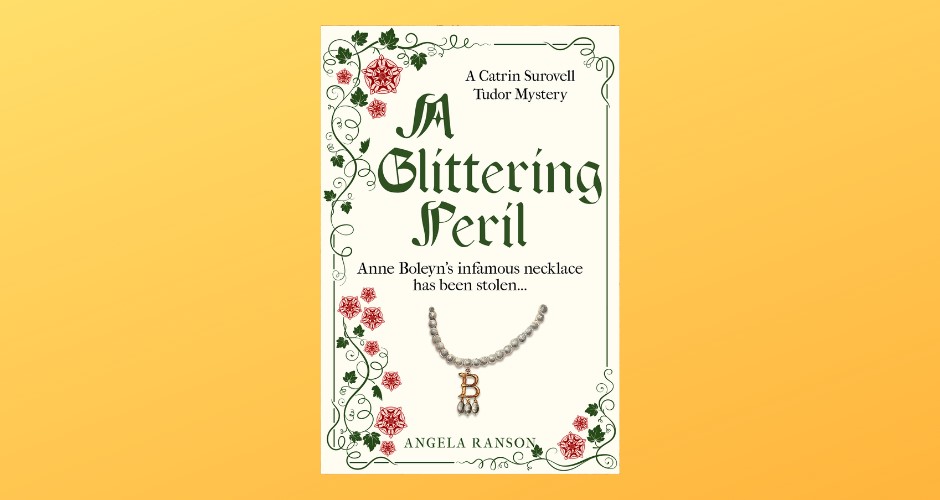
Congratulations to Angela Ranson, whose gripping Tudor mystery, A Glittering Peril, is out now!

A Glittering Peril is the third book in the Catrin Surovell Tudor Mysteries Series: exciting historical thrillers set at the court of Elizabeth I.

1561

Every summer, Queen Elizabeth takes a journey around her kingdom. It is a time of revels and celebration, full of pleasure and extravagance.

But in July 1561, the trip begins badly when the corpse of an unknown man is left in her path.

The nervous queen asks Catrin Surovell, her trusted favourite lady-in-waiting, to find out who is trying to sabotage her journey.

But Catrin soon discovers that the queen’s nervousness stems from something greater than the mysterious death.

Someone has been leaving reminders of the queen’s mother, Anne Boleyn, in strange places. A woman appears in the distance who looks like her; the scent of Anne’s perfume is left in the queen’s chamber, and Anne’s favourite French ballads are sung by a disembodied voice as the queen is travelling.

Worst of all, Anne Boleyn’s famous gold-and-pearl necklace with teardrop pearls hanging from a letter ‘B’ is taken from the queen’s bedchamber. The queen is devastated by the loss, for the necklace was one of very few mementos she had of her mother.

The queen begins to suspect one of her courtiers, so Catrin visits his home to conduct a secret investigation into his actions. And that’s when she discovers this is the most difficult mystery she has ever had to solve.

Is Queen Elizabeth being haunted by her ill-fated mother? Or is someone trying to drive her insane?

And can Catrin find the connection between the missing jewels and the unknown corpse…?

Sapere Books Sign New Scottish Queens Series by Kristi Ross

We are thrilled to announce that we have signed the first three books in Kristi Ross’ new Scottish Queens series.

Kristi Ross with Bolt

In Kristi’s words:

“My new series brings to life the untold stories of Scotland’s Stuart queens. While the histories of queens in England, France, and much of Europe are well documented, these Scottish queens have been mainly forgotten — until now.

“In this series, readers will explore the compelling journey of Queen Joan Beaufort, niece of King Henry IV and cousin to King Henry V, who enters Scotland as the wife of King James Stuart I after he was held prisoner by her English family for eighteen years. Her tale is one of true love, resilience, and determination as she navigates her husband’s assassination, becoming the  first dowager queen of Scotland in over a hundred years.

“We also delve into the story of Queen Euphemia Ross, whose life begins as King Robert Bruce I’s ends. Her rise from noblewoman to queen consort is a testament to the position of pawn that high-ranking women played. As the second wife of King Robert Stuart II, Euphemia constantly defends her children’s succession rights against rivals and navigates the complex dynamics of her husband’s family. Readers will also meet her daughter-in-law, Queen Annabella, born into the powerful Drummond clan and niece to King David Bruce II’s second wife, Queen Margaret Drummond. Annabella takes the reins of the kingdom when her husband, King Robert Stuart III, is incapacitated, showcasing her leadership and strength in crisis.

“Working with Sapere Books is a perfect match, as their commitment to historical fiction and their passion for bringing forgotten stories to light resonates deeply with me. These women had little control over their destinies, yet their strength and adaptability are fascinating. It drives me to tell the world their stories so that their legacies are remembered.”

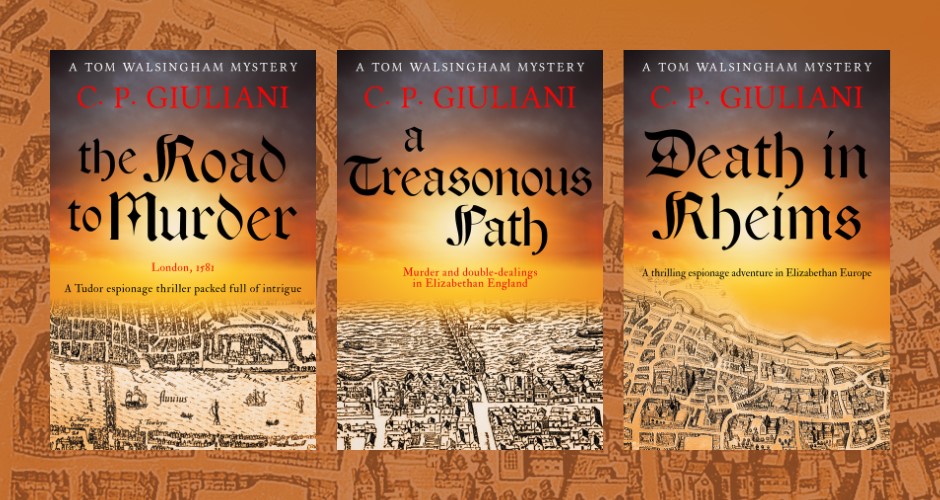
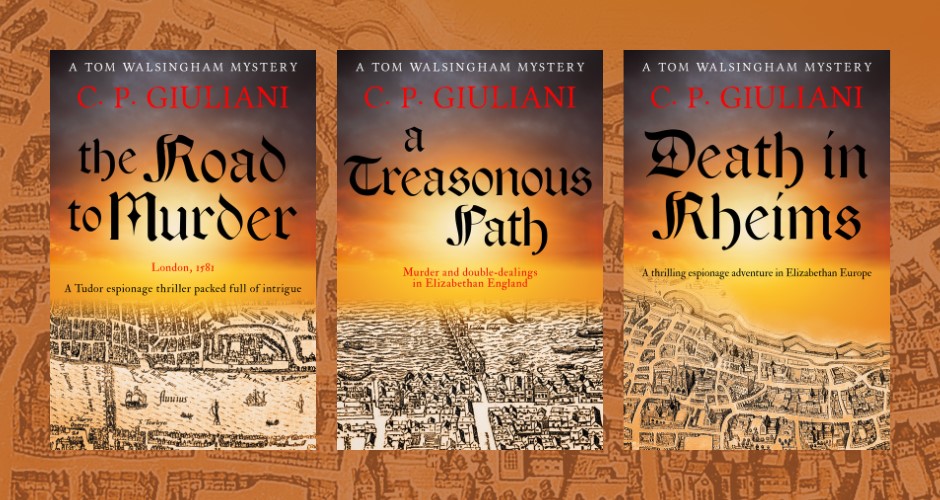
Sapere Books Sign Three New Tom Walsingham Titles by C.P. Giuliani

We are thrilled to announce that we have signed three new instalments in the Tom Walsingham Mysteries Series by C.P. Giuliani.

The series follows the espionage adventures of Tom Walsingham during the Elizabethan era in Tudor England.

In C.P. Giuliani’s words:

“Tom Walsingham sleuths on! I’m thrilled to have signed up three more adventures featuring my Elizabethan detective and spy with Sapere Books. I have great plans for Tom. He will be tasked with recovering a misplaced foreign ambassador — whose mission could change the course of Anglo-Spanish relations; he’ll become involved in a personal investigation when death strikes at his family home, Scadbury Manor; and poor Tom will find himself in prison when his money troubles and Sir Francis Walsingham’s plans collide. Plenty of mysteries and dangers lie ahead for Tom!

“I’m really happy to be working with Sapere, whose welcoming and stimulating atmosphere and competent, friendly and helpful team have made (and are making) my publishing journey a truly lovely adventure.”

Sapere Books Sign New Scotland Yard Series by Michael Fowler

Following the success of his DS Hunter Kerr Investigations and Dr Hamlet Mottrell Investigations, we are delighted to announce that we have signed a new historical police procedural series by Michael Fowler.

In Michael’s words:

“My new series features Detective Winter Cooper of Scotland Yard and is set in the 1950s.

“Detective Cooper’s first case is based upon a real event, the Eastcastle Street robbery — Britain’s biggest cash-in-transit hold-up at the time. In May 1952, robbers used two cars to sandwich a Post Office van in London and escaped with mailbags containing £287,000 (estimated to be worth approximately £8,500,000 today). It was a case that shocked the nation and embarrassed the Government, with Prime Minister Winston Churchill demanding daily updates from the Police Commissioner. Despite the involvement of over a thousand police officers, and the offer of a £25,000 reward, no one was ever caught.

“This is my take on that case, and while it is a deviation from my contemporary novels, I hope readers will embrace Winter Cooper with the same enthusiasm that I have put into creating him and this new series.

“Working with Sapere Books again was an easy decision to make. Over the past five years, they have given me so much support as a writer and I cannot thank them enough. When I ran the idea of this new series past them, their backing was unflinching.”

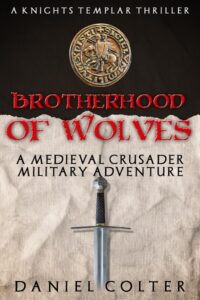
How I Write by Daniel Colter

In this behind-the-scenes blog series, Sapere Books authors offer an intriguing insight into how, where and why they write.

Today, we are delighted to spotlight Daniel Colter, author of the Knights Templar Thriller Series.

Writers are a strange breed.

The view from Daniel’s window

We invent friends in our heads, decide how they speak, what they wear, where they go, then spend countless hours conversing with them. No two writers share the same head-friends, oddly, despite running in the same  social circles. Neither do any two writers develop a story the same way.

Specific routines keep us on track, or don’t (looking at you, internet), and each work proceeds at its own pace. Most writers are one of two species: a plotter or a pantser. A plotter maps out each scene, chapter, and verse before putting fingers to keyboard. Pantsers fly by the seat of their pants, beginning with an idea, then writing towards a vaguely defined ending. I mapped out my first novel, Brotherhood of Wolves, but tossed the map aside by chapter 3. I found pantsing more rewarding, and still do, because much of the fun (and frustration) is writing myself into a corner and finding a path out.

My novels are historical fiction, where history provides setting, culture, and place. History can also frame the plot. Story is given precedent over history, however, because the goal is to entertain, not to educate. One or more characters are historical persons and the fictional protagonist lives within their orbit. Historical fiction should stay true to history and the fiction takes flight where history grows murky — which it usually does, especially the further back in time one travels. The murk is where the fun begins, in my opinion, and its where the what if fleshes out the story, where the pantser finds out what happens to his head-friends.

Writers are also strange creatures.

Some writers have habits, like a dog that circles exactly three and a half times before lying down, and these rituals are intended to fuel creativity. Isabel Allende started her first novel on January 8, 1981, and that day became a ceremonial start date for all her subsequent works. The poet Friedrich Schiller kept rotten apples in his desk and, when his mind needed a jolt, he would give one a sniff.

My writing rituals are more mundane and less … smelly. I start with two (not one, not three) cups of coffee. I keep a stuffie of Curious George on my desk, in honour of Curious George Rides a Bike, the first book I read cover-to-cover. I say hello to George each morning.

Ritual also comes from my father. He was a painter and writer and used a second-hand desk as his art space. I acquired that desk, set to rehabbing it, but foolishly sanded the top to expose wood veneer over composite. I left his dried paint splashes along the edges, though, and I touch them when I write. They make me think of him, and thinking of him puts me in a creative mood. I told him I had begun writing historical fiction, his favourite genre, but he passed away before reading Brotherhood of Wolves. I often wonder what he would think of my series, and suspect he would be pleased (except for the part where I ruined his desk).

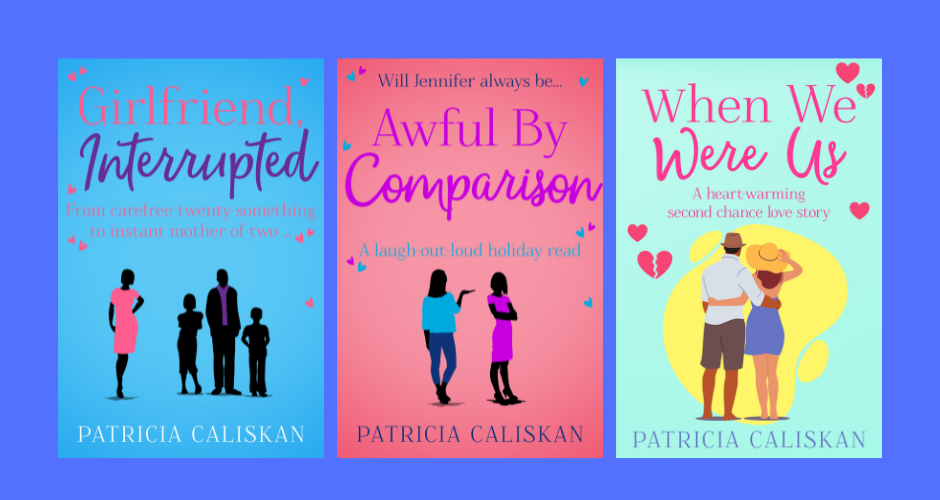
My Writing Space by Patricia Caliskan

In this behind-the-scenes blog series, Sapere Books authors offer an intriguing insight into how, where and why they write.

Today, we are delighted to spotlight contemporary romance author Patricia Caliskan.

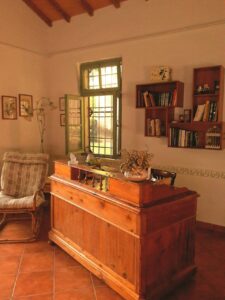
I wrote my third novel, When We Were Us, at my bureau, which has become my writing enclave. Something about opening the bureau desktop gives me a sense of immediacy which speeds the writing along. I write upstairs, free from distractions, except for my dogs who stop by to visit, but basically closed off from everything except the world I’m creating.

Patricia’s bureau

I never thought I had any writing rituals until people began asking the question. I realised that I have rituals in general. All three of my novels were largely written at night. Once the demands of the day are over, night-time is not only the perfect fit in a practical sense but allows me the space I need to daydream on behalf of my characters, and fully immerse my thoughts in the world of the book.

I’m a huge advocate of those tiny details which promote wellbeing, even when I’m not writing. So, before I get back to my latest manuscript, I mix essential oils for my diffuser, which works like magic for changing up the mood, and I set a timer to monitor my working hours.

I find having scheduled time slots super helpful. I can show up and do the work and know exactly how much time I’ve spent on the novel, which is reassuring when I’m trying to find enough time to work on a project.

I switch on my moon light, as I call it, a perfect orb of white light, and always freshen up my perfume before I write. I think of perfume as a superpower. A favourite scent signals that we’ve got work to do and someplace else to be.

I usually start by reading over where I left off to reacclimatise. I try not to spend too much time agonising over a word choice or a sentence formation until I’m at the editing stage. I have a natural tendency to edit as I go, wanting the work to be as close to the final manuscript as possible, which can hinder the drafting process.

When it comes to first drafts, I remind myself of my own advice: to just get it all down. I need solitude to do that, and sitting at my bureau, I feel enclosed in the world of the book. When it comes to editing, I usually end up inadvertently making a playlist to score parts of the novel or characters, which I find helpful with tone and pace. Once I have a completed manuscript, I print the work out and read it aloud, because if the writing doesn’t sound right, it isn’t right, and needs reworking.

Writing fiction requires both discipline and detachment, and my little bureau space provides just that!

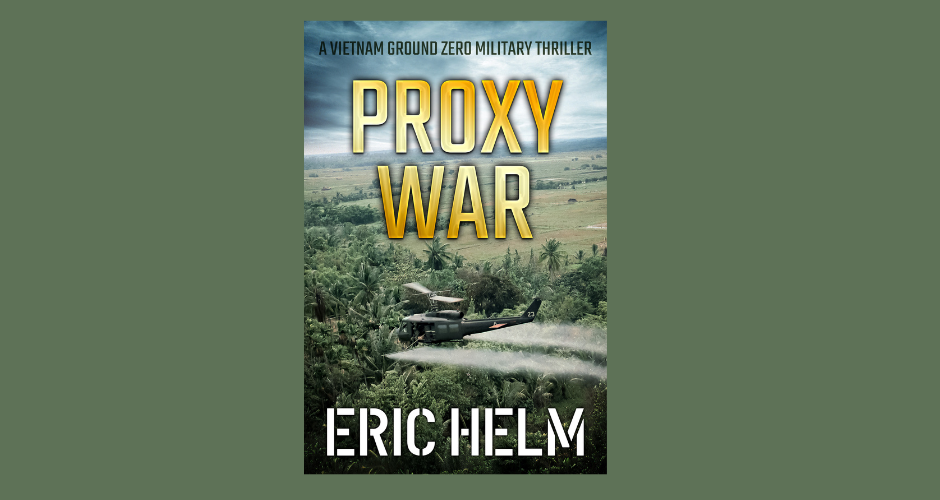
Proxy War is Out Now

Congratulations to Eric Helm, whose thrilling Vietnam War adventure, Proxy War, is published today!

Proxy War is the twenty-ninth book in the Vietnam: Ground Zero series: action-packed, authentic historical thrillers set during the Vietnam War.

Republic of Vietnam, 1969

The American government has known for a long time that there were Soviet advisors in North Vietnam, but now it seems they are ready to strike.

Intelligence has been gathered suggesting that Soviet fighter pilots have engaged in aerial combat with American Air Force and Navy pilots.

As of yet the Americans have not retaliated, as the UN is terrified of the Vietnam War escalating into a global nuclear disaster.

But the Soviets have been spotted engaging local Vietnamese troops and it seems they are readying for an attack.

U.S. Army Special Forces Major Mack Gerber and Sergeant Major Anthony Fetterman have been on light duties in Vietnam, during a relatively peaceful period in the war.

But after a visit to a Special Forces Camp, they are told that the enemy have been increasing their assaults on the base.

What are the Soviets planning? How large is their army?

Can the US Special Forces stop their deadly attack…?

How I Write by C.P. Giuliani

In this behind-the-scenes blog series, Sapere Books authors offer an intriguing insight into how, where and why they write.

Today, we are delighted to spotlight C.P. Giuliani, author of the Tom Walsingham Mysteries Series.

C.P Giuliani’s garden house

Every year, as soon as summer comes, I move my writing to the garden house. It’s not really cooler, as temperature goes, but it feels summery and pleasant. I love the tall ceiling, the terracotta floor, the desk that used to belong to my great-grandfather, and the view onto the garden. There’s a little pond outside the French windows, and the birds bathing or drinking are, I confess, something of a distraction — but they also provide a cheerful break whenever I find myself stuck. A paragraph refusing to take the right shape? A character mutinying? A dull passage? I step away from the desk and watch while the blackbirds play in the water — and, more often than not, a solution will suggest itself.

For all its rustic pleasantness, the garden house has decent Wi-Fi — which is rather essential when my pile of reference books is not enough to confirm some detail — and is equipped with an electric kettle to make cup after cup of tea, which is a fundamental of my writing method.

In truth, beyond the insane amounts of tea, I have little in the way of a writing routine. Working in theatre means that my hours are flexible. Sometimes I write in the morning, sometimes very late at night, sometimes both; sometimes I must snatch the odd hour here and there, between a rehearsal session and a meeting with the techs. One thing I do is to always keep a notebook with me. Through the years, I’ve learnt to keep a dedicated notebook for each project, beside a general one for everything and anything: notes, stray ideas, snatches of dialogue overheard or imagined, lists, questions… It’s the general notebook that I carry around, so I can jot down anything that occurs to me — to be transferred to the relevant one later. This means that I do some of my writing at the theatre, at the vet’s, as I stand in a queue at the Post Office…

My family, friends and colleagues have developed a high degree of amused tolerance for my ‘Notebook Moments’, when I drop whatever I’m doing to take a note; strangers are occasionally a little put out until I explain that, for one thing, I’m prone to forgetting what I don’t write down and, for another, sometimes an idea will present itself in a very iridescent shape, little more than a flicker of colour under the surface of the water — and will need to be recorded quickly and thought through in writing, at least a little, if it’s to be of any use.

So to recap, I’m absent-minded, easily distracted, forgetful, and can’t keep a routine… I suppose it’s no wonder that a quiet, pleasant place like the garden house is important to my writing process.

Becoming a Novelist is a Matter of History by David Field

In this behind-the-scenes blog series, Sapere Books authors offer an intriguing insight into how, where and why they write.

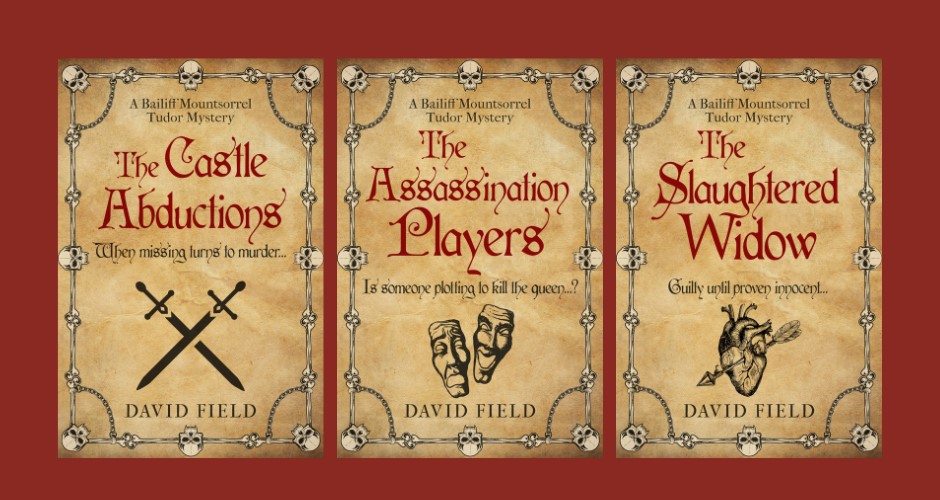
Today, we are delighted to spotlight David Field, author of numerous historical series including the Bailiff Mountsorrel Tudor Mystery Series and the New World Nautical Saga Series.

I’ve always written stories, even as a child, then I progressed from childhood scribbles to more serious attempts at literary glory on an old upright Olivetti typewriter (one of those with a red and black ribbon, if you’re old enough to remember) when my handwriting graduated from ‘untidy’ to ‘execrable’.

Reluctantly I then honoured my mother’s wish, and my father’s insistence, and got a ‘real job’ as a criminal trial lawyer, which was about as relaxing as standing on one leg on the top outer ledge of The Shard in London, without the reassurance of a safety harness. To relieve the stress I decided to start working on a novel — but what should I choose for a genre?

A good friend of mine who already earned a precarious living as a novelist was insistent that one should always write about things that one knows, and by this stage I knew two things outside my professional straightjacket — some history from my schooldays, and the streets of my home town, Nottingham. During the final years of my working life I spent stolen moments imagining the lives of those living in Nottingham during the Luddite Riots, and In Ludd’s Name was eventually published by a boutique publishing house owned by an old school friend.

Bitten by the bug, and buoyed up by having finally been published, I grew ambitious, and searched the history books for possible storylines, most notably from that most colourful of periods of English history, the Tudor era. The literary world seemed to be awash with Henry VIII, Anne Boleyn, Elizabeth I and even ‘Bloody Mary’, but two seminal characters from that era seemed never to have received much attention from novelists.

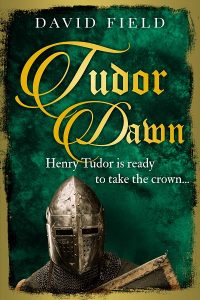
First was the progenitor of the Tudors, the boy from Wales, Henry VII, and I climbed inside his head to bring to the pages that followed his boyhood imprisonment in a bleak castle in South Wales, his youthful exile in Brittany, his triumphant return at the head of a ramshackle army that deposed Richard III at Bosworth, and his love match with Elizabeth of York that brought the Wars of the Roses to an end in the nursery rather than on the battlefield. To my delight, and secret surprise, I found a publisher — Sapere Books — and Tudor Dawn was launched.

Then — unbounded joy and amazement! — Sapere wanted another one, so this time I focused on a butcher’s son from Ipswich who rose from obscurity to become Archbishop of York, Papal Legate for life, Lord Chancellor and the diplomacy coach of choice of Henry VIII. Cardinal Thomas Wolsey’s spectacular downfall was just as dramatic, and The King’s Commoner was published, as testament to the fact that I had a second novel in me.

Dozens of titles have since been published, all by Sapere Books, and all ‘historical’ in genre. As one of the characters in Alan Bennett’s delightful creation, The History Boys, says of history — ‘It’s just one ******* thing after another’, and so it has been for me.

How I Write by Neil Denby

In this behind-the-scenes blog series, Sapere Books authors offer an intriguing insight into how, where and why they write.

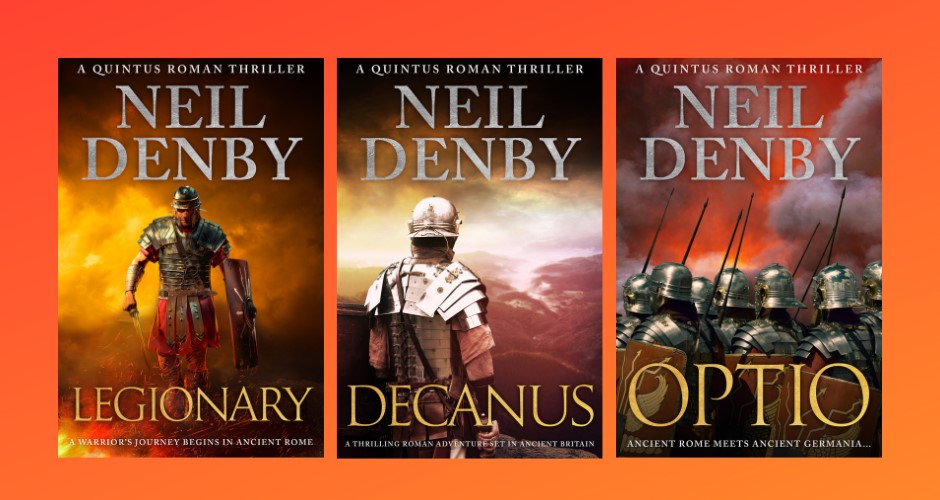
Today, we are delighted to spotlight Neil Denby, author of the Quintus Roman Thriller series.

Inspiration can come at any time of the day or night, but I find that the small hours are awash with ideas — plot lines, character development, a resolution to a particularly tricky scenario — so it is important that I keep a notepad and pencil by the bed. It may be old-fashioned but it is also reliable and has the advantage of not involving bright screens.

Frustratingly, come morning, I cannot always decipher what I have written down, but sometimes there are gems. These may be character or plot evolution, or perhaps just phrases, but I know I would have forgotten them completely if I had not made a note.

While out walking — an excellent way to clear the brain of fog — I defer to modern technology and record voice notes on my mobile phone. The same principle applies — if there is no immediate record, the thoughts can be lost.

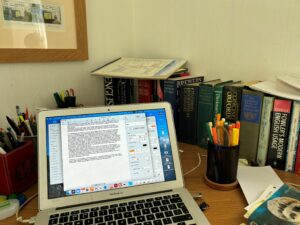
These brief lines are later transferred to a laptop. This is strategically placed in a corner of my study so that I am not distracted by the view outside the window. A row of reference books and one of my favourite possessions, an original Steve Bell cartoon, are all that I have for company. It also helps if I can visualise a character or a place, so I keep a sketchpad on my desk where I can create basic images — maps, plans, sometimes the progress of marches or battles. These drawings help to maintain consistency and authenticity.

This is my primary space, where the words are typed up. I add to them, enhance them, contextualise them, read them back. I often discover that I have used a particular word or phrase twice or more. Or if there is something I’m not sure about, I look it up. The reference books help to straighten out facts and also to find alternative words. Roget’s and Brewer’s and Fowler’s and Chambers provide a wealth of information unmatched by an American-leaning internet. I admit to slipping down rabbit holes of etymology and semantics, but find it strangely satisfying.

I always have to read what has been written, in context with the book so far. Traditionally that would have meant printing the manuscript out and sitting down with a pencil. Happily, that is no longer the case. Instead (thanks to everything going up into the Cloud) I can now read and review on my iPad. This means I can lounge in a chair, or sit outside, or read whilst travelling. So it is more a case of recreating the experience of the reader to see how and if things work.

Of course, there are edits, and actual printouts sometimes, but that is basically it: pencils and pads and technology.

Oh technology, where were you when I had all those essays to write at school?

Sapere Books Sign Three Tudor Suspense Novels by Kate Robertson

We are delighted to announce that we have signed a new series of Tudor mysteries by Kate Robertson.

In Kate’s words:

“The series follows Anne Winston, a lady at the court of Queen Elizabeth I. Quiet and unassuming, she is a keen observer and has a skill for puzzling out problems.

“When we first meet Anne, she has just returned to court from burying her husband. She soon learns that her nephew has been arrested for sedition and must race against the clock to prove his innocence while also being drawn into the emerging spy network under Sir William Cecil, the Secretary of State.

“As the series progresses, we will see Anne uncover intrigues and conspiracies, using her powers of observation and ability to go unnoticed in most situations. I wanted to write a story about an older female protagonist who discovers the power of her voice and finds her agency in a complicated world, all while trying to right wrongs and find justice for the forgotten.

“I met Amy Durant at the Historical Novel Society Conference in San Antonio in 2023. I initially pitched her a different story but when she asked what else I had, I knew I needed to share Anne, my most personal protagonist, entrenched in the Tudor era, which is my first historical period love.

“I’m excited to work with Sapere — it’s inspiring to work with a publisher that knows and loves historical fiction so well.”

Sapere Books Sign a New Roman Military Series by Jeff Jones

We are delighted to announce that we have signed a series of Roman military adventures by Jeff Jones.

In Jeff’s words:

Legion of the Damned is set in the middle of the first century when Rome was arguably at the pinnacle of its power and follows the career of Marcus Corvo, a man seemingly destined to forever live in his ancestors’ shadows. After a reckless act of bravery turns the tide of a battle, Corvo expects to be severely punished but is instead promoted and recruited for a clandestine rescue mission deep in enemy territory. But this is no ordinary mission and Corvo is obliged to recruit men from the gladiatorial arenas, prisons and mines. His small force is to comprise of expendables — a legion of the damned.

“In the coming series, Corvo’s adventures will take him and his men from the desert sands of Parthia, to the forests of Germania and then to Britannia where he will arrive in time to be caught up in Boudicca’s rebellion.

“The idea for Legion of the Damned has been bouncing around in my head for some time now and my original intention was for it to be made into an historical fantasy novel. When Sapere Books asked whether I’d be interested in writing Roman historical fiction I jumped at the chance. I knew that I could make the idea work.”

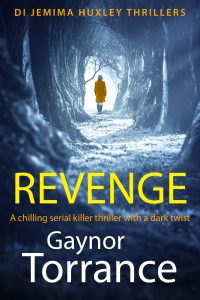
Why I’m Addicted to Crime Thrillers by Gaynor Torrance

Gaynor Torrance is the author of the DI JEMIMA HUXLEY THRILLERS series.

Like many other people, I’m a crime thriller junkie. I can honestly say that books in this genre are my guilty pleasure — as well as chocolate, of course. As far as I’m concerned, it has to be well-written and absolutely has to have a complex plot. I need an abundance of twists and turns, along with a large helping of red herrings. If it keeps me guessing, it will offer me everything I expect from a good book.

I want the story to grab me and not let go. Whenever this happens, my own identity quickly fades into the background, and I become the protagonist. Gender is unimportant to me. I don’t care whether the protagonist is male or female. The only thing that matters is that I inhabit a world I would shun in real life. Fictional characters are instantly relying on me, and I’m desperately trying to save lives whilst I figure out what’s going on. 

From the safety of a comfy armchair, these books have transported me to places I’ll never visit. They’ve presented me with opportunities to solve mysteries. Allowed me to get up close and personal with some of the most evil and twisted minds you could ever imagine. Over the years, I’ve brought justice to victims, been caught up in life-threatening situations and sometimes even had a hand in saving the world from imminent disaster.

Immersing oneself in these fictional scenarios is my ultimate form of escapism. It’s a white-knuckle ride minus the personal risk.

Having so many ideas of my own, I decided to take things a step further. And so I began writing about Detective Inspector Jemima Huxley, whose stories are set in Cardiff, a city I know well.

I love Jemima, but that’s because I know what makes her tick. I appreciate that on first appearance, she’s perhaps not the most likeable of characters. In Revenge, which is when readers are introduced to her, she comes across a bit like Marmite. She’s not a typical lead detective, and this will polarise opinion, as you’ll either love her or hate her.

When I created Jemima, I wanted her to have an interesting backstory. Over the years, I’ve read so many crime novels that have a hard-nosed lead detective heavily dependent on alcohol. Or whose personal relationships are in tatters because of the pressures of the job.

DI Jemima Huxley is different. She’s a modern woman who gets stuck in and excels at her job. Jemima is determined to have it all. At work, she’s a capable, dedicated detective: loyal, brave and intelligent. If only she had more control over other aspects of her life…

If you’ve read Revenge, you’ll already know that Jemima has some serious personal issues. She’s hiding things from everybody. Her mental health is suffering, and she’s in danger of falling down a rather large rabbit hole.

Most importantly, Jemima hasn’t yet figured out what’s at the root of her problems. I have a feeling that that epiphany is a long way off, and until it happens, there’s little chance she’ll begin to turn things around.

Jemima’s personal torment manifests itself in a way that is guaranteed to upset some readers. And I’ll let you in on a secret — I’ve shed tears as I’m writing those scenes. What Jemima does to her body is shocking, brutal and heartbreaking. But her method of keeping a lid on things is a reality for some people.

It’s a sad fact that mental health issues are still stigmatised. And, like many others, Jemima feels compelled to hide her suffering for fear of being judged.

But Jemima isn’t the sort of person to give up easily. She has her low moments but always seems to manage to pull herself together and face whatever life throws at her. Any serial killers stalking the streets of Cardiff had better watch out, because Jemima’s returning soon to investigate her next big case, Sole Survivor!

Click here to order REVENGE now!

Innovation and Inspiration at the Independent Publishers’ Guild Conference

On Tuesday we attended the annual autumn Independent Publishers’ Guild conference, which is a great chance for us to find out more about the latest developments in the industry, get some ideas and inspiration for our own practices, and catch up with old friends. Here are our highlights from the day!

The conference opened with a keynote speech from serial entrepreneur Sam Conniff Allende, the author of self-help book Be More Pirate. He shared his thoughts on the importance of rule-breaking: challenging systems and taking risks to effect positive change and drive success. Sam also compared Golden Age pirates with modern entrepreneurs – in terms of their powerful branding and shrewd tactics!

Booksellers Peter Saxton, Phil Henderson and Tamara Macfarlane

A talk on the importance of fresh branding and operations was led by Stephen Page of Faber and Faber, Nicola Usborne of Usborne Publishing, and Chris Bennett of Cambridge University Press. Each showed how developing modern-looking visual marketing campaigns, analysing previous successes and failures, and maximising the potential of their backlists keep their businesses moving forward.

A trio of trade and children’s retailers – Peter Saxton of Waterstones, Phil Henderson of Blackwell’s and Tamara Macfarlane of Tales on Moon Lane – brought us up to date on the latest trends in bookselling. A particularly welcome development is a surge in the popularity of books celebrating women in non-gender-stereotypical roles and inspirational stories for young girls.

Jeremy Yates-Round of Haynes Publishing showed how he keeps his business agile in a tough climate. Techniques included humorous and imaginative marketing campaigns, both licensing and being licensed by external brands, and offering customers different platforms to access content (e.g. via online apps).

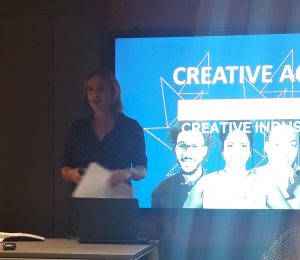
Josie Dobrin of Creative Access

Josie Dobrin of Creative Access and Rik Ubhi of Zed Books led an important discussion on how publishers can attract, welcome and maintain a diverse workforce. Practical tips for recruiters included undertaking unconscious bias training, checking recruitment data to see at what point in the selection process BAME candidates are excluded (and working to fix the filtering systems so that this happens less frequently), avoiding the ‘quick hire’, removing unnecessarily high barriers for entry-level jobs, and making existing BAME hires feel safe, listened to and valued.

Claire Farrell, Extinction Rebellion co-founder

Clare Farrell, the co-founder of Extinction Rebellion (XR) – a climate change mitigation movement – gave a rousing speech on the realities of the climate emergency and the ways in which XR is putting pressure on governments to instigate action on a wider scale. She also explained how the publishing sector can take its own stand via actions as simple as using recycled paper for all books.

The conference wrapped up with a surprise singing lesson from author and musician James Sills – good fun for all!

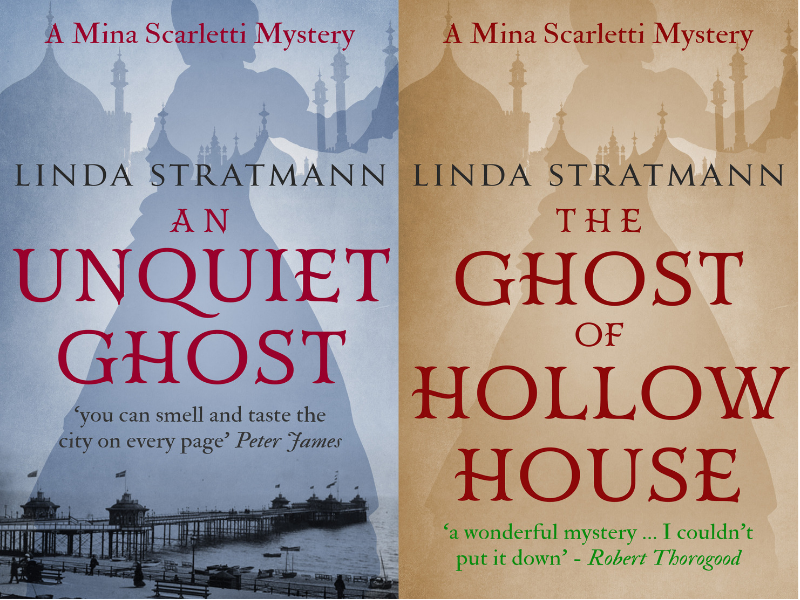
Author Q&A with Linda Statmann

When did you first start writing? Did a specific event encourage you to start?

When I was six years old, I saw a TV programme about the Blitz, which as you can imagine was pretty alarming. I wrote a poem about it.

How much research do you do?

I am fascinated with the Victorian era and do a lot of research to try and get the details right. I read contemporary newspapers and journal articles, biographies and medical works. I study maps, census returns, directories, legislation, photographs, and art. I have about a hundred books just on the history of spiritualism.

Tell us about where you write / your writing habits.

I work from home and have a room which is my office. I don’t work set hours; even when I am doing the household chores, my mind is still working on my latest project or planning a new one.

What part of the writing process do you find most difficult? Starting, knowing when you’ve done enough research, the ending?

When I begin a project, I know where I am starting from and where I will end up, but I have to link the two in a way that makes sense. Every time I pause in order to find that natural link, I have to remind myself that I found it last time. It’s worked so far.

How real do your characters become and do they ever seem to control their own storyline?

They feel very real to me, and because I let themes develop naturally in my mind often the characters do things that I hadn’t necessarily planned but emerge from their personalities and situations, so sometimes they do take me by surprise.

Do you ever feel guilty about killing off characters or do you relish it?

Neither, but it is sometimes sad. It’s very hard writing about a character who I know is about to become a murder victim.

Do you find it hard to know when to end a story?

No, I know when it feels right to me.

What are you working on?

I am editing a new volume in the Notable British Trials series about the trial of the Mannings in 1849. I am also developing the plot for the fifth Mina Scarletti book, to be entitled His Father’s Ghost.

What are you reading right now?

Munich by Robert Harris.

What is your favourite book? Who is your favourite character?

I have read thousands of books and it is impossible to pick one!

What book do you wish you had written?

See above.

Do you love any genres/books that are very different from what you write?

Most of my reading is non-fiction: history, biography, true crime, psychology. In crime fiction, I tend to read books with modern settings or if historical, a very different time period from the one I write about.

 Tell us something surprising about you!

I prefer pickles to sweets!

Author Q&A with Alexandra Walsh, author of The Catherine Howard Conspiracy

When did you first start writing? Did a specific event encourage you to start?

There has never been a time when I didn’t write. As a child, my idea of a perfect game was to tell a story to my teddies, then write it down. It was never a conscious decision, it was part of me then and it still is now.

How much research do you do?

It entirely depends on the story. For a while I wrote film scripts, mostly comedies, and they didn’t need any research. Likewise my first few attempts at novels (still languishing unpublished!). One story, The Music Makers took all its chapter heading from the wheel of the Major Arcana cards in the Tarot pack. Although I was a fairly proficient Tarot reader back then, I did research other, wider meanings, for the cards to add extra depth to the main character’s adventures.

The Marquess House Trilogy, which has a split timeline comprising of a present day strand and a historical section has taken years of research. Book one: The Catherine Howard Conspiracy was actually not my intended starting place. The big reveal that appears in book two: The Two Elizabeths was the kernel of the idea for this story and, over the years, I have written many different versions of it trying to make it work. However, none of them were quite right and after several years of juggling work, life and researching Elizabethan England I realised the only way I’d be able to capture this monster of a story on paper was to split it into three separate tales, rather than trying to cram it into one book. Three books, one for each piece of jewellery: two ruby rings and a silver locket.

It was actually devastating because it meant starting again from the beginning. In true frustrated writer style, rather than face this unhappy truth, I wrote a comedy instead, entitled The Patron Saint of Married Women, which was set in the present day and needed very little research. In. Your. Face. History.

In the end, I caved in and began researching Henry VIII’s fourth and fifth brides. I also made the alarming decision to dump my two main characters: Isabella and Oliver. I never liked them much anyway. The name Perdita had been running around my head for a while. From reading Dodie Smith’s One Hundred and One Dalmatians when I was younger, I knew it meant Little Lost One and somehow this seemed appropriate for my main character. Then one morning, I woke up with the question: “Who is Piper?” running around my head. Immediately, I knew she was Perdita’s twin sister and something clicked into place.

The very very first version of this story featured Isabella (now gone) mourning her twin sister who had died under mysterious circumstances on an archaeological dig after she had unearthed a silver locket. The idea was that she had been murdered by MI One Elite. Strangely, the nasty old Watchers were there from the beginning, as was Mary Fitzroy, James Rivers and Alistair Mackensie. Jerusalem was always around too, although it took me a while to settle on its true nature. Warren Dexter was another one who survived the character cull. However, it wasn’t until Perdita and Piper popped up that the story suddenly opened up before me. Then, Kit arrived. He had been through a number of names and he finally found an identity because I quite fancied Kit Harington who plays Jon Snow in Game of Thrones. Yes, it’s an embarrassing admission but he was the inspiration for Kit and once he had his name, the last piece of the puzzle was in place and the story flooded out.

I’ve long since moved past my toe-curling crush, though. Ahem.

Anyway, in answer to your question, at present, several months of research and writing of detailed timelines. By gathering all the information into one huge chart, it’s easier to write fluently and present a more rounded and believable version of my historical periods.

Tell us about where you write / your writing habits.

I have a purpose built writing hut in the garden with insulation and a heater. I write every day and, at the moment, am lucky enough to be able to treat it like my day-job.

What part of the writing process do you find most difficult? Starting, knowing when you’ve done enough research, the ending?

It varies. I love the lure of the blank page. Every piece of paper is an adventure waiting to unfold. Knowing when you’ve done enough research is a tricky one but there comes a point where you have to plunge in and see what happens. I don’t like writing endings, not because I don’t like them but because it means you’re saying goodbye to your characters.

How real do your characters become and do they ever seem to control their own storyline?

Very real. They all seem to end up taking over their own storylines. Sometimes, I even argue with them. Although perhaps I shouldn’t have admitted that…

Do you ever feel guilty about killing off characters or do you relish it?

Never! I worry about killing them off for different reasons. What about if I suddenly realise I need them again but they died in Chapter Four?!! EEEKKK!

Do you find it hard to know when to end a story?

Usually I know the end before I begin. The Marquess House trilogy has proved more troublesome though because in my head, it’s one long story, so realising I had to make three endings, instead of just the one at the very very end of book three, has taken a while to adjust to.

What are you working on?

Part three of The Marquess House trilogy. It’s working title was always Prince Oliver but I don’t think this works any more. The title will arrive when its ready.

What are you reading right now?

The Moon Sister by Lucinda Riley. It’s part five of her Seven Sisters series. I only recently discovered these books but I’m really enjoying them.

What is your favourite book? Who is your favourite character?

This is a tough one. How do you choose between so many friends? And also, do I go for something literary and make it look as though I’m very high brow or do I tell the truth?!

For a long time now, my favourite book has been Harry Potter and the Prisoner of Azkaban. I was going through quite a tough time when I began reading these books and, not only was Hogwarts a wonderful place to hide, I was awed by J K Rowling’s brilliance. Goblet of Fire had just been released, the films had been cast and the storm of Harry Potter was building. I never like making judgements on phenomena unless I’ve read/seen/visited them, so I bought the books. Philosopher’s Stone hooked me from page one. Chamber of Secrets worried me – who was Dobby? Was he good or bad? – but when I read the third book with its fabulous twist with Scabbers and the appearance of Sirius Black who had first been mentioned in chapter one of book one, I realised this was more than a series of children’s books. This was truly magical. I’ve asked for help at Hogwarts many times and it’s always been given.

My favourite character is Hermione Granger. Although Harry is pretty amazing too.

I also love Ballet Shoes by Noel Streatfeild and Moll Flanders by Daniel Defoe.

What book do you wish you had written?

Apart for the Harry Potter series? The God of Small Things by Arundhati Roy or The Passion by Jeanette Winterson.

Do you love any genres/books that are very different from what you write?

I try to read a broad cross-section of genres. If a story is well-written, it’ll grip you no matter what the genre. I try never to suffer from literary snobbery. Every book is worth trying, you may not make friends there but you don’t need to be rude!

Tell us something surprising about you!

I play musicals in the background while I write.

Sapere Books: Call For Nautical Fiction

Are you working on a new series set in the Age of Sail? Have you written a naval thriller set during the World Wars? Are you passionate about seafaring stories? Sapere Books wants to hear from you!

We are actively looking to acquire nautical fiction from both debut and established authors. We are particularly interested in historical naval fiction, nautical thrillers, and books in a series.

If you are an author who owns the rights to a previously published naval series, or a writer working on a new nautical novel, please get in touch and tell us about it!

Email our Editorial Director, Amy Durant, directly with some information about your nautical writing and a synopsis of your naval novel and we will get back to you as soon as possible.

We hope to hear from you soon!

Find out all about Christine Evans

When did you first start writing? Did a specific event encourage you to start?

In the 1990s. I can’t be more specific as I went to several creative writing classes, usually with the same tutors. The class would start out well attended, then people gradually would drop out – usually in winter. Then the following year the funding would change and we’d start up again at a different venue. But I always persevered and about three or four of us went to the same classes, which I enjoyed very much. Finally one tutor suggested I sent off some of my stories to a magazine. The first one was rejected but the editor must have seen something in my writing and made some useful suggestions. So luckily my next one was accepted by Ireland’s Own. I still have the cover framed on my wall. It’s dated August 1999 and has the picture of a Connemara pony on the front.


How much research do you do?

For Song of the Shuttle I went to Quarry Bank Mill, a working cotton mill near Manchester owned by the National Trust. The volunteer guide on duty was so helpful, explaining how the machines worked, then demonstrating them. He was really patient answering all my questions. From a large second hand book store in South Manchester I was lucky enough to find a book from the television series about the American Civil War shown back in the 1990s. It was packed with information and original photographs which was invaluable to my research. Other books like ‘The Hungry Mills’ and ‘Reveille in Washington’ helped enormously and also a map showing the major battles of the war.

For subsequent books I’ve turned to Victorian history which has always interested me. The internet is invaluable too. Where else could you discover the uniform that an American military hospital orderly wears?


Tell us about where you write / your writing habits.

I’ve set up office in a small bedroom since my son and daughter have left home. It overlooks the back garden and I can see the small birds bobbing about in the trees. I’m afraid I’m not an organised writer or set time each day for writing. I have a habit of waking up at an unearthly hour with an idea in my head and can’t get back to sleep until I’ve typed it out. I did try to write those ideas down on a pad by the bed but couldn’t read my writing in the morning. So I drag on a hairy old dressing gown – and tracky bottoms in winter – and sneak off into my office for an hour or so. Then I slip back into bed and sleep soundly.


What part of the writing process do you find most difficult? Starting, knowing when you’ve done enough research, the ending?

Most of my stories are written in my head long before they reach the page. Then when I have time I want to get down the information as quickly as possible. Of course I have to go through it all again and edit it. Sometimes I seem to write in Polish!  I’m not keen on editing and don’t like rewriting at all.


How real do your characters become and do they ever seem to control their own storyline?

My characters do seem to take on a life of their own and I instinctively know how they will act. This is a very perceptive question as many times my ideas and plots will change when faced with what a character would do.


Do you ever feel guilty about killing off characters or do you relish it?

I have sat and wept when one of my characters died. Normally it’s only the baddies that ‘get it’. I feel they get what they deserve.


What are you reading right now?

At the moment I’m reading a spy novel by John Le Carre and persevering with it. I get annoyed by the macho attitude of the men though! I have Lamentation by C. J. Sansom waiting in the wings. I love his Shardlake novels.


What is your favourite book? 

My favourite book is Jane Eyre. I’ve always loved it from being young when I had the Dean and Son version for young readers.

What book do you wish you had written?

Something brilliant like The Book Thief. I’ve recommended it to so many people and they’ve all enjoyed it.


Do you love any genres/books that are very different from what you write?

I have very eclectic taste. I really enjoy Terry Pratchett books. Patrick O’Brian’s seafaring novels are a favourite and also Lyndsay Davies’ Roman detective Falco. Although they are historical novels, they are very different from the romances that I’m writing.
Tell us something surprising about you!

I’ve had a painting exhibited in Manchester Art gallery. I won a competition where all the art classes round the city sent a painting that was inspired by one of the Gallery’s paintings. It was called ‘Things to Do’ and in one corner featured a cosy armchair, a book and a cup of tea. The rest of the canvas had an ironing board, a dirty frying pan, an un-ironed shirt and lots and lots of socks – black with a different coloured heel. None of the socks matched! The blurb was that I’d rather sit reading than doing all the chores. Along with a certificate I received a bag of art goodies. Unfortunately I don’t have time to go to any art classes nowadays.

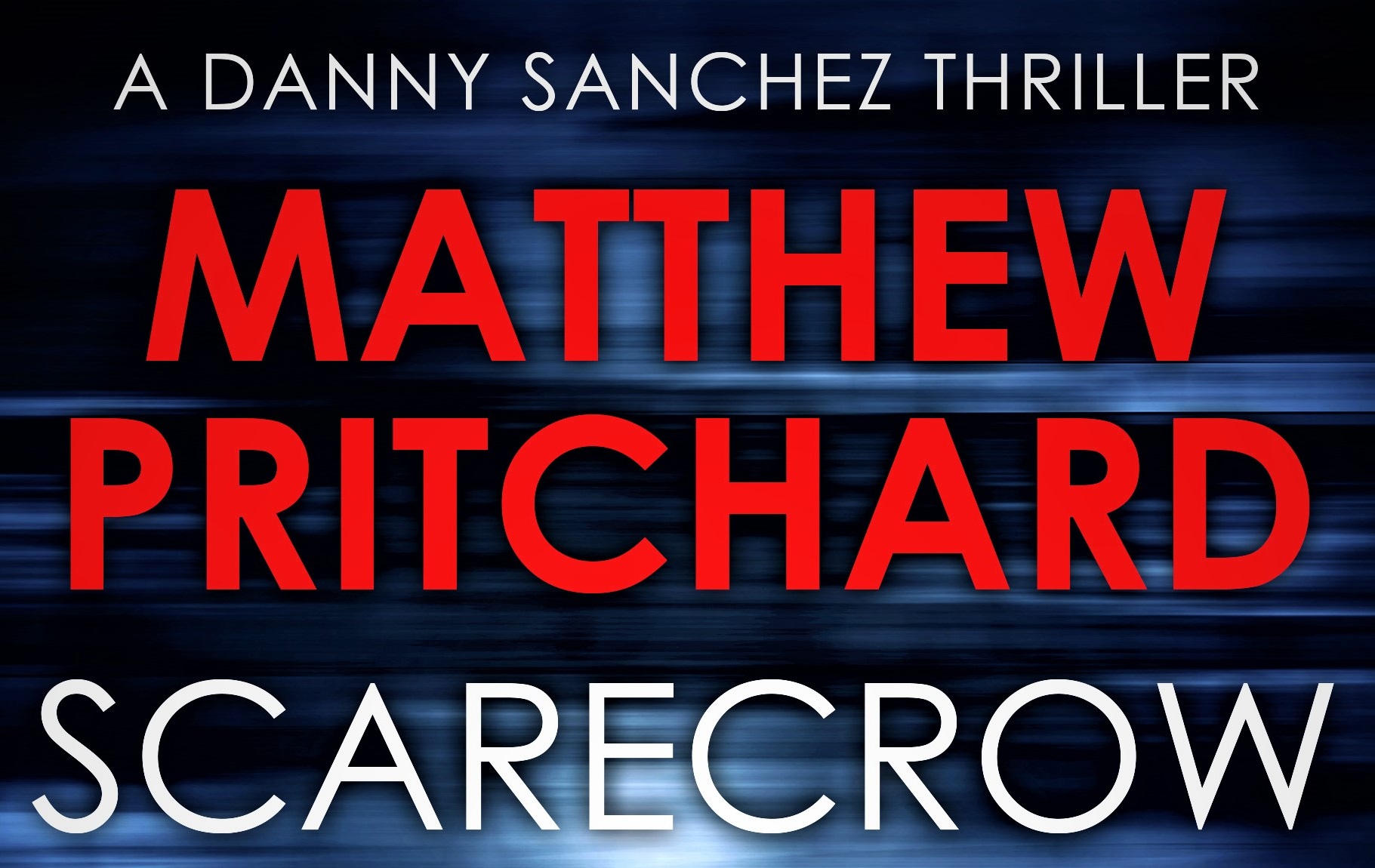
Excerpt from Scarecrow by Matthew Pritchard

Chapter One

Sunday, March 28th, 2010

Danny Sanchez arrived at 10:27.

It was already bedlam; hundreds of people covered the dusty patch of waste ground beyond the white walls of the property, shouting, pushing, arguing among the cacti and scruffy palms. The excavator’s arm loomed menacingly above the roof of the two-storey villa.

The demolition had been scheduled for nine a.m., but frantic negotiation had earned the elderly expat owners a three-hour stay of execution while the house was cleared. The whole neighbourhood turned out to help, Briton and Spaniard alike. A stream of people walked back and forth along the edge of the unpaved road, carrying everything and anything they could salvage – doors, windows, even the kitchen work surface. The problem now was where to put it all. An incongruous pile of household items was collecting around the trunk of a fan palm. Danny watched as a negligee blew free from a box and wrapped itself around a cactus.

Christ, what a mess.

In eighteen years of journalism, Danny had witnessed dozens of horrors – people cut from the wreckage of car accidents, a woman leap from a burning building, a suicide on a railway track – but this was something new. They were going to demolish Peggy and Arthur Cookes’ house and nothing could be done to avert it. He’d seen the paperwork. Nearly every penny the poor old duffers had was invested in the villa; a lifetime’s equity would be smashed to rubble. It was like waiting for an execution.

The Junta de Andalucía, southern Spain’s regional government, had sent a woman in her mid-thirties to oversee the demolition. Crafty, Danny thought; people found it harder to get angry with a woman, especially an attractive one. Her hard hat and fluorescent bib bobbed at the centre of a tightly-knit group of people. Guardia Civil officers in green boiler suits formed a protective ring around the Junta woman. Then came the leaders of the protestors, waving documents and trying to argue over the shoulders of the Guardia officers.

Behind them was the press pack, two dozen strong, cameras and microphones waving above the crowd as it surged and rocked. Gawkers and curious children milled at the edges, wondering what all the fuss was about.

For her part, the woman from the Junta looked genuinely distraught at what she had to do. Danny had no idea whether she could follow the English words being bellowed at her, but it was obvious she understood the gist. She kept pointing to the paperwork on her clipboard, raising hands and shoulders in shrugs of helplessness. Someone, somewhere had decreed the demolition must go ahead; it was her job to get it done.

The Cookes were inconsolable. Peggy sat on an armchair that had been dumped among spiky clumps of esparto grass. Tears carved streaks through the dust that had settled on her face. Danny recognized the armchair; he’d sat in it when he’d interviewed them a year before, when the demolition orders were first served. Arthur Cooke had looked dapper and defiant as he posed for the cameras back then; now, every one of his seventy-three years weighed upon him. He stood with his hand on his wife’s shoulder and turned moist eyes as Danny approached.

“Not now, mate,” he said, shaking his head. “The bastards are about to ruin us.”

Danny nodded, glad he’d been spared having to ask the obligatory “How do you feel?” It was amazing how dumb those four words could make you feel sometimes.

Peggy Cooke wanted to speak, though. “Why us?” she said, her voice shrill. “Out of all the hundreds of people, why does it have to be us? I want you to print that. It’s not fair.”

Why us? That had been everyone’s first reaction in March 2009 when the judicial demolition orders were delivered to eleven different families dotted around the municipality of Los Membrillos. It seemed so monstrously unfair, given the scale of the problem in Almeria, the province that occupies Spain’s south-eastern tip. A Junta survey had uncovered more than 12,500 irregular constructions in just ten of the worst affected municipalities. But the Spanish legal system was a Heath-Robinson contraption manned by characters from Kafka; immense and baffling in its complexity, arbitrary in the decisions it dispensed and spitefully prescriptive when it did so. It was one of the dangers of emigrating to Spain, the flipside to all the sunshine, fiestas and good living.

Not that it had worried the tens of thousands of Britons who had flooded the Almanzora Valley at the turn of the century, buying up villas and plots of land for self-builds, breathing life into the moribund rural communities that nestled below the Sierra de los Filabres mountain range. But the rush to expand had left thousands caught in the legal quicksand between the local and regional government of Andalusia. Local councils could grant licences to build, but the regional government had the right to challenge those licences. The catch-22 was that no one would stop you from planning to build a house; the house actually had to be built – and the money spent – for it to come to the Junta’s attention and challenge its legality.

Why us? Danny knew the answer to Peggy Cooke’s question; he’d interviewed the mayor of Los Membrillos. “We had so many applications for building licences, we were swamped,” the mayor had said, unlocking a cabinet and indicating three large cardboard boxes leaking paperwork. We only got round to processing eleven.” That was the bitter irony of it; by trying to follow the rules, these unlucky eleven home owners had created a paper trail that Junta officials could follow back to specific properties.

Time was ticking on. The crowd was getting angrier, the shouting louder. More Guardia officers arrived. Danny phoned everyone and anyone he could think of who was involved with the case.

It was the usual pass-the-parcel.

The council blamed the Junta, the Junta blamed the courts, the courts blamed the council; all down the line, each link of the chain shrugged its shoulders and pointed to someone else. Arthur Cooke watched Danny in action, hoping that this man who spoke such perfect Spanish could somehow work a miracle. Danny finished the phone call, shook his head. The flicker of light in the old man’s eyes dulled.

Paco Pino arrived at 11 a.m., yawning and scratching at his chest. “My one day off,” the photographer said, screwing a lens onto one of three cameras dangling from his neck, “And this has to go and happen. Just my luck.”

Danny was glad the Cookes couldn’t speak Spanish; crass comments like that were the last thing they needed to hear. Not that Paco was a bad person; experience had simply made him blasé, like everyone who made a living reporting other people’s misfortunes. Truth be told, Paco was a saint in comparison with some; Danny had spoken to one of the journalists sent by a UK red top to cover the announcement of the demolition orders the previous year.

“We won’t be interested again now until they knock the things down,” she said as she left, nodding toward the cloudy March sky. “Let’s hope they do it in summer, eh? I might get a bit of a tan.”

The pile around the palm tree grew: beds, sofas, lampshades, mirrors, cardboard boxes stuffed with clothes and crockery. Danny looked at his watch. Not long now.

At ten to twelve, uniformed officers of the Policia Local cleared the last of the protestors from the garden and checked no one was left inside the house. There were more scuffles on the white gravel outside the villa, more insults in English and Spanish. The property’s black gates had been lifted from their hinges earlier to allow the excavator through. Having shoved a final protestor outside, Guardia Civil officers formed a human barrier in the space between the gateposts. Protestors waved paperwork at the Junta woman as she looked at her watch and waved toward the workers.

The sudden roar of the excavator’s engine caused everyone to freeze and fall silent. The crowd turned as the engine revved and the excavator’s mantis arm uncoiled and rose above the house. For a moment, time seemed stilled…

…and then the air thundered as the excavator’s claw drove down through the roof. An angry moan emerged from the crowd as the arm rose and hundreds of dislodged tiles showered and smashed on the ground. The excavator arm dipped once, twice, three times more, prising the roof apart before ripping backwards and pulling free a ragged-edged section of brickwork. Looking through the jagged rent it created was surreal; the neatly-tiled interior walls had been exposed, giving a view inside a giant dolls’ house.

The Cookes stood holding each other: Peggy sobbing; Arthur straining to keep her on her feet, his face stoic. They were tearing his house down, but he wouldn’t show a flicker of weakness. Another huge section of wall tumbled away; it fell to the ground with a thud. Dust rose, people coughed, choked, began walking back along the road. Danny pulled his jacket up to cover his mouth.

The Spanish woman atop the ridge didn’t really care about the foreigners; their house was illegal; it had to come down.

She was only there for the spectacle, to have something to tell her friends tomorrow at the market.

She was the first to see it.

Her mouth gaped; then she began to scream and point toward the corner of the house. People looked to see what the noise was but the sounds were rendered unintelligible by the rumble of falling brickwork and the excavator’s diesel chug.

But the dust was settling now; people were following the woman’s outstretched hand, squinting as they too noticed the thing wedged in the narrow gap between exterior and interior wall.

A Guardia Civil officer rushed to the excavator, banged on the window. The machine fell silent. Other people had noticed the shouting woman now and were pressing closer, shading their eyes, unsure of what they were seeing. For the second time that morning, a sudden silence halted the crowd.

Danny thought it was a mannequin at first. And then the corpse fell forward, bending from the waist, its blackened head rocking back and forth. Some people screamed; others stood open-mouthed; some turned to run.

Arthur Cooke’s face remained expressionless as he stared at the semi-skeletal corpse lolling from the broken wall of his house. Then, without moving a single muscle of his face, he toppled forward and fell heavily to the earth.
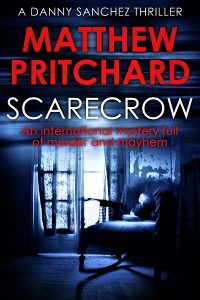
 

Need to know what happens next? Get Scarecrow now from Amazon.

“I am looking for a drowned girl” by J. C. Briggs

Ellen Tyrell’s Nose and Other Suspicious Circumstances

With thanks to the British Newspaper Archive

I am looking for a drowned girl. My old friend, Professor Swaine Taylor will, no doubt, provide the grisly forensic detail in his Medical Jurisprudence: ‘the eyelids livid, and the pupils dilated; the mouth closed or half-open, the tongue swollen and congested … sometimes indented or even lacerated by the teeth …’

I need an inquest on said drowned girl; this is where the British Newspaper Archive comes in. There are drowned girls aplenty in London in the decade 1840-49. Poor things, dragged from the Thames, the Regent’s Canal, the Surrey Canal, the New River, the Serpentine, the lake in Regent’s Park, from under Waterloo Bridge – a favourite spot for those seduced and abandoned girls. There they lie stretched out on muddy shores and banks, their bonnets askew, one boot missing, or both, their faces pale like Millais’ Ophelia, or more likely, bloated and bruised, or half-eaten by decomposition – or rats. Their bodies sometimes float, buoyed up by petticoats – the effect of air retained by the clothes, or the presence of gases. Sometimes a thin hand grasps a clump of weed which, according to Professor Taylor, indicates that the victim went into the water alive. Did she fall or was she pushed? Suicide, most often.

I find the case of the suicide of two young sisters dragged from a Leeds canal in April 1847, tied together by a handkerchief. The handkerchief is pitiable somehow, and memorable. Dickens must have read of that case for he uses the same circumstance in Our Mutual Friend. Something of a thrill in contemplating that, but I need only one girl.

I need an unknown drowned girl, unclaimed, buried at the expense of the parish, and forgotten. Somewhere in a village, a mother wonders about her lost child. She will never know what became of her ruined darling. The Morning Post in February 1842 explains: ‘In London the bodies are taken to any obscure vault, public house, or police office. The Coroner directs the parish to advertise the body, often in vain.’

I find several cases of unidentified females in the newspaper archive. In July 1841, according to The Morning Advertiser, a young woman was pulled from the London Dock. She was never identified. I am intrigued by the report’s dark observation that ‘No one could walk into that water by accident.’ Unknown, too, is the identity of the ‘fine-made ’young woman taken from the Serpentine in October 1845 and deposited at St George’s Workhouse. Yet she has a distinctive mole on her left cheek, dark hair and hazel eyes. Surely somebody missed her. Seduced and abandoned, perhaps, like poor Eliza Luke found in the New River in April 1844.

However, this is a crime story, so, naturally, I need a drowned, unknown, murdered girl. This is more difficult. Such is the damage done by the water, or the bridge, or the rocks of some lonely reach that it is often impossible to find enough evidence of murder. However, there is the case of Eliza Rayment found in the River Thames in October 1847. There is a deep cut under her chin. Four inches in length, an inch in depth, so reports Mr Bain, the surgeon, at the inquest, and there are ‘two arteries divided’. The wound might have been inflicted by the deceased, but ‘a person using the right hand would naturally make an incision on the left hand side.’ Eliza Rayment was right-handed. Mr Bain attributes death to the loss of blood from the wound. Poor Emma Ashburnham who was formerly Emma Meyer had once lived ‘in some splendour’ in York Road under the protection of ‘a gentleman of fortune’, but it is not known how she came to be in the river at Waterloo Bridge with a deep and ugly stab wound in her side.

Blood brings me to Ellen Tyrell and her nose. Ellen was found in the Surrey Canal in August 1845. Mr John Hawkins, the surgeon, finds an abrasion on the right side of the nose, but from the decomposition of the body he is unable to distinguish any other external marks of violence. Given that she was seen in the company of a man, not her husband, the night before she disappeared, the inquest is adjourned for the purpose of producing further evidence.

Oh, Eliza Rayment, what a mystery, what a suggestive tale, a married woman whose whereabouts were unknown for some days before your death. Who were you with? Emma, who was that ‘gentleman of fortune’? Alas, neither of you is for me, and Ellen, your nose, telling though it is, does not serve my purpose. I am ‘Oh, that I had been content with a cut throat, or a stabbing, but, in the interests of my plot, the victim must be strangled or I must rewrite the whole damned thing.

There is evidence I do like: the 1847 case of the unknown drowned young woman wearing a false plait at the back of her hair; the one in 1842 in which an umbrella is found nearby, bearing on its ivory handle the initials ‘F.H.’ And I like especially, the single earring she is wearing. I have a fancy for a single ruby like a drop of blood in my victim’s ear.

I dig deep into the newspaper archives and I find it – just the one, and the indefatigable Mr Bain is on hand to assist. The body was found in October 1848 near Battersea Bridge, much decomposed, appearing to have been in the water some time. Nevertheless, Mr Bain finds evidence of a ligature encircling the neck, though what this might have been he cannot say.

It is quite enough for me. Possible death by strangulation.
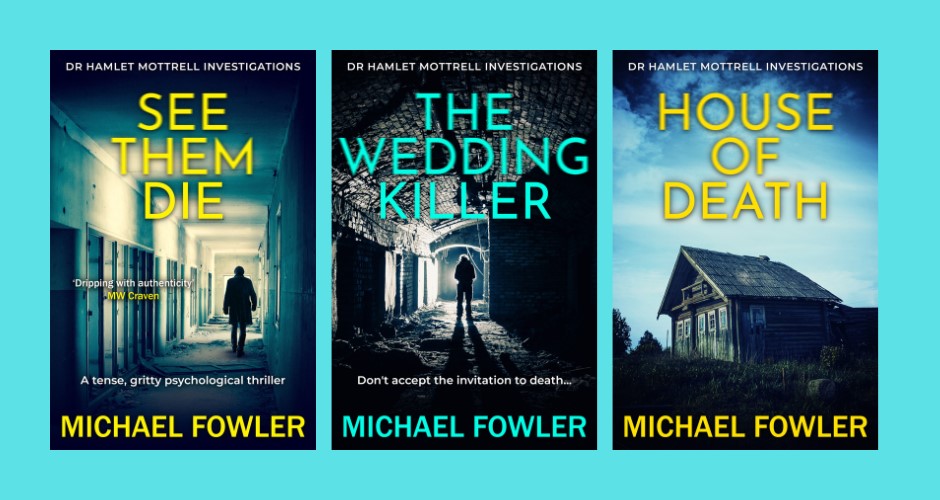
Oh, all right, I admit it: the body was that of a sailor. But, it did happen. Evidence of a ligature was found. I’ll just have to put an ‘s’ before the ‘he’. No one will know.
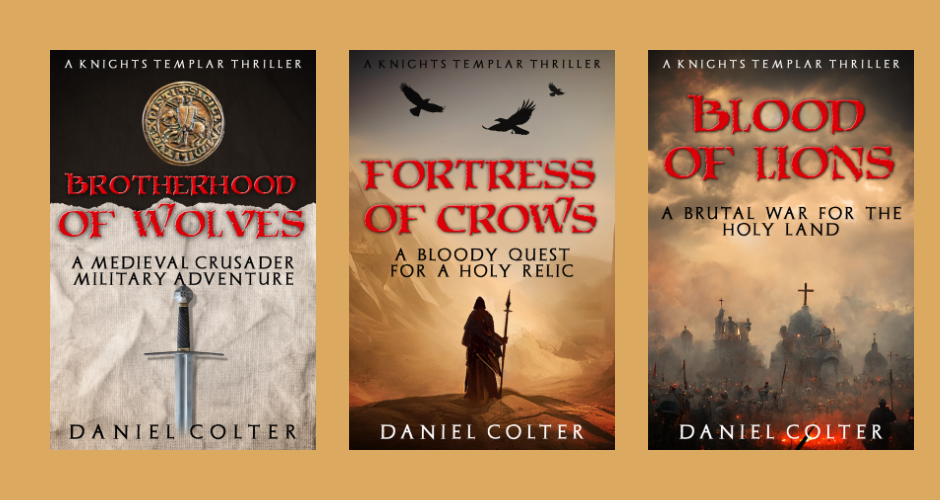

‘F.H.’? Names: Fanny? Florence? Flora? Ah, here’s a name in the archives: ‘Harvest’. I have her: Flora Harvest, the Grim Reaper cometh.

The Murder of Patience Brooke by J. C . Briggs


He Wrote Her Every Day by Gail Lindenberg

The Cooper Museum, housed in a small building in the heart of historic downtown Upland, offers a cozy and often crowded venue for local events. A favorite place to hang out with city residents, this cheery place often invites authors whose books feature the history of American towns and people, especially people from Upland, California.

I wrote my first edition of He Wrote Her Every Day in Upland and printed twenty copies in time to celebrate my mother’s 90th birthday. Based on letters Mom had saved from my father in Germany during WWII, the book was my mother’s gift to share with the family. This hard-cover version of their story includes photographs and follows a narrative using all the documents and souvenirs my mother saved. When I received an invitation to present my book on Author’s Day at the Cooper, I was delighted—and a bit apprehensive.

I decided to prepare a visual display of a few of Dad’s letters and many of the souvenirs. Did I mention that Mom saved everything? I needed three tables, but managed to make do with two. A three-foot square map mounted on a display board earned center stage, balanced between my tables. It was also a place I could hide if no one showed any interest in my book.

The map, sent to all the soldiers and their families from the Army post-war, depicts the route this Infantry division traveled from the beginning of the war until the final return of the last Occupation troops. So when the recommissioned Queen Mary finally brought Dad home, Mom already had the map of the route taken by his troops known as the Railsplitters.

Our afternoon of book signing invited walk-through traffic in the patio area outside of the small museum. A beautiful afternoon in California promised our group of about a dozen local authors a busy opportunity to talk to our neighbors about our books. I was hoping for a few sales and a chance to meet my fellow writers.

Flattered when the assistant curator pulled a chair up at my table, I smiled widely as he began to go through all of the V-mails, coins, K-ration kit remnants, and the seventy-five-year-old postcards that make up my father’s collection. He looked through the assemblage of bits and pieces that had been the focus of my writing for about a half hour before, at last, he raised his head and just said, “Wow!”

Hungry for some positive feedback, I answered by asking, “Wow what?”

His response was a surprise. “You should not have all of this sitting out here in the sun for anyone to handle. This should be in a museum.” I thought he was trolling for a donation to the Cooper, but no, he assured me that mother’s bits and pieces needed a place where scholars could read the primary documents and preserve them for posterity.

He told me about the National WWII museum in New Orleans, LA. It took me a year to do it, but Kim Guise, curator of the museum in New Orleans, guided me through the process and helped our family contribute the collection to them. Mom was tickled to sign the donation papers and make it official. The museum staff is currently working on a display of the letters and souvenirs of Private James William Hendrickson, Jr. It is, according to Guise, the largest collection of letters and documents from an individual American soldier.

This was exciting, but the best experience at the Cooper came on yet another day when my display had been transferred from the originals to mere copies. The Railsplitter Map held pride of place and looked as sharp and clear as the originals.

He Wrote Her Every Day will be published by Sapere Books and is coming soon! 

Me, Danny Sanchez and Journalism by Matthew Pritchard

The Daily Mail and The Sun are both pretty shitty newspapers, I ought to know: I wrote for them both.

Why? Because they were the only newspapers that paid decent money to journalists working out of Spain.

Anyway, stories that were suitably comic, tragic or grotesque enough for The Mail or The Sun only occurred infrequently on my patch – but when they did, I entered an incredibly stressful, real life version of the cartoon, “Wacky Races”, as the first journalist to get there and get the pictures and facts, got the sale. The rest just wasted time and petrol, and I was always in competition with at least 3 or 4 others.

And it was those missed sales that started chipping away at my integrity. Because if you work for shitty newspapers, you very quickly begin to behave in a shitty way.

With me, it began with a bit of cheeky chicanery. Much of rural Spain consists of unmarked dirt tracks, the names of which are known only to locals, so most reporters rely on rural petrol station attendants for guidance, and I often slipped the staff a tenner to misdirect any other strangers asking around.

Pretty tame stuff, but it was the start of the road to Shitsville. And once you’re on it, the question quickly raises itself: How far down the road are you prepared to go?

I found out in 2010, when I covered a story about the collapse of a house which had killed two expats in a tiny hamlet way up in the mountains.

When I got there, I deployed my usual set of tricks. First of all, in order to find the house, I lied and said I was a friend of the dead couple and was there to pay my respects. This got me detailed directions, as well as plenty of pats on the back and commiseration from local Spaniards. I may even have squeezed out some crocodile tears for their benefit.

The property was all locked up and wrapped with police incident tape, so I climbed the fence and started looking for a decent angle from which to take a photograph, clambering, hopping and jumping all over the rubble as I did so. When a neighbour of the dead couple emerged and asked me what the hell I was doing, I ignored his question and asked him the only thing that interested me: ‘Have you seen any other reporters here before me?’

When he said, ‘No’, I climbed back over the fence and started looking for somewhere with Wi-Fi coverage.

I got the sale. But as I was celebrating in a local bar, looking through the photos I had taken, I began to notice that there was dried blood and other types of biological matter all over the collapsed concrete pillars and rubble. Then I noticed some of it had stained the tip of my desert boot as I’d been merrily desecrating a place where two people had died a sudden and likely very painful death.

I lay awake that night, and slowly came to the realisation that I did not have what it took to be a fulltime tabloid journalist. My journey along the road to Shitsville had ended.

And that’s where Danny Sanchez was born. Because Danny does have what it takes and I enjoy exploring the grottier side of journalism through the prism of the character.

Most readers warm to Danny immediately, but others don’t, and I suspect it is the ruthless side of Danny’s character that is the reason for this – he climbs walls, he lies, he goes through bins, he enters people’s homes uninvited and he “borrows” documents – in short, he does whatever he has to in order to get the story.

The trick is to make the people he is investigating so loathsome that the reader sympathises with Danny, despite his shady behaviour.

Anyway, for those of you who dislike the character, I’d ask that you cut the guy some slack – he trawls through the shitty side of journalism so I don’t have to.

Whose Voice? by Graham Brack

Sapere Books are publishing books of mine from two different series involving two different detectives.

One, involving Lieutenant Josef Slonský is set in 21st century Prague; the other, featuring the university lecturer Master Mercurius, takes place in 17th century Netherlands. There are obvious differences in setting that inform the writing.

Slonský is a career policeman. He is inclined to take the occasional drink to get the mental cogs turning faster. There is nothing much in his life except his work, and since he is 58 when the series starts, the threat of retirement looms large. Slonský has all the support that modern science can offer, including a mobile telephone, though he does not really know how to do anything beyond making calls on it.

Mercurius is very much an amateur, an accidental detective who falls into the work when a series of abductions in Delft leave the local authorities baffled, so they send to the University at Leiden for a clever man who might help them solve these; and the Rector sends Mercurius. He is a young man, only 33, a lecturer in moral philosopher and an ordained minister, and he has little in the way of science to help him.

To my mind, though, none of these is the major difference between the series. I award that distinction to the fact that Slonský books are written in the third person, whereas Mercurius narrates his; and I thought it might be instructive to discuss why that is so.

I would love to say that it was the result of a carefully balanced decision, weighing all the factors for and against either approach, but if the truth be told the stories just came out that way. In my head, the action in Slonský appears as a film in which I stand back, observe, listen and record, whereas the Mercurius books involve me as a character in the tale I am telling. I toyed with telling Mercurius in the third person, but it didn’t feel right, and I have spent a bit of time thinking why that might be.

I think the reason is that Slonský is a big character, but he has a large regular supporting cast and it is important to me that we should get to know them. If he were also the narrator, I think he would dominate too much. Mercurius, on the other hand, is the only character who appears in all that series of books, and as the only consistent element the story has to pivot on him anyway.

This is not just of analytical interest. Many crime novelists consistently favour one or the other approach. I am prepared for either, but it changes the way the story develops. In Slonský stories things can happen when he isn’t around; Mercurius only knows what he sees and hears. That inevitably leads to a slower unwinding of the evidence, because it would seem forced if all the clues turned up in an afternoon. Slonský can send his colleagues out to investigate several lines of enquiry and bring them back together for a conference; Mercurius spends a lot of time travelling to discover things for himself. There is no telephone or telegraph system that he can use, and he does not possess a horse.

There have been rare examples of writers changing the voice during a series – Conan Doyle had Holmes writing one of his stories, for example – but generally once the choice is made, you’re stuck with it. It seems strange, given how important it is, that I am not more systematic in my selection!


LYING AND DYING, the first thriller in Graham‘s Slonský series, is available to pre-order now.

Real Life vs. Fiction by Patricia Caliskan

Full-time employee by day, aspiring novelist by night? Then you’ve come to the right article, my friend! That’s how every author who ever nabbed themselves a publishing deal started out. So, let’s do what all dreamers do, and make a list:

1. Be Prepared.
Dib-dib-dib, as the Boy Scouts say. Be prepared to make your first priority a notepad and a pen. Don’t leave home, work, or bed, without them. Inspiration is all around. That punch-line you blurted out. The way someone pronounces, ‘Yugoslavia’. The colour of Boredom. Get as ephemeral or literal as you like, but write it down. Because you’re a writer, remember? It’s not 9-to-5. It’s stride-in-your-step, adrenelin-jolting devotion!

Between You and Me: Check that notepad is tantalizingly empty, and the pen actually works before you get too attached to a brainwave. Ahem.

2. Time on your Side.
Writers tend to fall into either early-morning or late-night camps. That’s because our brains rather wonderfully surrender all traces of reality when we’re pre- or post-dreaming. Marian Keyes set her alarm a couple hours ahead of the office to complete work on her first novel. Jay McInerney kept cosying up to the keyboard way past the midnight hour. No matter which option hits the mark, make it a date.

Friendly Advice: When circumstances don’t allow, don’t beat yourself up. Keep jotting down ideas as casually as you like, and know you’ll make it up to your manuscript with a ream of words waiting in the wings.

3. Plan, plan, plan!
I’d like to be one of those streamlined, linear-types, writing at stealth from beginning to end, but guess what? It doesn’t happen. I know where I’m going. I’ve a pretty good idea why we’re going there, but midway is about as far as I get, plot-wise. Then it’s time to iron-out the initial plan. If you’re armed with a water-tight synopsis, I look on in awe, but I need to submerge in the writing before emerging with a first draft.

Lesson Learned: If something isn’t working, it’s because it doesn’t work. Move on. Re-think. Re-write. No Re-grets.

4. Prioritise
As nice it would be to flounce off into the nearest vestibule and announce an early retirement from all daily responsibility, it’s first things first. Your mind can’t wander into fiction beneath a cloud of household chores or office deadlines. Pin them down. Get them done. Then consider yourself free to focus.

Working Lunch: Make the most of any break. Walk. Think. Be alone. Listen to your characters. Trust your instincts. Jot those thoughts down in that notepad you carry these days.

5. Bite into the Best Bits
There’s no point setting aside time, staring at a screen, wondering where to find a word count. Sometimes you have to take it by surprise. Don’t think of it as a book. Start with that ending you can’t wait to write, or the big reveal you know has to happen. Hit the highlights. Pick out the praline, and throw away the toffees! Why not? It’s your work. Kill off that character before they’re introduced in chapter eight, you absolute maverick! Look in the rearview, and you’ll find a picnic trail of plot development.

Novel Navigation: Make sure there’s batteries in the torch. In other words, map each scene in a working synopsis as you go along. See that shard of light up ahead? That’s the ending, compadre.


Visit Patricia’s author page or find out more about her second novel, Girlfriend, Interrupted. 

How I Wrote a Novel by Cathy Bussey


This year I achieved a lifelong ambition, I wrote a novel. 

I’ve wanted to write a novel since I was about six years old. I have multiple unfinished drafts saved on this computer, on previous computers, on computers lost to time, on computers that probably predate time (BBC Micro, anybody?). Until this year, I never managed to finish one.

I would begin and I would know how it ended. I could never do the middle bit, connecting the dots, getting the characters from A to B. Slowly my interest and motivation would slip away, or I would start afresh, try again only to find the same cycle repeating itself.

If you search online for ‘how to write a novel’ you’ll come across many well-thought out blogs and articles and tips and exercises all designed to help.

Most of them involve things like, planning and writing out the story structure, getting the plot outline completed, developing your characters, going through various creative exercises on paper (if your character went out for lunch, what would they order?). It’s all highly organised and linear.

I did none of the above. The process of writing my novel was as far removed from a planned and organised creative exercise as it’s possible to be. It was completely unlinear.

I went through cycles of intense creativity and productivity, and these would slowly tail off and I would need to rest, get a few early nights, stop trying to force it and wait for the inspiration to return, trusting that it would – and it did. Every time.

It became clear to me that if I kept trusting the process – trusting myself – I was going to finish this book. I put all thoughts of publication out of my mind, stopped worrying about whether my agent would want to read it and whether she would consider it worthy of submission. I didn’t have to encourage myself or ‘fake it til I made it’.

I genuinely wanted to finish the book, to finish the book. That was the only goal. I retained of course an inkling that this could become something big for me if I did finish it and if my agent liked it and if somebody picked it up – but at this stage that was too many ‘ifs’ and all were out of my control.

The only thing in my control was whether or not I would finish the book, so that became the goal, and that’s what I did.

Throughout the process there were standout moments. Finishing, getting good feedback from my agent, getting a deal – they were all huge. But the real standout moment happened much earlier. It happened after those awkward, difficult times when I sat staring at a blank screen knowing what I had to write and feeling unable to write it, waiting to be ready to break through the block, refusing to shut down my computer and let the novel slip away as all its predecessors have done, because I couldn’t find the courage to do what I had to do.

The standout moment was when I realised I was going to finish. That I was not going to stop and I was going to do whatever it took to finish the book. Not in a half-assed ‘well I’ll just put up with some parts that don’t really work for me just to get it done’, but finish truly, with the knowledge deep inside me that I’d done the absolute best I could. I hadn’t shirked or taken the easy way out.

That was when I realised that the hard part – the middle bit, the connecting chapters, keeping the story going, retaining the flow – wasn’t hard at all. In fact it was the easiest part of all.

Welcome to Sapere Books!

Sapere Books is a digital and print-on-demand publisher of exciting new submissions and brilliant backlist books.

We are excited to be launching our first titles on March 1st!

Our launch books include An Unquiet Ghost by Linda Stratmann  – the latest novel in her intriguing Mina Scarletti mystery series; The Gaslight Stalker by David Field  – a brand new voice in historical crime; Dead Ernest by Frances Garrood – a touching story of love and loss; and The Gathering Murders by Keith Moray  – the start of his thrilling Scottish detective series.

Check out our AUTHORS page to see all of the brilliant writers who will be publishing their stories with us in 2018. We have lots of exciting announcements coming soon, including a brand-new series from award-winning Irish author, Cora Harrison, and Regency crime from best-seller Elizabeth Bailey.