Sapere Books Signs Three New Sherlock Holmes Mysteries by Linda Stratmann

We’re thrilled to announce that we have signed three new instalments of the Early Casebook of Sherlock Holmes series by Linda Stratmann.

The series follows a young Sherlock Holmes and his acquaintance, medical student Mr Stamford, as they unravel mysteries and unmask devious killers.

In Linda’s words:

“I am delighted to continue the adventures of a youthful Holmes, before he met Dr Watson. A little about what to expect next: in the Halloween-themed Widow’s Key, an unexpected legacy creates a furore, with deadly mysteries to uncover.  In The Aeronauts, murder is sky-high, and escaped balloons cause peril both aloft and below. The Ghost of Lodge Thirteen finds Holmes and Stamford in Brighton. Richard Scarletti has been accused of murder, and his sister Mina (from the Mina Scarletti Mysteries) and Holmes form a powerful detective alliance.”

To keep up to date with Linda’s newest releases, visit her website and sign up to her newsletter.

Sapere Books Sign New Scotland Yard Series by Michael Fowler

Following the success of his DS Hunter Kerr Investigations and Dr Hamlet Mottrell Investigations, we are delighted to announce that we have signed a new historical police procedural series by Michael Fowler.

In Michael’s words:

“My new series features Detective Winter Cooper of Scotland Yard and is set in the 1950s.

“Detective Cooper’s first case is based upon a real event, the Eastcastle Street robbery — Britain’s biggest cash-in-transit hold-up at the time. In May 1952, robbers used two cars to sandwich a Post Office van in London and escaped with mailbags containing £287,000 (estimated to be worth approximately £8,500,000 today). It was a case that shocked the nation and embarrassed the Government, with Prime Minister Winston Churchill demanding daily updates from the Police Commissioner. Despite the involvement of over a thousand police officers, and the offer of a £25,000 reward, no one was ever caught.

“This is my take on that case, and while it is a deviation from my contemporary novels, I hope readers will embrace Winter Cooper with the same enthusiasm that I have put into creating him and this new series.

“Working with Sapere Books again was an easy decision to make. Over the past five years, they have given me so much support as a writer and I cannot thank them enough. When I ran the idea of this new series past them, their backing was unflinching.”

Yorick vs Psycho, or The Child in a Box by Linda Stratmann

 Linda Stratmann is the author of the Mina Scarletti Mysteries and the Early Casebook of Sherlock Holmes series.

One of the great joys of historical research is discovering untold and fascinating true stories. This is one I found during my reading for Sherlock Holmes and the Cabinet of Wonders, which inspired part of the plot.

On 8 January 1878 an unusual statement was printed on the front page of The Scotsman newspaper. The title was ‘YORICK — WHAT IS IT?’ and the author, announcing ‘challenge accepted’, was one of the most accomplished and famous magicians of his day. John Nevil Maskelyne was a mechanical genius, the constructor of a whist-playing automaton called Psycho. He was the lessee of the Egyptian Hall theatre in Piccadilly, known as ‘England’s Home of Mystery’, where he performed illusions and debunked spirit mediums. He was also, judging by the tone of the piece in The Scotsman, extremely annoyed. His ire was aimed at two men: William Alexander, under whose management a rival of Psycho called Yorick was being exhibited, and the conjuror Boz who took the stage.

After briefly holding the licence of the York Hotel in Weston-super-Mare, Alexander had decided on a new career, promoting conjurors and illusionists. It is not known what previous experience he might have had, but he brought to his profession the ability to manufacture glowing endorsements, shameless theft of other men’s material, and a complete ignorance of the laws of libel.

‘Boz’ was born William Arthur Weston, in Brighton, in 1847. His father was a gunsmith and his mother a dyer. In common with many youthful enthusiasts of the art of conjuring, he had become fascinated with the American Davenport Brothers who toured England in 1864-5, bringing with them a miraculous cabinet. When the brothers were securely tied in the cabinet, all kinds of manifestations were produced, both musical and visual, which many onlookers believed to be the work of spirits. Weston, convinced that their act was trickery, determined to work out how it was done. He chanced to meet George William Buck, a skilled and successful professional conjurer born in 1836, who worked under the name Herr Dobler. The two discovered a mutual interest and pooled their information. After collaborating to perform an exposé of the Davenports’ methods, Dobler hired Weston as his assistant, and they went on tour. In 1866, however, Weston’s father died, and he was obliged to return to Brighton and the trade of dyeing. The flame of ambition still burned, and Weston hoped for an opportunity to take to the stage again.

This eventually came about when he met William Alexander, who by 1875 was managing the career of Herr Dobler. Coincidentally, Alexander had just spotted a new money-spinner, and all he needed was a man with some stage experience who could play a part and was happy to comply with his unusual promotional methods. He terminated his arrangement with Dobler and engaged Weston, who was now advertised as ‘Boz’.

Before long, posters were appearing under the heading ‘Alexander’s Sensations’, advertising Boz and the astonishing Yorick, a whist-playing automaton. The glowing reviews of this extraordinary device were probably written either by Alexander or Weston. Herr Dobler was especially shocked to see that the advertisements were using his playbills and lithographs and were posted in towns where he was appearing. Worse still, Weston was now claiming that he alone had devised the method of exposing the Davenports, and taught it to Dobler, who had been profiting ever since from his work. When Dobler objected, he was accused of being an impostor, taking the name and reputation of another man, a conjuror named Ludwig Dobler who had died in 1864.

Dobler sued both Alexander and Weston for libel and they made a counterclaim against him. The case came before the Bristol assizes in July 1877, where Dobler’s counsel pointed out that English conjurors often performed under foreign names to enhance their attractiveness, ‘for foreigners were supposed to be more clever than English people.’ The case was stopped with the agreement that the imputations would be withdrawn on both sides, and the offensive advertisements not repeated.

Boz and Alexander had suffered little from this spat. They continued their career as before, the advertisements and reviews becoming even more exuberant, the claims more fantastical, and the audiences larger. Their confidence was misplaced, since they had reckoned without John Nevil Maskelyne.

Maskelyne, born in 1839, had been apprenticed to a watchmaker. He became fascinated by stage illusions and seances when he was asked to repair a mysterious mechanical device. The owner was unusually coy about describing its function, and Maskelyne realised that it was used by mediums to fake spirit rapping. After he and his friend George Cooke successfully replicated the Davenport Brothers’ act without the aid of spirits, they commenced a career as conjurers and illusionists and first appeared at the Egyptian Hall in 1873.

Maskelyne had spent more than two years devising and assembling his whist-playing automaton Psycho, the workings of which were a closely guarded secret. He was therefore highly displeased to see Alexander’s advertisements claiming that the young pretender Yorick, which as illustrated on a handbill appeared identical to Psycho, was superior in both construction and operation. However, he had strong suspicions that Yorick, whatever wonders it might perform, was not an automaton.

Yorick and Boz had commenced their glittering career early in 1877 at Weston-super-Mare. Yorick, billed as ‘the most perfect automatic clairvoyant in the world’ was said not only to play whist but also perform mental arithmetic, read, write and spell. It could even, so it was claimed, submit to the test of a naked sword being passed through its body in four distinct places, and being taken to pieces in full view of the audience. There is no evidence that these tests were ever applied.

Yorick moved on to Bristol, the advertisements now boldly claiming that Psycho had been superseded. The tour was in full flow, with bookings pouring in: Liverpool, Manchester and Leicester were to follow.

It was during the Edinburgh appearances in December 1877 that Maskelyne’s patience expired. He and Cooke published newspaper announcements cautioning the public against a ‘gross imposition’ by conjurors exhibiting ‘a trick consisting of a child concealed in an Octagon Box about 24 inches wide and 12 inches deep upon which the bust of a figure is placed’. It was the child, not machinery, that caused the figure to move. Maskelyne did not mind sincere imitations but objected to crude copies said to be superior to Psycho, in an attempt to injure his hard-earned reputation.  At the Egyptian Hall, members of the audience were invited to come up onto the stage and examine the interior of Psycho and the box on which it sat, but, he said, the exhibitors of ‘spurious imitations’ could allow no-one to examine theirs.

On 4 January, The Scotsman published Alexander’s response. He claimed that audience members were permitted to examine Yorick, which he insisted was a genuine automaton on the same principle as Psycho. He challenged Maskelyne and Cooke, who he now alleged were simply the exhibitors of a figure made by another man named Clark [sic], to disprove his claims. The wager was worth £100, the loser to hand this sum to the Edinburgh Infirmary.

Maskelyne eagerly accepted the challenge in his statement of 8 January. He had always acknowledged that a friend of his called Clarke had assisted with the theory and early development of Psycho, but he alone had built the mechanism. Crucially, he now revealed the whole of Yorick’s secret. For the last two years, copies of Psycho had been made and sold in London. Although claimed to be genuine automata, they were designed so that their movements could be controlled by a child concealed in the apparatus. Mr Alexander had purchased one and engaged a little boy to work it, and Mr Weston, as Boz, to present it to the public. It was then advertised as the most wonderful automaton in the world, costing £1,000 to construct. During the performance, Boz told his audience that Yorick operated on the same principle as Psycho but was superior. He even claimed that he was the inventor and Mr Maskelyne the imitator.

Maskelyne now issued a devastating counterchallenge. He proposed to send a representative to Edinburgh who would spare no labour or expense to prove that he had just cause for his caution to the public. He offered to place £200 with a committee of Edinburgh gentlemen, to be paid to the infirmary if his statement was shown to be untrue. If it was true, then Mr Alexander was to pay £100 to the infirmary. The loser of the wager was to pay all the expenses of obtaining the evidence and advertising the result in The Scotsman.

William Alexander now knew that the man he had taunted was willing to do everything in his considerable power to defend his reputation. Maskelyne repeated his challenge, which was never accepted.

Alexander continued to expand his operation. He obtained a second figure worked by a child, which he presented as the original Yorick. In February 1878 he had a new sensation to announce. Extraordinarily, he had partnered again with Herr Dobler — the same man who had previously sued him for libel — who would be appearing with a marvellous automaton, similar to Psycho, dressed as a king and called Rex. This association did not last long. Dobler returned to his former act and sued Alexander for unpaid wages.

The performances of Boz and Yorick continued, the advertisements now carefully avoiding libel, but the secret was out, and bookings dried up before the end of 1878.

The magical career of Arthur Weston was in decline. On 1 April 1880, in Dunfermline where he had an engagement as ‘Signor Boz’, he was found dead in his lodgings. He had tied a piece of wetted silk (variously described as a handkerchief or a cravat) about his neck, and twisted it tightly with a poker, thus garrotting himself, a highly unusual form of suicide. He was thirty-three years of age and left a widow and two children.

Herr Dobler continued to perform as a popular and respected conjuror. He died in 1904. William Alexander remains an obscure figure. It is to be hoped that he decided to abandon his dubious career as a promoter of talent.


Sources

Family records on Ancestry.co.uk

White Magic: The Story of Maskelynes by Jasper Maskelyne

Newspaper reports and advertisements, principally The Scotsman and the Era*.

Also the Western Daily Press and Glasgow Evening Citizen.

*Regarding the Era’s report of the libel trial, on Sunday, 5 August 1877 p. 4, titled ‘Rival Conjurers’. Some statements are untrue, when checked against other records. Weston’s father was not a dyer but a journeyman gunsmith and William Alexander was licensee of the York Hotel under that name.

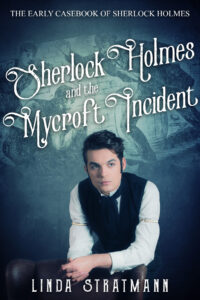
Sherlock Holmes and the Mycroft Incident is Published Today

Congratulations to Linda Stratmann, whose absorbing historical mystery, Sherlock Holmes and the Mycroft Incident, is published today!

Sherlock Holmes and the Mycroft Incident is the seventh Victorian crime thriller in the Early Casebook of Sherlock Holmes series.

1877

A trusted government courier, Anthony Cloudsdale, has gone missing after delivering some secret documents.

The police are questioning everyone who works at Whitehall, and their attention has been drawn to a young clerk, Joshua Emmett, who is in need of funds and might have been vulnerable to bribery.

Emmett is an old schoolfriend of Mycroft Holmes and Mycroft approaches his private-investigator brother, Sherlock Holmes for help.

Holmes and Mycroft collaborate with the assistance of Holmes’ trusted friend Mr Stamford, but each time they discover new information about Cloudsdale’s disappearance, it appears to provide evidence of Emmett’s involvement.

And when a body is found in the Thames, Emmett is arrested.

But is the body Cloudsdale’s? Can Sherlock prove Emmett’s innocence?

Or is Mycroft trying to protect a guilty man…?

Congratulations to Keith Moray!

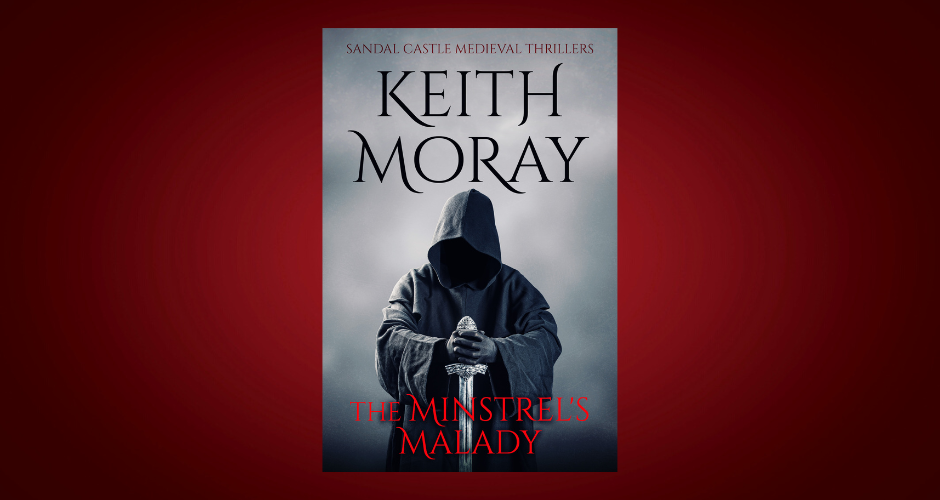
Congratulations to Keith Moray, whose gripping Medieval mystery, The Minstrel’s Malady, is published today!

The Minstrel’s Malady is the fifth book in the Sandal Castle Medieval Thrillers series: historical murder mysteries set in Yorkshire.

1330, Yorkshire, England

Edmund of Woodstock, the Earl of Kent, is executed for High Treason against King Edward III.

At his trial, it is claimed that a demon was conjured up by a monk versed in the Dark Arts, who told him that his brother, King Edward II, still lived.

Keen to quell rumours of sorcery that could do untold damage to the royal house and to the country, Sir Richard Lee, Sergeant-at-Law, is instructed by Sir Roger Mortimer and Queen Isabella, the king’s mother, to seek out the monk who delivered the message.

When a minstrel is struck down by a seizure before Sir Richard’s court, many believe the man to be possessed of a demon. Richard’s assistant, Hubert of Loxley, is given the task of riding to Cawthorne Priory to deliver the minstrel into the care of the monastery hospital.

Also at the priory is the anchorite, Sister Odelina, blessed with visions and the power to heal the sick.

But when a number of sinister deaths take place at the priory, blame falls upon the minstrel and the demon inside him.

Are the deaths the work of evil spirits? Or is there a murderer in their midst…?

With panic on the rise, can Sir Richard discover the truth before evil strikes again…?

Sapere Books Sign New Early Casebook of Sherlock Holmes Books by Linda Stratmann

We are thrilled to announce that we have signed three new instalments of the Early Casebook of Sherlock Holmes series by Linda Stratmann.

Book 1 in the Early Casebook of Sherlock Holmes series

The series follows the adventures of Sherlock Holmes and his acquaintance Mr Stamford during their years at St Bartholomew’s Medical College.

In Linda’s words:

“I am delighted to have signed with Sapere for three more books in the Early Casebook of Sherlock Holmes series, my chronicle of his youthful adventures.  In these next three we will meet a young Mycroft, enter the world of theatrical illusions, and encounter a devious confidence trickster with a mysterious device.

“My grateful thanks are due to the dedicated team at Sapere Books, for their invaluable support, and the friendly encouragement of the growing family of Sapere authors.”

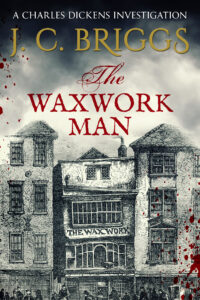
The Waxwork Man is Out Now!

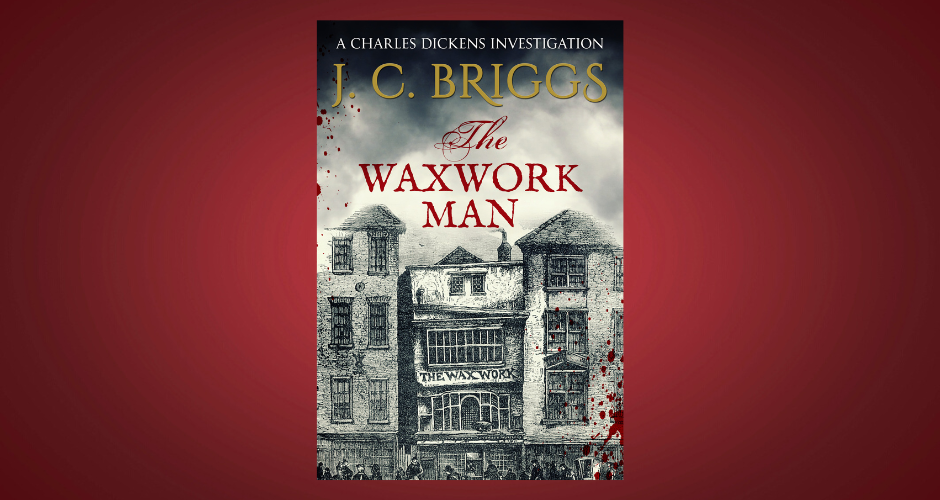
Congratulations to J. C. Briggs, whose captivating historical adventure, The Waxwork Man, is out now!

The Waxwork Man is the eleventh book in the Charles Dickens investigations, a traditional British detective series set in Victorian London.

London, 1851

While visiting Madame Tussaud’s Chamber of Horrors, Charles Dickens crosses paths with Sir Fabian Quarterman, a judge famed for his ruthlessness in court.

Dickens reluctantly accepts an invitation to accompany Quarterman back to his mansion, where he claims to keep a gallery of waxworks that surpass Madame Tussaud’s. To his dismay, Dickens finds that they are all effigies of women who were sentenced to death or who died in brutal circumstances.

The day after Dickens’s visit, Quarterman is found dead in his gallery, his face frozen in an expression of terror. When Dickens views the scene with Superintendent Sam Jones of Bow Street, he believes that one of the waxwork women is missing.

Though the cause of Quarterman’s death is assumed to be apoplexy, Dickens is convinced that there are more sinister forces at work. And when waxwork women begin mysteriously appearing around London and two more men are found dead in suspicious circumstances, Dickens and Jones must once again embark on a search for a deranged criminal…

What happened to the missing waxwork? Did someone seek revenge on the judge?

And can Dickens unearth the secrets of the dead…?

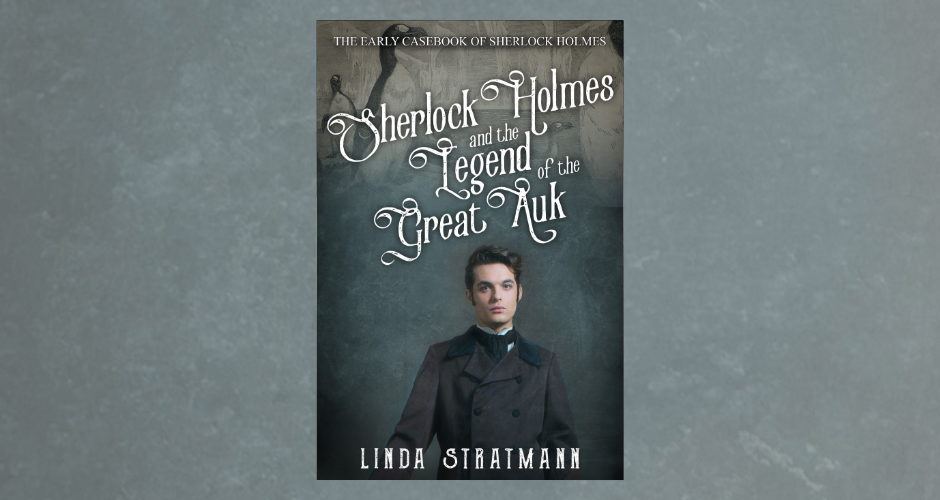
Sherlock Holmes and the Legend of the Great Auk is Published Today

Congratulations to Linda Stratmann, whose atmospheric historical mystery, Sherlock Holmes and the Legend of the Great Auk, is published today!

Sherlock Holmes and the Legend of the Great Auk is the fifth Victorian crime thriller in the Early Casebook of Sherlock Holmes series.

London, 1877

The unveiling of a new specimen of the extinct Great Auk leads to accusations of fraud against the British Museum and a ferocious attack on the exhibit by ornithologist Charles Smith.

Sherlock Holmes is tasked with saving the reputation of the museum, but before long, Smith is found murdered.

Police think it was a random robbery gone wrong but when Holmes examines the crime scene, he is sure there is more to it.

Aided by his loyal friend Mr Stamford, Holmes is determined to discover if the museum has something to hide.

Is there more to the legend of the Great Auk? Why has this exhibit attracted so much controversy?

Could more lives be in danger…?

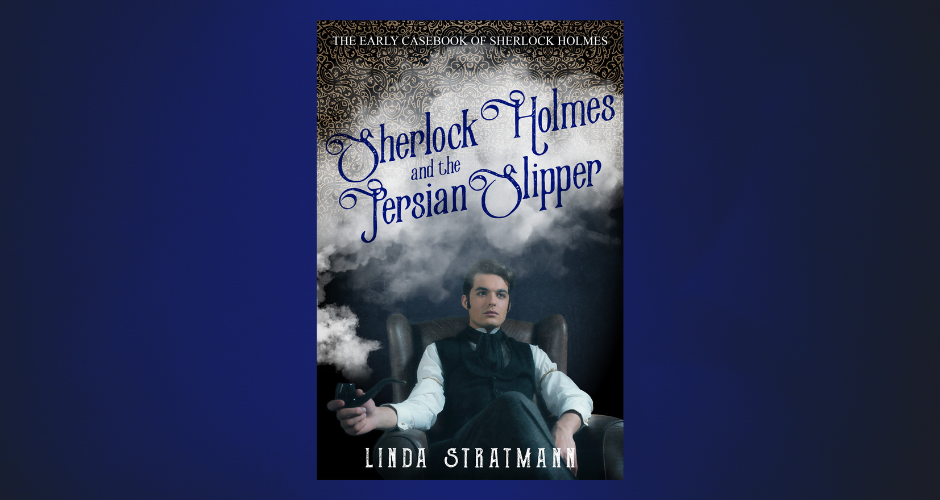
Sherlock Holmes and the Persian Slipper is Published Today

Congratulations to Linda Stratmann, whose eerie historical mystery, Sherlock Holmes and the Persian Slipper, is published today!

Sherlock Holmes and the Persian Slipper is the fourth Victorian crime thriller in the Early Casebook of Sherlock Holmes series.

London, 1877

When medical student Mr Stamford is visited by his cousin, Lily, he is disturbed by the sinister tale she relates.

Lily’s friend, Una, has recently inherited an old country house and settled down to married life in Coldwell, a small Essex village. However, Una’s letters to Lily indicate that she is alarmed by her new husband’s secretive behaviour — especially when she discovers a gun in his drawer, tucked inside a Persian slipper. Fearing for her friend’s safety, Lily asks Stamford to pay Una a visit.

To his dismay, Stamford arrives in Coldwell to find that Una’s husband, John Clark, has been found dead, lying in bed with a gunshot wound in his chest. Close examination reveals that the bullet was fired from Clark’s own gun, through the toe of the slipper.

Stamford loses no time in alerting his acquaintance, Sherlock Holmes — an artful young sleuth — hoping that he can shed some light on Clark’s death.

As Holmes and Stamford begin to probe Clark’s past, it soon becomes obvious that he had plenty to hide. And when Holmes hears of further suspicious disappearances, he starts to search for the connection between the sinister mysteries…

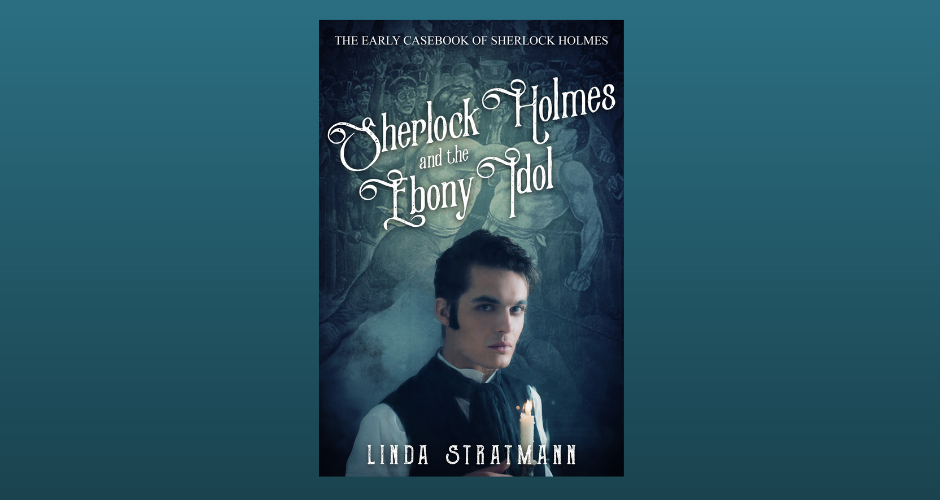
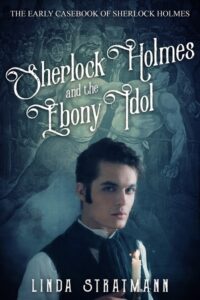
Sherlock Holmes and the Ebony Idol is Out Now

Congratulations to Linda Stratmann, whose gripping historical mystery, Sherlock Holmes and the Ebony Idol, is published today! Sherlock Holmes and the Ebony Idol is the third Victorian crime thriller in the Early Casebook of Sherlock Holmes series.

When a pugilist dies at a local boxing demonstration attended by medical student Mr Stamford and his acquaintance Sherlock Holmes, a post-mortem reveals the death is due to natural causes.

But when the corpse of another boxer is discovered clutching a small wooden carving – the ebony idol – Holmes begins to suspect that sinister forces are at work.

His suspicions seem confirmed when the companions hear about a previous death in the ring.

Tasked by the man’s widow to bring his killer to justice, Holmes and Stamford are swiftly drawn into their most curious case to date.


Click here to order Sherlock Holmes and the Ebony Idol

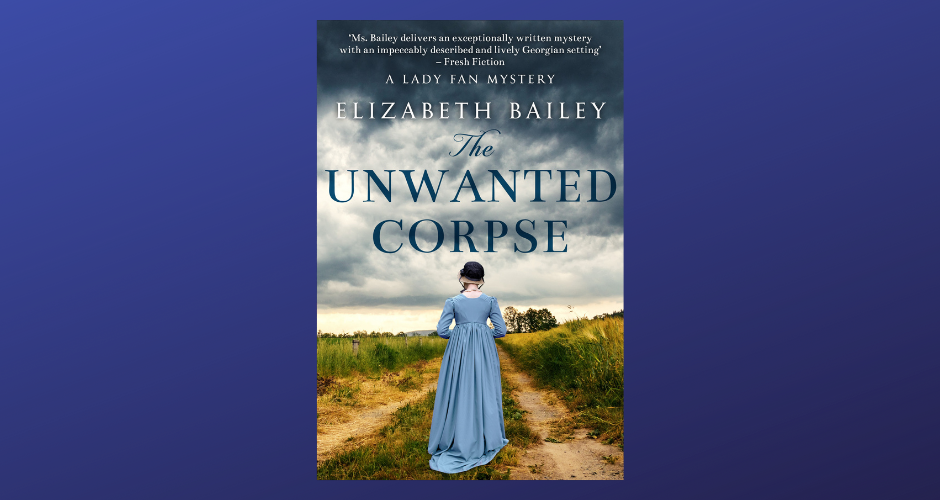
The Unwanted Corpse is Published Today

Congratulations to Elizabeth Bailey, whose brilliantly written historical mystery, The Unwanted Corpse, is published today! The Unwanted Corpse is the eighth book in the Lady Fan Mystery series.

1794, England

When a body is unceremoniously dumped outside her home, Lady Ottilia Fanshawe is once more drawn into a murder case.

Ottilia is recovering from the birth of her first child and her husband, Lord Francis Fanshawe, is worried that she has finally taken on more than she can handle.

But Ottilia will not be diverted. Motherhood has always been her deepest desire, but solving crimes is her passion. And she is determined to balance both.

No one in her household recognises the dead man, and yet a note was left with Lady Fan’s name on it. Clearly, someone wants her to investigate the crime, but why?


Click here to order The Unwanted Corpse

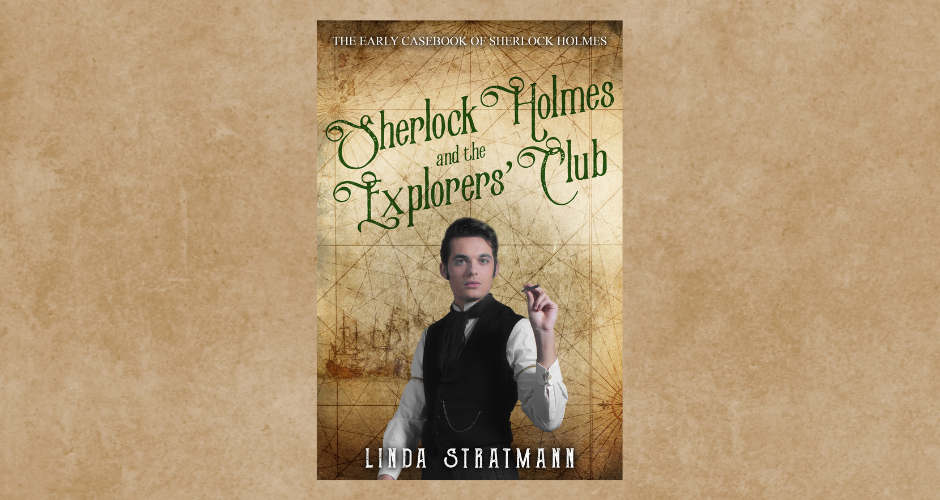
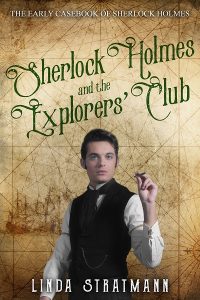
Sherlock Holmes and the Explorers’ Club Published Today

Congratulations to Linda Stratmann, whose fabulous historical mystery, Sherlock Holmes and the Explorers’ Club, is published today!

Sherlock Holmes and the Explorers’ Club is the second Victorian crime thriller in the Early Casebook of Sherlock Holmes series.

When the preserved foot of a dead man with extra toes arrives at St Bartholomew’s Medical College, the students are fascinated. However, despite this unusual feature being reported in the press, the man’s identity remains a mystery.

Intrigued by the puzzle, medical student Mr Stamford calls on his acquaintance Sherlock Holmes — an eccentric but brilliant young sleuth — to help him learn more about the deceased.

With only the man’s boots and a few possessions to examine, Holmes relishes the challenge. He soon finds a coded message hidden inside the man’s purse, which suggests a possible connection to criminals or spies.

Over the course of their investigations, Holmes’ and Stamford’s suspicions are strengthened when they learn of further shocking deaths. It soon becomes apparent that the men who died all belonged to the mysterious Explorers Club — and the lives of the remaining members may also be in danger.

Although the deaths look like accidents, Holmes is convinced that the men were murdered. And with conspiracy and intrigue lurking at every turn, he must now expose the secrets of the Explorers’ Club before the next member meets a grisly end…


Click here to order Sherlock Holmes and the Explorers’ Club

Summons to Murder Published Today

Congratulations to J. C. Briggs, whose absorbing historical mystery, Summons to Murder, is publishing today!

Summons to Murder is set in Victorian England and is the ninth book in the Charles Dickens Investigations series.

Pierce Mallory, a gentleman journalist, is found dead in his lodgings with a gunshot wound in his head and a duelling pistol beside him.

Though the death is deemed a suicide, Mallory’s friends — including Charles Dickens — don’t believe that he would have taken his own life.

Dickens therefore returns to the scene of Mallory’s demise, along with Superintendent Sam Jones from Bow Street. On further investigation, they soon find evidence that Mallory was murdered.

A notorious philanderer, there are plenty of people who could have wanted Mallory dead — including abandoned lovers and jealous husbands.

And as Dickens and Jones dig further into Mallory’s personal affairs, it seems that there are more shocking scandals waiting to be uncovered…


Click here to order Summons to Murder

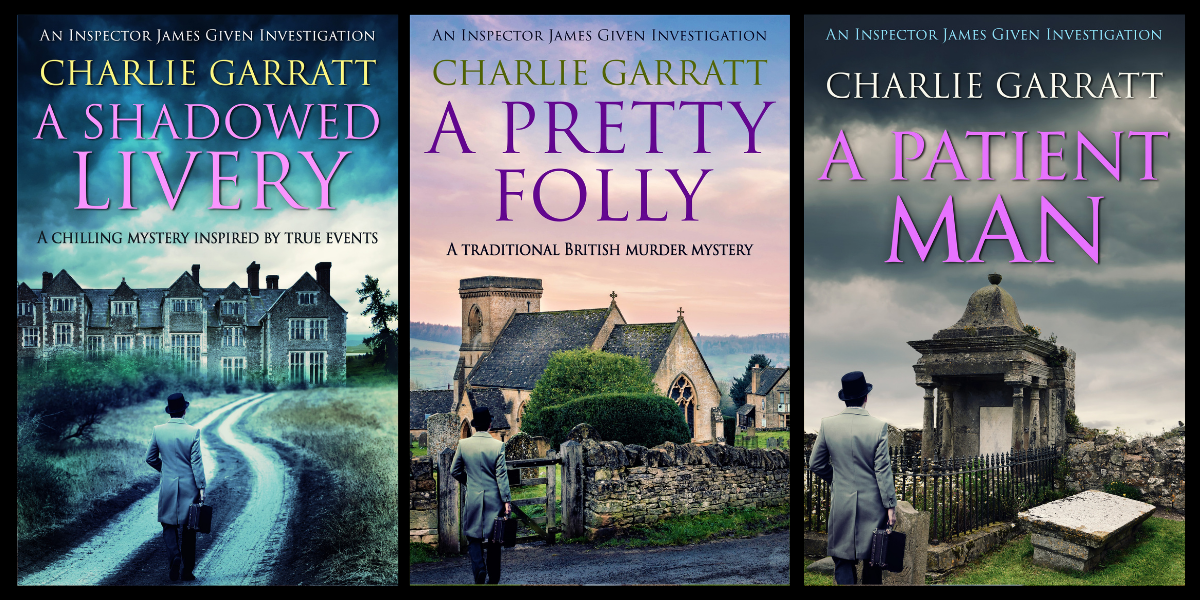
Sapere Books Sign a New Historical Crime Novel by Charlie Garratt

Set in England during the Second World War, Charlie Garratt’s Inspector James Given Investigations follow a troubled detective as he uncovers the truth behind a series of suspicious deaths.

The first four books in the series are already published, and we are delighted to announce that we have now signed up the fifth instalment.

In Charlie’s words:

“I could hardly believe it when Sapere Books accepted my first and second novels, so I’m delighted to have signed a contract for my fifth: A LEAMINGTON DEATH. In this instalment, James returns from war-torn France to settle into a quiet life working for his father, when a request from his old boss to help with a simple factory theft turns into a murder investigation. James’ initial reluctance to become involved is tempered by the debts he owes to the victim.

“The team at Sapere could not have been more supportive to me as an author on this journey, with excellent advice, high-quality editing, great marketing and very fair royalties — paid very promptly. The regular get-togethers they organise for their authors also offer a great exchange of experience and ideas, something other publishers could learn from.”


Click here to order A SHADOWED LIVERY

Click here to find out more about The Inspector James Given Investigations

Sapere Books Sign a New Sherlock Holmes Series by Linda Stratmann

Following the publication of Linda Stratmann’s sensational Mina Scarletti Mysteries – Victorian crime novels with a courageous woman sleuth at the centre – editorial director Amy Durant has signed up her exciting new series, which follows a young Sherlock Holmes. The first instalment will be published next year.

In Linda’s words:

“22 year old Sherlock Holmes, realising that his destiny is to be the world’s first and best consulting detective, has abandoned conventional education and come to London to acquire the very particular and unusual skills and knowledge he needs for his chosen career. This is Holmes before Watson: youthful, fiery, determined, energetic, still learning his craft. This is the legend in the making, the story of how young Holmes became the Holmes we know.

“Sherlock Holmes is the epitome of the great detective, iconic and instantly recognisable. It was a tremendous thrill to be asked to create new adventures and explore those periods of Holmes’s life which Conan Doyle left to the imagination. It is a pleasure to continue working with the wonderfully supportive team at Sapere Books, and to be a part of the Sapere family of authors.”


Click here to order MR SCARLETTI’S GHOST

Click here to find out more about the Mina Scarletti Mysteries

Sapere Books Sign a New Historical Mystery by Elizabeth Bailey

Elizabeth Bailey’s Regency-era Lady Fan Mysteries follow Ottilia, a courageous woman sleuth faced with gruesome deaths, buried scandals, witch hunts and more.

The first six books in the series are already published, and we are delighted to have signed up the seventh, THE DAGGER DANCE.

In Elizabeth’s words:

“In THE DAGGER DANCE, Lady Fan is off to rescue a Barbadian slave girl accused of murder. I’ve been wanting to bring this story to light, since Ottilia long ago guessed her steward Hemp had a secret heartache for a lost love. Bristol was at that time a major port for shipping traders doing the rounds from Africa to England and the West Indies. The research was almost as engaging as writing the book.

“With this seventh adventure, I count myself a very lucky member of the Sapere Books author family. Sapere has done wonders for Lady Fan, and it’s a joy to be with such a supportive and encouraging publisher where the author’s contribution is so much valued and validated.”

Click here to order the first Lady Fan Mystery, THE GILDED SHROUD

Click here to find out more about the Lady Fan Mysteries

His Father’s Ghost by Linda Stratmann

Linda Stratmann is the author of the MINA SCARLETTI INVESTIGATIONS, a traditional British detective series set in Victorian Brighton.

More than a year ago, I determined to write a book in which Mina Scarletti, disabled by the scoliosis that twists her spine and cramps her lungs, is taken ill and solves a mystery while confined to bed. It is not a new concept. In The Wench is Dead, Inspector Morse solves a Victorian murder while in hospital, and in Josephine Tey’s The Daughter of Time, Inspector Alan Grant, hospitalised with a broken leg, explores the fate of the Princes in the Tower.

But these are historical puzzles, and therefore considered suitable to engage the mind of a bored invalid. In His Father’s Ghost, Mina has additional challenges. She is intrigued by a current conundrum, the disappearance of a local man while out sailing, declared legally dead, but his actual fate unknown. Her doctor, however, has advised her against any activity that might tax her delicate health, and that includes solving mysteries. She has to use all her ingenuity to gather the information she needs. In doing so, she finds that she has uncovered evidence of past crimes and scandals. Her enquiries are a catalyst that set off a train of events that ultimately have dramatic and life-changing consequences for several prominent citizens of Brighton.

One of the themes which I explore in this book is hallucination. Mina, when stricken by a fever, sees and hears things that reveal what is troubling her. The son of the vanished man, disturbed by significant events, has terrifying visions in those dark hours that lie between sleeping and waking.

I really enjoyed my research for this book. I visited the fascinating Police Cells Museum of Brighton, and read about the curious spiritoscope, an apparatus designed to prove that it was spirits and not the medium who cause the movement of the divination table.

It was my real pleasure to include two characters who have appeared in previous books, the flamboyant actor Marcus Merridew, fresh from his acclaimed season as Hamlet, and the creepy young photographer Mr Beckler.

While editing the manuscript, which was completed at the end of 2019, I was struck by how Mina’s plight echoes our current time. She is ill with a lung infection, and effectively on lockdown. But when she scents a puzzle, it gives her strength. She needs not only warmth and air and nourishment, but material to keep her busy mind alive.


Click here to pre-order HIS FATHER’S GHOST

Celebrating Jean Stubbs by Gretel McEwen

Jean Stubbs is the author of the INSPECTOR LINTOTT INVESTIGATIONS series and the BRIEF CHRONICLES series. In celebration of her life and work, we asked her daughter, Gretel McEwen, to share her memories of Jean and her writing.

We lived in a world of stories, the line between reality and fiction often blurred. As a child, my mother had always made up plays and stories — her brother an unwilling but worshipful bit part player. A generation later, my mother made up fictional characters for my brother and I — she brought them to life with special voices and we talked to them. Alfred was a gentle and not very bright giant whose answer to any question was 29!

My mother had her first novel, The Rose Grower, published at the age of 35 and from that moment our house was filled with a whole cast of characters. I came home from school one day to find her weeping over the death of Hanrahan (Hanrahan’s Colony). And the hanging of Mary Blandy (My Grand Enemy) brought very dark clouds into our house.

As my mother surfed her way through this creative theatre, we learned to read the signs — coffee cups on every surface, a sink full of dishes and no plans for supper meant a good and productive writing day. A house full of the smell of baking, a gleaming kitchen and rice pudding in the oven either meant the dreaded writer’s block or a completed first draft. So we too surfed, adjusted and gloried in the passing show. My mother always wrote on our vast Edwardian dining table, and her writing companion was always the current much-loved cat. They had their own specially typed title page upon which to sit, since she had learned the hard way that cats like to sit on the top copy with muddy paws! The mystery cat was the black one who sat on a certain stair — but when you went to stroke him he was not there … another blurred line…

I felt closely involved with each novel as it progressed. At the end of a good writing day, my mother would read aloud to me the latest chapter — a fine reader with a different voice for each character, once more bringing it all to life. She wrote in long hand at first, then, as the book grew, she typed chapters then full copies and carbon copies for her publisher, Macmillan. Later, she was one of the early authors to use a word processor. When the first print draft came from the publisher, we would sit at each end of the dining room table and proofread — calling out corrections to each other and marking them on the manuscript.

Publication day was a celebration, shopping an occasion, dinner parties a reason for more excellent cooking, and royalty cheques a relief! When I left home, I greatly missed being a bit part player in this imaginative and unpredictable life of stories — and I missed the ghostly companions.


CLICK HERE TO FIND OUT MORE ABOUT THE INSPECTOR LINTOTT INVESTIGATIONS

CLICK HERE TO FIND OUT MORE ABOUT THE BRIEF CHRONICLES

The Real Waxwork Corpse by Simon Michael

Simon Michael is the author of the Charles Holborne Legal Thrillers, set in the 1960s. The Waxwork Corpse is Book Five in the series.

Like all the books in the series, The Waxwork Corpse is based on real events and real cases but this one you may remember, because it made the headlines.

In 1984 a man was arrested in connection with the death of his wife, a body having been found in Wastwater, the deepest lake in England, almost a decade after she went missing, supposedly with her lover.

I learned of the case while waiting in a barristers’ robing room for a jury to return with a verdict. How the killer had dropped the body tied to a kerbstone, in the middle of the night, from an inflatable dinghy into the dark waters of Wastwater. How it had, in a one in a million mischance, landed on the ledge of an underwater pinnacle named Tiffin’s Rock. How, in another extraordinary twist of fate, the ledge was at the perfect depth for the water temperature to preserve the body (the tissues had become “adipose”, wax-like, and so remained recognisable so many years later). And how, extraordinarily, the police happened to be looking for a missing young woman in the same area shortly after an amateur diver first saw the body underwater.

It would, I knew, make a wonderful story, and some years later, following the killer’s conviction for manslaughter and his discharge from prison, I got in touch with his solicitors. Did they think the man would allow me to interview him with a view to writing the story, I asked? They replied in the affirmative and, to my complete astonishment, sent me the case papers, witness statements, photographs, pathology and scientific reports — the complete file.

By then the man was out of prison, running a small B&B in a remote part of England. I got in touch and asked if I could come to interview him, and he agreed. Perhaps rather thoughtlessly in retrospect, I decided that the trip offered the perfect opportunity to take my wife and new-born daughter for a short break away from London.

The plan was to drive from London on Friday afternoon and spend the weekend at the B&B. My wife could walk on the beach while I conducted the interview. However, what nobody predicted, including The Met Office, was that one of the worst storms of the century was due to strike Britain that day.

By dusk, tall vehicles on the motorway in front of us were blowing over. Power lines were brought down by uprooted trees, huge swathes of the countryside were plunged into complete darkness as the electricity supply failed and torrential rain was hurled from the skies. Traffic was guided off the motorway and down narrow country lanes, at one point even being directed over waterlogged fields.

We finally arrived at our destination, a small seaside town, several hours late and in pitch darkness. It was still pouring, the fierce winds howling through the deserted streets and whipping the rain almost horizontal. There was no electricity; even the traffic lights were out.

Eventually, we found the address. We climbed out of the car and, immediately drenched, stepped over dislodged branches and other detritus and ran up the path to the front door. We were exhausted and irritable, with a baby who’d been inconsolable for hours.

I knocked on what we hoped was our host’s front door. At first there was no answer, but then a flickering light swayed down the hallway towards the door. A huge shadow darkened the glass, and the door was opened by an extremely tall man holding a storm lantern.

It was a scene straight out of a horror movie. He offered us hot drinks but my wife, completely spooked by then, insisted we went straight to bed. We climbed the narrow stairs, tired and famished, and entered our dark bedroom. My wife barred the door with a chair.

The next day, the weather was improved and the power restored. I asked my questions about the case and the evidence and the killer’s motivation, while my wife took the baby for a walk on the beach. The interview went well, and it was agreed that I could use the story as long as the man’s identity was obscured to protect his children.

Halfway through I realised that the man sitting opposite me was admitting, completely calmly, that he killed his wife in a fit of uncontrolled anger.

That afternoon I reported some of what I was told to my wife. As I repeated the story and saw the growing horror on her face, it dawned on me that staying for the weekend in an isolated B&B with a man possessing such an uncontrolled temper that he could kill his wife with his bare hands, no longer seemed like such a good idea.

We left that afternoon.

If you want to find out what the killer’s real motivation was, and whether or not he was actually guilty of murder, you’ll have to read The Waxwork Corpse!


Order THE WAXWORK CORPSE here.

Or find out more about the Charles Holborne series here.

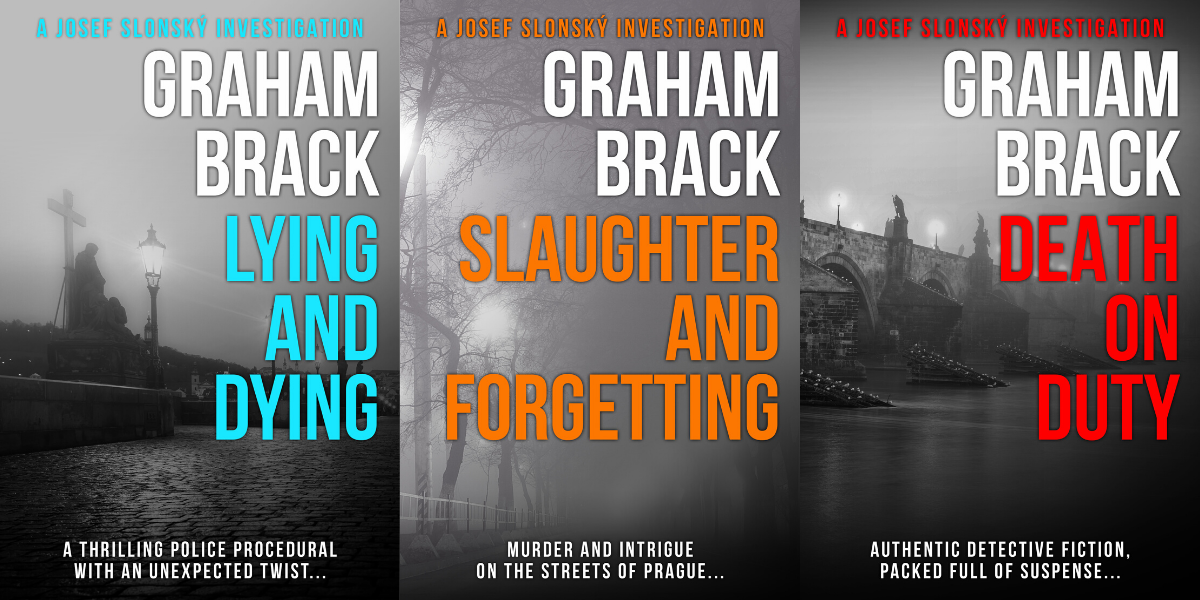
Introducing Josef Slonský by Graham Brack

Graham Brack is the author of the JOSEF SLONSKÝ INVESTIGATIONS series.

When I started writing the book that became Lying and Dying, I didn’t have a detective in mind. There would have to be one, of course, and because I wanted it to be realistic he would have to be part of a team, but the character of Slonský was not central to my thinking.

I can remember precisely when he appeared. My brother and I were at the National Theatre; during the interval I described the story, and together we arrived at the notion that a senior Czech detective must have worked under Communism and would therefore probably have some skeletons in his closet. Moreover, everyone he knew would have similar problems, so it would be understandable if he had little or no respect for anyone of his own vintage.

The world-weary detective is a lazy trope, so I made Slonský enthusiastic about his work. He loves his job. He believes it matters, and he has no patience with corrupt colleagues. And then it came to me that the biography I had proposed for him, in which he spent around half his career under Communism, and half after it, meant he must be coming up to retirement. That provided a rich vein of character analysis, because he dreads retirement; there is nothing else in his life, so he wants to go on as long as he can, and the fact that his bosses know that gives them the only hold they have over him.

Thus, Captain Lukas is able to get him to take a trainee officer, Jan Navrátil. Slonský has had partners before, but they quickly apply for transfers. Navrátil can’t do that. He is a fast-tracked police academy officer with a law degree, fierce intelligence, a strict moral code and an open and trusting nature. Slonský comes to realise that Navrátil is incorruptible and probably always will be, and that when he is gone Navrátil has the potential to reach the very top of the tree – provided he listens to Slonský’s sage advice. Shaping Navrátil’s police career will give Slonský the nearest thing he can have to a legacy. Later they are joined by a woman officer, Kristýna Peiperová, who doesn’t have a law degree but balances that by knowing much more about how the world works. Slonský enjoys training her too, and he honestly does not know which of them will get the top job first, but he doesn’t care. Male or female doesn’t matter; all he wants is someone who can bring about the clean, efficient police force he wanted to join.

I sat down to write one Saturday morning, and after a page or so the police car pulled up and Slonský climbed out. Battered, inelegant, disinclined to waste any effort, cunning, cynical and sharp-tongued, he appeared in my mind’s eye and somehow took over. A story in which he was a necessary figure but not the star was seized and made into a section of his biography. Whenever he walked into a scene, it livened up, and I found if I just listened to him he told me so much about himself.

He doesn’t eat well, but he eats a lot. He is a typical Czech, he believes, devoted to beer and sausages. He lives in a dingy one-room flat, so he spends most evenings in bars. He was married, but his wife left him, and he took it for granted that they were divorced, which proved not to be the case. He believes that nobody can work on an empty stomach, that you should never miss a chance to eat or pee (because you don’t know when the next one will come) and that not everything about the old days was bad.

His name was derived from the Czech word slon, meaning elephant. It seemed appropriate, given his size and his memory, and it was gratifyingly similar to the Czech surname Slánský.

After Lying and Dying was published, a woman wrote to me to say that Slonský was appallingly non-PC in his language but his instincts were good; he was meticulously fair, and therefore free from prejudices such as sexism and racism; and, she said, while she wouldn’t invite him to dinner, if she were ever murdered she would want him to be investigating her death. I think he would allow himself a smile if he heard that.

Click here to order LYING AND DYING now!

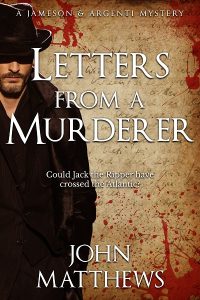
Read the first chapter of LETTERS FROM MURDERER now

Chapter One – 1891

When pathologist Jacob Bryce got to the third stab wound, he knew that it was not one of the ordinary back-alley robberies which constituted most of the murders in New York City’s notorious 4th Ward.

Most of the blood, concentrated around the woman’s chest and stomach, had coagulated into a thick skin, indicating that death had taken place several hours beforehand. Bryce had to use alcohol to clean and loosen the blood in order to view those first puncture wounds.
It was the practice at Bellevue hospital that whenever a body was brought in for autopsy one of the crime-scene detectives should also be present to pass on key information when queried. Bryce looked towards the attending detective, whose name he couldn’t recall and who still looked somewhat in shock.

‘What time did you first discover the body?’

‘Uh, we got there, myself and a colleague from Mulberry Street, at just before midnight.’

‘And the first people to discover the body — when might that have been?’

The detective briefly consulted his notes. ‘Another girl from the Riverway Hotel first noticed her in a side-alley forty minutes before we arrived.’

‘Much activity in the area that time of night?’

‘Yes. Quite busy still.’

Bryce nodded thoughtfully. Add on at most half an hour for her body to first be discovered then the two hours since midnight taken up with initial forensics at the crime-scene and transporting the body in an ambulance-wagon to Bellevue.

The deep gash to the side of the woman’s neck, severing the carotid artery, wouldn’t on its own have been unusual for a street robbery; it was the fact that it was combined with so many stab wounds — Bryce had counted eight so far. Blood flow from the neck-wound was less, indicating that the stomach wounds had come first.

By the time Bryce had located the fourteenth stab wound, he realized he was in unchartered waters; it was like nothing he’d seen before. The smell of body waste mixed with carbolic and alcohol was heavy in the air. The young detective was now even more wide-eyed and looked slightly nauseous, one hand going to his mouth.

Bryce noticed a small X marked on the woman’s left shoulder. He’d get a photo taken of it later. A keen follower of Virchow’s principal, Bryce had a neat line of glass jars prepared and labelled, ready — once they’d been initially examined and weighed — to take each of the body’s internal organs. But he soon discovered that two of those jars would go unfilled. He looked towards the detective.

‘Were any body parts removed from the scene? Perhaps bagged and taken elsewhere for examination … or inadvertently left at the crime scene?’

The detective looked flustered. ‘No. None that I know of.’

‘The scene was searched thoroughly — nothing left there?’

‘Yes. I’m sure it was.’

Bryce wondered whether the scavenging rats and dogs of the area might have run off with the woman’s liver and kidney. Half an hour? Unlikely in such a short period, but regardless the killer had first removed those organs. Yes, like nothing he’d seen before — although he had heard of something similar.

Bryce looked at the clock on the wall. Five hours before Inspector McCluskey was in his office for him to pass on the information.


‘Come now. This Darwin fellow was clearly deranged.’ Viscount Linhurst swirled his brandy balloon at London’s St James Club. ‘Evolved from monkeys? We’re clearly the far higher species.’ With a captive audience of two of London’s leading surgeons — Sir Thomas Colby and Andrew Maitland — he thought it an apt time to air such views.

‘You’d never guess it from any of my household staff,’ Maitland commented.

There was a light guffaw from Linhurst, but Colby remained serious. ‘I don’t know. I see the similarities daily in autopsies. Every single organ in the same place — liver, stomach, spleen — and every bone and joint the same, too, right down to the little finger.’ Colby held up a pinkie. ‘I wouldn’t discount it so hastily if I were you.’

‘I’m not convinced.’ Linhurst tapped his forehead. ‘It’s all here, you see. And Darwin hasn’t adequately explained how a monkey could possibly —’ Linhurst broke off as a club usher approached.

‘I apologize for the intrusion, gentleman, but there’s an urgent call for Sir Thomas.’

Colby unfolded the note held out on a silver tray. ‘Sorry. Excuse me a moment.’

He followed the usher towards the vestibule call booth and at the other end Police Commissioner Grayling wasted little time with preamble.

‘There’s been another one.’ Silence. Grayling wasn’t sure if it was purely shock or Colby hadn’t immediately made the link. He added: ‘Similar to the other eight.’

‘Where? Whitechapel again?’

‘No. You’d hardly credit it when I tell you. It’s across the sea: New York.’

But Colby wasn’t that surprised. With the last murder more than a year ago now the supposition was either that the Ripper was imprisoned, dead, or had moved on.

‘Who is handling the investigation there?’

‘McCluskey.’ Octave lower, derisory. ‘But, no matter — you’ll need to go over as soon as possible.’

‘I see. I hazard he didn’t request my involvement.’

‘No. I did. Your contribution is invaluable to match the crimes. There’s also the possibility that it’s a copycat murder: as you’re well aware there has been far more in the press about this than we’d have liked. But if a link is proven we still have by far the heavier case burden: eight murders that remain unsolved.’

Colby didn’t need reminding: three years that had consumed his life like never before. The number of murders attributed to the Ripper ranged from five to as many as eleven, but eight was the number Colby had personally cited as having links. No past investigation had attracted such strong public furore and a Fleet Street eager for fresh readers hadn’t helped.

‘There was also a mark left on this one,’ Grayling said. ‘A small X on her left shoulder.’

‘Oh?’

‘It might be significant, it might not. Or indeed, it might mean that this is a different man entirely: not the Ripper at all. We won’t know until we get the full details.’

‘Yes, I see.’ Colby sighed. ‘One problem, though. I have an important speech at the Royal College of Surgeons in two weeks time that I must be here for. I won’t be able to go until after that.’

‘I’m not sure matters will hold that long — aside from the politics. McCluskey would no doubt start bleating about our incompetence again. Can’t you delay it — speak there later?’

‘No, it’s an annual event. But that’s not the only problem.’ The rest of Colby’s hectic social calendar flooded in: his son’s upcoming investiture at Sandhurst, a dinner-dance invitation from Lord and Lady Northbrook that he’d face untold woe from his wife for missing. ‘I fear I’m not going to be able to go over.’

‘I’m sorry to hear that. I suppose I’ll just have to tell McCluskey the bad news — or probably good from his point of view. He’ll be relieved no doubt that we aren’t interfering, as well as now have first-hand proof of that incomp—’

‘I have a suggestion,’ Colby cut in. The thought had struck as Grayling started riding him. ‘One of my best students went over to New York four months ago. An aunt who he was close to — she raised him after his mother died — was very ill. He could stand in for me.’

‘But would he be competent enough?’

‘Very much so. My main protégée, you could say. Of all my students, he was the only one to identify crucial links in the Ripper case without my constant prompting. Uncanny — almost as if he knew the man personally.’

‘I see.’

‘And, of course, I could give him added consultation by telegram and letter from London.’

‘Yes, I suppose it could work,’ Grayling said at length. ‘But if he’s picked up on any of the scuttlebutt in London, tell him not to use our pet-term, Inspector McClumsy — get us off on the wrong foot. And what’s his name, by the way?’

Colby swallowed back a chuckle. ‘Jameson. Finley Jameson.’


‘Mr Jameson… Mr Jameson!’

The voice had a slight echo, as if it was at the end of a tunnel, and it took Finley Jameson a moment to focus on the wizened Chinaman hovering over him and realize where he was. The smell of opium smoke and incense was heavy and Jameson wasn’t sure if the mist was just in the air or behind his eyes.

‘Mr Jameson… Lawrence is here. Says he has an urgent message for you. Shall I show him in?’

That snapped Jameson to. He sat up, rubbing his head. Years back in his university days, he’d had a shock of wavy, wild blond hair, but now, cropped short, it looked much darker.

‘No … tell him to wait. I’ll be out in a few minutes.’ He didn’t want his assistant, Lawrence, to see him like this. He wouldn’t understand.

‘Do you want me to get Sulee to bring you some tea? Help you waken?’

‘Yes … thank you. An excellent suggestion.’

Sulee, more distant through the mist, gave a small bow as she went to make him tea. Her lithe beauty was apparent despite the plain high-collar shirt and loose trousers of any laundry worker.

He recalled Ling offering for a dollar that Sulee give him a scented oil massage while he smoked; for another dollar she’d apply the oil with her naked body and then lick it off inch by inch ‘like a cat’.

Jameson thought he’d politely declined, but when later he seemed to remember Sulee’s oiled body writhing against him, he wasn’t so sure. Then halfway through her eyes became vertical ovals and her skin transformed to that of a tiger’s, complete with stripes — unless it was the candlelight throwing shadows through a nearby palm — so perhaps it had been a dream after all.

The main thing to attract Jameson to these dens was that wonderful merging between dreams and reality. But was death always what triggered his visits? Certainly, the first time he’d visited one had been not long after his mother’s death and it couldn’t be sheer coincidence that his visits since had often been following his and Colby’s most traumatic autopsies. Now, too, this visit to Ling’s had come straight after his aunt’s death and often his past visits to dens had taken place when other problems had arisen in his life. Was he escaping personal demons or merely enjoying a harmless ethereal distraction? After a moment, he shrugged the thought away. As often, he found himself more at ease studying the intricacies of the lives of others than his own.


Compelled to keep reading? Buy Letters from a Murderer now!

 

Author Q&A with J. C. Briggs, author of the Charles Dickens Investigations

When did you first start writing? Did a specific event encourage you to start?

I started writing when I was a teacher. I first wrote short plays for performance. When I gave up teaching in 2012, it was the bicentenary of the birth of Charles Dickens. When I read that he had a secret desire to be a detective, I wondered if I could write the crime novel that I had always wanted to write, so I gave it a try with Dickens as my detective.

How much research do you do?

Because my novels are historical crime novels, I need to do a lot of research into Dickens’s life and times, and into nineteenth century forensics. I need to know what the Victorians knew about poison, or stabbing, or shooting, or drowning and post mortems in the mid-nineteenth century.

Tell us about where you write / your writing habits.

I write in a little room in my house. I often write sections of the novel long-hand and then type them up and make changes as I go. I always carry a notebook to jot down ideas when I’m on a train or waiting for someone – you never know what you might overhear!
What part of the writing process do you find most difficult? Starting, knowing when you’ve done enough research, the ending

I find it easy to start. Often the beginning of a novel comes from something I’ve read, especially something from Dickens’s letters. Then I get stuck in working out the plot, especially when I find that X couldn’t have done the murder at that point because she/he was somewhere else at the time!

How real do your characters become and do they ever seem to control their own storyline?

Very real – that’s why I enjoy writing a series. You can bring characters back. It’s very odd how characters you expected to play a minor part in the story start to develop in ways you had not planned and begin to play a major role. Then they seem to have a back story and you think: where did that come from?

Do you ever feel guilty about killing off characters or do you relish it?

It’s always satisfying to get rid of the murderer because that means the case is solved. And there have to be other victims – one murder doesn’t make a crime novel. You can’t help relishing the dramatic deaths, but sometimes you do feel sorry for the victim. Then you think: sorry, but you’ve had your lot, it’s time for another killing – keep up the suspense!

Do you find it hard to know when to end a story?

Not in the sense that you know it’s over when the case is solved, but you also have to think carefully about the very last paragraphs. You want to leave the reader thinking about the effects it has all had on the characters who are left and what their futures hold – if they have one.

What are you working on?

A novel which begins in Ferrara where Dickens went in 1844; I found a letter he wrote from there in which he describes some girls looking down into a stretch of water. It was twilight, the sun was setting and the walls of the castle were blood-red. Dickens writes that he knew the place although he had not been there before and that it chilled his blood. I wondered what those girls were looking at in the water and why Dickens was suddenly frightened. Murder?

What are you reading right now?

Bleak House

What is your favourite book? Who is your favourite character?

Great Expectations. Miss Havisham.

What book do you wish you had written?

So many, it’s too hard to choose, but there’s a wonderful book: Pinkerton’s Sister by Peter Rushforth, which is so rich in character and incident and full of all kinds of literary allusions that I can’t help wishing …

Do you love any genres/books that are very different from what you write?

One of my favourite authors is William Trevor; I’ve just finished The Silence in the Garden which is about Ireland before the First World War. I love fiction about Ireland.

Tell us something surprising about you!

I was the voice over in a television show in Hong Kong. I was a puppet named Violet the Vulture – I played her as a kind of avian Lady Bracknell. My husband, who wrote the show, was Barney the Bear, and we had a kangaroo called Alice Springs.

Excerpt from Scarecrow by Matthew Pritchard

Chapter One

Sunday, March 28th, 2010

Danny Sanchez arrived at 10:27.

It was already bedlam; hundreds of people covered the dusty patch of waste ground beyond the white walls of the property, shouting, pushing, arguing among the cacti and scruffy palms. The excavator’s arm loomed menacingly above the roof of the two-storey villa.

The demolition had been scheduled for nine a.m., but frantic negotiation had earned the elderly expat owners a three-hour stay of execution while the house was cleared. The whole neighbourhood turned out to help, Briton and Spaniard alike. A stream of people walked back and forth along the edge of the unpaved road, carrying everything and anything they could salvage – doors, windows, even the kitchen work surface. The problem now was where to put it all. An incongruous pile of household items was collecting around the trunk of a fan palm. Danny watched as a negligee blew free from a box and wrapped itself around a cactus.

Christ, what a mess.

In eighteen years of journalism, Danny had witnessed dozens of horrors – people cut from the wreckage of car accidents, a woman leap from a burning building, a suicide on a railway track – but this was something new. They were going to demolish Peggy and Arthur Cookes’ house and nothing could be done to avert it. He’d seen the paperwork. Nearly every penny the poor old duffers had was invested in the villa; a lifetime’s equity would be smashed to rubble. It was like waiting for an execution.

The Junta de Andalucía, southern Spain’s regional government, had sent a woman in her mid-thirties to oversee the demolition. Crafty, Danny thought; people found it harder to get angry with a woman, especially an attractive one. Her hard hat and fluorescent bib bobbed at the centre of a tightly-knit group of people. Guardia Civil officers in green boiler suits formed a protective ring around the Junta woman. Then came the leaders of the protestors, waving documents and trying to argue over the shoulders of the Guardia officers.

Behind them was the press pack, two dozen strong, cameras and microphones waving above the crowd as it surged and rocked. Gawkers and curious children milled at the edges, wondering what all the fuss was about.

For her part, the woman from the Junta looked genuinely distraught at what she had to do. Danny had no idea whether she could follow the English words being bellowed at her, but it was obvious she understood the gist. She kept pointing to the paperwork on her clipboard, raising hands and shoulders in shrugs of helplessness. Someone, somewhere had decreed the demolition must go ahead; it was her job to get it done.

The Cookes were inconsolable. Peggy sat on an armchair that had been dumped among spiky clumps of esparto grass. Tears carved streaks through the dust that had settled on her face. Danny recognized the armchair; he’d sat in it when he’d interviewed them a year before, when the demolition orders were first served. Arthur Cooke had looked dapper and defiant as he posed for the cameras back then; now, every one of his seventy-three years weighed upon him. He stood with his hand on his wife’s shoulder and turned moist eyes as Danny approached.

“Not now, mate,” he said, shaking his head. “The bastards are about to ruin us.”

Danny nodded, glad he’d been spared having to ask the obligatory “How do you feel?” It was amazing how dumb those four words could make you feel sometimes.

Peggy Cooke wanted to speak, though. “Why us?” she said, her voice shrill. “Out of all the hundreds of people, why does it have to be us? I want you to print that. It’s not fair.”

Why us? That had been everyone’s first reaction in March 2009 when the judicial demolition orders were delivered to eleven different families dotted around the municipality of Los Membrillos. It seemed so monstrously unfair, given the scale of the problem in Almeria, the province that occupies Spain’s south-eastern tip. A Junta survey had uncovered more than 12,500 irregular constructions in just ten of the worst affected municipalities. But the Spanish legal system was a Heath-Robinson contraption manned by characters from Kafka; immense and baffling in its complexity, arbitrary in the decisions it dispensed and spitefully prescriptive when it did so. It was one of the dangers of emigrating to Spain, the flipside to all the sunshine, fiestas and good living.

Not that it had worried the tens of thousands of Britons who had flooded the Almanzora Valley at the turn of the century, buying up villas and plots of land for self-builds, breathing life into the moribund rural communities that nestled below the Sierra de los Filabres mountain range. But the rush to expand had left thousands caught in the legal quicksand between the local and regional government of Andalusia. Local councils could grant licences to build, but the regional government had the right to challenge those licences. The catch-22 was that no one would stop you from planning to build a house; the house actually had to be built – and the money spent – for it to come to the Junta’s attention and challenge its legality.

Why us? Danny knew the answer to Peggy Cooke’s question; he’d interviewed the mayor of Los Membrillos. “We had so many applications for building licences, we were swamped,” the mayor had said, unlocking a cabinet and indicating three large cardboard boxes leaking paperwork. We only got round to processing eleven.” That was the bitter irony of it; by trying to follow the rules, these unlucky eleven home owners had created a paper trail that Junta officials could follow back to specific properties.

Time was ticking on. The crowd was getting angrier, the shouting louder. More Guardia officers arrived. Danny phoned everyone and anyone he could think of who was involved with the case.

It was the usual pass-the-parcel.

The council blamed the Junta, the Junta blamed the courts, the courts blamed the council; all down the line, each link of the chain shrugged its shoulders and pointed to someone else. Arthur Cooke watched Danny in action, hoping that this man who spoke such perfect Spanish could somehow work a miracle. Danny finished the phone call, shook his head. The flicker of light in the old man’s eyes dulled.

Paco Pino arrived at 11 a.m., yawning and scratching at his chest. “My one day off,” the photographer said, screwing a lens onto one of three cameras dangling from his neck, “And this has to go and happen. Just my luck.”

Danny was glad the Cookes couldn’t speak Spanish; crass comments like that were the last thing they needed to hear. Not that Paco was a bad person; experience had simply made him blasé, like everyone who made a living reporting other people’s misfortunes. Truth be told, Paco was a saint in comparison with some; Danny had spoken to one of the journalists sent by a UK red top to cover the announcement of the demolition orders the previous year.

“We won’t be interested again now until they knock the things down,” she said as she left, nodding toward the cloudy March sky. “Let’s hope they do it in summer, eh? I might get a bit of a tan.”

The pile around the palm tree grew: beds, sofas, lampshades, mirrors, cardboard boxes stuffed with clothes and crockery. Danny looked at his watch. Not long now.

At ten to twelve, uniformed officers of the Policia Local cleared the last of the protestors from the garden and checked no one was left inside the house. There were more scuffles on the white gravel outside the villa, more insults in English and Spanish. The property’s black gates had been lifted from their hinges earlier to allow the excavator through. Having shoved a final protestor outside, Guardia Civil officers formed a human barrier in the space between the gateposts. Protestors waved paperwork at the Junta woman as she looked at her watch and waved toward the workers.

The sudden roar of the excavator’s engine caused everyone to freeze and fall silent. The crowd turned as the engine revved and the excavator’s mantis arm uncoiled and rose above the house. For a moment, time seemed stilled…

…and then the air thundered as the excavator’s claw drove down through the roof. An angry moan emerged from the crowd as the arm rose and hundreds of dislodged tiles showered and smashed on the ground. The excavator arm dipped once, twice, three times more, prising the roof apart before ripping backwards and pulling free a ragged-edged section of brickwork. Looking through the jagged rent it created was surreal; the neatly-tiled interior walls had been exposed, giving a view inside a giant dolls’ house.

The Cookes stood holding each other: Peggy sobbing; Arthur straining to keep her on her feet, his face stoic. They were tearing his house down, but he wouldn’t show a flicker of weakness. Another huge section of wall tumbled away; it fell to the ground with a thud. Dust rose, people coughed, choked, began walking back along the road. Danny pulled his jacket up to cover his mouth.

The Spanish woman atop the ridge didn’t really care about the foreigners; their house was illegal; it had to come down.

She was only there for the spectacle, to have something to tell her friends tomorrow at the market.

She was the first to see it.

Her mouth gaped; then she began to scream and point toward the corner of the house. People looked to see what the noise was but the sounds were rendered unintelligible by the rumble of falling brickwork and the excavator’s diesel chug.

But the dust was settling now; people were following the woman’s outstretched hand, squinting as they too noticed the thing wedged in the narrow gap between exterior and interior wall.

A Guardia Civil officer rushed to the excavator, banged on the window. The machine fell silent. Other people had noticed the shouting woman now and were pressing closer, shading their eyes, unsure of what they were seeing. For the second time that morning, a sudden silence halted the crowd.

Danny thought it was a mannequin at first. And then the corpse fell forward, bending from the waist, its blackened head rocking back and forth. Some people screamed; others stood open-mouthed; some turned to run.

Arthur Cooke’s face remained expressionless as he stared at the semi-skeletal corpse lolling from the broken wall of his house. Then, without moving a single muscle of his face, he toppled forward and fell heavily to the earth.


Need to know what happens next? Get Scarecrow now from Amazon.

“I am looking for a drowned girl” by J. C. Briggs

Ellen Tyrell’s Nose and Other Suspicious Circumstances

With thanks to the British Newspaper Archive

I am looking for a drowned girl. My old friend, Professor Swaine Taylor will, no doubt, provide the grisly forensic detail in his Medical Jurisprudence: ‘the eyelids livid, and the pupils dilated; the mouth closed or half-open, the tongue swollen and congested … sometimes indented or even lacerated by the teeth …’

I need an inquest on said drowned girl; this is where the British Newspaper Archive comes in. There are drowned girls aplenty in London in the decade 1840-49. Poor things, dragged from the Thames, the Regent’s Canal, the Surrey Canal, the New River, the Serpentine, the lake in Regent’s Park, from under Waterloo Bridge – a favourite spot for those seduced and abandoned girls. There they lie stretched out on muddy shores and banks, their bonnets askew, one boot missing, or both, their faces pale like Millais’ Ophelia, or more likely, bloated and bruised, or half-eaten by decomposition – or rats. Their bodies sometimes float, buoyed up by petticoats – the effect of air retained by the clothes, or the presence of gases. Sometimes a thin hand grasps a clump of weed which, according to Professor Taylor, indicates that the victim went into the water alive. Did she fall or was she pushed? Suicide, most often.

I find the case of the suicide of two young sisters dragged from a Leeds canal in April 1847, tied together by a handkerchief. The handkerchief is pitiable somehow, and memorable. Dickens must have read of that case for he uses the same circumstance in Our Mutual Friend. Something of a thrill in contemplating that, but I need only one girl.

I need an unknown drowned girl, unclaimed, buried at the expense of the parish, and forgotten. Somewhere in a village, a mother wonders about her lost child. She will never know what became of her ruined darling. The Morning Post in February 1842 explains: ‘In London the bodies are taken to any obscure vault, public house, or police office. The Coroner directs the parish to advertise the body, often in vain.’

I find several cases of unidentified females in the newspaper archive. In July 1841, according to The Morning Advertiser, a young woman was pulled from the London Dock. She was never identified. I am intrigued by the report’s dark observation that ‘No one could walk into that water by accident.’ Unknown, too, is the identity of the ‘fine-made ’young woman taken from the Serpentine in October 1845 and deposited at St George’s Workhouse. Yet she has a distinctive mole on her left cheek, dark hair and hazel eyes. Surely somebody missed her. Seduced and abandoned, perhaps, like poor Eliza Luke found in the New River in April 1844.

However, this is a crime story, so, naturally, I need a drowned, unknown, murdered girl. This is more difficult. Such is the damage done by the water, or the bridge, or the rocks of some lonely reach that it is often impossible to find enough evidence of murder. However, there is the case of Eliza Rayment found in the River Thames in October 1847. There is a deep cut under her chin. Four inches in length, an inch in depth, so reports Mr Bain, the surgeon, at the inquest, and there are ‘two arteries divided’. The wound might have been inflicted by the deceased, but ‘a person using the right hand would naturally make an incision on the left hand side.’ Eliza Rayment was right-handed. Mr Bain attributes death to the loss of blood from the wound. Poor Emma Ashburnham who was formerly Emma Meyer had once lived ‘in some splendour’ in York Road under the protection of ‘a gentleman of fortune’, but it is not known how she came to be in the river at Waterloo Bridge with a deep and ugly stab wound in her side.

Blood brings me to Ellen Tyrell and her nose. Ellen was found in the Surrey Canal in August 1845. Mr John Hawkins, the surgeon, finds an abrasion on the right side of the nose, but from the decomposition of the body he is unable to distinguish any other external marks of violence. Given that she was seen in the company of a man, not her husband, the night before she disappeared, the inquest is adjourned for the purpose of producing further evidence.

Oh, Eliza Rayment, what a mystery, what a suggestive tale, a married woman whose whereabouts were unknown for some days before your death. Who were you with? Emma, who was that ‘gentleman of fortune’? Alas, neither of you is for me, and Ellen, your nose, telling though it is, does not serve my purpose. I am ‘Oh, that I had been content with a cut throat, or a stabbing, but, in the interests of my plot, the victim must be strangled or I must rewrite the whole damned thing.

There is evidence I do like: the 1847 case of the unknown drowned young woman wearing a false plait at the back of her hair; the one in 1842 in which an umbrella is found nearby, bearing on its ivory handle the initials ‘F.H.’ And I like especially, the single earring she is wearing. I have a fancy for a single ruby like a drop of blood in my victim’s ear.

I dig deep into the newspaper archives and I find it – just the one, and the indefatigable Mr Bain is on hand to assist. The body was found in October 1848 near Battersea Bridge, much decomposed, appearing to have been in the water some time. Nevertheless, Mr Bain finds evidence of a ligature encircling the neck, though what this might have been he cannot say.

It is quite enough for me. Possible death by strangulation.

Oh, all right, I admit it: the body was that of a sailor. But, it did happen. Evidence of a ligature was found. I’ll just have to put an ‘s’ before the ‘he’. No one will know.

‘F.H.’? Names: Fanny? Florence? Flora? Ah, here’s a name in the archives: ‘Harvest’. I have her: Flora Harvest, the Grim Reaper cometh.

The Murder of Patience Brooke by J. C . Briggs


Me, Danny Sanchez and Journalism by Matthew Pritchard

The Daily Mail and The Sun are both pretty shitty newspapers, I ought to know: I wrote for them both.

Why? Because they were the only newspapers that paid decent money to journalists working out of Spain.

Anyway, stories that were suitably comic, tragic or grotesque enough for The Mail or The Sun only occurred infrequently on my patch – but when they did, I entered an incredibly stressful, real life version of the cartoon, “Wacky Races”, as the first journalist to get there and get the pictures and facts, got the sale. The rest just wasted time and petrol, and I was always in competition with at least 3 or 4 others.

And it was those missed sales that started chipping away at my integrity. Because if you work for shitty newspapers, you very quickly begin to behave in a shitty way.

With me, it began with a bit of cheeky chicanery. Much of rural Spain consists of unmarked dirt tracks, the names of which are known only to locals, so most reporters rely on rural petrol station attendants for guidance, and I often slipped the staff a tenner to misdirect any other strangers asking around.

Pretty tame stuff, but it was the start of the road to Shitsville. And once you’re on it, the question quickly raises itself: How far down the road are you prepared to go?

I found out in 2010, when I covered a story about the collapse of a house which had killed two expats in a tiny hamlet way up in the mountains.

When I got there, I deployed my usual set of tricks. First of all, in order to find the house, I lied and said I was a friend of the dead couple and was there to pay my respects. This got me detailed directions, as well as plenty of pats on the back and commiseration from local Spaniards. I may even have squeezed out some crocodile tears for their benefit.

The property was all locked up and wrapped with police incident tape, so I climbed the fence and started looking for a decent angle from which to take a photograph, clambering, hopping and jumping all over the rubble as I did so. When a neighbour of the dead couple emerged and asked me what the hell I was doing, I ignored his question and asked him the only thing that interested me: ‘Have you seen any other reporters here before me?’

When he said, ‘No’, I climbed back over the fence and started looking for somewhere with Wi-Fi coverage.

I got the sale. But as I was celebrating in a local bar, looking through the photos I had taken, I began to notice that there was dried blood and other types of biological matter all over the collapsed concrete pillars and rubble. Then I noticed some of it had stained the tip of my desert boot as I’d been merrily desecrating a place where two people had died a sudden and likely very painful death.

I lay awake that night, and slowly came to the realisation that I did not have what it took to be a fulltime tabloid journalist. My journey along the road to Shitsville had ended.

And that’s where Danny Sanchez was born. Because Danny does have what it takes and I enjoy exploring the grottier side of journalism through the prism of the character.

Most readers warm to Danny immediately, but others don’t, and I suspect it is the ruthless side of Danny’s character that is the reason for this – he climbs walls, he lies, he goes through bins, he enters people’s homes uninvited and he “borrows” documents – in short, he does whatever he has to in order to get the story.

The trick is to make the people he is investigating so loathsome that the reader sympathises with Danny, despite his shady behaviour.

Anyway, for those of you who dislike the character, I’d ask that you cut the guy some slack – he trawls through the shitty side of journalism so I don’t have to.

Whose Voice? by Graham Brack

Sapere Books are publishing books of mine from two different series involving two different detectives.

One, involving Lieutenant Josef Slonský is set in 21st century Prague; the other, featuring the university lecturer Master Mercurius, takes place in 17th century Netherlands. There are obvious differences in setting that inform the writing.

Slonský is a career policeman. He is inclined to take the occasional drink to get the mental cogs turning faster. There is nothing much in his life except his work, and since he is 58 when the series starts, the threat of retirement looms large. Slonský has all the support that modern science can offer, including a mobile telephone, though he does not really know how to do anything beyond making calls on it.

Mercurius is very much an amateur, an accidental detective who falls into the work when a series of abductions in Delft leave the local authorities baffled, so they send to the University at Leiden for a clever man who might help them solve these; and the Rector sends Mercurius. He is a young man, only 33, a lecturer in moral philosopher and an ordained minister, and he has little in the way of science to help him.

To my mind, though, none of these is the major difference between the series. I award that distinction to the fact that Slonský books are written in the third person, whereas Mercurius narrates his; and I thought it might be instructive to discuss why that is so.

I would love to say that it was the result of a carefully balanced decision, weighing all the factors for and against either approach, but if the truth be told the stories just came out that way. In my head, the action in Slonský appears as a film in which I stand back, observe, listen and record, whereas the Mercurius books involve me as a character in the tale I am telling. I toyed with telling Mercurius in the third person, but it didn’t feel right, and I have spent a bit of time thinking why that might be.

I think the reason is that Slonský is a big character, but he has a large regular supporting cast and it is important to me that we should get to know them. If he were also the narrator, I think he would dominate too much. Mercurius, on the other hand, is the only character who appears in all that series of books, and as the only consistent element the story has to pivot on him anyway.

This is not just of analytical interest. Many crime novelists consistently favour one or the other approach. I am prepared for either, but it changes the way the story develops. In Slonský stories things can happen when he isn’t around; Mercurius only knows what he sees and hears. That inevitably leads to a slower unwinding of the evidence, because it would seem forced if all the clues turned up in an afternoon. Slonský can send his colleagues out to investigate several lines of enquiry and bring them back together for a conference; Mercurius spends a lot of time travelling to discover things for himself. There is no telephone or telegraph system that he can use, and he does not possess a horse.

There have been rare examples of writers changing the voice during a series – Conan Doyle had Holmes writing one of his stories, for example – but generally once the choice is made, you’re stuck with it. It seems strange, given how important it is, that I am not more systematic in my selection!


LYING AND DYING, the first thriller in Graham‘s Slonský series, is available to pre-order now.

The History Spin Doctors by David Field

It’s a truism that history is a set of facts left to posterity by the winners, and for historical novelists like me there’s always another ‘take’ on every so-called ‘fact’ we’re taught at school.  A prime example of that is the enduring legend of ‘The Princes in the Tower’.

The first to get their stories organised were the Tudors who benefitted considerably from the unexplained disappearance from the Tower of London of the Yorkist royal heirs Edward, Prince of Wales, and Richard, Duke of York. 

When Henry Tudor defeated Richard of Gloucester in an obscure field in Leicestershire we now know as ‘Bosworth’ (even though that town didn’t exist then), there was no one left on the Yorkist side to challenge his claim to the throne, given that the princes were no more.  But it was essential to point the finger away from ‘the person most likely’ – the obvious suspect for the disappearances/deaths, and the Tudor propaganda machine swung into action.

Sir Thomas More possible lived to regret the assistance he gave to Henry VIII in perpetuating the myth that the person behind the disappearances of the princes from the Tower had been a close relative of theirs, namely their uncle.  But More was the first to point the written finger at Richard of Gloucester, particularly after Sir William Tyrell, during the reign of Henry Tudor, allegedly confessed to having done the job in the pay of Richard.  But tortured men will eventually say whatever their torturers want to hear, and the alleged confession came, second hand, through the mouth of the torturer.

Never one to miss an opportunity to ingratiate himself with a royal patron, that literary prostitute William Shakespeare built Thomas More’s accusation into a horror story of a crook-backed, slew-footed, psychopathic freak who did away with anyone who stood between him and the throne.  Actors such as Laurence Olivier and Benedict Cumberbatch then provided us all with a visual image to go with the verbal hype.  The net result of all this ‘fake news’ was that we all grew up believing that Richard III had done for the two little boys under his guardianship.
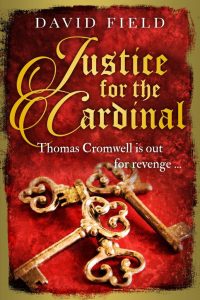
But spin the wheel 180 degrees, and there was someone else who benefitted equally from a sudden absence of Yorkist claimants to the English throne.  He had an alibi, of course, because at the most likely date of the crime – the Summer of 1483 – he, Henry Tudor, was in exile in Britanny.

But back home in England, ‘Mummy’, the formidable, wily, scheming Margaret Beaufort, was preparing the runway for her favourite son’s safe landing with an invasion force.  She also had a useful second son – Henry’s half-brother the Duke of Buckingham – who was Lord High Constable of England, with responsibilities that included security at the Tower of London.  Go figure, as they say.

Having written a novel from the Tudor perspective (The Flowering of the Tudor Rose), and having suffered death by blog from dedicated ‘Ricardians’, I took up the case for the defence in Justice for the Cardinal, due for publication by Sapere Books later this year.  The central character in this novel is Richard Ashton, grandson of the Duke of York who escaped from the Tower, only to be executed under his assumed name of ‘Perkin Warbeck’ by a paranoid Henry VII.

‘You pays your money . . . .’, as the old saying goes.   The jury will forever remain out on who really ordered the murder of the princes.  In the meantime, we historical novelists can play on both halves of the pitch.


Write About What You Know by Keith Moray

I began my writing career many moons ago when I was studying medicine at the University of Dundee in Scotland. At that time the city was famous for the ‘three J’s’ of Jute, Jam and Journalism. Journalism referred to the publishing firm of D C Thomson, which produced the famous Beano comic and countless other publications.

I submitted a few children’s stories to the People’s Friend, a well known family magazine that is still going strong today. To my surprise and delight they were accepted and I was soon regularly writing stories for the Children’s Corner on the inside back page. 

Then once I had graduated I moved to Hull. While I was working in cardiology I learned that the Kingston-upon-Hull telephone exchange had a ‘dial-a-bedtime’ story service. For the cost of a phone call parents could have a short three-minute bedtime story told to their youngsters over the phone. My stories were soon being recorded and heard by youngsters all over the city.

Inevitably, I longed to have my name on the spine of an actual book. It was then that I came across that old adage, ‘write about what you know.’ It is one of the nuggets of writing wisdom, except it is often misinterpreted.
In my case as a medical doctor I assumed that it mean that I should write a medical thriller or maybe a medical romance. My problem was that I worked in medicine and didn’t want to spend my thinking and writing time in medicine as well. So I had several false starts on various non-medical novels, and like most writers I have a drawer full of opening chapters for several books that never saw the light.

Then it dawned on me. It didn’t mean that I had to write exclusively about a medical world, but that I should use my medical knowledge to really make a character stand out and be believable. Or I should be able to drip in details about drugs, operations, or snippets of medical history, to give the work authenticity. And that is just what I did in my first western novel Raw Deal at Pasco Springs. I did the same with several other westerns before turning to crime!

I began by creating West Uist, an island in the Outer Hebrides of Scotland and peopled it with believable characters, including the local doctor, who doubles as a police surgeon. On the island my detective, Inspector Torquil McKinnon can solve crimes using his brains rather than depending upon forensic science and DNA. Yet in The Gathering Murders, the first novel in the series there is still plenty of medicine peppering the plot.

Crossing one genre gives you the confidence to do it again. The bridge that I use is medicine. I am able to create believable medical situations. For example, I write collaborative western novels with some other writers in the USA. We have created a town called Wolf Creek and each collaborator writes one or two chapters per novel from the viewpoint of his or her character.

My character is Dr Logan Munro the town doctor, who extracts bullets, sets broken bones and delivers babies. Similarly, I use my knowledge of the history of medicine in my historical novels, The Pardoner’s Crime and The Fool’s Folly, which are set in the thirteenth and fourteenth centuries.

Essentially, my message is that you don’t have to set your story in your relevant world. What you can do is drop in a character that shows your expertise. That is my interpretation of the axiom ‘write about what you know.’


Visit Keith’s author page to find out more about him or check out his website or follow him on Facebook or Twitter.