Congratulations to Natalie Kleinman!

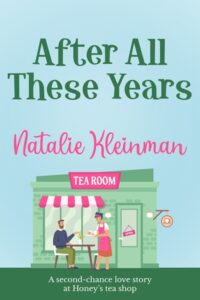
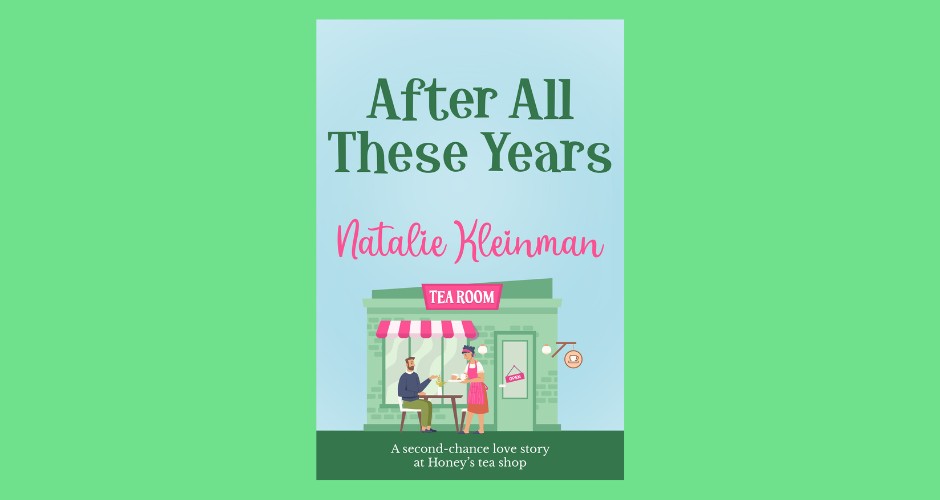
Congratulations to Natalie Kleinman, whose second-chance love story, After All These Years, is out out now!

When Guy Ffoulkes walks into Honeysuckle ‘Honey’ Bunting’s tea shop in the little town of Rills Ford, she’s transported back in a flash to her teenage years – and to the pain of first love.

As a young girl she worshipped Guy from afar – but to him, she knows, she was simply his best friend’s scruffy younger sister.

Over the years Honey has poured her energy into her business and caring for her elderly mother, telling herself it’s enough for her. But no man has ever replaced Guy in her heart…

Now, fourteen years on, Guy has returned from Australia, a rich and successful architect, but a lonely man. And when he and Honey reconnect, neither can deny the spark between them.

But Honey’s loyalties are tested to the extreme when Guy reveals the reason for his return…

Does Honey know her old flame as well as she thinks? Will Guy let pride and ambition drive away the only woman he has ever loved?

And as the pair find themselves at the heart of a local scandal, can they find the strength to take a chance on love?

A Walk in the Park is Published Today

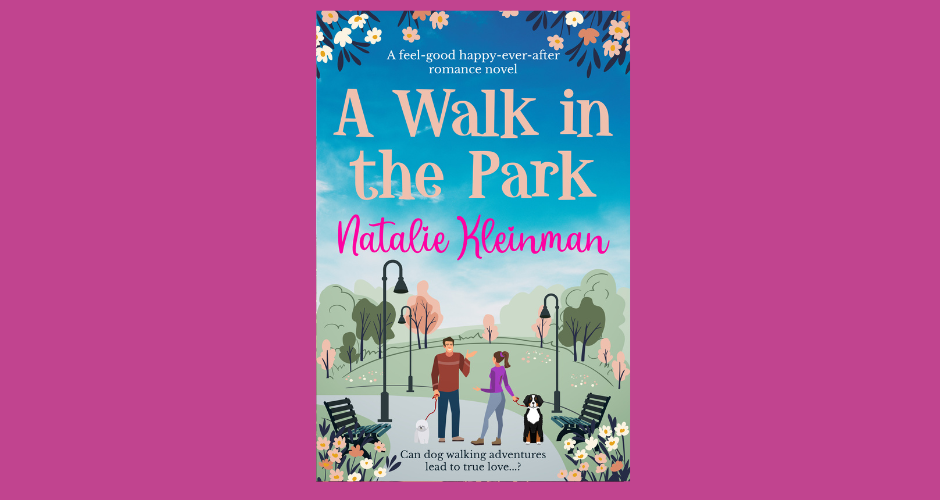
Congratulations to Natalie Kleinman, whose heart-warming contemporary romance, A Walk in the Park, is out now!

Ever since she was a teenager, twenty-nine-year-old Daisy Shepherd has been thrilled to be able to walk dogs for a living. And with a supportive mother and stepfather, she thinks she has everything she needs.

But when her birth father, James, asks to meet her, her idyllic lifestyle is turned upside down.

Having been abandoned by James as a baby, Daisy has no desire to get to know him. However, she is delighted to learn that she has two half-siblings, Charlie and Kirsty, with whom she forms a warm friendship.

With a newly expanded family, Daisy’s happiness should be complete. But as she spends more and more time with Charlie and Kirsty, her feelings grow more complex.

And with her heart pulling her in one direction and her head in another, she begins to wonder how she can protect her relationship with her siblings while preserving her peace of mind…

Will Daisy be able to work through her feelings? Can she keep her newfound family in her life?

Or are they destined to be pulled apart?

My Writing Space by Patricia Caliskan

In this behind-the-scenes blog series, Sapere Books authors offer an intriguing insight into how, where and why they write.

Today, we are delighted to spotlight contemporary romance author Patricia Caliskan.

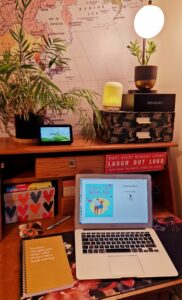
I wrote my third novel, When We Were Us, at my bureau, which has become my writing enclave. Something about opening the bureau desktop gives me a sense of immediacy which speeds the writing along. I write upstairs, free from distractions, except for my dogs who stop by to visit, but basically closed off from everything except the world I’m creating.

Patricia’s bureau

I never thought I had any writing rituals until people began asking the question. I realised that I have rituals in general. All three of my novels were largely written at night. Once the demands of the day are over, night-time is not only the perfect fit in a practical sense but allows me the space I need to daydream on behalf of my characters, and fully immerse my thoughts in the world of the book.

I’m a huge advocate of those tiny details which promote wellbeing, even when I’m not writing. So, before I get back to my latest manuscript, I mix essential oils for my diffuser, which works like magic for changing up the mood, and I set a timer to monitor my working hours.

I find having scheduled time slots super helpful. I can show up and do the work and know exactly how much time I’ve spent on the novel, which is reassuring when I’m trying to find enough time to work on a project.

I switch on my moon light, as I call it, a perfect orb of white light, and always freshen up my perfume before I write. I think of perfume as a superpower. A favourite scent signals that we’ve got work to do and someplace else to be.

I usually start by reading over where I left off to reacclimatise. I try not to spend too much time agonising over a word choice or a sentence formation until I’m at the editing stage. I have a natural tendency to edit as I go, wanting the work to be as close to the final manuscript as possible, which can hinder the drafting process.

When it comes to first drafts, I remind myself of my own advice: to just get it all down. I need solitude to do that, and sitting at my bureau, I feel enclosed in the world of the book. When it comes to editing, I usually end up inadvertently making a playlist to score parts of the novel or characters, which I find helpful with tone and pace. Once I have a completed manuscript, I print the work out and read it aloud, because if the writing doesn’t sound right, it isn’t right, and needs reworking.

Writing fiction requires both discipline and detachment, and my little bureau space provides just that!

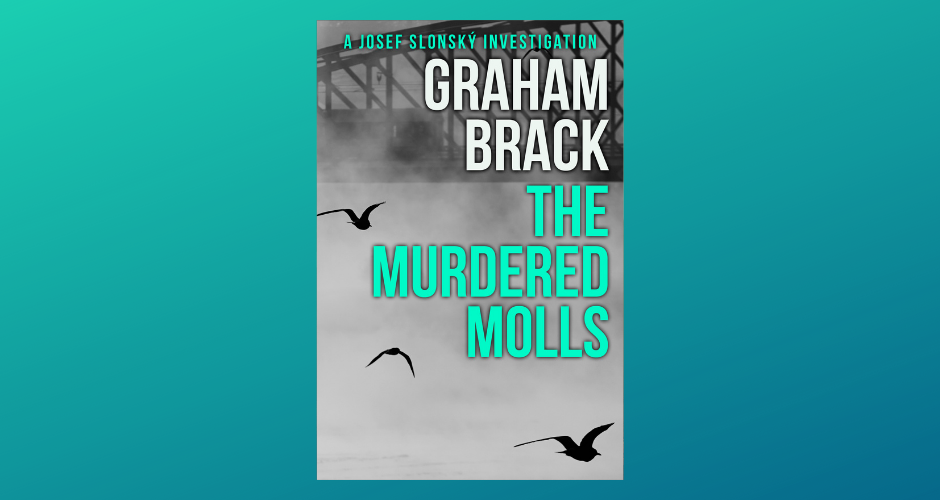
The Murdered Molls is Published Today

Congratulations to Graham Brack, whose absorbing crime thriller, The Murdered Molls, is published today!

The Murdered Molls is the seventh book in the Josef Slonský Investigations series, atmospheric police procedurals full of dark humour.

A woman is discovered brutally murdered in her apartment, with some of her body parts surgically removed.

The pathologist has dubbed the perpetrator the nastiest killer he’s ever come across in the Czech Republic.

But after a scuffle with a cat burglar, Captain Josef Slonský has found himself laid up in hospital with a series of torn ligaments in his knee, unable to rush to the scene of the crime.

With his medical review due in less than nine weeks, and the threat of enforced retirement hanging on the outcome, he is determined to get out of bed and back on active duty asap.

With the help of his friend Valentin, Slonský signs himself out of hospital and puts his mind to solving the killing.

Is a serial killer at large? Are more women in danger?

And can Slonský prove his worth and keep the job that means so much to him?

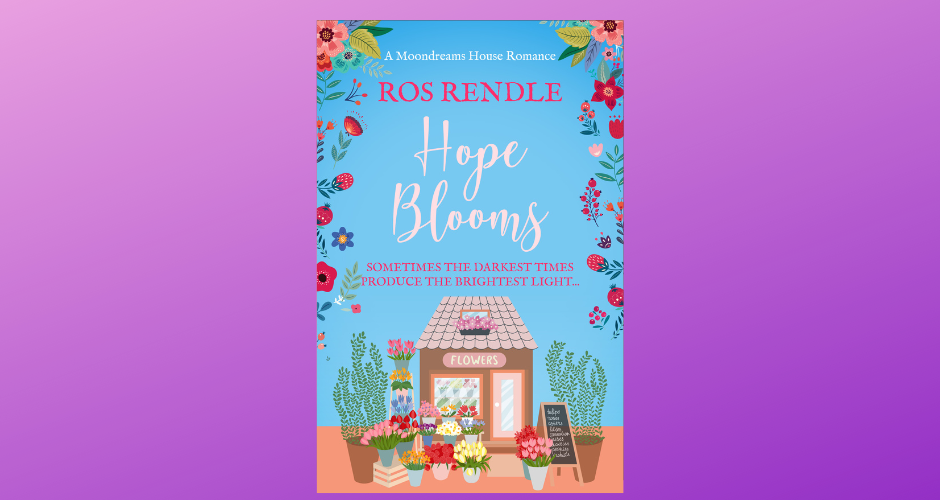
Hope Blooms is Published Today

Congratulations to Ros Rendle, whose heart-warming love story, Hope Blooms, is published today!

Hope Blooms is the fourth book in the Moondreams House Romance series.

Having recently left the army, Hope Everett is now learning to live with a physical disability and PTSD. As she does her best to accustom herself to the civilian world, she wonders what to do with the rest of her life.

When a florist job becomes available on the Moondreams House estate, Hope jumps at the chance to indulge her lifelong passion for flowers. Despite her limited experience, her enthusiasm wins her the job.

However, her excitement is dampened when Dante Troughton — the aloof son of the estate owner — insists on overseeing the financial side of Hope’s business.

Though Hope initially finds Dante arrogant and overbearing, their uneasy relationship gradually grows into a mutual respect. And as both begin to open up about their past, Hope questions whether she is ready to let someone get close to her…

Can Hope make her new business thrive? Will she find solace in her work and blossoming friendships?

Or will the tragedies of her previous life overwhelm her…?

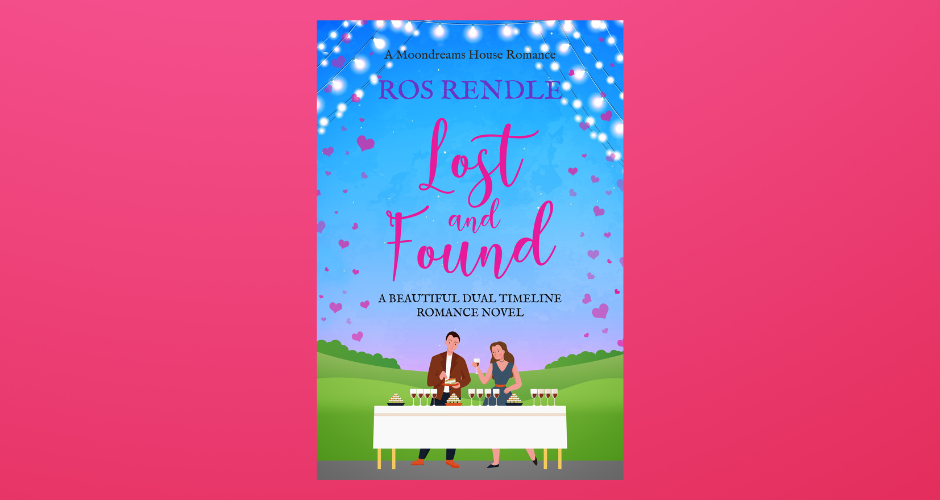
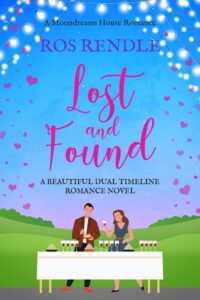
Lost and Found is Published Today

Congratulations to Ros Rendle, whose moving dual-timeline romance novel, Lost and Found, is out now! Lost and Found is the second book in the Moondreams House Romances series.

Having been adopted as a baby, twenty-four-year-old Natalie has started to wonder where she came from.

But when she finds out that she was abandoned in a doorway, her curiosity about her birth mother turns to hurt and anger.

Trying to forget her turmoil, Natalie throws herself into her new business venture: Tea and Sweet Dreams, a cosy teashop on the Moondreams House estate.

However, her resentment over her origins continues to simmer, putting pressure on her relationships.

With her love life hanging in the balance and her teashop requiring constant attention, Natalie soon begins to feel overwhelmed. Realising that she cannot move forward until she unravels her past, she becomes determined to find and confront the woman who left her…

Why did Natalie’s mother give her up? Will she find the answers she’s looking for? Or will her roots remain a mystery…?

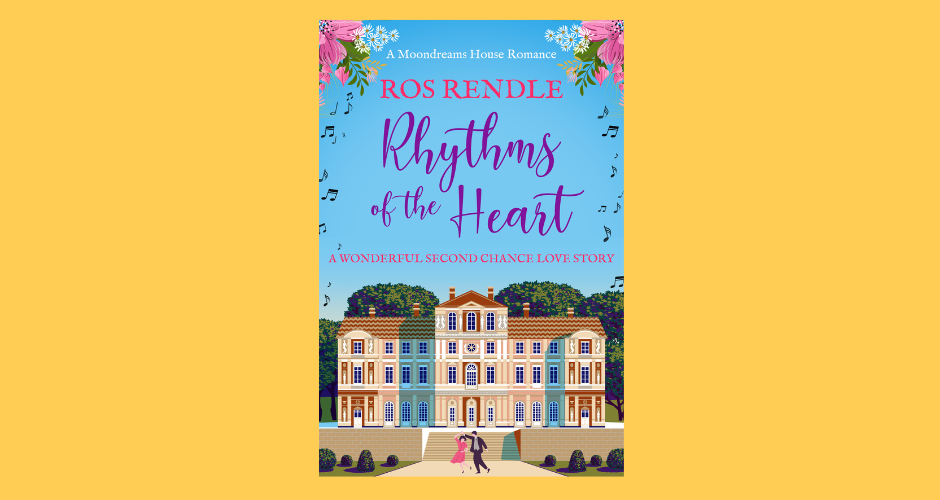
Rhythms of the Heart is Published Today!

Congratulations to Ros Rendle, whose gorgeous contemporary romance, Rhythms of the Heart, is published today! Rhythms of the Heart is the first book in the Moondreams House series.

Having been widowed for eighteen months, 39-year-old Annie Ellis is searching for a way to support herself.

When she runs into Harry Moon — an old flame from her teenage years — her life takes a direction she never expected.

Separated from his wife and now working as a concierge at Moondreams House — a large local estate — Harry understands what it is like to feel alone. As their friendship progresses, Annie confides her ambition to run a dance school. Admiring her vision, Harry encourages her to rent the ballroom of Moondreams House for her new venture.

Happy with her career path, Annie’s grief over her late husband slowly eases. Believing she is ready for romance, she begins to look for someone to share her new beginning…

Will Annie make a success of her dance school? Is love on the horizon?

Or will the pain of the past hold her back…?

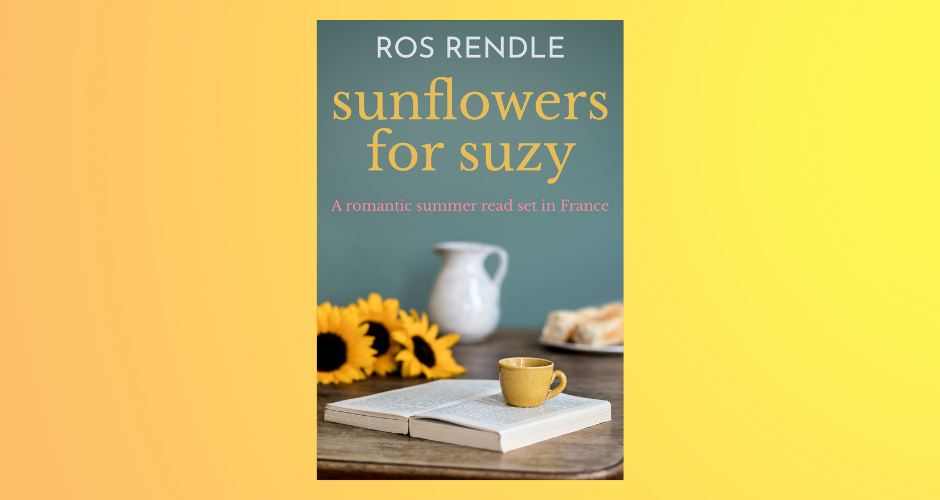
Happy Publication Day to Ros Rendle!

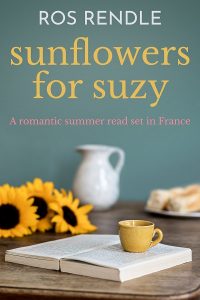
Congratulations to Ros Rendle, whose moving contemporary romance, Sunflowers for Suzy, is published today!

Having recently lost her mother, 38-year-old Suzy Summers is anxious to make a fresh start. Leaving behind her old life in England, she flees to the idyllic village of Fleurus-le-Comte in Northern France.

On arrival, Suzy crosses paths with Jean Christophe, an unhappily married farmer. Irritated by his apparent conceit, she vows to have nothing to do with him.

However, as Suzy settles into village life, she and Jean Christophe are thrown together more and more. Witnessing his kindness and charm, Suzy softens and they form a tentative friendship.

Among the peaceful hills and rivers of the beautiful valley, Suzy’s weary spirit begins to heal. But as she finds herself falling for a man who already belongs to another, she begins to wonder whether she can bear to stay…


Click here to order Sunflowers for Suzy

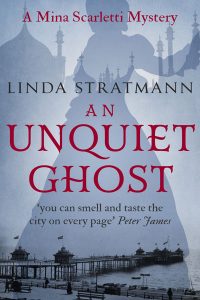
Author Q&A with Linda Statmann

When did you first start writing? Did a specific event encourage you to start?

When I was six years old, I saw a TV programme about the Blitz, which as you can imagine was pretty alarming. I wrote a poem about it.

How much research do you do?

I am fascinated with the Victorian era and do a lot of research to try and get the details right. I read contemporary newspapers and journal articles, biographies and medical works. I study maps, census returns, directories, legislation, photographs, and art. I have about a hundred books just on the history of spiritualism.

Tell us about where you write / your writing habits.

I work from home and have a room which is my office. I don’t work set hours; even when I am doing the household chores, my mind is still working on my latest project or planning a new one.

What part of the writing process do you find most difficult? Starting, knowing when you’ve done enough research, the ending?

When I begin a project, I know where I am starting from and where I will end up, but I have to link the two in a way that makes sense. Every time I pause in order to find that natural link, I have to remind myself that I found it last time. It’s worked so far.

How real do your characters become and do they ever seem to control their own storyline?

They feel very real to me, and because I let themes develop naturally in my mind often the characters do things that I hadn’t necessarily planned but emerge from their personalities and situations, so sometimes they do take me by surprise.

Do you ever feel guilty about killing off characters or do you relish it?

Neither, but it is sometimes sad. It’s very hard writing about a character who I know is about to become a murder victim.

Do you find it hard to know when to end a story?

No, I know when it feels right to me.

What are you working on?

I am editing a new volume in the Notable British Trials series about the trial of the Mannings in 1849. I am also developing the plot for the fifth Mina Scarletti book, to be entitled His Father’s Ghost.

What are you reading right now?

Munich by Robert Harris.

What is your favourite book? Who is your favourite character?

I have read thousands of books and it is impossible to pick one!

What book do you wish you had written?

See above.

Do you love any genres/books that are very different from what you write?

Most of my reading is non-fiction: history, biography, true crime, psychology. In crime fiction, I tend to read books with modern settings or if historical, a very different time period from the one I write about.

 Tell us something surprising about you!

I prefer pickles to sweets!

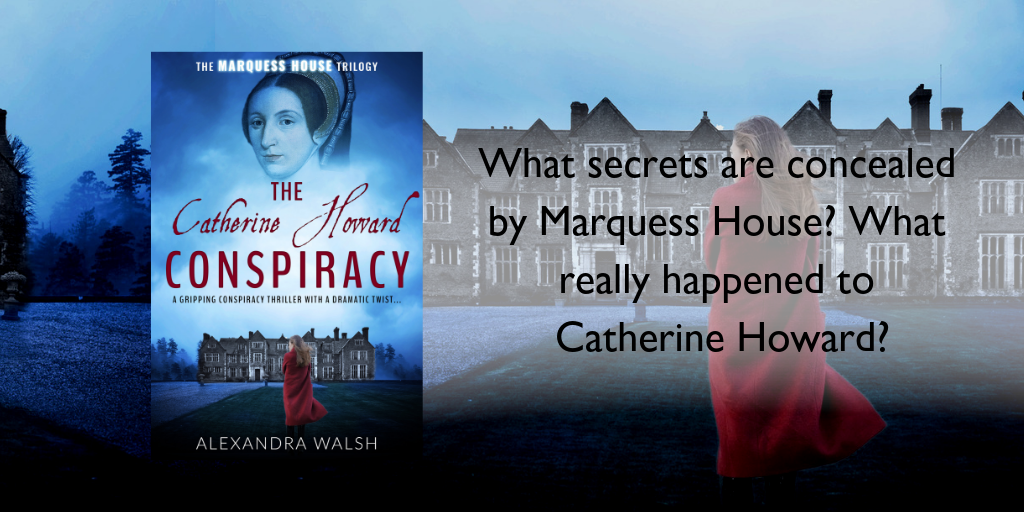
Author Q&A with Alexandra Walsh, author of The Catherine Howard Conspiracy

When did you first start writing? Did a specific event encourage you to start?

There has never been a time when I didn’t write. As a child, my idea of a perfect game was to tell a story to my teddies, then write it down. It was never a conscious decision, it was part of me then and it still is now.

How much research do you do?

It entirely depends on the story. For a while I wrote film scripts, mostly comedies, and they didn’t need any research. Likewise my first few attempts at novels (still languishing unpublished!). One story, The Music Makers took all its chapter heading from the wheel of the Major Arcana cards in the Tarot pack. Although I was a fairly proficient Tarot reader back then, I did research other, wider meanings, for the cards to add extra depth to the main character’s adventures.

The Marquess House Trilogy, which has a split timeline comprising of a present day strand and a historical section has taken years of research. Book one: The Catherine Howard Conspiracy was actually not my intended starting place. The big reveal that appears in book two: The Two Elizabeths was the kernel of the idea for this story and, over the years, I have written many different versions of it trying to make it work. However, none of them were quite right and after several years of juggling work, life and researching Elizabethan England I realised the only way I’d be able to capture this monster of a story on paper was to split it into three separate tales, rather than trying to cram it into one book. Three books, one for each piece of jewellery: two ruby rings and a silver locket.

It was actually devastating because it meant starting again from the beginning. In true frustrated writer style, rather than face this unhappy truth, I wrote a comedy instead, entitled The Patron Saint of Married Women, which was set in the present day and needed very little research. In. Your. Face. History.

In the end, I caved in and began researching Henry VIII’s fourth and fifth brides. I also made the alarming decision to dump my two main characters: Isabella and Oliver. I never liked them much anyway. The name Perdita had been running around my head for a while. From reading Dodie Smith’s One Hundred and One Dalmatians when I was younger, I knew it meant Little Lost One and somehow this seemed appropriate for my main character. Then one morning, I woke up with the question: “Who is Piper?” running around my head. Immediately, I knew she was Perdita’s twin sister and something clicked into place.

The very very first version of this story featured Isabella (now gone) mourning her twin sister who had died under mysterious circumstances on an archaeological dig after she had unearthed a silver locket. The idea was that she had been murdered by MI One Elite. Strangely, the nasty old Watchers were there from the beginning, as was Mary Fitzroy, James Rivers and Alistair Mackensie. Jerusalem was always around too, although it took me a while to settle on its true nature. Warren Dexter was another one who survived the character cull. However, it wasn’t until Perdita and Piper popped up that the story suddenly opened up before me. Then, Kit arrived. He had been through a number of names and he finally found an identity because I quite fancied Kit Harington who plays Jon Snow in Game of Thrones. Yes, it’s an embarrassing admission but he was the inspiration for Kit and once he had his name, the last piece of the puzzle was in place and the story flooded out.

I’ve long since moved past my toe-curling crush, though. Ahem.

Anyway, in answer to your question, at present, several months of research and writing of detailed timelines. By gathering all the information into one huge chart, it’s easier to write fluently and present a more rounded and believable version of my historical periods.

Tell us about where you write / your writing habits.

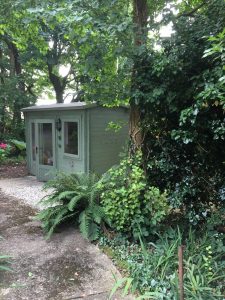
I have a purpose built writing hut in the garden with insulation and a heater. I write every day and, at the moment, am lucky enough to be able to treat it like my day-job.

What part of the writing process do you find most difficult? Starting, knowing when you’ve done enough research, the ending?

It varies. I love the lure of the blank page. Every piece of paper is an adventure waiting to unfold. Knowing when you’ve done enough research is a tricky one but there comes a point where you have to plunge in and see what happens. I don’t like writing endings, not because I don’t like them but because it means you’re saying goodbye to your characters.

How real do your characters become and do they ever seem to control their own storyline?

Very real. They all seem to end up taking over their own storylines. Sometimes, I even argue with them. Although perhaps I shouldn’t have admitted that…

Do you ever feel guilty about killing off characters or do you relish it?

Never! I worry about killing them off for different reasons. What about if I suddenly realise I need them again but they died in Chapter Four?!! EEEKKK!

Do you find it hard to know when to end a story?

Usually I know the end before I begin. The Marquess House trilogy has proved more troublesome though because in my head, it’s one long story, so realising I had to make three endings, instead of just the one at the very very end of book three, has taken a while to adjust to.

What are you working on?

Part three of The Marquess House trilogy. It’s working title was always Prince Oliver but I don’t think this works any more. The title will arrive when its ready.

What are you reading right now?

The Moon Sister by Lucinda Riley. It’s part five of her Seven Sisters series. I only recently discovered these books but I’m really enjoying them.

What is your favourite book? Who is your favourite character?

This is a tough one. How do you choose between so many friends? And also, do I go for something literary and make it look as though I’m very high brow or do I tell the truth?!

For a long time now, my favourite book has been Harry Potter and the Prisoner of Azkaban. I was going through quite a tough time when I began reading these books and, not only was Hogwarts a wonderful place to hide, I was awed by J K Rowling’s brilliance. Goblet of Fire had just been released, the films had been cast and the storm of Harry Potter was building. I never like making judgements on phenomena unless I’ve read/seen/visited them, so I bought the books. Philosopher’s Stone hooked me from page one. Chamber of Secrets worried me – who was Dobby? Was he good or bad? – but when I read the third book with its fabulous twist with Scabbers and the appearance of Sirius Black who had first been mentioned in chapter one of book one, I realised this was more than a series of children’s books. This was truly magical. I’ve asked for help at Hogwarts many times and it’s always been given.

My favourite character is Hermione Granger. Although Harry is pretty amazing too.

I also love Ballet Shoes by Noel Streatfeild and Moll Flanders by Daniel Defoe.

What book do you wish you had written?

Apart for the Harry Potter series? The God of Small Things by Arundhati Roy or The Passion by Jeanette Winterson.

Do you love any genres/books that are very different from what you write?

I try to read a broad cross-section of genres. If a story is well-written, it’ll grip you no matter what the genre. I try never to suffer from literary snobbery. Every book is worth trying, you may not make friends there but you don’t need to be rude!

Tell us something surprising about you!

I play musicals in the background while I write.

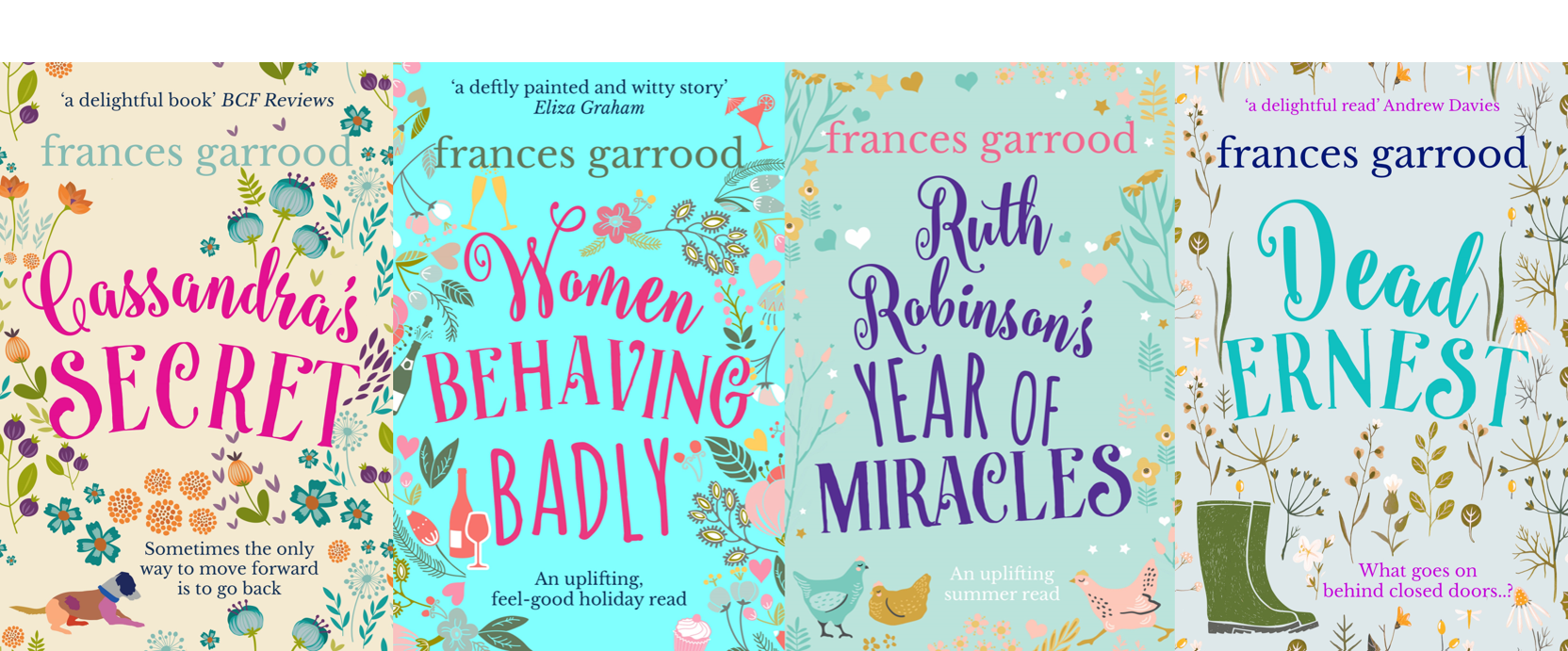
Author Q&A with Frances Garrood, author of Ruth Robinson’s Year of Miracles

When did you first start writing? Did a specific event encourage you to start?

I can’t remember a time when I didn’t write something; poetry as a child, then on to short stories when my children were small, and then novels.

How much research do you do?

It depends. I had to do quite a lot for Dead Ernest as it was set during WW2, but often it’s just my own experience. I did once phone a safari park to find out how a monkey would behave if trapped in a car (for Women Behaving Badly), and they said they had no idea!

Tell us about where you write / your writing habits.

I’m afraid I don’t have any. I’m totally lacking in discipline, and I just write when I feel like it, at a desk in a corner of our bedroom. Not very professional, I’m afraid…

What part of the writing process do you find most difficult?

Starting, knowing when you’ve done enough research, the ending? I think the middle is difficult, but I’m not a planner, so I can get stuck anywhere. I usually just let the story take me where it wants to, and sometimes it doesn’t want to!

How real do your characters become and do they ever seem to control their own storyline?

They become very real, and I really hate letting go of them in the end. They certainly control the story to a great extent, especially when they’re speaking. I love writing dialogue.

Do you ever feel guilty about killing off characters or do you relish it?

A bit of both. But it’s also quite cathartic for me, because I was widowed fairly young, and I use my own experience of bereavement.

Do you find it hard to know when to end a story?

So far, my books have ended more or less of their own accord, but that could change (though I hope not).

What are you working on?

I’ve actually started three, and am waiting for one of them to take off. Two are sequels, and sequels are – I’ve discovered – a lot harder than I thought they’d be

What are you reading right now?

A little-known novel by Anthony Trollope (my favourite author): The Belton Estate.T I’ve read pretty well all his books, several more than once, and was delighted to find this one.

What is your favourite book? Who is your favourite character?

Without doubt, George Elliot’s Middlemarch. And my favourite character has to be Winnie the Pooh.

What book do you wish you had written?

At the moment, it’s Gail Honeyman’s stunning debut Eleanor Oliphant is Completely Fine. Otherwise, pretty well anything by Anne Tyler.

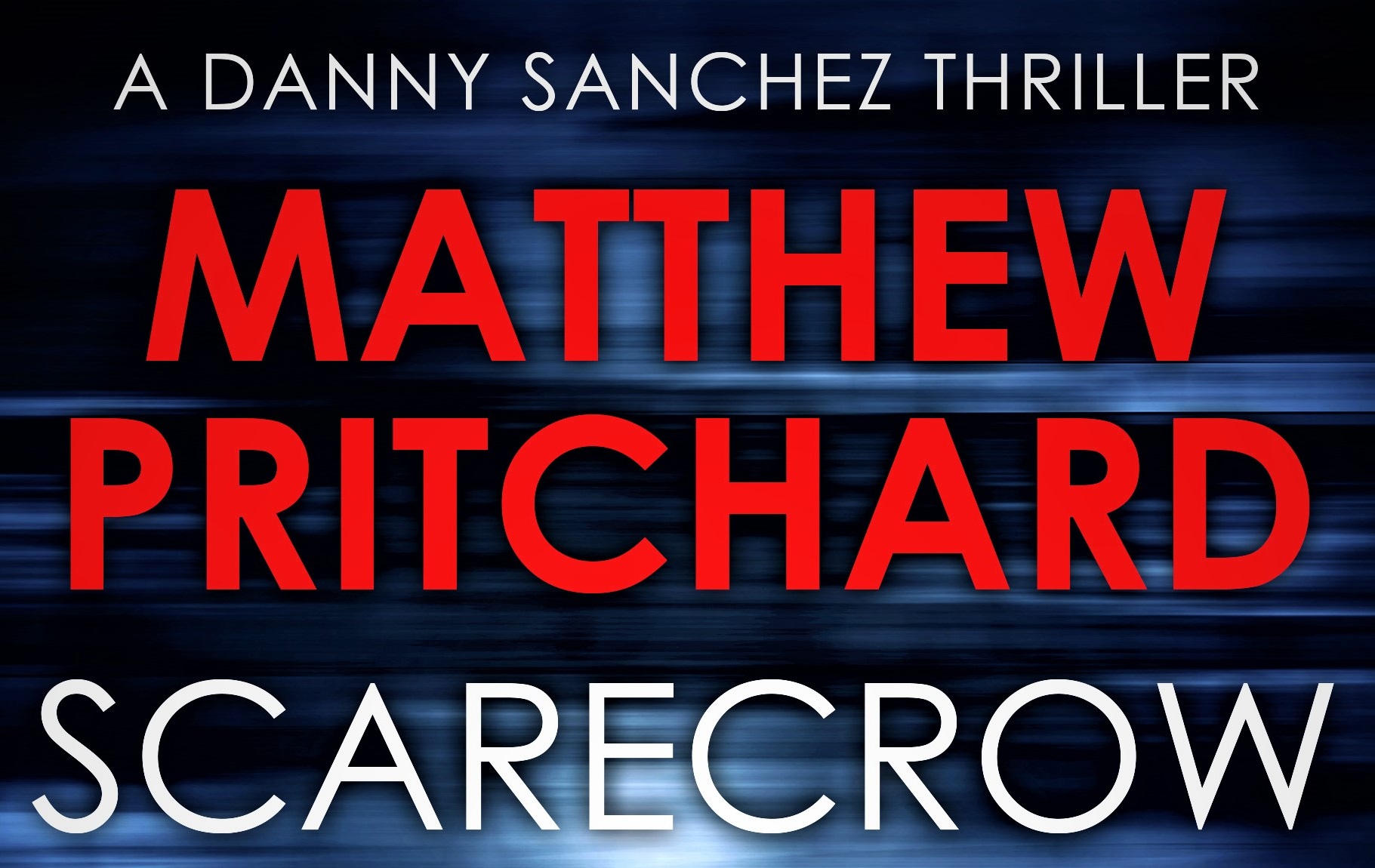
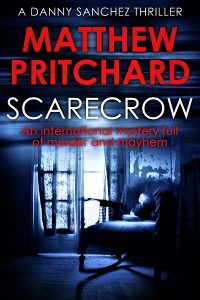
Excerpt from Scarecrow by Matthew Pritchard

Chapter One

Sunday, March 28th, 2010

Danny Sanchez arrived at 10:27.

It was already bedlam; hundreds of people covered the dusty patch of waste ground beyond the white walls of the property, shouting, pushing, arguing among the cacti and scruffy palms. The excavator’s arm loomed menacingly above the roof of the two-storey villa.

The demolition had been scheduled for nine a.m., but frantic negotiation had earned the elderly expat owners a three-hour stay of execution while the house was cleared. The whole neighbourhood turned out to help, Briton and Spaniard alike. A stream of people walked back and forth along the edge of the unpaved road, carrying everything and anything they could salvage – doors, windows, even the kitchen work surface. The problem now was where to put it all. An incongruous pile of household items was collecting around the trunk of a fan palm. Danny watched as a negligee blew free from a box and wrapped itself around a cactus.

Christ, what a mess.

In eighteen years of journalism, Danny had witnessed dozens of horrors – people cut from the wreckage of car accidents, a woman leap from a burning building, a suicide on a railway track – but this was something new. They were going to demolish Peggy and Arthur Cookes’ house and nothing could be done to avert it. He’d seen the paperwork. Nearly every penny the poor old duffers had was invested in the villa; a lifetime’s equity would be smashed to rubble. It was like waiting for an execution.

The Junta de Andalucía, southern Spain’s regional government, had sent a woman in her mid-thirties to oversee the demolition. Crafty, Danny thought; people found it harder to get angry with a woman, especially an attractive one. Her hard hat and fluorescent bib bobbed at the centre of a tightly-knit group of people. Guardia Civil officers in green boiler suits formed a protective ring around the Junta woman. Then came the leaders of the protestors, waving documents and trying to argue over the shoulders of the Guardia officers.

Behind them was the press pack, two dozen strong, cameras and microphones waving above the crowd as it surged and rocked. Gawkers and curious children milled at the edges, wondering what all the fuss was about.

For her part, the woman from the Junta looked genuinely distraught at what she had to do. Danny had no idea whether she could follow the English words being bellowed at her, but it was obvious she understood the gist. She kept pointing to the paperwork on her clipboard, raising hands and shoulders in shrugs of helplessness. Someone, somewhere had decreed the demolition must go ahead; it was her job to get it done.

The Cookes were inconsolable. Peggy sat on an armchair that had been dumped among spiky clumps of esparto grass. Tears carved streaks through the dust that had settled on her face. Danny recognized the armchair; he’d sat in it when he’d interviewed them a year before, when the demolition orders were first served. Arthur Cooke had looked dapper and defiant as he posed for the cameras back then; now, every one of his seventy-three years weighed upon him. He stood with his hand on his wife’s shoulder and turned moist eyes as Danny approached.

“Not now, mate,” he said, shaking his head. “The bastards are about to ruin us.”

Danny nodded, glad he’d been spared having to ask the obligatory “How do you feel?” It was amazing how dumb those four words could make you feel sometimes.

Peggy Cooke wanted to speak, though. “Why us?” she said, her voice shrill. “Out of all the hundreds of people, why does it have to be us? I want you to print that. It’s not fair.”

Why us? That had been everyone’s first reaction in March 2009 when the judicial demolition orders were delivered to eleven different families dotted around the municipality of Los Membrillos. It seemed so monstrously unfair, given the scale of the problem in Almeria, the province that occupies Spain’s south-eastern tip. A Junta survey had uncovered more than 12,500 irregular constructions in just ten of the worst affected municipalities. But the Spanish legal system was a Heath-Robinson contraption manned by characters from Kafka; immense and baffling in its complexity, arbitrary in the decisions it dispensed and spitefully prescriptive when it did so. It was one of the dangers of emigrating to Spain, the flipside to all the sunshine, fiestas and good living.

Not that it had worried the tens of thousands of Britons who had flooded the Almanzora Valley at the turn of the century, buying up villas and plots of land for self-builds, breathing life into the moribund rural communities that nestled below the Sierra de los Filabres mountain range. But the rush to expand had left thousands caught in the legal quicksand between the local and regional government of Andalusia. Local councils could grant licences to build, but the regional government had the right to challenge those licences. The catch-22 was that no one would stop you from planning to build a house; the house actually had to be built – and the money spent – for it to come to the Junta’s attention and challenge its legality.

Why us? Danny knew the answer to Peggy Cooke’s question; he’d interviewed the mayor of Los Membrillos. “We had so many applications for building licences, we were swamped,” the mayor had said, unlocking a cabinet and indicating three large cardboard boxes leaking paperwork. We only got round to processing eleven.” That was the bitter irony of it; by trying to follow the rules, these unlucky eleven home owners had created a paper trail that Junta officials could follow back to specific properties.

Time was ticking on. The crowd was getting angrier, the shouting louder. More Guardia officers arrived. Danny phoned everyone and anyone he could think of who was involved with the case.

It was the usual pass-the-parcel.

The council blamed the Junta, the Junta blamed the courts, the courts blamed the council; all down the line, each link of the chain shrugged its shoulders and pointed to someone else. Arthur Cooke watched Danny in action, hoping that this man who spoke such perfect Spanish could somehow work a miracle. Danny finished the phone call, shook his head. The flicker of light in the old man’s eyes dulled.

Paco Pino arrived at 11 a.m., yawning and scratching at his chest. “My one day off,” the photographer said, screwing a lens onto one of three cameras dangling from his neck, “And this has to go and happen. Just my luck.”

Danny was glad the Cookes couldn’t speak Spanish; crass comments like that were the last thing they needed to hear. Not that Paco was a bad person; experience had simply made him blasé, like everyone who made a living reporting other people’s misfortunes. Truth be told, Paco was a saint in comparison with some; Danny had spoken to one of the journalists sent by a UK red top to cover the announcement of the demolition orders the previous year.

“We won’t be interested again now until they knock the things down,” she said as she left, nodding toward the cloudy March sky. “Let’s hope they do it in summer, eh? I might get a bit of a tan.”

The pile around the palm tree grew: beds, sofas, lampshades, mirrors, cardboard boxes stuffed with clothes and crockery. Danny looked at his watch. Not long now.

At ten to twelve, uniformed officers of the Policia Local cleared the last of the protestors from the garden and checked no one was left inside the house. There were more scuffles on the white gravel outside the villa, more insults in English and Spanish. The property’s black gates had been lifted from their hinges earlier to allow the excavator through. Having shoved a final protestor outside, Guardia Civil officers formed a human barrier in the space between the gateposts. Protestors waved paperwork at the Junta woman as she looked at her watch and waved toward the workers.

The sudden roar of the excavator’s engine caused everyone to freeze and fall silent. The crowd turned as the engine revved and the excavator’s mantis arm uncoiled and rose above the house. For a moment, time seemed stilled…

…and then the air thundered as the excavator’s claw drove down through the roof. An angry moan emerged from the crowd as the arm rose and hundreds of dislodged tiles showered and smashed on the ground. The excavator arm dipped once, twice, three times more, prising the roof apart before ripping backwards and pulling free a ragged-edged section of brickwork. Looking through the jagged rent it created was surreal; the neatly-tiled interior walls had been exposed, giving a view inside a giant dolls’ house.

The Cookes stood holding each other: Peggy sobbing; Arthur straining to keep her on her feet, his face stoic. They were tearing his house down, but he wouldn’t show a flicker of weakness. Another huge section of wall tumbled away; it fell to the ground with a thud. Dust rose, people coughed, choked, began walking back along the road. Danny pulled his jacket up to cover his mouth.

The Spanish woman atop the ridge didn’t really care about the foreigners; their house was illegal; it had to come down.

She was only there for the spectacle, to have something to tell her friends tomorrow at the market.

She was the first to see it.

Her mouth gaped; then she began to scream and point toward the corner of the house. People looked to see what the noise was but the sounds were rendered unintelligible by the rumble of falling brickwork and the excavator’s diesel chug.

But the dust was settling now; people were following the woman’s outstretched hand, squinting as they too noticed the thing wedged in the narrow gap between exterior and interior wall.

A Guardia Civil officer rushed to the excavator, banged on the window. The machine fell silent. Other people had noticed the shouting woman now and were pressing closer, shading their eyes, unsure of what they were seeing. For the second time that morning, a sudden silence halted the crowd.

Danny thought it was a mannequin at first. And then the corpse fell forward, bending from the waist, its blackened head rocking back and forth. Some people screamed; others stood open-mouthed; some turned to run.

Arthur Cooke’s face remained expressionless as he stared at the semi-skeletal corpse lolling from the broken wall of his house. Then, without moving a single muscle of his face, he toppled forward and fell heavily to the earth.


Need to know what happens next? Get Scarecrow now from Amazon.

Me, Danny Sanchez and Journalism by Matthew Pritchard

The Daily Mail and The Sun are both pretty shitty newspapers, I ought to know: I wrote for them both.

Why? Because they were the only newspapers that paid decent money to journalists working out of Spain.

Anyway, stories that were suitably comic, tragic or grotesque enough for The Mail or The Sun only occurred infrequently on my patch – but when they did, I entered an incredibly stressful, real life version of the cartoon, “Wacky Races”, as the first journalist to get there and get the pictures and facts, got the sale. The rest just wasted time and petrol, and I was always in competition with at least 3 or 4 others.

And it was those missed sales that started chipping away at my integrity. Because if you work for shitty newspapers, you very quickly begin to behave in a shitty way.

With me, it began with a bit of cheeky chicanery. Much of rural Spain consists of unmarked dirt tracks, the names of which are known only to locals, so most reporters rely on rural petrol station attendants for guidance, and I often slipped the staff a tenner to misdirect any other strangers asking around.

Pretty tame stuff, but it was the start of the road to Shitsville. And once you’re on it, the question quickly raises itself: How far down the road are you prepared to go?

I found out in 2010, when I covered a story about the collapse of a house which had killed two expats in a tiny hamlet way up in the mountains.

When I got there, I deployed my usual set of tricks. First of all, in order to find the house, I lied and said I was a friend of the dead couple and was there to pay my respects. This got me detailed directions, as well as plenty of pats on the back and commiseration from local Spaniards. I may even have squeezed out some crocodile tears for their benefit.

The property was all locked up and wrapped with police incident tape, so I climbed the fence and started looking for a decent angle from which to take a photograph, clambering, hopping and jumping all over the rubble as I did so. When a neighbour of the dead couple emerged and asked me what the hell I was doing, I ignored his question and asked him the only thing that interested me: ‘Have you seen any other reporters here before me?’

When he said, ‘No’, I climbed back over the fence and started looking for somewhere with Wi-Fi coverage.

I got the sale. But as I was celebrating in a local bar, looking through the photos I had taken, I began to notice that there was dried blood and other types of biological matter all over the collapsed concrete pillars and rubble. Then I noticed some of it had stained the tip of my desert boot as I’d been merrily desecrating a place where two people had died a sudden and likely very painful death.

I lay awake that night, and slowly came to the realisation that I did not have what it took to be a fulltime tabloid journalist. My journey along the road to Shitsville had ended.

And that’s where Danny Sanchez was born. Because Danny does have what it takes and I enjoy exploring the grottier side of journalism through the prism of the character.

Most readers warm to Danny immediately, but others don’t, and I suspect it is the ruthless side of Danny’s character that is the reason for this – he climbs walls, he lies, he goes through bins, he enters people’s homes uninvited and he “borrows” documents – in short, he does whatever he has to in order to get the story.

The trick is to make the people he is investigating so loathsome that the reader sympathises with Danny, despite his shady behaviour.

Anyway, for those of you who dislike the character, I’d ask that you cut the guy some slack – he trawls through the shitty side of journalism so I don’t have to.

Whose Voice? by Graham Brack

Sapere Books are publishing books of mine from two different series involving two different detectives.

One, involving Lieutenant Josef Slonský is set in 21st century Prague; the other, featuring the university lecturer Master Mercurius, takes place in 17th century Netherlands. There are obvious differences in setting that inform the writing.

Slonský is a career policeman. He is inclined to take the occasional drink to get the mental cogs turning faster. There is nothing much in his life except his work, and since he is 58 when the series starts, the threat of retirement looms large. Slonský has all the support that modern science can offer, including a mobile telephone, though he does not really know how to do anything beyond making calls on it.

Mercurius is very much an amateur, an accidental detective who falls into the work when a series of abductions in Delft leave the local authorities baffled, so they send to the University at Leiden for a clever man who might help them solve these; and the Rector sends Mercurius. He is a young man, only 33, a lecturer in moral philosopher and an ordained minister, and he has little in the way of science to help him.

To my mind, though, none of these is the major difference between the series. I award that distinction to the fact that Slonský books are written in the third person, whereas Mercurius narrates his; and I thought it might be instructive to discuss why that is so.

I would love to say that it was the result of a carefully balanced decision, weighing all the factors for and against either approach, but if the truth be told the stories just came out that way. In my head, the action in Slonský appears as a film in which I stand back, observe, listen and record, whereas the Mercurius books involve me as a character in the tale I am telling. I toyed with telling Mercurius in the third person, but it didn’t feel right, and I have spent a bit of time thinking why that might be.

I think the reason is that Slonský is a big character, but he has a large regular supporting cast and it is important to me that we should get to know them. If he were also the narrator, I think he would dominate too much. Mercurius, on the other hand, is the only character who appears in all that series of books, and as the only consistent element the story has to pivot on him anyway.

This is not just of analytical interest. Many crime novelists consistently favour one or the other approach. I am prepared for either, but it changes the way the story develops. In Slonský stories things can happen when he isn’t around; Mercurius only knows what he sees and hears. That inevitably leads to a slower unwinding of the evidence, because it would seem forced if all the clues turned up in an afternoon. Slonský can send his colleagues out to investigate several lines of enquiry and bring them back together for a conference; Mercurius spends a lot of time travelling to discover things for himself. There is no telephone or telegraph system that he can use, and he does not possess a horse.

There have been rare examples of writers changing the voice during a series – Conan Doyle had Holmes writing one of his stories, for example – but generally once the choice is made, you’re stuck with it. It seems strange, given how important it is, that I am not more systematic in my selection!


LYING AND DYING, the first thriller in Graham‘s Slonský series, is available to pre-order now.

Real Life vs. Fiction by Patricia Caliskan

Full-time employee by day, aspiring novelist by night? Then you’ve come to the right article, my friend! That’s how every author who ever nabbed themselves a publishing deal started out. So, let’s do what all dreamers do, and make a list:

1. Be Prepared.
Dib-dib-dib, as the Boy Scouts say. Be prepared to make your first priority a notepad and a pen. Don’t leave home, work, or bed, without them. Inspiration is all around. That punch-line you blurted out. The way someone pronounces, ‘Yugoslavia’. The colour of Boredom. Get as ephemeral or literal as you like, but write it down. Because you’re a writer, remember? It’s not 9-to-5. It’s stride-in-your-step, adrenelin-jolting devotion!

Between You and Me: Check that notepad is tantalizingly empty, and the pen actually works before you get too attached to a brainwave. Ahem.

2. Time on your Side.
Writers tend to fall into either early-morning or late-night camps. That’s because our brains rather wonderfully surrender all traces of reality when we’re pre- or post-dreaming. Marian Keyes set her alarm a couple hours ahead of the office to complete work on her first novel. Jay McInerney kept cosying up to the keyboard way past the midnight hour. No matter which option hits the mark, make it a date.

Friendly Advice: When circumstances don’t allow, don’t beat yourself up. Keep jotting down ideas as casually as you like, and know you’ll make it up to your manuscript with a ream of words waiting in the wings.

3. Plan, plan, plan!
I’d like to be one of those streamlined, linear-types, writing at stealth from beginning to end, but guess what? It doesn’t happen. I know where I’m going. I’ve a pretty good idea why we’re going there, but midway is about as far as I get, plot-wise. Then it’s time to iron-out the initial plan. If you’re armed with a water-tight synopsis, I look on in awe, but I need to submerge in the writing before emerging with a first draft.

Lesson Learned: If something isn’t working, it’s because it doesn’t work. Move on. Re-think. Re-write. No Re-grets.

4. Prioritise
As nice it would be to flounce off into the nearest vestibule and announce an early retirement from all daily responsibility, it’s first things first. Your mind can’t wander into fiction beneath a cloud of household chores or office deadlines. Pin them down. Get them done. Then consider yourself free to focus.

Working Lunch: Make the most of any break. Walk. Think. Be alone. Listen to your characters. Trust your instincts. Jot those thoughts down in that notepad you carry these days.

5. Bite into the Best Bits
There’s no point setting aside time, staring at a screen, wondering where to find a word count. Sometimes you have to take it by surprise. Don’t think of it as a book. Start with that ending you can’t wait to write, or the big reveal you know has to happen. Hit the highlights. Pick out the praline, and throw away the toffees! Why not? It’s your work. Kill off that character before they’re introduced in chapter eight, you absolute maverick! Look in the rearview, and you’ll find a picnic trail of plot development.

Novel Navigation: Make sure there’s batteries in the torch. In other words, map each scene in a working synopsis as you go along. See that shard of light up ahead? That’s the ending, compadre.


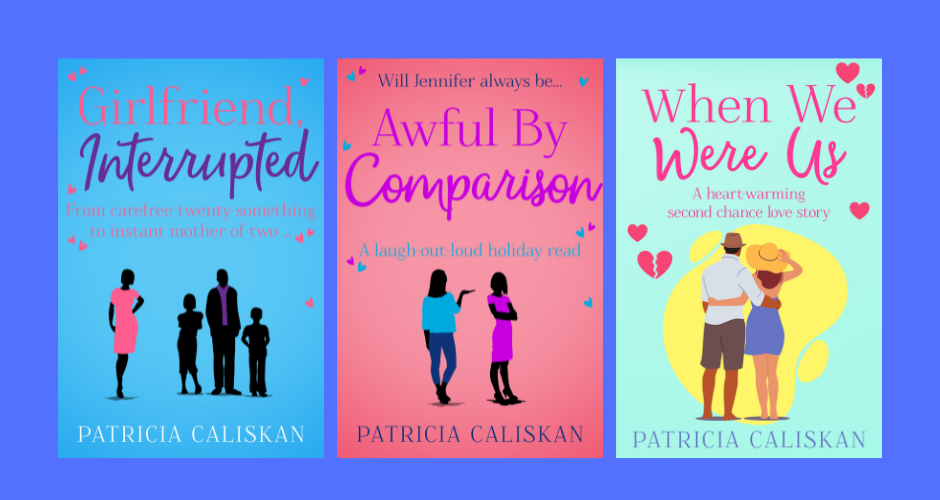
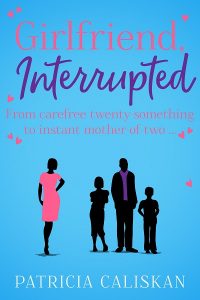
Visit Patricia’s author page or find out more about her second novel, Girlfriend, Interrupted. 

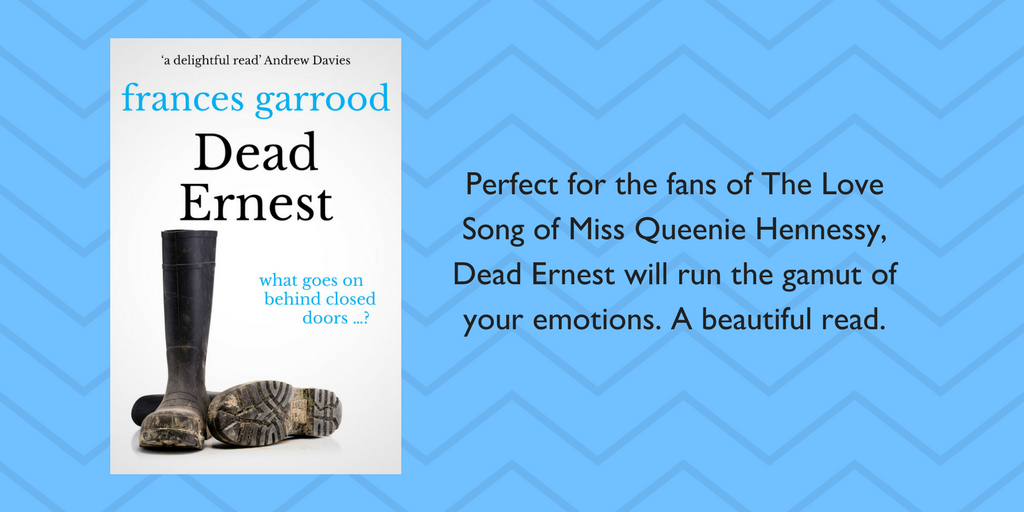
Excerpt from Dead Ernest

Prologue


BENTLEY Ernest, Husband of Annie and father of William (Billy) passed away suddenly on January 2nd 2004 aged 83.

Funeral January 10th at 12.30 p.m. at Great Mindon Crematorium. Family flowers only.


“What about beloved? Something like that?” Billy asked, scrutinising Annie’s crabbed handwriting.

“Beloved? Beloved what?”

“You know. Beloved husband, much-loved father. That sort of thing.”

“Did you love your father, Billy?”

“Of course. Well, I suppose so. Yes, of course I did.”

“Well then. We can put much-loved father.”

“And husband? What about husband?”

“No,” said Annie. “Not beloved husband. Not any sort of husband.”

“But Mum!” Billy looked hurt, as though even now he were taking his father’s part. “You must. What will people think?”

“It doesn’t matter what people think,” said Annie firmly. “I know.”


Chapter One


No one had expected Ernest to die, least of all Ernest. He prided himself on coming from tough, Yorkshire stock, and had often told Annie that he would easily outlive her. So, when he had his heart attack, Annie’s feelings were at first of surprise rather than anything else.

“Are you sure?” she asked the policewoman, who was making tea in the kitchen. (How odd that it was always the police who were sent to break bad news; almost as though dying in the street were an offence against the law). “Are you sure he’s dead?”

“Quite sure. I’m so sorry, dear.” The policewoman handed her the tea (much too sweet, and not hot enough) and put an arm around her shoulders. “It must be a terrible shock. Is there anyone you’d like us to contact?”

“Billy. My son Billy. You’ll need to contact him.”

Because, of course, Billy must be told. Strangely, Annie had rather wanted to keep the news to herself for a while; to taste it and think about it on her own before sharing it with anyone else. But Billy would think it odd if she didn’t tell him at once, and besides, there would be things that would need doing. Annie had only the vaguest idea of what those things were, but she was sure Billy would know how to deal with them. Billy was good at that sort of thing.

“How do you know it was a heart attack?” Annie asked. “How can they tell?”

“Well, they can’t tell. Not for certain. But that’s what it looks like. There’ll have to be a post-mortem, of course.”

“Ernest wouldn’t like that,” Annie said, remembering Ernest’s dislike of being touched and even greater dislike of anyone seeing him in a position of disadvantage. A post-mortem, she could see, was going to place him in a position of considerable disadvantage.

“It has to be done, dear. It’s the law. Because he didn’t die in hospital.” The policewoman poured herself a cup of tea, although Annie hadn’t invited her to have one. Death, it would seem, muddled up all the rules of normal behaviour.

Ernest would have hated dying in the street like that, with everyone watching. Dying in hospital would have been acceptable, with dignity and nurses and clean sheets. But then Annie might have had to sit with him while he was doing it, and she wasn’t sure she could have managed that. Perhaps, after all, it was a blessing that he had died in the street.

“Where was he?” she asked. “Where did Ernest die?”

“Outside the fish and chip shop.”

“Outside the fish and chip shop,” Annie repeated, surprised. It seemed such an odd place to die. She wondered what he had been doing there. The fish and chip shop was the wrong end of town for the barber’s, which was where Ernest was supposed to be, and he’d only just had his lunch, so he couldn’t have been hungry. But now she would never know. Nobody would ever know what Ernest was doing before he died outside the fish and chip shop.

Annie was aware of the policewoman watching her, waiting to see how she would behave. “What do people usually do?” she asked, suddenly interested.

“Do?” The policewoman looked bemused.

“Yes. When someone dies. You must see a lot of them. When you tell them, what do they do?”

“Everyone’s different of course,” said the policewoman carefully. “They cry, of course, and some people even scream. And sometimes they’re just shocked and quiet. Trying to understand what’s happened.”

“And what am I?”

“What are you?” The policewoman’s teacup paused, trembling, halfway to her lips.

“Yes. How would you say I was taking it?”

“I would say,” the teacup returned firmly to its saucer, “I would say that you were being very brave. Perhaps it hasn’t quite sunk in yet,” she added gently. “It’s a terrible shock for you.”

Was it? Was it really a terrible shock? A surprise, certainly, but a shock? Annie wished the policewoman would go away and let her think. She needed time to sort herself out; to get to grips with what had happened. Ernest was dead, and she didn’t feel anything much at all. Not sad, not happy, not anything. Was she normal? Was it okay to feel like this?

“Ernest is dead.” She tried the words to see what they felt like. “Ernest — is — dead. It sounds so strange.” She paused. “He had this little joke he used to tell: ‘Once upon a time there were two worms fighting in dead Ernest.’ I never thought it was funny, and Billy didn’t like it, but it always made Ernest laugh.”

The policewoman smiled.

“Did he have a sense of humour then, your Ernest?”

“Oh, I wouldn’t say that. Ernest only had the two jokes, and I’ve forgotten the other one.”

“Would you like another cup of tea?” the policewoman asked.

“No thank you. I think I’d like you to go now,” Annie said.

“But we can’t leave you here on your own. Not at a time like this. Is there a neighbour who might sit with you? Just until your son gets here.”

Annie thought of her neighbours. Of odd, secretive Mr Adams, a tiny man of indeterminate age who lived alone and who hoarded things. Annie had only once been inside his house and had been left with an impression of disturbing smells and what appeared to be wall-to-wall jumble and bric-a-brac. The piles were neat and appeared to be in some kind of order, but the impression was not welcoming. On the other side lived a young couple, with a frog-faced toddler who screamed a lot. Annie certainly didn’t want to involve them, and she quite definitely didn’t need the toddler.

“I don’t really have much to do with the neighbours.” She stood up. “I want to be by myself now. I don’t need anyone else.”

After the policewoman had gone, Annie locked and bolted the door. Then, because it was getting dark, she drew the curtains and turned on the gas fire. Ernest would be home any time now, and wanting his tea. Ernest was very particular about his tea. He always had it at six o’clock on the dot, the same time as he used to have his meal when he got home from work. Ernest liked routine and order, and because it was easier to do what Ernest wanted, Annie had always gone along with it. Yes. She must get Ernest’s tea ready. A nice piece of fish (it was Friday) and some mashed potatoes and cabbage. Annie thought it was odd to have cabbage with fish, but Ernest had read a book about green vegetables being particularly good for you, and recently he had insisted on having them with everything.

But Ernest is dead, she realised again. Ernest is dead. He isn’t coming home for his tea. The green-vegetable book came too late to save him. He won’t be coming home at all; not ever. His heavy tread on the gravel (a slight limp because of his bad hip), his key in the door, his voice calling her name as he hung up his coat and cap. None of these things would ever happen again. The coat and the cap were — where? At the hospital, presumably. And Ernest himself; where exactly was he? Lying somewhere, cold, waiting for the post-mortem. Annie shivered. At least she wouldn’t have to go and identify him. Billy would see to that. She couldn’t understand why anyone had to go and identify Ernest, when he’d been carrying his pension book.
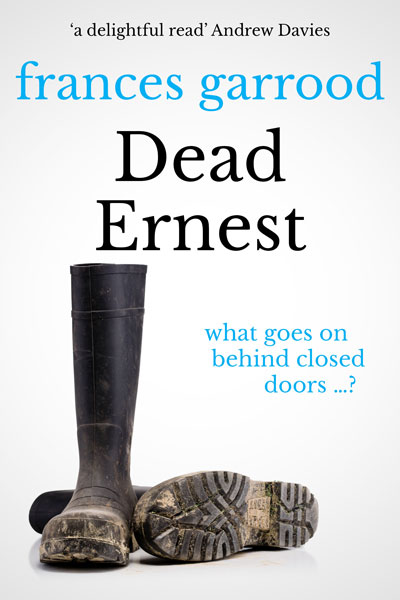
 

Get your copy of Dead Ernest now!

How I Wrote a Novel by Cathy Bussey


This year I achieved a lifelong ambition, I wrote a novel. 

I’ve wanted to write a novel since I was about six years old. I have multiple unfinished drafts saved on this computer, on previous computers, on computers lost to time, on computers that probably predate time (BBC Micro, anybody?). Until this year, I never managed to finish one.

I would begin and I would know how it ended. I could never do the middle bit, connecting the dots, getting the characters from A to B. Slowly my interest and motivation would slip away, or I would start afresh, try again only to find the same cycle repeating itself.

If you search online for ‘how to write a novel’ you’ll come across many well-thought out blogs and articles and tips and exercises all designed to help.

Most of them involve things like, planning and writing out the story structure, getting the plot outline completed, developing your characters, going through various creative exercises on paper (if your character went out for lunch, what would they order?). It’s all highly organised and linear.

I did none of the above. The process of writing my novel was as far removed from a planned and organised creative exercise as it’s possible to be. It was completely unlinear.

I went through cycles of intense creativity and productivity, and these would slowly tail off and I would need to rest, get a few early nights, stop trying to force it and wait for the inspiration to return, trusting that it would – and it did. Every time.

It became clear to me that if I kept trusting the process – trusting myself – I was going to finish this book. I put all thoughts of publication out of my mind, stopped worrying about whether my agent would want to read it and whether she would consider it worthy of submission. I didn’t have to encourage myself or ‘fake it til I made it’.

I genuinely wanted to finish the book, to finish the book. That was the only goal. I retained of course an inkling that this could become something big for me if I did finish it and if my agent liked it and if somebody picked it up – but at this stage that was too many ‘ifs’ and all were out of my control.

The only thing in my control was whether or not I would finish the book, so that became the goal, and that’s what I did.

Throughout the process there were standout moments. Finishing, getting good feedback from my agent, getting a deal – they were all huge. But the real standout moment happened much earlier. It happened after those awkward, difficult times when I sat staring at a blank screen knowing what I had to write and feeling unable to write it, waiting to be ready to break through the block, refusing to shut down my computer and let the novel slip away as all its predecessors have done, because I couldn’t find the courage to do what I had to do.

The standout moment was when I realised I was going to finish. That I was not going to stop and I was going to do whatever it took to finish the book. Not in a half-assed ‘well I’ll just put up with some parts that don’t really work for me just to get it done’, but finish truly, with the knowledge deep inside me that I’d done the absolute best I could. I hadn’t shirked or taken the easy way out.

That was when I realised that the hard part – the middle bit, the connecting chapters, keeping the story going, retaining the flow – wasn’t hard at all. In fact it was the easiest part of all.

Write About What You Know by Keith Moray

I began my writing career many moons ago when I was studying medicine at the University of Dundee in Scotland. At that time the city was famous for the ‘three J’s’ of Jute, Jam and Journalism. Journalism referred to the publishing firm of D C Thomson, which produced the famous Beano comic and countless other publications.

I submitted a few children’s stories to the People’s Friend, a well known family magazine that is still going strong today. To my surprise and delight they were accepted and I was soon regularly writing stories for the Children’s Corner on the inside back page. 

Then once I had graduated I moved to Hull. While I was working in cardiology I learned that the Kingston-upon-Hull telephone exchange had a ‘dial-a-bedtime’ story service. For the cost of a phone call parents could have a short three-minute bedtime story told to their youngsters over the phone. My stories were soon being recorded and heard by youngsters all over the city.

Inevitably, I longed to have my name on the spine of an actual book. It was then that I came across that old adage, ‘write about what you know.’ It is one of the nuggets of writing wisdom, except it is often misinterpreted.
In my case as a medical doctor I assumed that it mean that I should write a medical thriller or maybe a medical romance. My problem was that I worked in medicine and didn’t want to spend my thinking and writing time in medicine as well. So I had several false starts on various non-medical novels, and like most writers I have a drawer full of opening chapters for several books that never saw the light.

Then it dawned on me. It didn’t mean that I had to write exclusively about a medical world, but that I should use my medical knowledge to really make a character stand out and be believable. Or I should be able to drip in details about drugs, operations, or snippets of medical history, to give the work authenticity. And that is just what I did in my first western novel Raw Deal at Pasco Springs. I did the same with several other westerns before turning to crime!

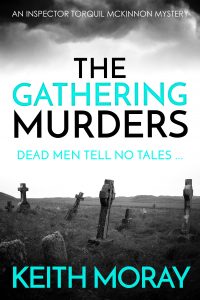
I began by creating West Uist, an island in the Outer Hebrides of Scotland and peopled it with believable characters, including the local doctor, who doubles as a police surgeon. On the island my detective, Inspector Torquil McKinnon can solve crimes using his brains rather than depending upon forensic science and DNA. Yet in The Gathering Murders, the first novel in the series there is still plenty of medicine peppering the plot.

Crossing one genre gives you the confidence to do it again. The bridge that I use is medicine. I am able to create believable medical situations. For example, I write collaborative western novels with some other writers in the USA. We have created a town called Wolf Creek and each collaborator writes one or two chapters per novel from the viewpoint of his or her character.

My character is Dr Logan Munro the town doctor, who extracts bullets, sets broken bones and delivers babies. Similarly, I use my knowledge of the history of medicine in my historical novels, The Pardoner’s Crime and The Fool’s Folly, which are set in the thirteenth and fourteenth centuries.

Essentially, my message is that you don’t have to set your story in your relevant world. What you can do is drop in a character that shows your expertise. That is my interpretation of the axiom ‘write about what you know.’


Visit Keith’s author page to find out more about him or check out his website or follow him on Facebook or Twitter.