Remembering Jeremy Howard-Williams

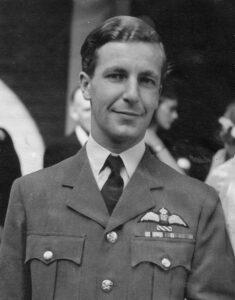
Jeremy Howard-Williams DFC (1922–1995), author of Night Intruder, had a distinguished career in the RAF as a night-fighter pilot during the Second World War and was awarded the Distinguished Flying Cross for gallantry. To commemorate the eightieth anniversary of the end of the Second World War, Jeremy’s son, Anthony Inglis Howard-Williams, reflects on the arrival of peace in 1945 and how it influenced his father’s life.

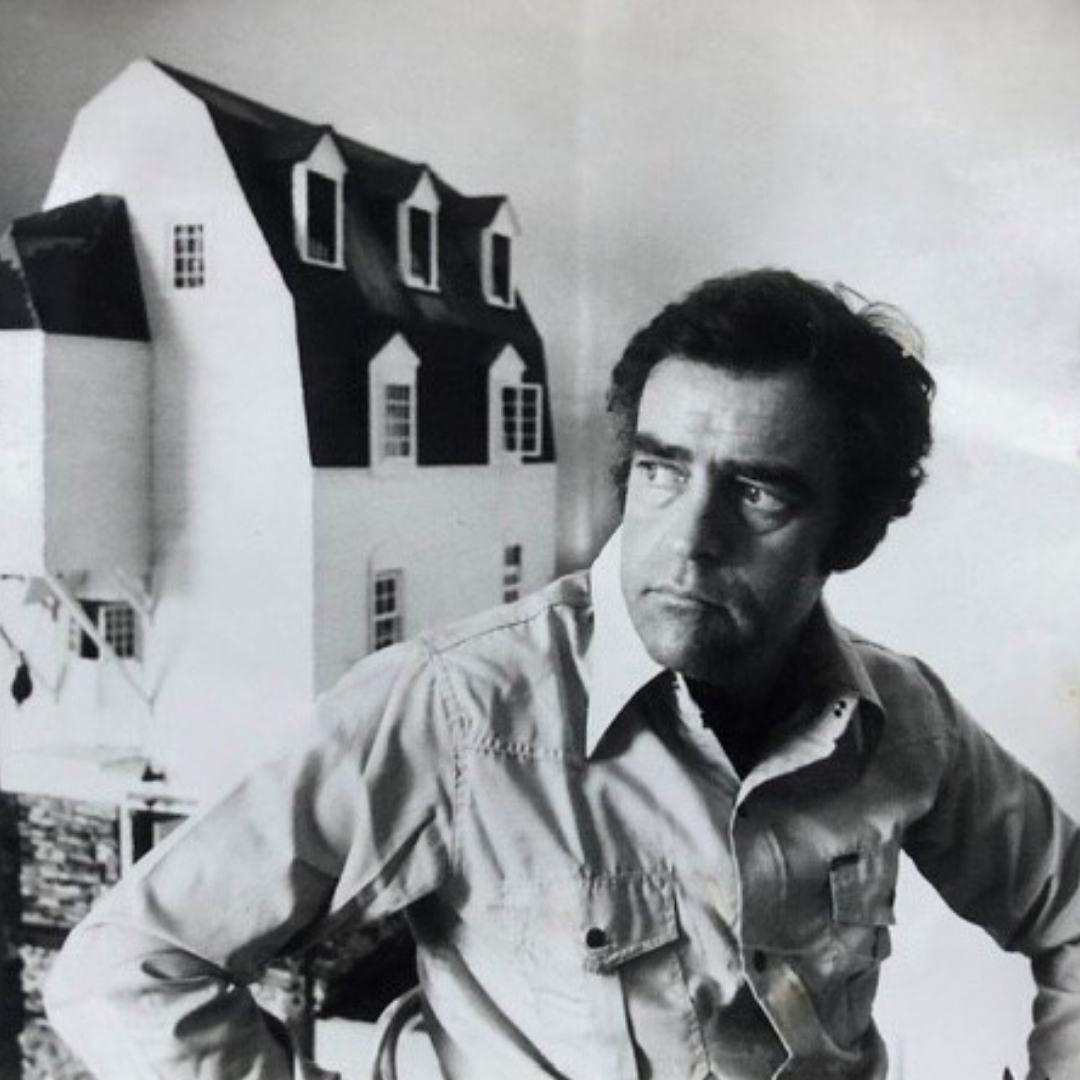
Jeremy Howard-Williams warming up the engines of a clipped wing Spitfire

When peace came to Europe in May 1945, Flight Lieutenant Jeremy Howard-Williams DFC was stationed at HQ, 11 Group Uxbridge. Three days before Germany’s unconditional surrender, a party was held to celebrate peace. Jeremy and his brother Peter did so by marching a guest — Flight Lieutenant Andrew from RAF Intelligence — between them up and down an anteroom. The junior flight lieutenant just happened to have been their pre-war boarding school housemaster, and the brothers had found it too good an opportunity to miss. When, years later, he was asked how the lieutenant had taken the ribbing, Jeremy replied, “with remarkable good humour!”

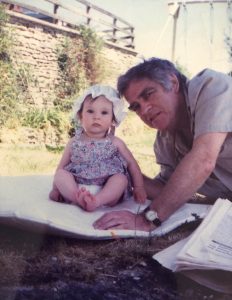
Jeremy at his wedding in 1951

Like so many in 1945, Jeremy was headed for an uncertain future. With peace  came the pressing question: what happens now? For most, life outside of the  forces beckoned. With millions demobilising, the assimilation of those who had been at war back into civilian society became one of the new post-war government’s biggest challenges. For those who did not want to leave the forces came a different challenge. With Jeremy’s father a retired RAF pilot, Peter a Battle of Britain day-fighter pilot and Jeremy a night-fighter pilot with the Fighter Interception Unit — an elite force at the forefront of the RAF’s early experiments with radar equipment — both brothers understandably wished to remain serving.

With the Royal Air Force downsizing, deployment meant less flying — not a very exciting prospect for a twenty-three-year-old war veteran. Jeremy had specifically joined the RAF in order to fly when the Nazis had tried to seize control of Western Europe. However, in the new modern era of the jet engine, aircraft were flying ever faster and higher. Now that was exciting!

In the end, both brothers remained in the RAF. Jeremy was first posted in an admin job to Singapore during the Malayan Emergency, where he met his wife, uniting two distinguished RAF families. He later worked as an assistant air attaché in the Paris and Berlin embassies. He did fly during these postings, but mainly a desk. He resigned in 1957.

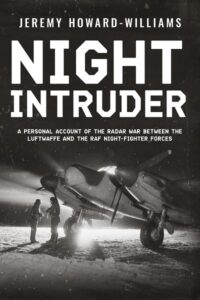
Ultimately, Jeremy’s parents divorced and his father remarried into the Ratsey family, where Jeremy became sales manager for the famous sail-making firm Ratsey & Lapthorn in Cowes on the Isle of Wight. After leaving the company, he wrote many authoritative books on sailing, as well as Night Intruder, republished by Sapere Books, a personal account of his wartime service as a pilot and the radar war between the RAF and Luftwaffe night-fighter forces.

Sapere Books Sign New Historical Mystery Series by Cheryl Sawyer

We are thrilled to announce that we have signed a new historical mystery series set in eighteenth-century France by Cheryl Sawyer.

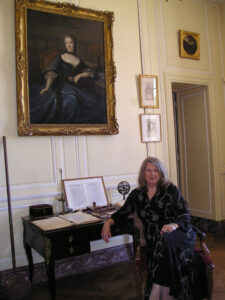
Cheryl Sawyer at the  Château de Breteuil with a contemporary portrait of Émilie du Châtelet

In Cheryl’s words:

A cavalier of the Maréchaussée, the French military police, in the early 1700s

“It’s 1735 in the remote Champagne province and a cavalier in France’s mounted police force must investigate a murder at the chateau of Cirey, where the scandalous Marquise du Châtelet is sheltering Voltaire. How could a lower-class gendarme solve major crime in a society where aristocrats held all the power?

“That very question sprang to mind when I visited beautiful, secluded Cirey during my research into  Émilie du Châtelet, a brilliant physicist of the Enlightenment. A lone military policeman would struggle to do his duty in this privileged locale, even if Voltaire himself were a likely suspect.

“That is how Victor Constant and his first challenging investigation came to life. I had eight historical novels published in several languages, but this was my first crime story and I sought seasoned opinion. Peter Lovesey wrote to me: ‘Marvellous tensions between the great free-thinker and Victor Constant,  the book’s hero. The story dazzles and beguiles and the setting is pitch-perfect.’ The novel went on to be longlisted for awards by the Historical Novel Society and the American Library in Paris, and readers have since called Victor ‘the Jack Reacher of the eighteenth century’.

“I am delighted that Sapere Books have chosen Murder at Cirey to lead this series and thrilled that Victor Constant persists in battling injustice within the rigid society of the Champagne. The new titles are Death in Champagne and Murder on High. A huge thank you to the Sapere team for launching this adventurous series!”

www.cherylsawyer.com

Congratulations to David Field!

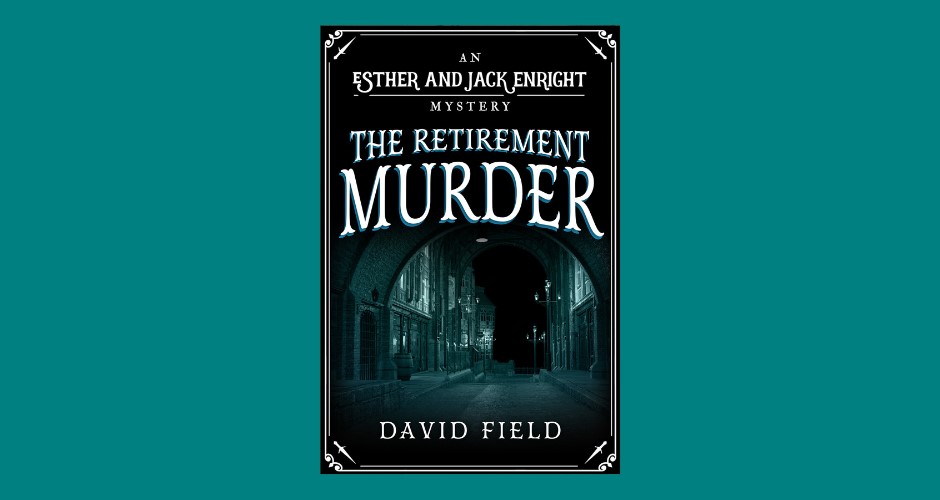
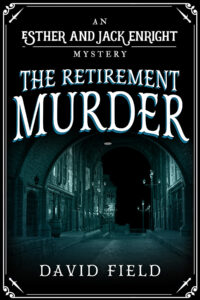
Congratulations to David Field, whose twisty Victorian thriller, The Retirement Murder, is out now!

The Retirement Murder is the ninth instalment in the Esther and Jack Enright Mystery Series – a traditional British detective series set in Victorian London and packed full of suspense.

London, 1898

The time has finally come for Percy Enright to retire from Scotland Yard. His nephew, Jack, is sad to lose a partner in the force, but Jack’s wife Esther is glad Percy won’t be getting her husband into any further scrapes.

It seems Esther’s relief might be short lived, though, when a senior officer collapses at Percy’s farewell ceremony.

It soon becomes clear that the officer was poisoned, and Percy delays retirement to help Jack track down the culprit.

It’s a daunting task that involves trawling through all the murdered officer’s recent cases in the search for someone who may still bear him a grudge.

But when it becomes clear the dead man may not have been the intended target, the investigation suddenly turns in a new direction.

Why are the police being targeted? Can Percy make one final arrest before he retires?

Or will the murderer outwit the Enrights in their latest case…?

Sapere Books Sign Victorian Mystery Series by Keith Moray

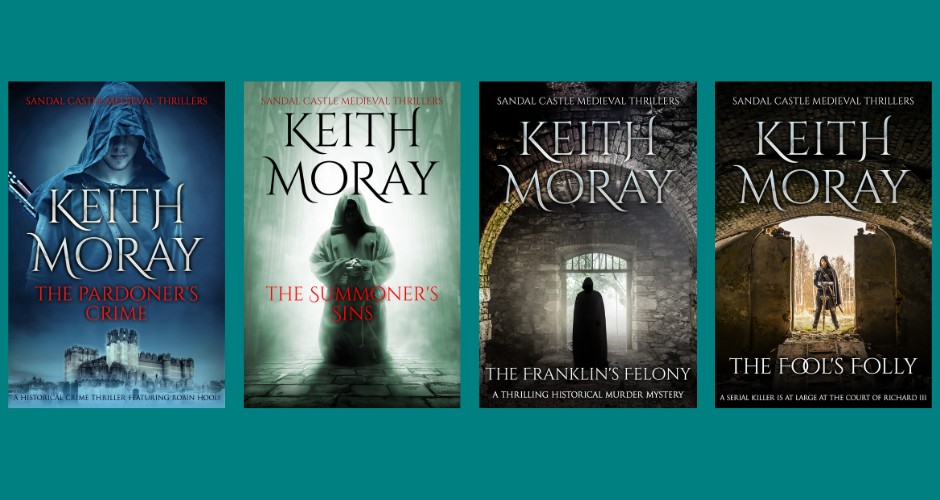
Following the success of his many historical series, including the Sandal Castle Medieval Thrillers and Inspector Torquil McKinnon Mystery Series, we are delighted to announce that we have signed a new supernatural series set in Victorian London by Keith Moray.

In Keith’s words:

“The first book in the series is set in London in 1854. Jack Moon is a foundling, brought up in an orphanage and then a workhouse, where he and his best friend Danny are subject to regular beatings. Together they escape, but when Danny dies in tragic circumstances, Jack secretly buries his friend in a cemetery at night.

“Alone and living in a deserted and rat-infested warehouse, Jack starts seeing Danny’s ghost, who warns him that someone is out to kill him and worse, the girl he loves, too. This is Victorian London, with its criminal underworld, body-snatchers, phrenologists, séances, ghosts and ghouls.

“I am delighted to be writing another historical series with Sapere Books, who have permitted me to set my stories in a variety of times and places, from ancient Egypt and medieval England to a contemporary Scottish island. My new mystery series delves into the occult and the psyche of the Victorian mind. It is murky, sinister and just a little bit scary.

“And one of the main characters is a ghost.”

The Night Angels is Published Today

Congratulations to D. R. Bailey, whose thrilling aviation novel, The Night Angels, is published today!

The Night Angels is the second novel in the Secret Sirens Aviation Thrillers Series, heart-pounding Second World War escapades with strong female leads.

1943

Sisters Anna and Jennifer Nightingale are recruits in the top-secret Siren Squadron: a group of women trained in the RAF to fight against the enemy.

The Sirens are tasked with flying a series of night stealth missions as part of Operation Scorpion. The first mission is successful, and on returning to base they are told that new members will be joining their ranks.

Hopeful that this means the all-female squadron has been deemed a success, the sisters welcome the new recruits and start training them on the Mosquitos.

They head out on another night mission. But this time not everyone returns.

With a downed plane found empty off the English coast, fears grow that one of the Sirens hasn’t survived.

But the show must go on. And Anna Nightingale has to destroy the crashed plane so the Sirens can remain classified.

As their night missions continue, increased skirmishes with enemy pilots suggest someone may be leaking information to the Germans.

Have the Sirens been compromised? Can they find the mole?

Or will these daring female agents be forced out of the war…?

A Glittering Peril is Published Today

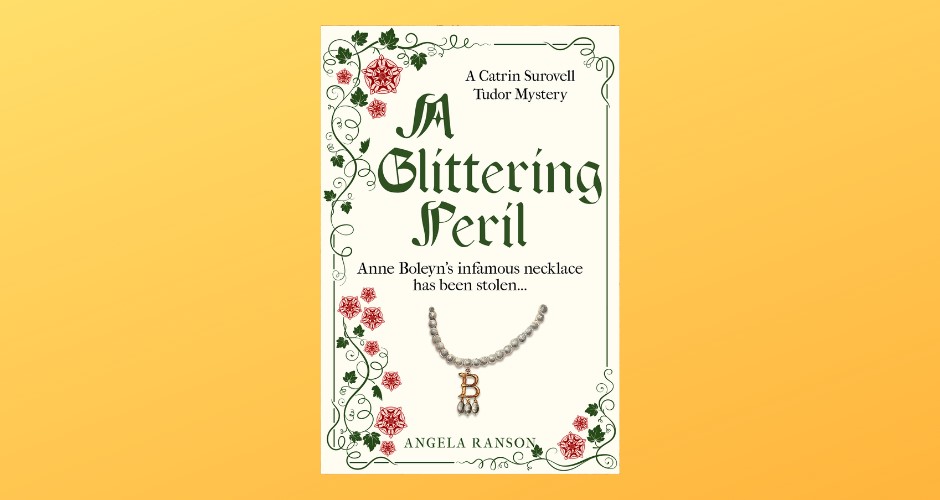
Congratulations to Angela Ranson, whose gripping Tudor mystery, A Glittering Peril, is out now!

A Glittering Peril is the third book in the Catrin Surovell Tudor Mysteries Series: exciting historical thrillers set at the court of Elizabeth I.

1561

Every summer, Queen Elizabeth takes a journey around her kingdom. It is a time of revels and celebration, full of pleasure and extravagance.

But in July 1561, the trip begins badly when the corpse of an unknown man is left in her path.

The nervous queen asks Catrin Surovell, her trusted favourite lady-in-waiting, to find out who is trying to sabotage her journey.

But Catrin soon discovers that the queen’s nervousness stems from something greater than the mysterious death.

Someone has been leaving reminders of the queen’s mother, Anne Boleyn, in strange places. A woman appears in the distance who looks like her; the scent of Anne’s perfume is left in the queen’s chamber, and Anne’s favourite French ballads are sung by a disembodied voice as the queen is travelling.

Worst of all, Anne Boleyn’s famous gold-and-pearl necklace with teardrop pearls hanging from a letter ‘B’ is taken from the queen’s bedchamber. The queen is devastated by the loss, for the necklace was one of very few mementos she had of her mother.

The queen begins to suspect one of her courtiers, so Catrin visits his home to conduct a secret investigation into his actions. And that’s when she discovers this is the most difficult mystery she has ever had to solve.

Is Queen Elizabeth being haunted by her ill-fated mother? Or is someone trying to drive her insane?

And can Catrin find the connection between the missing jewels and the unknown corpse…?

Sapere Books Sign New Anne Boleyn Series by Rozsa Gaston

We are delighted to announce that we have signed the ‘Anne Boleyn Chronicles’ by Rozsa Gaston.

Rozsa is the author of the Anne of Brittany series — an enthralling historical series set during the French Renaissance.

In Rozsa’s words:

“My new series tells the tale of Anne Boleyn’s years abroad before joining Henry VIII’s Tudor court. Set in the years 1513–1522, the story begins in the Netherlands at Margaret of Austria’s Burgundian-Habsburg imperial court.

“We see Anne grow from girlhood to womanhood as one of Margaret’s eighteen maids of honour. Facing the challenges of cliques and envy, she navigates court life by learning to fit in even as she longs to stand out.

“We then follow Anne to France, where she serves first Mary Tudor, then French queen, Claude of France, and finally, the French king’s sister, Marguerite d’Angoulême.

“After six years in France, Anne attends the summit of the Field of the Cloth of Gold where she realises the advantages that might await her at the Tudor court as an Englishwoman with French sensibilities. The series culminates in Anne’s return to England in the first months of 1522, fully armed with Continental flair, Reformist ideals, and a drive for self-determination fuelled by the new learning of Renaissance humanism.

“I am delighted to work with Sapere Books, with their strong commitment to historical fiction and historical biography. The team comes highly recommended for their personal touch, and I look forward to working with them to bring to readers Anne Boleyn’s formative years in a series that both informs and entertains.”

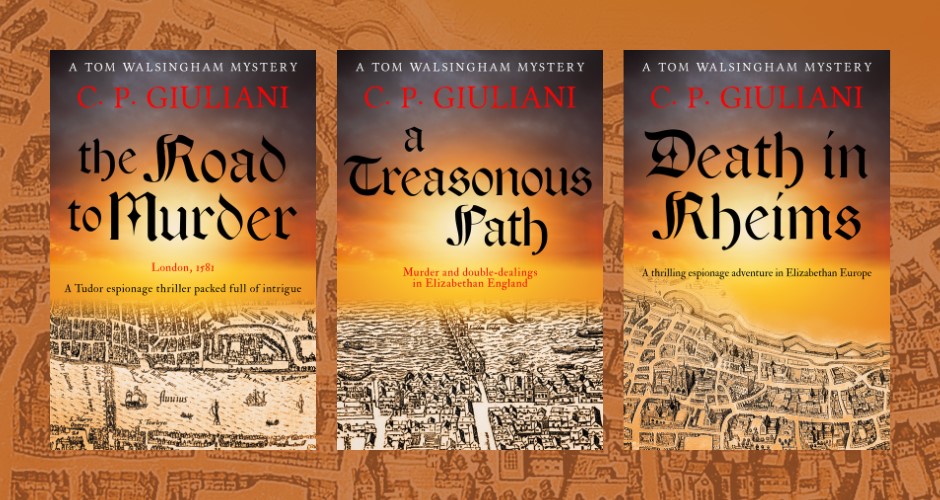
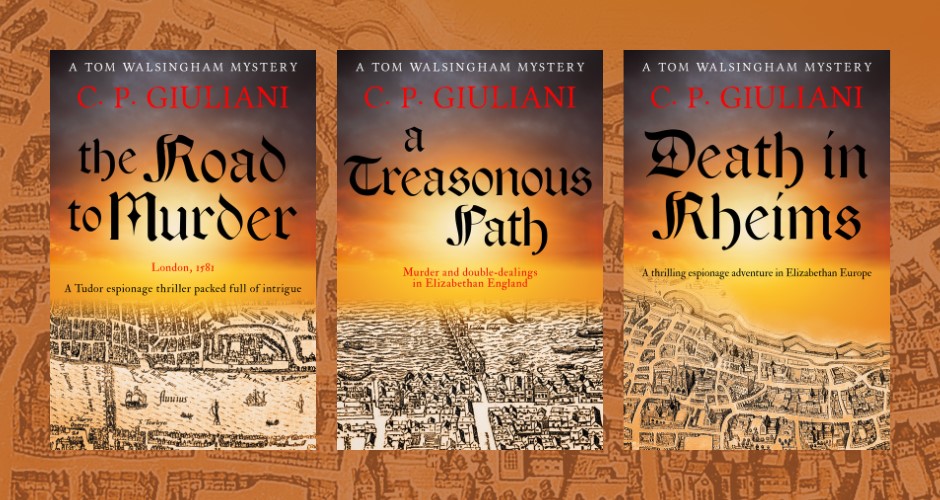
Sapere Books Sign Three New Tom Walsingham Titles by C.P. Giuliani

We are thrilled to announce that we have signed three new instalments in the Tom Walsingham Mysteries Series by C.P. Giuliani.

The series follows the espionage adventures of Tom Walsingham during the Elizabethan era in Tudor England.

In C.P. Giuliani’s words:

“Tom Walsingham sleuths on! I’m thrilled to have signed up three more adventures featuring my Elizabethan detective and spy with Sapere Books. I have great plans for Tom. He will be tasked with recovering a misplaced foreign ambassador — whose mission could change the course of Anglo-Spanish relations; he’ll become involved in a personal investigation when death strikes at his family home, Scadbury Manor; and poor Tom will find himself in prison when his money troubles and Sir Francis Walsingham’s plans collide. Plenty of mysteries and dangers lie ahead for Tom!

“I’m really happy to be working with Sapere, whose welcoming and stimulating atmosphere and competent, friendly and helpful team have made (and are making) my publishing journey a truly lovely adventure.”

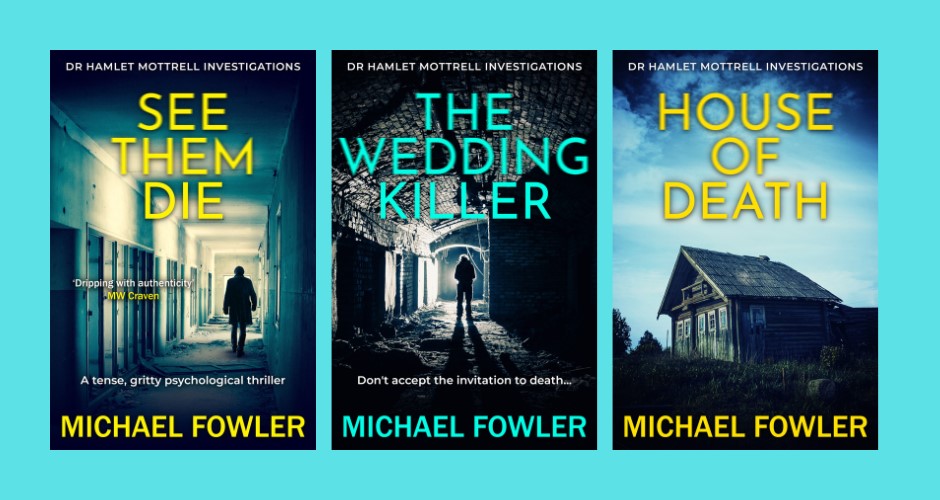
Sapere Books Sign New Scotland Yard Series by Michael Fowler

Following the success of his DS Hunter Kerr Investigations and Dr Hamlet Mottrell Investigations, we are delighted to announce that we have signed a new historical police procedural series by Michael Fowler.

In Michael’s words:

“My new series features Detective Winter Cooper of Scotland Yard and is set in the 1950s.

“Detective Cooper’s first case is based upon a real event, the Eastcastle Street robbery — Britain’s biggest cash-in-transit hold-up at the time. In May 1952, robbers used two cars to sandwich a Post Office van in London and escaped with mailbags containing £287,000 (estimated to be worth approximately £8,500,000 today). It was a case that shocked the nation and embarrassed the Government, with Prime Minister Winston Churchill demanding daily updates from the Police Commissioner. Despite the involvement of over a thousand police officers, and the offer of a £25,000 reward, no one was ever caught.

“This is my take on that case, and while it is a deviation from my contemporary novels, I hope readers will embrace Winter Cooper with the same enthusiasm that I have put into creating him and this new series.

“Working with Sapere Books again was an easy decision to make. Over the past five years, they have given me so much support as a writer and I cannot thank them enough. When I ran the idea of this new series past them, their backing was unflinching.”

How I Write by Valerie Holmes

In this behind-the-scenes blog series, Sapere Books authors offer an intriguing insight into how, where and why they write.

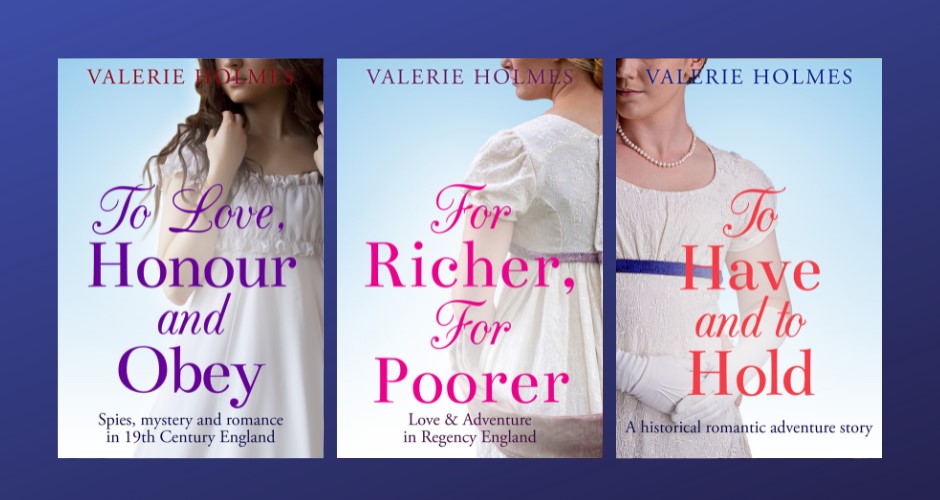
Today, we are delighted to spotlight Valerie Holmes, author of the Yorkshire Saga Series.

Valerie’s study.

Staring out of my study window I see a brick wall. Not a theoretical one that means I have writer’s block, which I do not actually believe in as a professional writer, but a literal brick wall.

This may not appear to be the most inspirational of vistas, but I am fine with it.

Inside my study I am surrounded by my writing workspace; my research books, my trusty printer and personal items that make me smile.

Centre stage is my lovely laptop with its two screens. One is usually displaying research sites and email tabs, the other Word documents — my current WIP.

Castleton Walk, Commondale.

The brick wall rarely gets a glance because, once my laptop is on, I dive into my inner vistas. The beautiful scenery of North Yorkshire’s open moorland and coastline with its sweeping bays and rugged headlands. These are the settings against which my romantic adventures play out. Hence the Yorkshire Saga Series and my many novellas.

It is a world I am familiar with because I grew up in a bay town on the northeast coast and have happy memories of running with my dog along the open expanses of fine sandy beach, climbing the dunes which were covered with needle-sharp marram grass.

Gisborough Priory.

The area is steeped in history, from the old abbeys and market towns to the beautiful city of York. I still return regularly to explore the area: the monk’s trods that cross the moorland, the fishermen’s cottages that line the harbours and the old inns of the bay towns such as Whitby, Staithes and Robin Hood’s Bay. Then there are the manor houses and halls, each with a story to tell — inspiration for my next adventure is found in all. The darker era of smuggling provides further scope to add drama and menace.

The beauty of having a laptop is that it is mobile. I have written in cafés, on trains, on picnic tables by the sea, and in hotels — but the real work, the editing, polishing and research, happens at my desk, ignoring the blank brick wall.

I have a flexible routine, writing every day. Life happens, events happen, but the one thing that is constant is the desire to write, which never goes away — or not yet — and I hope never will so long as readers enjoy my adventures.

What better motivation is there for an author to continue to write?

My Neighbours the Celts and Romans by Alistair Forrest

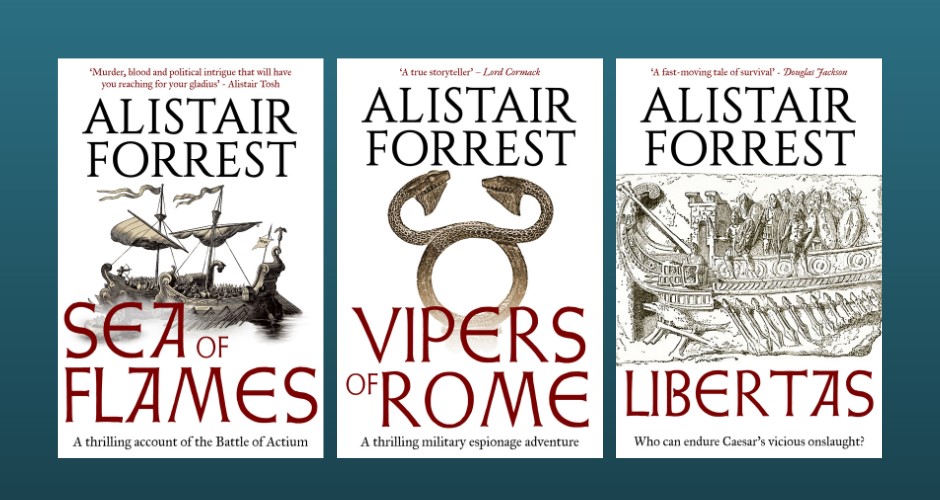
Alistair Forrest is the author of the action-packed Roman adventures Sea of Flames, Libertas and Vipers of Rome. He is currently working on a new series, The Britannia Conspiracy, set in the period during Caesar’s invasion of Gaul.

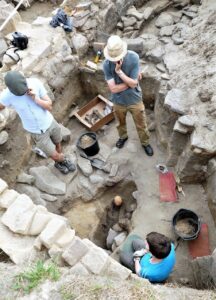
A 3,000-year-old skeleton. Photo: David Nash

Every year I climb into old jeans, don an Indiana Jones-style hat, and dash a hundred yards down the road to assist in an archaeological dig.

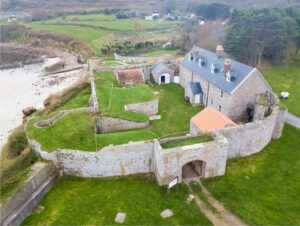
I live on the island of Alderney, which just happens to have an ancient Iron Age settlement, on top of which is a Roman village. Next to this is one of Europe’s best-preserved Roman forts, which was built to protect trade routes between Europe and Britain.

I’ve got to know both of the lead archaeologists — Dr Phil de Jersey and Dr Jason Monaghan — and confess that I’d like to know what they know, as long as it fits my ideas for a new historical fiction series.

So far I’ve struck lucky.

We know for sure that Iron Age folk lived and loved on this tiny island a few miles off the Normandy coast. We’ve found the skeletons, complete with bronze torcs and jewellery.

Our team, Dig Alderney, is bent (both literally and figuratively) on scraping away aeons of history to find the story behind these settlements. And at every layer we have been able to confirm that the Romans first came to this Channel Island in around 56 or 55BC when Julius Caesar was conquering Gaul and had set his sights on Britain, just across the English Channel.

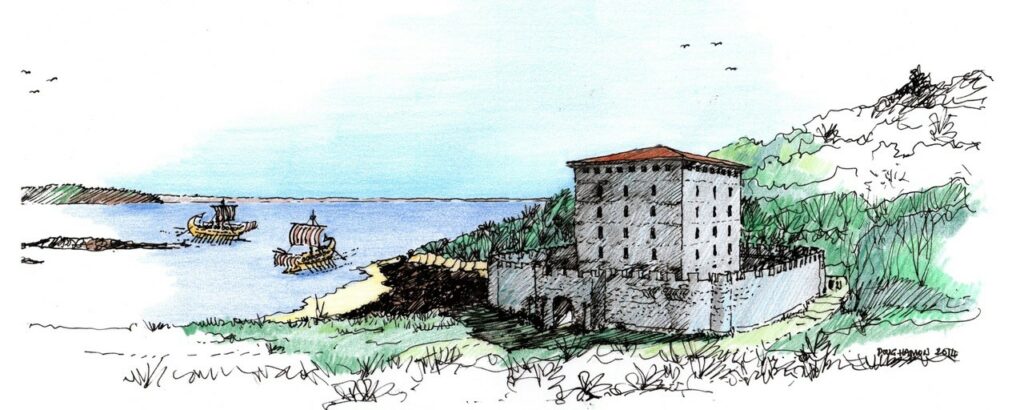
Artist Doug Hamon’s impression of the Roman fort.

Later, the Romans built a fort which has stood intact since the 4th century. Sadly, the huge central tower has long gone, its stonework no doubt used  to build medieval houses in the vicinity, and part of the south wall tumbled onto my local beach who knows when, where its parts can still be seen to this day.

The area is crowded with archaeological features. Some relate to German activity (Alderney was occupied during the Second World War) or Victorian fortifications inside and around the fort. Modern roads partly conceal what we know is an Iron Age cemetery discovered in 2019.

Two skeletons were discovered back then. That’s when I got involved after arriving on the island to write, and I was given backroom jobs like pot-washing, shovelling and making sandwiches. Just to be there was a privilege!

This is now a long-term project to learn more about the Roman and Iron Age settlement on Longis Common, a few yards from my home. How extensive is the Iron Age cemetery, and where was the village in which these people lived?

We hope to discover how far the Roman buildings extend, and if this was the site of an earlier Roman fort that predated the 4th century one, or the vicus municipal administration settlement that grew up close to a fort, or a purely civilian village?

Of course, I already know the answers because they’re in my head, as you would expect from an adventurous historical fiction author.

Alderney’s Roman fort today.      Photo: Alan Perks

I know I’m on to a winner. Take this exuberant comment by Dr Monaghan: “Finds include pottery, metalwork, glass, building materials, human bones and food remains including animal bones. The finds need to uncover more about the people who lived and were buried there. We want to learn about their lifestyle and how ancient Alderney was connected to the wider world.”

I’d call it making the facts fit a good story, and I’m already well into book two of The Britannia Conspiracy series. This series begins with coded messages from Julius Caesar to attend a secret conference on this island to plan his expeditions to Britain.

Should it be a full-on invasion, or a trade expedition? Either way, he’s in for some surprises, especially as far as the local Celts are concerned!


How I Write by Daniel Colter

In this behind-the-scenes blog series, Sapere Books authors offer an intriguing insight into how, where and why they write.

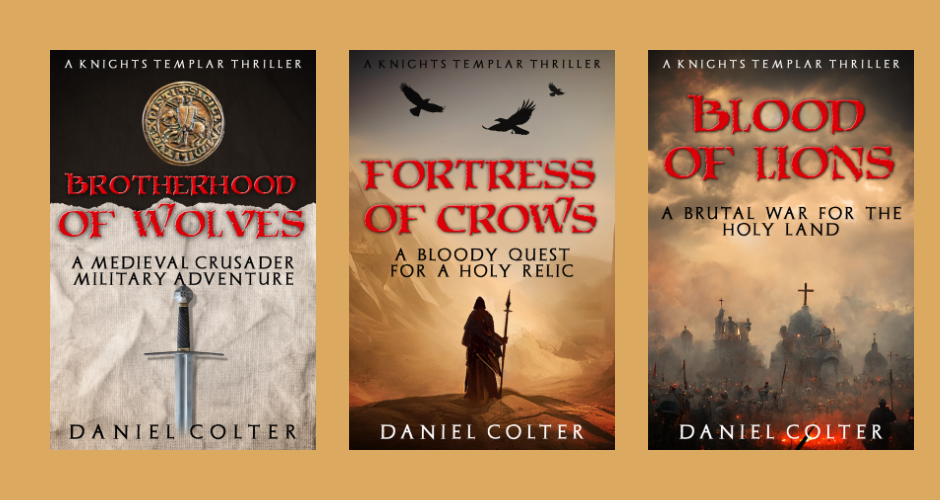
Today, we are delighted to spotlight Daniel Colter, author of the Knights Templar Thriller Series.

Writers are a strange breed.

The view from Daniel’s window

We invent friends in our heads, decide how they speak, what they wear, where they go, then spend countless hours conversing with them. No two writers share the same head-friends, oddly, despite running in the same  social circles. Neither do any two writers develop a story the same way.

Specific routines keep us on track, or don’t (looking at you, internet), and each work proceeds at its own pace. Most writers are one of two species: a plotter or a pantser. A plotter maps out each scene, chapter, and verse before putting fingers to keyboard. Pantsers fly by the seat of their pants, beginning with an idea, then writing towards a vaguely defined ending. I mapped out my first novel, Brotherhood of Wolves, but tossed the map aside by chapter 3. I found pantsing more rewarding, and still do, because much of the fun (and frustration) is writing myself into a corner and finding a path out.

My novels are historical fiction, where history provides setting, culture, and place. History can also frame the plot. Story is given precedent over history, however, because the goal is to entertain, not to educate. One or more characters are historical persons and the fictional protagonist lives within their orbit. Historical fiction should stay true to history and the fiction takes flight where history grows murky — which it usually does, especially the further back in time one travels. The murk is where the fun begins, in my opinion, and its where the what if fleshes out the story, where the pantser finds out what happens to his head-friends.

Writers are also strange creatures.

Some writers have habits, like a dog that circles exactly three and a half times before lying down, and these rituals are intended to fuel creativity. Isabel Allende started her first novel on January 8, 1981, and that day became a ceremonial start date for all her subsequent works. The poet Friedrich Schiller kept rotten apples in his desk and, when his mind needed a jolt, he would give one a sniff.

My writing rituals are more mundane and less … smelly. I start with two (not one, not three) cups of coffee. I keep a stuffie of Curious George on my desk, in honour of Curious George Rides a Bike, the first book I read cover-to-cover. I say hello to George each morning.

Ritual also comes from my father. He was a painter and writer and used a second-hand desk as his art space. I acquired that desk, set to rehabbing it, but foolishly sanded the top to expose wood veneer over composite. I left his dried paint splashes along the edges, though, and I touch them when I write. They make me think of him, and thinking of him puts me in a creative mood. I told him I had begun writing historical fiction, his favourite genre, but he passed away before reading Brotherhood of Wolves. I often wonder what he would think of my series, and suspect he would be pleased (except for the part where I ruined his desk).

My Writing Space by Patricia Caliskan

In this behind-the-scenes blog series, Sapere Books authors offer an intriguing insight into how, where and why they write.

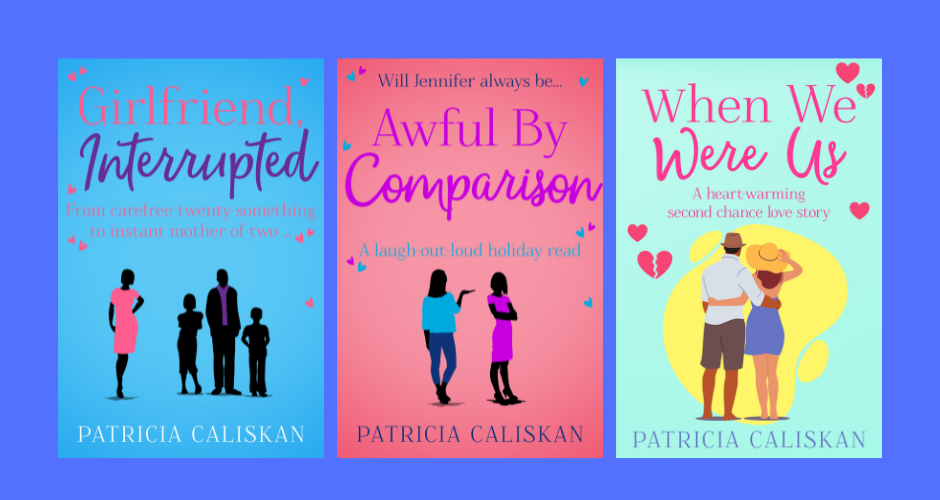
Today, we are delighted to spotlight contemporary romance author Patricia Caliskan.

I wrote my third novel, When We Were Us, at my bureau, which has become my writing enclave. Something about opening the bureau desktop gives me a sense of immediacy which speeds the writing along. I write upstairs, free from distractions, except for my dogs who stop by to visit, but basically closed off from everything except the world I’m creating.

Patricia’s bureau

I never thought I had any writing rituals until people began asking the question. I realised that I have rituals in general. All three of my novels were largely written at night. Once the demands of the day are over, night-time is not only the perfect fit in a practical sense but allows me the space I need to daydream on behalf of my characters, and fully immerse my thoughts in the world of the book.

I’m a huge advocate of those tiny details which promote wellbeing, even when I’m not writing. So, before I get back to my latest manuscript, I mix essential oils for my diffuser, which works like magic for changing up the mood, and I set a timer to monitor my working hours.

I find having scheduled time slots super helpful. I can show up and do the work and know exactly how much time I’ve spent on the novel, which is reassuring when I’m trying to find enough time to work on a project.

I switch on my moon light, as I call it, a perfect orb of white light, and always freshen up my perfume before I write. I think of perfume as a superpower. A favourite scent signals that we’ve got work to do and someplace else to be.

I usually start by reading over where I left off to reacclimatise. I try not to spend too much time agonising over a word choice or a sentence formation until I’m at the editing stage. I have a natural tendency to edit as I go, wanting the work to be as close to the final manuscript as possible, which can hinder the drafting process.

When it comes to first drafts, I remind myself of my own advice: to just get it all down. I need solitude to do that, and sitting at my bureau, I feel enclosed in the world of the book. When it comes to editing, I usually end up inadvertently making a playlist to score parts of the novel or characters, which I find helpful with tone and pace. Once I have a completed manuscript, I print the work out and read it aloud, because if the writing doesn’t sound right, it isn’t right, and needs reworking.

Writing fiction requires both discipline and detachment, and my little bureau space provides just that!

How I Write by C.P. Giuliani

In this behind-the-scenes blog series, Sapere Books authors offer an intriguing insight into how, where and why they write.

Today, we are delighted to spotlight C.P. Giuliani, author of the Tom Walsingham Mysteries Series.

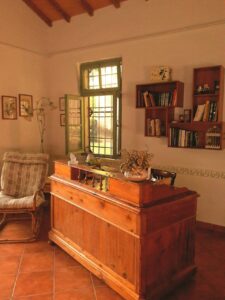
C.P Giuliani’s garden house

Every year, as soon as summer comes, I move my writing to the garden house. It’s not really cooler, as temperature goes, but it feels summery and pleasant. I love the tall ceiling, the terracotta floor, the desk that used to belong to my great-grandfather, and the view onto the garden. There’s a little pond outside the French windows, and the birds bathing or drinking are, I confess, something of a distraction — but they also provide a cheerful break whenever I find myself stuck. A paragraph refusing to take the right shape? A character mutinying? A dull passage? I step away from the desk and watch while the blackbirds play in the water — and, more often than not, a solution will suggest itself.

For all its rustic pleasantness, the garden house has decent Wi-Fi — which is rather essential when my pile of reference books is not enough to confirm some detail — and is equipped with an electric kettle to make cup after cup of tea, which is a fundamental of my writing method.

In truth, beyond the insane amounts of tea, I have little in the way of a writing routine. Working in theatre means that my hours are flexible. Sometimes I write in the morning, sometimes very late at night, sometimes both; sometimes I must snatch the odd hour here and there, between a rehearsal session and a meeting with the techs. One thing I do is to always keep a notebook with me. Through the years, I’ve learnt to keep a dedicated notebook for each project, beside a general one for everything and anything: notes, stray ideas, snatches of dialogue overheard or imagined, lists, questions… It’s the general notebook that I carry around, so I can jot down anything that occurs to me — to be transferred to the relevant one later. This means that I do some of my writing at the theatre, at the vet’s, as I stand in a queue at the Post Office…

My family, friends and colleagues have developed a high degree of amused tolerance for my ‘Notebook Moments’, when I drop whatever I’m doing to take a note; strangers are occasionally a little put out until I explain that, for one thing, I’m prone to forgetting what I don’t write down and, for another, sometimes an idea will present itself in a very iridescent shape, little more than a flicker of colour under the surface of the water — and will need to be recorded quickly and thought through in writing, at least a little, if it’s to be of any use.

So to recap, I’m absent-minded, easily distracted, forgetful, and can’t keep a routine… I suppose it’s no wonder that a quiet, pleasant place like the garden house is important to my writing process.

Becoming a Novelist is a Matter of History by David Field

In this behind-the-scenes blog series, Sapere Books authors offer an intriguing insight into how, where and why they write.

Today, we are delighted to spotlight David Field, author of numerous historical series including the Bailiff Mountsorrel Tudor Mystery Series and the New World Nautical Saga Series.

I’ve always written stories, even as a child, then I progressed from childhood scribbles to more serious attempts at literary glory on an old upright Olivetti typewriter (one of those with a red and black ribbon, if you’re old enough to remember) when my handwriting graduated from ‘untidy’ to ‘execrable’.

Reluctantly I then honoured my mother’s wish, and my father’s insistence, and got a ‘real job’ as a criminal trial lawyer, which was about as relaxing as standing on one leg on the top outer ledge of The Shard in London, without the reassurance of a safety harness. To relieve the stress I decided to start working on a novel — but what should I choose for a genre?

A good friend of mine who already earned a precarious living as a novelist was insistent that one should always write about things that one knows, and by this stage I knew two things outside my professional straightjacket — some history from my schooldays, and the streets of my home town, Nottingham. During the final years of my working life I spent stolen moments imagining the lives of those living in Nottingham during the Luddite Riots, and In Ludd’s Name was eventually published by a boutique publishing house owned by an old school friend.

Bitten by the bug, and buoyed up by having finally been published, I grew ambitious, and searched the history books for possible storylines, most notably from that most colourful of periods of English history, the Tudor era. The literary world seemed to be awash with Henry VIII, Anne Boleyn, Elizabeth I and even ‘Bloody Mary’, but two seminal characters from that era seemed never to have received much attention from novelists.

First was the progenitor of the Tudors, the boy from Wales, Henry VII, and I climbed inside his head to bring to the pages that followed his boyhood imprisonment in a bleak castle in South Wales, his youthful exile in Brittany, his triumphant return at the head of a ramshackle army that deposed Richard III at Bosworth, and his love match with Elizabeth of York that brought the Wars of the Roses to an end in the nursery rather than on the battlefield. To my delight, and secret surprise, I found a publisher — Sapere Books — and Tudor Dawn was launched.

Then — unbounded joy and amazement! — Sapere wanted another one, so this time I focused on a butcher’s son from Ipswich who rose from obscurity to become Archbishop of York, Papal Legate for life, Lord Chancellor and the diplomacy coach of choice of Henry VIII. Cardinal Thomas Wolsey’s spectacular downfall was just as dramatic, and The King’s Commoner was published, as testament to the fact that I had a second novel in me.

Dozens of titles have since been published, all by Sapere Books, and all ‘historical’ in genre. As one of the characters in Alan Bennett’s delightful creation, The History Boys, says of history — ‘It’s just one ******* thing after another’, and so it has been for me.

Happy Publication Day to David Field!

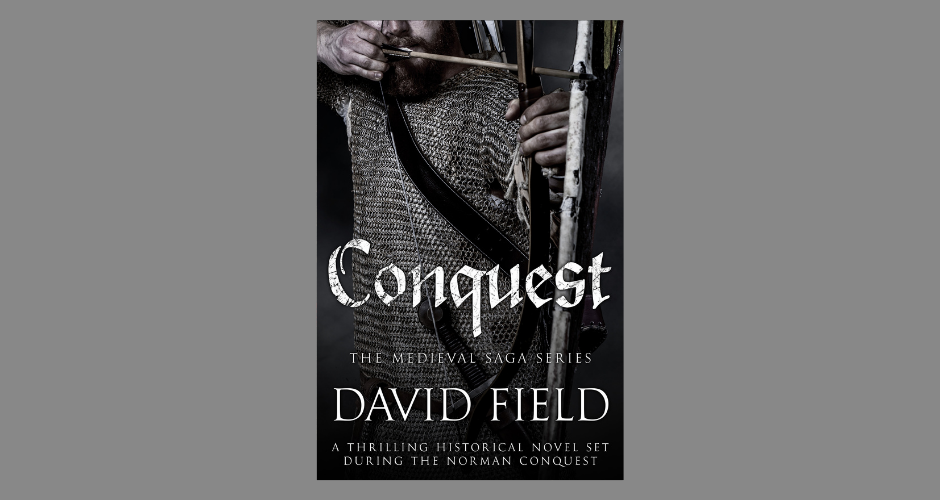
Congratulations to David Field, whose thrilling Medieval saga, Conquest, is published today!

It’s 1065 and the Saxon kingdom is under threat of invasion at both ends. From the north comes Harald Hardrada of Norway intent on pillage, while across the Channel, Duke William of Normandy is about to enforce his claim to the throne.

Between the two lie the villages and townships defended only by part-time armies maintained by the Earls of Wessex, Mercia and Northumbria, barely united under King Harold Godwineson.

It falls to brave and determined young men like Will Riveracre and Selwyn Astenmede to stand firm against whichever marauding invader reaches them first.

But the initial battle could be the least of their worries as a new king ascends the throne – threatening to annihilate their traditions and customs forever…


Click here to order Conquest

Sapere Books Sign a New Crime Series by C V Chauhan

We are delighted to announce that we have signed a new Leicester-based crime series by C V Chauhan.

C V Chauhan

The series follows Detective Rohan Sharma as he unravels a succession of dark and thrilling mysteries.

In C V Chauhan’s words:

“I’m absolutely delighted to have been signed by Amy and her team at Sapere for my new, three-book series which breaks new ground in the genre. I’ve been made most welcome by all members of the team and by my fellow authors. It’s a very friendly and supportive community, and I feel privileged to be part of it.

“If you like your crime fiction with added spice, then you’ve come to the right place. THE DANCE OF DEATH, my debut novel, introduces you to Rohan Sharma, an able, erudite detective who lives in the heart of the Asian community in Leicester and who has a talkative, African grey parrot for company. Recently divorced, he is the father of two children.

“In the first instalment in the series, Rohan Sharma and his team hunt for a psychopathic killer while dark forces undermine his work and put others in danger.

“THE DANCE OF DEATH will be published in the near future, and I’m currently working on the next Rohan Sharma novel. I’m not going to give away too much at the moment, but suffice to say it’ll have an international dimension. More on this later…”

Author Q&A with Stephen Taylor

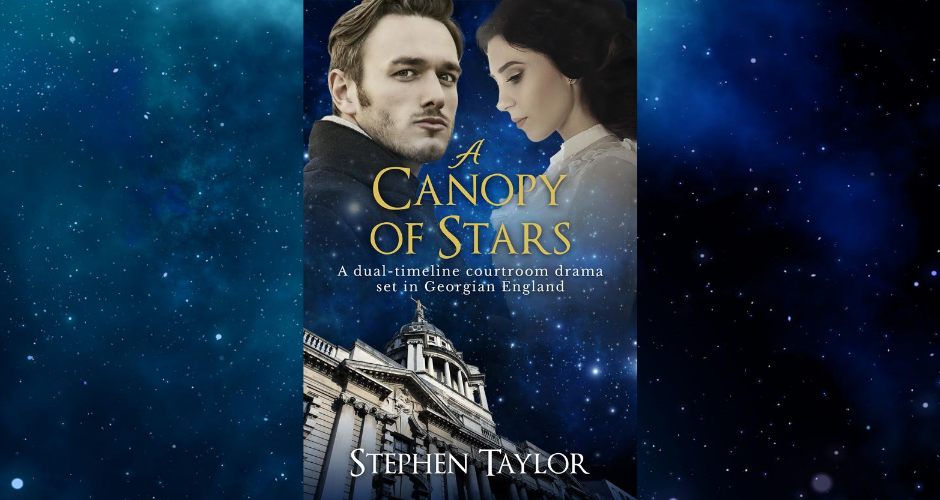
Stephen Taylor is the author of A CANOPY OF STARS, a thrilling historical 19th century saga stretching from the legal courts of Georgian London to the Jewish ghetto in Frankfurt.

Hi Stephen! Welcome to the Sapere Books blog. Could you tell us a bit about what first got you into writing?

My addiction has been with me for over twenty years now. When I was younger, if somebody told me a good joke, when I retold it it was twice as long, embellished, the story enhanced, the characters fleshed out. With me, it was never just about and Englishmen, an Irishman, and a Scotsman. It was an Englishman in a bowler hat with a monocle, an Irishman in a donkey jacket with a pint of Guinness and a Scotsman in a kilt with a set of bagpipes (and yes I know that this is stereotypical).

Tell us about where you write and your writing habits.

I started by writing during my lunchtime at work, but now I write in my home office. I keep a working week, Monday to Friday and write for two and a half hours a day. I seem to need that discipline.

What part of the writing process do you find most difficult?

Probably research: it’s a double edged sword — part good, part tiresome. The rewrites are also tricky, as you can edit forever, endlessly trying to improve what you have written. I aim to stop after five rewrites.

Do your characters ever seem to control their own storyline?

The received wisdom is that you determine your storyline and not let your characters deviate from that. However, after I develop my characters, they tell me where they want to go, what they want to do. I follow them, and my stories are character led. I still have a structure in my mind — A to B, but the characters say how I get there.

Do you find it hard to know when to end a story?

Not usually. I have a prompt to myself that sits just below the line I am typing. It reminds me to keep some control over the characters.  It says: INTRIGUE — CONFLICT — CLIMAX — RESOLUTION. i.e:

Open with a big question or hook: INTRIGUE. Then you have the problems your hero is up against: CONFLICT. This builds to a CLIMAX. This is followed by the RESOLUTION.

What is your favourite book?

If you ask me this next week, you may get a different answer. I would say my favourite book is To Kill a Mockingbird by Harper Lee. My favourite character is Uriah Heep, from David Copperfield. Dickens’ image of him is wonderfully unpleasant — he’s so slimy.

What book do you wish you had written?

Anything by Norman Mailer. As a writer, he is so far above me. He’s much more than a storyteller.

Tell us something surprising about you.

I was brought up in Manchester, but I was born in Yorkshire. My mother traveled back to Yorkshire so that my birth there would give me residential status to play cricket for Yorkshire — nobody ever believes that, but I promise that it’s true. Unfortunately, it was a feat that I never achieved, the White Rose County being unappreciative of my cricketing skills.


Preorder A CANOPY OF STARS here!

Sign up to our newsletter for deals and new releases.

Authors in Lockdown

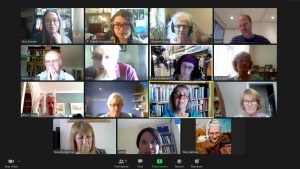
We recently had a digital meet-up with some of our authors to catch up on current projects and find out how lockdown has impacted their writing. Read on to find out more about their creative news and practices:

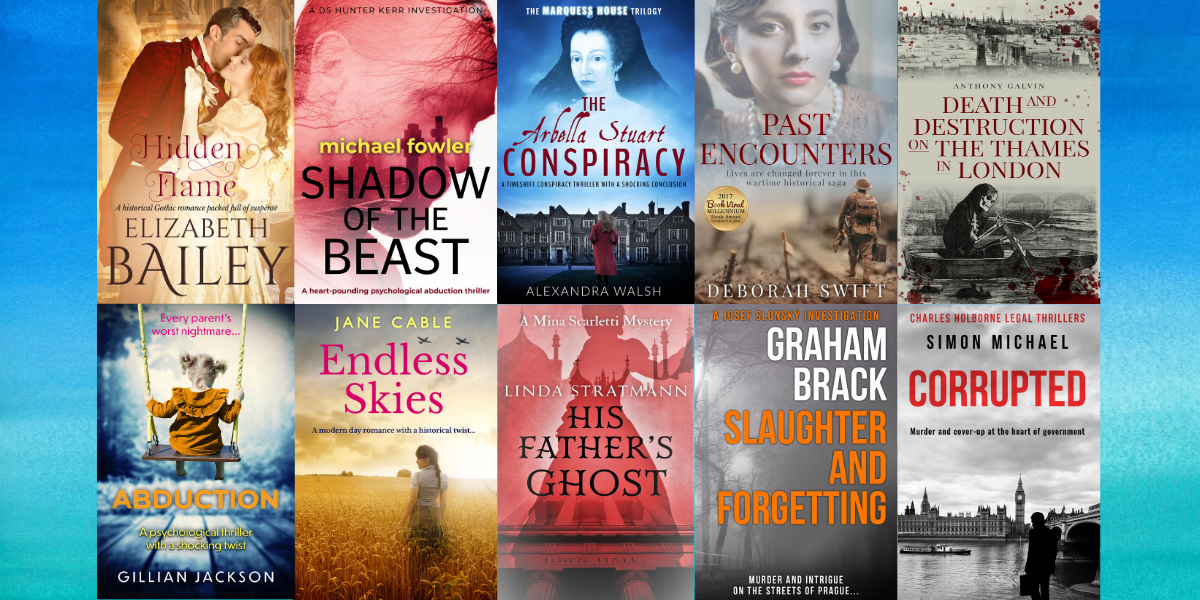
Elizabeth Bailey has published six Lady Fan Mysteries, four Brides By Chance Regency Adventures, and two more historical romances. She is working on her seventh Lady Fan book. Elizabeth has also been taking daily walks, giving digital readings, and maintaining her weekly newsletter, which is filled with writing updates and giveaways.

Graham Brack has published six Josef Slonský Investigations and two Master Mercurius Mysteries. He is working on the next books in both series. Graham finds that working on two series simultaneously helps prevent him developing writers’ block with either one.

Jane Cable has published one contemporary romantic saga drawing on World War II, and her second – Endless Skies – is forthcoming. Jane has been developing a new website, editing Endless Skies, and working on a new contemporary romance novel.

Tim Chant has a Russian-Japanese naval novel forthcoming and has started the next one. He is also writing and self-publishing science-fiction and steampunk novellas.

Michael Fowler has published five DS Hunter Kerr Investigations. He is currently working on a new series, developing a character who is a forensic psychologist. As part of this, Michael is researching various forensic technologies and has spoken to an expert in the field.

Justin Fox has two nautical novels forthcoming with Sapere Books. These are also being published in South Africa by Penguin Random House and are currently being edited.

Anthony Galvin (who also writes as Dean Carson) is the author of historical non-fiction book Death and Destruction on the Thames in London. He is working on a series of thrillers. As a mature student, Anthony has also been finishing up assignments and exams.

Sean Gibbons’ gritty crime series – following taxi driver Ben Miller – will be published in 2021. He is currently writing the fourth book in the series and has just finished a World War II espionage thriller.

Gillian Jackson has published three psychological thrillers. She is now editing old and self-published work, finding ways to re-purpose old characters. Gillian is particularly interested in developing more contemporary women’s fiction with a psychological element.

Natalie Kleinman has four Regency romances signed up and has written two more. She has recently made a start on a new romantic novel.

Simon Michael has published five Charles Holborne Legal Thrillers, and he has a sixth one lined up. Aside from writing, he has recently been busy with building work.

Ros Rendle has six romance novels forthcoming with Sapere Books, including her Strong Sisters trilogy. Ros has recently finished a new novel, and she has found her Chapter writing group (regional groups of romance writers affiliated with the Romantic Novelists Association) a great source of support.

Linda Stratmann has published five Mina Scarletti Mysteries and is writing the sixth. To help with this, she has been researching Victorian spirit photography using Archive.org. Linda has also been gardening, cooking, baking, and holding digital meetings with the Crime Writers’ Association, of which she is the chair.

Deborah Swift has published two romantic World War II sagas and is working on the third, which will be set in Shetland and Norway. She has been researching nautical terminology and walking a lot, which she finds is a great time to think about plot.

Alexandra Walsh has published three timeshift conspiracy thrillers; the last one, The Arbella Stuart Conspiracy, came out in May. She is now writing a Victorian dual-timeline novel and is planning to start a newsletter.

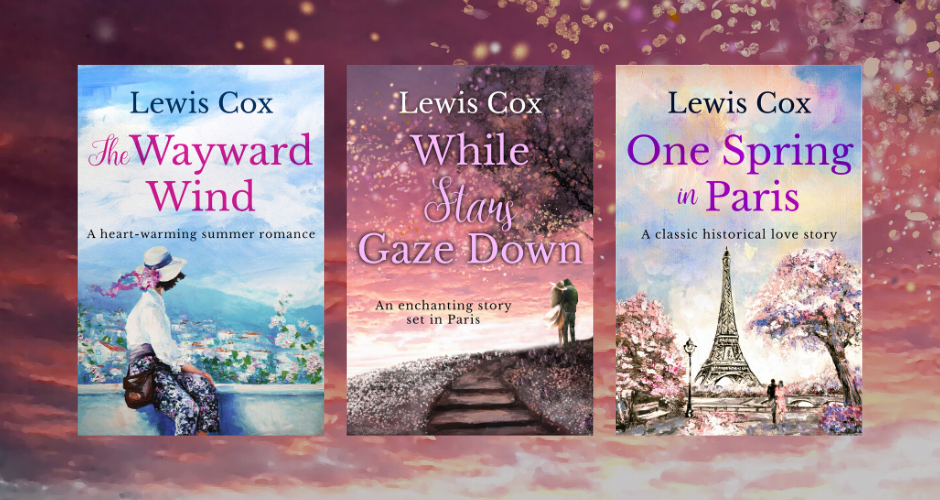
Sparkling Summer Reads by Lewis Cox

This summer, settle down with a charming, classic love story by Lewis Cox – a master of the genre!

ONE SPRING IN PARIS follows Caroline May, a young artist studying her craft in the city of love. When her money runs out, she resolves to find a way to remain in the place that inspires her most. Through friends, she finds work with melancholy restauranteur Raoul Pierre. As soon as they meet, Caroline finds herself irresistibly drawn to her new employer. But knowing that Raoul is a determined bachelor, she vows to hide her feelings to protect her heart…

Click here to order ONE SPRING IN PARIS

THE WAYWARD WIND is a fun and flirty summer romance set in sunny Madeira. Fleeing a London scandal that has damaged her reputation, the capricious Ann Thrail arrives at her aunt and uncle’s idyllic home in Portugal for a long stay. But her aunt, Kate, soon begins to worry that Ann will lead her son astray. With no wish to return home, Ann must learn to rein in her chaotic nature and win over her anxious relatives…

Click here to order THE WAYWARD WIND

WHILE STARS GAZE DOWN is a beautiful story of healing and new beginnings. Nursing a recently broken heart, Diana Gregg attempts to move on by immersing herself in the delights of Parisian society. But when she crosses paths with John Fanshawe — who reminds her of her ex-boyfriend — she decides to protect herself from further pain by maintaining a distance between them. Confused by Diana’s reserved attitude, John is determined to overcome her apparent dislike…

Click here to order WHILE STARS GAZE DOWN

To further celebrate her work, we asked Lewis Cox’s granddaughter, Priscilla Playford, to say a few words about her life and achievements:

“My grandmother wrote over 250 novels all in longhand; she started her career in the late 1920s and continued writing well into her 80s. She wrote under the names of Lewis Cox, Bridget Parsons and Mary Blair, and her books were published, primarily, by Hutchinson, Mills & Boon and later, Robert Hale. They were available in many countries and translated into several languages, including Japanese and Dutch.

In her writing, as in life, my grandmother was very disciplined and forthright with a strong will and high standards. Not outgoing, she did not seek publicity but enjoyed her success and, whilst not a traveller, it is perhaps true that she lived through her imagination. She loved antiques and enjoyed collecting furniture and pictures.

One cannot help but admire all that she achieved, particularly at a time when women were expected to be in the background — hence her using the name ‘Lewis Cox’ — and during the war; judging by the cuttings, she was very highly thought of and had good reviews and billing.”

In Memory of Alan Williams

We had very sad news back in April that one of our authors, Alan Williams, fell victim to COVID-19. He passed away in a care home, aged 84.

Alan with his daughter, Sophie

Williams graduated from King’s College, Cambridge, in 1957 with a BA in Modern Languages. He then led a rich and varied life as a journalist and foreign correspondent, working for publications such as the Cardiff Western Mail and the Manchester Guardian. He reported on a number of world events, including the Hungarian Revolution, the Algerian War and the Vietnam War.

His experiences as a reporter later influenced his novel writing. Barbouze – the first instalment of Williams’ Charles Pol Espionage Thriller series – follows a British journalist who accompanies a French spy on a mission in North Africa. A later novel in the series, The Tale of the Lazy Dog, is a heist story set in Southeast Asia. Williams’ writing won him much acclaim: he has been described as “the natural heir to Ian Fleming” and “one of the important figures in the change and development of the espionage novel”.

Williams has three children – Sophie, Owen and Laura – and three grandchildren, Roxy, Willow and Fox. Our thoughts are with his family at this difficult time.

You can read Alan Williams’ full obituary in the Guardian.

Photographs courtesy of Sophie and Laura.

Welcoming Three New Authors

We are thrilled to announce that we have recently welcomed three brilliant new authors to our contemporary romance and historical fiction lists. We look forward to sharing their wonderful work with the world!

Tim Chant is working on an exciting historical naval thriller series. The first instalment – THE STRAITS OF TSUSHIMA – is set in 1905 during the Russo-Japanese war and follows the daring exploits of Marcus Baxter, a British Royal Navy officer turned spy.

THE STRAITS OF TSUSHIMA is due out in 2021.

Teresa F Morgan is working on a fabulous three-book contemporary romance series. Set in Cornwall, her novels have a strong sense of place and a unique sunny charm. Her first book, COCKTAILS AT KITTIWAKE COVE, sees ambitious restauranteur Rhianna Price arrive in the area looking for a fresh start. But when she runs into her holiday fling, Rhianna’s focus is put to the test…

COCKTAILS AT KITTIWAKE COVE is due out in 2021.

Tanya Jean Russell writes heart-warming romantic fiction. Her first book will be a seasonal novel called AN IMPERFECT CHRISTMAS, a moving and uplifting tale that follows Maggie Green, a young accountant who returns to her hometown and is forced to face her first love.

AN IMPERFECT CHRISTMAS will be published in late 2020.

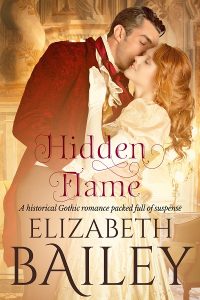
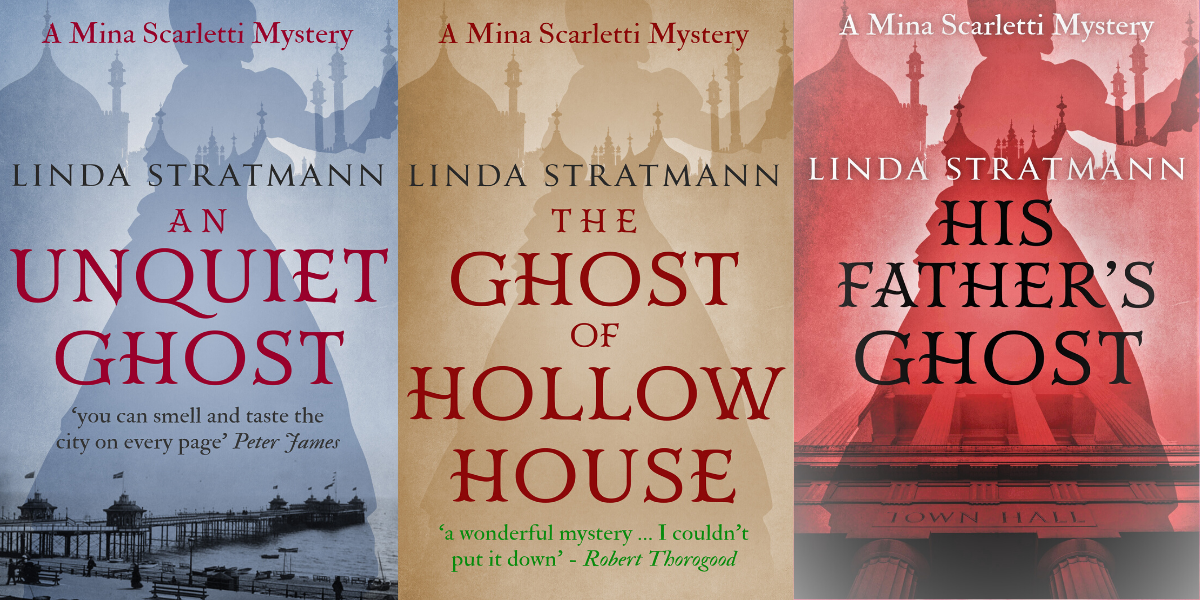
His Father’s Ghost by Linda Stratmann

Linda Stratmann is the author of the MINA SCARLETTI INVESTIGATIONS, a traditional British detective series set in Victorian Brighton.

More than a year ago, I determined to write a book in which Mina Scarletti, disabled by the scoliosis that twists her spine and cramps her lungs, is taken ill and solves a mystery while confined to bed. It is not a new concept. In The Wench is Dead, Inspector Morse solves a Victorian murder while in hospital, and in Josephine Tey’s The Daughter of Time, Inspector Alan Grant, hospitalised with a broken leg, explores the fate of the Princes in the Tower.

But these are historical puzzles, and therefore considered suitable to engage the mind of a bored invalid. In His Father’s Ghost, Mina has additional challenges. She is intrigued by a current conundrum, the disappearance of a local man while out sailing, declared legally dead, but his actual fate unknown. Her doctor, however, has advised her against any activity that might tax her delicate health, and that includes solving mysteries. She has to use all her ingenuity to gather the information she needs. In doing so, she finds that she has uncovered evidence of past crimes and scandals. Her enquiries are a catalyst that set off a train of events that ultimately have dramatic and life-changing consequences for several prominent citizens of Brighton.

One of the themes which I explore in this book is hallucination. Mina, when stricken by a fever, sees and hears things that reveal what is troubling her. The son of the vanished man, disturbed by significant events, has terrifying visions in those dark hours that lie between sleeping and waking.

I really enjoyed my research for this book. I visited the fascinating Police Cells Museum of Brighton, and read about the curious spiritoscope, an apparatus designed to prove that it was spirits and not the medium who cause the movement of the divination table.

It was my real pleasure to include two characters who have appeared in previous books, the flamboyant actor Marcus Merridew, fresh from his acclaimed season as Hamlet, and the creepy young photographer Mr Beckler.

While editing the manuscript, which was completed at the end of 2019, I was struck by how Mina’s plight echoes our current time. She is ill with a lung infection, and effectively on lockdown. But when she scents a puzzle, it gives her strength. She needs not only warmth and air and nourishment, but material to keep her busy mind alive.


Click here to pre-order HIS FATHER’S GHOST

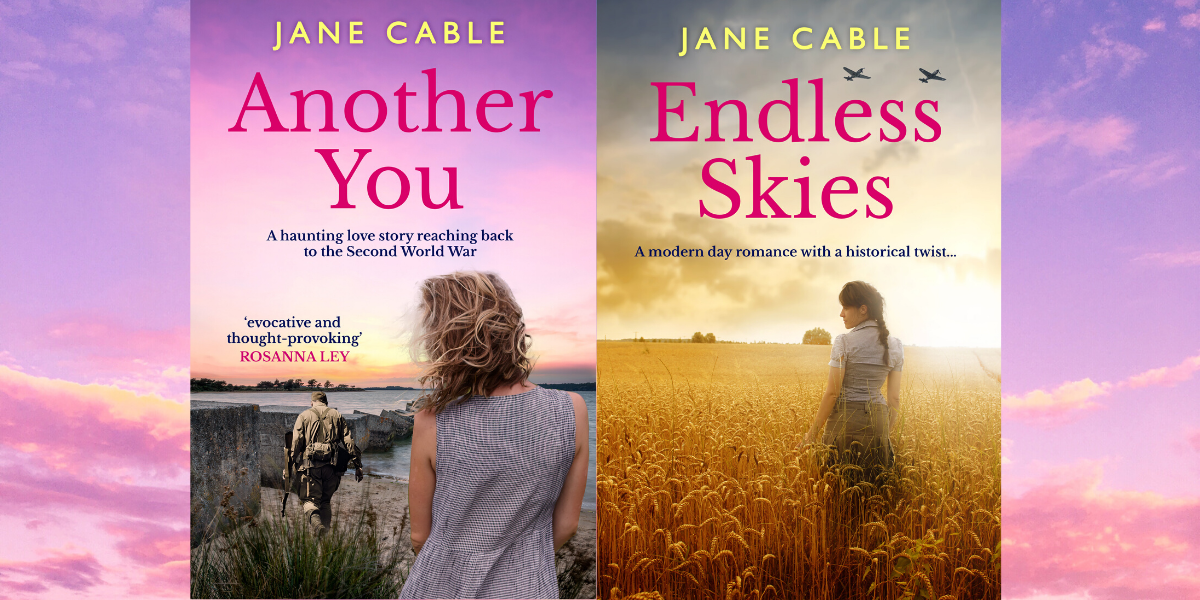
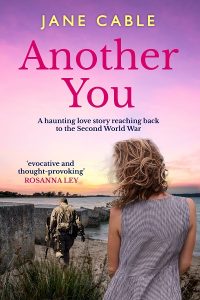
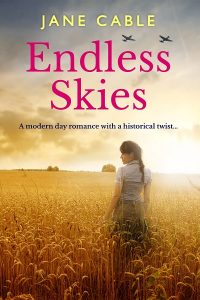
Using Local History in ANOTHER YOU and ENDLESS SKIES by Jane Cable

Jane Cable is the author of ANOTHER YOU and ENDLESS SKIES, modern romantic sagas that draw on the Second World War.

Although I hated history at school, in my adult life I have become a total history buff. Not history about royalty, wars and politicians though – the history of ordinary, everyday people. A history I feel connected to and is more often than not local.

For my contemporary romances the history I choose is sharply focussed, linked to the setting. For Another You, the most gripping part of Studland’s past was its role in the practices for D-Day, and for Endless Skies I decided to stay with World War Two. The book is set in Lincolnshire, so to my mind is inextricably linked with Bomber Command.

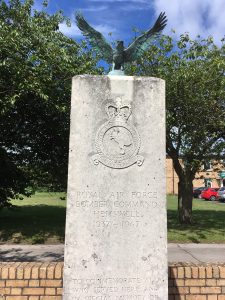
The wartime setting for Endless Skies is RAF Hemswell, now an industrial estate best known for its antiques centres and markets. In fact, that was the reason I went there in the first place. But wandering around the old barrack buildings, I could almost see the airmen on the stairs and hear the stamp of their boots in the parade ground. This had to be the place.

The staff at Hemswell Antique Centres were able to give me a leaflet with a short history of the base, and that set me off on my research. While we were in Lincolnshire I walked its buildings and roads then drove around the area, so I was totally familiar with the terrain, and once we were back at home I started to dig deeper.

Here the internet is invaluable, and there are a number of websites giving the history of RAF bases. Hemswell was one of the first to be operational right at the beginning of the war, but as I dug deeper I found two Polish squadrons had been based there in 1942-3 and had suffered huge losses. I knew exactly where to focus my research.

This is where local history becomes exceptionally localised for me: one place at one point in time. In Endless Skies my protagonist, Dr Rachel Ward, is an archaeologist and my own work made me think of hers: researching a site, carrying out a survey, opening a trench, trowelling into every corner then digging out a single artefact. She finds … well, it would be spoiling the story to tell you. I find words.

Hemswell War Memorial

But sometimes before you focus down you need to pan out, so I read around the subject: first-hand accounts from wartime bomber crews; memoirs of civilian life on RAF bases. For background on Hemswell itself I was very lucky – it was where The Dam Busters was filmed in the 1950s, and there was both a book and documentary about making the movie so I could watch almost contemporary footage.

There was also a treasure trove on the internet about the Polish airmen who crewed the station, and seeing photographs of them was quite an eerie experience. In fact, I ended up with far more information than I could possibly – or would want to – use in the book. But the level of detail gives me confidence my historical details are correct.

But equally interesting to me were the ghost stories associated with Hemswell: a pilot in flames on the runway, the echoes of 1940s music and the sounds of bombers taking off and landing. And having researched them, it would have been such a shame not to use at least one of them as well. Although my ghosts, of course, are completely fictional.


Click here to order ANOTHER YOU.

Click here to pre-order ENDLESS SKIES.

THE SANDAL CASTLE MEDIEVAL THRILLERS by Keith Moray

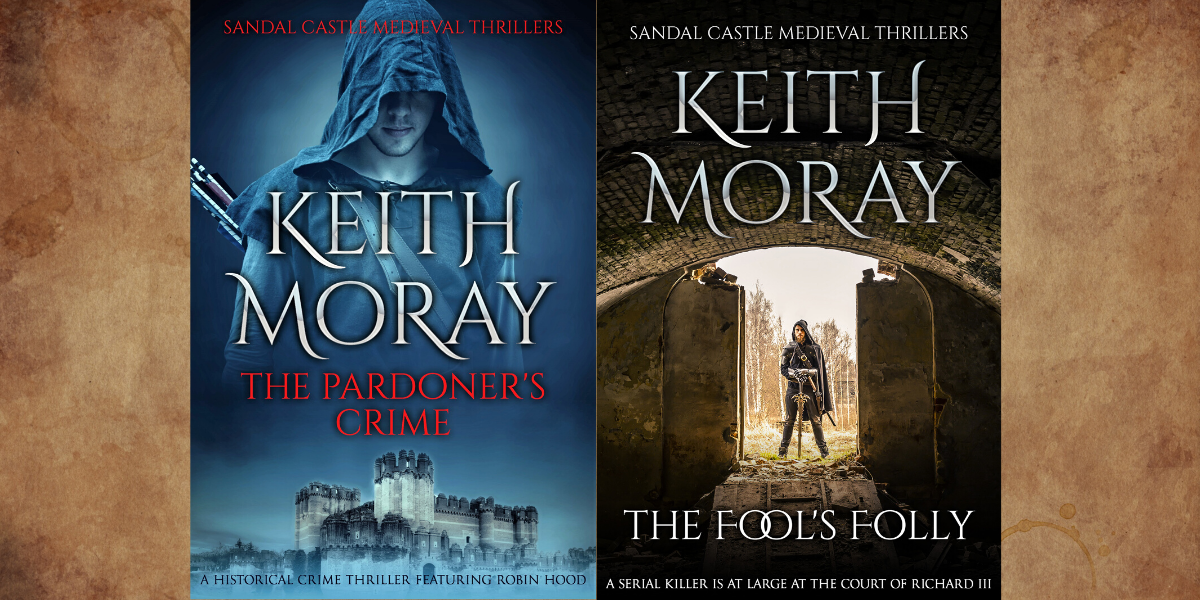
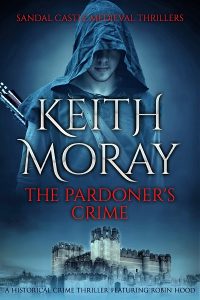
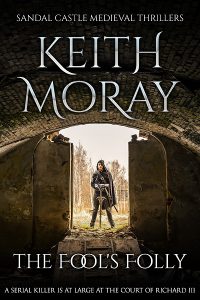
Keith Moray is the author of the SANDAL CASTLE MEDIEVAL THRILLERS, historical murder mysteries set in Yorkshire. The first two books in the series, THE PARDONER’S CRIME and THE FOOL’S FOLLY, are available to pre-order.

I live within arrowshot of the ruins of Sandal Castle. As a family doctor in Yorkshire, for thirty years I saw it most days while driving around the area on my morning visits. Nowadays, in semi-retirement I go running around the old battlefield where thousands of knights and soldiers once fought and died during the Wars of the Roses.

I plot and daydream when I run. Happily, a short story entitled The Villain’s Tale about a miscreant in a rat-infested dungeon in Sandal Castle won a Fish Award. It spurred me on to start plotting the Sandal Castle Medieval Thrillers.

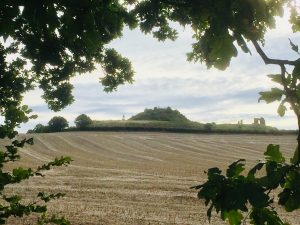
Sandal Castle

The fine old motte and bailey was built in the 12th century by the De Warenne family during the reign of Henry I. From the 14th century it passed into royal ownership and is best known for its involvement in the Battle of Wakefield in 1460, when Richard, Duke of York was mortally wounded.  His son, King Edward IV established it as one of the two bases for the Council of the North in 1472. Effectively, this was the government for the North of England. After he died, his younger brother, King Richard III began rebuilding the castle in 1483. The work stopped when he lost his life at Bosworth Field in 1485.

Robin Hood

Thanks to television and movies, most people associate the outlaw Robin Hood with Sherwood Forest and Nottingham. However, the medieval ballads say that his stomping ground was actually Barnsdale Forest, which once covered a vast swathe of Yorkshire. The ballads also mention King Edward and various Yorkshire characters, such as George-a-Green the Pinder of Wakefield, and many actual locations in Wakefield are referred to.

The Court Rolls of the Manor of Wakefield

In medieval times, The Manor of Wakefield was the largest in Yorkshire and one of the largest in England, covering some 150 square miles. The Court Rolls of the Manor of Wakefield are a national treasure, consisting of a continuous recording of court proceedings from the late thirteenth century until the 1920s.

The outlaw and bowman Robert Hode, a sure candidate for being the historical Robin Hood, is mentioned in the Court Rolls of 1316.

 The Sandal Castle Medieval Thrillers

If you look at the picture of Sandal Castle today you will see exactly where I had the germ of the idea for The Pardoner’s Crime, the first novel in this series. It is a view of the castle from under what I fancifully call Robin Hood’s tree. I blended historical facts, medieval ballads and a good deal of imagination to come up with a historical whodunit.

There are three completed novels and a fourth in the pipeline. They are not all about the same characters; indeed they are set at different times, because Sandal Castle with its fascinating history is the historical backdrop to them. They are all inspired by Chaucer’s The Canterbury Tales and some of the characters that he described so beautifully. The Pardoner’s Crime fuses The Canterbury Tales with the Robin Hood legends. The reader is challenged to uncover the true villain in each novel.


Click here to pre-order THE PARDONER’S CRIME.

Click here to pre-order THE FOOL’S FOLLY.

Sandal Castle image credit: Keith Moray

Sherlock, Spiritualism and Suffragists by David Field

David Field is the author of the Carlyle & West Victorian Mysteries.

As a historical novelist in search of bygone eras to recreate, I’ve always been fascinated by the late Victorian period. It was a time of contrasts, with vast scientific, medical and technological breakthroughs coming at a time when ordinary folk were obsessed with communicating with the dead. Victoria seemed destined to rule forever over a rich empire, while her subjects in its industrial cities, and most notably in its London capital, were existing in conditions of abject poverty.

Following the success of my Esther & Jack Enright mystery series, which began with the search for Jack the Ripper and ended just as the nineteenth century was about to, I was urged to return to this rich seam of inspiration, and there was – for me, at least – one obvious place to start.

When Arthur Conan Doyle abandoned medical practice and created his fascinating character Sherlock Holmes, he was inspired by his memory of a real life Sherlock. His name was Dr Joseph Bell, and he had taught anatomy to his classes of medical students at Edinburgh University, one of whom had been Doyle himself. Bell had what was then a unique approach to his analysis of the cadavers that were to be found on his mortuary slab, something that is second nature to modern forensic examiners, but was revolutionary in its day. He approached ‘cause of death’ by examining, not just insides of the bodies, but the clothing and personal possessions with which they arrived, and telltale indications on the skin, such as needle marks, abrasions, rough working hands and suchlike. From this he made logical deductions that were of value to police in unexplained death enquiries, and he taught his students to apply the same techniques when they went out into the world.

There must have been several generations of medical graduates from Edinburgh who were taught ‘the Bell method’, and it was no great stretch of the imagination for me to create Dr James Carlyle, anatomist and general surgeon at Whitechapel’s London Hospital – a medical doctor with the same professional training as Conan Doyle and the same inquisitive, logical mind as Joseph Bell.

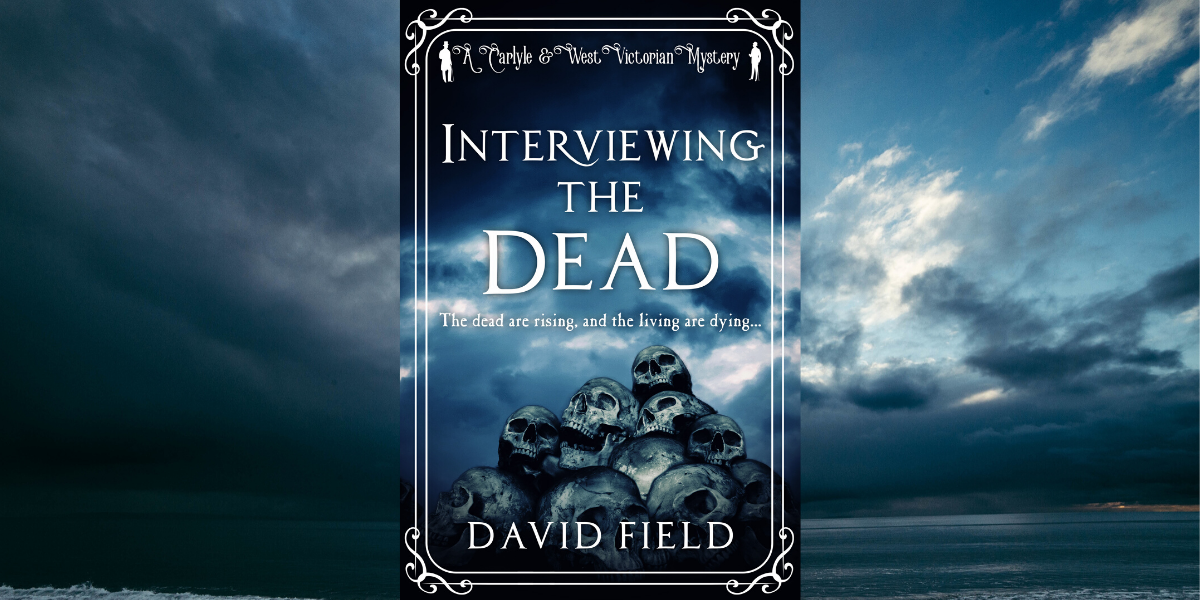
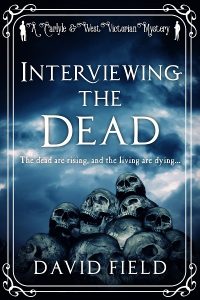
His first challenge – described in the first novel in my new series, INTERVIEWING THE DEAD – is to debunk the panicked belief among the populace of the East End that the spirits of those buried in a Plague Pit in Aldgate have returned to take their revenge for the disturbance of their resting place. That belief has taken hold easily, given the obsession with Spiritualism that gripped the country during this period.

But there were also other ‘spirits’ abroad, and they were advocating for great social change. Chief among these were the Suffragists, who campaigned for ‘votes for women’ and Suffragettes who took on entire police forces in public demonstrations. There were also other groups of feminists, as we would call them today, who advocated for equality of admission to professions such as medicine and the law. This was how Dr James Carlyle’s daughter, Adelaide, was created, as a young woman whose opinion of men and their dominance of society could not have been any lower – until she meets my third new character, Matthew West.

Although the Anglican Church was ahead of all other Protestant movements in the 1890s, it was demonstrating a social elitism that drove away ordinary working folk, and left the pastoral door open for more working-class religious initiatives and crusades among the poor. ‘Methodism’ had become a religious movement of its own, with its own hierarchy, but its progenitor, ‘Wesleyism’, still had its head above the parapet, and Wesleyan street preachers such as Matthew West might be found on corners, in market places, and outside factory and dockside gates.

Matthew has his own reasons for wishing to hose down any belief in the return of vengeful spirits of the dead, and when he finds himself associated with Dr Carlyle in the search for the truth, he comes up against the fiery Adelaide, who works as her father’s assistant. They influence each other’s views on life as they are drawn imperceptibly into a mutual attraction.

The stage is set for my next series. I hope you’ll join me in following the exploits of this unlikely trio, and I look forward to learning your reaction to them.

Click here to pre-order INTERVIEWING THE DEAD!

Sapere Books Celebrates Second Anniversary

Sapere Books has reached its second birthday!

We now have a family of over 50 authors and plenty of chart successes under our belt.

To celebrate our first two years as a company, we threw a party in London and caught up with our fabulous authors over drinks and nibbles. All have exciting new projects brewing. Here is a taster of what to expect from our authors in 2020.

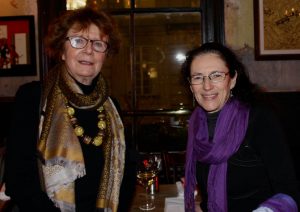
Alexandra Walsh and Graham Brack

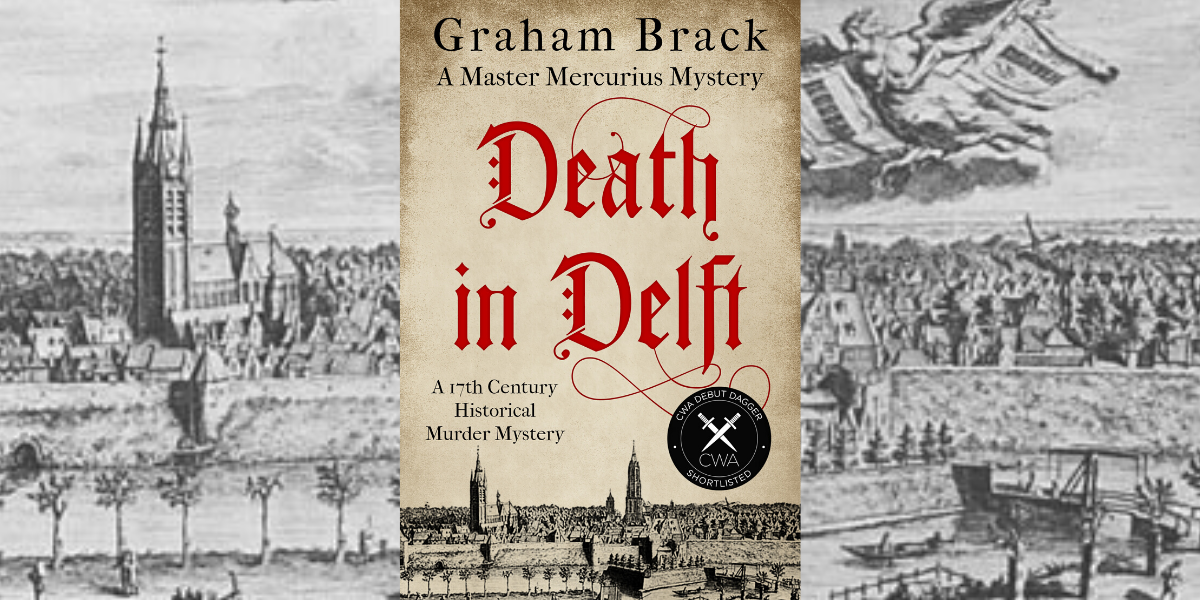
Graham Brack is working on a historical fiction series, the Master Mercurius Mysteries, set in the 17th century. The first book, Death in Delft is already available to pre-order, and more will follow later this year.

Keith Moray has written the Sandal Castle Medieval Thriller series, historical murder mysteries set in Yorkshire. The first book, The Pardoner’s Crime, is available to pre-order, and more are soon to follow.

Alis Hawkins’ brand-new Medieval novel The Black and The White will be published later this month.

David Field is working on a brand-new Victorian mystery series, the Carlyle & West Mysteries, which will launch very soon.

Jane Cable has another thought-provoking romance with echoes of the past launching soon.

Stephen Taylor, Caoimhe O’Brien, and Keith Moray

Gillian Jackson has written a new psychological thriller, which will be released this summer.

Natalie Kleinman will be joining our excellent Regency Romance authors with her sparkling new books, which will feature strong and resourceful heroines.

Ros Rendle will be launching her Strong Sisters series this year – sweeping sagas that will explore family relationships and rivalries.

Seán Gibbons’ gritty urban crime series set in Galway will launch later this year.

J. C. Briggs and Linda Stratmann

Stephen Taylor has a series of 18th century novels coming out soon.

And there are new books coming out soon from fan-favourite series, such as Alexandra Walsh’s Marquess House Trilogy, Elizabeth Bailey’s Lady Fan series, J C Briggs’ Charles Dickens Investigations series, Gaynor Torrance’s DI Jemima Huxley series, Charlie Garratt’s Inspector Given series, Michael Fowler’s DS Hunter Kerr series, Valerie Holmes’ Yorkshire Saga series, Marilyn Todd’s Julia McAllister series, Simon Michael’s Charles Holborne series, John Matthews’ Jameson & Argenti series and Linda Stratmann’s Mina Scarletti series.


For more information on our latest releases and ebook deals sign up to the Sapere Books newsletter.

Death in Delft by Graham Brack

DEATH IN DELFT by Graham Brack is the first historical murder investigation in the Master Mercurius Mystery series: atmospheric crime thrillers set in seventeenth-century Europe. Click here to pre-order.

Most crime writers have a keen sense of place. Something about a setting grabs them and tells them there is a story here.

So it was with me. When you live in Cornwall, the quickest place to get to on the continent is Amsterdam, because there is a flight from Exeter, so over the years my wife and I have been frequent visitors to the Netherlands.

The first place we went was Delft. As is well known, Delft is the city of Vermeer; but it is also the city of Antony van Leeuwenhoek, the father of modern microscopy. Not only did they live within around 250 metres of each other, they were born within a few days of October 1632. Can you imagine being a schoolteacher who had two such boys in their class?

I was turning this around in my mind when the idea came to me that people often ask whether detection is an art or a science. Well, if these two could not tell you, who could? Making them into detectives in their own right would be a bit of a stretch, but they could vie to assist a third person, and that’s how my Dutch series was born.

In the year 1671, three young girls disappear from their homes in Delft. Two come from poor families, but one is the daughter of a local dignitary. The mayor recognises that he needs help to find these girls, and writes to the nearby University of Leiden, asking the Rector to send the cleverest man he can spare.

Master Mercurius is undoubtedly clever. He is, in effect, an Oxbridge don transported to another time and country, but like many an academic he is completely wrapped up in his subject – moral philosophy – and has very little experience of the world. He does not want to let the Rector and the University down, but he is acutely aware that brains alone will not solve this mystery. Fortunately, he has Vermeer and Van Leeuwenhoek to help, and together they set out to retrieve the girls and discover the culprit. In a nutshell, that is how I came to write Death in Delft, in which Mercurius narrates – very frankly – his experiences.

I don’t think it counts as a spoiler if I say that he is successful and returns to his study with something of a reputation. Unfortunately for him, in 1674 the Stadhouder – the man we know as King William III – needs some assistance in putting down a conspiracy which seeks to remove him from power. It seems likely that someone in high places is pulling the strings, so William needs an intelligent outsider to look into the matter, and his gaze falls upon Mercurius, who is summoned from Leiden. In Untrue till Death Mercurius will find himself personally threatened – and since he is no man of action, he does not enjoy it at all.

However, success in unravelling this mystery only means that when William next needs help he thinks once more of Mercurius, so in 1676 our hero is packed off on a boat to London as part of the embassy negotiating the marriage of William III and Princess Mary. The trouble is that somebody does not want the wedding to go ahead, so in Dishonour and Obey Mercurius finds that there is more to marriage preparation than sitting down with the young couple to talk them through their vows.

Mercurius is a very reluctant detective, as he never tires of telling us. He likes nothing better than sitting quietly reading a book, ideally in a tavern where people leave him alone. As a man of the cloth, he has a strong moral sense but he is a bit squeamish about the punishments of the day. Of course, he knows that a couple of hours of misery on a scaffold are nothing compared with what awaits an unrepentant criminal in the next life, but he feels responsible for one and not for the other.

He also has no idea at all about women. He is not immune to their charms; in fact, he spends much of his time under the spell of young women, but Mercurius has a little secret.

And no, I’m not going to tell you what it is. You’ll have to read the books to find out.

Celebrating Jean Stubbs by Gretel McEwen

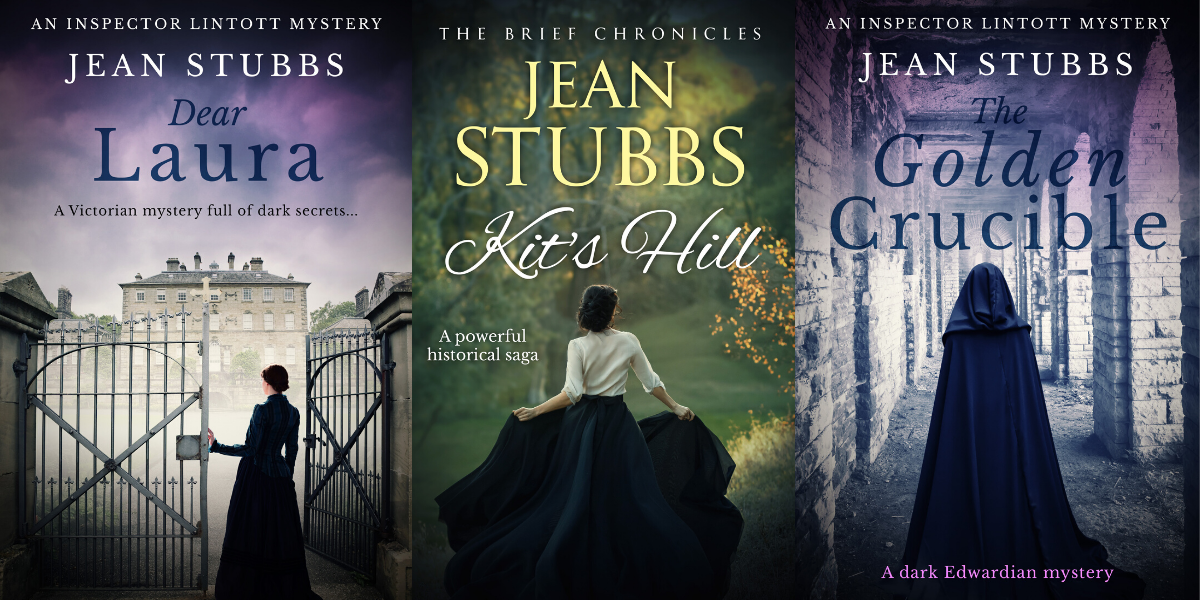
Jean Stubbs is the author of the INSPECTOR LINTOTT INVESTIGATIONS series and the BRIEF CHRONICLES series. In celebration of her life and work, we asked her daughter, Gretel McEwen, to share her memories of Jean and her writing.

We lived in a world of stories, the line between reality and fiction often blurred. As a child, my mother had always made up plays and stories — her brother an unwilling but worshipful bit part player. A generation later, my mother made up fictional characters for my brother and I — she brought them to life with special voices and we talked to them. Alfred was a gentle and not very bright giant whose answer to any question was 29!

My mother had her first novel, The Rose Grower, published at the age of 35 and from that moment our house was filled with a whole cast of characters. I came home from school one day to find her weeping over the death of Hanrahan (Hanrahan’s Colony). And the hanging of Mary Blandy (My Grand Enemy) brought very dark clouds into our house.

As my mother surfed her way through this creative theatre, we learned to read the signs — coffee cups on every surface, a sink full of dishes and no plans for supper meant a good and productive writing day. A house full of the smell of baking, a gleaming kitchen and rice pudding in the oven either meant the dreaded writer’s block or a completed first draft. So we too surfed, adjusted and gloried in the passing show. My mother always wrote on our vast Edwardian dining table, and her writing companion was always the current much-loved cat. They had their own specially typed title page upon which to sit, since she had learned the hard way that cats like to sit on the top copy with muddy paws! The mystery cat was the black one who sat on a certain stair — but when you went to stroke him he was not there … another blurred line…

I felt closely involved with each novel as it progressed. At the end of a good writing day, my mother would read aloud to me the latest chapter — a fine reader with a different voice for each character, once more bringing it all to life. She wrote in long hand at first, then, as the book grew, she typed chapters then full copies and carbon copies for her publisher, Macmillan. Later, she was one of the early authors to use a word processor. When the first print draft came from the publisher, we would sit at each end of the dining room table and proofread — calling out corrections to each other and marking them on the manuscript.

Publication day was a celebration, shopping an occasion, dinner parties a reason for more excellent cooking, and royalty cheques a relief! When I left home, I greatly missed being a bit part player in this imaginative and unpredictable life of stories — and I missed the ghostly companions.


CLICK HERE TO FIND OUT MORE ABOUT THE INSPECTOR LINTOTT INVESTIGATIONS

CLICK HERE TO FIND OUT MORE ABOUT THE BRIEF CHRONICLES

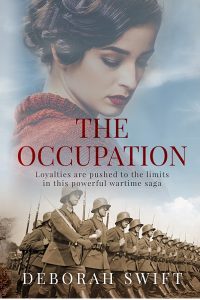
The Inspiration for THE OCCUPATION by Deborah Swift

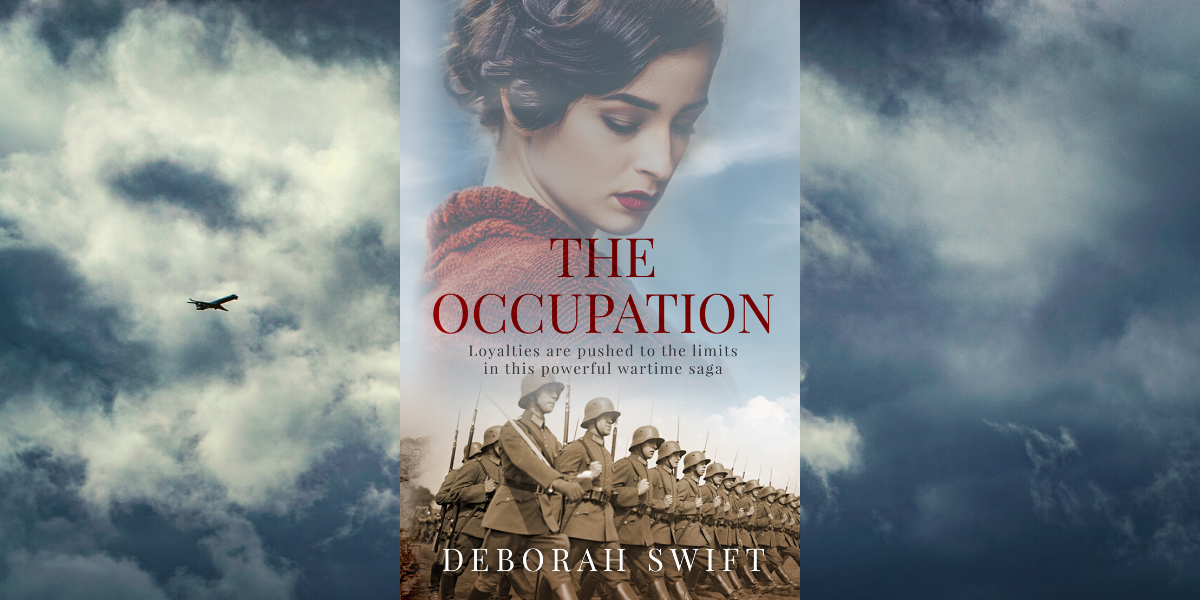
Deborah Swift is the author of PAST ENCOUNTERS and THE OCCUPATION.

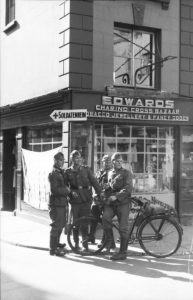
During World War Two, the Channel Islands were the only part of the British Isles to be occupied by the Germans. I saw a picture online of a British ‘bobby’ or policeman talking to a Nazi soldier, and it sparked my interest. Jersey is a tiny island, only eight miles long, so I was fascinated to find out how the population managed to keep up their morale, when as many as fifteen thousand (yes, you read that right) Germans had taken over. What happened to the Jews on the island, or to the other groups that the Nazis considered ‘undesirable’? How did it feel to be invaded by a foreign army?

The story became much more interesting and involved the more I uncovered. At the beginning of the war, Jersey had been ‘stood down’ for military action, as nobody believed the Germans would want such a small territory. Men of fighting age had been sent elsewhere, so it was a population of women and farmers. When the invasion came, it was a total surprise and there were no defences in place. After a brief bombing campaign, the German army just walked in. Before long, white ‘surrender’ flags were fluttering from Jersey houses.

German soldiers standing in King Street, St Helier, Jersey

This was the beginning of Nazi rule on the islands, which was supposed to be a ‘peaceful’ occupation. Of course, when you are invaded it might look peaceful, but underneath the tensions soon began to show. The oppressive Nazi force vastly outnumbered the British people left on the island. Those that remained had to find ways to resist, and ways to outwit the unwanted intruders in their traditional way of life. German rule took over – people had to speak German, cars had to drive on the right, many things that had been allowed before, such as owning a car or a radio, were ‘verboten’ – forbidden. The Germans began a vast building programme to fortify the island, which they intended to use at a military base to attack England. The vast concrete fortifications were built by slave labour.

My story is based on several true accounts, although I have welded them together and compressed them into a fictional narrative. Céline and Rachel’s story was inspired by the true Jersey story of Dorothea Weber, who hid her Jewish friend Hedwig Bercu from the Germans. More on this surprising real life story can be found here.

Fred’s story in The Occupation is based on a number of accounts of life in the Germany army, and in the French Resistance. I was interested to examine the idea of occupation from the point of view of both the occupier, and the occupied. What always interests me in fiction is the conflicts that arise because of the circumstances of war, where one nation is pitted against another, and people who might have been quite amicable before the conflict are forced to swear allegiance to a sharp division between one side and another, when in reality, and in people, many shades of grey exist.

For an overview on the occupation of Jersey, the BBC history site has several pages on this topic. For more on Deborah’s books, find her at www.deborahswift.com or on Twitter @swiftstory.


CLICK HERE TO ORDER THE OCCUPATION


Image Credit: Bundesarchiv, Bild 101I-228-0326-34A / Dey / CC-BY-SA 3.0. Accessed via Wikimedia Commons.

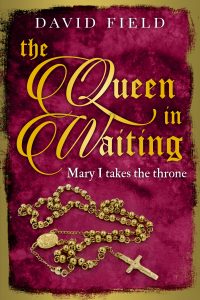
Mary Tudor – Sinned Against or Sinning? by David Field

David Field is the author of The Tudor Saga Series. The Queen In Waiting is the fifth book in the series.

There were many victims during that turbulent period in English history that we call the Tudor era, and not all of them were obvious. ‘Popular’ history has a habit of creating fixed mental images of those who lived their lives in the maelstrom of Tudor Court politics, and it’s only when you examine the actual facts that the doubts begin to creep in. A  prime example of a Tudor ‘identity’ whose place in the ‘fake news’ of the period has set her character in concrete is Mary Tudor, the only child of Henry VIII and his first – and longest lasting – Queen, Katherine of Aragon. Mention Mary and the word ‘Bloody’ appears like magic before her name, conjured up by usage and with little regard to the circumstances that led her to burn Protestants at the stake.

Mary was born in February 1516, the only surviving child from her mother Katherine’s long and miserable litany of stillbirths and miscarriages. Katherine may well have suffered from gynaecological problems that Mary inherited, because Mary is recorded as having endured menstrual disorders as a young woman. These were no doubt the early warnings of the phantom pregnancies and uterine blockages that would deny her issue of her own, and lead ultimately to her death.

But in her very early years we are given a picture of a rosy-cheeked, chuckling little infant with her father’s distinctive red hair being bounced gleefully on Henry’s knee as he resolutely hid from the world his inner torment that Mary was not a boy. His obsession with begetting a male heir, more perhaps than any natural lust for Anne Boleyn, led to Katherine’s eclipse, and as she entered puberty Mary was forced to watch from very distant sidelines as her beloved mother suffered the public humiliation of the annulment of her marriage to Henry, and her replacement on the throne by ‘the night crow’ Anne Boleyn. Anne completed the insult by giving birth, in almost indecent haste, to Mary’s half-sister Elizabeth.

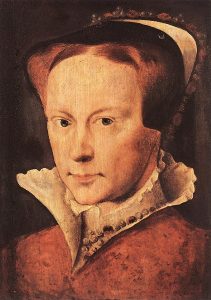
Mary Tudor

Humiliation was piled on humiliation as Mary was declared a bastard, and her place in the succession was taken by Elizabeth. The newly demoted ‘Lady Mary’ was stripped of her own former household and sent to live with Elizabeth in Hatfield House, Hertfordshire, denied access to her mother Katherine, who pined her way to a heartbroken death in a remote castle in Cambridgeshire. Mary was reported to have been ‘inconsolable’ at her mother’s death, and suffered from unspecified illnesses for several years during which she was estranged from her father.

The execution of Anne Boleyn and the bastardisation of Elizabeth would have been of little comfort to Mary once Henry’s new wife Jane Seymour gave birth to the heir apparent Edward, who, under the baleful influence of the Seymours who governed the nation as part of his Regency Council, proved to be far more aggressively Protestant than his late father, while Mary was equally determined to both pursue and promote the Catholic religion of her late mother. The two never saw eye to eye, and during a disastrous attempt at reconciliation during the Christmas of 1550, the thirty-four year old Mary was reduced to tears when rebuked by her thirteen year old half-brother, in front of the entire Court, for her fervent adherence to her faith.

The death of Edward was probably the greatest catalyst for Mary’s subsequent actions. It was learned that in his fear that England would slide back into Catholicism should Mary become Queen, Edward had bequeathed the throne to their distant cousin Jane Grey, from an obscure Leicestershire offshoot of the wider Tudor family. Not only that, but the Council of State initially supported Jane, and Mary was obliged to claim her throne by superior force of arms.

She was now 37, beyond the customary ‘sell by’ date of Tudor women, unmarried, childless, and suffering from gynaecological issues. She was probably both flattered and relieved to receive an offer of marriage from her second cousin Philip of Spain. There seems to be little doubt that for him it was a marriage of greed, furthering his ambition to rule most of Europe, but for Mary it seems to have been a love match. Then history repeated itself through a phantom pregnancy and a terrible slow decline with what may well have been ovarian cancer. One can only feel desperately sorry for the lonely old woman on her death bed when one reads that, on learning of Mary’s demise, Philip wrote to his sister that “I felt a reasonable regret for her death.”

Is it surprising that Mary Tudor was hardly a bundle of laughs during her lifetime? Her mother was publicly humiliated, she herself was bastardised by her loving father, her half brother ridiculed her faith, her Council of State preferred a country girl over her as Queen, and her younger sister was prettier, more socially accomplished, and more loved by the people, while her husband regarded sexual relations between them as some sort of public duty. Add to that her almost permanent ill-health, and it is difficult not to reach behind the public persona she left behind in order to give her a consoling cuddle.

In the latest novel in my Tudor series, The Queen in Waiting, I chose to depict the reign of Mary through the eyes of Elizabeth, another victim of their times. I could only describe the events of Elizabeth’s life through the actions of Mary, and they were harsh when considered without regard to the events that forged them. Sinned against or sinning? Your choice.


Order THE QUEEN IN WAITING here.

Or find out more about The Tudor Saga Series here.


Image credit: Portrait of Mary I of England and Ireland by Hans Eworth. (Public domain).

Intrigued by SNAP SHOT? Read the first chapter for free now!

 Chapter 1


‘This —’ The owner of the house cleared his throat and tried again. ‘This is highly irregular.’ He tapped the letter from Whitmore Photographic. ‘The proprietor assures me that he will personally be taking Flora’s portrait.’

Julia McAllister glanced at the four-year-old, sitting bolt upright in her best pink taffeta dress. A froth of ringlets cascaded over her shoulders, and the silver locket round her neck twinkled in the meagre light. With her favourite dolls cradled in her arms, three of them in each, you could be forgiven for thinking the little mite was still alive.
‘My employer, poor man, his health took a turn for the worse.’ Julia flashed a tortured smile. ‘His heart, I’m afraid. Notoriously unreliable.’

‘Yes, but even so.’ Her client’s eyebrows met when he frowned. ‘A woman?’

Julia slotted the plate holder into her camera. She bit her lip, and reminded herself that this was just a job, another routine portrait — that she should knuckle down, take the picture, forget the subject was a baby.

‘Mr. Whitmore would not have entrusted me with such a sensitive task,’ she assured the grieving father, ‘unless he had every confidence in my ability.’

‘For my part —’ his wife’s voice was little more than a croak — ‘I’m comforted that a member of my own sex is looking after Flora. Women,’ she added shakily, ‘are infinitely more sympathetic, so come, dear.’ She pulled her husband’s sleeve. ‘Let us leave Miss McAllister in peace.’

Mrs., Julia wanted to correct. It’s Mrs. McAllister. But the death of their only child was testing the couple’s strength, their marriage and, judging from the cross on the mantelpiece that had been laid flat, their faith in Jesus Christ. Like families everywhere, too much in life had been taken for granted. It was only when the flame was snuffed, in this case without warning, that it was driven home how little they had to remind them of their loved ones. They wanted this picture to cling to and cherish.

‘Rest assured,’ she said, ‘I will do your daughter proud.’

Alone in the parlour, Julia took a series of deep breaths and forced herself to block out the red flock walls that threatened to close in, the gagging scent of lilies, the silence of the grandfather clock, whose pendulum had been removed and wouldn’t be replaced until Flora lay in her grave. How sad. How desperately tragic. When your husband dies, you become a widow. When your parents die, you become an orphan. Yet there’s no word to describe someone who loses a child.

To calm her nerves, Julia followed her familiar ritual of running her hand over the Spanish mahogany case of her camera, inhaling the leathery tang of the bellows and fingering the handmade dovetail joints. (None of those factory-made monstrosities, thank you very much.) By the time she’d given the brass fittings one last unnecessary polish, she felt in control, and disappearing under the heavy dark cover, she examined the image. After all this time, she hadn’t grown used to seeing the world upside down, but there, now — a quick tweak to the focus, a slight tilt to the left, a touch of back swing and —

Mother of God!

The girl’s hand moved.

Nonsense. It must have been a trick of the candles, and that was the problem with having the curtains drawn and the mirrors draped in black. The shadows played havoc.

There! It moved again!

Julia sloughed the sheet from her shoulders and squinted. Impossible. Flora fell downstairs and snapped her neck. In fact, the only thing holding her upright was a metal clamp under her pretty lace collar, and a rope, artfully hidden by dolls, tying the girl to the chair. Julia should know. She’d put them there.

No, no, no. The dead don’t —

‘Ow!’ a voice squealed.

‘Were you trying to steal that locket?’ Julia grabbed the young boy hiding behind the body.

‘Lemme go, you’re pinching!’

‘Did you think I wouldn’t spot a third hand? A third hand, I might add, caked with a six-inch layer of grime.’

‘I said lemme go!’

‘This will be a double exposure in every sense, if you don’t quit squawking.’ Julia examined the urchin in front of her. Eight, was he? Nine? ‘How did you get in?’

‘Door’s open, innit.’

Of course. The front door had been left partly open for mourners to enter without jarring the nerves already stretched past breaking point.

‘So you thought you’d sneak in and steal the locket that probably contains a clipping of her hair, which is all her mother has to remember her only daughter by?’

The defiance crept out of the boy’s face. ‘You gonna report me to the rozzers?’

‘No.’

‘Why not?’

‘Because these are good people, who don’t need to know that some stray urchin crept in their house, defiled their daughter’s body and was caught stealing her precious locket. They’ve suffered tragedy enough, and I won’t have you adding to their misery.’

‘Wotcha gonna do, then?’

‘I am going to take this girl’s portrait, that’s what I’m going to do, and you, sir, are going to help me.’

Me? I don’t know nuffin’ about photographs.’

Julia fluffed the girl’s lace collar to hide the mucky handprint on the taffeta. ‘You don’t need to. Just hold the curtain open — the left one if you please — to throw some decent light in the room.’

‘Like that?’

‘Exactly like that.’ She pressed the shutter release, changed the plate, took another, then another, then another.

‘Why d’you take so many?’ He sniffed, and wiped his nose on his sleeve. ‘It’s not like she’s gonna move and throw the focus out.’

‘For someone who professes to know nothing about photography, you seem remarkably well informed. However, your expertise is no longer required, young man. Time for you to leave, preferably in the same covert manner in which you arrived.’

‘Can’t I —?’

‘Shoo.’

Julia packed up her camera, collapsed her tripod and dismantled the contraption that was holding Flora upright, before packing her accessories back in the case and promising the grieving couple that Whitmore Photographic would be giving Flora’s portrait the utmost priority.

Outside, Julia felt the weight lift from her. After a month of non-stop drizzle that had combined with the smoke from the factories to form a choking, brown, sulphurous stew, the sun was a welcome sight, and Julia wasn’t alone in her joy. Half the population of Oakbourne, it seemed, had turned out to celebrate. The street shimmered with jewel-coloured silks, wide hats festooned with feathers, wasp waists, and shoes with toes so pointed they could put an eye out. Impressive moustaches paraded beneath dark derby hats. Parasols twirled, hansom cabs rattled, and (shock, horror!) could that really be ladies riding bicycles in bloomer suits? Flower girls proffered violets, carnations and stocks a penny a bunch, puppies chased their own tails and a boy played a harp taller than himself to an enraptured audience on the corner.

Stopping at the strawberry barrow, Julia smelled her scrawny assistant before she saw him. ‘You again.’

‘Seeing as how I helped out back there, I thought you might wanna give me sixpence for me troubles.’

‘How about I give you a clip round the ear?’

‘Cow,’ he muttered. Julia checked her black beaded purse. Strangely, it was still there. ‘Threepence, then.’

Dear Lord, give me strength. ‘Suppose we say no pence, and I don’t call the police?’

‘Suppose I went up your chimney and cleaned it?’

‘You’re too old, you’d get stuck, and by the time you’d starved to death and your skeleton dropped out, I’d have died from frostbite, waiting. Go away.’

‘I’ll settle for a ha’penny.’

Julia pulled the boy out of the path of a hackney cab and pointed with her strawberry in the opposite direction to which she was headed. ‘Go. Now.’

‘S’pose I said I wasn’t stealing nuffin’. S’pose I told you, I just wanted to see what a pretty girl looks like dead, coz the only corpses I seen are under the bridges by the canal, and them’s anything but pretty.’

Against her better judgment, Julia gave him her last strawberry. It disappeared whole, green bits, stalk, and all. ‘What’s your name?’

‘Bug.’

‘Bug?’

A grubby shoulder shrugged. ‘Short for Bugger Off, which is what most people —’

‘No explanation required. In fact, I can well see the attraction in offering that particular piece of advice, but tell me — Bug — when was the last time you took a bath?’

‘What’s it to you?’

‘Personally, very little.’ Julia set down her clutter of camera, tripod, cases and clamps. ‘In terms of community service, however, I feel it only fair to remedy the situation.’

Grabbing him by the collar with one hand and the seat of his moth-eaten pants with the other, Julia dropped Bug in the horse trough.

The resulting yells were more than satisfactory. Even if the language wasn’t.

But it was little Flora’s face that stayed with Julia as she pushed through the crush of Cadogan Street and into Westgate Road. Requests for post-mortem photographs — memento mori, as they were popularly called — were becoming more and more common, and this was by no means the first that Julia had taken. Some of her subjects were old, well into their eighties, some were children, a few already laid out in their coffin. Rather memorably, one old chap had begun to decay.

For the sake of authenticity, some of her clients she propped standing up, some with their heads in their hands, some leaning back with a newspaper as though they’d nodded off in mid-read. One lady the family had wanted sitting at a table laid with glassware, cutlery and plates, as though waiting for her dinner guests. Many, like little Flora, had their eyes open. With others, she painted their eyelids to make it look like they were posing for the camera. She perched dogs on their laps. (Stuffed, of course — live animals don’t sit still long enough for the exposure). Several were arranged with their entire families around them and on one notable occasion, it had been impossible to tell which of the eight was the corpse.

None — not one — of those subjects had affected her like this.

Perhaps it was because Flora was an only child, and the mother was of an age when she was unlikely to conceive again. Perhaps it was the dignity with which the couple bore their grief. Perhaps it was the little girl herself, taken in the blink of an eye. Either way, this morning left a nasty taste in Julia’s mouth. One that even the reddest, ripest strawberries couldn’t take away.

‘Ah. The lady photographer, I presume?’

Julia eyed up the man waiting outside her shop, set down her equipment and proceeded to unlock the door. He didn’t look bereaved, was too old to be getting married, and too young to have a daughter needing a wedding recorded for posterity. In fact, in his smart grey lounge suit, derby hat and cocky air, she wouldn’t mind betting he wanted to commission a portrait of himself. Recorded for posterity.

‘What exactly are you wanting, Mr —?’

‘Collingwood.’ For all the width of his smile, it didn’t reach his eyes. Eyes, the artist in her noted, the same hue as his suit. ‘Inspector. Detective Inspector Collingwood, of the Boot Street Police Station. You’d be Miss —?’

‘Mrs.’ Julia hoped that stacking her equipment would excuse not shaking hands. Shaking being the operative word. ‘It’s Mrs. McAllister,’ she said. ‘Now what can I help you with, Inspector? An official police photograph, taken in the station?’

‘Not exactly.’ He walked slowly round the shop, examining the frames on display, the portraits hanging in the window, the showcase of photos, the little china dogs on sale as a side-line. ‘Does the name Eleanor Stern mean anything to you?’

Relief washed over Julia, leeching the strength from her knees — its place instantly taken by a new surge of anxiety. Nellie, Nellie, what have you done now?

‘Can’t say it does.’

‘Lily Atkins?’

An image flashed through Julia’s head. Black stockings drawn over chubby knees. Enormous breasts. The coquettish twist to Lily’s lips as she tweaked her own nipple.

‘Again, no, doesn’t ring a bell.’

‘Hm.’ Collingwood paced a bit more. He stared out of the window at the Common, where lovers strolled arm in arm beneath the oaks, ladies of a certain age walked their Pomeranians, and nannies in uniform pushed perambulators as they eyed the soldiers from the corner of their eye. ‘Bridget O’Leary, though. Surely you know her?’

‘Sorry…’ No smile was ever more apologetic. ‘Then again, a lot of ladies have their portraits taken, Inspector. I could check the ledger, if you like?’

‘That won’t be necessary.’ The pacing changed from clockwise to anti-clockwise. ‘Mr. Whitmore.’ He ran his hand across a silver frame with embossed cherubs on the corners. ‘He left you this business when he died, is that correct?’

‘He did.’

‘Yet four years later, you haven’t changed the name above the shop, and still pretend to clients that Samuel Whitmore’s alive?’

If it had been anyone else, she would have passed that off as respect to her benefactor’s generosity. Unfortunately, there are only so many lies you can tell the police.

‘Pretend is a strong word, Inspector. As a woman fighting to survive, not only in commerce but in what is very much a man’s world, I find it simpler not to disabuse them.’

‘Of course.’ Collingwood switched his derby from his left hand to his right, then back again. ‘And you’re not familiar with the names Lily Atkins, Bridget O’Leary and Eleanor, more commonly known as Nellie, Stern?’

‘I thought we’d already agreed I am not.’

‘Had we? Because these photographs were found in their rooms.’

One by one, he laid them on the walnut counter like a deck of cards. All three were along the lines of the image that had flashed through Julia’s mind a moment before. Although in Nellie’s case, perhaps a little more so.

Inspector!’ Julia swept them off the counter. ‘How dare you bring such filth into my premises!’

Something twitched at the side of his mouth as he bent to retrieve them. With luck, it was indigestion. ‘My apologies if the content offends you, Mrs. McAllister, but you notice that, on the reverse of these prints, is your stamp.’

Damn. She never put her address on the back of any incriminating — Wait. Whitmore Photographic? In her distinctive purple ink…?

‘I have no idea how that got there.’ And that was the truth. ‘But as far as I’m aware, no law has been broken in either posing for pornographic photographs, or taking them.’

‘Quite so. The crime lies in the possession and distribution of lewd material, although it piques my interest that you’re aware of this fact.’

A trickle of sweat snaked down Julia’s backbone. ‘You wouldn’t believe the requests I receive from certain members of the public.’

‘Hm.’ Collingwood’s grey eyes — wolf’s eyes — held hers for what seemed like two days, but was probably only a couple of seconds. She swore she heard the dust motes hitting the ground. ‘Your husband.’

‘James.’

‘Where might I find him?’

‘The Sudan.’

One eyebrow rose. ‘Fighting in the campaign?’

‘Buried there.’ Julia smoothed her skirts. ‘Now then, Inspector, if you don’t mind, a grieving family needs a portrait of their daughter — the only image they will have to remember her by.’

‘I understand. You need to get to work.’

‘The matter is pressing, and despite my trade plate on the back of these vile photographs, I assure you, I know nothing of their provenance, and to be honest, I’m offended that you think me acquainted with strumpets such as these.’ She forced a smile. ‘On the other hand, I can see how you made the connection, and — well, far be it for me to tell you your job, but wouldn’t it be simpler to ask the girls about the pictures?’

‘Strange as it might seem, that thought occurred to me, as well.’ Collingwood picked up a china dog, a King Charles Spaniel as it happened, examined the pottery mark, then replaced it in the exact position in which he had found it. ‘The problem with that line of enquiry is that all three are dead.’

 ‘I am sorry to hear that.’ Nellie? Lily? Little Birdie…?

‘Murdered,’ Collingwood said quietly. ‘And from what I can gather, Mrs. McAllister, you work alone on these premises, without an assistant.’

Breathe … breathe…

‘I’m sure there’s a point to that observation, Inspector.’

‘My point, Mrs. McAllister, is that all roads lead to Rome.’ He picked up another china dog, a Skye Terrier, and proceeded to examine it. ‘And you, it would seem, are standing in the middle of the Forum.’
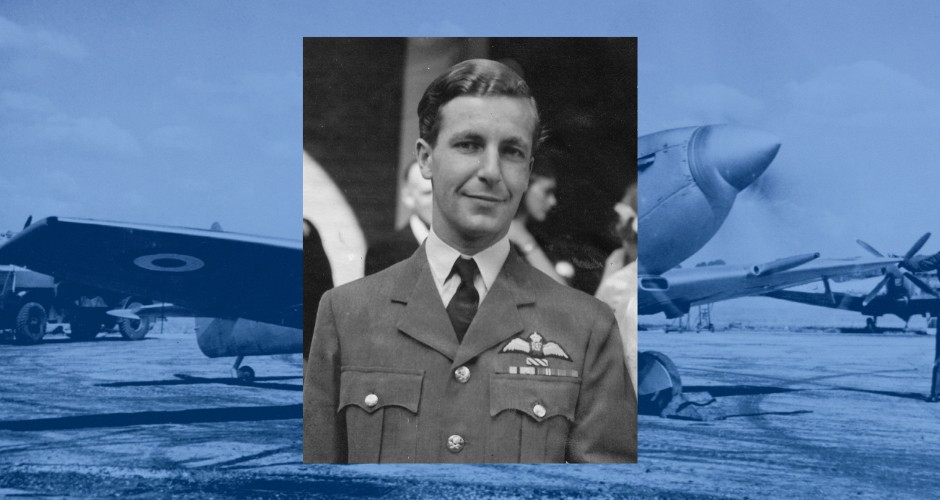



Need to keep reading and find out what happens to Julia? Buy Snap Shot here now!

Read the first chapter of gorgeous romance TO LOVE, HONOUR AND OBEY now!

CHAPTER 1

1805, North Riding, Yorkshire

Willoughby Rossington gulped the much needed ale down his dry throat, sighed with relief and placed the pewter tankard on the upturned barrel, which doubled as a table. It had been a difficult mission and a hard ride, but Willoughby had managed to flush out his prey, a highwayman, and after a chase across exposed moorland had relieved the country of one more specimen of murdering vermin. Now, he leaned patiently back on the settle, which lined the alcove next to the rear door of the inn, watching for the York coach to arrive.

Discreetly, Willoughby checked the shallow cut on his wrist. It had not been deep enough to sever the vein. Taking a clean strip of linen from a side pocket of his case, he tied it around his wrist as best as he could, using his free hand and teeth. This was not the first time he had been wounded. A pistol shot had caught him as he was chased across a French beach the previous summer. Fortunately, he had not been on his own and was tossed into the bottom of a fishing boat waiting to return him to England. His uncle had called it his initiation — a rite of passage. The slight scar above his left ear would apparently serve to remind him to take greater care. He slipped his wrist inside his cuff and smiled — no more scars, he thought.

A flurry of activity broke out in the yard.

“York coach!” A horn was heard as the vehicle approached.

Willoughby drained the tankard, ran a hand through his fair hair before replacing his hat, picked up his bag and headed out. He was anxious to be on his way again. The coach had made good time and was busy. A family with two young girls filled most of the inside, so it was with some relief that Willoughby found himself climbing on top. He settled as comfortably as he could, holding on firmly as the horses pulled their burden back out onto the open road, increasing in speed and momentum. Willoughby felt the invitation to attend his uncle, Lord Nathaniel Rossington, in his pocket and relaxed into the journey. The rush of air on his face made him smile. He anticipated his uncle’s next set of orders and relished the prospect of serving his country further.

The coach sped between the open moors and fields, slowing as it approached the ancient city of York. Willoughby was aware of the noise emanating from the lunatic asylum as they passed by. He swallowed, feeling pity for the poor souls trapped inside. That would be hell on earth to him, to be trapped like a caged animal, or worse, chained like a bear, perpetually baited.

The vehicle entered through the ancient stone archway and slowed to navigate the heavily soiled mire, making the going heavy as it passed through one of the ancient crumbling Barrs, ready to traverse the narrow lanes inside the old walls, where a mixture of wooden medieval homes with their jutted fronts gave way to the fashionable new stone buildings.

Willoughby looked on in wonder at the might of The Minster, the magnificent cathedral that dominated the cobbled together collections of buildings around it. No matter how often he saw it, he was always impressed. York was a place which confused and delighted his senses by turn. Contrasts were everywhere: putrid stench mingled with the more pleasant aromas of the market, rich living alongside the impoverished.
The coach came to a lumbering halt in front of an old inn. A sign swung dubiously above the door of a phoenix rising from the ashes. It was a sorry depiction of what should have been a lovely image, buffeted by the wind and heavy rain.

The innkeeper rushed around the corner and greeted his new arrivals, despite the pouring rain. All was a hive of activity. A small step was brought for the passengers to climb down onto. Willoughby knew that Lord Rossington would have been informed that the coach was in. He would be expected to report shortly but he was tempted to go inside and warm and dry himself.


Beth heard the excitement as word reached the inn that the coach was approaching. She had been preparing food in the back in readiness. In her dreams, she would get on the coach, dressed smartly in a travelling coat and be taken to some grand house where her husband or, more likely, her lover, would be awaiting her return. She put down her bread knife at the side of the stone sink, brushed her hands against her coarse skirts and glanced anxiously around her. Dotty, the cook, had gone into the back yard and Irwin Wilkes had left earlier on ‘business’. He would normally greet his guests and then return inside — to her. She grabbed her old shawl and pulled it around her shoulders, thinking that he must have been delayed.

Beth knew if she was caught shirking, she would be in for trouble, yet the yearning inside her made her desperate to see who the coach had brought in. The longing to escape the inn, her hellhole, was growing daily. She had nothing of her own and no one to go to, but the coaches came and went and each time her heart desired to go too. She was the bird lost in the ashes and she would take flight, unlike the bird that was trapped on a piece of wood swinging above the doorway.

She ran her fingers through her rich auburn hair, its fiery colour subdued by the need of a wash, though she kept it in relatively good order as she hated the knots. Beth peeped through the serving hatch just to make sure that Irwin Wilkes had not become distracted by his friends and was sitting on his favourite settle. No, he was hovering somewhere outside in his coat. He owned the inn and, although it hurt Beth to think it, he also owned her. Two seasons ago she had been bought by coin from the orphanage where she had grown up as a young woman to serve drinks at the inn. She had no say in the matter, no rights, and was told to be grateful her fate was not a worse one. It was go with Wilkes or live on the filthy streets.
Peering through the musty, smoke-filled tap room she could see the passengers alight from the coach. One man stood alone and slightly to the side. Beth watched him. He did not look as if he intended to enter, she noted with disappointment, but stood surveying the city. He was tall and from what she could see of his features, between high collar and tall hat, handsome. He looked to the inn, but despite the soaking he had had, he decided to move off.

He must be lost, Beth reasoned, so she straightened her shoulders and stepped forward, ready to cross the room and welcome the guests and offer the stranger her help before he decided to leave — if she could. There was something about him that drew her to him. He would fit the image of the man in her daydream well enough. Even though he was clearly a gentleman, she thought, a girl can dream, can’t she?

“Beth!”

She froze. Wilkes’s footsteps neared as his boots sounded upon the flagstone floor behind her. The weather must have dampened his enthusiasm for being a good host.

“Where d’you think you are off to, my girl?”

She could smell his musk. He spun her around, whipping the worn fabric from her shoulders. The word ‘my’ resonated in her head as the usual feelings of disgust stirred within her belly. He threw his coat onto a stool.

“Nowhere, Mr Wilkes. I was just a bit cold and I heard all the noise.” She tried to keep her voice calm as getting flustered only provoked his temper further. Her eyes were downcast; he took it as a sign of submission. She used it to shield the hatred that burned within them.

“Cold, eh,” he repeated, and chuckled. “Go on up to me room. I’ll be there shortly.” He slapped her rump as she stepped away.

Beth tried not to show him fear or her anger. She picked up her shawl; moth-bitten it may be, but it was hers, and then climbed the wooden steps to his room above, cursing her stupidity and dreading his idea of giving her warmth.


Willoughby stretched to his full height. He was tired, his wrist was sore, but he needed to see his uncle — then he could think about resting before setting off again on his next mission. He was in the north; he was so near to where his father had been murdered. Willoughby’s heart desired one mission more than any other: to investigate that ‘accident’. No one had been brought to justice. Five years later and he had proved to his uncle he could wheedle out vermin and be trusted, so why not now avenge his father’s death?

He approached the grand façade of the elegant terraced house. Willoughby had to stay level-headed; displays of emotion were not appreciated — ‘anger was to be challenged into action, not allowed to burn and destroy internally’. His uncle was full of such pearls of wisdom.

He lifted the brass knocker, then crashed it against the door and waited until a liveried servant opened it to him.

“Is my uncle at home?” Willoughby asked.

“Your uncle? May I have your card, sir?” The man spoke stiffly and held out a gloved hand.

Willoughby wondered if he was one of his uncle’s agents or just a household servant; either way, he acted like a pompous fool. Willoughby pulled the invitation from his pocket, returning it to its sender. It was his pass to a very different world — one in which he thrived. The man responded with a cursory look up and down as rain dripped off Willoughby’s greatcoat and onto the doorstep of the elegant house.

Willoughby met the man’s stare in challenge and made to step forward. It had been an uncomfortable journey and his patience was becoming worn. The servant closed the door on him, disappearing with the letter. Willoughby balled his fist and looked across the sodden road, waiting patiently, albeit reluctantly, to be allowed entry. A few minutes later the door reopened.

“My apologies, sir.” The man bowed low as he stepped back, allowing Willoughby to pass by him, whilst taking his hat and coat. “This way, if you please, sir.”

Willoughby followed him across a chequered floor and down a narrow corridor to a set of doors towards the back of the house. Beyond them was his uncle’s study. Immediately Willoughby entered, the doors were shut securely behind him, not one, but two sets separated by a good thick curved wall. This was a necessity, as his uncle could not afford to have his private discussions overheard by anyone.

Willoughby was surprised that the normally officious man was not sitting and looking imposingly at him from behind the large mahogany desk as was his habit. Instead, he stood silently gazing at a painting that adorned the wall above the marble fireplace. Immaculately dressed in a perfectly fitted black coat which accentuated his straight and noble posture, he held his hands clasped behind his back. “Do you know what this is, Willoughby?”

Willoughby sighed. Never a warm word of welcome, but he knew how to respond. “It is a seascape, Uncle.” Willoughby stared at it emotionless, almost mimicking his uncle’s dour manner until he saw a flash of annoyance showing in the older man’s eyes. “A stormy sea and a rescue boat being hauled into the water by the local villagers.” Willoughby admired the movement and energy within the painting. One could almost feel the tempest raging and the desperation of the people to launch the life-saving boat into the water.

“What else can you see? Where do you think it is set?” his uncle persisted, staring at him, waiting for Willoughby to look beyond the obvious. It was like a game, a grooming, which both his uncle and his father had played with him since he had been a child.

Willoughby stepped forward, relaxing his pose. He looked at every feature of the painting: the group of people at the water’s edge, the windmill behind a row of small fishermen’s houses, the firm flat sands, the high rugged headland in the distance and the menacing sea. “By the attire of the people and the geographical features of the land, I would say this is a fishing village on the remote north-east coast.” Willoughby glanced at his uncle, waiting for acknowledgement or approval.

“And what reasoning is behind this decision, Willoughby? Have you proof of a logical nature or is this just a wild guess — no more than a lucky whim?”

“No, Uncle, it is not a guess. The boats in the background are the cobles of the Yorkshire design. They land on the flat sandy beaches, cutting through the breakers. The sea is treacherously turbulent and that area is infamous for its wrecks. To the right are the ancient marshlands and dunes, whilst to the left, the steep jutting headland forms a dramatic feature. The boat is one of the new designs of ‘lifeboat’, which I believe has to be pulled manually down to the beach by the villagers in order to launch it successfully.”

His uncle released his hands, relaxing his stance and patted Willoughby firmly on his shoulder. “Excellent observations, Willoughby; you show some intelligence. I’m glad your time at Cambridge was not wasted; you have at least learnt to deduce. So tell me, why am I showing you this merciless place?” Nathaniel Rossington flicked the tails of his coat up into the air and rested against his desk.

“You wish me to go there, no doubt still wearing the robes of a priest and save the poor from the endless toil of their lives and their mortal souls from hell itself, Uncle?” Willoughby raised a cynical brow, as he knew Nathaniel was a sceptical man, a non-believer, a fact he kept very much to the closest family members to avoid unnecessary problems within the society with which he mixed.

“I would say they are beyond salvation and, personally, I should let them rot away within their own grimy existence.”

Willoughby was not surprised by the man’s sentiment, he had his sights set on saving a nation, apparently forgetting at times that the word represented common men eking out a ‘grimy existence’ and not just the land itself.

“However, I would also remind you that this is not a game anymore, Willoughby. It is as serious as life and death … yours included.” Nathaniel looked at Willoughby, whose gaze did not waver despite his uncle’s powerful withering stare. However, Willoughby did note the fleeting glint of amusement in the man’s eyes — a rare sight.

“There are treacherous men earning a lot of money in the region — corruption throughout and within the villages which has spread to the normally decent social strata. I need you in there.” He pointed to the painting, his manner intense. “Yes, don your priest’s garb and start preaching and listening to as many confessions as you can…”

“Uncle, I am not a priest. I have chosen a very different path now.” Willoughby spoke out defiantly, then instantly wished he had controlled his tongue. “Surely, I have proven to you that I would have been wasted in such a role when I refused to follow the path which was laid out for me by Uncle Jeremiah, God rest his soul. I would be better serving as a soldier — please, sir, allow me to hunt down Father’s murderers or obtain me a commission so that I may serve, with your blessing.”

“I am fully aware of what you are and what you are not. Unless you wish me to return you to ‘your initial path’ and insist that you are to be permanently planted in a respectable parish with a fat wife and several noisy brats to feed, you would do well to remember how much I do know about you, Willoughby James Rossington!” Nathaniel’s words were harsh, but as always, controlled. “You serve best where I place you. Your brother serves the King, you fight a very different battle and I need you here to do it!”

Willoughby nodded, annoyed that this man who had acted as a father to him when his own died prematurely always placed his duty first. More disastrous news had followed the next year when his elder uncle, Jeremiah, had perished in a riding accident. Nathaniel was totally devoted towards his King and country. He buried his pain deeply, though, Willoughby realised. Willoughby had been sent to many a dark place concerning his clandestine role. It had shown him a world very different from the old clubs of St James Street in London and the halls of Cambridge. Nathaniel was a man who demanded and expected nothing less than total obedience from those who served him, whether relative or not, and that had earned him Willoughby’s absolute respect.

Willoughby did not want to don the garb of the priesthood. He had his own faith, but preaching was something he found no comfort in. It irked him that he had been made to hide within the role in order to be of some use to his uncle. He should have been the soldier — Charles wanted to stay on the estate, but the uncles had insisted he fought for the family honour, leaving Willoughby’s path clear for the priesthood.

“You will win the hearts of one or two of the local people. Use your stealth, wit and common sense, but, Willoughby, remember this is no fool’s errand. We have reason to believe that the rot that has set in this area is deep and complex. Every one living there is as guilty as their neighbour of plying the trade. They will not break their ungodly ranks and speak out… Strangers are like foreigners to them, they live in greed and ignorance. Only last month, a riding officer nearly had what brains he possessed spilt from a broken skull after he came across a group of ‘fishermen’ moving a catch. It was not crabs they had plucked from the sea. The fool shouted warning before shooting!” Nathaniel shook his head. “You have two names to keep in your mind, and I demand that you make your initial contact with them as a priest, someone people will pass by, seeing the uniform and not the man, yet, hopefully, show respect and trust.”

Willoughby was surprised by the severity of the tone in his uncle’s orders.

“Go to Major Walter Husk, who has a temporary barracks in Whitby. He will brief you on the known smuggling activity along the coast north of Whitby, and then to Reverend Artemis Burdon of St Aidan’s at Ebton. He will take you in and give you a base from which to work. I do not want you to use the name ‘Rossington’. Our family name will be kept out of this. You travel as Reverend Mr Willoughby James. Make sure you conjure up a credible past-life, which does not link you back to the family or me. You are working incognito. Only Husk and Burdon will know the truth. Both are loyal to the Crown and…”

“My father’s murderers…” Willoughby’s face was instantly animated. It was on Ebton beach that the body of his father, Joshua, had been washed up. “Is it possible that Father’s murderers still walk free after nearly six years?” Each time Willoughby had requested to investigate it he had been turned away with other missions to attend to, keeping him far away from this part of the country. It was always with the promise that when the time was right, his turn would come. Now he needed to know if that time was here. Willoughby clenched his fists at his side as the years of frustration and training mixed with his eagerness to set off on his own personal quest grew.

“Of course it is possible, Willoughby!” Nathaniel stood tall and looked into Willoughby’s deep brown eyes as if analysing his private thoughts. “You need to put all personal issues aside. We both do. We are working for our country, for the very survival of our nation.” Nathaniel swallowed as if struggling to keep his composure. “We are at war with the French. The trade forgets its loyalties and anything is sold for the right price. If, and I mean if, there is a link between my brother’s early demise and the current tenuous situation, then I expect you to discover it and act accordingly. They went to ground, but have now risen stronger than ever. But remember this: King and country first, revenge last! Do I make myself clear?” Nathaniel raised his eyebrows.

“Yes, sir!”

“Oh, and one more thing to remember: the harbinger of evil can be both male or female. Your father was engaging in an affair as well as his ‘work’. It may have been the cause of his downfall.”

Willoughby’s attention had wandered to the painting, straining at the menacing sea and the headland beyond. He swallowed, for it must have been a cold and lonely death to die in those waters alone. At the mention of an affair, so calmly announced, Willoughby’s head shot back around to look at his uncle.

“Affair? With who?”

“I do not know who. You will not fall into the same trap, will you, my young priest?”

Willoughby was taken aback. He had never thought it possible that his father had had an affair, for his mother had died of a broken heart four years since.

Nathaniel patted him on the back firmly.

“Here is a purse. The sooner you go and pay your respects to your aunt, the sooner I shall have peace from her on this matter. I swear the woman can hear through the walls of a fortress. May your God be with you, and I hope you come back to us safely from this vipers’ nest, Willoughby.”


Have to keep reading? Buy To Love, Honour and Obey now!


Author Q&A with Kim Fleet

Kim Fleet is the author of the Eden Grey Mystery Series, coming soon from Sapere Books.

Hi Kim! Welcome to the Sapere Books Blog!

What first got you into writing?

I started writing when I was 9. My dad gave me a book called Write Your Own Novel. It was the first time I’d make the connection that the books I loved reading were written by real people, and I thought I’d like to have a go. Dad also gave me a hardback notebook with beautiful marbled endpapers to write in. I filled it with large, round writing; enormous speech marks; and classic lines of dialogue such as, “Hello, Queen Elizabeth the First, would you like a cup of tea?”

What are your typical writing habits?

All my planning is done longhand. I write out character lists, character portraits, and scene outlines with just enough information to get writing but with enough space for the story to grow on its own. I also draw maps of places and maps of connections between characters: this shows me instantly whether I’ve got enough material for a full novel or if I need to come up with another subplot. It helps to avoid the dreaded soggy bit at 30,000 words in. I do a lot of the planning in cafes as I like the buzz of people around me (and the cake). When it comes to writing, though, I use a laptop and sit up in bed to write with the radio on in the background. It’s terrible for my back but does mean I eat less cake.

What part of the writing process do you find most difficult?

The first three chapters are always a nightmare, mostly because I’m still feeling my way into the novel and don’t know the characters fully yet. Those chapters will be rewritten time and time again. Once I got 30,000 words into a novel, realised I’d got the wrong character as the murderer, and had to scrap the whole thing and start again.

How much research do you do?

Every novel requires some research, whether it’s on places, historical detail, or forensic procedures. Research is so absorbing it’s easy to get lost in it, so I discipline myself to do enough to feel confident to start writing and no more. During the writing process, if I realise I need to research something, I write it on the manuscript and come back to it once I’ve got a complete first draft.

Do you ever find your characters controlling their storylines?

Absolutely. The characters become incredibly real, not only when I’m writing but during ‘normal’ life, too! I often have a voice chuntering in my head as I walk round the supermarket or when I’m gardening. In recent years, in addition to hearing characters I’ve started to be physically touched by them, too. It sounds bonkers, but sometimes when I’m in the car I can feel my character’s knees poking into my back. I think I need to create characters who are a bit shorter.

Do you ever feel guilty about killing off characters?

It’s very hard to kill off some characters, but I think that’s necessary to the story. In crime, there has to be something at stake, an offence against society that we care about and want the sleuth to avenge or solve. If I don’t care who dies, if it doesn’t hurt me while I’m writing, then there’s no power in the set-up and nothing for the sleuth to put right.

Do you find it hard to know when to end a story?

All the time. I either stop too soon or drivel on for too long!

Which book do you wish you had written?

Red Joan by Jennie Rooney. It’s a crackingly good read. It’s the book I always recommend to friends when they say they don’t know what to read next.

Tell us something surprising about you!

I can sing ‘Three Blind Mice’ in the Aboriginal language of Pitjantjatjara.


Paternoster, the first book in the EDEN GREY MYSTERY SERIES is available to pre-order now.

GET PATERNOSTER HERE!

Author Q&A with Patricia Caliskan

Patricia Caliskan is the author of two romantic comedies: Awful By Comparison and Girlfriend, Interrupted.

Hi Patricia! Welcome to the Sapere Books blog!

Can you tell us a bit about what first got you into writing?

I wrote stories from about the age of six. I collected stationery, pens and pencils, and spent hours at my miniature desk, making ‘books’ for the family. Beverley Cleary’s Ramona series was a huge inspiration to me as a little girl.

What does your typical ‘writer’s day’ look like?

A typical writing day looks like writing through the night. I’ve always been slightly nocturnal; that’s when I get most of my ideas and can be totally focused. I have a 4 a.m. cut-off and wake up completely zooped to read and edit the work. I have a few places I gravitate towards throughout the house. My latest project is basically happening in the kitchen, so there’s been a lot of snack breaks with this one.

I drink coffee on-tap and usually have a playlist on the go. No rituals as such, but candles signify ‘writing time’. That’s about as ceremonial as I get.

What part of the writing process do you find most difficult?

My challenge seems to be plotting from about three-quarters of the way through to the ending. It’s incredibly exciting to start a project, and I know how each story ends – until I begin writing. The characters and storylines naturally evolve, so my plotlines tend to evolve too. It’s a bit like using Sat Nav. I know my destination, but don’t always take the most straightforward route. 

Do you find it hard to know when to end a story?

Absolutely not! There’s nothing like typing ‘The End’ after I’m 100% satisfied I’ve tied up every strand of the story, and done the best work I can for the reader. It’s the best feeling.

How much research do you do?

There’s research involved in every book. Luckily, it’s one of the reasons I enjoy the process. The character of Lara in Awful by Comparison was based on reports ahead of the #metoo movement, and Gia Carangi in particular. The subject of step-parenting in Girlfriend, Interrupted was something I personally experienced, but I visited online forums to make the dynamic as relatable as possible. I’m currently learning about the psychological effects of being widowed, and floristry, so you could say it’s pretty varied.

How real do your characters become and do they ever seem to control their own storyline?

My characters absolutely dictate their fate. Their voices can become very different to how I initially heard them. Listening to certain nuances and spending time with them, they’re full of surprises. It’s kind of like developing a friendship, really. My understanding of them deepens over the course of the novel.

What are you working on at the moment?

I’m currently working on my third novel. It has an ever-changing title, but I can say with certainty that it’s set in the fictitious address of Arkin Avenue, and tells the stories of a great bunch of characters. I hope you’re going to love them.

Which book do you wish you had written?

As she’s fresh in my mind, The Private Lives of Pippa Lee. It was one of those books which made me happy, simply because the character existed. I thought it said a lot about the shifting roles we occupy throughout our lives.

Tell us something surprising about you!

Duran Duran have been my favourite band for nearly 35 years. If you take another look, you’ll find them mentioned in all of my books so far!

Sapere Books Author Meet-up

On Saturday we had our semi-annual author meet-up in London, where we had a chance to catch up with our wonderful writers over drinks and nibbles, as well as finding out what their next big projects are. Here is a taster of what’s to come:

Simon Michael, Natalie Linh Bolderston and Elizabeth Bailey

Elizabeth Bailey has more dazzling Regency romances and murder mysteries in the pipeline with new Brides By Chance and Lady Fan novels coming our way.

Graham Brack has handed in the final instalment of his thrilling Josef Slonský Investigation series, and will be launching a new historical crime series next year.

We are currently working on Jane Cable’s second compelling romance novel, Winter Skies, and she is already drafting her third.

Michael Fowler’s gripping crime thriller series, the DS Hunter Kerr Investigations, is being launched this month.

Anthony Galvin is working on exciting new thrillers under the pen name of Dean Carson, which we will be publishing soon.

Anthony Galvin and Michael Fowler

Charlie Garratt is drafting book three in his intriguing historical mystery series, the Inspector James Given Investigations.

The captivating fourth instalment of Valerie Holmes’ sweeping Regency adventure series, The Yorkshire Saga, will be coming out soon.

Two members of the Romantic Novelists’ Association, Natalie Kleinmann and Ros Rendle, have recently signed with us and will be bringing out brilliant new books next year.

A brand-new book in Simon Michael’s atmospheric historical crime series, the Charles Holborne Legal Thrillers, is going up on pre-order this month and he has an idea in mind for the next one.

We will soon be publishing book five in Linda Stratmann’s absorbing Victorian detective series, the Mina Scarletti Mysteries, and she has started work on book six.

Deborah Swift’s powerful new wartime romance, The Occupation, will be out by the end of this year.

Thank you to all of the authors who were able to attend, and we hope to see everyone again to celebrate our second anniversary in March!


The Sapere Books team


Image credit: a big thank you to Gary Stratmann for his photographs.

Why I’m Addicted to Crime Thrillers by Gaynor Torrance

Gaynor Torrance is the author of the DI JEMIMA HUXLEY THRILLERS series.

Like many other people, I’m a crime thriller junkie. I can honestly say that books in this genre are my guilty pleasure — as well as chocolate, of course. As far as I’m concerned, it has to be well-written and absolutely has to have a complex plot. I need an abundance of twists and turns, along with a large helping of red herrings. If it keeps me guessing, it will offer me everything I expect from a good book.

I want the story to grab me and not let go. Whenever this happens, my own identity quickly fades into the background, and I become the protagonist. Gender is unimportant to me. I don’t care whether the protagonist is male or female. The only thing that matters is that I inhabit a world I would shun in real life. Fictional characters are instantly relying on me, and I’m desperately trying to save lives whilst I figure out what’s going on. 

From the safety of a comfy armchair, these books have transported me to places I’ll never visit. They’ve presented me with opportunities to solve mysteries. Allowed me to get up close and personal with some of the most evil and twisted minds you could ever imagine. Over the years, I’ve brought justice to victims, been caught up in life-threatening situations and sometimes even had a hand in saving the world from imminent disaster.

Immersing oneself in these fictional scenarios is my ultimate form of escapism. It’s a white-knuckle ride minus the personal risk.

Having so many ideas of my own, I decided to take things a step further. And so I began writing about Detective Inspector Jemima Huxley, whose stories are set in Cardiff, a city I know well.

I love Jemima, but that’s because I know what makes her tick. I appreciate that on first appearance, she’s perhaps not the most likeable of characters. In Revenge, which is when readers are introduced to her, she comes across a bit like Marmite. She’s not a typical lead detective, and this will polarise opinion, as you’ll either love her or hate her.

When I created Jemima, I wanted her to have an interesting backstory. Over the years, I’ve read so many crime novels that have a hard-nosed lead detective heavily dependent on alcohol. Or whose personal relationships are in tatters because of the pressures of the job.

DI Jemima Huxley is different. She’s a modern woman who gets stuck in and excels at her job. Jemima is determined to have it all. At work, she’s a capable, dedicated detective: loyal, brave and intelligent. If only she had more control over other aspects of her life…

If you’ve read Revenge, you’ll already know that Jemima has some serious personal issues. She’s hiding things from everybody. Her mental health is suffering, and she’s in danger of falling down a rather large rabbit hole.

Most importantly, Jemima hasn’t yet figured out what’s at the root of her problems. I have a feeling that that epiphany is a long way off, and until it happens, there’s little chance she’ll begin to turn things around.

Jemima’s personal torment manifests itself in a way that is guaranteed to upset some readers. And I’ll let you in on a secret — I’ve shed tears as I’m writing those scenes. What Jemima does to her body is shocking, brutal and heartbreaking. But her method of keeping a lid on things is a reality for some people.

It’s a sad fact that mental health issues are still stigmatised. And, like many others, Jemima feels compelled to hide her suffering for fear of being judged.

But Jemima isn’t the sort of person to give up easily. She has her low moments but always seems to manage to pull herself together and face whatever life throws at her. Any serial killers stalking the streets of Cardiff had better watch out, because Jemima’s returning soon to investigate her next big case, Sole Survivor!

Click here to order REVENGE now!

Author Q&A with Gillian Jackson

Hi Gillian! Welcome to the Sapere Books blog!

The first two books you have published with us have similar themes of children going missing and families struggling to find them. What initially drew you to those sorts of stories?

I set out to write a compelling story (and what is more compelling than the abduction of a child?) that could be seen from several different perspectives. Those of us who are parents can imagine the horror of a missing child, and I was able to draw on my experience of a time when my own two-year-old daughter went missing from our garden. She was only out of my sight for a few moments and fortunately was found within forty minutes, but the gamut of emotions my husband and I experienced was terrifying. The fear, guilt and despair almost crippled us. I was able to project some of these emotions onto the parents in Abduction and Snatched, who had to wait more than an hour to find out what had happened to their missing children.

We will soon be publishing a third thriller by you – THE ACCIDENT. Can you give us a little teaser of what it’s about?

This is a book I consider to be my ‘ripples in a pond’ novel. It begins, as the title suggests, with an accident and follows the consequences for those involved. As the story unfolds, jealousy comes into play with a shocking outcome; a life changing injury is faced, and the very best possible outcome is derived from the very worst scenario. If that isn’t enough, there’s a smattering of romance too!

Have you always wanted to be a writer? What first got you into writing?

It wasn’t until my early fifties that I began writing seriously, although I’ve dabbled in children’s stories and short stories for most of my adult life. Initially, writing was for me a therapeutic experience, as I kept a journal while recovering from a rather difficult period in my life. The first book I ever wrote was a small self-help book, my only foray into nonfiction so far.

What part of the writing process do you find the most challenging?

Probably the ending, as I sometimes get too bogged down in tying up all the loose ends until I’m satisfied that the story is properly wrapped up. Perhaps this is because when I read a book, I find an incomplete ending so frustrating!

Where and how do you write? Do you have set hours or do you write when you feel motivated? And do you have a favourite writing spot?

Being easily distracted, I’m fortunate to have a designated study to lock myself away to write. I try to write most days but often find my mind most active late at night when all these fictional characters keep me awake with their conversations, and I need to write, or at least make notes. As a work in progress develops, the time I spend on it increases as my enthusiasm grows.

Do you like to read the same types of books you write? Or something completely different? Can you tell us some of your favourite books?

I read quite widely, from thrillers to sagas. I love all of Kate Morton’s books as well as Victoria Hislop’s, particularly The Island. Some of my all-time favourite books are Jane Austen’s novels and the works of the Brontë sisters; I love the sense of atmosphere that leaps off every page, and Austen’s wit is amazing and so timeless!

What three tips would you give to aspiring writers?

You can’t do enough editing and polishing. The temptation when you write those satisfying words ‘the end’ is to get your book out into the world. Don’t – leave it for a couple of weeks and go back to read it again with fresh eyes; you’ll be surprised. Also, write what you know, and enjoy the journey.

Tell us something surprising about yourself!

I used to walk my rather large pet goat, Hobnob, around the streets on a lead. We were discovered and interviewed for BBC TV, but I had to do most of the talking.


Gillian Jackson is the author of psychological and domestic thrillers.

Click here to order ABDUCTION.

Click here to order SNATCHED.

Picking my First Villain by Michael Fowler

Michael Fowler is the author of the DS HUNTER KERR INVESTIGATIONS series.

 In 2010, after 32 years as a cop, and an even longer time as a passionate writer and lover of crime fiction, Heart of The Demon — the first in the DS Hunter Kerr series — materialised as the book I always told myself I could write.

It is inspired by a true crime event. As a Detective Sergeant, I was following up information in relation to a girl who had been missing for a number of years, and much of her previous history was recorded on her original missing report that had been filed away and stored in the basement at Barnsley Police station.

Whilst seeking it out, I came across a large cardboard box, which, upon rooting through, I found it contained the court file and crime scene photos for a man called Peter Pickering, who was dubbed ‘The Beast of Wombwell,’ and I couldn’t resist rummaging through the contents to get an insight into his crimes.

Peter Pickering was first convicted of attacking two schoolgirls in 1966 and was jailed for six years.

In 1972, five months after his release, he abducted 14-year-old schoolgirl Shirley Ann Brody in his home town of Wombwell, near Barnsley, drove her to secluded woodland, where he raped her and stabbed her while wearing yellow washing-up gloves — a detail that gave rise to his other tabloid nickname, the “maniac in the marigolds”.

Following that murder he was locked up in a psychiatric hospital, but it was always believed he had committed more attacks and murders, and he was interviewed by detectives on numerous occasions over several decades. The focus of those interviews were the murders of 14-year-old Anne Dunwell, from Rotherham, in 1964, and 14-year-old Elsie Frost, from Bradford, in 1965.

He refused to cooperate. However, following another investigation, detectives found evidence linking him to the rape of a Sheffield woman, committed just weeks before he abducted and murdered Shirley Ann Brody, and last year, at the age of 80, he was convicted of that rape.

Early this year Pickering died, taking his secrets to the grave. The finding of the Peter Pickering case file in Barnsley Police Station basement became a light-bulb moment for me as a writer, and has not only provided some of the background for Heart of the Demon, but has also inspired another of my Hunter Kerr novels, Shadow of The Beast.


Michael Fowler is the author of the DS HUNTER KERR INVESTIGATIONS series.

Click here to order HEART OF THE DEMON now!

Author Q&A with Elizabeth Bailey

Hi Elizabeth! Welcome to the Sapere Books blog!

 Elizabeth Bailey is the author of THE LADY FAN MYSTERY SERIES – romantic Regency crime novels, and THE BRIDES BY CHANCE REGENCY ADVENTURE SERIES.

 Can you tell us a little a bit about what first got you interested in writing?

I can’t think of a time I didn’t write. I dabbled for most of my young and adult life, but I was in my thirties when I became a member of a co-operative writing group with the idea of sending out each other’s work. I wrote several short stories and then decided to write a historical romance, a genre I had been reading from a child beginning with the novels of Georgette Heyer. That book, though it never saw the light of day, was the turning point. I loved writing it and felt I had at last found my true metier. I’ve been writing fiction ever since.

Do you have set writing times?

Mostly I write my first draft early morning in bed after I’ve had my tea. If I can get between 500 to 1500 words written, I feel I’m making progress. I try to get it all down without research, leaving notes to myself within the text where I need more data. The murder or where it happens, I will usually check out before I start, unless I add something new and have to go and find out about it before I can get on. I can’t start at all until I have names of the main characters and a general idea of what is likely to happen in the first couple of chapters. I actually don’t usually know who the murderer is when I begin. Nothing like making life interesting for yourself!

Seeing as you write historical fiction, do you find you have to do a lot of research?

These days with many years of historicals of the same period behind me I am so familiar with the time that my research is mostly for specifics. I have many books collected over the years which furnish me with the detail I need. My main focus of research is in the area of the murder and the internet is a mine of information on the subject. You can find contemporary sources relating to anatomical matters, which means I can be as accurate as possible according to knowledge of the era. However, I do turn to current material for exact descriptions of what happens, for example, when someone is bludgeoned, knifed or otherwise injured. All of which is fascinating to read about.

What part of the writing process do you find most difficult?

Struggling through against the odds when life intervenes. This happens and you just have to deal with it. It’s virtually impossible in this day and age to shut yourself away in an ivory tower to get your first draft done. I wrote a short book in a week once on a holiday. Another time I forced through 5000 words a day to get a novel done. But it’s not optimum. It doesn’t allow time for the filtering process that builds the minutiae of the story and generates ideas you hadn’t thought of until some trigger sets them off. Working steadily every day seems to build a book better, but it does mean you are subject to interruptions and getting back into it after a break is the hardest thing of all.

Do you find your characters start to control their own storylines?

Yes, they become totally real, and some characters are completely independent and go off in unexpected directions. The thing is, you invest them with life and then they become real people (albeit in a sort of ghost form in your head). They start behaving according to their character and you might have no idea of who they really are until they do this. Ottilia is a case in point. She was supposed to be a retiring female, letting Francis take the lead. Not a bit of it. She marched into centre stage the minute I set her on the page and stayed there. In the book I’m currently writing, I had a peripheral character take off in much the same way and seize quite a chunk of the story from Ottilia. Experience has taught me to run with it. I have a great belief in the Inner Writer knowing a great deal more than I do about the developing story. It really is like being two people sometimes.

Do you ever feel guilty about killing off characters in your crime series?

Apart from the initial dead body, I hesitate. The first death is the spur for the story, so that’s all right. We usually don’t know that person. But it’s very hard to kill off someone who has become a character in their own right. But that’s good, I think. It transfers to my heroine, who is allowed to have an emotional reaction to such a death.

Do you find it hard to know when to end a story?

Usually the story comes to a natural conclusion. Then it’s just a matter of tying up loose ends and giving my lead characters a chance to mull and make decisions of their own. I like to keep the denouement fairly short. When the story is finished, that’s it. And there’s a maxim – always leave the reader wanting more. If you ice the cake too richly, they might be too satisfied to want another slice.

Which book by another author do you wish you had written?

Oh, that’s a tough one. For sheer quality perhaps, another long-time favourite, In This House of Brede by Rumer Godden. So subtle, engaging, insightful and just beautifully written. But then I would love to write like PG Wodehouse whose Jeeves and Bertie books I adore. I’ve had a go in a play I wrote for school when I was teaching drama, and I have a short story out in a similar style (To Catch a Thief). Or Terry Pratchett with such a discerning eye for the human condition.

Tell us something surprising about you!

When I was a teenager, I won two cups for target shooting with a 303 rifle. Now I couldn’t hit a haystack!

Author Q&A with Linda Statmann

When did you first start writing? Did a specific event encourage you to start?

When I was six years old, I saw a TV programme about the Blitz, which as you can imagine was pretty alarming. I wrote a poem about it.

How much research do you do?

I am fascinated with the Victorian era and do a lot of research to try and get the details right. I read contemporary newspapers and journal articles, biographies and medical works. I study maps, census returns, directories, legislation, photographs, and art. I have about a hundred books just on the history of spiritualism.

Tell us about where you write / your writing habits.

I work from home and have a room which is my office. I don’t work set hours; even when I am doing the household chores, my mind is still working on my latest project or planning a new one.

What part of the writing process do you find most difficult? Starting, knowing when you’ve done enough research, the ending?

When I begin a project, I know where I am starting from and where I will end up, but I have to link the two in a way that makes sense. Every time I pause in order to find that natural link, I have to remind myself that I found it last time. It’s worked so far.

How real do your characters become and do they ever seem to control their own storyline?

They feel very real to me, and because I let themes develop naturally in my mind often the characters do things that I hadn’t necessarily planned but emerge from their personalities and situations, so sometimes they do take me by surprise.

Do you ever feel guilty about killing off characters or do you relish it?

Neither, but it is sometimes sad. It’s very hard writing about a character who I know is about to become a murder victim.

Do you find it hard to know when to end a story?

No, I know when it feels right to me.

What are you working on?

I am editing a new volume in the Notable British Trials series about the trial of the Mannings in 1849. I am also developing the plot for the fifth Mina Scarletti book, to be entitled His Father’s Ghost.

What are you reading right now?

Munich by Robert Harris.

What is your favourite book? Who is your favourite character?

I have read thousands of books and it is impossible to pick one!

What book do you wish you had written?

See above.

Do you love any genres/books that are very different from what you write?

Most of my reading is non-fiction: history, biography, true crime, psychology. In crime fiction, I tend to read books with modern settings or if historical, a very different time period from the one I write about.

 Tell us something surprising about you!

I prefer pickles to sweets!

Author Q&A with Alexandra Walsh, author of The Catherine Howard Conspiracy

When did you first start writing? Did a specific event encourage you to start?

There has never been a time when I didn’t write. As a child, my idea of a perfect game was to tell a story to my teddies, then write it down. It was never a conscious decision, it was part of me then and it still is now.

How much research do you do?

It entirely depends on the story. For a while I wrote film scripts, mostly comedies, and they didn’t need any research. Likewise my first few attempts at novels (still languishing unpublished!). One story, The Music Makers took all its chapter heading from the wheel of the Major Arcana cards in the Tarot pack. Although I was a fairly proficient Tarot reader back then, I did research other, wider meanings, for the cards to add extra depth to the main character’s adventures.

The Marquess House Trilogy, which has a split timeline comprising of a present day strand and a historical section has taken years of research. Book one: The Catherine Howard Conspiracy was actually not my intended starting place. The big reveal that appears in book two: The Two Elizabeths was the kernel of the idea for this story and, over the years, I have written many different versions of it trying to make it work. However, none of them were quite right and after several years of juggling work, life and researching Elizabethan England I realised the only way I’d be able to capture this monster of a story on paper was to split it into three separate tales, rather than trying to cram it into one book. Three books, one for each piece of jewellery: two ruby rings and a silver locket.

It was actually devastating because it meant starting again from the beginning. In true frustrated writer style, rather than face this unhappy truth, I wrote a comedy instead, entitled The Patron Saint of Married Women, which was set in the present day and needed very little research. In. Your. Face. History.

In the end, I caved in and began researching Henry VIII’s fourth and fifth brides. I also made the alarming decision to dump my two main characters: Isabella and Oliver. I never liked them much anyway. The name Perdita had been running around my head for a while. From reading Dodie Smith’s One Hundred and One Dalmatians when I was younger, I knew it meant Little Lost One and somehow this seemed appropriate for my main character. Then one morning, I woke up with the question: “Who is Piper?” running around my head. Immediately, I knew she was Perdita’s twin sister and something clicked into place.

The very very first version of this story featured Isabella (now gone) mourning her twin sister who had died under mysterious circumstances on an archaeological dig after she had unearthed a silver locket. The idea was that she had been murdered by MI One Elite. Strangely, the nasty old Watchers were there from the beginning, as was Mary Fitzroy, James Rivers and Alistair Mackensie. Jerusalem was always around too, although it took me a while to settle on its true nature. Warren Dexter was another one who survived the character cull. However, it wasn’t until Perdita and Piper popped up that the story suddenly opened up before me. Then, Kit arrived. He had been through a number of names and he finally found an identity because I quite fancied Kit Harington who plays Jon Snow in Game of Thrones. Yes, it’s an embarrassing admission but he was the inspiration for Kit and once he had his name, the last piece of the puzzle was in place and the story flooded out.

I’ve long since moved past my toe-curling crush, though. Ahem.

Anyway, in answer to your question, at present, several months of research and writing of detailed timelines. By gathering all the information into one huge chart, it’s easier to write fluently and present a more rounded and believable version of my historical periods.

Tell us about where you write / your writing habits.

I have a purpose built writing hut in the garden with insulation and a heater. I write every day and, at the moment, am lucky enough to be able to treat it like my day-job.

What part of the writing process do you find most difficult? Starting, knowing when you’ve done enough research, the ending?

It varies. I love the lure of the blank page. Every piece of paper is an adventure waiting to unfold. Knowing when you’ve done enough research is a tricky one but there comes a point where you have to plunge in and see what happens. I don’t like writing endings, not because I don’t like them but because it means you’re saying goodbye to your characters.

How real do your characters become and do they ever seem to control their own storyline?

Very real. They all seem to end up taking over their own storylines. Sometimes, I even argue with them. Although perhaps I shouldn’t have admitted that…

Do you ever feel guilty about killing off characters or do you relish it?

Never! I worry about killing them off for different reasons. What about if I suddenly realise I need them again but they died in Chapter Four?!! EEEKKK!

Do you find it hard to know when to end a story?

Usually I know the end before I begin. The Marquess House trilogy has proved more troublesome though because in my head, it’s one long story, so realising I had to make three endings, instead of just the one at the very very end of book three, has taken a while to adjust to.

What are you working on?

Part three of The Marquess House trilogy. It’s working title was always Prince Oliver but I don’t think this works any more. The title will arrive when its ready.

What are you reading right now?

The Moon Sister by Lucinda Riley. It’s part five of her Seven Sisters series. I only recently discovered these books but I’m really enjoying them.

What is your favourite book? Who is your favourite character?

This is a tough one. How do you choose between so many friends? And also, do I go for something literary and make it look as though I’m very high brow or do I tell the truth?!

For a long time now, my favourite book has been Harry Potter and the Prisoner of Azkaban. I was going through quite a tough time when I began reading these books and, not only was Hogwarts a wonderful place to hide, I was awed by J K Rowling’s brilliance. Goblet of Fire had just been released, the films had been cast and the storm of Harry Potter was building. I never like making judgements on phenomena unless I’ve read/seen/visited them, so I bought the books. Philosopher’s Stone hooked me from page one. Chamber of Secrets worried me – who was Dobby? Was he good or bad? – but when I read the third book with its fabulous twist with Scabbers and the appearance of Sirius Black who had first been mentioned in chapter one of book one, I realised this was more than a series of children’s books. This was truly magical. I’ve asked for help at Hogwarts many times and it’s always been given.

My favourite character is Hermione Granger. Although Harry is pretty amazing too.

I also love Ballet Shoes by Noel Streatfeild and Moll Flanders by Daniel Defoe.

What book do you wish you had written?

Apart for the Harry Potter series? The God of Small Things by Arundhati Roy or The Passion by Jeanette Winterson.

Do you love any genres/books that are very different from what you write?

I try to read a broad cross-section of genres. If a story is well-written, it’ll grip you no matter what the genre. I try never to suffer from literary snobbery. Every book is worth trying, you may not make friends there but you don’t need to be rude!

Tell us something surprising about you!

I play musicals in the background while I write.

Author Q&A with Frances Garrood, author of Ruth Robinson’s Year of Miracles

When did you first start writing? Did a specific event encourage you to start?

I can’t remember a time when I didn’t write something; poetry as a child, then on to short stories when my children were small, and then novels.

How much research do you do?

It depends. I had to do quite a lot for Dead Ernest as it was set during WW2, but often it’s just my own experience. I did once phone a safari park to find out how a monkey would behave if trapped in a car (for Women Behaving Badly), and they said they had no idea!

Tell us about where you write / your writing habits.

I’m afraid I don’t have any. I’m totally lacking in discipline, and I just write when I feel like it, at a desk in a corner of our bedroom. Not very professional, I’m afraid…

What part of the writing process do you find most difficult?

Starting, knowing when you’ve done enough research, the ending? I think the middle is difficult, but I’m not a planner, so I can get stuck anywhere. I usually just let the story take me where it wants to, and sometimes it doesn’t want to!

How real do your characters become and do they ever seem to control their own storyline?

They become very real, and I really hate letting go of them in the end. They certainly control the story to a great extent, especially when they’re speaking. I love writing dialogue.

Do you ever feel guilty about killing off characters or do you relish it?

A bit of both. But it’s also quite cathartic for me, because I was widowed fairly young, and I use my own experience of bereavement.

Do you find it hard to know when to end a story?

So far, my books have ended more or less of their own accord, but that could change (though I hope not).

What are you working on?

I’ve actually started three, and am waiting for one of them to take off. Two are sequels, and sequels are – I’ve discovered – a lot harder than I thought they’d be

What are you reading right now?

A little-known novel by Anthony Trollope (my favourite author): The Belton Estate.T I’ve read pretty well all his books, several more than once, and was delighted to find this one.

What is your favourite book? Who is your favourite character?

Without doubt, George Elliot’s Middlemarch. And my favourite character has to be Winnie the Pooh.

What book do you wish you had written?

At the moment, it’s Gail Honeyman’s stunning debut Eleanor Oliphant is Completely Fine. Otherwise, pretty well anything by Anne Tyler.

Sapere Books: Call For Nautical Fiction

Are you working on a new series set in the Age of Sail? Have you written a naval thriller set during the World Wars? Are you passionate about seafaring stories? Sapere Books wants to hear from you!

We are actively looking to acquire nautical fiction from both debut and established authors. We are particularly interested in historical naval fiction, nautical thrillers, and books in a series.

If you are an author who owns the rights to a previously published naval series, or a writer working on a new nautical novel, please get in touch and tell us about it!

Email our Editorial Director, Amy Durant, directly with some information about your nautical writing and a synopsis of your naval novel and we will get back to you as soon as possible.

We hope to hear from you soon!