Author Q&A with Elizabeth Bailey

Hi Elizabeth! Welcome to the Sapere Books blog!

 Elizabeth Bailey is the author of THE LADY FAN MYSTERY SERIES – romantic Regency crime novels, and THE BRIDES BY CHANCE REGENCY ADVENTURE SERIES.

 Can you tell us a little a bit about what first got you interested in writing?
I can’t think of a time I didn’t write. I dabbled for most of my young and adult life, but I was in my thirties when I became a member of a co-operative writing group with the idea of sending out each other’s work. I wrote several short stories and then decided to write a historical romance, a genre I had been reading from a child beginning with the novels of Georgette Heyer. That book, though it never saw the light of day, was the turning point. I loved writing it and felt I had at last found my true metier. I’ve been writing fiction ever since.

Do you have set writing times?

Mostly I write my first draft early morning in bed after I’ve had my tea. If I can get between 500 to 1500 words written, I feel I’m making progress. I try to get it all down without research, leaving notes to myself within the text where I need more data. The murder or where it happens, I will usually check out before I start, unless I add something new and have to go and find out about it before I can get on. I can’t start at all until I have names of the main characters and a general idea of what is likely to happen in the first couple of chapters. I actually don’t usually know who the murderer is when I begin. Nothing like making life interesting for yourself!

Seeing as you write historical fiction, do you find you have to do a lot of research?

These days with many years of historicals of the same period behind me I am so familiar with the time that my research is mostly for specifics. I have many books collected over the years which furnish me with the detail I need. My main focus of research is in the area of the murder and the internet is a mine of information on the subject. You can find contemporary sources relating to anatomical matters, which means I can be as accurate as possible according to knowledge of the era. However, I do turn to current material for exact descriptions of what happens, for example, when someone is bludgeoned, knifed or otherwise injured. All of which is fascinating to read about.

What part of the writing process do you find most difficult?
Struggling through against the odds when life intervenes. This happens and you just have to deal with it. It’s virtually impossible in this day and age to shut yourself away in an ivory tower to get your first draft done. I wrote a short book in a week once on a holiday. Another time I forced through 5000 words a day to get a novel done. But it’s not optimum. It doesn’t allow time for the filtering process that builds the minutiae of the story and generates ideas you hadn’t thought of until some trigger sets them off. Working steadily every day seems to build a book better, but it does mean you are subject to interruptions and getting back into it after a break is the hardest thing of all.

Do you find your characters start to control their own storylines?

Yes, they become totally real, and some characters are completely independent and go off in unexpected directions. The thing is, you invest them with life and then they become real people (albeit in a sort of ghost form in your head). They start behaving according to their character and you might have no idea of who they really are until they do this. Ottilia is a case in point. She was supposed to be a retiring female, letting Francis take the lead. Not a bit of it. She marched into centre stage the minute I set her on the page and stayed there. In the book I’m currently writing, I had a peripheral character take off in much the same way and seize quite a chunk of the story from Ottilia. Experience has taught me to run with it. I have a great belief in the Inner Writer knowing a great deal more than I do about the developing story. It really is like being two people sometimes.

Do you ever feel guilty about killing off characters in your crime series?

Apart from the initial dead body, I hesitate. The first death is the spur for the story, so that’s all right. We usually don’t know that person. But it’s very hard to kill off someone who has become a character in their own right. But that’s good, I think. It transfers to my heroine, who is allowed to have an emotional reaction to such a death.

Do you find it hard to know when to end a story?
Usually the story comes to a natural conclusion. Then it’s just a matter of tying up loose ends and giving my lead characters a chance to mull and make decisions of their own. I like to keep the denouement fairly short. When the story is finished, that’s it. And there’s a maxim – always leave the reader wanting more. If you ice the cake too richly, they might be too satisfied to want another slice.

Which book by another author do you wish you had written?

Oh, that’s a tough one. For sheer quality perhaps, another long-time favourite, In This House of Brede by Rumer Godden. So subtle, engaging, insightful and just beautifully written. But then I would love to write like PG Wodehouse whose Jeeves and Bertie books I adore. I’ve had a go in a play I wrote for school when I was teaching drama, and I have a short story out in a similar style (To Catch a Thief). Or Terry Pratchett with such a discerning eye for the human condition.

Tell us something surprising about you!

When I was a teenager, I won two cups for target shooting with a 303 rifle. Now I couldn’t hit a haystack!

We’ll be at the 2019 Joan Hessayon Award Presentation in York!

We (Amy and Natalie) will be at the 2019 Joan Hessayon Award Presentation, run by the Romantic Novelists’ Association.

The award is for a debut author who has had their book accepted for publication after passing through the Romantic Novelists’ Association New Writers’ Scheme.

This year our editorial director, Amy Durant, served as a judge.

The ceremony takes place on 14th September, and you can find out more here.


History for Sale: Laxton Village Under the Hammer by Austin Hernon

Laxton Village is believed to be the last remaining example in Europe where the Open Field System and Court Leet have been preserved. It boasts a unique 1,845 acre heritage estate — including 525 acres of unenclosed open fields — produces in excess of £230,000 per annum, and is of significant educational and curatorial interest. The village is now on sale for £7m.

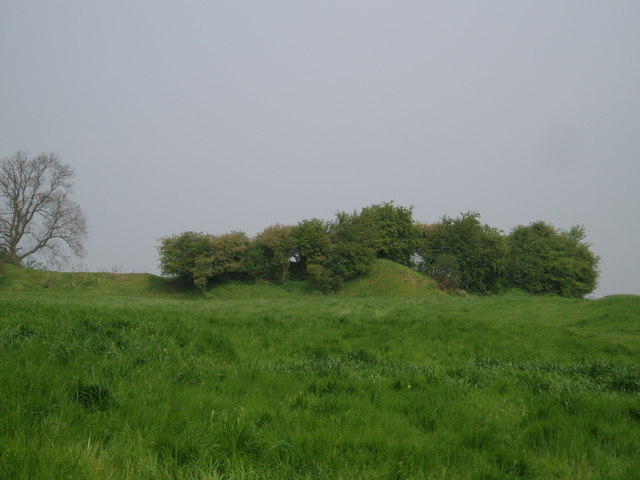
Castle mound: the site of an 11th-century castle in Laxton.

THE ESTATE

The Laxton Estate is situated in and around the picturesque village of Laxton, surrounded by rolling countryside. The village is linear and unusual in appearance, comprising 17 traditional red brick farmsteads in addition to a village pub and visitor centre. The majority of the estate is farmed under Agricultural Holdings Act (AHA) and Farm Business Tenancy (FBT) agreements. Each farm tenant benefits from a home farmstead and land let under AHA and/or FBT and a right to farm land within the open field system as administrated by Laxton Court Leet, an ancient manorial Court with legal status as a court of Law.

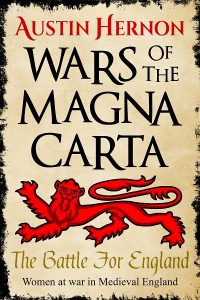
You can find out more about the history of Laxton from the Wars of the Magna Carta series. The first instalment, The Battle For England, features Laxton Castle, domain of the brave heroine Matilda.


Image credit:

Castle mound at Laxton, Nottinghamshire. Source: Wikipedia, contributed by Robert Goulden. Used under Creative Commons CC BY-SA 2.0 licence.

The Saddest Historical Letter by Deborah Swift

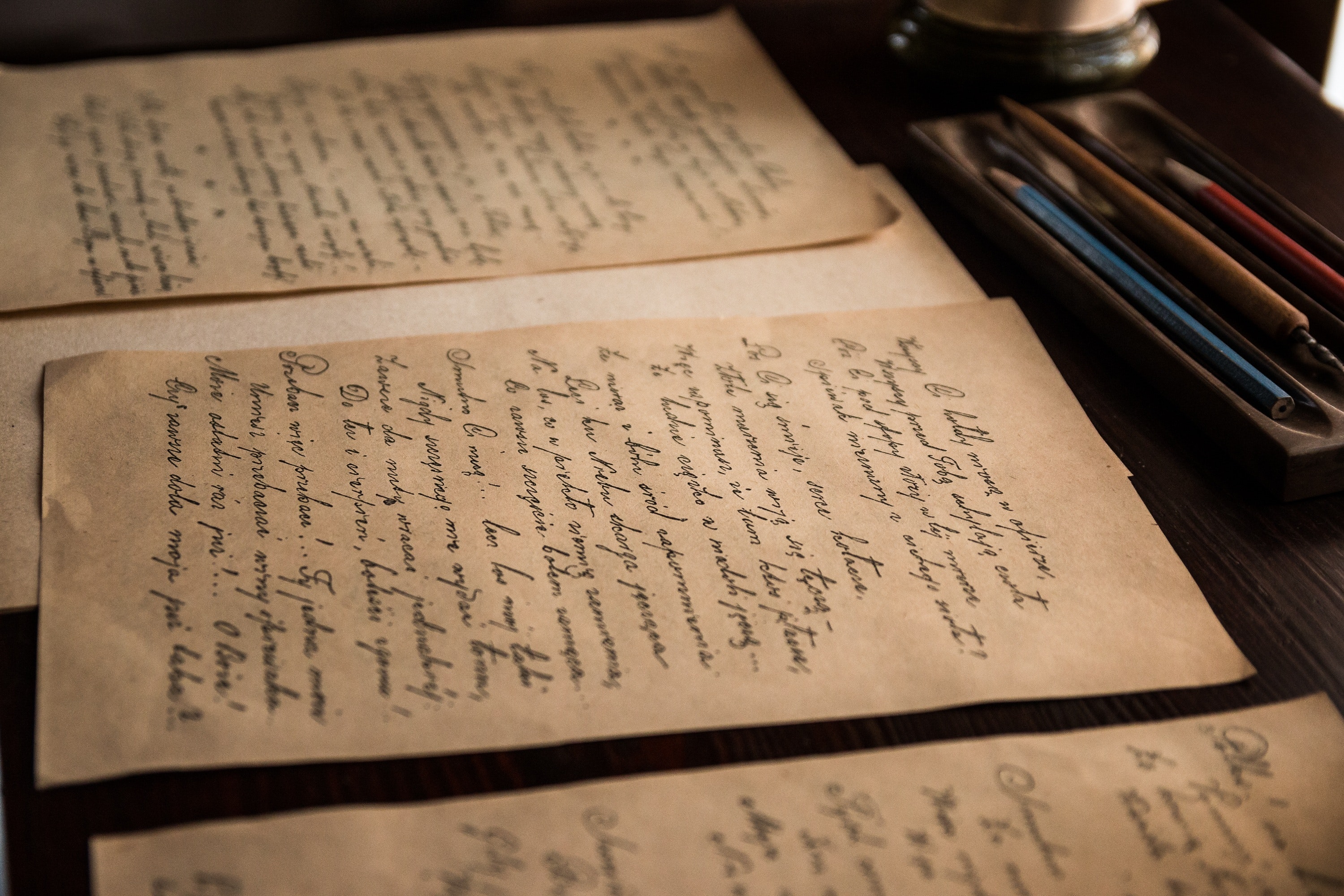
As a writer of historical fiction, I’m obsessed with old letters which form my link to the past. Do you have a favourite historical letter? Here’s mine. One of the most chilling letters from history, and the saddest, is the letter from Mary Queen of Scots to her sister Elizabeth I when she heard she had ordered her to be executed.
Mary’s letter contains a plea for her remains to be taken back to France after her death, as well as a warning that would haunt Elizabeth for the rest of her life:

I will not accuse any person, but sincerely pardon every one, as I desire others, and, above all, God, to pardon me. And since I know that your heart, more than that of any other, ought to be touched by the honour or dishonour of your own blood, and of a Queen, the daughter of a king, I require you, Madam, for the sake of Jesus, that after my enemies have satisfied their black thirst for my innocent blood, you will permit my poor disconsolate servants to remove my corpse, that it may be buried in holy ground, with my ancestors in France, especially the late Queen my mother, since in Scotland the remains of the Kings my predecessors have been outraged, and the churches torn down and profaned…

…Accuse me not of presumption if, leaving this world and preparing myself for a better, I remind you will one day to give account of your charge, in like manner as those who preceded you in it, and that my blood and the misery of my country will be remembered, wherefore from the earliest dawn of your comprehension we ought to dispose our minds to make things temporal yield to those of eternity.

Your sister and cousin wrongfully a prisoner,

Marie R

I can only imagine the guilt that Elizabeth must have felt upon receipt of this, and her fear that she would never be forgiven for the blood on her hands.

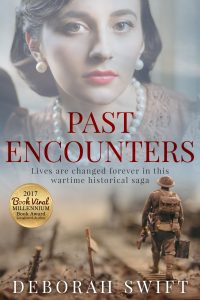
Letters were massively important during wartime, and especially for Prisoners of War. In WW2, Rhoda and Peter — the two main characters in my book Past Encounters — rely on their letters to each other to form a lifeline. But for people separated by the conflict, the long-awaited letter can often get lost in the wartime confusion, making such links precarious and precious.

With so much of our communication virtual these days, it is sad that so few letters might be preserved to give future historians insight into the minds and hearts of the past. When researching Past Encounters, I relied on letters and memoirs to fill in Peter’s story of his POW years, and to conjure up his worst journey: the Death March through Poland and Germany at the end of the war. There is an excellent film about the untold story of the gruelling Long March to Freedom featured in Past Encounters here.

As well as the fate of Allied POWs, Past Encounters also features the wartime filming of the classic British romantic blockbuster Brief Encounter directed by Sir David Lean CBE, who was responsible for large-scale epics such as The Bridge Over the River Kwai, Lawrence of Arabia and Doctor Zhivago. Celia Johnson’s letters home from the filming provided a brilliant insight into night-time on a freezing railway station in January and February 1945:

people are most awfully nice and even the station master, a large man in stern bowler hat, renowned for his grumpiness, raises his stern hat unceasingly to me, and I am continually being besought to sit by the fire in his office.

Which letters have moved you?

Author Q&A with Linda Statmann

When did you first start writing? Did a specific event encourage you to start?

When I was six years old, I saw a TV programme about the Blitz, which as you can imagine was pretty alarming. I wrote a poem about it.

How much research do you do?

I am fascinated with the Victorian era and do a lot of research to try and get the details right. I read contemporary newspapers and journal articles, biographies and medical works. I study maps, census returns, directories, legislation, photographs, and art. I have about a hundred books just on the history of spiritualism.

Tell us about where you write / your writing habits.

I work from home and have a room which is my office. I don’t work set hours; even when I am doing the household chores, my mind is still working on my latest project or planning a new one.

What part of the writing process do you find most difficult? Starting, knowing when you’ve done enough research, the ending?

When I begin a project, I know where I am starting from and where I will end up, but I have to link the two in a way that makes sense. Every time I pause in order to find that natural link, I have to remind myself that I found it last time. It’s worked so far.

How real do your characters become and do they ever seem to control their own storyline?

They feel very real to me, and because I let themes develop naturally in my mind often the characters do things that I hadn’t necessarily planned but emerge from their personalities and situations, so sometimes they do take me by surprise.

Do you ever feel guilty about killing off characters or do you relish it?

Neither, but it is sometimes sad. It’s very hard writing about a character who I know is about to become a murder victim.

Do you find it hard to know when to end a story?

No, I know when it feels right to me.

What are you working on?

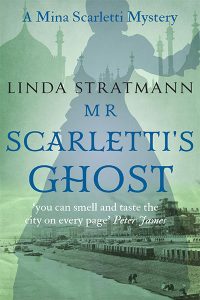
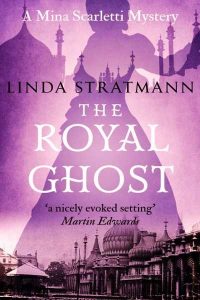
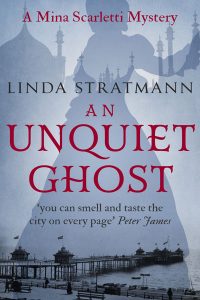
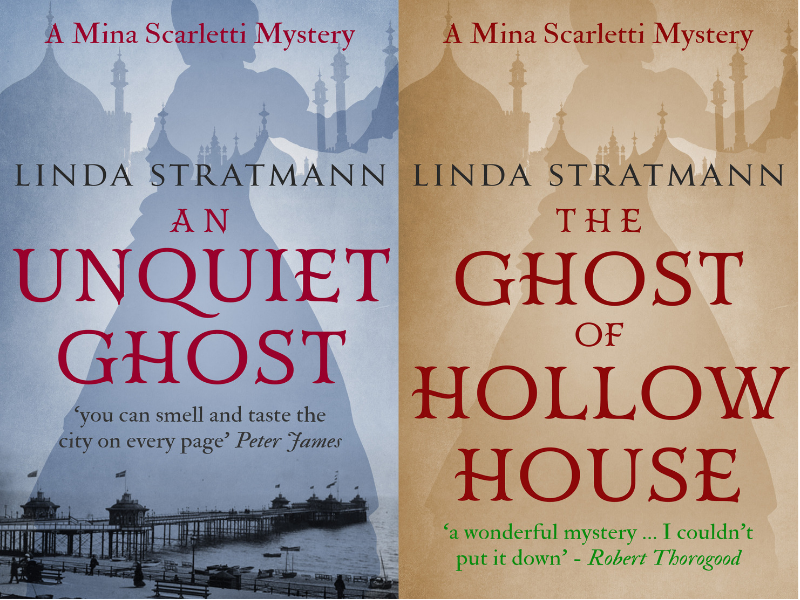
I am editing a new volume in the Notable British Trials series about the trial of the Mannings in 1849. I am also developing the plot for the fifth Mina Scarletti book, to be entitled His Father’s Ghost.

What are you reading right now?

Munich by Robert Harris.

What is your favourite book? Who is your favourite character?

I have read thousands of books and it is impossible to pick one!

What book do you wish you had written?

See above.

Do you love any genres/books that are very different from what you write?

Most of my reading is non-fiction: history, biography, true crime, psychology. In crime fiction, I tend to read books with modern settings or if historical, a very different time period from the one I write about.

 Tell us something surprising about you!

I prefer pickles to sweets!