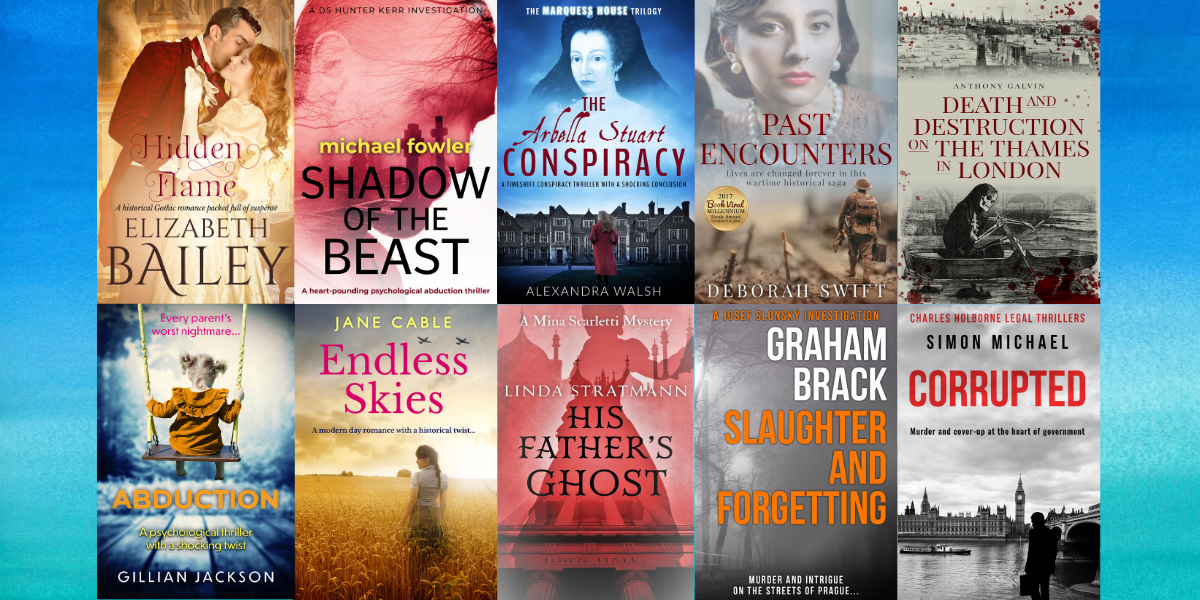
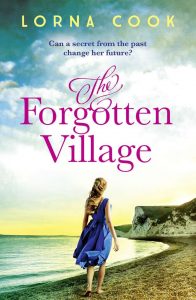
Sapere Books Sign a New Sherlock Holmes Series by Linda Stratmann

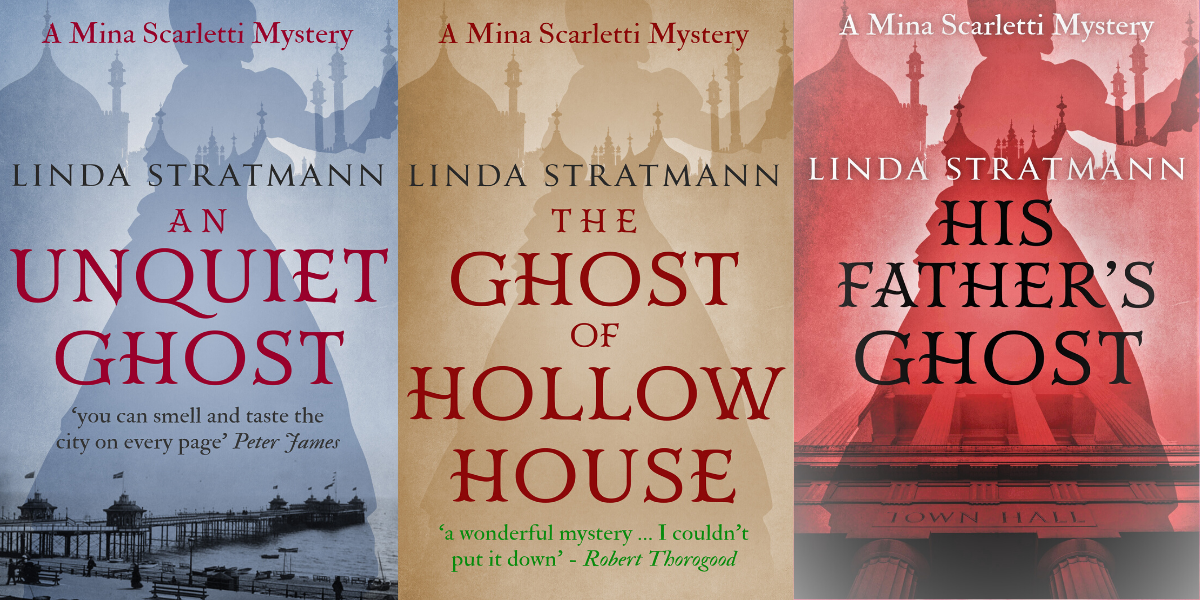
Following the publication of Linda Stratmann’s sensational Mina Scarletti Mysteries – Victorian crime novels with a courageous woman sleuth at the centre – editorial director Amy Durant has signed up her exciting new series, which follows a young Sherlock Holmes. The first instalment will be published next year.

In Linda’s words:

“22 year old Sherlock Holmes, realising that his destiny is to be the world’s first and best consulting detective, has abandoned conventional education and come to London to acquire the very particular and unusual skills and knowledge he needs for his chosen career. This is Holmes before Watson: youthful, fiery, determined, energetic, still learning his craft. This is the legend in the making, the story of how young Holmes became the Holmes we know.

“Sherlock Holmes is the epitome of the great detective, iconic and instantly recognisable. It was a tremendous thrill to be asked to create new adventures and explore those periods of Holmes’s life which Conan Doyle left to the imagination. It is a pleasure to continue working with the wonderfully supportive team at Sapere Books, and to be a part of the Sapere family of authors.”


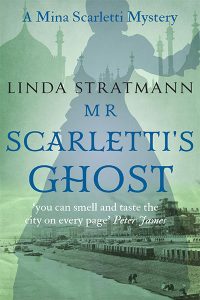
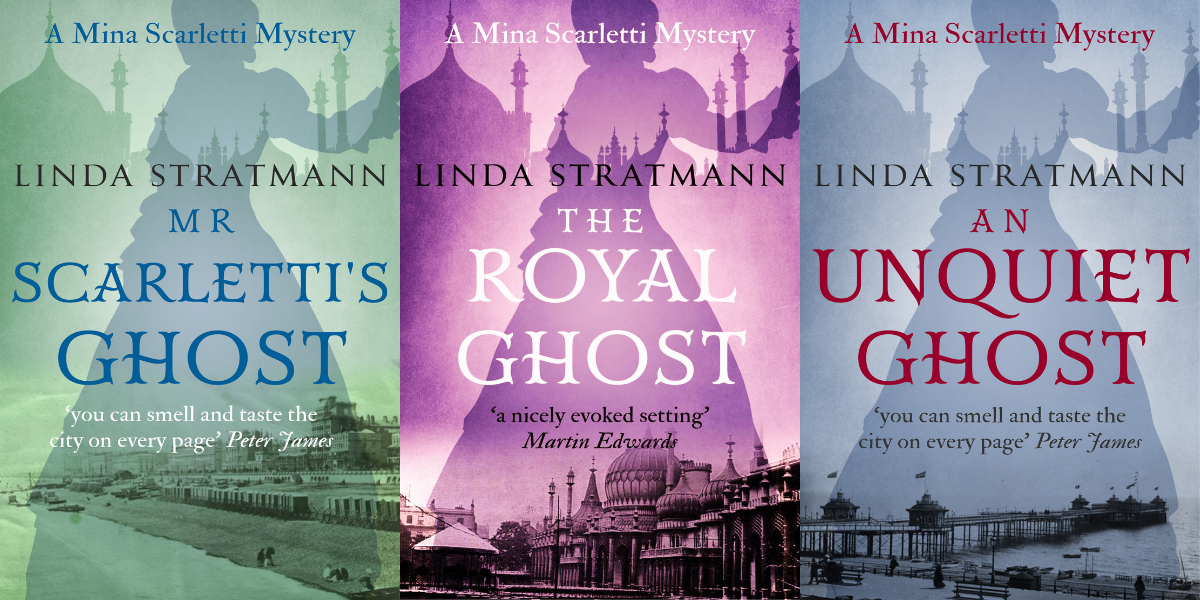
Click here to order MR SCARLETTI’S GHOST

Click here to find out more about the Mina Scarletti Mysteries

Sapere Books Sign a New Historical Mystery by Elizabeth Bailey

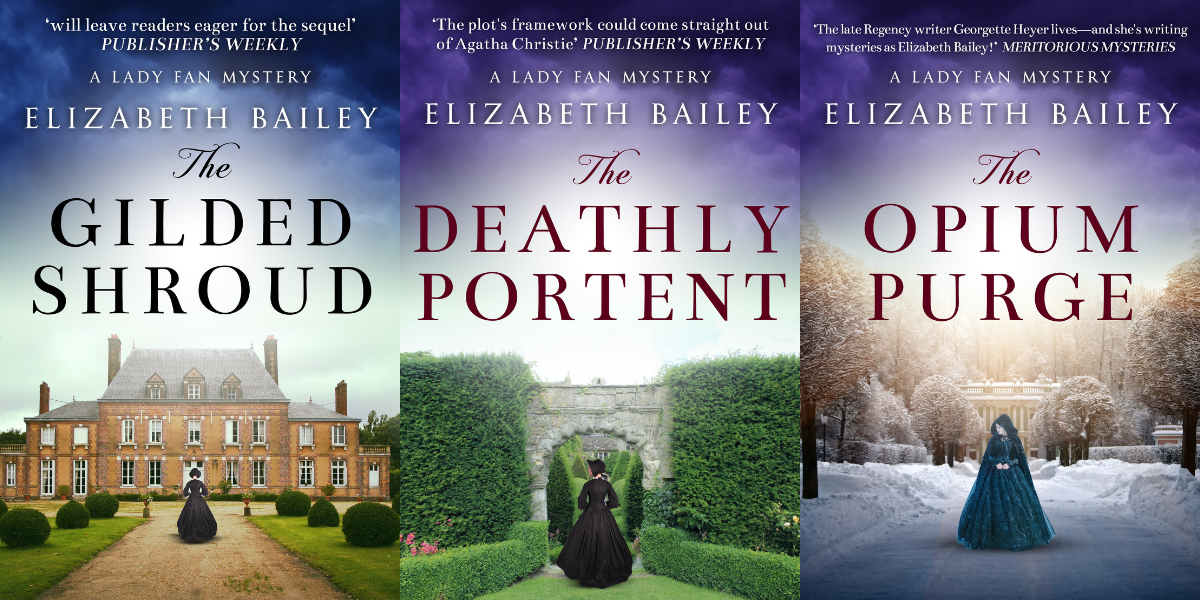
Elizabeth Bailey’s Regency-era Lady Fan Mysteries follow Ottilia, a courageous woman sleuth faced with gruesome deaths, buried scandals, witch hunts and more.

The first six books in the series are already published, and we are delighted to have signed up the seventh, THE DAGGER DANCE.

In Elizabeth’s words:

“In THE DAGGER DANCE, Lady Fan is off to rescue a Barbadian slave girl accused of murder. I’ve been wanting to bring this story to light, since Ottilia long ago guessed her steward Hemp had a secret heartache for a lost love. Bristol was at that time a major port for shipping traders doing the rounds from Africa to England and the West Indies. The research was almost as engaging as writing the book.

“With this seventh adventure, I count myself a very lucky member of the Sapere Books author family. Sapere has done wonders for Lady Fan, and it’s a joy to be with such a supportive and encouraging publisher where the author’s contribution is so much valued and validated.”

Click here to order the first Lady Fan Mystery, THE GILDED SHROUD

Click here to find out more about the Lady Fan Mysteries

Sapere Books Signs a Regency Novel by Graham Ley

We are delighted to announce that we have signed up a new Regency romance novel by Graham Ley.

Writing runs in the family: Graham’s mother, Alice Chetwynd Ley, was the author of numerous Regency romances. Sapere Books have reissued sixteen of her books, including The Eversley Saga and The Rutherford Trilogy.

In Graham’s words:

“I decided to write a novel in my mother’s honour. Then the world speeded up. In place of the familiar books in covers, there were eBooks, and over the last few years her complete backlist has been published by Sapere Books.

“I’ve written a fair bit in the past – playscripts and poetry, and some children’s stories. My greatest challenge was undoubtedly what kind of heroine should I choose. In the end, Arabella chose herself, and was her own woman from start to finish. I set the story in Devon and Brittany, which I love equally, and added intrigue, conspiracy and action to the romantic mix.

“I shall be delighted to see my own tribute novel sitting alongside my mother’s books with such a strong specialist publisher! I hope readers enjoy The Baron Returns.”

A River, a Death and a Bicycle by Charlie Garratt

When I wrote A Shadowed Livery, it didn’t occur to me that Inspector James Given would spawn a series, so I happily scribbled away with no thought of the future. But the series developed, and by three-quarters of the way through the third novel I was trying to think of ways of killing him off, so I could move on to other projects. I’m not unusual in this. Conan Doyle famously had Holmes plunge from the Reichenbach Falls, only to re-emerge alive in a later story, and virtually all of our favourite Game of Thrones characters met their deaths before the end. However, I had a slightly more difficult problem than those. My series is written in first person, from James’s point of view, so how could he tell the stories if he were dead? It has been done, but I didn’t like it as a device.

The simple answer is he didn’t die, and I’m still working out how he might.

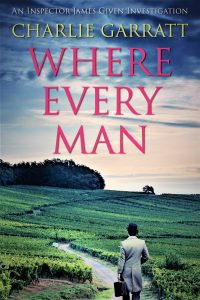
As a result, when I finished A Patient Man, I was on the lookout for ideas for the next in the series when a story arose on the Facebook page for my local area. The posts said a man with a bicycle had been found dead in the River Severn, under a bridge about a mile from my home. It turned out not to be true and, if it were, I probably wouldn’t have written about it. But it was such a bizarre image, not just the body in the water, but the bicycle with him, I knew there had to be a story there. The old ‘what if?’ kicked in, and Where Every Man was underway.

In the first three novels, James Given is living in Kenilworth, Warwickshire, and I could have moved him close to where I live in Shropshire for the new one, but at the end of A Patient Man he was contemplating a move to France. I’ve always wanted to live there, so why not take James instead? There were, however, some practical considerations, not least of which were that at the time of the action the Second World War had begun, German forces were on the French border, James is Jewish and the ferries had been commandeered for military service.

Despite these difficulties, James and his wife make it to Brittany, with the help of an acquaintance, to settle into a life of country air, good food and new friends. But that wouldn’t necessarily have made for a good story. When the local librarian is found dead in the river, with her bicycle by her side, things become a lot more interesting.


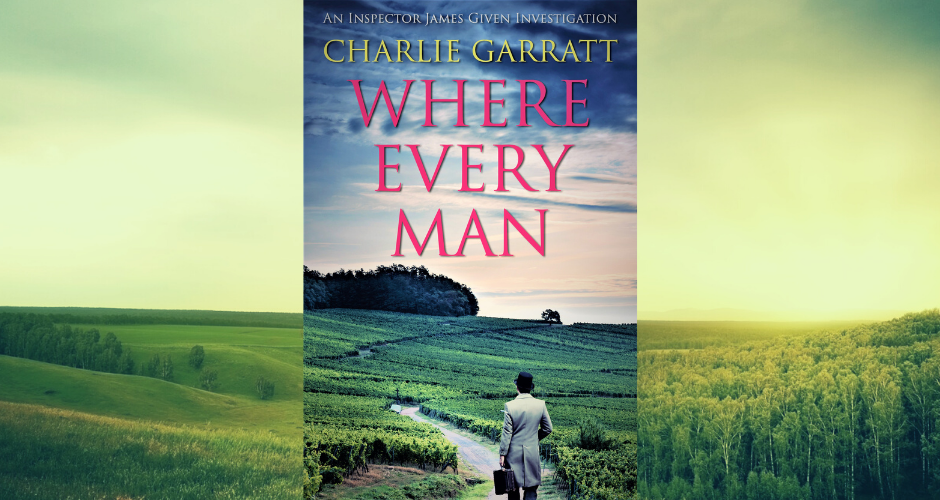
Where Every Man is the fourth James Given novel and is due for release on 6th October.

Click here to pre-order Where Every Man

Click here to find out more about the Inspector James Given series

Sapere Books Sign Two New Historical Mysteries by J. C. Briggs

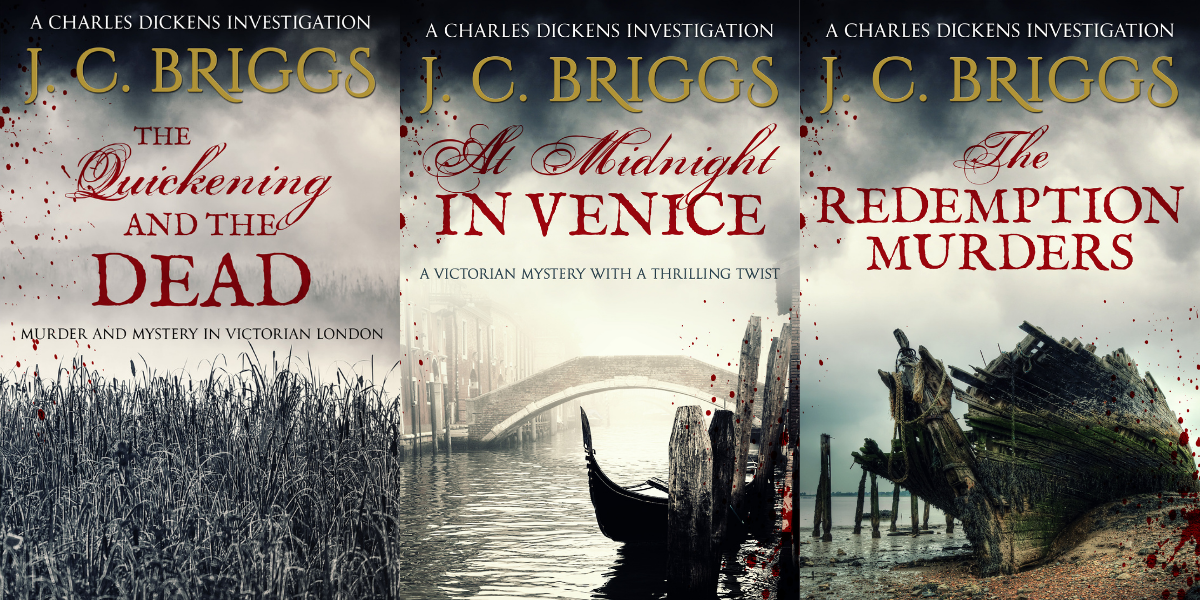
J C Briggs’ gripping Charles Dickens Investigations follow the famous writer-turned-detective as he dives into the seedy underbelly of Victorian London.

The first six books in the series have been published, and we are thrilled to announce that we have signed up the next two instalments.

In J C Briggs’ words:

“I am thrilled that Sapere Books are to publish two new cases featuring Charles Dickens and Superintendent Jones. Number seven in the series is THE HAWKE SAPPHIRES, which begins at Hawke Court, an almost derelict mansion where Sir Gerald Hawke is dying. His two wives and his only son are dead. His heir is a clergyman, Meredith Case, for whom Hawke has one last command. Hawke has commanded all his vicious life and expects to be obeyed. Meredith Case must ‘find Sapphire Hawke’, who vanished over twenty years ago.

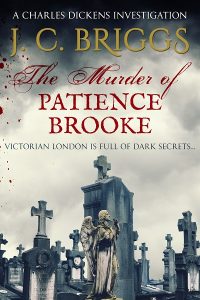
“A chance meeting with Charles Dickens sends Case to the north of England. Meanwhile, Dickens and Superintendent Jones of Bow Street are investigating the death of a young man who was found on the steps of a bookshop.

“Charles Dickens begins to suspect that the two cases are connected. He and the young detective, Scrap, experience a frightening night at Hawke Court.

“Book eight in the series is THE CHINESE PUZZLE. On the first day of The Great Exhibition in May 1851, a Chinese man bowed before Queen Victoria. It was assumed that he was a representative of the Celestial Empire. He wasn’t. It was reported in the newspapers of the day.

“In THE CHINESE PUZZLE, behind the scenes the Home Secretary is furious at the breach of security. There have been attempts on the Queen’s life before.

“And also concerning for the government, a wealthy banker and former opium merchant of Canton vanishes on the first day of the Exhibition. The Prime Minister, Lord John Russell, appoints Superintendent Jones to carry out a most secret investigation. The case may involve high-powered bankers and politicians. Jones cannot afford to get it wrong. Only Charles Dickens can help him find his way about the houses of some very important people. There is danger from high and low when the case takes them to the East End opium trade and some very dangerous criminals.

“It really is great to work with Sapere Books again and to know that they have faith in my series. They are a wonderfully supportive publisher to all the writers in the Sapere family.”


Click here to order THE MURDER OF PATIENCE BROOKE

Click here to find out more about the Charles Dickens Investigations

The Beast of Barnwell by Michael Fowler

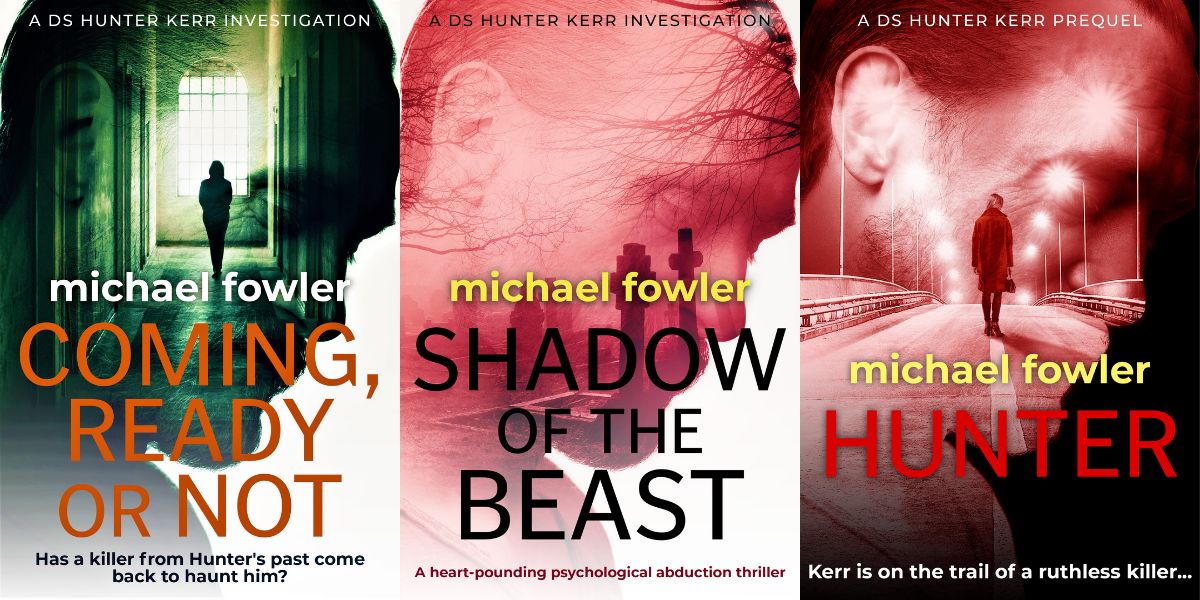
Michael Fowler’s DS Hunter Kerr novel, SHADOW OF THE BEAST features a horrific serial killer. Read on to find out more about where the inspiration for the Beast of Barnwell ― the murderer in this story ― comes from.

The ‘Beast’ is loosely based on Peter Pickering from Wombwell, near Barnsley, who was dubbed ‘the Beast of Wombwell’ by the press following his conviction in 1973 for the rape and murder of 14 year-old Shirley Ann Boldy, when he was jailed indefinitely.

Peter abducted Shirley Ann as she walked back to school at lunchtime, driving her to woods in the village of Barnburgh, where he tortured and raped her before stabbing her with a kitchen knife. Peter had to flee with her body in his van when he was disturbed by three men walking in the woods who tried to intervene after hearing her screams for help.

Arrested later that day, he had dumped Shirley Ann’s body, cleaned his van, burned his clothes and sandpapered and bleached his shoes in a hope of hiding evidence; however, he eventually confessed, blaming his mother for the killing, telling detectives that she would never allow him to have a girlfriend, and he could see her face as he killed Shirley.

The killing of Shirley Ann came just five months after he was released from prison after a six-year jail term for sex attacks on a teenage girl in Doncaster and Scarborough.

Detectives who dealt with Pickering firmly believed that Peter was responsible for more rapes and murders and were particularly interested in him for the unsolved murders of 13 year-old Anne Dunwell, from Rotherham, who was raped and strangled in 1964, and 14 year-old Elsie Frost from Wakefield, who was stabbed five times in 1965. He was visited several times while detained in Broadmoor by detectives and interviewed in connection with these murders, but he refused to cooperate.

However, in 2017, detectives had a breakthrough. Forensic evidence linked Peter to the murder of Elsie Frost and a fresh investigation was launched. During this re-investigation detectives discovered that Peter was renting a storage garage in Sheffield, and getting a warrant, they opened it up and found handcuffs, diaries and exercise books, which contained confessions. One of those confessions was the rape of an 18-year-old woman from Barnsley, which was undetected and after tracing the woman, who was then in her sixties, Peter was charged with that rape and convicted in 2018. Before he could be sentenced for that rape and also charged with the Elsie Frost murder, Peter died. He was 79.

Click here to order SHADOW OF THE BEAST

Click here to find out more about the DS Hunter Kerr Investigations

Sapere Books Sign a New Victorian-era Novel by Alexandra Walsh

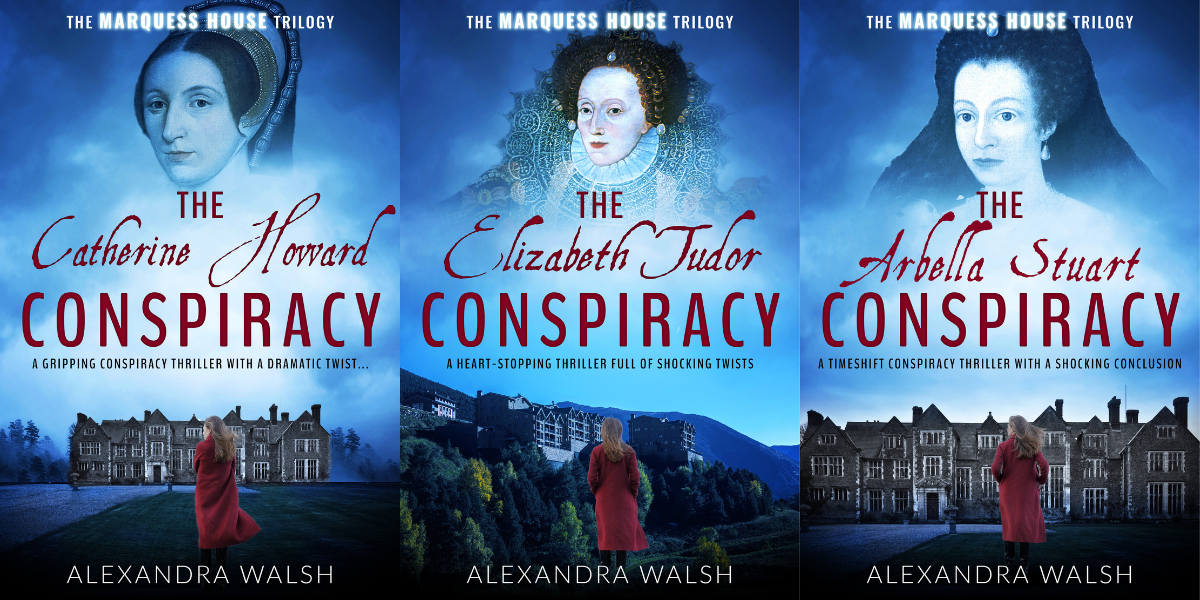
Following the publication of Alexandra’s Walsh’s captivating Marquess House Trilogy – dual timeline conspiracy thrillers with ingenious twists on Tudor and Stuart history – editorial director Amy Durant has signed her fourth book.

In Alexandra’s words:

“It’s very exciting to be working with Sapere Books on my new publication. THE WINDCHIME is a story that is very special to me, as it involves some of my own family history. Once again, it’s a dual timeline novel, with the split moving from the present day to the Victorian era. Set on the Pembrokeshire coast, it involves a multi-generational family with a secret at their heart. It also explores hereditary madness and the contrasting treatments of mental health in the Victorian era and the present day.

“A love story brings it all together as the present-day characters uncover the tragedy that took place in the past. I hope everyone enjoys this shift of era and will like my new characters. Once again, it’s been a pleasure to work with everyone at Sapere Books and be part of the Sapere family. Not only is the support and guidance of the publishing team of Amy, Caoimhe, Richard and Natalie, invaluable; the encouragement, friendship and advice of the other Sapere Books authors has been extremely helpful and has offered great inspiration.”

Click here to order THE CATHERINE HOWARD CONSPIRACY

Click here to find out more about The Marquess House Trilogy

Sapere Books Publishes a New Historical Mystery Series by Graham Brack

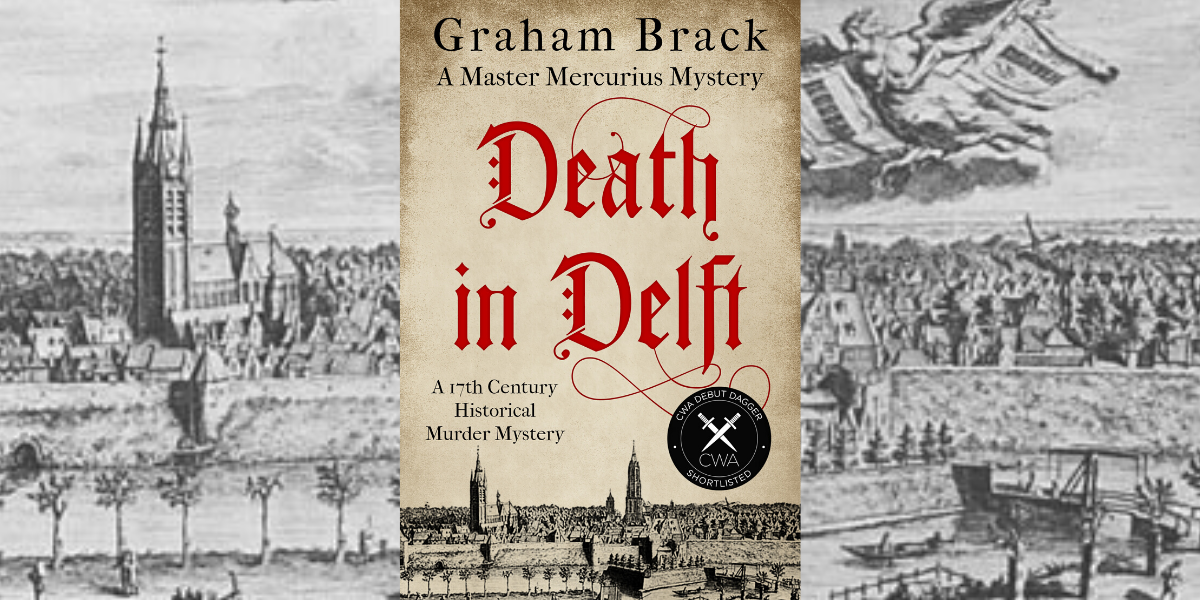
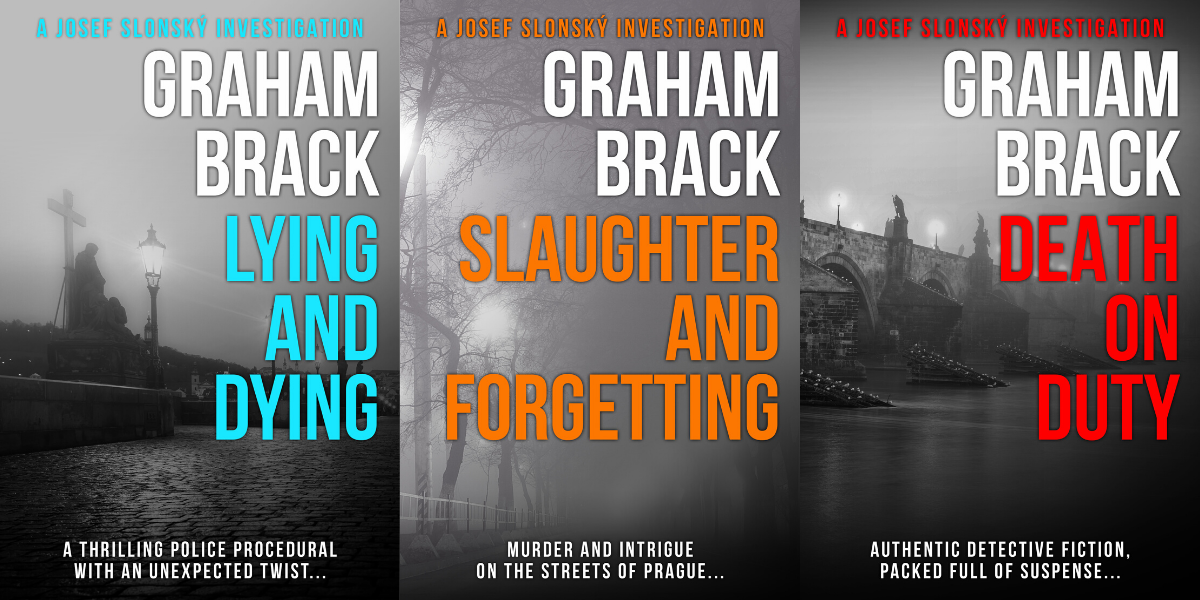
Following the publication of Graham Brack’s darkly funny Josef Slonský Investigations – atmospheric police procedurals set in Prague – Sapere Books recently started publishing his Master Mercurius Mysteries: 17th century crime thrillers set in Leiden, The Netherlands. Taking centre stage is Mercurius – a witty university lecturer-cum-sleuth.

The first three books in the Master Mercurius series are published or available to pre-order, and we are delighted to have signed up the next instalment: THE NOOSE’S SHADOW. The fourth book sees Mercurius free from the demands of the Stadhouder – William I of Orange – for once as he is asked for help by a poor young woman whose husband faces execution for a murder he swears he did not commit. How can Mercurius refuse?

Graham says, “I was already part of the Sapere family after Amy signed me to write six Slonský novels, so I knew Sapere Books was the right place for my Dutch series too – and Slonský will be back! We’re a very supportive bunch of writers who enjoy each other’s successes, and the Sapere team is simply excellent. I couldn’t imagine going anywhere else with the Mercurius books.”

Amy says, “I have already worked with Graham on eight published books since we launched in March 2018, and I am thrilled to have signed his next book. I hope there will be many more! Fans of his previous series are already calling for a return of Slonský, and they seem equally smitten with Master Mercurius. I thoroughly enjoy reading Graham’s books and look forward to editing many more in the series.”


Click here to order DEATH IN DELFT 

Click here to find out more about the Master Mercurius Mysteries

Celebrating Lost Voices: Roger Longrigg

Each month, Sapere Books spotlights an author whose books have gone out of print and whose work we are republishing, in an effort to revive the most vibrant and engaging voices of the past.

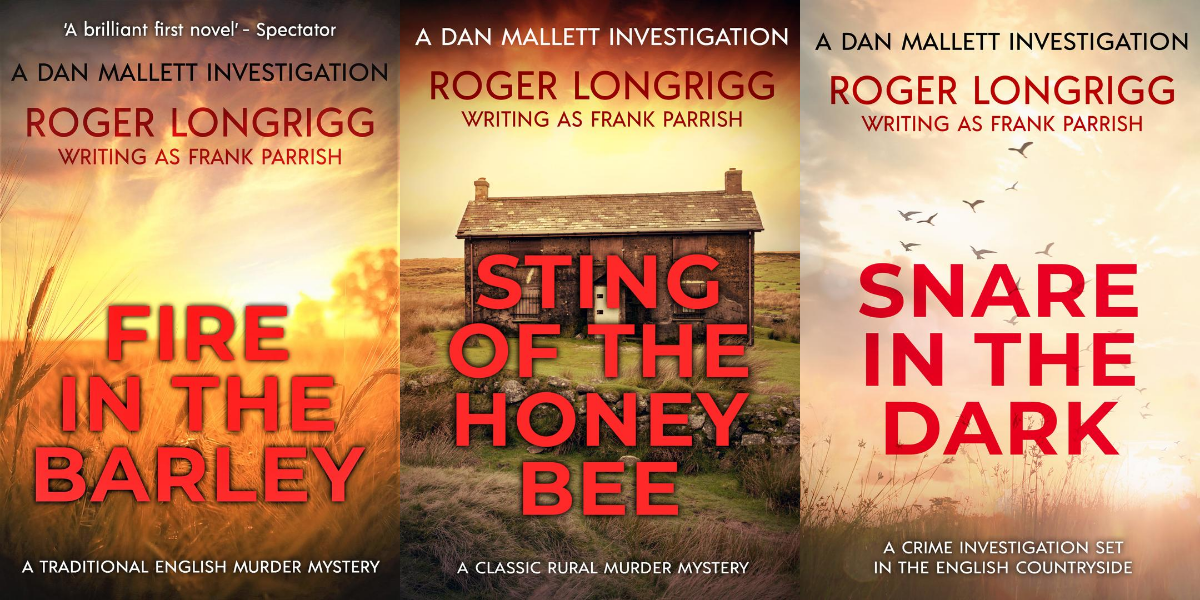
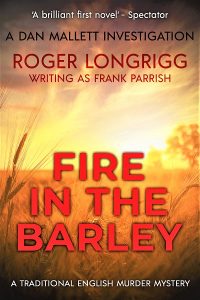
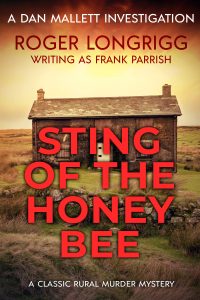
Born in 1929, Roger Longrigg was an impressively versatile author who wrote under several noms de plume. He used one of these – Frank Parrish – to pen the witty and suspenseful Dan Mallett Investigations, which Sapere Books is republishing. Set in the West Country of England in the 1970s, the cosy mystery series follows a crafty and likeable poacher as he unravels various crimes in the area – often committing several felonies himself in the process.

With its deft humour, clever plotting, and immersive rural setting, the first book in the series – Fire in the Barley – has been described by Roald Dahl as ‘exciting and funny from beginning to end’. The protagonist, Dan Mallett, has been praised as ‘a fully-fledged, all-of-a-piece original character in a well-conceived, excitingly paced story’ (The Times).


Roger’s daughter, Laura Longrigg, reflects on his life and career:

“Roger Longrigg worked in advertising in London in the early 60s; it’s also the setting of his first novel, A High-Pitched Buzz, full of the wild, clever, sexy, heavy drinking characters familiar from the cult TV series Mad Men of the same era.

“He dreamed of being a full-time writer but, despite receiving glowing reviews (including comparison to Evelyn Waugh), the book only earned him £100.  His agent said, ‘You need to write three books a year to support the family, but not even Dick Francis fans want to read three of his in 12 months.’  So Roger wrote series of novels under different pseudonyms, eight in all. They include Laura Black: Scottish-based bodice-rippers; international espionage thrillers to emulate Ian Fleming under the name Ivor Drummond and psychological suspense by Domini Taylor, which included Mother Love, turned into an award-winning TV drama starring Diana Rigg. Perhaps most successful was Frank Parrish, creator of poacher turned detective Dan Mallett; the first in this series, Fire in the Barley, won the John Creasey Dagger in 1977 for best first novel. Roger had to turn it down, because it was actually his 26th!

“In all, Roger wrote 55 books of fiction and non-fiction; he thoroughly enjoyed the subterfuge of being behind so many different personalities and genres and it’s thrilling that he is about to find a whole new generation of readers through Sapere’s reissues, and that his real name can be revealed at last.”


Click here to order Fire in the Barley

Click here to find out more about the Dan Mallett Investigations

Sapere Books Sign Four Historical Sagas by Deborah Swift

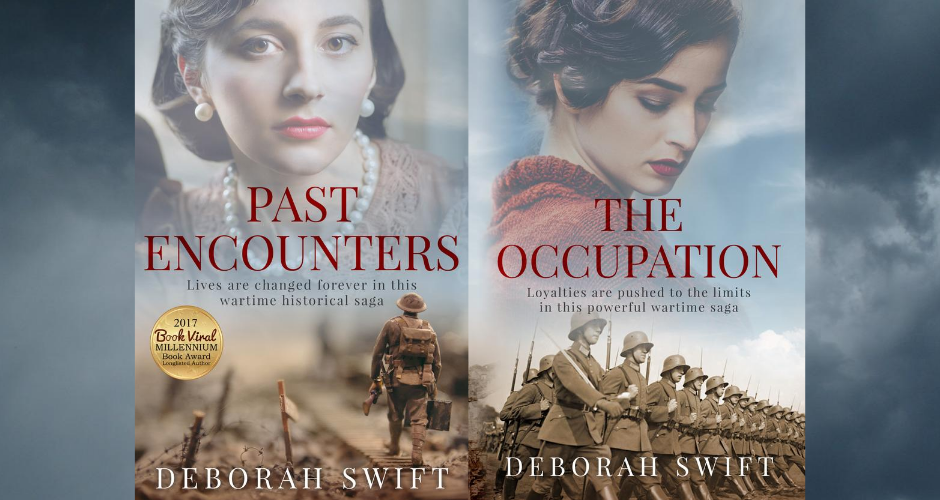
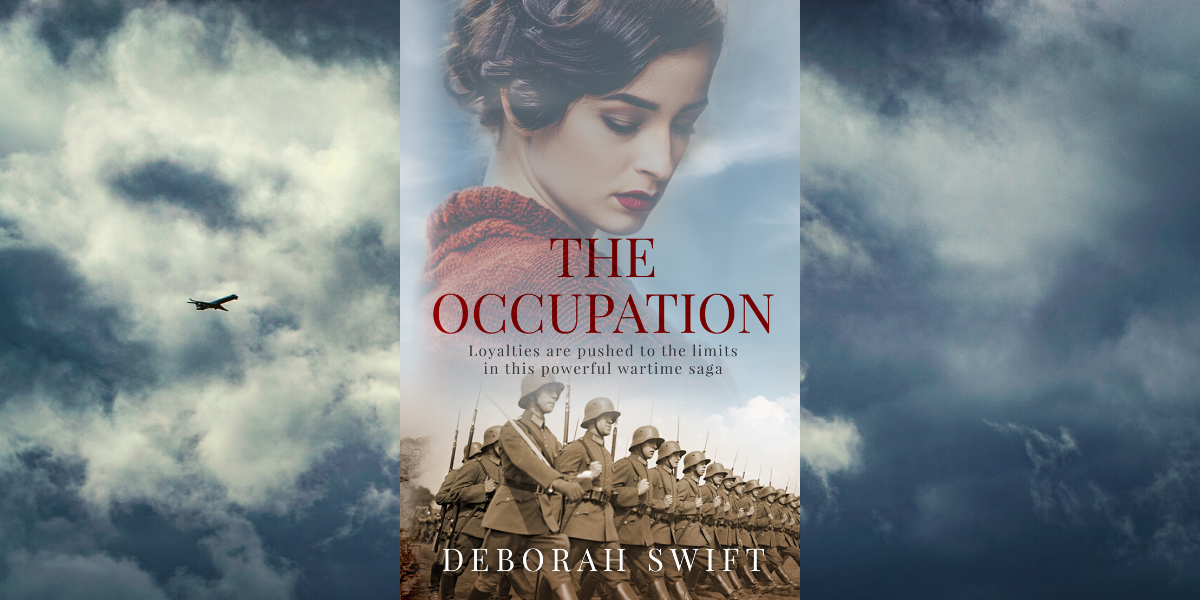
Following the publication of Deborah Swift’s extraordinary wartime sagas – PAST ENCOUNTERS and THE OCCUPATION – editorial director Amy Durant has signed four more of her books.

In Deborah’s words:

“I’m really thrilled to have signed with Sapere Books for my third WW2 novel, THE LIFELINE, in which a teacher flees Nazi-occupied Norway and escapes to Scotland on a small fishing boat, in an operation known as The Shetland Bus.

“Not only that, but I’ve signed with Sapere for three more historical novels set further back in time. The first, THE POISON KEEPER tells the story of Giulia Tofana, the woman who, according to legend, poisoned six hundred men in 17th Century Italy. The deadly poison Aqua Tofana bears her name. Italy in the 17th Century is a fascinating brew of baroque religion, art and culture, and the legacy of the ‘Camorra,’ the 17th Century Mafia. THE POISON KEEPER is set in Naples under the smoking shadow of Mount Vesuvius. There will be two further books in the Italian series; the other two books will be set in Venice and Rome.

“I was delighted to be offered a home for four new books (four books!) with Sapere, as not only do they offer very good royalty rates to authors, but they have a really strong, supportive author community.”

Amy commented: “Deborah is a wonderful storyteller, and I am extremely happy she has chosen to continue partnering with Sapere Books for her next four novels. Fans of her first two Second World War novels won’t have to wait much longer for her third wartime-era book; THE LIFELINE will be available to preorder soon.”


Click here to order PAST ENCOUNTERS

Click here to order THE OCCUPATION

Sign up to Deborah’s newsletter to stay up to date with her book news and latest releases.

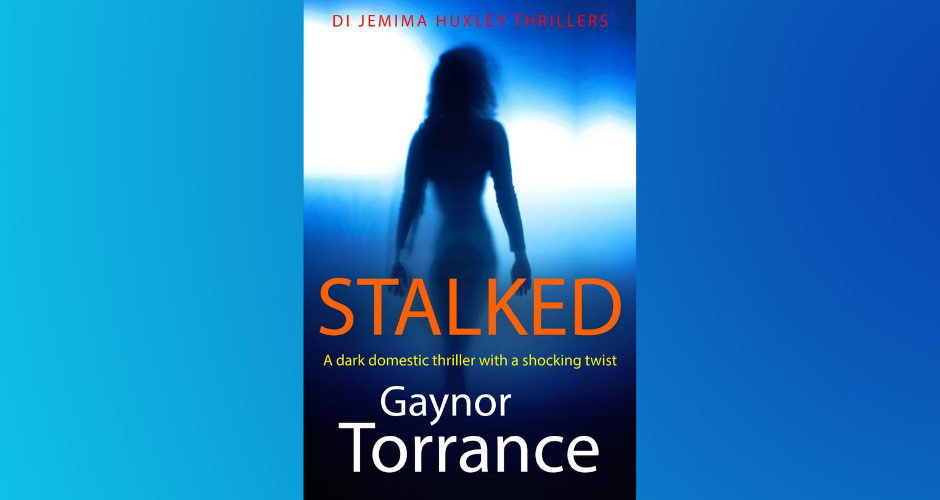
Stalked in Real Life by Gaynor Torrance

It seems apt that I am writing this on the day that the A-level results are announced. I finished school many years ago, but can still recall the excitement of finding out that I had been accepted at my university of choice to study psychology. With everything to look forward to, my head spun with expectations of what student life would be like. Little did I know that my entire existence was about to take a sinister turn. Until then, I’d lived a sheltered life and hadn’t heard of people being stalked. But that was about to change as my terrifying ordeal began only a few weeks later. 
It was a steep learning curve. If I were included in a random cohort of people and asked to order them by likeliness of being targeted by a stalker, I would have positioned myself towards the bottom of that list. After all, I was introverted, wasn’t going to turn anyone’s head and certainly didn’t court attention. I was someone people didn’t tend to notice. Though I later discovered that anyone, regardless of age, gender, or perceived physical attractiveness can be stalked, and stalkers are not exclusively male.

Even as I write this, I can feel my stress levels grow. Despite the passage of time, as I dredge up these suppressed memories, the old emotions rise like a tsunami threatening to overwhelm me. There are some things from that time that I refuse to discuss as those memories are far too traumatic. I also have no intention of naming the person who caused me so much mental and emotional anguish. Identifying him serves no purpose and might cause pain or embarrassment to other people, which I have no desire to do. It is enough for me to know that my ordeal is over. Apart from in nightmares, my stalker is no longer a threat to me.

It is essential to understand that this chapter of my life occurred way before the availability of mobile phones or the subsequent rise of social media. It was quite literally another world back then. At the time, there were no stalking laws in the UK. Society was far more misogynistic, and I would probably have been seen as a stupid young woman who had obviously brought it all on herself. It seemed to me that my only viable option was to deal with things alone. 

Before I realised the threat he posed, I had allowed my stalker to enter my room at the hall of residence. Although I didn’t appreciate it at the time, I’d made a big mistake. It gave him access to information, and we’re all familiar will the old adage, ‘Information is power. He took the opportunity to familiarise himself with my lecture and seminar timetable. Naively I had it pinned on my noticeboard. From then on, he was able to predict my movements.

His behaviour quickly became alarmingly claustrophobic. And when I tried to distance myself, things escalated rapidly. For almost a year he followed me, watched me, sent anonymous threatening messages and on a few occasions, succeeded in cornering me. It was a relentless campaign of intimidation, designed to mess with my head. He even managed to convince people that he was a heartbroken innocent, and I felt ostracised when I most needed support.  

I have no intention of giving you a blow-by-blow account of what happened. It would take too long, and I would feel uncomfortable about relaying some of the details. However, there are things I’m willing to share. 

On one occasion, I’d gone home for a weekend visit and was travelling back to the university. I felt physically sick as I stood on the platform waiting for the train to arrive, as I dreaded him turning up. I breathed a sigh of relief as the train pulled in, found a seat, settled down and took out whichever book I was reading. There was plenty of time for me to lose myself in the story as it would take a few hours for me to reach my destination, and I certainly needed the distraction. About forty minutes into the journey, the woman opposite me got up to leave. And as the train pulled away from the station, someone else sat in that seat. As I glanced up, my blood ran cold. It was him.

I did my best to stay calm, but I was quaking inside. He crossed his arms and kept staring at me as I pretended to continue to read my book. Neither of us spoke until he leaned forward and placed his elbows on the table between us. I wanted to run, but there was nowhere to go. 

He appeared calm as he told me that he had a ‘new best friend,’ someone who was helping him see things differently. They’d discussed things, and he now realised that he didn’t want a relationship with me. I had a glimmer of hope, but that light was soon extinguished. As his monologue continued, I deduced that the friend he was referring to was God. But what he went on to tell me was the scariest thing I had ever heard.

He claimed to be having frequent conversations with God, who had made him realise that I was evil and had to be stopped. He said that he had God’s permission to do whatever it took to make this happen. After all, he had right on his side. I could tell that this wasn’t some kind of sick joke. He believed everything he was saying.  

My mind raced as the train approached my destination. I was all too aware of the impending showdown and didn’t want to end up injured or dead. The odds were stacked against me. He was far larger and undoubtedly stronger than me. I knew I was safe whilst I was on the train, as he surely wouldn’t harm me in public. But even when I got off the train, the university campus was still a few miles away. I couldn’t risk waiting for the bus I had planned to take. I had to get a taxi.

As the train pulled into the station, I sat in my seat for as long as I dared. It was a popular destination, and people were already queuing up to get off. Leaving my book on the table, I grabbed my bag, jumped up and pushed my way past people. I was shouting and distressed. It was one of the few occasions in my life when I wanted others to notice me. Thankfully people obliged and let me through, though none of them thought to ask me what was wrong or offer any help. I was banking on the fact that he couldn’t risk making a scene. It gave me the only advantage I was going to get. 

I raced over the footbridge, panting and crying. Reached the taxi rank where a queue hadn’t yet formed. I jumped inside the nearest cab and told the driver to take me to the campus. But as the vehicle was about to pull away, the rear door opened and he calmly got in. ‘Thought you were going to leave without me,’ he said in a non-threatening way.

He grabbed my arm, and we sat in silence. When the cab eventually pulled up outside my hall, I dug the nails of my free hand into the back of his and shouted, ‘He’s paying.’ I ran, all the while fumbling for my keys. I made it inside and sprinted up two flights of stairs. Little did I realise that another student was on her way out of the hall and unhelpfully held the door open for him.

As I entered my corridor, I was dismayed to find it deserted. I’d been banking on there being other people around. My hand was shaking as I attempted to insert the key into the lock. I heard the door open off the stairwell, turned and saw him there striding purposefully towards me. I’d lost my chance. I couldn’t risk going into my room. If he forced his way inside, it would be game over. I knew from past experience what would happen. Instead, I ran to the communal toilets, which were almost opposite my room. All four cubicles were free. I got inside one, locked the door and started shouting for help.

Luckily for me, other students heard the commotion, and people soon arrived. My friend was amongst them and knew a little of what was happening to me. She helped me get back to my room, while some other girls attracted his attention. She came inside with me as she could see how scared I was. She was just closing the door when he realised what we’d done. He completely lost it and kicked the door in. Another student had the foresight to call security, and he was eventually forced to leave. 

On another occasion he drove a car at me, screeching to a halt inches from where I stood. He calmly got out of the vehicle, stepped towards me and said, ‘If I can’t have you, no one will.’ Thankfully a stranger intervened. But nowhere was safe. I was isolated, terrified and didn’t know who I could trust.  

When I returned for my second year at university, my tutor sat me down and informed me that he believed there was a credible threat to my life. My stalker had applied to study numerous courses at the university. He was frequently seen roaming the grounds and buildings despite being banned from entering the campus. Realistically I knew there was no way they could ensure that he was kept out. This guy was focused and had no intention of playing by the rules.

That morning I spent an hour or so in my tutor’s office as he made some phone calls, and just like that, I was transferred to another university. I had to leave without saying goodbye and immediately cut ties with my university friends. My world had become a real-life psychological thriller. 

Throughout this entire ordeal, I was offered no support or counselling. It wasn’t the ‘done thing,’ back then. I was on a downward spiral with no safety net in sight. In public, I did my best to act as though nothing was wrong. It was a role I felt compelled to play. I wanted to move on, put things behind me and try to fit in. But I didn’t succeed. I couldn’t relax and frequently experienced panic attacks. In retrospect, I realise that I was suffering from PTSD. But at least I had walked away. I had survived. Though something had to give, and my studies suffered.

For many years, my children have often joked that I am the most paranoid person on the planet. They don’t appreciate that I spent such a sustained period living in fear. Thankfully I bear no physical scars from that time. Though, I carry mental and emotional wounds which have faded but will never fully heal. 

An example of how messed up I had become is that throughout my twenties, I dreaded entering my own home if I happened to be alone. I’d put the key in the lock, take a deep breath, race to the kitchen and grab a sharp knife. My knuckles would be white and my hand shaking as I systematically walked from room to room, flinging open cupboard doors, looking behind curtains and beneath the furniture. It is a relief that I no longer feel compelled to do that.

Upon reflection, my behaviour was extreme and perhaps ridiculous. But unless you’ve experienced such an insidious long-lasting threat, you can’t begin to imagine how deeply it affects you. I can honestly say that in those days, I had become as obsessed with my stalker as he was with me. 

As time passed with no contact, I still couldn’t get him out of my head. I had no idea where he was, but expected to find him waiting in the shadows. Even sleep failed to offer respite, as I experienced night terrors whenever I’d had a stressful day. 

Then, I had a meltdown at work. It happened out of the blue on an ordinary afternoon. I hadn’t seen or heard from my stalker for years. I walked out of the ladies room just as the lift doors located directly opposite, opened. A man stepped out, we looked at each other, and he smiled. He was my stalker’s doppelganger. The likeness was uncanny. I kept facing him and quickly backed up to the ladies room, where I locked myself inside a cubicle and cried. 

At that moment, I thought it was happening all over again. I couldn’t understand how he had found me after all this time. I knew I’d have to resign and look for another job as it wasn’t safe for me to continue working there. Eventually, I was all cried out, and some other women came in to use the facilities. I waited for them to enter the cubicles and went out to clean myself up, taking my time so that I could leave the room with them.

When I returned to my desk, I contacted reception, gave them my stalker’s name and asked for his extension number and details of which department he worked for. I was informed that no one with that name was employed there. It took a while for me to be convinced that the receptionist was telling me the truth. I later discovered that the man in question was actually someone else. He must have thought I was a lunatic.   

There is no doubt in my mind that living through such a traumatic experience has shaped the person I went on to become. I’m introverted and do my best to avoid group interactions as I find them stressful. It seems that no matter how hard I try, I still feel like an outsider. I’m incapable of ‘fitting in’

Of course, I have friends and family, and I value them highly. I’m comfortable when there’re just a handful of people I know and trust. But in larger groups, even virtual ones, I feel ill at ease. Though, every so often, I pluck up the courage to try again. Hopefully one day I’ll find it’s no longer a problem.  

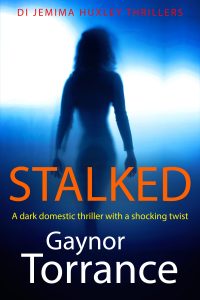
STALKED, the third book in the Jemima Huxley Thrillers series, is the story I always wanted to write. It is undeniably a work of fiction, but one created with an authentic understanding of what it is like to be in those particular crosshairs. I didn’t have to imagine what it would be like for my character, Violet Watkins — I know what she was going through.

If you have already read the book, you may think that the twist at the end is far-fetched. It was in fact inspired by information passed to me from someone who knew my stalker, and was a chilling indication that perhaps he hadn’t fully moved on. As a writer, I played around with the idea as I thought it would be perfect for this book. Though in my personal life, there was never any suggestion of such a threat.

Thankfully my ordeal is over. I am a very different person to the one I had hoped to be all those years ago. There are occasions when I wonder what path I would have followed if things had been different. But overall I have no regrets as I have so much to be grateful for.


Click here to order STALKED


If you have been affected by any of the issues raised above, the following organisations may be able to provide help and support:

National Stalking Helpline

Paladin National Stalking Advocacy Service

Supportline

Victim Support
Submissions Call for Writers of Colour

Sapere Books is always open for submissions, and we especially encourage writers of colour to send us their work. We recognise that writers of colour are underrepresented in genre fiction publishing, and we believe that it is important to take steps to address this.

We are an eBook-focused publisher; physical copies of books are made available on a print-on-demand basis.

We are looking for both new submissions and out-of-print titles in the following genres:

  • Crime Fiction, Mystery and Thrillers
  • Romantic Fiction and Women’s Fiction
  • Historical Fiction (including Sagas, Mysteries, Thrillers and Romance)
  • Action and Adventure (Military, Aviation and Naval Fiction)
  • History and Historical Biography

If you are a writer of colour with a finished manuscript or an out-of-print book, please see our submissions guidelines and get in touch with our editorial director, Amy Durant: amy@saperebooks.viltac.com.

If you have further questions about the submissions process, or what Sapere Books is looking for, feel free to email them directly to Amy and she will get back to you as soon as possible.

Please click here to find out more about what we can offer authors.

We look forward to reading your work!

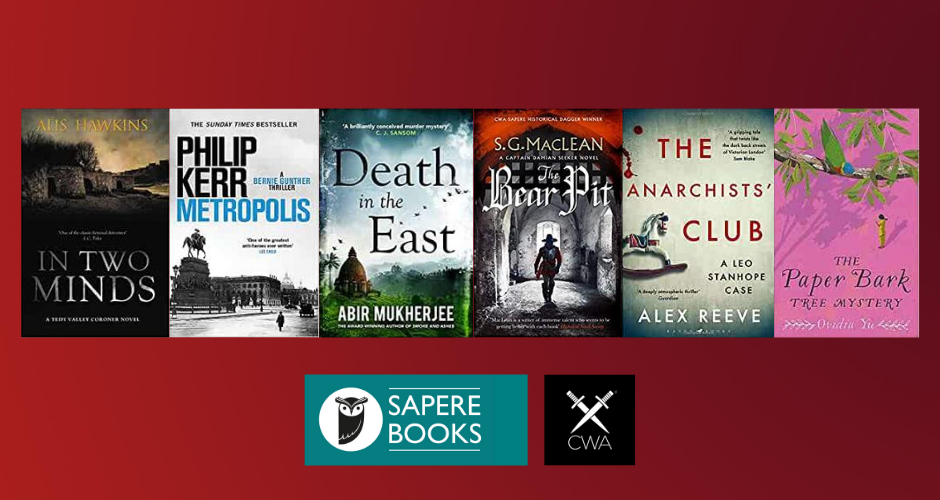
The Sapere Books Historical Dagger Award Shortlist 2020

Sapere Books are proud to be sponsoring the Crime Writers’ Association’s Historical Dagger Award, which is for the best historical crime novel set in any period at least 50 years prior to the year in which the prize is presented.

The 2020 shortlist has now been announced, and features seventeenth-century plotters, stolen diamonds, sainted monks and more.


In Two Minds, Alis Hawkins, The Dome Press

Set in nineteenth century Wales, In Two Minds follows two investigators – Harry Probert-Lloyd, a young barrister, and John Davies, a solicitor’s clerk – as they attempt to solve a grisly mystery. A faceless, naked corpse has washed up on a remote Cardiganshire beach, and no one can identify it. Harry’s attempts to solve the crime are met with local hostility and suspicion – especially when he chooses to consult an eccentric doctor with radical and controversial methods.

And when Harry’s own relations appear to be implicated in the crime, it seems he may be forced to choose between professional duty and familial ties…

Click here to find out more about In Two Minds


Metropolis, Philip Kerr, Quercus

Detective Bernie Gunther is back in the fourteenth – and final – book in Philip Kerr’s gripping series of twentieth century thrillers. It’s 1928 and Bernie is just beginning his career in Berlin, at the height of the Weimer Republic. He is soon faced with a gruesome investigation when the bodies of four prostitutes are found, all murdered in the same brutal fashion. Before Bernie can make any headway with the case, yet another girl is found dead – this time the daughter of one of Berlin’s most notorious gangsters.

A murderer with a twisted agenda is prowling the streets of Berlin, and it’s up to Bernie to put a stop to their deadly spree…

Click here to find out more about Metropolis


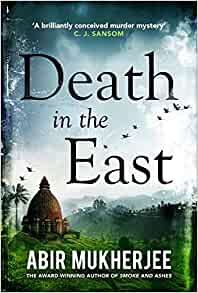
Death in the East, Abir Mukherjee, Harvill Secker

Set in 1920s India, Death in the East follows the continuing adventures of dynamic duo Captain Sam Wyndham and Sergeant Surrender-not Banerjee. Wyndham is haunted by an old case from his early days as a young constable, when his old flame Bessie Drummond was found beaten to death in her own room. Arriving at the ashram of a sainted monk – where he hopes to overcome his opium addiction – Wyndham finds a shadowy figure from his past, a man he believed was long dead.

Certain that the man is out for revenge, Wyndham once again calls on Sergeant Banerjee for help. Together, they prepare to take on a sadistic and slippery killer…

Click here to find out more about Death in the East


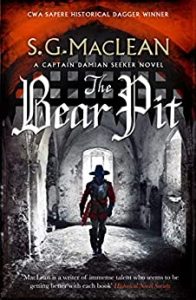
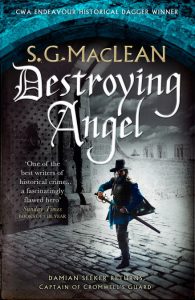
The Bear Pit, S. G. MacLean, Quercus
Captain Damian Seeker – a trusted member of Oliver Cromwell’s guard – must once again step in when Cromwell finds himself the target of a ruthless assassin. Conspiracies against the Lord Protector are once again on the rise, and there are many who would stop at nothing to see Charles Stuart restored to the throne. Meanwhile, Seeker is also faced with an illegal gambling den and the body of a man savaged by a bear. Yet it was believed that all bears were shot when Cromwell banned bearbaiting – so where did this one come from?

As Seeker investigates further, the two cases start to converge, and he begins to realise the magnitude of the treacherous forces that threaten the realm…

Click here to find out more about The Bear Pit


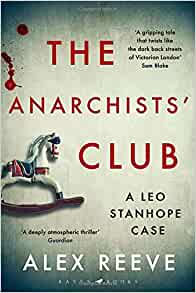
The Anarchists’ Club, Alex Reeve, Raven Books

Following on from The House on Half Moon Street, The Anarchists’ Club leads us back into the dark underbelly of Victorian London. Determined to live his truth while maintaining his freedom and safety, pharmacist Leo Stanhope is doing his best to move on from the trauma and heartbreak of the past. But then a woman is found murdered at a club for anarchists – and she’s carrying Leo’s address in her purse. When Leo arrives at the club under police escort, he is dismayed to see an unwelcome face from his distant past – a man intent on blackmailing him for an alibi.

And now Leo must make a painful choice – risk having his lifelong secret exposed, or protect a possible murderer in exchange for his silence…

Click here to find out more about The Anarchists’ Club


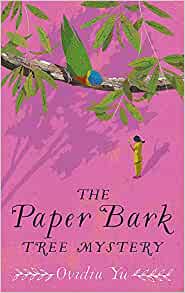
The Paper Bark Tree Mystery, Ovidia Yu, Constable

The Paper Bark Tree Mystery is the third book in Ovidia Yu’s page-turning Crown Colony series, set in 1930s Singapore. Su Lin has landed a job as an assistant at Singapore’s new detective agency. But her dream role is cut short when Englishman Bernard ‘Bald Bernie’ Hemsworth decides that a ‘local girl’ can’t be trusted with the agency’s investigations. Su Lin therefore loses her job and is replaced with a privileged white girl. Soon after, Bernie – widely disliked – is found dead in the filing room. And when the father of her best friend is accused, Su Lin is determined to prove his innocence.

During the course of her investigations, Su Lin uncovers stolen diamonds and treacherous arms deals. And it seems that the closer she gets to the truth, the more danger she is in…

Click here to find out more about The Paper Bark Tree Mystery

Author Q&A with Stephen Taylor

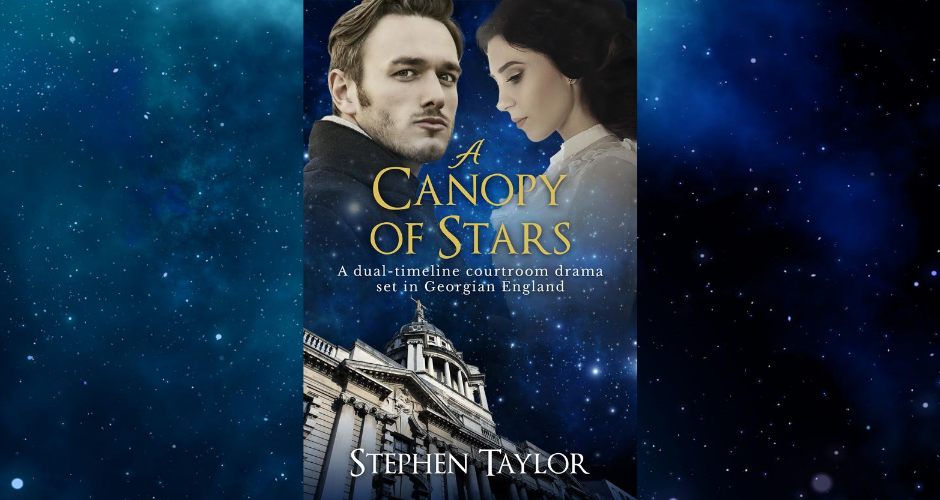
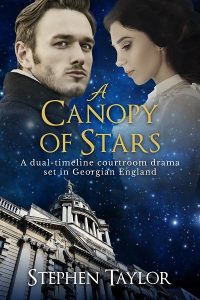
Stephen Taylor is the author of A CANOPY OF STARS, a thrilling historical 19th century saga stretching from the legal courts of Georgian London to the Jewish ghetto in Frankfurt.

Hi Stephen! Welcome to the Sapere Books blog. Could you tell us a bit about what first got you into writing?

My addiction has been with me for over twenty years now. When I was younger, if somebody told me a good joke, when I retold it it was twice as long, embellished, the story enhanced, the characters fleshed out. With me, it was never just about and Englishmen, an Irishman, and a Scotsman. It was an Englishman in a bowler hat with a monocle, an Irishman in a donkey jacket with a pint of Guinness and a Scotsman in a kilt with a set of bagpipes (and yes I know that this is stereotypical).

Tell us about where you write and your writing habits.

I started by writing during my lunchtime at work, but now I write in my home office. I keep a working week, Monday to Friday and write for two and a half hours a day. I seem to need that discipline.

What part of the writing process do you find most difficult?

Probably research: it’s a double edged sword — part good, part tiresome. The rewrites are also tricky, as you can edit forever, endlessly trying to improve what you have written. I aim to stop after five rewrites.

Do your characters ever seem to control their own storyline?

The received wisdom is that you determine your storyline and not let your characters deviate from that. However, after I develop my characters, they tell me where they want to go, what they want to do. I follow them, and my stories are character led. I still have a structure in my mind — A to B, but the characters say how I get there.

Do you find it hard to know when to end a story?

Not usually. I have a prompt to myself that sits just below the line I am typing. It reminds me to keep some control over the characters.  It says: INTRIGUE — CONFLICT — CLIMAX — RESOLUTION. i.e:

Open with a big question or hook: INTRIGUE. Then you have the problems your hero is up against: CONFLICT. This builds to a CLIMAX. This is followed by the RESOLUTION.

What is your favourite book?

If you ask me this next week, you may get a different answer. I would say my favourite book is To Kill a Mockingbird by Harper Lee. My favourite character is Uriah Heep, from David Copperfield. Dickens’ image of him is wonderfully unpleasant — he’s so slimy.

What book do you wish you had written?

Anything by Norman Mailer. As a writer, he is so far above me. He’s much more than a storyteller.

Tell us something surprising about you.

I was brought up in Manchester, but I was born in Yorkshire. My mother traveled back to Yorkshire so that my birth there would give me residential status to play cricket for Yorkshire — nobody ever believes that, but I promise that it’s true. Unfortunately, it was a feat that I never achieved, the White Rose County being unappreciative of my cricketing skills.


Preorder A CANOPY OF STARS here!

Sign up to our newsletter for deals and new releases.

Authors in Lockdown

We recently had a digital meet-up with some of our authors to catch up on current projects and find out how lockdown has impacted their writing. Read on to find out more about their creative news and practices:

Elizabeth Bailey has published six Lady Fan Mysteries, four Brides By Chance Regency Adventures, and two more historical romances. She is working on her seventh Lady Fan book. Elizabeth has also been taking daily walks, giving digital readings, and maintaining her weekly newsletter, which is filled with writing updates and giveaways.

Graham Brack has published six Josef Slonský Investigations and two Master Mercurius Mysteries. He is working on the next books in both series. Graham finds that working on two series simultaneously helps prevent him developing writers’ block with either one.

Jane Cable has published one contemporary romantic saga drawing on World War II, and her second – Endless Skies – is forthcoming. Jane has been developing a new website, editing Endless Skies, and working on a new contemporary romance novel.

Tim Chant has a Russian-Japanese naval novel forthcoming and has started the next one. He is also writing and self-publishing science-fiction and steampunk novellas.

Michael Fowler has published five DS Hunter Kerr Investigations. He is currently working on a new series, developing a character who is a forensic psychologist. As part of this, Michael is researching various forensic technologies and has spoken to an expert in the field.

Justin Fox has two nautical novels forthcoming with Sapere Books. These are also being published in South Africa by Penguin Random House and are currently being edited.

Anthony Galvin (who also writes as Dean Carson) is the author of historical non-fiction book Death and Destruction on the Thames in London. He is working on a series of thrillers. As a mature student, Anthony has also been finishing up assignments and exams.

Sean Gibbons’ gritty crime series – following taxi driver Ben Miller – will be published in 2021. He is currently writing the fourth book in the series and has just finished a World War II espionage thriller.

Gillian Jackson has published three psychological thrillers. She is now editing old and self-published work, finding ways to re-purpose old characters. Gillian is particularly interested in developing more contemporary women’s fiction with a psychological element.

Natalie Kleinman has four Regency romances signed up and has written two more. She has recently made a start on a new romantic novel.

Simon Michael has published five Charles Holborne Legal Thrillers, and he has a sixth one lined up. Aside from writing, he has recently been busy with building work.

Ros Rendle has six romance novels forthcoming with Sapere Books, including her Strong Sisters trilogy. Ros has recently finished a new novel, and she has found her Chapter writing group (regional groups of romance writers affiliated with the Romantic Novelists Association) a great source of support.

Linda Stratmann has published five Mina Scarletti Mysteries and is writing the sixth. To help with this, she has been researching Victorian spirit photography using Archive.org. Linda has also been gardening, cooking, baking, and holding digital meetings with the Crime Writers’ Association, of which she is the chair.

Deborah Swift has published two romantic World War II sagas and is working on the third, which will be set in Shetland and Norway. She has been researching nautical terminology and walking a lot, which she finds is a great time to think about plot.

Alexandra Walsh has published three timeshift conspiracy thrillers; the last one, The Arbella Stuart Conspiracy, came out in May. She is now writing a Victorian dual-timeline novel and is planning to start a newsletter.

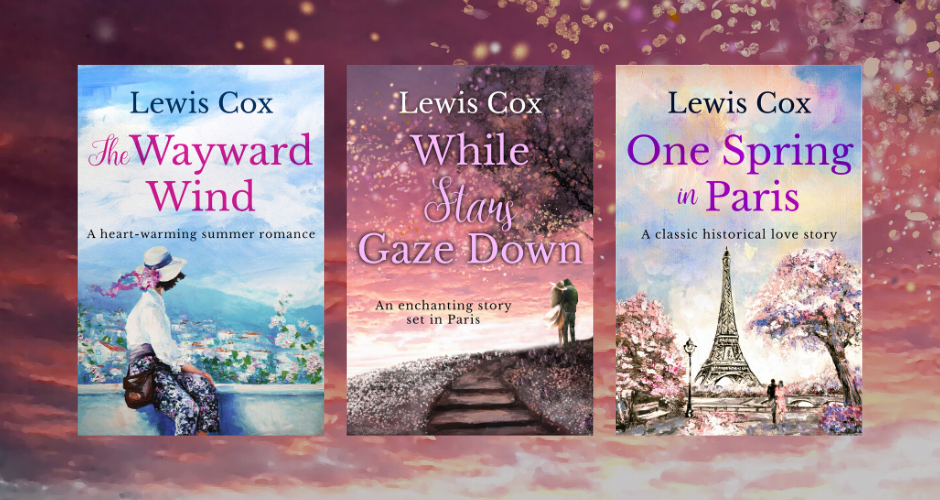
Sparkling Summer Reads by Lewis Cox

This summer, settle down with a charming, classic love story by Lewis Cox – a master of the genre!

ONE SPRING IN PARIS follows Caroline May, a young artist studying her craft in the city of love. When her money runs out, she resolves to find a way to remain in the place that inspires her most. Through friends, she finds work with melancholy restauranteur Raoul Pierre. As soon as they meet, Caroline finds herself irresistibly drawn to her new employer. But knowing that Raoul is a determined bachelor, she vows to hide her feelings to protect her heart…

Click here to order ONE SPRING IN PARIS

THE WAYWARD WIND is a fun and flirty summer romance set in sunny Madeira. Fleeing a London scandal that has damaged her reputation, the capricious Ann Thrail arrives at her aunt and uncle’s idyllic home in Portugal for a long stay. But her aunt, Kate, soon begins to worry that Ann will lead her son astray. With no wish to return home, Ann must learn to rein in her chaotic nature and win over her anxious relatives…

Click here to order THE WAYWARD WIND

WHILE STARS GAZE DOWN is a beautiful story of healing and new beginnings. Nursing a recently broken heart, Diana Gregg attempts to move on by immersing herself in the delights of Parisian society. But when she crosses paths with John Fanshawe — who reminds her of her ex-boyfriend — she decides to protect herself from further pain by maintaining a distance between them. Confused by Diana’s reserved attitude, John is determined to overcome her apparent dislike…

Click here to order WHILE STARS GAZE DOWN

To further celebrate her work, we asked Lewis Cox’s granddaughter, Priscilla Playford, to say a few words about her life and achievements:

“My grandmother wrote over 250 novels all in longhand; she started her career in the late 1920s and continued writing well into her 80s. She wrote under the names of Lewis Cox, Bridget Parsons and Mary Blair, and her books were published, primarily, by Hutchinson, Mills & Boon and later, Robert Hale. They were available in many countries and translated into several languages, including Japanese and Dutch.

In her writing, as in life, my grandmother was very disciplined and forthright with a strong will and high standards. Not outgoing, she did not seek publicity but enjoyed her success and, whilst not a traveller, it is perhaps true that she lived through her imagination. She loved antiques and enjoyed collecting furniture and pictures.

One cannot help but admire all that she achieved, particularly at a time when women were expected to be in the background — hence her using the name ‘Lewis Cox’ — and during the war; judging by the cuttings, she was very highly thought of and had good reviews and billing.”

In Memory of Alan Williams

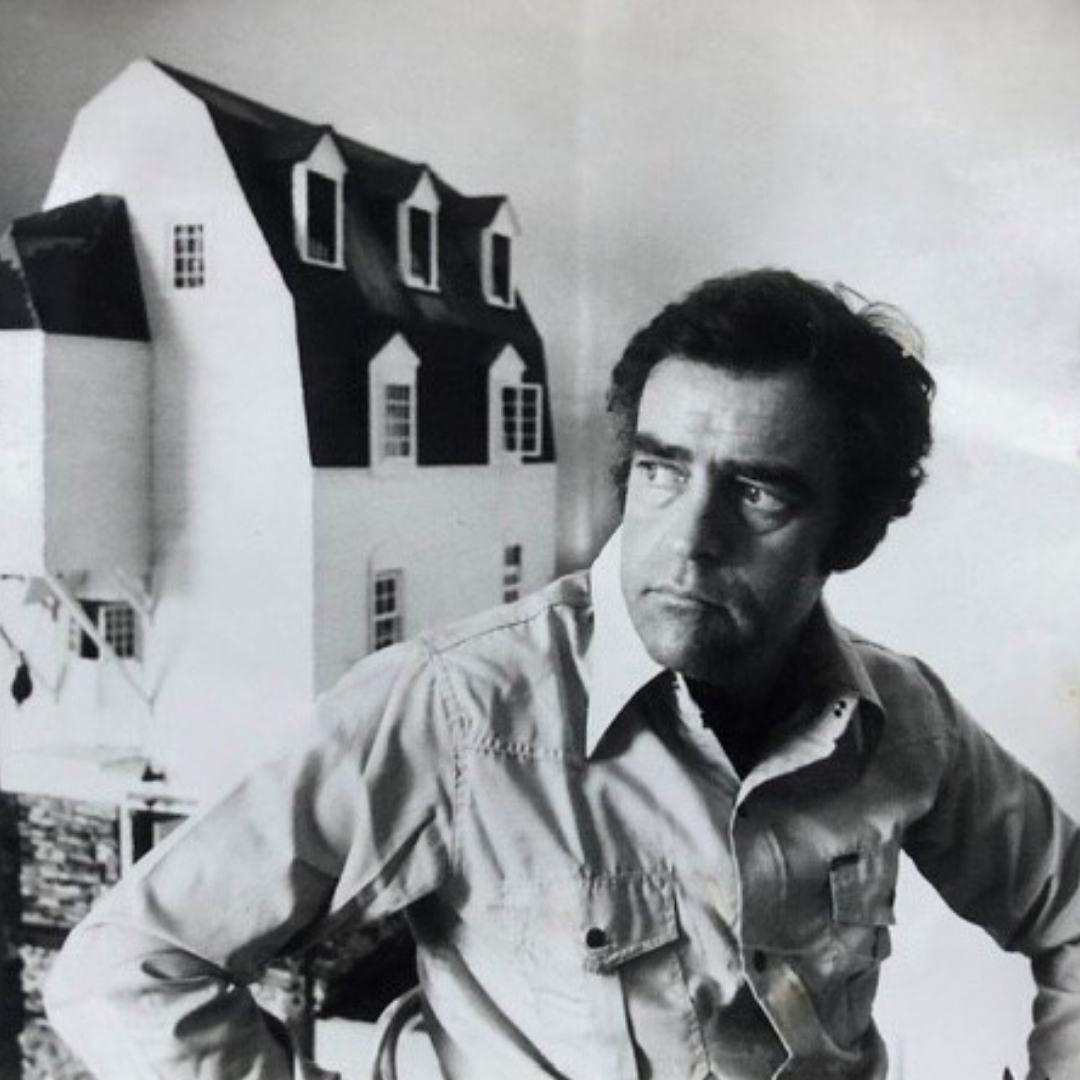
We had very sad news back in April that one of our authors, Alan Williams, fell victim to COVID-19. He passed away in a care home, aged 84.

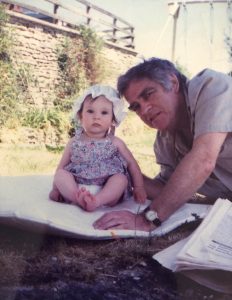
Alan with his daughter, Sophie

Williams graduated from King’s College, Cambridge, in 1957 with a BA in Modern Languages. He then led a rich and varied life as a journalist and foreign correspondent, working for publications such as the Cardiff Western Mail and the Manchester Guardian. He reported on a number of world events, including the Hungarian Revolution, the Algerian War and the Vietnam War.

His experiences as a reporter later influenced his novel writing. Barbouze – the first instalment of Williams’ Charles Pol Espionage Thriller series – follows a British journalist who accompanies a French spy on a mission in North Africa. A later novel in the series, The Tale of the Lazy Dog, is a heist story set in Southeast Asia. Williams’ writing won him much acclaim: he has been described as “the natural heir to Ian Fleming” and “one of the important figures in the change and development of the espionage novel”.

Williams has three children – Sophie, Owen and Laura – and three grandchildren, Roxy, Willow and Fox. Our thoughts are with his family at this difficult time.

You can read Alan Williams’ full obituary in the Guardian.

Photographs courtesy of Sophie and Laura.

The Sapere Books Historical Dagger Award Longlist 2020

Sapere Books are proud to be sponsoring the Crime Writers’ Association’s Historical Dagger Award, which is for the best historical crime novel set in any period at least 50 years prior to the year in which the prize is presented.

This year’s judges were Janet Laurence, the author of four cookery books and a series of articles on historical cookery; Angela May Rippon CBE, a television journalist, newsreader, writer and presenter; Professor Edward James, Emeritus Professor of Medieval History at University College Dublin; and Andre Paine, former editor of Crime Scene magazine.

The 2020 longlist has now been announced. Congratulations to the following authors and publishers:

THE MAN THAT GOT AWAY by Lynne Truss, Raven Books

THE KING’S EVIL by Andrew Taylor, Harper Collins

THE BEAR PIT by SG MacLean, Quercus Fiction

THE ANARCHISTS’ CLUB by Alex Reeve, Raven Books

METROPOLIS by Philip Kerr, Quercus Fiction

THE PAPER BARK TREE MYSTERY by Ovidia Yu, Constable

THE SERPENT’S MARK by SW Perry, Corvus

IN TWO MINDS by Alis Hawkins, The Dome Press

LIBERATION SQUARE by Gareth Rubin, Michael Joseph

THE BONE FIRE by SD Sykes, Hodder & Stoughton

SORRY FOR THE DEAD by Nicola Upson, Faber & Faber

DEATH IN THE EAST by Abir Mukherjee, Harvill Secker

Welcoming Three New Authors

We are thrilled to announce that we have recently welcomed three brilliant new authors to our contemporary romance and historical fiction lists. We look forward to sharing their wonderful work with the world!

Tim Chant is working on an exciting historical naval thriller series. The first instalment – THE STRAITS OF TSUSHIMA – is set in 1905 during the Russo-Japanese war and follows the daring exploits of Marcus Baxter, a British Royal Navy officer turned spy.

THE STRAITS OF TSUSHIMA is due out in 2021.

Teresa F Morgan is working on a fabulous three-book contemporary romance series. Set in Cornwall, her novels have a strong sense of place and a unique sunny charm. Her first book, COCKTAILS AT KITTIWAKE COVE, sees ambitious restauranteur Rhianna Price arrive in the area looking for a fresh start. But when she runs into her holiday fling, Rhianna’s focus is put to the test…

COCKTAILS AT KITTIWAKE COVE is due out in 2021.

Tanya Jean Russell writes heart-warming romantic fiction. Her first book will be a seasonal novel called AN IMPERFECT CHRISTMAS, a moving and uplifting tale that follows Maggie Green, a young accountant who returns to her hometown and is forced to face her first love.

AN IMPERFECT CHRISTMAS will be published in late 2020.

His Father’s Ghost by Linda Stratmann

Linda Stratmann is the author of the MINA SCARLETTI INVESTIGATIONS, a traditional British detective series set in Victorian Brighton.

More than a year ago, I determined to write a book in which Mina Scarletti, disabled by the scoliosis that twists her spine and cramps her lungs, is taken ill and solves a mystery while confined to bed. It is not a new concept. In The Wench is Dead, Inspector Morse solves a Victorian murder while in hospital, and in Josephine Tey’s The Daughter of Time, Inspector Alan Grant, hospitalised with a broken leg, explores the fate of the Princes in the Tower.

But these are historical puzzles, and therefore considered suitable to engage the mind of a bored invalid. In His Father’s Ghost, Mina has additional challenges. She is intrigued by a current conundrum, the disappearance of a local man while out sailing, declared legally dead, but his actual fate unknown. Her doctor, however, has advised her against any activity that might tax her delicate health, and that includes solving mysteries. She has to use all her ingenuity to gather the information she needs. In doing so, she finds that she has uncovered evidence of past crimes and scandals. Her enquiries are a catalyst that set off a train of events that ultimately have dramatic and life-changing consequences for several prominent citizens of Brighton.

One of the themes which I explore in this book is hallucination. Mina, when stricken by a fever, sees and hears things that reveal what is troubling her. The son of the vanished man, disturbed by significant events, has terrifying visions in those dark hours that lie between sleeping and waking.

I really enjoyed my research for this book. I visited the fascinating Police Cells Museum of Brighton, and read about the curious spiritoscope, an apparatus designed to prove that it was spirits and not the medium who cause the movement of the divination table.

It was my real pleasure to include two characters who have appeared in previous books, the flamboyant actor Marcus Merridew, fresh from his acclaimed season as Hamlet, and the creepy young photographer Mr Beckler.

While editing the manuscript, which was completed at the end of 2019, I was struck by how Mina’s plight echoes our current time. She is ill with a lung infection, and effectively on lockdown. But when she scents a puzzle, it gives her strength. She needs not only warmth and air and nourishment, but material to keep her busy mind alive.


Click here to pre-order HIS FATHER’S GHOST

Distract Yourself with these Heart-Pounding Thrillers

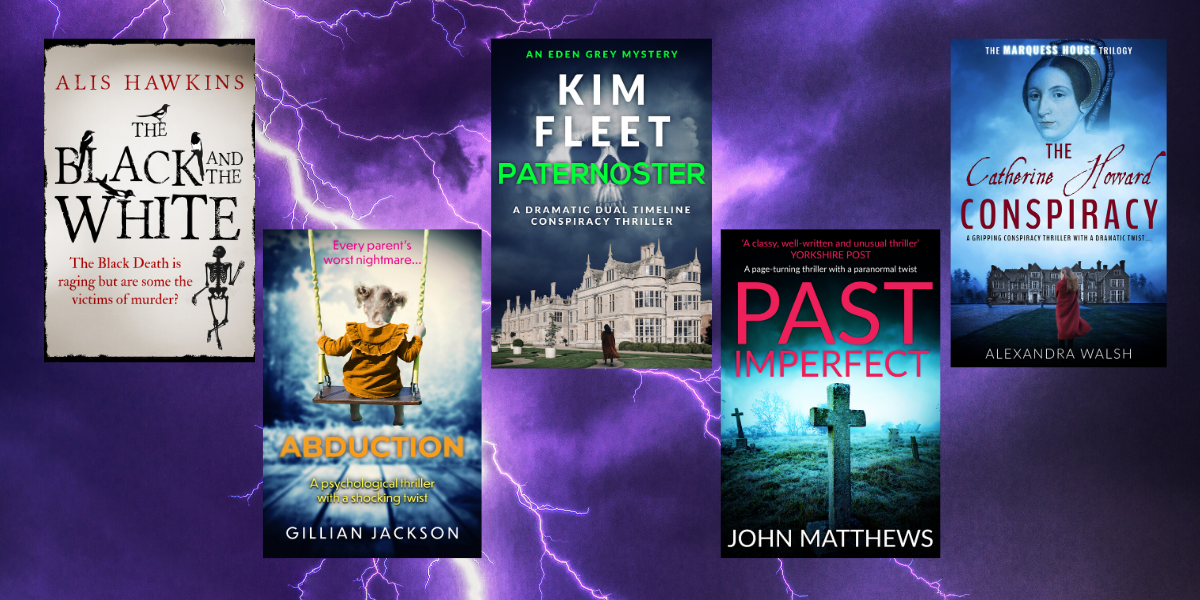
To help keep you entertained during quarantine we’ve put together a list of some of our most absorbing thrillers, featuring mysterious disappearances, historical conspiracies, ghostly dreams and more…

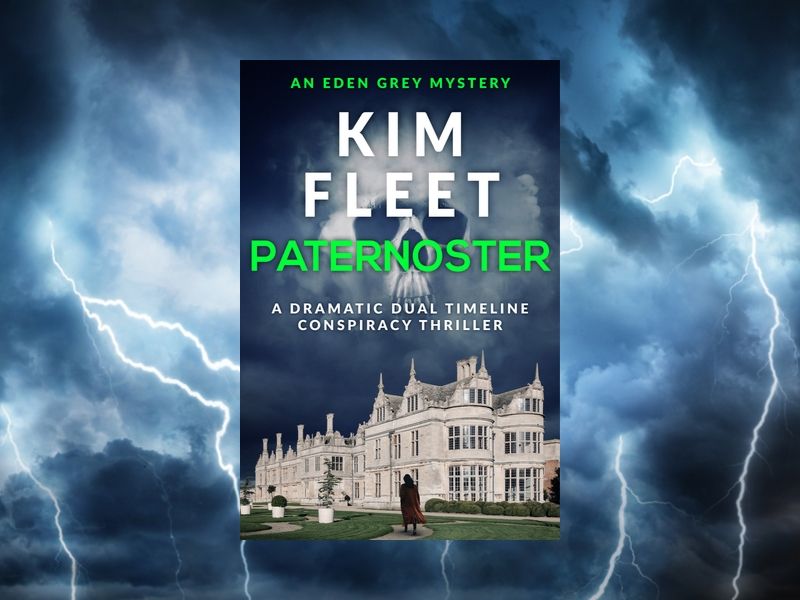
Paternoster, Kim Fleet

A compelling timeshift mystery, Paternoster moves between 18th Century and modern-day England. In 1795, kept woman Rachel Lovett is left homeless and destitute when her benefactor loses his money. Forced to steal jewellery to survive, Rachel finds herself constantly on the run from the law and the hangman’s noose. And when she joins a brothel, she is soon introduced into the ruthless Paternoster Club…

In 2013, Private Investigator Eden Grey is called in to examine a pair of skeletons found in the grounds of a prestigious school. It soon becomes obvious that these are not recent murders – the bodies have been buried for centuries. And now Eden must unravel a historic mystery while concealing her own personal demons…

Click here to order Paternoster

The Black and the White, Alis Hawkins

Set in 1349, The Black and the White is a chilling medieval mystery that explores the ravages of the infamous Black Death. Martin Collyer wakes up in his family’s charcoaling hut, having made a miraculous recovery. But his father, who showed no signs of the plague, is dead.

With no home to go to, Martin seizes his second chance at life and goes on a journey to seek salvation for his father’s unconfessed soul. Along the way, he befriends another traveller, the enigmatic Hob Cleve. But when more suspicious deaths occur, Martin begins to wonder whether he is travelling with a killer…

Click here to order The Black and the White

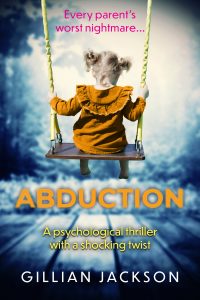
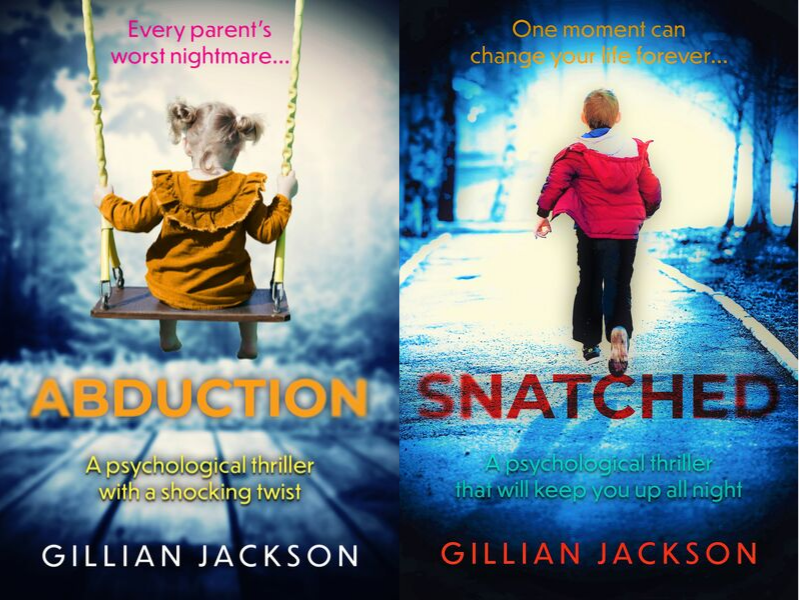
Abduction, Gillian Jackson

Abduction is an emotional psychological thriller that confronts every parent’s worst nightmare. During her third birthday party, little Grace disappears without a trace while playing a game of hide and seek.

As the years go by and the case goes cold, Grace’s parents lose hope of ever finding her and do their best to move on with their lives. But her older sister, Elise, refuses to give up. And a chance encounter leads her to believe that she may have found her…

Click here to order Abduction

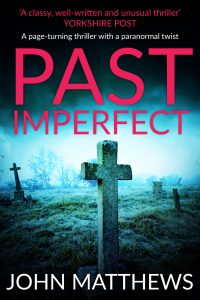
Past Imperfect, John Matthews

Spanning three decades, Past Imperfect is a gripping international crime novel with a paranormal twist. In 1963, a boy is kidnapped and murdered in the French countryside. The killer is seemingly caught, but young policeman Dominic Fornier is convinced he is innocent.

In London thirty years later, a boy loses his parents in a car accident and is left comatose. And when he regains consciousness, he is plagued by eerie dreams of a life that isn’t his. When Fornier hears of a possible link between the two boys, he throws himself into a desperate race against time to catch a brutal killer and right the wrongs of the past…

Click here to order Past Imperfect

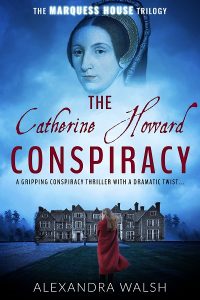
The Catherine Howard Conspiracy, Alexandra Walsh

The Catherine Howard Conspiracy is an absorbing dual timeline conspiracy thriller with a shocking twist on Tudor history. In 1539, young Catherine Howard is brought to the court of King Henry VIII to be a lady in waiting to the new queen, Ann of Cleves. But when she catches the king’s eye, her uncle begins scheming to secure a Howard heir to the throne. After the fate that befell her cousin, Anne Boleyn, Catherine is terrified of the unpredictable king and begins to fear for her life.

In 2018, Perdita and Piper Rivers inherit Marquess House from their estranged grandmother, renowned Tudor historian Mary Fitzroy. When Perdita sets out to uncover Mary’s reasons for abandoning them, she is drawn into the mysterious archives of Marquess House: a collection of letters and diaries that claim all records of Catherine Howard’s execution were falsified…

Click here to order The Catherine Howard Conspiracy


Like the look of these thrilling reads? Sign up to the Sapere Books newsletter for new releases and deals in crime and thriller fiction.

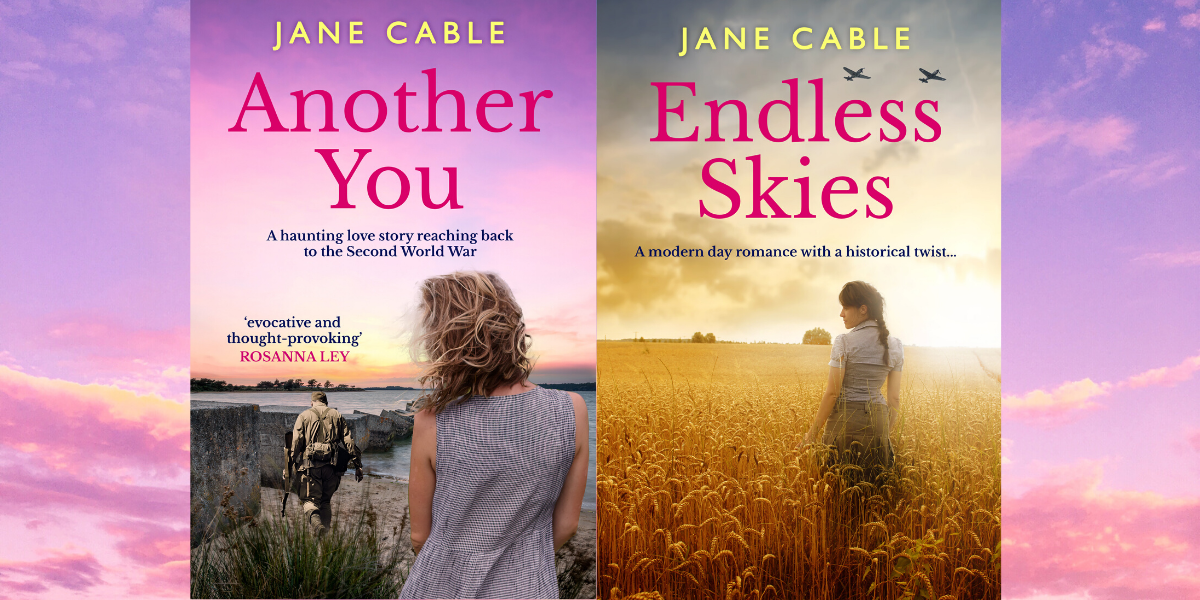
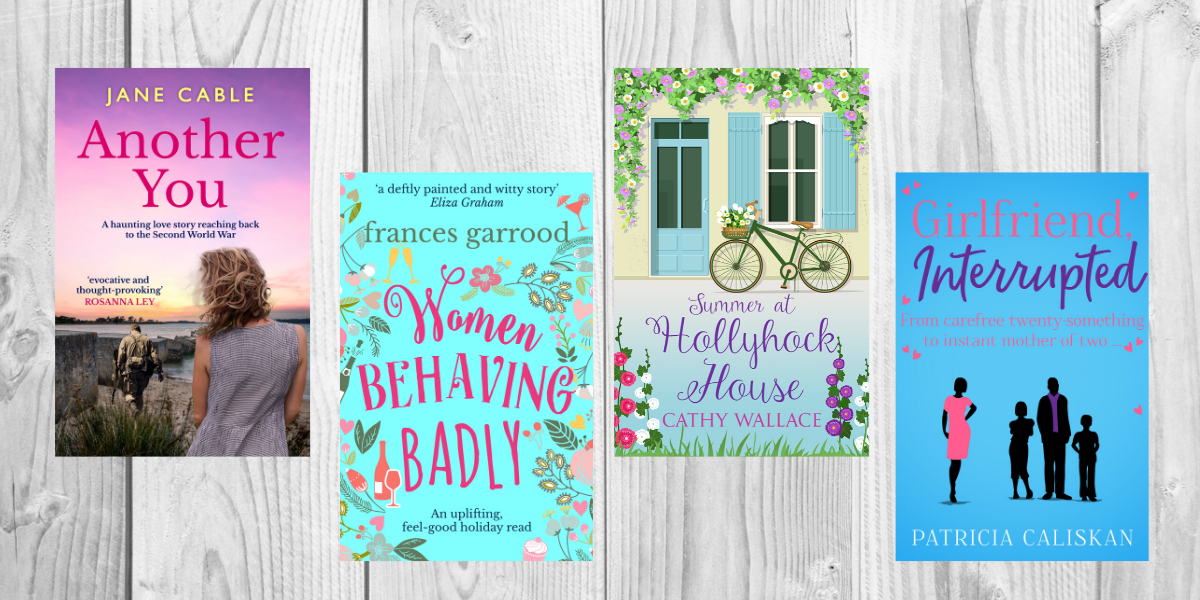
Using Local History in ANOTHER YOU and ENDLESS SKIES by Jane Cable

Jane Cable is the author of ANOTHER YOU and ENDLESS SKIES, modern romantic sagas that draw on the Second World War.

Although I hated history at school, in my adult life I have become a total history buff. Not history about royalty, wars and politicians though – the history of ordinary, everyday people. A history I feel connected to and is more often than not local.

For my contemporary romances the history I choose is sharply focussed, linked to the setting. For Another You, the most gripping part of Studland’s past was its role in the practices for D-Day, and for Endless Skies I decided to stay with World War Two. The book is set in Lincolnshire, so to my mind is inextricably linked with Bomber Command.

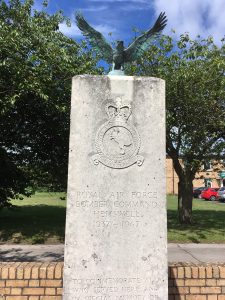
The wartime setting for Endless Skies is RAF Hemswell, now an industrial estate best known for its antiques centres and markets. In fact, that was the reason I went there in the first place. But wandering around the old barrack buildings, I could almost see the airmen on the stairs and hear the stamp of their boots in the parade ground. This had to be the place.

The staff at Hemswell Antique Centres were able to give me a leaflet with a short history of the base, and that set me off on my research. While we were in Lincolnshire I walked its buildings and roads then drove around the area, so I was totally familiar with the terrain, and once we were back at home I started to dig deeper.

Here the internet is invaluable, and there are a number of websites giving the history of RAF bases. Hemswell was one of the first to be operational right at the beginning of the war, but as I dug deeper I found two Polish squadrons had been based there in 1942-3 and had suffered huge losses. I knew exactly where to focus my research.

This is where local history becomes exceptionally localised for me: one place at one point in time. In Endless Skies my protagonist, Dr Rachel Ward, is an archaeologist and my own work made me think of hers: researching a site, carrying out a survey, opening a trench, trowelling into every corner then digging out a single artefact. She finds … well, it would be spoiling the story to tell you. I find words.

Hemswell War Memorial

But sometimes before you focus down you need to pan out, so I read around the subject: first-hand accounts from wartime bomber crews; memoirs of civilian life on RAF bases. For background on Hemswell itself I was very lucky – it was where The Dam Busters was filmed in the 1950s, and there was both a book and documentary about making the movie so I could watch almost contemporary footage.

There was also a treasure trove on the internet about the Polish airmen who crewed the station, and seeing photographs of them was quite an eerie experience. In fact, I ended up with far more information than I could possibly – or would want to – use in the book. But the level of detail gives me confidence my historical details are correct.

But equally interesting to me were the ghost stories associated with Hemswell: a pilot in flames on the runway, the echoes of 1940s music and the sounds of bombers taking off and landing. And having researched them, it would have been such a shame not to use at least one of them as well. Although my ghosts, of course, are completely fictional.


Click here to order ANOTHER YOU.

Click here to pre-order ENDLESS SKIES.

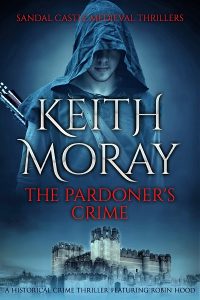
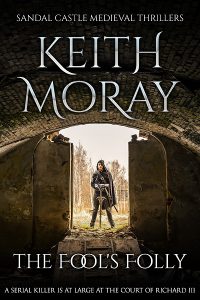
THE SANDAL CASTLE MEDIEVAL THRILLERS by Keith Moray

Keith Moray is the author of the SANDAL CASTLE MEDIEVAL THRILLERS, historical murder mysteries set in Yorkshire. The first two books in the series, THE PARDONER’S CRIME and THE FOOL’S FOLLY, are available to pre-order.

I live within arrowshot of the ruins of Sandal Castle. As a family doctor in Yorkshire, for thirty years I saw it most days while driving around the area on my morning visits. Nowadays, in semi-retirement I go running around the old battlefield where thousands of knights and soldiers once fought and died during the Wars of the Roses.

I plot and daydream when I run. Happily, a short story entitled The Villain’s Tale about a miscreant in a rat-infested dungeon in Sandal Castle won a Fish Award. It spurred me on to start plotting the Sandal Castle Medieval Thrillers.

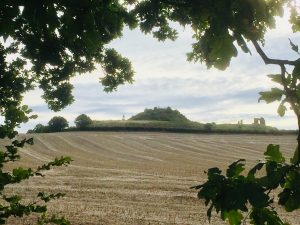
Sandal Castle

The fine old motte and bailey was built in the 12th century by the De Warenne family during the reign of Henry I. From the 14th century it passed into royal ownership and is best known for its involvement in the Battle of Wakefield in 1460, when Richard, Duke of York was mortally wounded.  His son, King Edward IV established it as one of the two bases for the Council of the North in 1472. Effectively, this was the government for the North of England. After he died, his younger brother, King Richard III began rebuilding the castle in 1483. The work stopped when he lost his life at Bosworth Field in 1485.

Robin Hood

Thanks to television and movies, most people associate the outlaw Robin Hood with Sherwood Forest and Nottingham. However, the medieval ballads say that his stomping ground was actually Barnsdale Forest, which once covered a vast swathe of Yorkshire. The ballads also mention King Edward and various Yorkshire characters, such as George-a-Green the Pinder of Wakefield, and many actual locations in Wakefield are referred to.

The Court Rolls of the Manor of Wakefield

In medieval times, The Manor of Wakefield was the largest in Yorkshire and one of the largest in England, covering some 150 square miles. The Court Rolls of the Manor of Wakefield are a national treasure, consisting of a continuous recording of court proceedings from the late thirteenth century until the 1920s.

The outlaw and bowman Robert Hode, a sure candidate for being the historical Robin Hood, is mentioned in the Court Rolls of 1316.

 The Sandal Castle Medieval Thrillers

If you look at the picture of Sandal Castle today you will see exactly where I had the germ of the idea for The Pardoner’s Crime, the first novel in this series. It is a view of the castle from under what I fancifully call Robin Hood’s tree. I blended historical facts, medieval ballads and a good deal of imagination to come up with a historical whodunit.

There are three completed novels and a fourth in the pipeline. They are not all about the same characters; indeed they are set at different times, because Sandal Castle with its fascinating history is the historical backdrop to them. They are all inspired by Chaucer’s The Canterbury Tales and some of the characters that he described so beautifully. The Pardoner’s Crime fuses The Canterbury Tales with the Robin Hood legends. The reader is challenged to uncover the true villain in each novel.


Click here to pre-order THE PARDONER’S CRIME.

Click here to pre-order THE FOOL’S FOLLY.

Sandal Castle image credit: Keith Moray

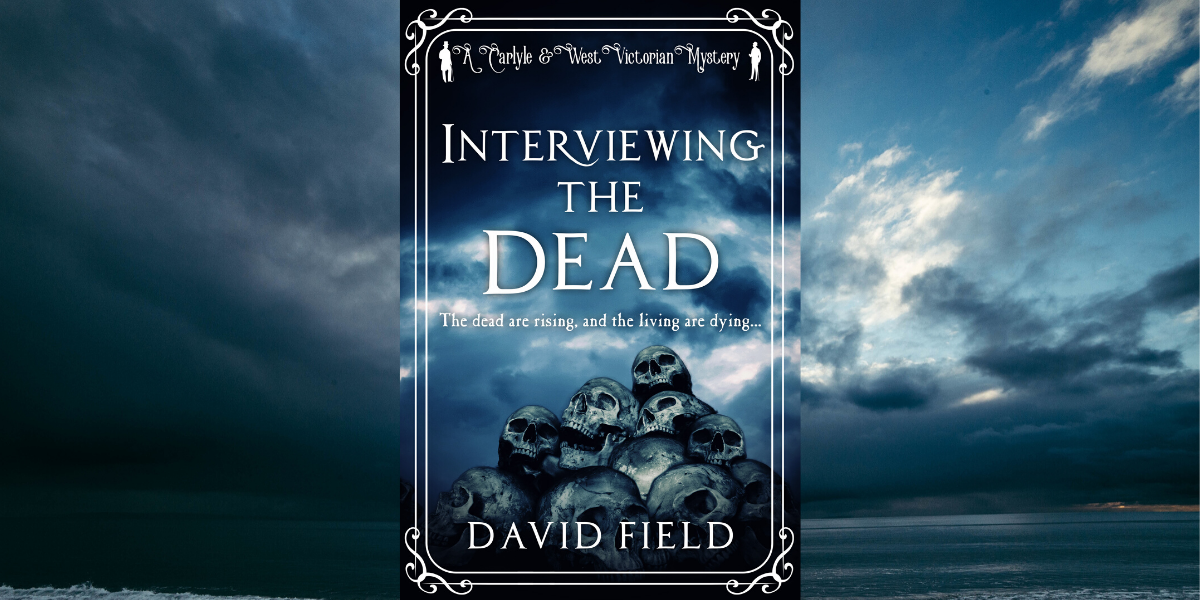
Sherlock, Spiritualism and Suffragists by David Field

David Field is the author of the Carlyle & West Victorian Mysteries.

As a historical novelist in search of bygone eras to recreate, I’ve always been fascinated by the late Victorian period. It was a time of contrasts, with vast scientific, medical and technological breakthroughs coming at a time when ordinary folk were obsessed with communicating with the dead. Victoria seemed destined to rule forever over a rich empire, while her subjects in its industrial cities, and most notably in its London capital, were existing in conditions of abject poverty.

Following the success of my Esther & Jack Enright mystery series, which began with the search for Jack the Ripper and ended just as the nineteenth century was about to, I was urged to return to this rich seam of inspiration, and there was – for me, at least – one obvious place to start.

When Arthur Conan Doyle abandoned medical practice and created his fascinating character Sherlock Holmes, he was inspired by his memory of a real life Sherlock. His name was Dr Joseph Bell, and he had taught anatomy to his classes of medical students at Edinburgh University, one of whom had been Doyle himself. Bell had what was then a unique approach to his analysis of the cadavers that were to be found on his mortuary slab, something that is second nature to modern forensic examiners, but was revolutionary in its day. He approached ‘cause of death’ by examining, not just insides of the bodies, but the clothing and personal possessions with which they arrived, and telltale indications on the skin, such as needle marks, abrasions, rough working hands and suchlike. From this he made logical deductions that were of value to police in unexplained death enquiries, and he taught his students to apply the same techniques when they went out into the world.

There must have been several generations of medical graduates from Edinburgh who were taught ‘the Bell method’, and it was no great stretch of the imagination for me to create Dr James Carlyle, anatomist and general surgeon at Whitechapel’s London Hospital – a medical doctor with the same professional training as Conan Doyle and the same inquisitive, logical mind as Joseph Bell.

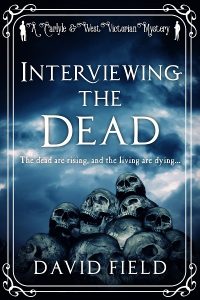
His first challenge – described in the first novel in my new series, INTERVIEWING THE DEAD – is to debunk the panicked belief among the populace of the East End that the spirits of those buried in a Plague Pit in Aldgate have returned to take their revenge for the disturbance of their resting place. That belief has taken hold easily, given the obsession with Spiritualism that gripped the country during this period.

But there were also other ‘spirits’ abroad, and they were advocating for great social change. Chief among these were the Suffragists, who campaigned for ‘votes for women’ and Suffragettes who took on entire police forces in public demonstrations. There were also other groups of feminists, as we would call them today, who advocated for equality of admission to professions such as medicine and the law. This was how Dr James Carlyle’s daughter, Adelaide, was created, as a young woman whose opinion of men and their dominance of society could not have been any lower – until she meets my third new character, Matthew West.

Although the Anglican Church was ahead of all other Protestant movements in the 1890s, it was demonstrating a social elitism that drove away ordinary working folk, and left the pastoral door open for more working-class religious initiatives and crusades among the poor. ‘Methodism’ had become a religious movement of its own, with its own hierarchy, but its progenitor, ‘Wesleyism’, still had its head above the parapet, and Wesleyan street preachers such as Matthew West might be found on corners, in market places, and outside factory and dockside gates.

Matthew has his own reasons for wishing to hose down any belief in the return of vengeful spirits of the dead, and when he finds himself associated with Dr Carlyle in the search for the truth, he comes up against the fiery Adelaide, who works as her father’s assistant. They influence each other’s views on life as they are drawn imperceptibly into a mutual attraction.

The stage is set for my next series. I hope you’ll join me in following the exploits of this unlikely trio, and I look forward to learning your reaction to them.

Click here to pre-order INTERVIEWING THE DEAD!

Sapere Books Celebrates Second Anniversary

Sapere Books has reached its second birthday!

We now have a family of over 50 authors and plenty of chart successes under our belt.

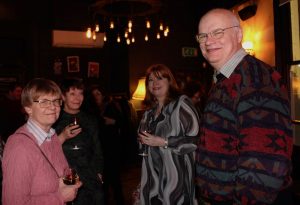
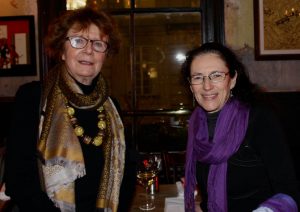
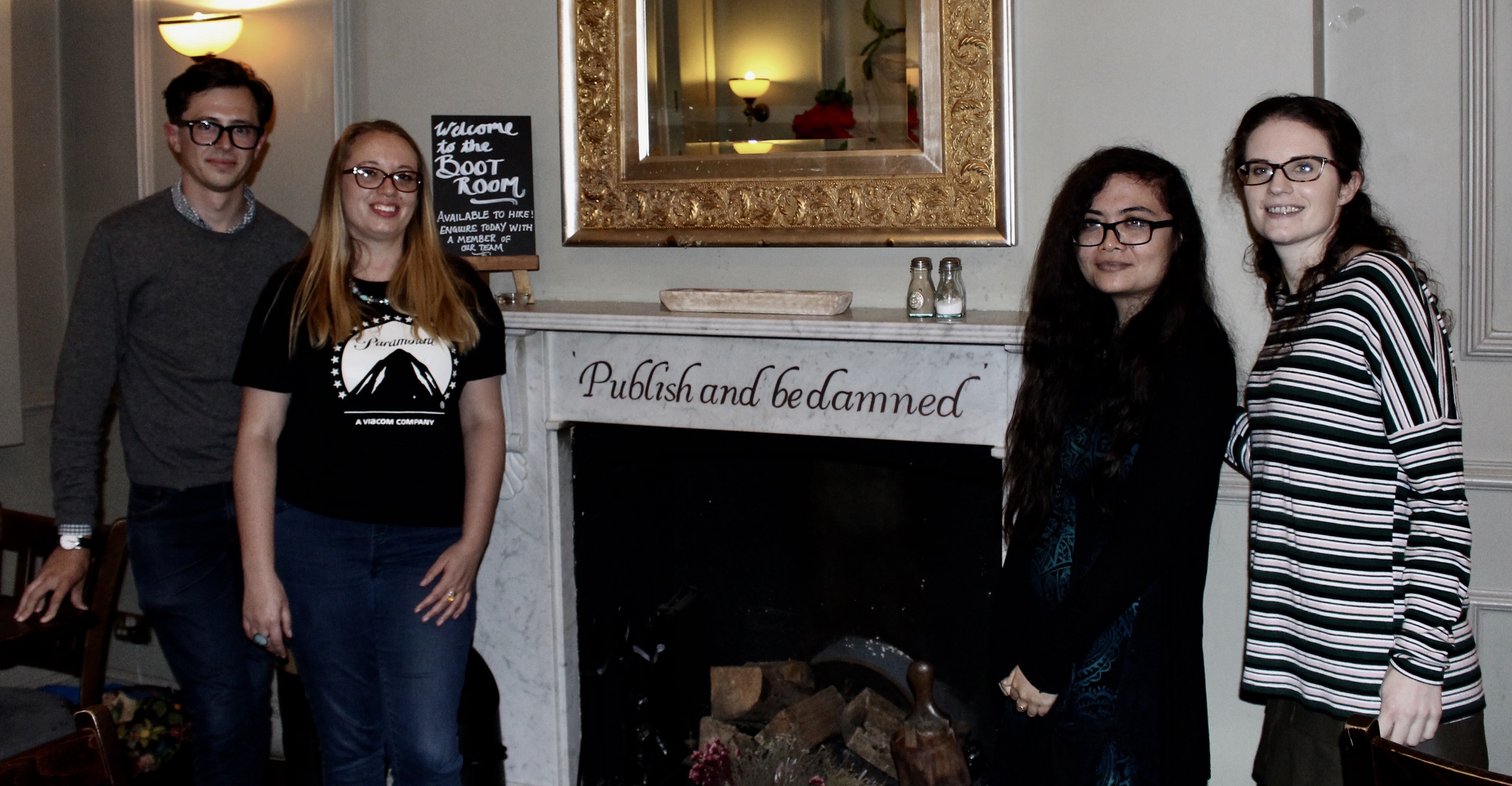
To celebrate our first two years as a company, we threw a party in London and caught up with our fabulous authors over drinks and nibbles. All have exciting new projects brewing. Here is a taster of what to expect from our authors in 2020.

Alexandra Walsh and Graham Brack

Graham Brack is working on a historical fiction series, the Master Mercurius Mysteries, set in the 17th century. The first book, Death in Delft is already available to pre-order, and more will follow later this year.

Keith Moray has written the Sandal Castle Medieval Thriller series, historical murder mysteries set in Yorkshire. The first book, The Pardoner’s Crime, is available to pre-order, and more are soon to follow.

Alis Hawkins’ brand-new Medieval novel The Black and The White will be published later this month.

David Field is working on a brand-new Victorian mystery series, the Carlyle & West Mysteries, which will launch very soon.

Jane Cable has another thought-provoking romance with echoes of the past launching soon.

Stephen Taylor, Caoimhe O’Brien, and Keith Moray

Gillian Jackson has written a new psychological thriller, which will be released this summer.

Natalie Kleinman will be joining our excellent Regency Romance authors with her sparkling new books, which will feature strong and resourceful heroines.

Ros Rendle will be launching her Strong Sisters series this year – sweeping sagas that will explore family relationships and rivalries.

Seán Gibbons’ gritty urban crime series set in Galway will launch later this year.

J. C. Briggs and Linda Stratmann

Stephen Taylor has a series of 18th century novels coming out soon.

And there are new books coming out soon from fan-favourite series, such as Alexandra Walsh’s Marquess House Trilogy, Elizabeth Bailey’s Lady Fan series, J C Briggs’ Charles Dickens Investigations series, Gaynor Torrance’s DI Jemima Huxley series, Charlie Garratt’s Inspector Given series, Michael Fowler’s DS Hunter Kerr series, Valerie Holmes’ Yorkshire Saga series, Marilyn Todd’s Julia McAllister series, Simon Michael’s Charles Holborne series, John Matthews’ Jameson & Argenti series and Linda Stratmann’s Mina Scarletti series.


For more information on our latest releases and ebook deals sign up to the Sapere Books newsletter.

Celebrating International Women’s Day

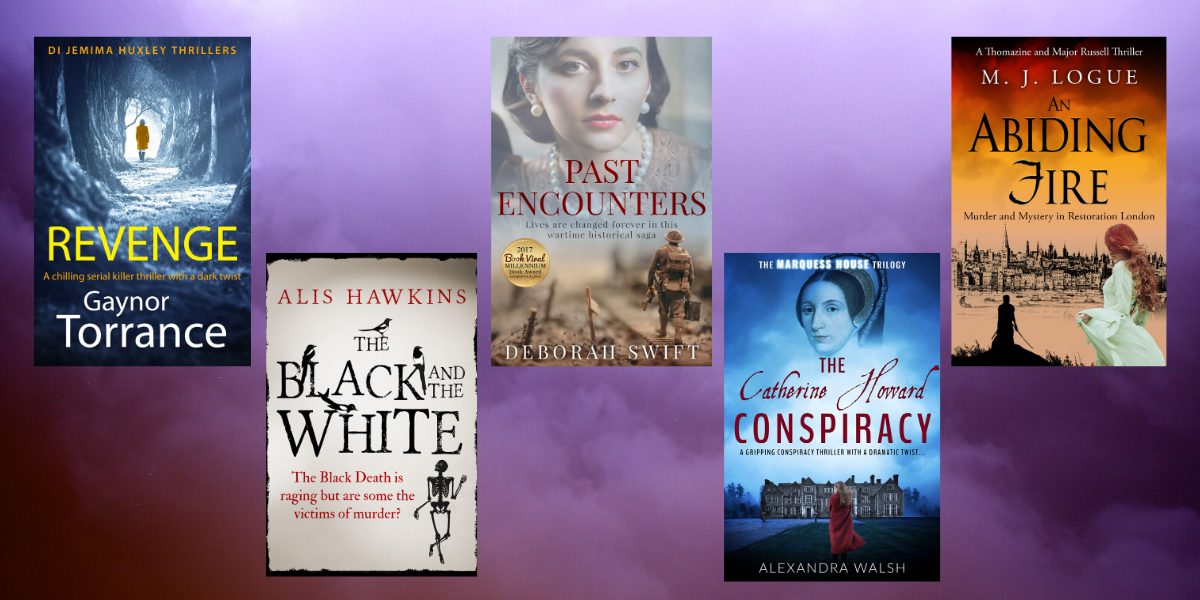
To celebrate International Women’s Day (8th March) we asked five of our authors to tell us all about their favourite female writers. Read on to find out more about their literary heroines!

Alis Hawkins, author of The Black and the White and Testament

My all-time favourite author is Joanna Trollope. An odd choice for a crime author? Not at all. Wonderful writing transcends genre, and she inspires me by drawing characters with a fine eye to dialogue and interaction; by bringing whole scenes to life with a few telling details; by making her readers care passionately about what happens to her characters.

Joanna Trollope has shown me how essential it is to do your research meticulously, to immerse your readers in the world you’re writing about – whether it’s a cathedral close or a dairy farm, a ceramics factory or a Spanish vineyard – but never to include a single unnecessary fact that might slow the action down.

Each Joanna Trollope novel begins with a single key event that turns the lives of all her interrelated characters upside down – and what else does a murder at the beginning of a book do but that?

Order THE BLACK AND THE WHITE here

Order TESTAMENT here

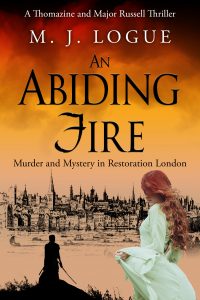
M. J. Logue, author of the Thomazine and Major Russell Thrillers

My busy little mind raced over all the possibilities – Tanith Lee, Storm Constantine, Dorothy Dunnett, Helen Hollick … but there can be only one, for me. Aphra Behn, of course. It’s not the what or the how of her writing, but the enigma and the old-school glamour of the writing persona she created – the international woman of mystery, the myths with which she surrounded herself – that inspires me. (Three hundred and fifty years later, she’s still a mystery!)

She was the first female literary professional, she did all her own publicity, and she’s still incredible. Possibly a spy, possibly bisexual – both, I suspect, images she manipulated to the hilt – and definitely a woman who knew how to work an audience. The fact that her plays and poems still resonate with us now is remarkable. She created characters that speak to us, no matter what clothes they’re wearing.

Order AN ABIDING FIRE here

Or find out more about the Thomazine and Major Russell Thrillers here

Deborah Swift, author of Past Encounters and The Occupation

The first Rosie Tremain novel I read was Music and Silence, set in the Danish court in the early 17th Century. Marvellously atmospheric, it shifts between different narrative styles: small vignettes that add up to a magnified version of life in Copenhagen that is so real, you feel you are there.

I’ve read all her other books since, including the more contemporary The Road Home, about an economic migrant arriving in the UK, who observes with bafflement the English obsession with status and success. I admire Tremain’s precision, and that is something I want to achieve in my own writing.

Order PAST ENCOUNTERS here

Order THE OCCUPATION here

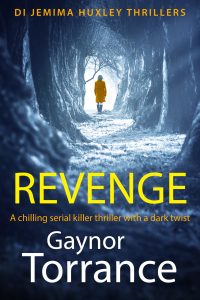
Gaynor Torrance, author of the DI Jemima Huxley Thrillers

I write in the genre I love to read, and being an avid reader of crime fiction, there are so many female authors whose work I admire. A particular favourite of mine is Sophie Hannah. I first stumbled across her books by chance, when I borrowed a copy of Little Face from my local library. Once I started reading, I couldn’t put it down.

Since finishing that particular book, I’ve worked my way through much of the Culver Valley Crime series. I adore the originality and complexity of Sophie’s plots, which have lashings of intrigue and misdirection. The central characters, DS Charlie Zailer and DC Simon Waterhouse, are such a great pairing. They’re both so dysfunctional and vulnerable in many ways, yet somehow form a compelling and likeable team.

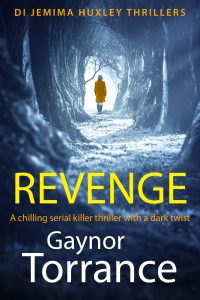
Order REVENGE here

Or find out more about the DI Jemima Huxley Thrillers here

Alexandra Walsh, author of The Marquess House Trilogy

She may be old-fashioned, and her comments can make me wince, but take away the occasionally dubious contents of a bygone era and Enid Blyton remains a huge inspiration with the breadth of her storytelling skill. In her adventure books, her plotting is deft and sharp, while in her fantasy books her imagination is broad and tantalising.

As a child, she shaped my reading habits but my eureka moment came when I was reading In the Fifth at Malory Towers. I was already harbouring ambitions to be a writer, but it was only a dream. Then, the heroine of the series, Darrell Rivers, wrote the school pantomime. Suddenly, I thought, If Darrell can do it, then so can I! My life path was set. From reading Enid Blyton’s work, I learned that girls were stronger and more effective if they worked together, that girls could do as much as boys and usually more, and that if you were determined you could solve anything – lessons that still resonate today.

Order THE CATHERINE HOWARD CONSPIRACY here

Or find out more about The Marquess House Trilogy here

Death in Delft by Graham Brack

DEATH IN DELFT by Graham Brack is the first historical murder investigation in the Master Mercurius Mystery series: atmospheric crime thrillers set in seventeenth-century Europe. Click here to pre-order.

Most crime writers have a keen sense of place. Something about a setting grabs them and tells them there is a story here.

So it was with me. When you live in Cornwall, the quickest place to get to on the continent is Amsterdam, because there is a flight from Exeter, so over the years my wife and I have been frequent visitors to the Netherlands.

The first place we went was Delft. As is well known, Delft is the city of Vermeer; but it is also the city of Antony van Leeuwenhoek, the father of modern microscopy. Not only did they live within around 250 metres of each other, they were born within a few days of October 1632. Can you imagine being a schoolteacher who had two such boys in their class?

I was turning this around in my mind when the idea came to me that people often ask whether detection is an art or a science. Well, if these two could not tell you, who could? Making them into detectives in their own right would be a bit of a stretch, but they could vie to assist a third person, and that’s how my Dutch series was born.

In the year 1671, three young girls disappear from their homes in Delft. Two come from poor families, but one is the daughter of a local dignitary. The mayor recognises that he needs help to find these girls, and writes to the nearby University of Leiden, asking the Rector to send the cleverest man he can spare.

Master Mercurius is undoubtedly clever. He is, in effect, an Oxbridge don transported to another time and country, but like many an academic he is completely wrapped up in his subject – moral philosophy – and has very little experience of the world. He does not want to let the Rector and the University down, but he is acutely aware that brains alone will not solve this mystery. Fortunately, he has Vermeer and Van Leeuwenhoek to help, and together they set out to retrieve the girls and discover the culprit. In a nutshell, that is how I came to write Death in Delft, in which Mercurius narrates – very frankly – his experiences.

I don’t think it counts as a spoiler if I say that he is successful and returns to his study with something of a reputation. Unfortunately for him, in 1674 the Stadhouder – the man we know as King William III – needs some assistance in putting down a conspiracy which seeks to remove him from power. It seems likely that someone in high places is pulling the strings, so William needs an intelligent outsider to look into the matter, and his gaze falls upon Mercurius, who is summoned from Leiden. In Untrue till Death Mercurius will find himself personally threatened – and since he is no man of action, he does not enjoy it at all.

However, success in unravelling this mystery only means that when William next needs help he thinks once more of Mercurius, so in 1676 our hero is packed off on a boat to London as part of the embassy negotiating the marriage of William III and Princess Mary. The trouble is that somebody does not want the wedding to go ahead, so in Dishonour and Obey Mercurius finds that there is more to marriage preparation than sitting down with the young couple to talk them through their vows.

Mercurius is a very reluctant detective, as he never tires of telling us. He likes nothing better than sitting quietly reading a book, ideally in a tavern where people leave him alone. As a man of the cloth, he has a strong moral sense but he is a bit squeamish about the punishments of the day. Of course, he knows that a couple of hours of misery on a scaffold are nothing compared with what awaits an unrepentant criminal in the next life, but he feels responsible for one and not for the other.

He also has no idea at all about women. He is not immune to their charms; in fact, he spends much of his time under the spell of young women, but Mercurius has a little secret.

And no, I’m not going to tell you what it is. You’ll have to read the books to find out.

Happy Valentine’s Day From Sapere Books

Celebrate Valentine’s Day with a timeless love story! We’ve chosen four of our favourite romantic reads for you this February.

Summer at Hollyhock House, Cathy Wallace

After breaking up with her long-term boyfriend, Faith Coombes is looking for a new start. Her search leads her back to where she began: the village where she grew up, home to her best friend and an old flame. As the summer wears on, Faith finds solace in her familiar surroundings, and her feelings for the boy she once adored begin to rekindle. But as memories of hurt and heartbreak start to resurface, Faith must decide whether she can put the past behind her and give love a second chance.

A charming and heart-warming tale of missed opportunities, self-discovery and the bittersweet sting of true love, Summer at Hollyhock House is sure to bring both tears and laughter.

FIND OUT MORE

Girlfriend, Interrupted, Patricia Caliskan

After a whirlwind romance, Ella Shawe takes the plunge and moves in with her boyfriend, Dan – plus his two children and pet dog. Far from domestic bliss, Ella must now learn to cope with a resistant family, a hellish mother-in-law and Dan’s impossibly perfect ex-wife. But with the future of her blossoming relationship on the line, Ella is determined to find a way to fit into the chaos…

Full of modern dilemmas and sparkling humour, Girlfriend, Interrupted is a fabulous British comedy with a spirited and relatable heroine at its heart.

FIND OUT MORE

Women Behaving Badly, Frances Garrood

Three very different women are all stuck with impossible romances: Alice has an irresponsible ex and a noncommittal lover; Mavis is having an affair with a father of two; and Gabs is a high-class escort who has fallen in love with someone she can never be with. In the eyes of the Catholic church, all three women have gone astray. But their priest, Father Cuthbert, is determined to reform them. As Alice, Mavis and Gabs form an unlikely friendship, each begin to question what is most important to them – and it soon becomes apparent that the lively trio can’t be ‘cured’ that easily…

Original, uplifting and fabulously witty, Women Behaving Badly is a moving tale of heartache, self-love and the warmth and power of female friendship.

FIND OUT MORE

Another You, Jane Cable

Following the breakdown of her marriage, Marie is still learning to heal. But as the head chef of The Smugglers – the pub co-owned by her ex-husband – she finds herself constantly stretched and plagued by headaches. With local celebrations planned for the 60th anniversary of D-Day, Marie expects to be busier than ever – but she could never have prepared for the changes that are about to hit. Paxton, a charming American soldier, seems to be just what Marie is looking for: a bit of light-hearted fun. But as they grow closer, she begins to wonder if he is all that he seems…

Drawing on World War II history as well as the horrors of modern combat, Another You is a sweeping story of trauma, courage, and self-reclamation.

FIND OUT MORE


Like the look of these romantic reads? Sign up to the Sapere Books newsletter for new releases and deals in romantic fiction.

The Sapere Books Popular Fiction Award Shortlist

Sapere Books are proud to be sponsoring the Romantic Novelists’ Association’s Popular Fiction Award. Read on to find out more about this year’s sparkling shortlist!

The Glittering Hour, Iona Grey, Simon & Schuster

Set in 1925, The Glittering Hour is a beautifully written historical saga with a clandestine romance at its core. Young socialite Selina Lennox lives a life of reckless hedonism: drinking, partying and often having her exploits captured by the press. However, one night, a chance encounter with struggling artist Lawrence Weston changes everything. An intense attraction between the two blossoms into forbidden love, but as the summer draws to a close, the dark side of pleasure is revealed to both.

Ten years later, Selina’s nine-year-old daughter, Alice, is staying at Blackwood Hall with her grandparents. And as she reads Selina’s letters, the mystery of her mother’s past heartache begins to unravel…

The Truths and Triumphs of Grace Atherton, Anstey Harris, Simon & Schuster

The Truths and Triumphs of Grace Atherton is a charming, powerful story of friendship and healing in the face of heartbreak. Residing in Paris with her long-term partner, cellist Grace Atherton lives in a blissful bubble of music and love. But when her world falls apart, Grace seeks comfort from two unlikely allies: eighty-six-year-old Maurice Williams and tough-talking teenager Nadia. All three have buried secrets and sufferings but, as their bonds grow, each are gradually compelled to open up. As the pain of the past begins to ease, the trio embark on a journey toward renewed happiness, self-acceptance, and hope.

The Flatshare, Beth O’Leary, Quercus Fiction

The Flatshare is a quirky, uplifting romcom that follows two people thrown together at just the right moment. When her relationship falls apart, Tiffy Moore agrees to share a one-bedroom flat with Leon Twomey. However – since Tiffy works 9 to 5 and Leon is a palliative care nurse who works nights and weekends – the two initially never meet. Through post-it note conversations, Tiffy and Leon slowly win each other’s trust and friendship, and are able to support each other through the pressures and frustrations of their difficult circumstances. With its poignant explorations of justice and unhealthy relationships interwoven throughout, The Flatshare is both an entertaining and heart-warmingly tender read.

Poppy’s Recipe for Life, Heidi Swain, Simon & Schuster

Poppy’s Recipe for Life is a warm and witty story of unlooked-for romance, family ties, inner demons, and the power of community. Poppy can’t wait to live out her dream of moving into a cosy cottage in Nightingale Square, close to a community garden where she can indulge her love of making preserves and pickles. However, when old family tensions once again bubble to the surface, her idyllic happiness is threatened. Amidst the complications, Poppy must also learn to get along with her prickly new neighbour, Jacob. But as the two grow closer, she begins to realise that the surly recluse may be more than he seems…


The winner will be announced at Leonardo Royal London City Hotel on Monday 2nd March.

Celebrating Jean Stubbs by Gretel McEwen

Jean Stubbs is the author of the INSPECTOR LINTOTT INVESTIGATIONS series and the BRIEF CHRONICLES series. In celebration of her life and work, we asked her daughter, Gretel McEwen, to share her memories of Jean and her writing.

We lived in a world of stories, the line between reality and fiction often blurred. As a child, my mother had always made up plays and stories — her brother an unwilling but worshipful bit part player. A generation later, my mother made up fictional characters for my brother and I — she brought them to life with special voices and we talked to them. Alfred was a gentle and not very bright giant whose answer to any question was 29!

My mother had her first novel, The Rose Grower, published at the age of 35 and from that moment our house was filled with a whole cast of characters. I came home from school one day to find her weeping over the death of Hanrahan (Hanrahan’s Colony). And the hanging of Mary Blandy (My Grand Enemy) brought very dark clouds into our house.

As my mother surfed her way through this creative theatre, we learned to read the signs — coffee cups on every surface, a sink full of dishes and no plans for supper meant a good and productive writing day. A house full of the smell of baking, a gleaming kitchen and rice pudding in the oven either meant the dreaded writer’s block or a completed first draft. So we too surfed, adjusted and gloried in the passing show. My mother always wrote on our vast Edwardian dining table, and her writing companion was always the current much-loved cat. They had their own specially typed title page upon which to sit, since she had learned the hard way that cats like to sit on the top copy with muddy paws! The mystery cat was the black one who sat on a certain stair — but when you went to stroke him he was not there … another blurred line…

I felt closely involved with each novel as it progressed. At the end of a good writing day, my mother would read aloud to me the latest chapter — a fine reader with a different voice for each character, once more bringing it all to life. She wrote in long hand at first, then, as the book grew, she typed chapters then full copies and carbon copies for her publisher, Macmillan. Later, she was one of the early authors to use a word processor. When the first print draft came from the publisher, we would sit at each end of the dining room table and proofread — calling out corrections to each other and marking them on the manuscript.

Publication day was a celebration, shopping an occasion, dinner parties a reason for more excellent cooking, and royalty cheques a relief! When I left home, I greatly missed being a bit part player in this imaginative and unpredictable life of stories — and I missed the ghostly companions.


CLICK HERE TO FIND OUT MORE ABOUT THE INSPECTOR LINTOTT INVESTIGATIONS

CLICK HERE TO FIND OUT MORE ABOUT THE BRIEF CHRONICLES

The Inspiration for THE OCCUPATION by Deborah Swift

Deborah Swift is the author of PAST ENCOUNTERS and THE OCCUPATION.

During World War Two, the Channel Islands were the only part of the British Isles to be occupied by the Germans. I saw a picture online of a British ‘bobby’ or policeman talking to a Nazi soldier, and it sparked my interest. Jersey is a tiny island, only eight miles long, so I was fascinated to find out how the population managed to keep up their morale, when as many as fifteen thousand (yes, you read that right) Germans had taken over. What happened to the Jews on the island, or to the other groups that the Nazis considered ‘undesirable’? How did it feel to be invaded by a foreign army?

The story became much more interesting and involved the more I uncovered. At the beginning of the war, Jersey had been ‘stood down’ for military action, as nobody believed the Germans would want such a small territory. Men of fighting age had been sent elsewhere, so it was a population of women and farmers. When the invasion came, it was a total surprise and there were no defences in place. After a brief bombing campaign, the German army just walked in. Before long, white ‘surrender’ flags were fluttering from Jersey houses.

German soldiers standing in King Street, St Helier, Jersey

This was the beginning of Nazi rule on the islands, which was supposed to be a ‘peaceful’ occupation. Of course, when you are invaded it might look peaceful, but underneath the tensions soon began to show. The oppressive Nazi force vastly outnumbered the British people left on the island. Those that remained had to find ways to resist, and ways to outwit the unwanted intruders in their traditional way of life. German rule took over – people had to speak German, cars had to drive on the right, many things that had been allowed before, such as owning a car or a radio, were ‘verboten’ – forbidden. The Germans began a vast building programme to fortify the island, which they intended to use at a military base to attack England. The vast concrete fortifications were built by slave labour.

My story is based on several true accounts, although I have welded them together and compressed them into a fictional narrative. Céline and Rachel’s story was inspired by the true Jersey story of Dorothea Weber, who hid her Jewish friend Hedwig Bercu from the Germans. More on this surprising real life story can be found here.

Fred’s story in The Occupation is based on a number of accounts of life in the Germany army, and in the French Resistance. I was interested to examine the idea of occupation from the point of view of both the occupier, and the occupied. What always interests me in fiction is the conflicts that arise because of the circumstances of war, where one nation is pitted against another, and people who might have been quite amicable before the conflict are forced to swear allegiance to a sharp division between one side and another, when in reality, and in people, many shades of grey exist.

For an overview on the occupation of Jersey, the BBC history site has several pages on this topic. For more on Deborah’s books, find her at www.deborahswift.com or on Twitter @swiftstory.


CLICK HERE TO ORDER THE OCCUPATION


Image Credit: Bundesarchiv, Bild 101I-228-0326-34A / Dey / CC-BY-SA 3.0. Accessed via Wikimedia Commons.

Author Q&A with Michael Fowler

Hi Michael! Welcome to the Sapere Books blog!

We are very excited to be publishing your HUNTER KERR detective series. Could you tell us a bit about what first got you into writing?

I started at about the age of twelve, and it was a science fiction apocalyptic story, written in two exercise books from Woolworths.  I had an uncle, who was not only an avid reader but had a wonderful imagination, and as a teenager, I would spend many autumn and winter nights with him developing characters and drafting first chapters in front of a glowing coal fire with just a single table lamp burning. It made for a wonderful atmosphere and it was my uncle who introduced me to crime fiction.

Where and how do you like to write?

I have a study set out with everything I need. I start my day walking my dog on fields at the back of my home, and as I’m walking, I am working through what I will be writing when I return. I then hammer away at my keyboard for about five hours, doing some refining along the way, and then take my dog out for his second walk, reflect on the piece I have just written and do a mental edit. I’ll then return and make a few adjustments.

What part of the writing process do you find most difficult?

I am a constructive plotter, and so work out a beginning and end, and build in significant events in the middle, to drive the story. In my study I have a huge whiteboard, and I ‘run’ my stories as if they were a major incident (from my detective days), with photographs, timelines, and spider lines connecting characters to story, so I can keep track.

How much research do you normally do before you start writing?

Not a great deal. Because my crime novels are based very much on my previous career as a detective, I am drawing on those experiences.

How real do your characters become?

Many of my characters are based on people I know or have met, so it’s quite easy for them to own their story.

Do you ever feel guilty about killing off your characters?

Not the villains. As I have said above, they are generally based on the villains I have come across during my career and so I find bumping them off quite cathartic.  However, I have just killed off one of my leading detectives in my Hunter Kerr series and I had a great deal of angst about doing so.

What are you working on at the moment?

I am working on a new character who is a forensic psychologist in a psychological thriller, which is a huge shift for me as my previous novels are police procedurals.

What is your favourite book?

I am such an avid reader I don’t have a favourite book or character. However, there are a few recent reads that stand out among others, and they are: Into the Darkest Corner by Elizabeth Haynes; The Dry by Jane Harper; Her Every Fear by Peter Swanson; Fall from Grace by Tim Weaver, plus The Bone Field by Simon Kernick.

Which book do you wish you had written?

The Bone Collector by Jeffery Deaver – I love the unique element of a paraplegic crime scene examiner detecting a crime from his bed.

Tell us something surprising about you!

I am also an established artist. I have exhibited in London’s Mall Gallery with The Society of Marine Artists, The Society of Oil Painters and the British Federation of Artists. In 2009 I was awarded the SAA Professional Artist of the Year.


Michael Fowler is the author of the DS HUNTER KERR INVESTIGATIONS series.  

Click here to order HEART OF THE DEMON – the first book in the series – now!

COLD DEATH – the second book in the series – is available to pre-order.


What to Expect from 2020

Happy new year to all of our wonderful authors and readers, and thank you for your continued faith and support! 2019 saw us expand our list with some incredible titles and we can’t wait to share more with you this year.

Here’s what to expect from 2020:

We will soon launch our non-fiction list, led by Sapere co-founder Richard Simpson. Richard is on the lookout for military history titles – backlist in particular – and aims to launch the first few books on our second anniversary in March.

Our ‘call for nautical fiction’ has been successful and we will soon be releasing Irving A. Greenfield’s Depth Force series – thrilling submarine adventures set in the 90s, as well as the first in a series of Second World War naval thrillers by Justin Fox, and a trilogy of Tudor nautical adventure books by David Field.

We also have plenty of exciting new projects from our current authors, so look out for the next books in the series you already love! These include the final instalment of Alexandra Walsh’s Marquess House Trilogy; the next ghostly adventure in Linda Stratmann’s Mina Scarletti series; a new Lady Fan regency mystery from Elizabeth Bailey and a return of Charles Dickens as private investigator in J C Briggs’ Victorian series.

We also have brand new authors launching next year and plenty more fan favourites! Make sure you sign up to our newsletter to stay up to date with our latest releases and monthly deals.

Celebrating Jane Austen’s Birthday

Renowned for her wit, humour, realism and sparkling dialogue, Jane Austen is hailed as one of England’s greatest writers. To celebrate her birthday (16 December 1775), we asked three of our Regency romance authors to tell us what her work means to them and how it has influenced their own writing.

Elizabeth Bailey, author of the Brides By Chance series

When I first read Pride and Prejudice, I was already educated to a degree on the period by an addiction to the works of Georgette Heyer. It was a revelation reading a novel contemporary to the era. The style was different, uncluttered by period description, Austen assuming that knowledge in her readers not necessarily available to the 20th century eye. Yet the detailed descriptions of the lives she depicts gave me a rich understanding of the thinking and mores of the day, and her dry humour and insights into humanity’s foibles made me realise that people don’t change very much. The same emotional dilemmas beset the human heart, regardless of the time in which they may be living. The trappings may be different, the moral values tighter or looser, but essentially the human condition remains constant. An invaluable lesson for a writer.

Order IN HONOUR BOUND here.

Or find out more about the Brides By Chance series here.

Valerie Holmes, author of The Yorkshire Saga

My work was strongly influenced by Jane Austen’s novels, which are as refreshing today as they were when she wrote them.  Social realism and romantic comedy blend subtly to provide moral lessons on life as she saw it: she could have coined the phrase ‘show, don’t tell’.

In 1775, Jane, a lively rector’s daughter was born into a world that restricted women by gender, social strata, the control of male relatives and wealth or a lack of it. Jane described Regency, but did not glorify fashionable finery, wealth, social meetings or snobbery — deliberate or unintentional.

Whether master or servant she wanted people to be unselfish, just and to be aware of the dangers of making quick and personal judgements.

Jane revealed the failings of would-be lovers, but also their ability to change. The resulting memorable novels have happy, hopeful endings.

Order TO LOVE, HONOUR AND OBEY here.

Or find out more about The Yorkshire Saga here.

Natalie Kleinman, author of The Reluctant Bride (forthcoming)

I couldn’t honestly tell you when Jane Austen first came into my life but, when she did, she came to stay. As with any society, there is good and there is bad, the haves and the have nots, but as a reader and a lover of romantic fiction I want to be whisked away to a time and place where I can remove myself from the mundane to a world of fashion, excitement and yes, romance, and that’s what her books do for me. Not that Miss Austen is universally kind to her cast of characters, but isn’t that what makes them seem so real? She has a talent that makes them leap from the page.

The films and TV productions that depict her work have only added to my enjoyment with their amazing sets and beautiful costumes. So on this day, her birthday, I would like to thank her for the abundance of pleasure she has given me over so many years.

Natalie’s Regency romances are forthcoming in 2020 and will feature spirited heroines, determined to succeed against the odds.


Featured image credit: Photo by Elaine Howlin on Unsplash.

MIDWINTER MYSTERIES: Our Christmas Crime Anthology

This Christmas, we’ve put together an anthology of festive crime fiction that is sure to give you the chills! Here’s a taste of what to expect from MIDWINTER MYSTERIES…

In Graham Brack’s AWAY IN A MANGER, a decidedly non-festive Lieutenant Josef Slonský investigates a string of thefts amid Prague’s bustling Christmas market.

At a Christmas Eve gathering, Charles Dickens weaves a gory, atmospheric ghost story that becomes a little too real in J C Briggs’ FOOTPRINTS IN THE SNOW.

Keith Moray’s LOST AND FOUND follows the residents of West Uist as they merrily prepare for their New Year’s Eve traditions – until one of them is found dead…

While trying to provide for his family, young Alfie finds himself investigating the disappearance of gold bars from a bullion store – which have vanished along with his beloved dog, Mutsy – in Cora Harrison’s THE SPIRIT OF CHRISTMAS.

In Seán Gibbons’ THE STOLEN SANTA SACK, unlucky driver Ben Miller is stuck with a dead Santa Claus and a sackful of cash in the back of his cab…

While hurrying to develop her clients’ portraits in time for Christmas, photographer Julia McAllister is landed with a drunken newlywed and a photograph of a ghost in Marilyn Todd’s WILL POWER.

Gaynor Torrance’s CHRISTMAS SPIRITS follows headstrong Detective Inspector Jemima Huxley as she finds herself caught up in an armed robbery while doing her Christmas shopping.

In David Field’s THE ESSEX NATIVITY, Detective Sergeant Jack Enright discovers a destitute couple expecting their first child in the shelter of a barn.

When one of her clients is stalked by a mysterious figure, Private Investigator Eden Grey attempts to uncover the unwelcome follower in Kim Fleet’s SECRET SANTA.

Major Thankful and Thomazine Russell investigate the theft of a scandalous manuscript written by the king in M J Logue’s STIR UP SUNDAY.

In Linda Stratmann’s THE CHRISTMAS GHOST, wilful sleuth Mina Scarletti attempts to bring peace to a woman haunted by the spirit of her dead son.


Click here to order MIDWINTER MYSTERIES!

Author Q&A with Keith Moray

Hi Keith. Welcome to the Sapere Books blog!

Can you tell us a little bit about what first inspired you to write the Torquil McKinnon Investigations?

Well, I have been a crime fiction reader most of my life and always wanted to be a crime writer. I began writing children’s stories for The People’s Friend when I was a medical student at the University of Dundee. Then when I qualified, I wrote for the Kingston-upon-Hull’s dial-a-bedtime story service, until I had to give it up and focus on my medical practice. One of my forebears was a piper, and I thought that if I ever did write a crime novel it would have a piper in it. The germ of an idea was there.

A few years later I started having bagpipe lessons from a good friend and golf partner, who happened to be a retired pipe major. So, actually playing the pipes seemed to germinate the idea. Then we went on a family holiday to Tobermory in Mull and the whole thing seemed to unfold before me. A remote Outer Hebridean island with a primitive golf course and the smallest police force in the country, the Hebridean Constabulary. The ingredients were there, it just took a visit to a Highland Gathering on the mainland and I started to plot The Gathering Murders.  The characters grew on me and the series just developed.

What was your reason for creating the fictional island of West Uist instead of choosing a real Scottish location?

I suppose I just fell into it. I had written several westerns long before I ever went to the USA, so I just started writing, amalgamating my own memories into my own wee island in much the same way that I had created towns and counties in the Southwest of America. I wanted West Uist to be Scotland in miniature. This is why the terrain varies, there is a great variety of surnames (far greater than in the Outer Hebrides) and I have introduced a different theme with each novel.

What are your typical writing habits? Do you work on a set schedule each day? Do you plan thoroughly before you begin writing?

I am an opportunistic writer, so I write when I have done all of my essential chores for the day, such as looking after my small practice. I am also a medical journalist and have a written a weekly column in the local newspaper for 38 years, so I can identify with Calum Steele, the editor of the West Uist Chronicle. Because I used to write short children’s stories and now write a newspaper column, I tend to write in short segments. It has become part of my writing psyche. This suits my opportunistic method of working.

I carry a notebook everywhere and am forever jotting snippets down, to be incorporated later. I plot late at night in longhand. When I am actually writing then it will be on the computer, and that can be literally any part of the day.

I do plan it out and have never felt brave enough to just type and see where the story goes. I have  a method of writing a novel that seems to work for me. A crime novel has so many elements to it: main plot, subplots, clues and red herrings. I work out each chapter and have a fair idea of what has to happen in each one.

What part of the writing process do you find most difficult?

Plotting is never easy. I go around asking myself ‘what if?’ That’s why I need my notebook handy. I would say it is 80 per cent of the work in writing the novel.

When I am working on the plot, I often play the pipes like Torquil (except he is a virtuoso and I am so abysmal that I am forbidden from playing if there is anyone else in the house). And I also putt golf balls across the landing into my study or chip balls onto the settee. Strangely enough, it facilitates ideas.

In terms of the visceral structure of the novel when I actually write, the middle part is the hardest for me. The first part is scene setting, putting people in the right places and ensuring that the crime happens early on. The middle part is about planting the clues, the red herrings and keeping the subplots going without letting them take over. The end part I already know what should happen, so the middle is about ensuring that you have put everything in place so that you can build it up for the final denouement.

Do you always know ‘who done it’ before you start drafting each novel?

Yes, in virtually all of my books I know who, where, when and how. But, I have to admit that I have on one occasion changed my mind while well into the story. It seemed to work, but I’m saying no more!

The sixth book in the series is due out soon – will that be the end for Torquil, or do you have ideas for more mysteries?

Gosh, I am honestly not sure. I would like to think there will be more, but I am working on other projects at the moment, which I am excited about. Torquil may not have finished with me yet.

And finally – tell us something surprising about yourself!

One of my hobbies is conjuring and I am a paid up member of the International Brotherhood of Magicians.


Click here for more information on Keith Moray’s Torquil McKinnon Investigations series.

 THE DEADLY STILL, book five in the series, is available to preorder now.

GET THE DEADLY STILL HERE!

Mary Tudor – Sinned Against or Sinning? by David Field

David Field is the author of The Tudor Saga Series. The Queen In Waiting is the fifth book in the series.

There were many victims during that turbulent period in English history that we call the Tudor era, and not all of them were obvious. ‘Popular’ history has a habit of creating fixed mental images of those who lived their lives in the maelstrom of Tudor Court politics, and it’s only when you examine the actual facts that the doubts begin to creep in. A  prime example of a Tudor ‘identity’ whose place in the ‘fake news’ of the period has set her character in concrete is Mary Tudor, the only child of Henry VIII and his first – and longest lasting – Queen, Katherine of Aragon. Mention Mary and the word ‘Bloody’ appears like magic before her name, conjured up by usage and with little regard to the circumstances that led her to burn Protestants at the stake.

Mary was born in February 1516, the only surviving child from her mother Katherine’s long and miserable litany of stillbirths and miscarriages. Katherine may well have suffered from gynaecological problems that Mary inherited, because Mary is recorded as having endured menstrual disorders as a young woman. These were no doubt the early warnings of the phantom pregnancies and uterine blockages that would deny her issue of her own, and lead ultimately to her death.

But in her very early years we are given a picture of a rosy-cheeked, chuckling little infant with her father’s distinctive red hair being bounced gleefully on Henry’s knee as he resolutely hid from the world his inner torment that Mary was not a boy. His obsession with begetting a male heir, more perhaps than any natural lust for Anne Boleyn, led to Katherine’s eclipse, and as she entered puberty Mary was forced to watch from very distant sidelines as her beloved mother suffered the public humiliation of the annulment of her marriage to Henry, and her replacement on the throne by ‘the night crow’ Anne Boleyn. Anne completed the insult by giving birth, in almost indecent haste, to Mary’s half-sister Elizabeth.

Mary Tudor

Humiliation was piled on humiliation as Mary was declared a bastard, and her place in the succession was taken by Elizabeth. The newly demoted ‘Lady Mary’ was stripped of her own former household and sent to live with Elizabeth in Hatfield House, Hertfordshire, denied access to her mother Katherine, who pined her way to a heartbroken death in a remote castle in Cambridgeshire. Mary was reported to have been ‘inconsolable’ at her mother’s death, and suffered from unspecified illnesses for several years during which she was estranged from her father.

The execution of Anne Boleyn and the bastardisation of Elizabeth would have been of little comfort to Mary once Henry’s new wife Jane Seymour gave birth to the heir apparent Edward, who, under the baleful influence of the Seymours who governed the nation as part of his Regency Council, proved to be far more aggressively Protestant than his late father, while Mary was equally determined to both pursue and promote the Catholic religion of her late mother. The two never saw eye to eye, and during a disastrous attempt at reconciliation during the Christmas of 1550, the thirty-four year old Mary was reduced to tears when rebuked by her thirteen year old half-brother, in front of the entire Court, for her fervent adherence to her faith.

The death of Edward was probably the greatest catalyst for Mary’s subsequent actions. It was learned that in his fear that England would slide back into Catholicism should Mary become Queen, Edward had bequeathed the throne to their distant cousin Jane Grey, from an obscure Leicestershire offshoot of the wider Tudor family. Not only that, but the Council of State initially supported Jane, and Mary was obliged to claim her throne by superior force of arms.

She was now 37, beyond the customary ‘sell by’ date of Tudor women, unmarried, childless, and suffering from gynaecological issues. She was probably both flattered and relieved to receive an offer of marriage from her second cousin Philip of Spain. There seems to be little doubt that for him it was a marriage of greed, furthering his ambition to rule most of Europe, but for Mary it seems to have been a love match. Then history repeated itself through a phantom pregnancy and a terrible slow decline with what may well have been ovarian cancer. One can only feel desperately sorry for the lonely old woman on her death bed when one reads that, on learning of Mary’s demise, Philip wrote to his sister that “I felt a reasonable regret for her death.”

Is it surprising that Mary Tudor was hardly a bundle of laughs during her lifetime? Her mother was publicly humiliated, she herself was bastardised by her loving father, her half brother ridiculed her faith, her Council of State preferred a country girl over her as Queen, and her younger sister was prettier, more socially accomplished, and more loved by the people, while her husband regarded sexual relations between them as some sort of public duty. Add to that her almost permanent ill-health, and it is difficult not to reach behind the public persona she left behind in order to give her a consoling cuddle.

In the latest novel in my Tudor series, The Queen in Waiting, I chose to depict the reign of Mary through the eyes of Elizabeth, another victim of their times. I could only describe the events of Elizabeth’s life through the actions of Mary, and they were harsh when considered without regard to the events that forged them. Sinned against or sinning? Your choice.


Order THE QUEEN IN WAITING here.

Or find out more about The Tudor Saga Series here.


Image credit: Portrait of Mary I of England and Ireland by Hans Eworth. (Public domain).

The Real Waxwork Corpse by Simon Michael

Simon Michael is the author of the Charles Holborne Legal Thrillers, set in the 1960s. The Waxwork Corpse is Book Five in the series.

Like all the books in the series, The Waxwork Corpse is based on real events and real cases but this one you may remember, because it made the headlines.

In 1984 a man was arrested in connection with the death of his wife, a body having been found in Wastwater, the deepest lake in England, almost a decade after she went missing, supposedly with her lover.

I learned of the case while waiting in a barristers’ robing room for a jury to return with a verdict. How the killer had dropped the body tied to a kerbstone, in the middle of the night, from an inflatable dinghy into the dark waters of Wastwater. How it had, in a one in a million mischance, landed on the ledge of an underwater pinnacle named Tiffin’s Rock. How, in another extraordinary twist of fate, the ledge was at the perfect depth for the water temperature to preserve the body (the tissues had become “adipose”, wax-like, and so remained recognisable so many years later). And how, extraordinarily, the police happened to be looking for a missing young woman in the same area shortly after an amateur diver first saw the body underwater.

It would, I knew, make a wonderful story, and some years later, following the killer’s conviction for manslaughter and his discharge from prison, I got in touch with his solicitors. Did they think the man would allow me to interview him with a view to writing the story, I asked? They replied in the affirmative and, to my complete astonishment, sent me the case papers, witness statements, photographs, pathology and scientific reports — the complete file.

By then the man was out of prison, running a small B&B in a remote part of England. I got in touch and asked if I could come to interview him, and he agreed. Perhaps rather thoughtlessly in retrospect, I decided that the trip offered the perfect opportunity to take my wife and new-born daughter for a short break away from London.

The plan was to drive from London on Friday afternoon and spend the weekend at the B&B. My wife could walk on the beach while I conducted the interview. However, what nobody predicted, including The Met Office, was that one of the worst storms of the century was due to strike Britain that day.

By dusk, tall vehicles on the motorway in front of us were blowing over. Power lines were brought down by uprooted trees, huge swathes of the countryside were plunged into complete darkness as the electricity supply failed and torrential rain was hurled from the skies. Traffic was guided off the motorway and down narrow country lanes, at one point even being directed over waterlogged fields.

We finally arrived at our destination, a small seaside town, several hours late and in pitch darkness. It was still pouring, the fierce winds howling through the deserted streets and whipping the rain almost horizontal. There was no electricity; even the traffic lights were out.

Eventually, we found the address. We climbed out of the car and, immediately drenched, stepped over dislodged branches and other detritus and ran up the path to the front door. We were exhausted and irritable, with a baby who’d been inconsolable for hours.

I knocked on what we hoped was our host’s front door. At first there was no answer, but then a flickering light swayed down the hallway towards the door. A huge shadow darkened the glass, and the door was opened by an extremely tall man holding a storm lantern.

It was a scene straight out of a horror movie. He offered us hot drinks but my wife, completely spooked by then, insisted we went straight to bed. We climbed the narrow stairs, tired and famished, and entered our dark bedroom. My wife barred the door with a chair.

The next day, the weather was improved and the power restored. I asked my questions about the case and the evidence and the killer’s motivation, while my wife took the baby for a walk on the beach. The interview went well, and it was agreed that I could use the story as long as the man’s identity was obscured to protect his children.

Halfway through I realised that the man sitting opposite me was admitting, completely calmly, that he killed his wife in a fit of uncontrolled anger.

That afternoon I reported some of what I was told to my wife. As I repeated the story and saw the growing horror on her face, it dawned on me that staying for the weekend in an isolated B&B with a man possessing such an uncontrolled temper that he could kill his wife with his bare hands, no longer seemed like such a good idea.

We left that afternoon.

If you want to find out what the killer’s real motivation was, and whether or not he was actually guilty of murder, you’ll have to read The Waxwork Corpse!


Order THE WAXWORK CORPSE here.

Or find out more about the Charles Holborne series here.

Introducing Josef Slonský by Graham Brack

Graham Brack is the author of the JOSEF SLONSKÝ INVESTIGATIONS series.

When I started writing the book that became Lying and Dying, I didn’t have a detective in mind. There would have to be one, of course, and because I wanted it to be realistic he would have to be part of a team, but the character of Slonský was not central to my thinking.

I can remember precisely when he appeared. My brother and I were at the National Theatre; during the interval I described the story, and together we arrived at the notion that a senior Czech detective must have worked under Communism and would therefore probably have some skeletons in his closet. Moreover, everyone he knew would have similar problems, so it would be understandable if he had little or no respect for anyone of his own vintage.

The world-weary detective is a lazy trope, so I made Slonský enthusiastic about his work. He loves his job. He believes it matters, and he has no patience with corrupt colleagues. And then it came to me that the biography I had proposed for him, in which he spent around half his career under Communism, and half after it, meant he must be coming up to retirement. That provided a rich vein of character analysis, because he dreads retirement; there is nothing else in his life, so he wants to go on as long as he can, and the fact that his bosses know that gives them the only hold they have over him.

Thus, Captain Lukas is able to get him to take a trainee officer, Jan Navrátil. Slonský has had partners before, but they quickly apply for transfers. Navrátil can’t do that. He is a fast-tracked police academy officer with a law degree, fierce intelligence, a strict moral code and an open and trusting nature. Slonský comes to realise that Navrátil is incorruptible and probably always will be, and that when he is gone Navrátil has the potential to reach the very top of the tree – provided he listens to Slonský’s sage advice. Shaping Navrátil’s police career will give Slonský the nearest thing he can have to a legacy. Later they are joined by a woman officer, Kristýna Peiperová, who doesn’t have a law degree but balances that by knowing much more about how the world works. Slonský enjoys training her too, and he honestly does not know which of them will get the top job first, but he doesn’t care. Male or female doesn’t matter; all he wants is someone who can bring about the clean, efficient police force he wanted to join.

I sat down to write one Saturday morning, and after a page or so the police car pulled up and Slonský climbed out. Battered, inelegant, disinclined to waste any effort, cunning, cynical and sharp-tongued, he appeared in my mind’s eye and somehow took over. A story in which he was a necessary figure but not the star was seized and made into a section of his biography. Whenever he walked into a scene, it livened up, and I found if I just listened to him he told me so much about himself.

He doesn’t eat well, but he eats a lot. He is a typical Czech, he believes, devoted to beer and sausages. He lives in a dingy one-room flat, so he spends most evenings in bars. He was married, but his wife left him, and he took it for granted that they were divorced, which proved not to be the case. He believes that nobody can work on an empty stomach, that you should never miss a chance to eat or pee (because you don’t know when the next one will come) and that not everything about the old days was bad.

His name was derived from the Czech word slon, meaning elephant. It seemed appropriate, given his size and his memory, and it was gratifyingly similar to the Czech surname Slánský.

After Lying and Dying was published, a woman wrote to me to say that Slonský was appallingly non-PC in his language but his instincts were good; he was meticulously fair, and therefore free from prejudices such as sexism and racism; and, she said, while she wouldn’t invite him to dinner, if she were ever murdered she would want him to be investigating her death. I think he would allow himself a smile if he heard that.

Click here to order LYING AND DYING now!

Creepy Thrillers to Read This Halloween

We have a range of hair-raising titles to help you get your fear fix this Halloween! Read on to find out more about some of our spookiest stories…

Werewolf, Matthew Pritchard

Werewolf is an atmospheric urban thriller set in post-WWII Germany. While running a police training school as part of the government’s denazification policy, Scotland Yard’s Detective Silas Payne is pulled into a grisly mystery. Two corpses are found in a requisitioned house, and another man is soon killed – this time a British soldier. Everyone blames the ‘werewolves’, a dangerous Nazi resistance force. But Silas believes that a new, depraved serial killer might be at large…

Heart of the Demon, Michael Fowler

When Yorkshire is terrorized by a deranged murderer, Detective Sergeant Hunter Kerr steps in to unravel the gruesome plot. A fourteen year-old-girl has been brutally slaughtered, and a bloody playing card has been left beside her body. As his investigation proceeds, Kerr makes another shocking discovery: the mummified remains of a teenage girl, seemingly killed in the same ritualistic fashion. Since the murders were committed more than a decade apart, it seems that the killer is biding their time. And it’s up to Kerr to untangle their deadly game before they strike again…

Mr Scarletti’s Ghost, Linda Stratmann

In Victorian Brighton, those desperate to communicate with their lost loved ones are rushing to psychics and mediums. But local author Mina Scarletti is sceptical, believing psychics to be unscrupulous fortune hunters. However, at her mother’s insistence, she takes part in a séance in an attempt to reach her recently deceased father. Still doubtful, Mina decides to investigate the spiritualist – the revered Miss Eustace. But will Mina be able to expose her as a fraudster? Or will Mr Scarletti’s ghost return from the grave…?

Past Imperfect, John Matthews

In 1963, a boy is abducted and killed in the French countryside. A man is convicted of the murder, but young policeman, Dominic Fornier, is convinced that they have caught the wrong person. In London 30 years later, a boy loses his parents in a car accident and is left in a coma. And when he wakes, he is haunted by strange dreams of a past that isn’t his. When Fornier hears of a possible link between the two boys, he plunges into a desperate race against time to catch a vicious killer and right the wrongs of the past…

Sapere Books Historical Dagger Award Winner Announced

On Thursday evening, we attended the Crime Writers’ Association Dagger Awards at the Leonardo Royal Hotel London City – a starry celebration of the best crime writing of the year in the UK.

We are the proud sponsors of the Sapere Books Historical Dagger Award, which recognises the best historical crime novel of the year. From a shortlist of six, the fabulous Destroying Angel by S. G. MacLean was chosen as the winner!

Set in 1655, Destroying Angel is the third novel in MacLean’s popular and critically acclaimed Seeker series. The first book in the series, Seeker, won the Historical Dagger in 2015, so this is a second win for MacLean’s excellent series.

This third book follows Captain Damian Seeker, a trusted member of Oliver Cromwell’s guard, as he travels to the Yorkshire village of Faithly to enforce the government’s anti-Royalist laws. Upon arrival, Damian is invited to dinner at the home of Faithly’s Puritan commissioner, Matthew Pullan – a tension-filled gathering that ends with Pullan’s young ward, Gwendolen, being fatally poisoned.

With suspicion and bitterness rife in the village, Damian must discover whether Gwendolen’s death was an accident or something more sinister. Atmospheric and full of compellingly unsavoury characters, Destroying Angel’s meticulous historical details and intricate narrative keep the reader absorbed throughout.

We would like to congratulate S. G. MacLean on her well-deserved win and applaud all of the shortlistees for their wonderful work!

You can order all the books in S G MacLean’s Seeker series here.

We would also like to say a massive thank you to CWA Chair Linda Stratmann, Vice Chair Jean Briggs and everyone else on the CWA committee who put in some much hard work organising the event! We are very happy to be building an ongoing relationship with the Association and we can’t wait for next year.

We are the proud publishers of both CWA Chair Linda Stratmann and Vice Chair Jean Briggs’ novels.

Click here to find out more about Linda Stratmann’s Mina Scarletti series.

Click here to find out more about Jean Briggs Charles Dickens Investigations series.

Author Q&A with Kim Fleet

Kim Fleet is the author of the Eden Grey Mystery Series, coming soon from Sapere Books.

Hi Kim! Welcome to the Sapere Books Blog!

What first got you into writing?

I started writing when I was 9. My dad gave me a book called Write Your Own Novel. It was the first time I’d make the connection that the books I loved reading were written by real people, and I thought I’d like to have a go. Dad also gave me a hardback notebook with beautiful marbled endpapers to write in. I filled it with large, round writing; enormous speech marks; and classic lines of dialogue such as, “Hello, Queen Elizabeth the First, would you like a cup of tea?”

What are your typical writing habits?

All my planning is done longhand. I write out character lists, character portraits, and scene outlines with just enough information to get writing but with enough space for the story to grow on its own. I also draw maps of places and maps of connections between characters: this shows me instantly whether I’ve got enough material for a full novel or if I need to come up with another subplot. It helps to avoid the dreaded soggy bit at 30,000 words in. I do a lot of the planning in cafes as I like the buzz of people around me (and the cake). When it comes to writing, though, I use a laptop and sit up in bed to write with the radio on in the background. It’s terrible for my back but does mean I eat less cake.

What part of the writing process do you find most difficult?

The first three chapters are always a nightmare, mostly because I’m still feeling my way into the novel and don’t know the characters fully yet. Those chapters will be rewritten time and time again. Once I got 30,000 words into a novel, realised I’d got the wrong character as the murderer, and had to scrap the whole thing and start again.

How much research do you do?

Every novel requires some research, whether it’s on places, historical detail, or forensic procedures. Research is so absorbing it’s easy to get lost in it, so I discipline myself to do enough to feel confident to start writing and no more. During the writing process, if I realise I need to research something, I write it on the manuscript and come back to it once I’ve got a complete first draft.

Do you ever find your characters controlling their storylines?

Absolutely. The characters become incredibly real, not only when I’m writing but during ‘normal’ life, too! I often have a voice chuntering in my head as I walk round the supermarket or when I’m gardening. In recent years, in addition to hearing characters I’ve started to be physically touched by them, too. It sounds bonkers, but sometimes when I’m in the car I can feel my character’s knees poking into my back. I think I need to create characters who are a bit shorter.

Do you ever feel guilty about killing off characters?

It’s very hard to kill off some characters, but I think that’s necessary to the story. In crime, there has to be something at stake, an offence against society that we care about and want the sleuth to avenge or solve. If I don’t care who dies, if it doesn’t hurt me while I’m writing, then there’s no power in the set-up and nothing for the sleuth to put right.

Do you find it hard to know when to end a story?

All the time. I either stop too soon or drivel on for too long!

Which book do you wish you had written?

Red Joan by Jennie Rooney. It’s a crackingly good read. It’s the book I always recommend to friends when they say they don’t know what to read next.

Tell us something surprising about you!

I can sing ‘Three Blind Mice’ in the Aboriginal language of Pitjantjatjara.


Paternoster, the first book in the EDEN GREY MYSTERY SERIES is available to pre-order now.

GET PATERNOSTER HERE!

The Sapere Books Historical Dagger Award Shortlist

Sapere Books are proud to be sponsoring the Crime Writers’ Association’s Historical Dagger Award, which is for the best historical crime novel set in any period at least 50 years prior to the year in which the prize is presented. Read on to find out more about this year’s stunning shortlist!

Destroying Angel, S. G. MacLean, Quercus Fiction

Set in 1655, Destroying Angel follows Captain Damian Seeker, a trusted member of Oliver Cromwell’s guard who travels to the Yorkshire village of Faithly to enforce the government’s anti-Royalist laws. Upon arrival, Damian is invited to dinner at the home of Faithly’s Puritan commissioner, Matthew Pullan – a tension-filled gathering that ends with Pullan’s young ward, Gwendolen, being fatally poisoned. With suspicion and bitterness rife in the village, Damian must discover whether Gwendolen’s death was an accident or something more sinister. Atmospheric and full of compellingly unsavoury characters, Destroying Angel’s meticulous historical details and intricate narrative keep the reader absorbed throughout.

The Quaker, Liam McIlvanney, Harper Fiction
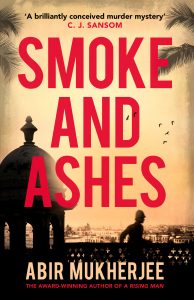
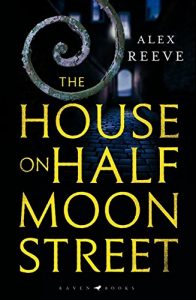
In the midst of a harsh Glasgow winter in 1969, DI Duncan McCormack is searching for a Bible-quoting murderer: the Quaker. The Quaker has already lured and killed three women after meeting them at a popular club – The Barrowland Ballroom – but so far attempts to capture him have been futile. When the body of a fourth woman is suddenly found, McCormack’s resolve stiffens as he plunges into a grim and intense pursuit of the truth. Based on the real-life story of serial killer ‘Bible John’, The Quaker is a darkly convincing portrayal of a city held captive by terror. The novel should also be commended for its effective use of multiple perspectives and skilful twists.

Smoke and Ashes, Abir Mukherjee, Harvill Secker

Smoke and Ashes follows Captain Sam Wyndham of the Calcutta police force – a secret opium addict who finds himself trapped in an illegal den during a police raid. As he makes his escape, he comes across a man who has been brutally murdered. And when he later finds a second corpse – apparently killed in the same ritualistic fashion – Sam begins to suspect that the two are linked. Fighting to keep his own vices in check, he teams up with Sergeant Banerjee to investigate the grisly deaths. Evocative and richly detailed, Smoke and Ashes should be praised for its powerful realisation of its setting – India in 1921 – and the strong narrative voice of the embittered, haunted protagonist.

The House on Half Moon Street, Alex Reeve, Raven Books
Leo Stanhope is a coroner’s assistant with a lifelong secret: he was born Charlotte – the daughter of a countryside reverend – but always knew that he was a man. Having run away to London at the age of fifteen, his dearest wish is to one day make a home with the woman he loves, Maria, and be free to live his truth without fear. But when Maria is murdered, Leo’s hopes are crushed and his freedom threatened. Heartbroken but determined, he vows to find her killer and becomes embroiled in the dark underbelly of the city. With its realistically gloomy Victorian ambience, well-paced plot and thoughtful characterisation, House on Half Moon Street is both gripping and tender.

Tombland, C. J. Sansom, Mantle

Two years after the death of Henry VIII, lawyer Matthew Shardlake is working for the old king’s daughter, Lady Elizabeth. When Edith Boleyn – the estranged wife of Elizabeth’s distant relation John Boleyn – is found murdered, Shardlake travels to Norwich to investigate. There, against the simmering backdrop of the peasants’ rebellion, Shardlake finds a dangerous, multi-layered plot waiting to be untangled. A sweeping, epic read, Tombland is to be admired for its lively evocation of Tudor England and effortlessly interwoven sense of mystery and unease.

Blood & Sugar, Laura Shepherd-Robinson, Mantle
In 1781, prospective parliamentarian Captain Harry Corsham returns from the war in the US to find a chilling puzzle awaiting him. A body has been found in Deptford, horrifically murdered and bearing a slaver’s mark. At the same time, Harry’s friend, Tad Archer, has gone missing. An abolitionist, Tad had been gathering shocking information in the hope of bringing an end to the British slaving industry. Determined to find out what happened to Tad, Harry follows the trail of secrets into a web of danger and conspiracy. A thrilling and powerful debut, Blood & Sugar is both an immersive mystery and an unflinching portrayal of the atrocities of the slave trade.

The winner will be announced on the 24th October at the Leonardo Royal Hotel London City. Tickets to the award ceremony are available here.

Author Q&A with Patricia Caliskan

Patricia Caliskan is the author of two romantic comedies: Awful By Comparison and Girlfriend, Interrupted.

Hi Patricia! Welcome to the Sapere Books blog!

Can you tell us a bit about what first got you into writing?

I wrote stories from about the age of six. I collected stationery, pens and pencils, and spent hours at my miniature desk, making ‘books’ for the family. Beverley Cleary’s Ramona series was a huge inspiration to me as a little girl.

What does your typical ‘writer’s day’ look like?

A typical writing day looks like writing through the night. I’ve always been slightly nocturnal; that’s when I get most of my ideas and can be totally focused. I have a 4 a.m. cut-off and wake up completely zooped to read and edit the work. I have a few places I gravitate towards throughout the house. My latest project is basically happening in the kitchen, so there’s been a lot of snack breaks with this one.

I drink coffee on-tap and usually have a playlist on the go. No rituals as such, but candles signify ‘writing time’. That’s about as ceremonial as I get.

What part of the writing process do you find most difficult?

My challenge seems to be plotting from about three-quarters of the way through to the ending. It’s incredibly exciting to start a project, and I know how each story ends – until I begin writing. The characters and storylines naturally evolve, so my plotlines tend to evolve too. It’s a bit like using Sat Nav. I know my destination, but don’t always take the most straightforward route. 

Do you find it hard to know when to end a story?

Absolutely not! There’s nothing like typing ‘The End’ after I’m 100% satisfied I’ve tied up every strand of the story, and done the best work I can for the reader. It’s the best feeling.

How much research do you do?

There’s research involved in every book. Luckily, it’s one of the reasons I enjoy the process. The character of Lara in Awful by Comparison was based on reports ahead of the #metoo movement, and Gia Carangi in particular. The subject of step-parenting in Girlfriend, Interrupted was something I personally experienced, but I visited online forums to make the dynamic as relatable as possible. I’m currently learning about the psychological effects of being widowed, and floristry, so you could say it’s pretty varied.

How real do your characters become and do they ever seem to control their own storyline?

My characters absolutely dictate their fate. Their voices can become very different to how I initially heard them. Listening to certain nuances and spending time with them, they’re full of surprises. It’s kind of like developing a friendship, really. My understanding of them deepens over the course of the novel.

What are you working on at the moment?

I’m currently working on my third novel. It has an ever-changing title, but I can say with certainty that it’s set in the fictitious address of Arkin Avenue, and tells the stories of a great bunch of characters. I hope you’re going to love them.

Which book do you wish you had written?

As she’s fresh in my mind, The Private Lives of Pippa Lee. It was one of those books which made me happy, simply because the character existed. I thought it said a lot about the shifting roles we occupy throughout our lives.

Tell us something surprising about you!

Duran Duran have been my favourite band for nearly 35 years. If you take another look, you’ll find them mentioned in all of my books so far!

Sapere Books Author Meet-up

On Saturday we had our semi-annual author meet-up in London, where we had a chance to catch up with our wonderful writers over drinks and nibbles, as well as finding out what their next big projects are. Here is a taster of what’s to come:

Simon Michael, Natalie Linh Bolderston and Elizabeth Bailey

Elizabeth Bailey has more dazzling Regency romances and murder mysteries in the pipeline with new Brides By Chance and Lady Fan novels coming our way.

Graham Brack has handed in the final instalment of his thrilling Josef Slonský Investigation series, and will be launching a new historical crime series next year.

We are currently working on Jane Cable’s second compelling romance novel, Winter Skies, and she is already drafting her third.

Michael Fowler’s gripping crime thriller series, the DS Hunter Kerr Investigations, is being launched this month.

Anthony Galvin is working on exciting new thrillers under the pen name of Dean Carson, which we will be publishing soon.

Anthony Galvin and Michael Fowler

Charlie Garratt is drafting book three in his intriguing historical mystery series, the Inspector James Given Investigations.

The captivating fourth instalment of Valerie Holmes’ sweeping Regency adventure series, The Yorkshire Saga, will be coming out soon.

Two members of the Romantic Novelists’ Association, Natalie Kleinmann and Ros Rendle, have recently signed with us and will be bringing out brilliant new books next year.

A brand-new book in Simon Michael’s atmospheric historical crime series, the Charles Holborne Legal Thrillers, is going up on pre-order this month and he has an idea in mind for the next one.

We will soon be publishing book five in Linda Stratmann’s absorbing Victorian detective series, the Mina Scarletti Mysteries, and she has started work on book six.

Deborah Swift’s powerful new wartime romance, The Occupation, will be out by the end of this year.

Thank you to all of the authors who were able to attend, and we hope to see everyone again to celebrate our second anniversary in March!


The Sapere Books team


Image credit: a big thank you to Gary Stratmann for his photographs.

Why I’m Addicted to Crime Thrillers by Gaynor Torrance

Gaynor Torrance is the author of the DI JEMIMA HUXLEY THRILLERS series.

Like many other people, I’m a crime thriller junkie. I can honestly say that books in this genre are my guilty pleasure — as well as chocolate, of course. As far as I’m concerned, it has to be well-written and absolutely has to have a complex plot. I need an abundance of twists and turns, along with a large helping of red herrings. If it keeps me guessing, it will offer me everything I expect from a good book.

I want the story to grab me and not let go. Whenever this happens, my own identity quickly fades into the background, and I become the protagonist. Gender is unimportant to me. I don’t care whether the protagonist is male or female. The only thing that matters is that I inhabit a world I would shun in real life. Fictional characters are instantly relying on me, and I’m desperately trying to save lives whilst I figure out what’s going on. 

From the safety of a comfy armchair, these books have transported me to places I’ll never visit. They’ve presented me with opportunities to solve mysteries. Allowed me to get up close and personal with some of the most evil and twisted minds you could ever imagine. Over the years, I’ve brought justice to victims, been caught up in life-threatening situations and sometimes even had a hand in saving the world from imminent disaster.

Immersing oneself in these fictional scenarios is my ultimate form of escapism. It’s a white-knuckle ride minus the personal risk.

Having so many ideas of my own, I decided to take things a step further. And so I began writing about Detective Inspector Jemima Huxley, whose stories are set in Cardiff, a city I know well.

I love Jemima, but that’s because I know what makes her tick. I appreciate that on first appearance, she’s perhaps not the most likeable of characters. In Revenge, which is when readers are introduced to her, she comes across a bit like Marmite. She’s not a typical lead detective, and this will polarise opinion, as you’ll either love her or hate her.

When I created Jemima, I wanted her to have an interesting backstory. Over the years, I’ve read so many crime novels that have a hard-nosed lead detective heavily dependent on alcohol. Or whose personal relationships are in tatters because of the pressures of the job.

DI Jemima Huxley is different. She’s a modern woman who gets stuck in and excels at her job. Jemima is determined to have it all. At work, she’s a capable, dedicated detective: loyal, brave and intelligent. If only she had more control over other aspects of her life…

If you’ve read Revenge, you’ll already know that Jemima has some serious personal issues. She’s hiding things from everybody. Her mental health is suffering, and she’s in danger of falling down a rather large rabbit hole.

Most importantly, Jemima hasn’t yet figured out what’s at the root of her problems. I have a feeling that that epiphany is a long way off, and until it happens, there’s little chance she’ll begin to turn things around.

Jemima’s personal torment manifests itself in a way that is guaranteed to upset some readers. And I’ll let you in on a secret — I’ve shed tears as I’m writing those scenes. What Jemima does to her body is shocking, brutal and heartbreaking. But her method of keeping a lid on things is a reality for some people.

It’s a sad fact that mental health issues are still stigmatised. And, like many others, Jemima feels compelled to hide her suffering for fear of being judged.

But Jemima isn’t the sort of person to give up easily. She has her low moments but always seems to manage to pull herself together and face whatever life throws at her. Any serial killers stalking the streets of Cardiff had better watch out, because Jemima’s returning soon to investigate her next big case, Sole Survivor!

Click here to order REVENGE now!

Author Q&A with Gillian Jackson

Hi Gillian! Welcome to the Sapere Books blog!

The first two books you have published with us have similar themes of children going missing and families struggling to find them. What initially drew you to those sorts of stories?

I set out to write a compelling story (and what is more compelling than the abduction of a child?) that could be seen from several different perspectives. Those of us who are parents can imagine the horror of a missing child, and I was able to draw on my experience of a time when my own two-year-old daughter went missing from our garden. She was only out of my sight for a few moments and fortunately was found within forty minutes, but the gamut of emotions my husband and I experienced was terrifying. The fear, guilt and despair almost crippled us. I was able to project some of these emotions onto the parents in Abduction and Snatched, who had to wait more than an hour to find out what had happened to their missing children.

We will soon be publishing a third thriller by you – THE ACCIDENT. Can you give us a little teaser of what it’s about?

This is a book I consider to be my ‘ripples in a pond’ novel. It begins, as the title suggests, with an accident and follows the consequences for those involved. As the story unfolds, jealousy comes into play with a shocking outcome; a life changing injury is faced, and the very best possible outcome is derived from the very worst scenario. If that isn’t enough, there’s a smattering of romance too!

Have you always wanted to be a writer? What first got you into writing?

It wasn’t until my early fifties that I began writing seriously, although I’ve dabbled in children’s stories and short stories for most of my adult life. Initially, writing was for me a therapeutic experience, as I kept a journal while recovering from a rather difficult period in my life. The first book I ever wrote was a small self-help book, my only foray into nonfiction so far.

What part of the writing process do you find the most challenging?

Probably the ending, as I sometimes get too bogged down in tying up all the loose ends until I’m satisfied that the story is properly wrapped up. Perhaps this is because when I read a book, I find an incomplete ending so frustrating!

Where and how do you write? Do you have set hours or do you write when you feel motivated? And do you have a favourite writing spot?

Being easily distracted, I’m fortunate to have a designated study to lock myself away to write. I try to write most days but often find my mind most active late at night when all these fictional characters keep me awake with their conversations, and I need to write, or at least make notes. As a work in progress develops, the time I spend on it increases as my enthusiasm grows.

Do you like to read the same types of books you write? Or something completely different? Can you tell us some of your favourite books?

I read quite widely, from thrillers to sagas. I love all of Kate Morton’s books as well as Victoria Hislop’s, particularly The Island. Some of my all-time favourite books are Jane Austen’s novels and the works of the Brontë sisters; I love the sense of atmosphere that leaps off every page, and Austen’s wit is amazing and so timeless!

What three tips would you give to aspiring writers?

You can’t do enough editing and polishing. The temptation when you write those satisfying words ‘the end’ is to get your book out into the world. Don’t – leave it for a couple of weeks and go back to read it again with fresh eyes; you’ll be surprised. Also, write what you know, and enjoy the journey.

Tell us something surprising about yourself!

I used to walk my rather large pet goat, Hobnob, around the streets on a lead. We were discovered and interviewed for BBC TV, but I had to do most of the talking.


Gillian Jackson is the author of psychological and domestic thrillers.

Click here to order ABDUCTION.

Click here to order SNATCHED.

Picking my First Villain by Michael Fowler

Michael Fowler is the author of the DS HUNTER KERR INVESTIGATIONS series.

 In 2010, after 32 years as a cop, and an even longer time as a passionate writer and lover of crime fiction, Heart of The Demon — the first in the DS Hunter Kerr series — materialised as the book I always told myself I could write.

It is inspired by a true crime event. As a Detective Sergeant, I was following up information in relation to a girl who had been missing for a number of years, and much of her previous history was recorded on her original missing report that had been filed away and stored in the basement at Barnsley Police station.

Whilst seeking it out, I came across a large cardboard box, which, upon rooting through, I found it contained the court file and crime scene photos for a man called Peter Pickering, who was dubbed ‘The Beast of Wombwell,’ and I couldn’t resist rummaging through the contents to get an insight into his crimes.

Peter Pickering was first convicted of attacking two schoolgirls in 1966 and was jailed for six years.

In 1972, five months after his release, he abducted 14-year-old schoolgirl Shirley Ann Brody in his home town of Wombwell, near Barnsley, drove her to secluded woodland, where he raped her and stabbed her while wearing yellow washing-up gloves — a detail that gave rise to his other tabloid nickname, the “maniac in the marigolds”.

Following that murder he was locked up in a psychiatric hospital, but it was always believed he had committed more attacks and murders, and he was interviewed by detectives on numerous occasions over several decades. The focus of those interviews were the murders of 14-year-old Anne Dunwell, from Rotherham, in 1964, and 14-year-old Elsie Frost, from Bradford, in 1965.

He refused to cooperate. However, following another investigation, detectives found evidence linking him to the rape of a Sheffield woman, committed just weeks before he abducted and murdered Shirley Ann Brody, and last year, at the age of 80, he was convicted of that rape.

Early this year Pickering died, taking his secrets to the grave. The finding of the Peter Pickering case file in Barnsley Police Station basement became a light-bulb moment for me as a writer, and has not only provided some of the background for Heart of the Demon, but has also inspired another of my Hunter Kerr novels, Shadow of The Beast.


Michael Fowler is the author of the DS HUNTER KERR INVESTIGATIONS series.

Click here to order HEART OF THE DEMON now!

Innovation and Inspiration at the Independent Publishers’ Guild Conference

On Tuesday we attended the annual autumn Independent Publishers’ Guild conference, which is a great chance for us to find out more about the latest developments in the industry, get some ideas and inspiration for our own practices, and catch up with old friends. Here are our highlights from the day!


The conference opened with a keynote speech from serial entrepreneur Sam Conniff Allende, the author of self-help book Be More Pirate. He shared his thoughts on the importance of rule-breaking: challenging systems and taking risks to effect positive change and drive success. Sam also compared Golden Age pirates with modern entrepreneurs – in terms of their powerful branding and shrewd tactics!

Booksellers Peter Saxton, Phil Henderson and Tamara Macfarlane

A talk on the importance of fresh branding and operations was led by Stephen Page of Faber and Faber, Nicola Usborne of Usborne Publishing, and Chris Bennett of Cambridge University Press. Each showed how developing modern-looking visual marketing campaigns, analysing previous successes and failures, and maximising the potential of their backlists keep their businesses moving forward.

A trio of trade and children’s retailers – Peter Saxton of Waterstones, Phil Henderson of Blackwell’s and Tamara Macfarlane of Tales on Moon Lane – brought us up to date on the latest trends in bookselling. A particularly welcome development is a surge in the popularity of books celebrating women in non-gender-stereotypical roles and inspirational stories for young girls.

Jeremy Yates-Round of Haynes Publishing showed how he keeps his business agile in a tough climate. Techniques included humorous and imaginative marketing campaigns, both licensing and being licensed by external brands, and offering customers different platforms to access content (e.g. via online apps).

Josie Dobrin of Creative Access

Josie Dobrin of Creative Access and Rik Ubhi of Zed Books led an important discussion on how publishers can attract, welcome and maintain a diverse workforce. Practical tips for recruiters included undertaking unconscious bias training, checking recruitment data to see at what point in the selection process BAME candidates are excluded (and working to fix the filtering systems so that this happens less frequently), avoiding the ‘quick hire’, removing unnecessarily high barriers for entry-level jobs, and making existing BAME hires feel safe, listened to and valued.

Claire Farrell, Extinction Rebellion co-founder

Clare Farrell, the co-founder of Extinction Rebellion (XR) – a climate change mitigation movement – gave a rousing speech on the realities of the climate emergency and the ways in which XR is putting pressure on governments to instigate action on a wider scale. She also explained how the publishing sector can take its own stand via actions as simple as using recycled paper for all books.

The conference wrapped up with a surprise singing lesson from author and musician James Sills – good fun for all!

Romantic Novelists’ Association 2019 Joan Hessayon Award Winner revealed

On Saturday, Amy and I travelled to York to celebrate the winner of the RNA’s Joan Hessayon Award.

The Joan Hessayon Award is for a debut author who has had their book accepted for publication after passing through the Romantic Novelists’ Association New Writers’ Scheme.
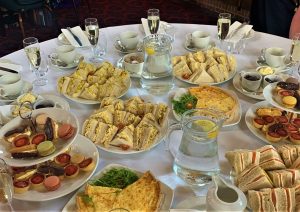
This year’s shortlist of fifteen included sweeping wartime romances, uplifting stories of self-discovery, and intriguing mysteries.

Our editorial director, Amy Durant, judged the shortlist alongside RNA Chair Alison May, Vice Chair Imogen Howson, and Simon & Schuster’s Sara-Jade Virtue.

This year’s winner is The Forgotten Village by Lorna Cook: a story of hope, new beginnings and unlooked-for love. Cook’s debut novel intertwines two love stories: one set in 2018, and one set in 1943.

In the present, twenty-eight-year-old Melissa is stuck on a lacklustre holiday in Dorset, with a boyfriend who seems more interested in surfing than working on their stale relationship. On a whim, she visits the nearby village of Tyneham, which was evacuated and closed during WW2 but is now open to the public. There she runs into Guy, a charming celebrity historian. Intrigued by a seventy-five-year-old photograph of Veronica Standish — the long-suffering wife of Tyneham’s tyrannical nobleman — Melissa enlists Guy’s help to find out more about her. They soon find themselves untangling a decades-old mystery to discover the fate of Veronica, her husband, and her secret lover.

Joan Hessayon Award winner Lorna Cook

As well as skilfully navigating and developing two romantic plots, Cook should be praised for her deft interweaving of historical detail, her strong sense of voice and character, and her sensitive handling of one of the book’s more difficult themes: domestic abuse.

We would like to send a huge congratulations to Lorna — and to all of the authors who participated, and managed to overcome the huge hurdle of getting a publishing deal!

Afternoon tea!

As well as indulging in a wonderful Afternoon Tea before the ceremony, we also had the chance to catch up with two of our authors: Ros Rendle and Natalie Kleinman, both of whom have fabulous romantic fiction forthcoming with Sapere Books.

Ros’ Strong Sisters series will explore family relationships, rivalries, and love. Natalie’s Regency romances will feature spirited heroines, determined to succeed against the odds.


Image credits:

The Forgotten Village by Lorna Cook, published by Avon in 2019.

Featured image: Photo by Brigitte Tohm on Unsplash.