How I Write by Patrick Larsimont

In this behind-the-scenes blog series, Sapere Books authors offer an intriguing insight into how, where and why they write.

Today, we are delighted to spotlight Patrick Larsimont, author of the Jox McNabb Aviation Thrillers.
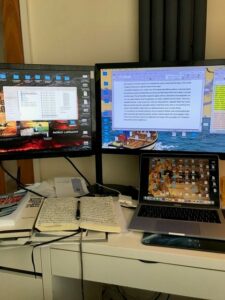
Patrick’s winter writing area

My writing has two modes, much like the clock, British Summer Time and Greenwich Mean Time. Living by the sea in Dorset, the weather rather sets the mood and often my productivity.

In the winter, when it’s darker, I get up early and write directly onto my computer.  Earlier this year, I acquired two largish monitors, which I have side by side on a stand, below which I have my MacBook Pro. My desk is invariably covered in paper, notebooks and little bibelots that keep me interested, amused and inspired.

When I glance at the nearby window ledge, I see a toy metal Spitfire in desert camo with a spinning propellor, and a pair of painted tin soldiers (not by me), one a bagpiper in full regalia, the other a 1940s RAF pilot, inscribed on the bottom as ‘Hurricane Ace, Battle of Britain.’ Finally, there’s my grandfather’s little silver boar, a memento of his own service during the war. It bears the motto, ‘Résiste et Mords,’ which got him through many battles and the camps. He’s gone now, but just seeing that pig always rids me of any writer’s block, knowing full well that I’ve had it much easier than him.

In winter mode, I stare at a radiator and the world comes to me through my monitors, making me feel like some sort of chaotic air traffic controller. Heaven help the pilots in my care, although old Jox McNabb is holding his own. I generally aim for twelve hundred words a day and have a weekly target of at least five thousand. It’s a cadence I can manage and feeds my nature as an impatient man.
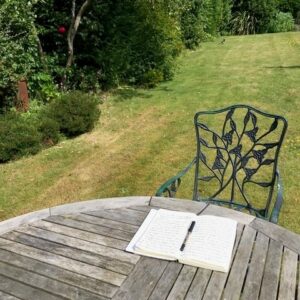
Patrick’s summer writing area

In the summertime, the process becomes two-staged. I write first in my notebook, in terrible doctor-style handwriting, sometimes so awful I can’t even decipher my own hieroglyphics. I can write anywhere — on the beach, at a coffeeshop (rarely) or in our garden (most often), and train journeys are good too. I don’t get too comfortable and like to just write, setting myself the target of twelve notebook pages per session. I then type up, embellish and edit whenever I fancy. Generally, I do about four drafts, plotting out a rough chapter breakdown at first, with two or three sentences for each. Invariably, that synopsis changes, with chapters budding off like yeast.

For inspiration, I depend on the internet and my constantly growing pile of to-be-read books, but often I just make stuff up. A lifetime of blagging it helps. When working on the laptop and monitors, the lure of ‘rabbit holes’ is great, and I can disappear for hours, but when grinding through with the notebook, I try to avoid that, although I do usually have my smartphone in my pocket.

If I did have a writing approach, it would probably be something like Nike’s ‘Just Do It’ (that’s the old adman in me), but ‘Résiste et Mords’ would probably do too.


How I Write by D. R. Bailey

In this behind-the-scenes blog series, Sapere Books authors offer an intriguing insight into how, where and why they write.

Today, we are delighted to spotlight D. R. Bailey, author of the Spitfire Mavericks Thrillers.

For my aviation novels, I do a lot of direct and indirect research. I read books, watch documentaries, scour historical websites and more. I’m looking for context rather than necessarily actual events. There is a surprising number of things you would never imagine happened continuing to be revealed about World War Two.

I’m interested in the what-ifs and that’s where I take my stories. I grew up just after the war and so some aspects of British culture at the time seem to have imprinted themselves upon me. I’m most interested in characters, developing them and their lives, building the stories around them. I have a keen sense of humour and I can’t help adding that into my plots. I’m not trying to write a history book so much as an adventure book set in the era.

I work full-time as a lecturer in Creative Technology, so my writing time is constrained. However, I’ve developed a disciplined approach to writing based on the Pomodoro method, which has served me well. I write in twenty-five-minute bursts, and I must work uninterrupted for that time. I try to complete a certain number of these bursts a day and I track them very precisely in a spreadsheet, which informs me of my writing speed and how much longer I have to go to finish the book. I also edit as I go, not leaving a scene until I’m happy with it. Then, of course, once finished I read through and edit again, but generally, I find I’ve done all the hard work prior to that point.

During term time I write after work for maybe an hour and then more at the weekends until I’ve got my novel done. I am a pretty fast writer, so I’m lucky that way. I also work through a loose synopsis and plot, but my characters often change the story as I go, and it plays in my head as I write it — just like a movie scene.

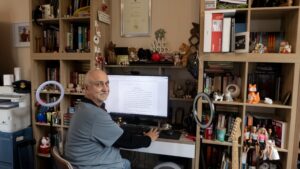
D. R. Bailey’s writing space

Fortunately, my wife is hugely supportive in every way and makes me delicious meals when I’m in full flow writing a novel. Unfortunately, my cat has no respect for my writing time, and will come and beg for food or strokes regardless of whether or not I’m busy.

My writing space, as you can see, has a lot of cat ornaments; I’m an avid cat lover and we just keep on collecting more. My space is light and comfortable, and I have a nice big screen for composing my words. I’m also surrounded by books, including my own, my daughter’s and my sister’s, who are both successful novelists too. I also have my doctorate certificate on the wall, one of my proudest achievements. I aim to keep writing for as long as I can, completing as many books as I can. I find it one of the most calming and fulfilling things in life. I’m grateful that Sapere Books has given me the chance to get my stories into the hands of so many more readers.


Congratulations to Elizabeth Bailey!

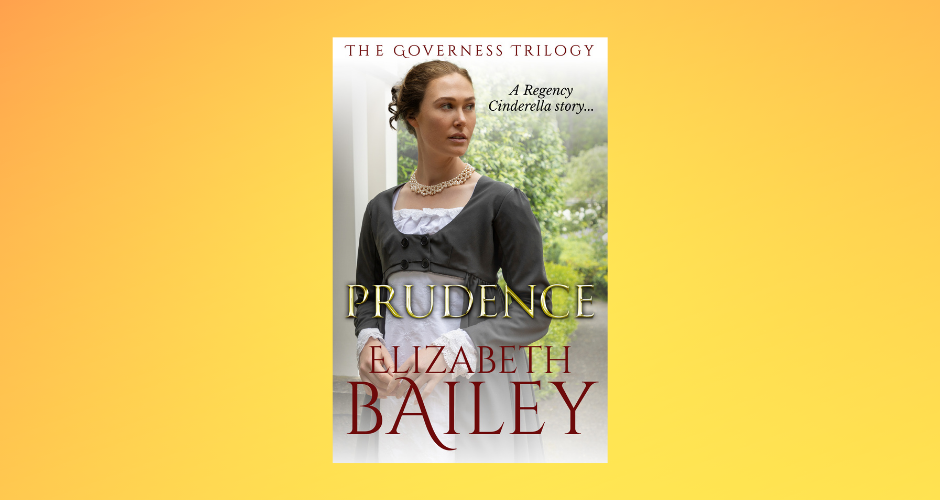
Congratulations to Elizabeth Bailey, whose captivating Regency adventure, Prudence, is published today!

Prudence is the first book in the Governess Trilogy: heart-warming Regency romance novels with strong female lead characters.

1795, England

Miss Prudence Hursley, orphaned from a young age, has grown up at the Paddington Charitable Seminary for Indigent Young Ladies. Primed for service, she is now ready to take up a position as a governess.

Full of trepidation as she takes the stagecoach to meet her employer at Rookham Hall, Prudence is sad to be leaving Nell and Kitty – her childhood friends who have replaced the family she lost and become like sisters to her.

Prudence has been given a temporary position by Mr Julius Rookham to teach – or tame – his two young wards, who have so far had an unconventional upbringing.

But when Prudence meets Julius she finds his changeable moods disconcerting. And it will take more than a little patience to turn the two unruly girls into refined young women, ready to enter society.

With her future hanging in the balance, can Prudence make herself invaluable enough to secure a permanent position?

And can Nell and Kitty advise her on how to handle the mysterious Mr Rookham…?

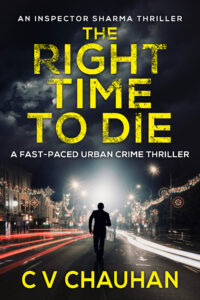
The Right Time To Die is Out Now

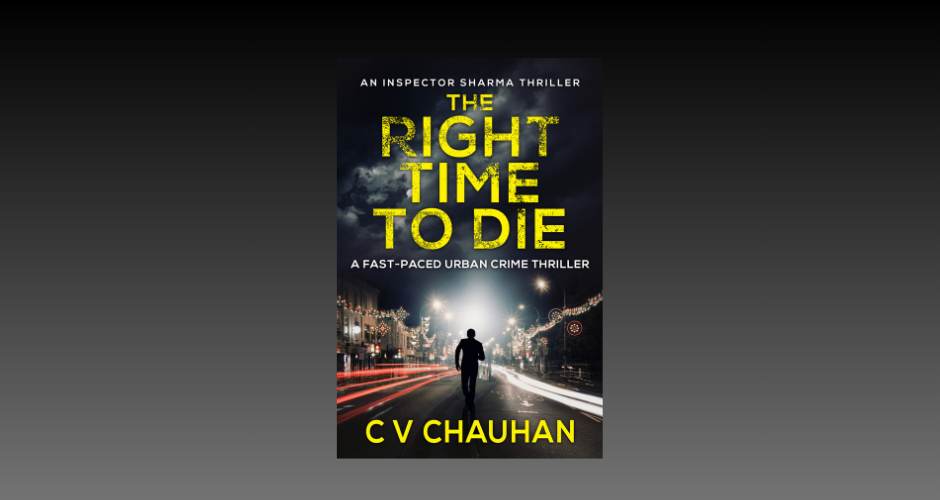
Congratulations to C. V. Chauhan, whose heart-pounding thriller, The Right Time To Die, is out now!

The Right Time To Die is the third book in the Inspector Sharma Thriller series: gritty urban police procedurals set in Leicester.

DI Sharma is caught in a lethal race against time…

Tensions are running high in the city of Leicester. Recent conflict between groups of Hindu and Muslim youths has led to violence on the streets, which the police are struggling to control.

Despite these events, Sunil Kumar, a Bollywood superstar has been invited to switch on the lights along the Golden Mile for the festival of Diwali.

DI Rohan Sharma is one of the thousands of onlookers that have arrived to enjoy the celebrations.

But Sharma is aware of social media tip-offs that suggest the happy atmosphere could turn deadly…

And his suspicions seem to be confirmed when Sunil Kumar collapses on stage.

With the police chiefs mistakenly believing Sharma could have inside knowledge on the local hostilities, he takes the lead on the investigation.

But when a spate of killings occur, in seemingly unrelated circumstances, Sharma finds himself in over his head.

Sucked into a dark world of race hate and extremism, Sharma uncovers a deadly plot.

Can he stop more murders from occurring? Will he unmask the fanatical killers?

Or will a catastrophe engulf the city of Leicester…?

Where My Inspiration Comes From by Alistair Forrest

In this behind-the-scenes blog series, Sapere Books authors offer an intriguing insight into how, where and why they write.

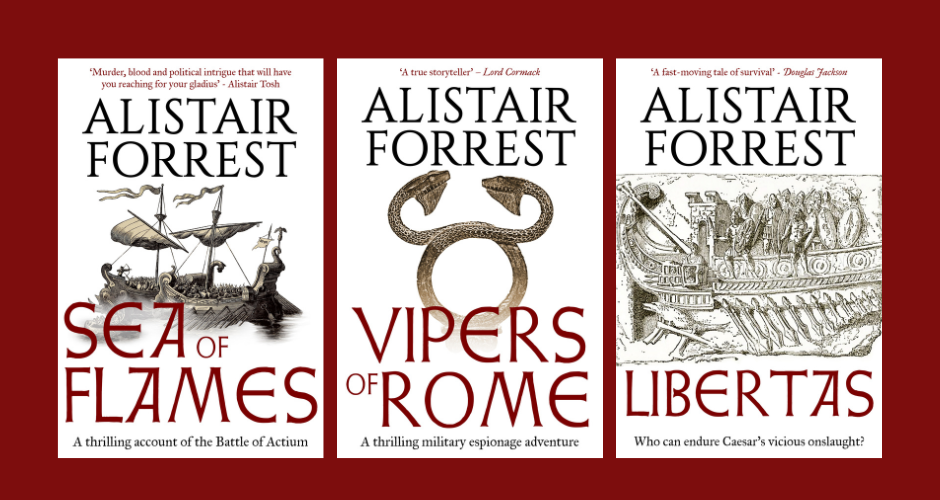
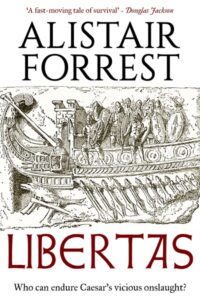
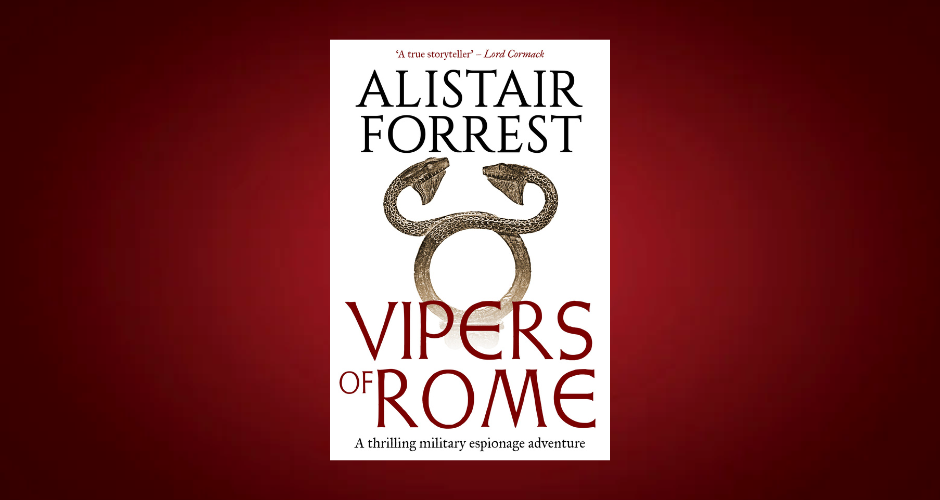
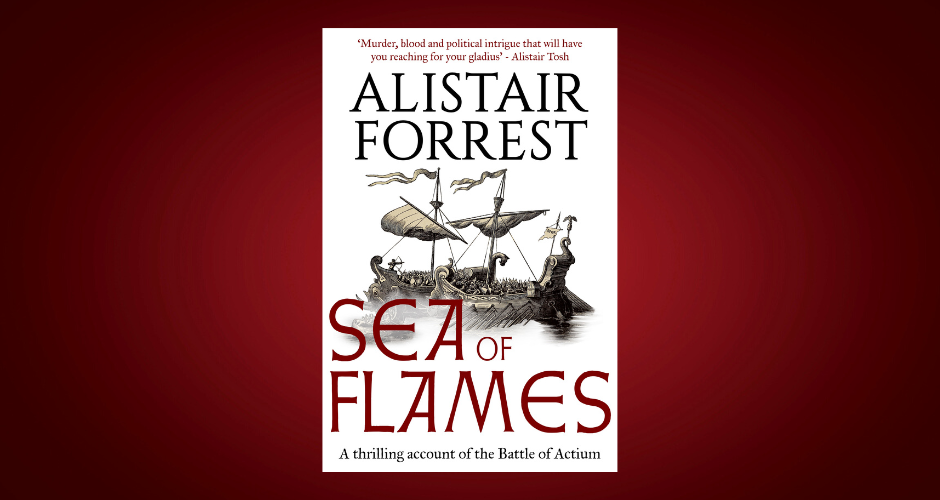
Today, we are delighted to spotlight Alistair Forrest, author of Sea of Flames, Libertas and Vipers of Rome.

For some authors, inspiration is a flash of instant eureka. For me, it’s been more like evolution.

I had never intended to write historical novels centred on the late Roman Republic, but it became inevitable when I moved to Spain with my wife, two-fifths of our children and assorted pets.

Our new home had been built slap bang in the middle of an ancient battlefield. More about that later.

For me, inspiration began in an English lesson at boarding school. One day, evening prep was to write an essay on Macbeth and I hadn’t got a clue how to answer the question. So I flipped to the cover of my textbook, which featured an image of Dunsinane Castle and the encroaching Birnam Wood.

I used my embryonic creative writing skills to describe the scene and thus avoid answering the question, hoping my talent would impress the English teacher, Patrick Cormack.

He wasn’t impressed. He called out my feeble effort in front of Class 4R, announcing that my work was too descriptive, and I wanted the ground to open up and swallow me. But the truth is, I really enjoyed writing that essay.

If I had ever summoned the courage to discuss career options with him, he would have said ‘Go and be an accountant’ or something like that. But while he became a politician with a knighthood and later Lord Cormack, I became a humble journalist. Yes, I could write.

Years later, on the publication of my first novel, Libertas, Lord Cormack was kind enough to give me an endorsement. “Forrest has the gift of a true storyteller,” he said, with a hint of a chuckle in his email.

My journalism career provided further inspiration. As a pimply cub reporter on the South Wales Echo, the terrifying news editor would peer down the vast newsroom to see who was slacking. The ‘punishment’ was to be handed the latest novel supplied by a hopeful publisher and told to review it by the next day. This happened to me frequently, and I never objected.

Among the many was Gateway to the Gods by Mary Teresa Ronalds, a magical excursion into the ancient world of Babylonia. It clicked for me, because as a child and teenager, I had lived in three Middle Eastern countries. From that moment, I wanted nothing more than to be a writer of ancient stories.

Leap forward decades, and that move to Spain. My wife and I chose a house amid well-tended olive groves in an upland valley opposite Monda (ancient Munda), a charming village in the Sierra de las Nieves Natural Park, not far inland from Marbella.

And it didn’t take long to discover that Julius Caesar had marched his crack legions through our garden.

I started writing Libertas, revelling in the scenery and culture, and imagining what the community might have been like when Caesar came.

I developed the theme of an indigenous people who were creative and inventive in their own right. They understood herbcraft and lacked nothing for a full, healthy life.

The hero in Libertas is not a warrior but a thinker. He is appalled at the horror that Rome brings to his hometown.

Living in the same community as my protagonist, separated by centuries in which nothing much happened between Caesar and Franco, enabled me to add colour and feeling to my imagined community of bakers, brewers and cheesemakers.

Happily I can refer to a comment by the Historical Novel Society’s reviewer: “Forrest makes us care about Munda. He captures the tragedy of a people dragged into the horror of a vicious war brought about by circumstances over which they had no control and could hardly understand.”

Such a contrast to my teacher’s comment on my Macbeth essay. But let’s face it, his comment was where inspiration began for me.

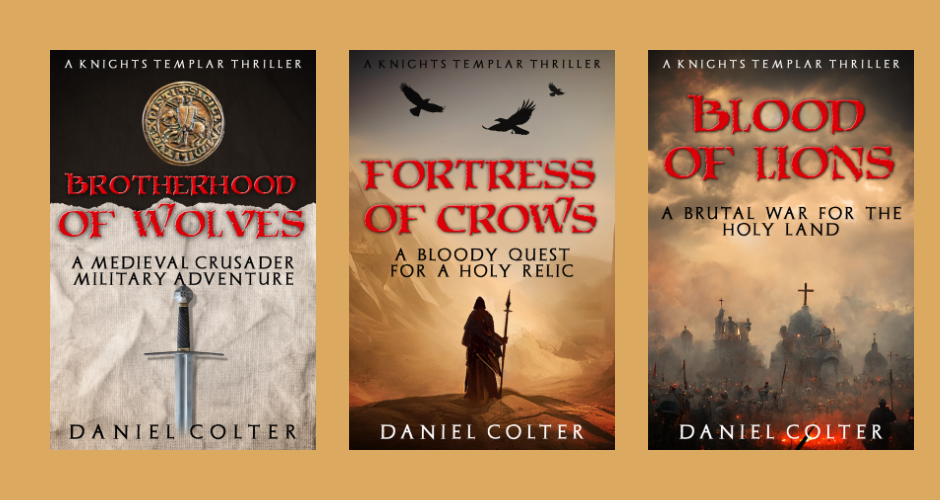
How I Write by Daniel Colter

In this behind-the-scenes blog series, Sapere Books authors offer an intriguing insight into how, where and why they write.

Today, we are delighted to spotlight Daniel Colter, author of the Knights Templar Thriller Series.

Writers are a strange breed.

The view from Daniel’s window

We invent friends in our heads, decide how they speak, what they wear, where they go, then spend countless hours conversing with them. No two writers share the same head-friends, oddly, despite running in the same  social circles. Neither do any two writers develop a story the same way.

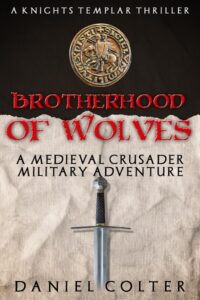
Specific routines keep us on track, or don’t (looking at you, internet), and each work proceeds at its own pace. Most writers are one of two species: a plotter or a pantser. A plotter maps out each scene, chapter, and verse before putting fingers to keyboard. Pantsers fly by the seat of their pants, beginning with an idea, then writing towards a vaguely defined ending. I mapped out my first novel, Brotherhood of Wolves, but tossed the map aside by chapter 3. I found pantsing more rewarding, and still do, because much of the fun (and frustration) is writing myself into a corner and finding a path out.

My novels are historical fiction, where history provides setting, culture, and place. History can also frame the plot. Story is given precedent over history, however, because the goal is to entertain, not to educate. One or more characters are historical persons and the fictional protagonist lives within their orbit. Historical fiction should stay true to history and the fiction takes flight where history grows murky — which it usually does, especially the further back in time one travels. The murk is where the fun begins, in my opinion, and its where the what if fleshes out the story, where the pantser finds out what happens to his head-friends.

Writers are also strange creatures.

Some writers have habits, like a dog that circles exactly three and a half times before lying down, and these rituals are intended to fuel creativity. Isabel Allende started her first novel on January 8, 1981, and that day became a ceremonial start date for all her subsequent works. The poet Friedrich Schiller kept rotten apples in his desk and, when his mind needed a jolt, he would give one a sniff.

My writing rituals are more mundane and less … smelly. I start with two (not one, not three) cups of coffee. I keep a stuffie of Curious George on my desk, in honour of Curious George Rides a Bike, the first book I read cover-to-cover. I say hello to George each morning.


Ritual also comes from my father. He was a painter and writer and used a second-hand desk as his art space. I acquired that desk, set to rehabbing it, but foolishly sanded the top to expose wood veneer over composite. I left his dried paint splashes along the edges, though, and I touch them when I write. They make me think of him, and thinking of him puts me in a creative mood. I told him I had begun writing historical fiction, his favourite genre, but he passed away before reading Brotherhood of Wolves. I often wonder what he would think of my series, and suspect he would be pleased (except for the part where I ruined his desk).

My Writing Space by Patricia Caliskan

In this behind-the-scenes blog series, Sapere Books authors offer an intriguing insight into how, where and why they write.

Today, we are delighted to spotlight contemporary romance author Patricia Caliskan.

I wrote my third novel, When We Were Us, at my bureau, which has become my writing enclave. Something about opening the bureau desktop gives me a sense of immediacy which speeds the writing along. I write upstairs, free from distractions, except for my dogs who stop by to visit, but basically closed off from everything except the world I’m creating.

Patricia’s bureau

I never thought I had any writing rituals until people began asking the question. I realised that I have rituals in general. All three of my novels were largely written at night. Once the demands of the day are over, night-time is not only the perfect fit in a practical sense but allows me the space I need to daydream on behalf of my characters, and fully immerse my thoughts in the world of the book.

I’m a huge advocate of those tiny details which promote wellbeing, even when I’m not writing. So, before I get back to my latest manuscript, I mix essential oils for my diffuser, which works like magic for changing up the mood, and I set a timer to monitor my working hours.

I find having scheduled time slots super helpful. I can show up and do the work and know exactly how much time I’ve spent on the novel, which is reassuring when I’m trying to find enough time to work on a project.

I switch on my moon light, as I call it, a perfect orb of white light, and always freshen up my perfume before I write. I think of perfume as a superpower. A favourite scent signals that we’ve got work to do and someplace else to be.

I usually start by reading over where I left off to reacclimatise. I try not to spend too much time agonising over a word choice or a sentence formation until I’m at the editing stage. I have a natural tendency to edit as I go, wanting the work to be as close to the final manuscript as possible, which can hinder the drafting process.

When it comes to first drafts, I remind myself of my own advice: to just get it all down. I need solitude to do that, and sitting at my bureau, I feel enclosed in the world of the book. When it comes to editing, I usually end up inadvertently making a playlist to score parts of the novel or characters, which I find helpful with tone and pace. Once I have a completed manuscript, I print the work out and read it aloud, because if the writing doesn’t sound right, it isn’t right, and needs reworking.

Writing fiction requires both discipline and detachment, and my little bureau space provides just that!

Proxy War is Out Now

Congratulations to Eric Helm, whose thrilling Vietnam War adventure, Proxy War, is published today!

Proxy War is the twenty-ninth book in the Vietnam: Ground Zero series: action-packed, authentic historical thrillers set during the Vietnam War.

Republic of Vietnam, 1969

The American government has known for a long time that there were Soviet advisors in North Vietnam, but now it seems they are ready to strike.

Intelligence has been gathered suggesting that Soviet fighter pilots have engaged in aerial combat with American Air Force and Navy pilots.

As of yet the Americans have not retaliated, as the UN is terrified of the Vietnam War escalating into a global nuclear disaster.

But the Soviets have been spotted engaging local Vietnamese troops and it seems they are readying for an attack.

U.S. Army Special Forces Major Mack Gerber and Sergeant Major Anthony Fetterman have been on light duties in Vietnam, during a relatively peaceful period in the war.

But after a visit to a Special Forces Camp, they are told that the enemy have been increasing their assaults on the base.

What are the Soviets planning? How large is their army?

Can the US Special Forces stop their deadly attack…?

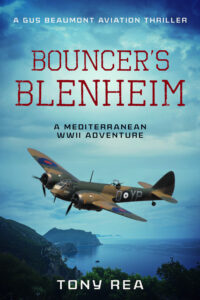
Bouncer’s Blenheim is Published Today

Congratulations to Tony Rea, whose thrilling fighter pilot adventure, Bouncer’s Blenheim, is published today!

Bouncer’s Blenheim is the second book in the Gus Beaumont Aviation Thrillers series: action-packed military novels set during the Second World War.

Europe, 1940

After surviving the Battle of Britain, fighter pilot Gus ‘Bouncer’ Beaumont has been promoted to Flying Officer and is posted to a Spitfire reconnaissance squadron.

That is, until Wing Commander Peacock creates another mission for him.

A new top-secret unit called the Special Operations Executive has been formed to gather intelligence on the enemy. And Gus is ordered infiltrate the Greek Resistance and establish their political affiliation.

Mussolini’s army have occupied Greece but the locals have been fighting back. The actions of the civilians seem promising and British Intelligence want to know where the Greeks’ allegiance lies.

To have a chance of success, Gus needs to ditch his plane into the sea and get picked up by the Resistance fighters.

But that is easier said than done … if you want to survive the crash.

Will Gus make it to Corfu in one piece? Can he persuade the Resistance fighters to confide in him?

And can he successfully evade the Italian army…?

How I Write by Marilyn Todd

In this behind-the-scenes blog series, Sapere Books authors offer an intriguing insight into how, where and why they write.

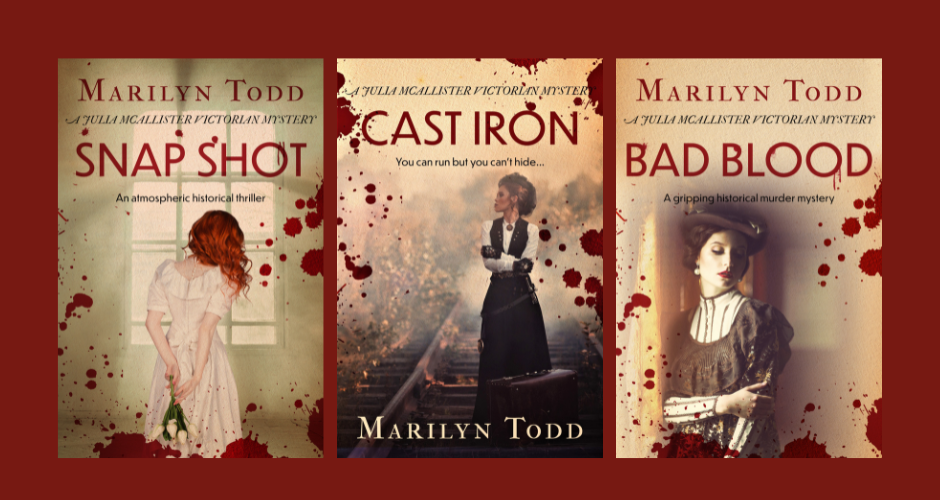
Today, we are delighted to spotlight Marilyn Todd, author of the Julia McAllister Victorian Mysteries series.

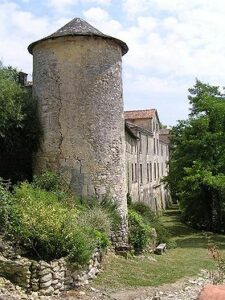
Medieval castle at the bottom of Marilyn’s garden

Living on a French hilltop, with a medieval castle at the bottom of our garden, Roman remains beside a river in the valley, and with the Hennessey Cognac estate on one side, Martell on the other — I couldn’t ask for a lovelier or more tranquil setting.

Okay, there are diggers outside at the moment, replacing water pipes in the very same trenches the electricity people dug (then filled in) exactly one week before. But usually the loudest sound is birdsong, and the mewing of buzzards circling overhead. Just the ticket when you come home bursting with ideas that need to be turned into stories without distractions. From Sicily to Arizona, Sweden to Nova Scotia, I find inspiration everywhere.

Sweden? That was when we were walking a little out-and-back coastal path — worryingly easy to imagine two people going out, but only one of them coming back.

Nova Scotia? Who wouldn’t be inspired by the biggest disaster no one’s ever heard of, when a French ship carrying enough explosives to end the First World War collided with a Norwegian ship coming the wrong way up the channel? The explosion took close to 2,000 lives, injured 9,000 more, destroyed everything in a half-mile radius, spiked a tsunami, and scattered debris several miles inland.

Sicily drew me back to ancient history, inspiring the second book in the Claudia Seferius series, Virgin Territory, as well as Blind Eye — set in Ancient Greece this time, rather than Rome — and debunked the myth of the Cyclops.

As always, Arizona never fails to deliver, especially when my story ‘The Wickedest Town in the West’ scooped an Ellery Queen’s Mystery Magazine award, of which I am ridiculously proud.

But while we travel a lot, not everything I write is inspired by breathtaking scenery, adventures and legends. My first series with Sapere Books, which kicked off with Snap Shot, was influenced by the emerging science of forensic evidence at the end of the nineteenth century, and the importance of studying crime scenes. Hence Britain’s first crime scene photographer, Julia McAllister.

My new Firefly series, coming soon with Sapere, tackles the inequalities women faced in Edwardian times, especially domestic violence, which was banned between the hours of 10 p.m. and 7 a.m. because the noise interrupted other people’s sleep. Battling the system is Kitty Sullivan, who runs a gentleman’s club with a fleet of … let’s say exotic dancers, to fund a women’s refuge. Environments that, unsurprisingly, provoke dangerous situations, which Kitty faces down with charm, wit and, of course, a silver Derringer.

After all, there’s no point in having double standards, if you don’t live up to both of them.

The Manors of the Wentworth Family Regency Saga by Graham Ley

In this behind-the-scenes blog series, Sapere Books authors offer an intriguing insight into how, where and why they write.

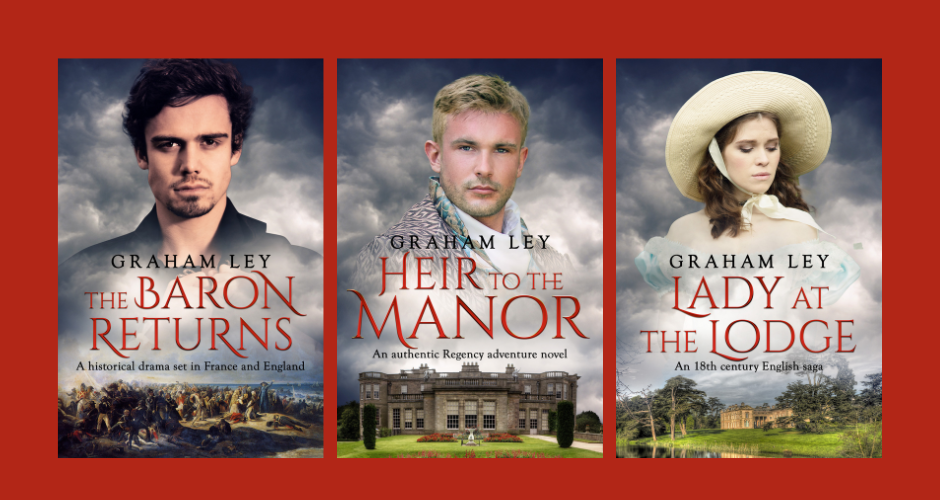
Today, we are delighted to spotlight Graham Ley, author of the Wentworth Family Regency Saga Series.

Brittany, really, has been my place for my writing. There lies inspiration and the prompt to be historical, implicit in the ancient stone and timber that surrounds you, and the glimpses from the road of almost hidden farmhouses and squat barns of sturdy beauty — sometimes deserted but strangely still standing. And that region across the Channel has an uncanny relationship with Devon and its history, embedded in its own cob-and-timber beauties, and those oddly contrasting stone manor houses.

How better to link the two regions than with the story of a family that was both Devonian and Breton, in the mid-1790s when the buildings were still full of life and yet conflict was raging? It was bound to be the case that at some point I would catch, in passing, the misty outline of the Breton manor that would lie at the heart of the story — a home that had been emptied by the Revolution in France, but which would be gradually restored in quite unpredictable ways. That manor came into being in partnership with another that would be in Devon, both of great antiquity but which had, in different ways, been brought up to date. Two homes that might contain threat as well as comforting familiarity, both put together from what I had seen across the two regions.

Manoir du Val au Houx, Brittany

In the saga, Chittesleigh in Devon and Kergohan in Brittany are manors with orchards and gardens. Both sit in the heart of farmland and woodland, with its capacity to conceal, protect and yet also harbour danger. It was only when I was finishing the fourth and final book of the saga that I stumbled on a truly striking vision of Kergohan, nestling in a valley only a mile or so from where I was staying. Its medieval aspect is pictured here, but it also has a shorter, eighteenth-century façade with a portico. So it seems that you can only sum up when you have finished. In the meantime, a building takes shape from the inspiration and the uncertain lives of its characters: they fill it with aspirations, fears and suspicions, which only their love for each other may come to quieten.

How I Write by C.P. Giuliani

In this behind-the-scenes blog series, Sapere Books authors offer an intriguing insight into how, where and why they write.

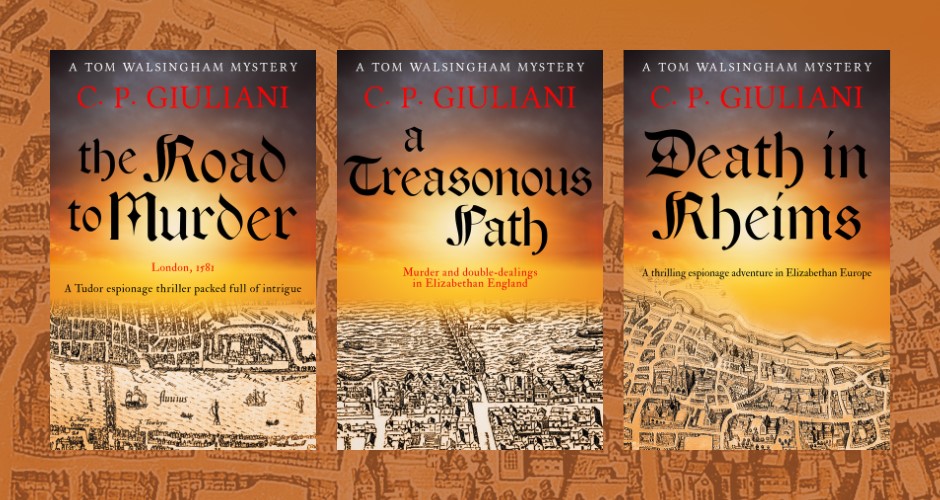
Today, we are delighted to spotlight C.P. Giuliani, author of the Tom Walsingham Mysteries Series.

C.P Giuliani’s garden house

Every year, as soon as summer comes, I move my writing to the garden house. It’s not really cooler, as temperature goes, but it feels summery and pleasant. I love the tall ceiling, the terracotta floor, the desk that used to belong to my great-grandfather, and the view onto the garden. There’s a little pond outside the French windows, and the birds bathing or drinking are, I confess, something of a distraction — but they also provide a cheerful break whenever I find myself stuck. A paragraph refusing to take the right shape? A character mutinying? A dull passage? I step away from the desk and watch while the blackbirds play in the water — and, more often than not, a solution will suggest itself.

For all its rustic pleasantness, the garden house has decent Wi-Fi — which is rather essential when my pile of reference books is not enough to confirm some detail — and is equipped with an electric kettle to make cup after cup of tea, which is a fundamental of my writing method.

In truth, beyond the insane amounts of tea, I have little in the way of a writing routine. Working in theatre means that my hours are flexible. Sometimes I write in the morning, sometimes very late at night, sometimes both; sometimes I must snatch the odd hour here and there, between a rehearsal session and a meeting with the techs. One thing I do is to always keep a notebook with me. Through the years, I’ve learnt to keep a dedicated notebook for each project, beside a general one for everything and anything: notes, stray ideas, snatches of dialogue overheard or imagined, lists, questions… It’s the general notebook that I carry around, so I can jot down anything that occurs to me — to be transferred to the relevant one later. This means that I do some of my writing at the theatre, at the vet’s, as I stand in a queue at the Post Office…

My family, friends and colleagues have developed a high degree of amused tolerance for my ‘Notebook Moments’, when I drop whatever I’m doing to take a note; strangers are occasionally a little put out until I explain that, for one thing, I’m prone to forgetting what I don’t write down and, for another, sometimes an idea will present itself in a very iridescent shape, little more than a flicker of colour under the surface of the water — and will need to be recorded quickly and thought through in writing, at least a little, if it’s to be of any use.

So to recap, I’m absent-minded, easily distracted, forgetful, and can’t keep a routine… I suppose it’s no wonder that a quiet, pleasant place like the garden house is important to my writing process.

Congratulations to Alistair Forrest!

Congratulations to 

42BC

Two years on from Julius Caesar’s assassination, his successors still crave vengeance. The massed legions of the new Caesar, Octavian, and Mark Antony face off against Cassius and Brutus at Phillipi.

Leading the charge for New Rome are primus pilus Titus Villius Macer and his optio, Crispus.

Their heroics come to the attention of Octavian’s spymaster, Marcus Vipsanius Agrippa, who recruits them for his Viper network of spies.

Their mission: Return to Titus’s native Sicilia to gather intelligence on its current ruler, Sextus Pompey.

But when Titus and Crispus arrive in Sicilia, they find much has changed while they’ve been fighting with the Fifth Legion.

The woman Titus came home to marry has grown cold and he must face up to domestic troubles while trying to help Agrippa restore Sicilia to Roman rule.

Suspecting a plot to assassinate Rome’s new rulers, Titus will face savage sea warfare against the local pirate fleet.

Can he uncover the deadly plot? Will he save another Caesar from assassination?

And can he save his family from the ravages of war…?

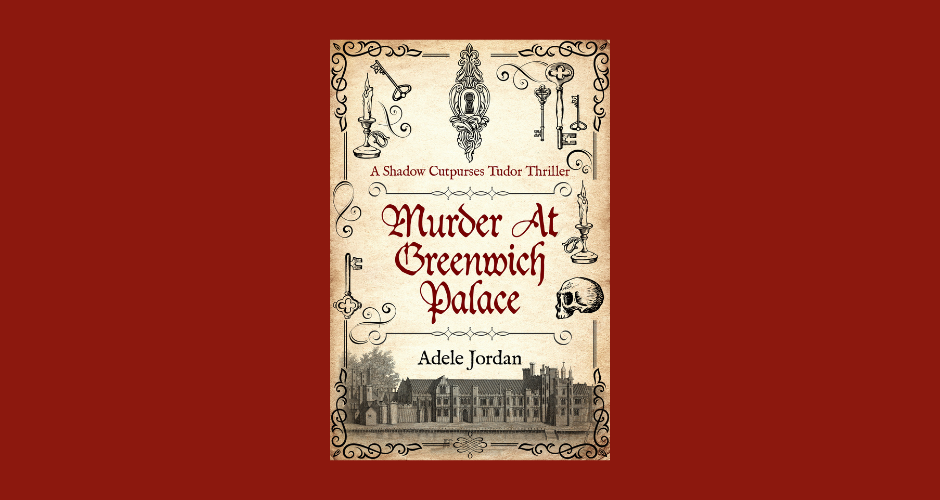
Congratulations to Adele Jordan!

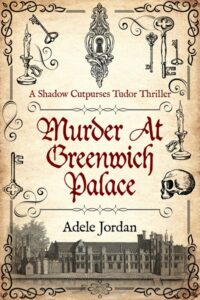
Congratulations to Adele Jordan, whose nail-biting historical thriller, Murder At Greenwich Palace, is published today!

Murder At Greenwich Palace is the first book in the Shadow Cutpurses Tudor Thriller Series. It is an espionage adventure set during King Henry VIII’s reign in England with a feisty female lead.

1536, London

Mother and daughter ‘shadow cutpurse’ team, Emlyn and Gwynnie have been stealing to survive for years, but they are ready to make their big break and escape a life of crime forever.

While Emlyn distracts the guards at Greenwich Palace, Gwynnie sneaks inside, searching for the royal jewels that will set them up for life.

But Gwynnie is disturbed in the act and whilst hiding, she sees something she can never unsee.

A man is murdered in front of her.

Gwynnie flees the crime scene but extreme flooding blocks her escape from the palace grounds.

And with the break-in discovered, suspicion for the murder is placed on the thieves.

If Gwynnie admits to what she has seen, she could find herself executed for a crime she didn’t commit.

Can Gwynnie find a way to reveal what she saw? Will she manage to find her way to freedom?

Or will her a career as a cutpurse end in death…?

Becoming a Novelist is a Matter of History by David Field

In this behind-the-scenes blog series, Sapere Books authors offer an intriguing insight into how, where and why they write.

Today, we are delighted to spotlight David Field, author of numerous historical series including the Bailiff Mountsorrel Tudor Mystery Series and the New World Nautical Saga Series.

I’ve always written stories, even as a child, then I progressed from childhood scribbles to more serious attempts at literary glory on an old upright Olivetti typewriter (one of those with a red and black ribbon, if you’re old enough to remember) when my handwriting graduated from ‘untidy’ to ‘execrable’.

Reluctantly I then honoured my mother’s wish, and my father’s insistence, and got a ‘real job’ as a criminal trial lawyer, which was about as relaxing as standing on one leg on the top outer ledge of The Shard in London, without the reassurance of a safety harness. To relieve the stress I decided to start working on a novel — but what should I choose for a genre?

A good friend of mine who already earned a precarious living as a novelist was insistent that one should always write about things that one knows, and by this stage I knew two things outside my professional straightjacket — some history from my schooldays, and the streets of my home town, Nottingham. During the final years of my working life I spent stolen moments imagining the lives of those living in Nottingham during the Luddite Riots, and In Ludd’s Name was eventually published by a boutique publishing house owned by an old school friend.

Bitten by the bug, and buoyed up by having finally been published, I grew ambitious, and searched the history books for possible storylines, most notably from that most colourful of periods of English history, the Tudor era. The literary world seemed to be awash with Henry VIII, Anne Boleyn, Elizabeth I and even ‘Bloody Mary’, but two seminal characters from that era seemed never to have received much attention from novelists.

First was the progenitor of the Tudors, the boy from Wales, Henry VII, and I climbed inside his head to bring to the pages that followed his boyhood imprisonment in a bleak castle in South Wales, his youthful exile in Brittany, his triumphant return at the head of a ramshackle army that deposed Richard III at Bosworth, and his love match with Elizabeth of York that brought the Wars of the Roses to an end in the nursery rather than on the battlefield. To my delight, and secret surprise, I found a publisher — Sapere Books — and Tudor Dawn was launched.

Then — unbounded joy and amazement! — Sapere wanted another one, so this time I focused on a butcher’s son from Ipswich who rose from obscurity to become Archbishop of York, Papal Legate for life, Lord Chancellor and the diplomacy coach of choice of Henry VIII. Cardinal Thomas Wolsey’s spectacular downfall was just as dramatic, and The King’s Commoner was published, as testament to the fact that I had a second novel in me.

Dozens of titles have since been published, all by Sapere Books, and all ‘historical’ in genre. As one of the characters in Alan Bennett’s delightful creation, The History Boys, says of history — ‘It’s just one ******* thing after another’, and so it has been for me.

Winners of the Sapere Books Writing Competition Announced!

The winners of Sapere Books’ second writing competition have now been announced. Sapere Books pitched six briefs that writers could choose from for their entries, ranging from naval thrillers to Gothic mysteries. The winners have now been chosen – one for each of the six categories – and they have been offered a five-book contract to turn their pitches into a series.

Top row: Jennifer Bruton, David Clensy and Lucy Smith. Bottom row: Jonathan Eyers, Clare Hawkins and Julian Barr.

Amy Durant, editorial director, said: “We had an unbelievable response to this year’s competition with an incredibly high standard of entrants. It was not easy, but we picked our winners due to their clear knowledge of the period they were writing in and brilliant storytelling that left us all wanting to read more. We are very excited to be adding so many talented writers to our Sapere family.”

The Bletchley Park Codebreaker series brief was won by debut author Jennifer Bruton. Jennifer said: “The courageous contributions of the women at Bletchley Park have long held a special place in my heart. To be able to share their story in collaboration with a publisher like Sapere Books is a dream come true.”

Assistant editor Matilda Richards said: “Jen’s brilliantly authentic entry not only provided a detailed description of what Bletchley Park was like for the codebreakers who worked there during the Second World War, but also captures the horrors of war for the soldiers fighting on the front line.”

The World War Two Naval Thriller series brief was won by indie author David Clensy. David said: “I am delighted to be working with Sapere Books on this series, which will allow readers to immerse themselves in the kinds of extraordinary experiences endured by our Royal Navy and Merchant Navy sailors during the Second World War. It is an honour to have this opportunity to commemorate the dedication of a generation who served our nation so valiantly.”

Editorial assistant Claire Smith said: “David’s inspired use of twin main characters joining up to the Royal and Merchant Navies is a fantastic way to explore the thrilling action and perils faced by both services during the war.”

A series chronicling the lives of England’s Medieval Queens has been won by debut author Lucy Smith. Lucy said: “I’m delighted to have been selected by Sapere to write a new series about England’s medieval queens. I can’t wait to immerse readers in the fascinating medieval era and tell the stories of the remarkable Plantagenet women.’

Assistant editor, Natalie Linh Bolderston, said: “Lucy’s submission pulled me straight into the knotty intrigues of medieval Europe. Eleanor of Aquitaine is such a compelling historical figure, and Lucy has done a fantastic job of capturing her cleverness and defiance.”

Non-fiction writer Jonathan Eyers has been chosen to write the fictional Age of Sail naval series. Jonathan said: “I am very pleased my new series will set sail with Sapere Books. I can’t wait for readers to follow Midshipman Newt Beresford across the oceans, into the heart of battle, and up the ranks. I can only hope his adventures are as thrilling and fun to read as they are to write.”

Matilda Richards said: “Jonathan’s well-researched submission showed a passion for the era and a good insight into life aboard ship during the eighteenth century. I’m excited to read more!”

Fantasy author Julian Barr is the winner of the King Arthur Origins brief. Julian said: “Combining historical grit with the otherworldly, the Arthurian Chronicles captures the tragedy and epic scope of this timeless myth. The series situates the legend in sixth-century Britain, following Arthur as he rises from beer-swilling mercenary to true nobility. It’s an honour to work with Sapere Books on bringing the series to life, and I am very grateful that they selected my pitch.’

Editorial assistant Helen Jennings said: “As soon as I started reading Julian’s submission I was immersed in Arthur’s world. His knowledge of Arthurian legend shines through in an exciting series proposal, and his storytelling is vivid and compelling.”

And finally, historical novelist Clare Hawkins is the winner of the Gothic Houses brief. Clare said: “I was delighted to have my entry selected. I love writing to a brief that offers plenty of scope for creating unique plots and characters in engaging historical settings.”

Natalie Linh Bolderston said: “Reading Clare’s submission, I was struck by the strength of her voice and how deftly she planted the seeds of the central mystery. With Clare’s shrewd sense of pacing and her close attention to her story’s setting, it is clear that she has a gift for creating a sinister atmosphere.”

Runner-up spots have also been offered to the following authors, with the prize being three-book contracts to work on a new series: Lynn Bryant, Melanie Golding, Philippa Elliott, Claire Dunn, Christopher Cevasco, Megan Clarke, Samantha Wilcoxson, Jules Larimore, Laura Karim and Carlo Gibbs.

The Real-life Inspiration Behind my Medieval Novels by Isolde Martyn

In this behind-the-scenes blog series, Sapere Books authors offer an intriguing insight into how, where and why they write.

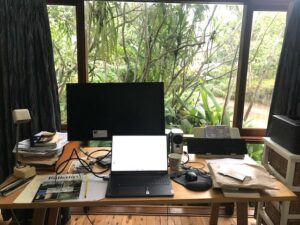
Isolde’s writing space

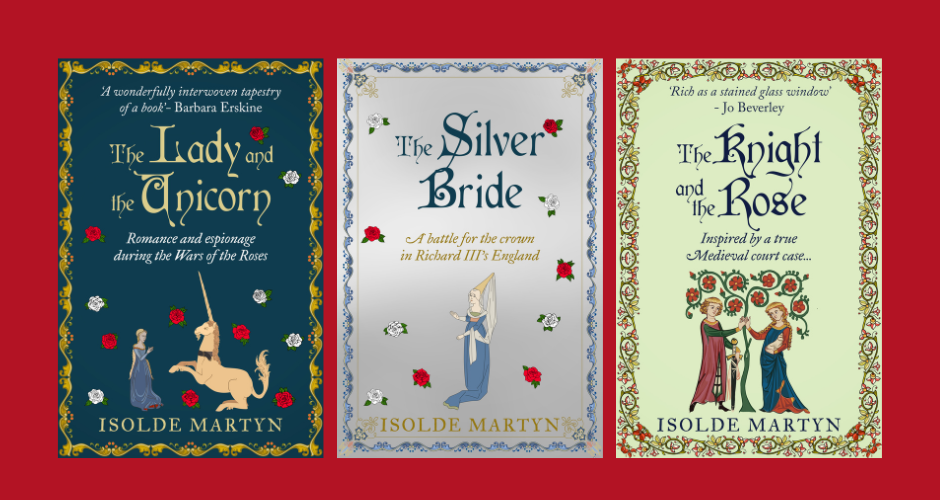
Today, we are delighted to spotlight Isolde Martyn, the author of a number of historical novels including The Lady and the Unicorn and The Knight and the Rose.

Instead of looking out at rose bushes and oak trees or hearing blackbirds, I face an office window that is flanked by palm lilies, and the bird noises come from kookaburras and sulphur-crested cockatoos. None of which is very helpful when I am attempting to describe a scene in fifteenth-century England or thirteenth-century France. Living in Sydney, my research is limited to the occasional overseas trip or the internet. Fortunately, the latter is so fantastic these days and British History Online is now one of my go-to places.

Inspiration? Visiting Carcassonne and Minerve in France and hearing how the Northern French crusaders ransacked the land of the troubadours. Or sometimes it’s someone’s talk quivering my antennae. My second novel, The Knight and the Rose, resulted from hearing a fellow historian cite a rare medieval divorce case that involved a ‘green card’ situation. My third book, The Silver Bride, was hatched from reading of a daughter dressing in armour to fight a duel for her cowardly dad, plus wondering what it would have been like to be a clairvoyant woman back in the 1480s. The Golden Widows arose out of a friend taking me to visit Shute Barton in Devon and hearing about Warwick the Kingmaker’s youngest sister losing seven menfolk in battle. That gave rise to the idea of two young widows on opposite sides in the Wars of the Roses in the early 1460s: Katherine Neville and Elizabeth Woodville.

Historical novelists tend to go over the ground with a metal detector trying to find new angles. It becomes a challenge, especially with the Tudors. Fortunately, the character who was trying to get my attention was from the previous century and one of history’s most mysterious wheelers and dealers, the twenty-nine-year-old Duke of Buckingham, Richard III’s cousin, and so the tale of a villain and a loser came to life in The Devil in Ermine.

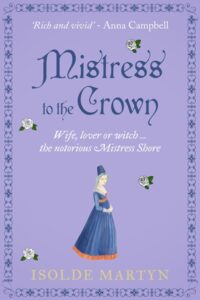
‘Write a woman next, a shameless gold-digger,’ suggested my agent. It didn’t work. Instead, on further acquaintance that most appealing of royal mistresses, Elizabeth Lambard — aka ‘Shore’s wife’ — took charge of the writing, and away we went with Mistress to the Crown.

I still envy novelists living in the UK for being able to easily do location research, but living in Australia hasn’t stifled my lifelong interest in… Oh, there goes another kookaburra!

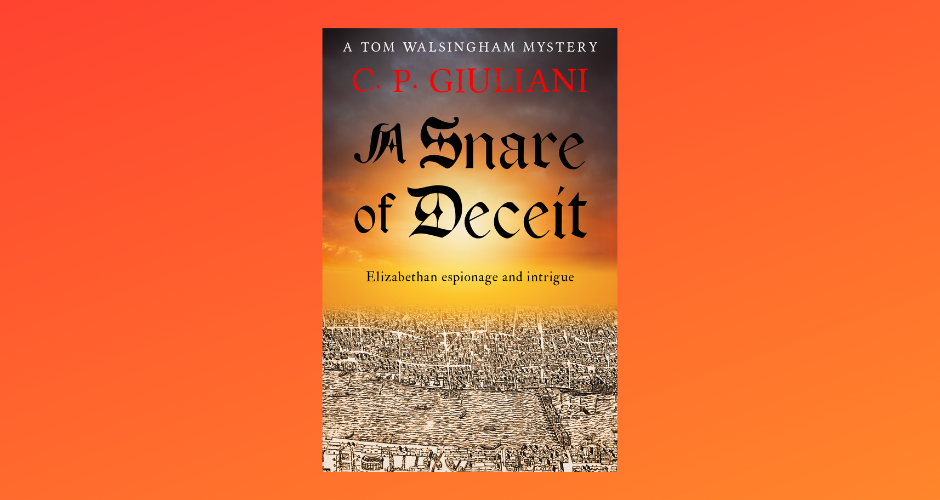
A Snare of Deceit is Out Now

Congratulations to C. P. Giuliani, whose gripping espionage thriller, A Snare of Deceit, is out now!

A Snare of Deceit is a page-turning adventure set during the Elizabethan era in Tudor England. It is the fifth book in The Tom Walsingham Mysteries series.

London, 1587

A new year is being celebrated at Greenwich Palace, but not everyone is in the mood for rejoicing.

Mary Stuart, the imprisoned Queen of Scots has been officially declared a traitor. But Queen Elizabeth is reluctant to sign the death warrant and her mood has been downcast, even in the middle of the festivities.

And the night is soured further when one of the performers is found dead in the tiltyard.

The show must go on, but Tom Walsingham, spying for his cousin Sir Francis, stays behind to investigate. The dead man was no ordinary player, but a man called Jack Perkin, who Tom knew was meant to be passing information to the queen’s confidants about a plot against her life.

With Perkin’s death unlikely to be an accident, Tom feels the danger of the murderous plot escalating out of control. And the player was killed before he could pass on his warning.

But that would place the murderer at court. And dangerously close to the queen…

Can Tom find the killer? Will he uncover the deadly plot?

Or will the web of deceit close in on him…?

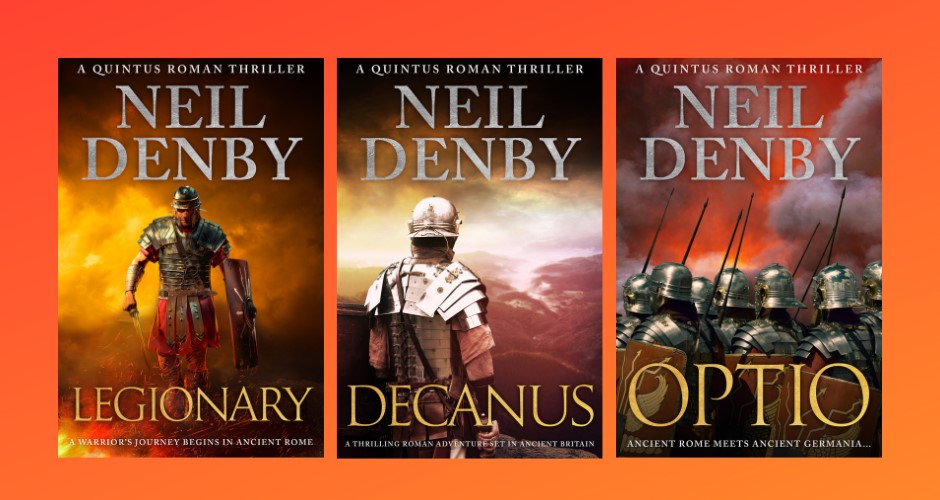
How I Write by Neil Denby

In this behind-the-scenes blog series, Sapere Books authors offer an intriguing insight into how, where and why they write.

Today, we are delighted to spotlight Neil Denby, author of the Quintus Roman Thriller series.

Inspiration can come at any time of the day or night, but I find that the small hours are awash with ideas — plot lines, character development, a resolution to a particularly tricky scenario — so it is important that I keep a notepad and pencil by the bed. It may be old-fashioned but it is also reliable and has the advantage of not involving bright screens.

Frustratingly, come morning, I cannot always decipher what I have written down, but sometimes there are gems. These may be character or plot evolution, or perhaps just phrases, but I know I would have forgotten them completely if I had not made a note.

While out walking — an excellent way to clear the brain of fog — I defer to modern technology and record voice notes on my mobile phone. The same principle applies — if there is no immediate record, the thoughts can be lost.

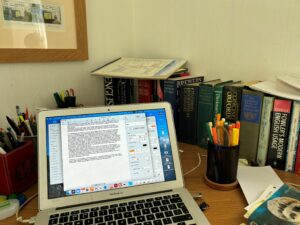
These brief lines are later transferred to a laptop. This is strategically placed in a corner of my study so that I am not distracted by the view outside the window. A row of reference books and one of my favourite possessions, an original Steve Bell cartoon, are all that I have for company. It also helps if I can visualise a character or a place, so I keep a sketchpad on my desk where I can create basic images — maps, plans, sometimes the progress of marches or battles. These drawings help to maintain consistency and authenticity.

This is my primary space, where the words are typed up. I add to them, enhance them, contextualise them, read them back. I often discover that I have used a particular word or phrase twice or more. Or if there is something I’m not sure about, I look it up. The reference books help to straighten out facts and also to find alternative words. Roget’s and Brewer’s and Fowler’s and Chambers provide a wealth of information unmatched by an American-leaning internet. I admit to slipping down rabbit holes of etymology and semantics, but find it strangely satisfying.
I always have to read what has been written, in context with the book so far. Traditionally that would have meant printing the manuscript out and sitting down with a pencil. Happily, that is no longer the case. Instead (thanks to everything going up into the Cloud) I can now read and review on my iPad. This means I can lounge in a chair, or sit outside, or read whilst travelling. So it is more a case of recreating the experience of the reader to see how and if things work.

Of course, there are edits, and actual printouts sometimes, but that is basically it: pencils and pads and technology.

Oh technology, where were you when I had all those essays to write at school?

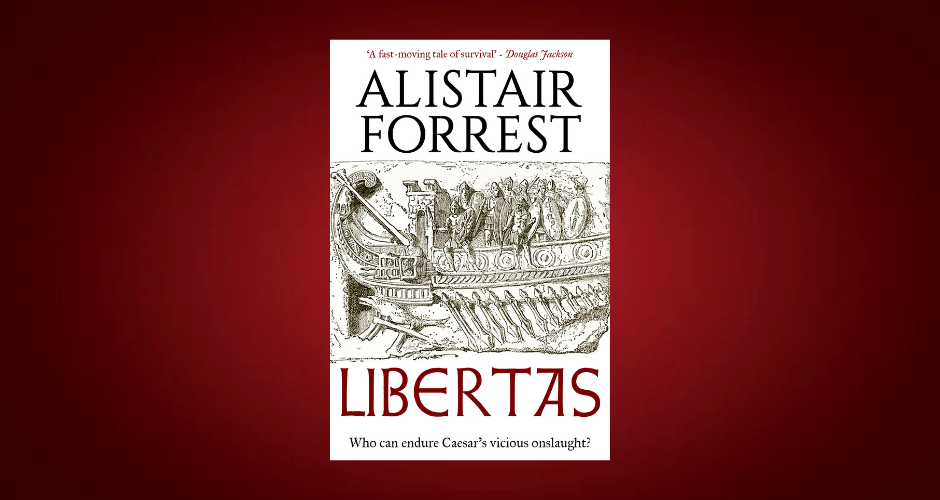
Libertas is Out Now

Congratulations to Alistair Forrest, whose action-packed Roman adventure, Libertas, is out now!

Hispania Ulterior, 51 BC

The son of a baker, young Melqart has lived all his life in Munda — an idyllic mountain town untouched by the troubles of Rome.

But when General Pompey sends his sons, Gnaeus and Sextus, to create strongholds and raise new legions, the citizens of Munda find themselves pulled into Rome’s conflicts. Recognising Melqart’s talents as an engineer and strategist, Sextus soon recruits him to his cause.

As tensions between Pompey and his political rival, Julius Caesar, reach breaking point, it seems that Munda is set to become a battleground.

And as darkness begins to fall over his beloved homeland, Melqart must summon all of his courage and ingenuity to save his community from destruction…

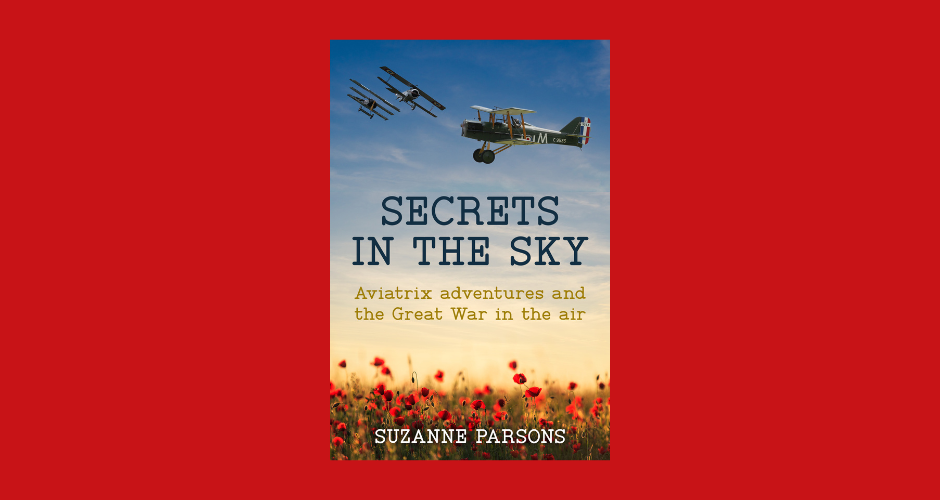
Secrets in the Sky is Published Today

Congratulations to Suzanne Parsons, whose thrilling aviation adventure, Secrets in the Sky, is published today!

Hertfordshire, 1910

After a childhood spent carted around the country by her restless mother, Ayda de Corsi finds stability when they settle at the Bound estate in Hertfordshire. And she finds a friend in Lord Bound’s son, Adam.

When a collection of flying machines owned by aviator Thomas Shuttleby is secretly stored at the Estate, Adam hopes flying may gain him notice from his parents and he trains to become a pilot.

Initially, Ayda’s life moves in a different direction, but eventually Adam secretly teaches Ayda to fly and she realises she has found her passion.

When war breaks out in 1914, Adam joins the Royal Flying Corps, while Ayda heads to London as a typist on the promise of a secret, civilian role as Britain’s only female dispatch pilot.

But as a woman, she is not taken seriously, and she finds her flying craft are sabotaged and someone is going to great lengths to stop her from succeeding.

A gifted aviatrix, Ayda must battle to overcome prejudice to fight for her place in a man’s world.

Can Ayda and Adam survive the war? Will Ayda manage to make her mark?

Or are the odds stacked against this daring aviatrix…?

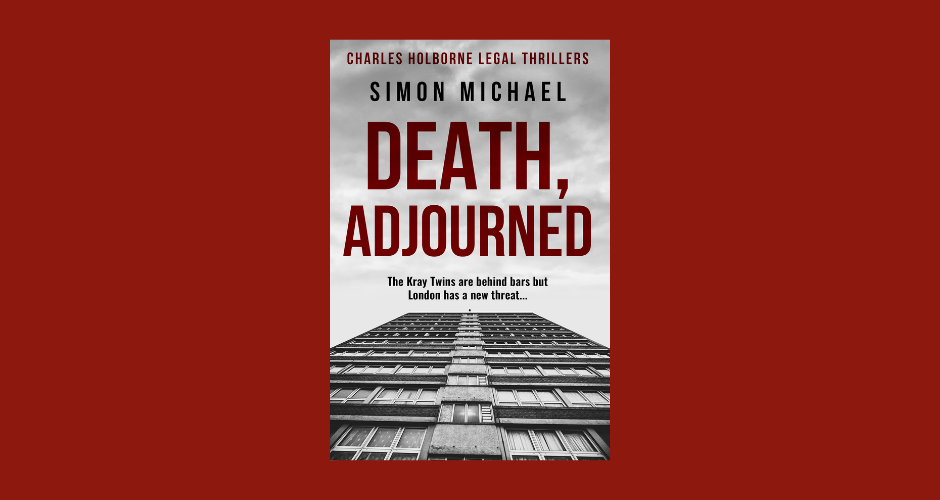
Death, Adjourned is Published Today

Congratulations to Simon Michael, whose exciting legal thriller, Death, Adjourned, is published today!

Death, Adjourned is the ninth crime novel in the Charles Holborne Legal Thrillers series — gritty, hard-boiled mysteries set in 1960s London.

London, 1969

The Kray twins, the nemeses of Charles Holborne, barrister, are finally convicted of multiple murders and sent away for the longest prison terms ever imposed by a British court.

But with London in the grip of a housing crisis and unscrupulous landlords hiking rents, there are new ruthless enforcers terrorising destitute East Enders.

When a tenant dies during a violent altercation with bailiffs, Charles is instructed to represent the businessmen charged with conspiracy to murder. There is motive, an eyewitness and a confession – seemingly an open and shut case.

But Charles suspects his clients are pawns in a much more dangerous game being played by shadowy Establishment figures.

But are his instincts wrong this time? Is he being manipulated into defending a guilty man?

And as dark secrets are revealed, will he have to choose between moral integrity and professional success?

Sapere Books Sign a New Naval Series by Daniel Donato

We are delighted to announce that we have signed a new series of historical naval adventures by Daniel Donato.

In Daniel’s words:

“The series follows English privateer Gideon Locke during Queen Anne’s War, which engulfed the colonies from Newfoundland all the way down to the Caribbean. With the Royal Navy tied up back home, it largely fell to privateers to protect the colonies.

“The story begins in 1707 with Gideon newly returned from a disastrous privateering venture, leaving him destitute and shunned by his fellow privateers. His fortunes change, however, when a charismatic captain recruits Gideon on his next venture. But by the time Gideon realizes that change in fortune was for the worse, it’s too late, and he finds himself caught up in a plot to kidnap the son of a prominent English Governor and deliver him to the French.

“As the series progresses, we’ll see Gideon fight to redeem himself, earn a reputation and climb in rank until he’s ultimately in command of his own vessel.

“I was very fortunate to meet Amy Durant at the Historical Novel Society Conference in Texas last year, and even more fortunate that she was interested in this series. It’s a dream come true to be working with a publisher like Sapere Books who understand that there’s quite a hunger out there for historical action and adventure.”

Sapere Books Sign Three Dual Timeline Novels by Laura Martin

Following the success of her Jane Austen Investigations series, we are thrilled to announce that we have signed a new dual timeline series set in the modern day and Tudor times by Laura Martin.

In Laura’s words:

“I am absolutely delighted to be writing a new dual timeline series for Sapere. With threads of the present day and Tudor times, as well as hints of the occult, the books are fantastically interesting to research and write. In the present day the series follows two friends — Alice and Lydia — whose lives are ripped apart when Lydia suffers a catastrophic accident whilst they are playing with a Ouija board. Alice tries to move on with her life until it becomes apparent Lydia’s condition is linked to an unsolved mystery in the past.

“Vivacious and charming, Bessie Blount is an immediate favourite at court when she joins the household of Queen Katherine of Aragon. With her skill at singing and dancing she soon catches King Henry VIII’s eye and quickly has to learn how to navigate the intrigue and politics at court. When she falls pregnant with the King’s son she begins to wish for a normal life, but the price she has to pay is watching her firstborn son grow up from afar. She cannot guide Henry Fitzroy through the dangerous world of the Tudor court, and cannot stop worrying about her eldest son’s safety.

“The happenings of the present day and the Tudor times are inextricably linked and only by unravelling the mysteries of the past can Alice have any chance of saving her friend.

“I am thrilled to be working with Sapere again on this new series. The whole team are wonderful to work with and have a way of making the complicated process of producing a book appear seamless.”

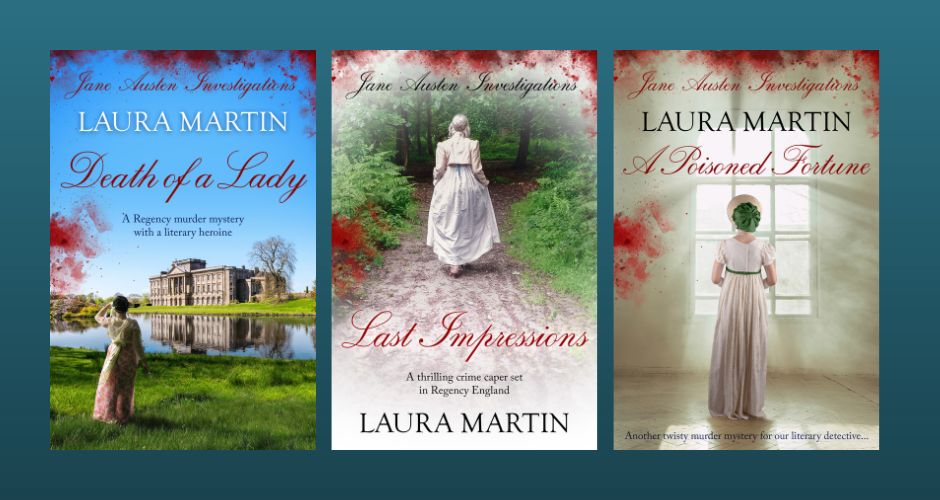
In the Jane Austen Investigations series:

Death of a Lady

Last Impressions

A Poisoned Fortune

The Body on the Beach

Sapere Books Sign Three Ancient Rome Novels by Alistair Tosh

We are thrilled to announce that we have signed a new series of Ancient Rome novels by Alistair Tosh.

Alistair is the author of the Edge of Empire series — gripping adventures set in the tumultuous Roman Britain of the second century AD.

In Alistair’s words:

“My new series takes place during the Second Punic War (218–201 BC) between Carthage and the Roman republic in the important theatre of Iberia (Spain/Portugal). It focuses on the lives of two historic figures: Hasdrubal Barca (Carthage) the younger brother of the legendary Hannibal and Gnaeus Cornelius Scipio (Rome), uncle of the famous Scipio Africanus. The novels will follow the ebb and flow of their lives and fortunes as their armies struggle for dominance of the land and its warring tribes.

“I discovered the stories of Hasdrubal and Gnaeus quite by accident. Last year I spent several months in Andalusia, Spain and was seeking a subject for a magazine article to aid with the marketing of my most recent trilogy. I thought of writing something about Rome’s impact on the province and during my research stumbled across their story. There’s a lot to tell.

“I am delighted to be working with Sapere Books. It was clear from the start that Sapere not only treat their authors fairly but understand the commercial fiction market, has scale, industry expertise and a strong focus on digital marketing.”

Congratulations to Patrick Larsimont!

Congratulations to Patrick Larsimont, whose thrilling wartime adventure, The Vulcan and the Straits, is out now!

The Vulcan and the Straits is the fourth book in the Jox McNabb Aviation Thrillers series: action-packed, authentic historical adventures following a young RAF pilot during the Second World War.

Autumn, 1942

Fighter pilot, Jox McNabb has survived the desert and the second battle of El Alamein, but now No. 111 Squadron is heading into a fresh new storm.

They embark on Operation Torch, the invasion of Vichy North Africa, but adverse weather conditions make flying almost impossible.

And their Commanding Officer, Tony Bartley is losing control as he becomes more and more dependent on alcohol.

After a rocky few months, and a final disastrous mission, it is decided that Jox should step up to Squadron Leader.

But as the North African campaign worsens and Bartley becomes increasingly erratic, Jox finds himself fighting an uphill battle.

Is Jox up for the challenge of command? Can he lead his men to victory?

Or are circumstances too stacked against him…?

Tides of Change is Out Now

Congratulations to D. R. Bailey, whose exciting wartime thriller, Tides of Change, is out now!

Tides of Change is the fifth book in the Spitfire Mavericks Thrillers series: action-packed aviation adventures set during the second world war and featuring a team of vigilante pilots.

December, 1941

After a tense encounter with attacking Focke-Wulfs, Flying Officer Angus Mackennelly returns to base to find Squadron Leader Bentley announcing the bombing of Pearl Harbor.

US forces are being drafted in as war is declared on Japan and an American airbase is to be established next to the RAF Banley base used by the Maverick Squadron.

Angus is promoted to Flight Lieutenant and is given orders to lead a squadron escorting the American bombers on short-range missions until they have their own escort fighters.

But after the US bombers have landed, the Germans stage an attack on the airbase and rumours start to circulate that there may be an enemy spy on base.

As Angus and the Mavericks prepare for more intense air battles over Europe, suspicion between the team grows.

Is there a spy? Are they only targeting the Americans?

And can Maverick Squadron prepare their new allies for the realities of war…?

Sapere Books Sign Three Tudor Suspense Novels by Kate Robertson

We are delighted to announce that we have signed a new series of Tudor mysteries by Kate Robertson.

In Kate’s words:

“The series follows Anne Winston, a lady at the court of Queen Elizabeth I. Quiet and unassuming, she is a keen observer and has a skill for puzzling out problems.

“When we first meet Anne, she has just returned to court from burying her husband. She soon learns that her nephew has been arrested for sedition and must race against the clock to prove his innocence while also being drawn into the emerging spy network under Sir William Cecil, the Secretary of State.

“As the series progresses, we will see Anne uncover intrigues and conspiracies, using her powers of observation and ability to go unnoticed in most situations. I wanted to write a story about an older female protagonist who discovers the power of her voice and finds her agency in a complicated world, all while trying to right wrongs and find justice for the forgotten.

“I met Amy Durant at the Historical Novel Society Conference in San Antonio in 2023. I initially pitched her a different story but when she asked what else I had, I knew I needed to share Anne, my most personal protagonist, entrenched in the Tudor era, which is my first historical period love.

“I’m excited to work with Sapere — it’s inspiring to work with a publisher that knows and loves historical fiction so well.”

Congratulations to Ava McKevitt!

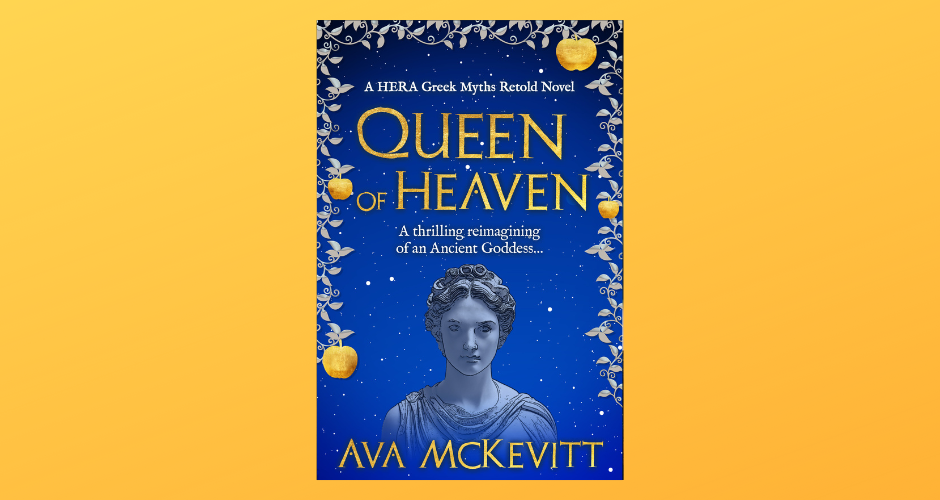
Congratulations to Ava McKevitt, whose exciting historical adventure, Queen of Heaven, is out now!

Queen of Heaven is the first book in the HERA Greek Myths Retold Series.

Divine daughter. Jealous lover. Goddess of motherhood. Vengeful wife. Queen of Olympus.

Hera is woman incarnate. And woman scorned.

The powerful goddess has never agreed with the way her story has been told and now the time has come for Hera to set the record straight.

Ripped from the stomach of her father by her brother Zeus, Hera’s beginning was violent and unnatural.

And her life on Olympus was overshadowed by that of her brother-husband Zeus.

But who was the real Hera? What made the revered goddess of matrimony and motherhood?

And how did the daughter of Time become the queen of Heaven…?

Sapere Books Sign a New Roman Military Series by Jeff Jones

We are delighted to announce that we have signed a series of Roman military adventures by Jeff Jones.

In Jeff’s words:

Legion of the Damned is set in the middle of the first century when Rome was arguably at the pinnacle of its power and follows the career of Marcus Corvo, a man seemingly destined to forever live in his ancestors’ shadows. After a reckless act of bravery turns the tide of a battle, Corvo expects to be severely punished but is instead promoted and recruited for a clandestine rescue mission deep in enemy territory. But this is no ordinary mission and Corvo is obliged to recruit men from the gladiatorial arenas, prisons and mines. His small force is to comprise of expendables — a legion of the damned.

“In the coming series, Corvo’s adventures will take him and his men from the desert sands of Parthia, to the forests of Germania and then to Britannia where he will arrive in time to be caught up in Boudicca’s rebellion.

“The idea for Legion of the Damned has been bouncing around in my head for some time now and my original intention was for it to be made into an historical fantasy novel. When Sapere Books asked whether I’d be interested in writing Roman historical fiction I jumped at the chance. I knew that I could make the idea work.”

Congratulations to David Field!

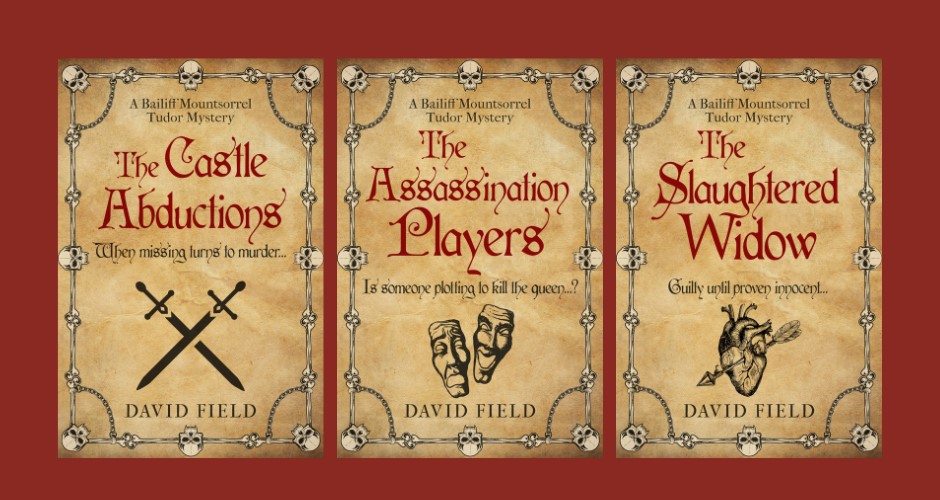
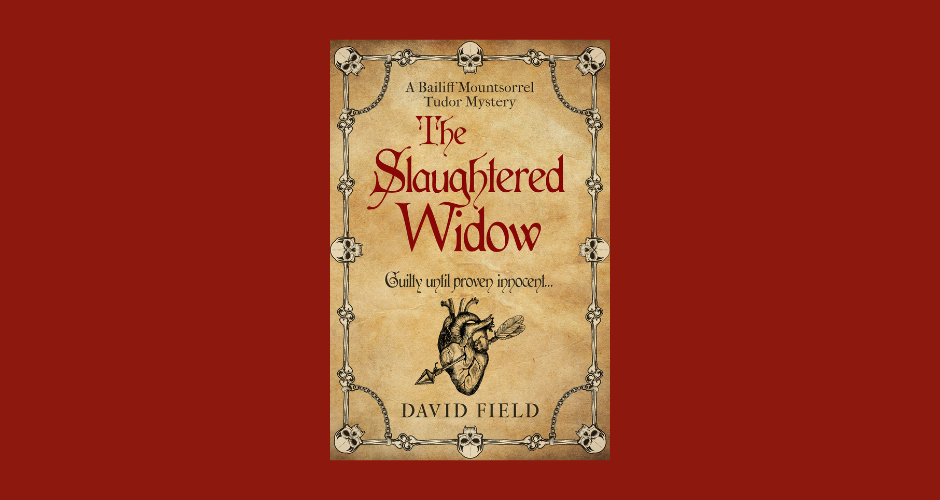
Congratulations to David Field, whose gripping historical mystery, The Slaughtered Widow, is published today!

The Slaughtered Widow is the third instalment of the Bailiff Mountsorrel Tudor Mystery Series – private investigation crime novels set during the reign of Elizabeth I and beyond.

Nottingham, England, 1592

Town Bailiff Francis Barton has been arrested for the murder of his former lover, the widow Agnes Timberlake, and the case against him is a strong one.

Agnes was hacked to death where she lay in her bed and Francis was found standing next to her body, with both his clothing and his sword covered in her blood.

And there is a motive. Agnes had recently loaned Francis her entire life savings and was believed to be demanding an accounting for them.

Despite the overwhelming evidence against him, Francis’s friend, County Bailiff Edward Mountsorrel, refuses to believe that Francis is guilty and sets out to investigate for himself.

Edward wants to speak to the serving girl from the widow’s house who may have been the last to see her mistress alive, but she has vanished.

Is the girl running from a guilty conscience? Or has she also fallen victim to the killer?

Time is running out for Francis. Can Edward clear his friend’s name … or is it time to accept that Francis really is capable of murder…?

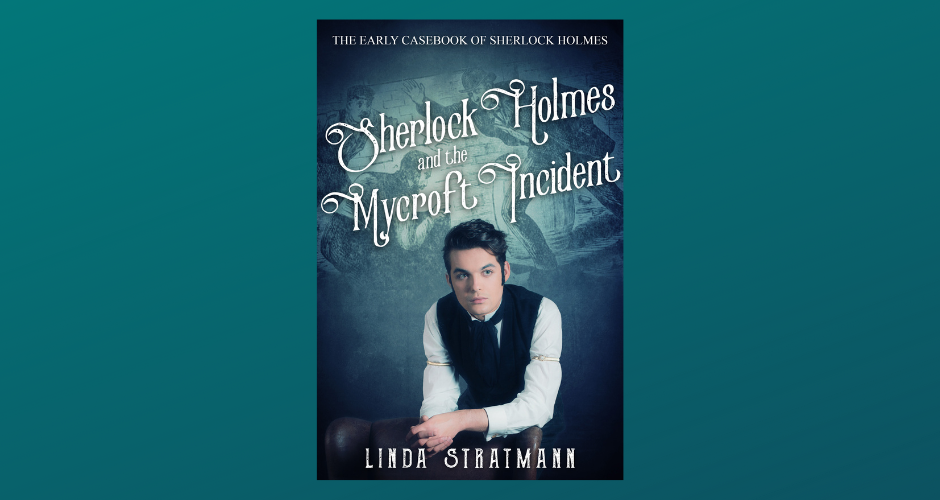
Sherlock Holmes and the Mycroft Incident is Published Today

Congratulations to Linda Stratmann, whose absorbing historical mystery, Sherlock Holmes and the Mycroft Incident, is published today!

Sherlock Holmes and the Mycroft Incident is the seventh Victorian crime thriller in the Early Casebook of Sherlock Holmes series.

1877

A trusted government courier, Anthony Cloudsdale, has gone missing after delivering some secret documents.

The police are questioning everyone who works at Whitehall, and their attention has been drawn to a young clerk, Joshua Emmett, who is in need of funds and might have been vulnerable to bribery.

Emmett is an old schoolfriend of Mycroft Holmes and Mycroft approaches his private-investigator brother, Sherlock Holmes for help.

Holmes and Mycroft collaborate with the assistance of Holmes’ trusted friend Mr Stamford, but each time they discover new information about Cloudsdale’s disappearance, it appears to provide evidence of Emmett’s involvement.

And when a body is found in the Thames, Emmett is arrested.

But is the body Cloudsdale’s? Can Sherlock prove Emmett’s innocence?

Or is Mycroft trying to protect a guilty man…?

Brand-New Vietnam War Thriller, Pioneer Post, is Published Today!

Congratulations to Eric Helm, whose nail-biting military drama, Pioneer Post, is published today!

Pioneer Post is the twenty-eighth book in the Vietnam: Ground Zero series: action-packed, authentic historical thrillers set during the Vietnam War.
Hawaii, 1969

U.S. Army Special Forces Major Mack Gerber and Sergeant Major Anthony Fetterman knew the promise of R&R in Hawaii was too good to be true.

Barely a day into the trip, they are called into a top-secret meeting to discuss classified intelligence. But when they get there, the generals in charge seem reluctant to share any information.

Gerber and Fetterman have recently come back from a mission in Vietnam. Though they were successful, the location where they established their base camp went against instructions from their superiors – and they covered certain things up in their final debrief reports.

All had seemed well when they first returned to the US, but now Gerber is suspicious that a case is being built against them.

Gerber and Fetterman are told they have been called to Hawaii to share base-building tactics with a new team working on the set up of a mission that will take place in Vietnam. But are they really being used for their expertise, or is someone setting them up for a fall?

How loyal are the fellow green berets who served with them in combat? Will secrets be spilled about their time in the jungle?

And will Gerber and Fetterman’s illustrious careers end in tatters…?

An Empire Lost is Published Today

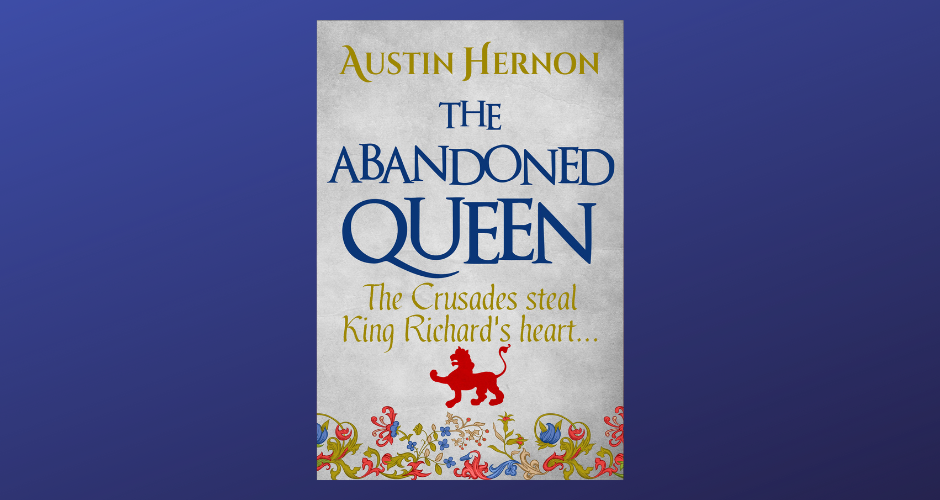
Congratulations to Austin Hernon, whose absorbing Medieval saga, An Empire Lost, is published today!

An Empire Lost is the third historical novel in The Berengaria of Navarre Medieval Trilogy: Early Plantagenet novels set during the Third Crusade and the reign of Richard the Lionheart.

1192

Having defeated Saladin’s forces in Jaffa, Richard the Lionheart has sent his queen, Berengaria of Navarre to Rome while he handles business elsewhere.

Not knowing when the king will return, Berengaria sets about making diplomatic connections with Pope Celestine III and Rome’s high-ranking cardinals.

Disaster strikes when the news arrives that Richard is being held hostage by Holy Roman Emperor Heinrich VI — a major political rival. Horrified, Berengaria and the king’s mother, Eleanor of Aquitaine, begin to raise funds to pay his ransom.

But not everyone is so eager to see Richard’s release. Having designs on England’s throne and the king’s French possessions, Richard’s brother, Prince John, has revolted in his absence, supported by King Philip of France. Together, they conspire to prolong Richard’s captivity.

With tensions rising throughout Europe, Berengaria worries that she will once more be caught in the middle of a war. And without her husband by her side, she begins to despair of ever producing an heir to secure England’s unwieldy throne…

Will Berengaria and Richard ever be reunited? Will they be able to secure England’s line of succession and their lands in France?

Or is Richard’s empire destined to fall…?

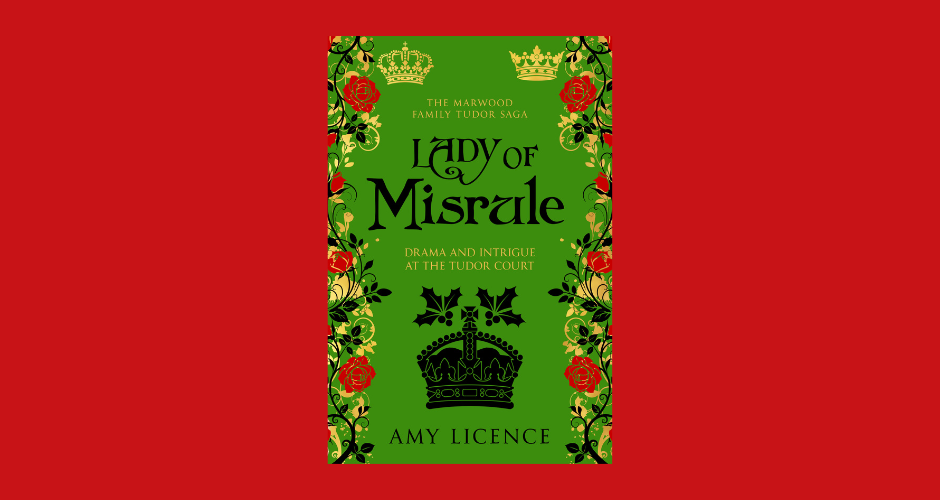
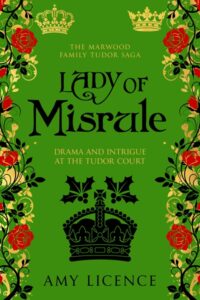
Lady of Misrule is Out Now

Congratulations to Amy Licence, whose intriguing Tudor drama, Lady of Misrule, is published today!

Lady of Misrule is the fourth book in The Marwood Family Tudor Saga.

1528

The mood at court is sombre. The fractures in the royal marriage are spreading and King Henry’s desires are threatening the stability of the realm.

Eighteen-year-old Thomasin Marwood feels aged beyond her years in service to Queen Catherine of Aragon.

Her time as a lady-in-waiting has exposed her to intrigues and dark plots that have cast a shadow over her future.

And now King Henry is becoming more open in his plot to divorce the queen and marry Lady Anne Boleyn.

Queen Catherine has sent for her daughter, Princess Mary to join her at court and remind Henry of his fatherly duties. But Anne Boleyn is always at Henry’s side, resplendent in her lavish gowns, reminding the king of her youth and ability to carry an heir.

Thomasin is loyal to her mistress, Queen Catherine, but she finds herself noticed by the Boleyns and she fears her position at court may soon change.

What will happen to Thomasin if the king is successful in his petition for a divorce? Will Queen Catherine be cast out of court?

And will Lady Anne Boleyn finally get the throne she has been lusting after…?

Author Lynne Reid Banks dies aged 94

Lynne Reid Banks, author of over forty published books for children and adults, has died at the age of 94.

Born in Barnes, London in 1929 to a Scottish doctor and an Irish actress, Lynne was evacuated to Canada at the start of the Second World War, where she spent five years. She returned to London and attended RADA before working at ITN as one of the UK’s first female television journalists. Her first novel, The L-Shaped Room, was published in 1960 and despite causing outrage at the time for its portrayal of an unmarried mother-to-be, was later adapted for cinema to great critical acclaim.

In the early 1960s Lynne went to live in Israel with her husband, the sculptor Chaim Stephenson, where she taught English. In 1971 she brought her family back to London where she continued to write, including the 1980 bestselling children’s book, The Indian in the Cupboard.

In 2013 Lynne won the prestigious J.M. Barrie Award ‘in recognition of a lifetime’s achievement in delighting children’.

We at Sapere Books were honoured to be chosen to reissue some of Lynne’s backlist over the past five years.

An End to Running

Children At The Gate

The Warning Bell

Fair Exchange

Casualties

Path to the Silent Country

Dark Quartet

Lynne Reid Banks (31 July 1929 — 4 April 2024)

Bouncer’s Battle is Published Today

Congratulations to Tony Rea, whose fighter pilot adventure, Bouncer’s Battle, is published today!

Bouncer’s Battle is the first book in the Gus Beaumont Aviation Thrillers series: action-packed military adventure novels set during the Second World War.
England, 1939

When Gus Beaumont completes his training in June 1939, he is given the nickname ‘Bouncer’ for his less than smooth landings.

Despite that, he is an excellent flyer, and his Polish-British heritage inspires the secretive Wing Commander Sir Alexander Peacock to set him on a mission.

The British are aware that Poland is likely to fall to Germany and they are desperate to get the Polish fighter pilots to safety beforehand so they can continue fighting against the Reich.

Gus’s cousin, Staś Rosen, is a Polish fighter pilot and Gus is sent to persuade him to pass the message on to those in charge.

By the time Gus returns to England, war has been declared, and after some tough battles against the Luftwaffe, Staś manages to escape from Poland.

Gus is jealous of Staś’s tales of adventures as he finds himself once more stuck in training, and failing to see any action.

But all that will change when Gus is sent to fight in the Battle of Britain…

Can Gus ‘Bouncer’ Beaumont make his mark? Will he find himself fighting alongside his cousin?

Or will the realities of war prove to be more than he can handle…?

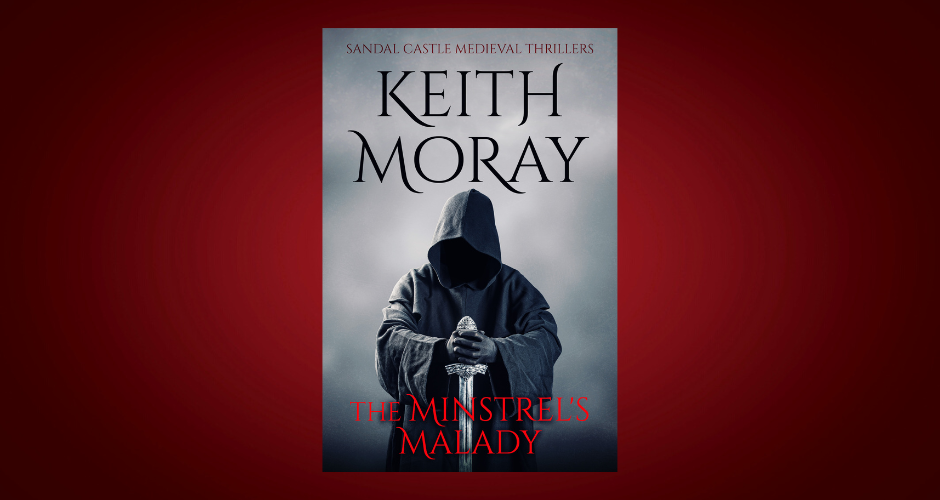
Congratulations to Keith Moray!

Congratulations to Keith Moray, whose gripping Medieval mystery, The Minstrel’s Malady, is published today!

The Minstrel’s Malady is the fifth book in the Sandal Castle Medieval Thrillers series: historical murder mysteries set in Yorkshire.

1330, Yorkshire, England

Edmund of Woodstock, the Earl of Kent, is executed for High Treason against King Edward III.

At his trial, it is claimed that a demon was conjured up by a monk versed in the Dark Arts, who told him that his brother, King Edward II, still lived.

Keen to quell rumours of sorcery that could do untold damage to the royal house and to the country, Sir Richard Lee, Sergeant-at-Law, is instructed by Sir Roger Mortimer and Queen Isabella, the king’s mother, to seek out the monk who delivered the message.

When a minstrel is struck down by a seizure before Sir Richard’s court, many believe the man to be possessed of a demon. Richard’s assistant, Hubert of Loxley, is given the task of riding to Cawthorne Priory to deliver the minstrel into the care of the monastery hospital.

Also at the priory is the anchorite, Sister Odelina, blessed with visions and the power to heal the sick.

But when a number of sinister deaths take place at the priory, blame falls upon the minstrel and the demon inside him.

Are the deaths the work of evil spirits? Or is there a murderer in their midst…?

With panic on the rise, can Sir Richard discover the truth before evil strikes again…?

The Guns of Zanzibar is Out Now

Congratulations to Tim Chant, whose gripping naval adventure, The Guns of Zanzibar, is out now!

The Guns of Zanzibar is the fourth book in the Marcus Baxter naval thriller series: action-packed historical adventures following former Royal Navy officer Marcus Baxter during the early 1900s and through the first world war.

August, 1914

Lieutenant Marcus Baxter has been sent from cold, grey London to the tropical climes of Zanzibar in East Africa on the pretence of carrying out a survey on the local naval station.

In reality, the Royal Navy’s Intelligence Division have sent Baxter to find out if one of their ex-members, Mr Arbuthnott is now working for a potentially hostile foreign power and sharing British secrets.

Baxter is under strict orders not to reveal his true mission to anyone in the small naval contingent he’s been sent to, which makes executing his orders complicated.

He leaves the British protectorate of Zanzibar and crosses the water to the German-occupied port of Dar Es-Salaam to try and subtly gain intelligence.

But once he arrives, he is certain he is being followed.

Returning to Zanzibar, he discovers that the Austrian Archduke Franz Ferdinand has been shot, escalating tensions between the British and German forces and making Baxter’s mission more urgent.

Where is Arbuthnott? Is he betraying the British?

Can Baxter complete his mission before his shadowy stalker catches up with him…?

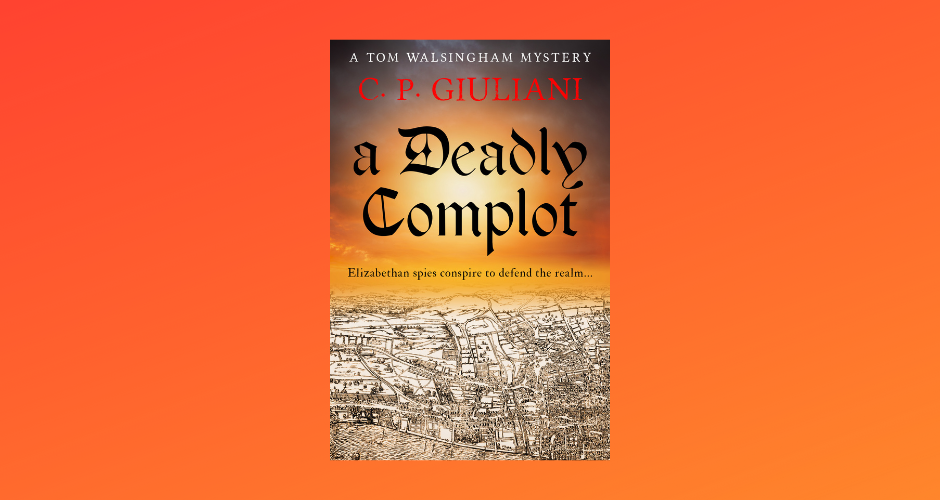
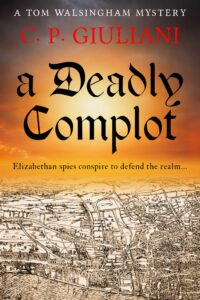
A Deadly Complot is Published Today

Congratulations to C. P. Giuliani, whose deadly espionage adventure, A Deadly Complot, is published today!

A Deadly Complot is the fourth book in The Tom Walsingham Mysteries series.

England, 1586

Tom Walsingham has been tasked with keeping watch over the network of spies recruited by his spymaster cousin, Sir Francis Walsingham.

After intercepting a series of letters sent to and from Chartley Castle, where Mary Queen of Scots has been imprisoned, the spies have infiltrated a ring of Catholic plotters. Led by the zealous Anthony Babington, the conspirators plan to murder Queen Elizabeth and replace her with Mary, thus restoring Catholicism to the realm.

With most of the plotters under careful observation, the spies have only to wait for the right moment to have them arrested. However, when one of the spies’ couriers — Isaac Finch — is murdered, it seems that Babington’s conspirators may suspect that they have informers in their midst.

Fearing that Finch may have been forced to reveal the spies’ plans, Tom vows to find out who killed him.

As he follows the sinister trail, Tom discovers that there is no shortage of people who may have wished Finch harm. And with the queen and the realm under threat, the pressure is on to solve the mystery before any more of Sir Francis’s recruits are lost…

Have Sir Francis’s spies been discovered? Is there a traitor in their midst?

And can Tom unravel the courier’s fate before Babington’s plotters act on their treasonous scheme…?

Happy Publication Day to David Field!

Congratulations to David Field, whose absorbing historical thriller, The Assassination Players, is published today!

The Assassination Players is the second instalment in the Bailiff Mountsorrel Tudor Mystery Series – private investigation crime novels set during the reign of Elizabeth I and beyond.

Nottinghamshire, England, 1591

Two of Queen Elizabeth I’s justices have been murdered within a week of each other, along with a woman who was involved with one of them and a man who had been awaiting trial by the other.

County Bailiff Edward Mountsorrel and Town Bailiff Francis Barton are tasked with investigating the deaths, but they are thrown off course by a visit from the queen’s secretary, Baron Burghley.

Burghley has discovered a plot to kill the Protestant queen and replace her with a Catholic alternative.

He tasks the bailiffs with journeying into a neighbouring county to infiltrate the gang of suspected traitors.

Time is of the essence as the threat already seems to have infiltrated Elizabeth’s court.

But the men behind the plot are ruthless and the path to discover them is fraught with danger.

Will Mountsorrel and Barton unmask the traitors? Who is behind the plot to kill the queen?

Can the bailiffs stop them before they change the course of history forever…?

Requiem of Revenge is Out Now

Congratulations to Richard Kurti, whose twisty biographical crime novel, Requiem of Revenge, is out now!

Requiem of Revenge is a page-turning historical thriller based on the mystery surrounding the death of J S Bach.

Bath, England, 1761

A gruesome discovery is made in one of the city’s wealthiest townhouses. A man has been imprisoned and blinded; left to die in his own home.

He is rescued and his wife, Lady Arabella Taylor is arrested for the crimes.

Doctor Erasmus Harvey examines the victim, and finds out he is Chevalier John Taylor, an esteemed surgeon. The chevalier is keen to see his wife punished and Harvey is sent to take her confession.

But when Harvey meets with Arabella, he is astonished to find she shows no remorse. In fact, she insists her crimes were justified.

Repulsed by this she-devil, Harvey is unsure whether to declare her insane. But as he hears her testimony, what she reveals shocks him to his core.

And he soon realises he is not only unravelling the truth behind the crimes inflicted on the chevalier, but also the death of the celebrated composer J.S. Bach.

Who is the victim and who is the criminal? Why did Arabella torture her husband?

Her crimes could expose a scandal that will send shockwaves through Europe…

Congratulations to Alistair Forrest!

Congratulations to Alistair Forrest, whose gripping Roman adventure, Sea of Flames, is out now!

33BC

On landing in Ephesus to trade, Lachares, a Greek sea merchant, is seized and unfairly executed by Mark Antony, the triumvir of Rome’s eastern provinces.

Lachares’ crew are left to deliver the news to his son, Eurycles, the governor of a Greek trading post. Horrified, Eurycles vows to take revenge on Mark Antony.

With conflict brewing between Antony and his greatest political rival, Octavian Caesar, Eurycles is invited to work against Antony’s cause by smuggling two defectors out of his camp. Eager for an opportunity to get close to his enemy, Eurycles pledges his ship and men to Caesar.

Now embroiled in the deadly machinations of spies and defectors, Eurycles must decide who he can trust.

And when Mark Antony’s legions land in Actium and begin to prepare for an all-out war, Eurycles starts to wonder whether he will survive long enough to exact his revenge…

The Abandoned Queen is Out Now

Congratulations to Austin Hernon, whose captivating medieval adventure, The Abandoned Queen, is out now!

The Abandoned Queen is the second book in the Berengaria of Navarre Medieval Trilogy: Early Plantagenet novels set during the Third Crusade and the reign of Richard the Lionheart.

1191

Having married Richard the LionheartBerengaria of Navarre is now preparing herself for the turbulent life of a queen.

Though he has not yet secured an heir, Richard is determined not to settle down until he has recaptured Jerusalem from the Saracen forces. Vowing to stay by his side for as long as possible, Berengaria accompanies him on the perilous voyage to the Holy Land.

Caught up in battle plans, Richard has barely a moment to spare for his new bride. And after witnessing a sea battle and a deadly siege in Akko, Berengaria is left disturbed by the king’s ruthlessness.

Surrounded by misery and bloodshed, the young queen begins to understand the true cost of war. And as Richard becomes ever more consumed by his ambitions, she starts to wonder whether their marriage will ever have a chance to flourish…

Will Richard survive his brutal Crusade? Will he and Berengaria return to England in triumph?

Or will the horrors of war tear their marriage apart?

Death Foretold is Published Today!

Congratulations to Angela Ranson, whose gripping murder mystery, Dead Foretold, is published today!

Dead Foretold is the second book in the Catrin Surovell Tudor Mystery Series. It is an exciting historical thriller set at the court of Elizabeth I.

1561

Queen Elizabeth is under pressure from all her advisors to marry, but no one can agree on a potential husband.

The conflict is slowly eroding Elizabeth’s power and authority among the nobility, especially when a prophecy starts to spread that seems to predict the deaths of senior members of the queen’s court.

Tension grows when one of the queen’s maids of honour, Mathilda, is killed and placed on a false altar of hawthorn branches.

Her death follows the first lines of the prophecy, making people fearful about who could be next.

Amid rising hysteria, the queen orders her trusted lady-in-waiting Catrin Surovell to investigate.

Catrin soon learns that there is more to this mysterious death than anyone thought.

Strange symbols and eerie events put her on the trail of the murderer.

What do the symbols mean? Is someone using the guise of magic to destabilise the queen’s reign?

Catrin has to figure it out and stop the murderer before he strikes again…

Congratulations to D. R. Bailey!

Congratulations to D. R. Bailey, whose page-turning military adventure, The Sunrise Raiders, is out now!

The Sunrise Raiders is the fourth book in the Spitfire Mavericks Thrillers series: action-packed aviation novels set during the second world war and featuring a team of vigilante pilots.

Autumn, 1941

During a routine patrol, Flying Officer Angus Mackennelly ends up in a skirmish with the enemy over the English Channel and is nearly captured.

It is clear the Germans have unleashed a new weapon.

Back at base, Maverick Squadron are told the new German fighter plane is the Focke-Wulf 190. And it is far more manoeuvrable and nimbler than anything the British have got.

Soon the FW is causing problems for every unit. Squadron Leader Bentley exhorts the Mavericks to do their best no matter what and continue to fly in combat against the new plane.

The Mavericks struggle on against the enemy but the odds are falling further out of their favour.

Something needs to change and Angus is tasked with capturing one of the enemy craft for British intelligence.

But that’s easier said than done…

Will Angus succeed in his mission? Can the British match the new German technology?

Or will Maverick Squadron be forced to admit defeat…?

Congratulations to J. C. Briggs!

Congratulations to J. C. Briggs, whose atmospheric Gothic mystery, The Legacy of Foulstone Manor, is published today!

Westmorland, England, 1970

Dark and imposing in a bleak landscape, Foulstone Manor stands abandoned on the edges of the Lake District.

Reclusive Joan Goss inherited Foulstone, but her fragmented memories of her childhood there still disturb her and she keeps her distance in a cottage on the outskirts of the land.

Joan was brought up by adoptive parents after her mother died and her father abandoned her.

And she has spent her adult life haunted by the dark rumours of her past.

When Joan’s niece Amanda comes to stay with her, she is finally forced to confront the secrets behind Foulstone Manor.

Records show that Joan’s father committed suicide. But what happened to her mother? And why was Joan never told the truth about her childhood?

As Joan uncovers her mother’s diary, the full truth of her parents’ marriage is revealed.

Did his traumatic experiences in the First World War force her father into an early grave? What caused Joan’s mother’s untimely death?

Can Joan come to accept the inheritance that she has always rejected…?

When We Were Us is Published Today

Congratulations to Patricia Caliskan, whose laugh-out-loud romantic comedy, When We Were Us, is published today!

Erika Forde has always played second fiddle to her husband David, the famous novelist. But since their son, Matt, left home for university, cracks have started to show in their marriage.

Erika has long had a nagging suspicion that David may not always have been faithful, and now his latest books are starting to wane in popularity causing erratic moods that are affecting Erika.

But while David’s career starts to dip, Erika’s advertising agency is on the up.

Erika’s creative genius wins the agency a huge client in Stable Denim, but her life is thrown into turmoil when one of the models cast for the campaign turns out to be her ex-boyfriend, Enzo.

Has Enzo been sent back into Erika’s life for a reason? Is it time for her to re-evaluate her marriage?

Or should some things be left in the past…?

Optio is Out Now

Congratulations to Neil Denby, whose absorbing Roman adventure, Optio, is out now!

Optio is the third book in the Quintus Roman Thrillers series: action-packed, authentic historical military adventures set in Ancient Rome.

Julius Quintus Quirinius, Decanus of his contubernium, has failed in his mission to secure a bridgehead in Britannia for the emperor Augustus.

Despite their failure, they have collected valuable intelligence from the British tribes that they are keen to share with Augustus, hoping that will restore their reputation.

Together with his rescued comrades, Quintus flees the misted isle of the enemy and begins the long and treacherous journey home.

Once they locate the remnants of their cohort, Quintus is promoted to Optio and tasked with leading his men against rebel Germanic tribes.

Success could mean a fast route back to Rome and the favour of the emperor. But failure means an almost certain death.

When disaster strikes, can Quintus rescue the honour of Rome and lead the cohort to safety?

Or will the odds once more refuse to fall in their favour…?

The Strange World of Roman Gods by Neil Denby

Neil Denby is the author of the Quintus Roman Thrillers series: action-packed, authentic historical military adventures set in Ancient Rome.

No doubt you are familiar with the major Roman gods: mighty Jupiter/Jove of the thunderbolts, king of the gods; Juno, his wife and the protector of the community; and their sons, Mars, god of war and lame Vulcan, god of the forge. Perhaps you also know that these were pretty much taken wholesale from the Greeks: Zeus does thunderbolts and lightning, and Hephaestus the blacksmith limps. However, unlike the Greek gods, who had their home on top of Mount Olympus, their Roman equivalents lived in forests, rivers and seas, at crossroads (compitalia) and boundaries and, if important enough, in temples.

The legionary soldier was as superstitious as the next Roman, perhaps even more so. Each had family gods, and needed not only to appease the gods, but to avoid offending them. The protagonist in my book series, Quintus, reveres Ceres, as goddess of agriculture. His comrade, Crassus, reveres Vulcan of the forge, while another comrade, Sextus, reveres Mercury, god of thieves and tricksters.

It was a central part of legionaries’ duties to carry out the correct sacrifices, with the right animals, on the designated days. If this was not possible, a legionary or officer would become a priest himself — a simple matter of covering one’s head — and make the necessary requests and offerings. One of my characters, Tullius, will sacrifice anything to appease the gods (a seal, a mouse, a cockroach), whilst Sextus is adept at reading omens, auguries and stars, as seen in Legionary.

The gods were invoked for good fortune, honoured with sacrifices and remembered on particular occasions. The oddest thing about Roman gods was the number of them that started their life as humans. When it came to turning actual people into divine beings, the Romans did not hold back. Romulus, founder of Rome, had a temple, and the shepherd’s hut in which he and his brother had lived still stood in Rome 700 years after his death. Julius Caesar claimed descent, via Aeneas, from Venus.

With Caesar’s death came what is referred to as the ‘imperial cult’. After his assassination and on the orders of the victors of Actium, he became a god — Divus Julius — gaining temples, priests and sacrifices. The newly minted Augustus (previously Octavian) became divi filius — son of a god — one of the titles he most loved. Other emperors followed, including both Augustus and his wife.

The legionaries in my stories refer to Julius Caesar as the general, the dictator or Divine Julius, depending on how well they knew him. He was assassinated in 44BC, less than thirty years before the beginning of the first book, Legionary. This is within living memory for many of my characters; indeed, the veteran Marcus served under Caesar as a young man.

There were countless gods that fell in and out of fashion, including all the souls of the departed. Larés and manés were the minor gods that represented the benevolent souls of the dead, whilst the lemurés were reckoned to be malevolent.

Religion thus permeated every aspect of a soldier’s life. They were all gods-fearing, if not gods-bothering — though they may have actually met some of those who were deified!